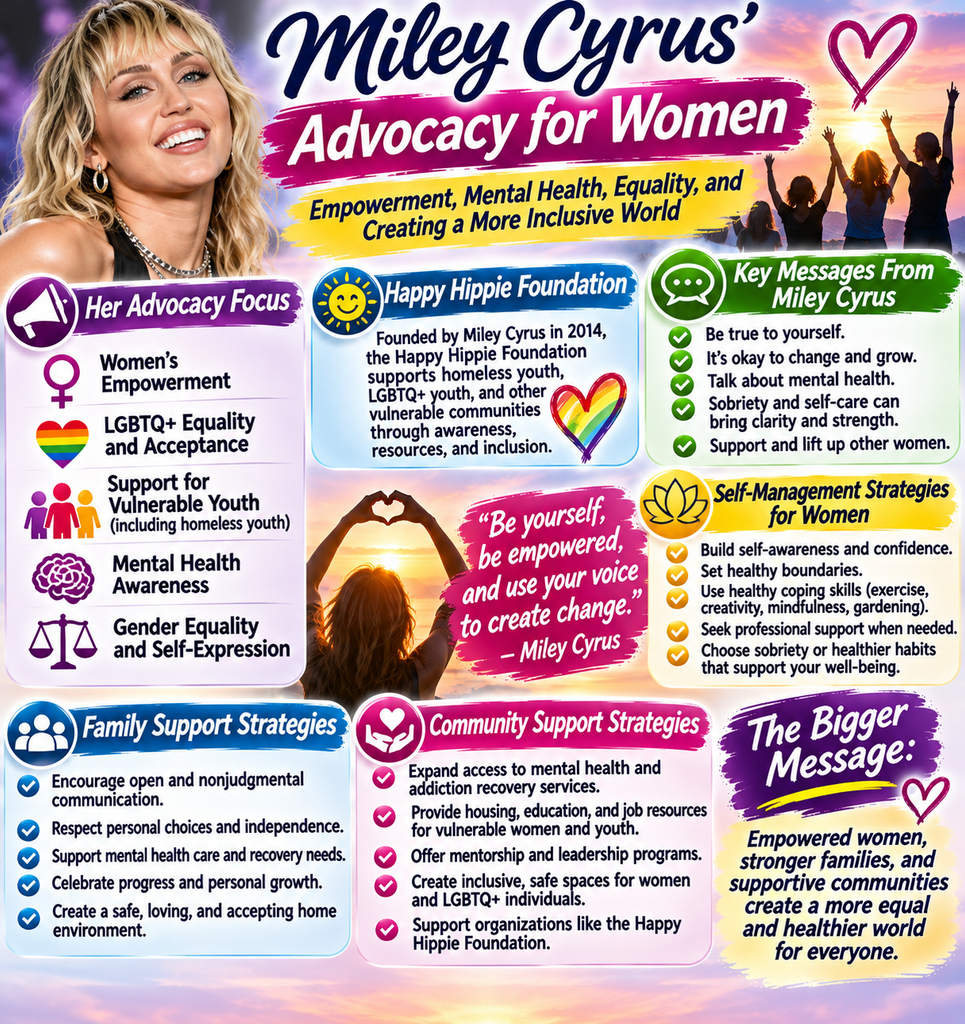
Miley Cyrus is an internationally recognized singer, songwriter, actress, and advocate who has used her public platform to promote women’s empowerment, mental health awareness, LGBTQ+ equality, and personal freedom. From her early career as a Disney Channel star to becoming an influential recording artist, Cyrus has experienced intense public scrutiny, personal challenges, and evolving expectations about how women should behave.
Beyond her entertainment career, Cyrus has encouraged women to embrace their individuality, challenge social stereotypes, establish healthy boundaries, and seek support during difficult times. Through her nonprofit organization, the Happy Hippie Foundation, she has also supported vulnerable young people, including LGBTQ+ youth and those experiencing homelessness.
Her public discussions about emotional well-being, alcohol use, sobriety, and personal growth provide additional lessons about self-awareness and healthy coping strategies.
This article explores Miley Cyrus’ advocacy for women, her personal and professional journey, and practical strategies for self-management, family support, and community support that can help women build confidence, protect their mental health, and overcome social barriers.
Miley Cyrus’ Journey From Child Star to Women’s Advocate
Miley Cyrus became internationally famous through her starring role in Disney Channel’s Hannah Montana. Growing up in the entertainment industry exposed her to public expectations, intense media attention, and criticism about her appearance, relationships, and personal choices.
As she transitioned into adulthood, Cyrus challenged traditional expectations of female entertainers. Her changing musical style, fashion, and public image generated controversy, but she consistently defended her right to express herself.
In a 2015 interview with ABC News, Cyrus discussed the importance of self-acceptance, particularly for women who may feel pressured to avoid expressing confidence in themselves. ABC News
Her journey demonstrates how women can reclaim their identities and establish boundaries despite external criticism.
The Happy Hippie Foundation: Turning Advocacy Into Action
In 2014, Cyrus founded the Happy Hippie Foundation to support homeless youth, LGBTQ+ youth, and other vulnerable populations.
The organization works to raise awareness, encourage acceptance, and connect individuals with resources that address discrimination, homelessness, and social inequality.
In 2015, Cyrus publicly launched the initiative through her Backyard Sessions, featuring musical collaborations that helped raise awareness and encourage donations. Happy Hippie+1
Although Happy Hippie is not exclusively a women’s advocacy organization, its work addresses challenges affecting women and girls, particularly those experiencing discrimination, rejection, or housing instability.
Key areas of advocacy
- Women’s empowerment: Encouraging self-expression, confidence, and independence.
- LGBTQ+ equality: Supporting acceptance, inclusion, and protection against discrimination.
- Youth homelessness prevention: Raising awareness and supporting vulnerable young people.
- Mental health awareness: Encouraging conversations about emotional well-being and access to support.
- Gender equality: Challenging stereotypes and restrictive expectations.
- Community involvement: Encouraging individuals to volunteer, donate, and participate in advocacy initiatives.
Cyrus has also spoken about discrimination affecting transgender women and the importance of social acceptance. Happy Hippie
Miley Cyrus’ Sobriety Journey and Personal Growth
Cyrus has openly discussed her experiences with alcohol, marijuana, and her decision to pursue sobriety.
In 2020, she explained that vocal cord surgery, therapy, and examining her family’s history of addiction and mental health challenges influenced her decision to change her lifestyle.
She also acknowledged returning to alcohol use during the COVID-19 pandemic before recommitting to sobriety. ABC News+1
In a May 2025 interview with Zane Lowe, Cyrus described sobriety as a transformative part of her life. She emphasized the importance of maintaining clarity and making decisions that support her well-being. ELLE
Her experiences provide valuable lessons for women navigating substance use, emotional stress, and recovery.
Importantly, choosing sobriety or experiencing a return to alcohol use does not, by itself, establish a specific substance use disorder diagnosis.
Self-Management Strategies: Building Confidence and Emotional Resilience
Self-management is essential for women seeking to improve their emotional well-being, establish independence, or recover from problematic substance use.
Cyrus has discussed the benefits of therapy, self-reflection, sobriety, and creating healthier personal routines. In 2025, she also described gardening as a grounding activity that supports her well-being. ELLE
Practical self-management strategies for women
- Develop self-awareness: Identify emotional triggers, unhealthy relationships, and behaviors that interfere with personal goals.
- Establish healthy boundaries: Learn to say no to situations that compromise emotional or physical well-being.
- Seek professional counseling: Consider therapy for anxiety, trauma, depression, relationship difficulties, or substance use concerns.
- Practice self-compassion: Replace harsh self-criticism with realistic expectations and constructive thinking.
- Build healthy coping skills: Use exercise, meditation, journaling, gardening, or creative activities to manage stress.
- Recognize substance-related risks: Avoid using alcohol or drugs to cope with emotional pain.
- Strengthen financial independence: Develop budgeting, employment, and educational skills that support personal autonomy.
- Create meaningful goals: Pursue interests, education, career opportunities, and personal development.
- Develop a support network: Maintain relationships with people who respect individual choices and encourage growth.
These strategies can help women build resilience while recognizing when professional intervention is necessary.
Family Support Strategies: Encouraging Independence and Emotional Healing
Family relationships can significantly influence women’s confidence, mental health, and recovery experiences.
Supportive families provide encouragement, emotional security, and opportunities for healthy communication.
Cyrus has discussed examining her family history and how understanding past experiences helped her gain insight into her own emotional patterns. ELLE
Her reflections illustrate the value of recognizing family influences without assigning blame.
How families can support women’s empowerment and recovery
- Encourage open communication: Create a safe environment for discussing emotional challenges and personal decisions.
- Respect individual autonomy: Support women’s ability to make informed choices about their lives.
- Avoid judgment and criticism: Recognize that shame can discourage honest conversations and help-seeking.
- Promote healthy relationships: Encourage mutual respect, emotional safety, and appropriate boundaries.
- Support professional treatment: Help loved ones access counseling or addiction treatment when needed.
- Recognize warning signs: Pay attention to emotional withdrawal, escalating substance use, and significant behavioral changes.
- Celebrate personal achievements: Acknowledge progress in education, employment, recovery, and self-confidence.
- Participate in family counseling: Address communication difficulties and unresolved conflicts when appropriate.
Families should remember that supporting someone does not mean controlling their choices. Healthy support combines compassion, respect, and accountability.
Community Support Strategies: Creating Opportunities for Women
Community organizations play an important role in addressing barriers that affect women’s mental health, economic stability, personal safety, and access to treatment.
Cyrus’ advocacy through Happy Hippie demonstrates how public awareness campaigns can connect vulnerable individuals with resources and encourage broader social participation.
Community-based strategies for supporting women
- Expand mental health services: Improve access to affordable counseling, psychiatric treatment, and trauma-informed care.
- Support addiction recovery programs: Provide evidence-based treatment, peer support, and relapse-prevention resources.
- Promote educational opportunities: Offer scholarships, vocational training, and career development programs.
- Establish mentorship networks: Connect young women with supportive professionals and community leaders.
- Address discrimination: Develop inclusive policies and resources that protect individuals experiencing unequal treatment.
- Provide housing assistance: Support women and young people experiencing homelessness or housing instability.
- Create safe community spaces: Offer environments where women can discuss challenges and build supportive relationships.
- Encourage volunteerism: Promote involvement in nonprofit organizations and local advocacy initiatives.
- Support survivors of violence: Improve access to confidential advocacy, legal assistance, emergency housing, and trauma-informed services.
These initiatives can strengthen women’s independence while reducing social and economic barriers.
The Connection Between Women’s Mental Health and Addiction
Women may encounter unique challenges related to substance use and recovery, including caregiving responsibilities, intimate partner violence, trauma, stigma, and barriers to treatment.
Some women may use alcohol or drugs to temporarily manage anxiety, depression, grief, or relationship stress.
However, repeated substance use can worsen psychological symptoms and increase the risk of dependence.
Effective treatment should recognize women’s individual circumstances rather than assuming that all women experience addiction in the same way.
Important considerations in women’s addiction treatment
- Screening for depression, anxiety, trauma, and substance use disorders.
- Providing trauma-informed, nonjudgmental care.
- Addressing pregnancy and reproductive health when relevant.
- Offering childcare and family-friendly treatment options.
- Screening for intimate partner violence in appropriate clinical settings.
- Providing evidence-based medications when indicated.
- Supporting housing, transportation, and financial stability.
- Encouraging long-term recovery support.
Cyrus’ public discussions about sobriety and emotional well-being can help normalize conversations about substance-related challenges, although her individual experiences should not be treated as a universal recovery model.
Challenging Gender Stereotypes and Social Expectations
A central theme in Cyrus’ public advocacy is the importance of individuality.
Women frequently encounter expectations concerning appearance, relationships, motherhood, professional success, and acceptable behavior.
These pressures can contribute to stress, low self-esteem, and difficulty establishing personal boundaries.
Cyrus has repeatedly challenged the idea that women must conform to narrowly defined social roles.
Her career illustrates several broader principles:
- Women deserve autonomy over their identities and personal choices.
- Confidence should not be mistaken for arrogance.
- Personal growth may involve changing beliefs, interests, or lifestyles.
- Public criticism should not determine an individual’s self-worth.
- Women can pursue professional success while prioritizing mental health.
- Supporting other women can strengthen collective confidence and opportunity.
In a 2026 interview with Variety, Cyrus reflected on the importance of maintaining balance, protecting her private life, and supporting younger artists facing public harassment. Variety Australia
The Importance of Mentorship and Women Supporting Women
Mentorship can help women navigate personal and professional challenges.
Cyrus has discussed the influence of established female musicians, including Dolly Parton, Joan Jett, and Stevie Nicks.
She has also expressed a desire to support younger artists who experience bullying, criticism, or difficulties managing fame. Variety Australia
This approach highlights the value of women supporting one another through shared experiences, guidance, and encouragement.
Mentorship programs can help women strengthen professional skills, develop confidence, and access opportunities that might otherwise remain unavailable.
For women recovering from addiction, peer mentorship may also reduce isolation and reinforce healthier coping strategies.
Lessons From Miley Cyrus’ Advocacy Journey
Miley Cyrus’ experiences offer several important lessons for women, families, healthcare professionals, and communities.
- Self-acceptance supports emotional well-being. Women should not have to sacrifice their individuality to meet social expectations.
- Mental health deserves attention. Therapy, self-reflection, and professional support can help individuals address emotional challenges.
- Sobriety can be empowering. Choosing to avoid alcohol or drugs may improve clarity, health, and personal stability.
- Setbacks do not erase progress. Returning to substance use should prompt support and reassessment rather than shame.
- Family support can strengthen resilience. Compassionate communication and respect for boundaries encourage healthier relationships.
- Community advocacy creates opportunities. Nonprofit organizations can connect vulnerable populations with resources and support.
- Women supporting women matters. Mentorship and positive relationships can strengthen confidence and professional development.
- Personal growth is ongoing. Changing priorities and redefining success are normal parts of life.
Conclusion: Empowering Women Through Advocacy, Recovery, and Self-Acceptance
Miley Cyrus’ journey from child star to internationally recognized musician and advocate demonstrates the importance of personal freedom, emotional resilience, and social responsibility.
Through her public advocacy and the Happy Hippie Foundation, Cyrus has supported vulnerable communities and encouraged conversations about equality, acceptance, and individual identity.
Her openness about sobriety, therapy, and personal growth also offers meaningful lessons for women facing emotional difficulties or substance-related challenges.
Self-management strategies help women develop confidence, establish boundaries, and make healthier decisions. Family support encourages emotional security, independence, and engagement in treatment. Community resources provide opportunities for education, recovery, mentorship, and protection from discrimination.
Together, these approaches can help women overcome barriers and build lives defined by their own values and aspirations.
Miley Cyrus’ advocacy reminds us that empowerment begins with self-acceptance, grows through supportive relationships, and becomes more powerful when women use their voices to help others.
Frequently Asked Questions and Answers
Understanding Miley Cyrus’ Advocacy for Women
1. What causes does Miley Cyrus advocate for?
Miley Cyrus has publicly supported women’s empowerment, gender equality, LGBTQ+ rights, prevention of youth homelessness, and mental health awareness.
She encourages individuals to embrace their identities, challenge harmful stereotypes, and seek supportive environments where they can express themselves without fear of discrimination.
Her advocacy emphasizes self-acceptance, equality, and access to resources for vulnerable populations.
2. Why is Miley Cyrus considered an advocate for women’s empowerment?
Cyrus has frequently challenged societal expectations about how women should dress, behave, express themselves, and pursue professional success.
Throughout her career, she has defended women’s independence and the right to make personal decisions without being defined by public criticism.
Her message encourages women to develop confidence, establish boundaries, and recognize their personal worth.
3. What is the Happy Hippie Foundation?
The Happy Hippie Foundation is a nonprofit organization founded by Miley Cyrus in 2014.
It focuses on supporting vulnerable young people, particularly LGBTQ+ youth and individuals experiencing homelessness.
The foundation promotes inclusion, acceptance, and access to resources that can improve young people’s lives.
4. How does Miley Cyrus challenge gender stereotypes?
Cyrus challenges gender stereotypes through her music, public statements, fashion, and advocacy.
She has questioned expectations that women must conform to traditional standards of appearance, relationships, and behavior.
Her approach emphasizes that women should be free to define their own identities and pursue personal goals without unnecessary social restrictions.
5. How does the Happy Hippie Foundation support women?
The foundation supports vulnerable populations, including women and girls experiencing homelessness, discrimination, and social exclusion.
Its work includes raising awareness, supporting partner organizations, and encouraging community involvement.
In October 2026, Cyrus announced a $1 million donation through the Miley Cyrus Foundation to support Rosa’s Place, a housing initiative intended to create 97 permanent apartments for women in Los Angeles, including survivors of violence exiting homelessness. Yahoo
6. Has Miley Cyrus advocated for LGBTQ+ women?
Yes. Cyrus has publicly supported LGBTQ+ equality, gender inclusion, and acceptance of diverse identities.
Through Happy Hippie, she has helped bring attention to discrimination and homelessness affecting LGBTQ+ young people.
Her advocacy emphasizes the importance of creating communities where individuals can live authentically and access support without discrimination. Happy Hippie+1
7. How has Miley Cyrus used her music to promote empowerment?
Cyrus frequently explores themes of independence, self-expression, resilience, and personal growth in her music.
Her song Flowers became particularly associated with self-love and emotional independence.
Music can encourage listeners to reflect on their experiences, recognize their strengths, and develop confidence during difficult life transitions.
Miley Cyrus’ Mental Health and Sobriety Journey
8. Has Miley Cyrus publicly discussed sobriety?
Yes. Cyrus has openly discussed her decision to stop drinking alcohol and using marijuana.
In a May 2025 interview with Zane Lowe, she described sobriety as a transformative part of her personal development and emotional well-being. She also acknowledged returning briefly to drinking during the COVID-19 pandemic before recommitting to sobriety. ELLE
Her experiences emphasize the importance of self-awareness and making choices that support personal health.
9. What can women learn from Miley Cyrus’ sobriety journey?
Her experiences highlight the importance of recognizing behaviors that interfere with personal goals.
Women can apply several lessons:
- Recognize emotional and environmental triggers.
- Establish boundaries around alcohol and drug use.
- Seek counseling when needed.
- Develop healthier coping strategies.
- Surround themselves with supportive individuals.
- Practice self-compassion after setbacks.
- Make health decisions based on personal needs rather than social expectations.
Choosing sobriety can be an empowering decision, but individuals with substance use disorders may also require evidence-based medical treatment.
10. Does Miley Cyrus have a diagnosed addiction?
Cyrus has publicly discussed substance use, sobriety, and her personal relationship with alcohol.
However, these disclosures should not automatically be interpreted as confirmation of a specific substance use disorder diagnosis.
Her experiences can inform conversations about recovery without assigning medical diagnoses she has not publicly established.
11. How does mental health relate to women’s empowerment?
Mental health influences self-esteem, decision-making, relationships, professional development, and overall quality of life.
Women experiencing anxiety, depression, trauma, or substance use problems may encounter additional barriers related to stigma, caregiving responsibilities, and financial insecurity.
Access to mental health services can help women strengthen independence and pursue personal goals.
12. What self-management strategies can women learn from Miley Cyrus?
Helpful self-management strategies include:
- Practice self-acceptance: Recognize personal strengths and avoid defining self-worth through external criticism.
- Establish boundaries: Protect emotional well-being by setting limits in relationships and social situations.
- Prioritize mental health: Seek therapy or professional counseling when needed.
- Develop healthy routines: Maintain regular sleep, physical activity, and balanced nutrition.
- Explore creative outlets: Use music, art, writing, or other interests to express emotions.
- Avoid unhealthy coping behaviors: Recognize when alcohol or drugs are being used to manage distress.
- Set meaningful goals: Pursue educational, professional, and personal aspirations.
- Build supportive relationships: Connect with individuals who encourage healthy decisions and personal growth.
Family Support Strategies for Women’s Empowerment
13. How has Miley Cyrus’ family influenced her advocacy?
Cyrus has discussed how her mother and grandmother shaped her values.
In 2024, she expanded her philanthropic work through the Miley Cyrus Foundation, drawing inspiration from the women in her family. D23
Their influence illustrates how family relationships can encourage compassion, generosity, and community involvement.
14. How can families support women experiencing emotional challenges?
Families can provide emotional security by encouraging open communication, respecting personal boundaries, and supporting access to professional care.
Helpful approaches include:
- Listening without criticism or judgment.
- Respecting personal independence.
- Encouraging counseling when appropriate.
- Recognizing signs of depression, anxiety, or substance misuse.
- Supporting educational and career goals.
- Avoiding harmful gender stereotypes.
- Encouraging healthy relationships.
- Celebrating progress and personal achievements.
15. Why is family acceptance important for LGBTQ+ women?
Family acceptance can strengthen emotional well-being, self-esteem, and social connectedness.
Rejection and discrimination may contribute to isolation, housing instability, and psychological distress.
Families can support LGBTQ+ women by respecting their identities, maintaining open communication, and connecting loved ones with inclusive community resources.
Community Support and Women’s Advocacy
16. How can communities promote women’s empowerment?
Communities can support women by improving access to education, employment, healthcare, housing, and leadership opportunities.
Important strategies include:
- Expanding affordable mental health services.
- Providing addiction treatment and recovery resources.
- Supporting survivors of domestic violence.
- Developing mentorship and leadership programs.
- Improving access to safe housing.
- Offering job training and financial education.
- Addressing discrimination and harassment.
- Creating inclusive community spaces.
These programs can help reduce barriers to independence and long-term stability.
17. What organizations support causes similar to Miley Cyrus’ advocacy?
Several organizations provide services related to women’s empowerment and vulnerable populations.
Downtown Women’s Center provides housing-related services and resources for women experiencing homelessness.
My Friend’s Place supports young people experiencing homelessness through services and opportunities for stability.
National Alliance on Mental Illness (NAMI) offers mental health education and support.
RAINN provides resources for survivors of sexual violence.
Happy Hippie Foundation promotes inclusion and support for vulnerable youth.
18. How can women become involved in advocacy?
Women can begin by identifying issues that matter to them, such as mental health, addiction recovery, education, equality, or domestic violence prevention.
They can volunteer with nonprofit organizations, mentor younger women, participate in awareness campaigns, or support local community programs.
Advocacy does not require fame or financial wealth. Consistent community involvement can create meaningful change.
Lessons From Miley Cyrus’ Advocacy Journey
19. What are the most important lessons from Miley Cyrus’ advocacy for women?
Her journey offers several meaningful lessons:
- Self-acceptance matters. Women deserve to feel confident in their identities.
- Personal independence is important. Individuals should have the freedom to make informed decisions about their lives.
- Mental health deserves attention. Emotional challenges should be addressed without shame.
- Sobriety can support personal growth. Healthier decisions may improve clarity and emotional stability.
- Family support strengthens resilience. Acceptance and encouragement can help women navigate challenges.
- Community involvement creates opportunities. Advocacy organizations can improve access to essential resources.
- Women supporting women is powerful. Mentorship and positive relationships can encourage personal and professional development.
20. What is the most important message from Miley Cyrus’ advocacy?
The central message is that women deserve respect, independence, equal opportunities, and the freedom to define their own identities.
Cyrus’ advocacy shows how public influence can support vulnerable communities and challenge discrimination.
Her personal reflections on sobriety and emotional well-being also reinforce the importance of self-awareness, healthy boundaries, and seeking support when necessary.
Video: