Panic can feel overwhelming and frightening. A panic attack may cause a racing heart, sweating, trembling, dizziness, chest discomfort, shortness of breath, nausea, or a powerful feeling that something terrible is about to happen. Because these symptoms can appear suddenly, some people begin fearing the next attack and avoiding situations where they worry panic could occur.
Medication can be helpful for some people, but it is not the only approach. Evidence-based psychotherapy, coping skills, lifestyle changes, family support, and community resources can all play important roles in managing panic. Choosing non-medication strategies does not mean someone has to handle panic alone.
Understanding the Panic Cycle
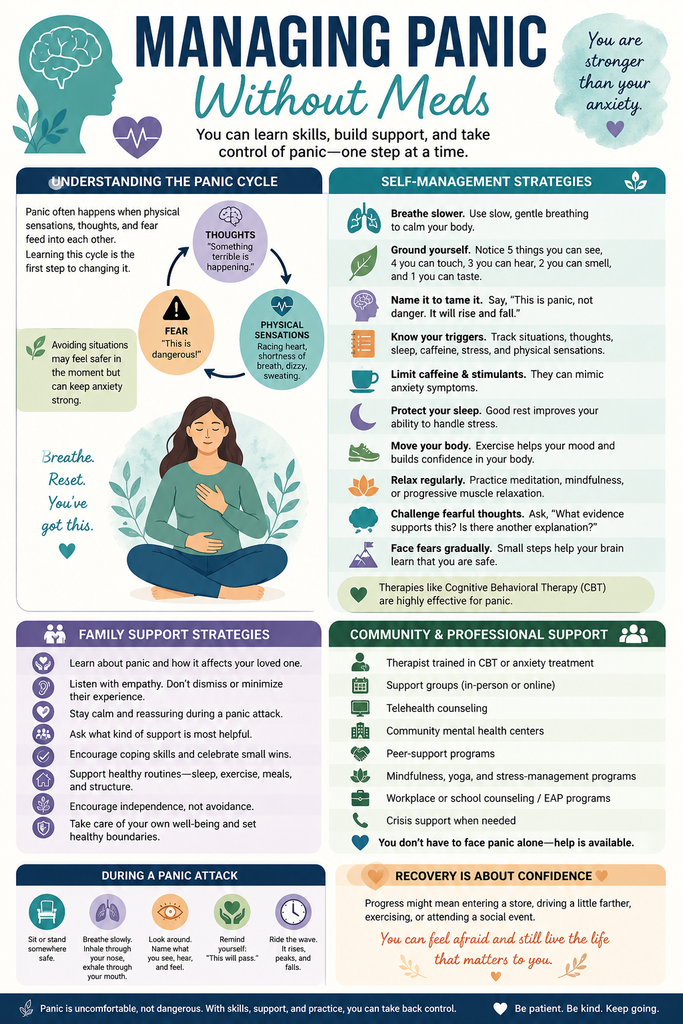
Panic often involves a cycle between physical sensations, thoughts, and fear. A person might notice their heart beating faster and think, “Something is seriously wrong.” That interpretation heightens fear, activating the body’s stress response and producing even stronger physical sensations.
Over time, people may start avoiding driving, stores, crowds, exercise, social events, or unfamiliar places because they associate these situations with panic. Avoidance can provide short-term relief, but it may reinforce the belief that the situation is dangerous.
Learning to recognize this cycle is an important part of recovery.
Self-Management Strategies
The goal of self-management is not necessarily to make every uncomfortable sensation disappear immediately. Instead, people can learn to recognize panic, tolerate temporary discomfort, reduce catastrophic interpretations, and gradually return to activities they have been avoiding.
Helpful strategies include:
- Practice slower breathing. Rapid breathing can intensify dizziness, tingling, and lightheadedness. Gentle, controlled breathing may help reduce hyperventilation.
- Use grounding techniques. Notice what you can see, hear, feel, smell, and touch to redirect attention toward the present environment.
- Label what is happening. Reminding yourself, “This feels frightening, but panic symptoms usually rise and eventually fall,” can interrupt catastrophic thinking.
- Learn your triggers. Keep track of situations, thoughts, sleep patterns, caffeine intake, stress, and physical sensations associated with attacks.
- Reduce excessive caffeine and stimulants. These can produce sensations such as shakiness and a rapid heartbeat that may resemble anxiety.
- Protect sleep. Inadequate sleep can make emotional and physical stress more difficult to manage.
- Exercise regularly. Physical activity can support overall mental health and help a person become more comfortable with normal changes in breathing and heart rate.
- Practice relaxation consistently. Mindfulness, progressive muscle relaxation, meditation, and calming routines are often more useful when practiced regularly rather than only during a crisis.
- Challenge catastrophic thoughts. Ask, “What evidence supports my fear? Is there another explanation for what I’m experiencing?”
- Gradually face avoided situations. With appropriate guidance, gradual exposure can help the brain learn that uncomfortable sensations or situations do not necessarily signal danger.
Cognitive behavioral therapy (CBT) is one of the best-established psychological treatments for panic disorder. Treatment may include learning about panic, changing inaccurate interpretations of bodily sensations, and gradually confronting feared sensations and situations.
Family Support Strategies
Family members can become powerful sources of stability, but helping does not mean eliminating every uncomfortable situation for the person experiencing panic. Constant reassurance or helping someone avoid every feared situation may unintentionally strengthen anxiety.
Families can help by:
- Learning about panic attacks and panic disorder.
- Listening without criticizing or dismissing symptoms.
- Remaining calm when a panic attack occurs.
- Asking the person what type of support is most helpful.
- Encouraging coping skills learned in therapy.
- Supporting healthy sleep, exercise, meals, and daily routines.
- Celebrating gradual progress instead of expecting immediate change.
- Avoiding statements such as “Just calm down” or “There’s nothing wrong with you.”
- Encouraging professional evaluation when panic interferes with work, school, relationships, driving, or daily activities.
- Supporting gradual independence rather than reinforcing avoidance.
Family members should also maintain their own boundaries and emotional well-being. Supporting someone with significant anxiety can be stressful, and caregivers may benefit from education, counseling, or support groups themselves.
Community and Professional Support Strategies
Managing panic without medication does not mean managing it without professional care. Therapy and community-based resources can provide structured tools that are difficult to develop on one’s own.
Helpful resources may include:
- A licensed therapist trained in CBT for anxiety and panic.
- Exposure-based therapy when appropriate.
- Primary care or mental health evaluation to rule out other causes of symptoms.
- Anxiety education programs and support groups.
- Telehealth counseling when transportation or anxiety makes office visits difficult.
- Community mental health centers.
- Peer-support programs.
- Stress-management, mindfulness, or wellness programs.
- School or workplace counseling and employee assistance programs.
- Crisis services when anxiety becomes associated with severe emotional distress or thoughts of self-harm.
Organizations such as the Anxiety and Depression Association of America and the National Institute of Mental Health also provide educational information about anxiety disorders and treatment.
What to Do During a Panic Attack
When panic begins, try to recognize the experience rather than immediately fighting every sensation. Sit or stand somewhere safe, loosen restrictive clothing if necessary, and focus on slow, comfortable breathing. Notice your surroundings and remind yourself that panic sensations can be extremely uncomfortable without necessarily being dangerous.
Instead of repeatedly checking your pulse or searching online for explanations, redirect attention toward a simple grounding activity. After the attack subsides, consider what happened before it began and which coping strategies helped.
However, symptoms should not automatically be assumed to be anxiety. New, severe, unusual, or unexplained chest pain, difficulty breathing, fainting, neurological symptoms, or other potentially serious symptoms require appropriate medical evaluation.
Recovery Is About Building Confidence
One of the biggest challenges with panic is becoming afraid of fear itself. A person may organize daily life around preventing another attack. Recovery can involve gradually changing that relationship with anxiety.
Progress might mean entering a store that was previously avoided, driving a little farther from home, exercising despite noticing a faster heartbeat, attending a social event, or experiencing anxiety without immediately escaping.
These achievements teach an important lesson: “I can experience anxiety and still continue with my life.”
Conclusion
Managing panic without medication is possible for many people, particularly when evidence-based therapy and consistent coping strategies are available. Breathing techniques, grounding, healthy routines, cognitive strategies, gradual exposure, and professional counseling can help reduce the power panic has over everyday life.
Family members can support recovery through patience, education, encouragement, and healthy boundaries, while therapists, healthcare professionals, support groups, and community mental health programs can provide additional guidance.
The goal is not to guarantee that anxiety will never appear again. The goal is to develop the skills and confidence to recognize panic, respond differently to it, and keep moving toward a meaningful life even when uncomfortable feelings arise.
Frequently Asked Questions
Here are some common questions:
1. Can panic attacks be managed without medication?
Yes. Many people learn to manage panic through cognitive behavioral therapy (CBT), gradual exposure, breathing techniques, stress management, healthy routines, and other coping skills. Medication can still be appropriate for some people, depending on symptoms and individual needs.
2. What does a panic attack feel like?
A panic attack can cause a racing or pounding heart, sweating, trembling, dizziness, chest discomfort, nausea, shortness of breath, tingling, or feelings of losing control. Symptoms can be intense even when there is no immediate danger.
3. What should I do when a panic attack starts?
Try to remain somewhere safe and remind yourself that the sensations will usually rise and then decrease. Slow your breathing, relax tense muscles, and focus attention on your surroundings rather than continuously checking your physical symptoms.
4. What is the 5-4-3-2-1 grounding technique?
It is a technique for redirecting attention to the present moment. Identify 5 things you can see, 4 you can touch or feel, 3 you can hear, 2 you can smell, and 1 you can taste. The exercise can help shift attention away from escalating fearful thoughts.
5. Can breathing exercises stop panic attacks?
Controlled breathing may reduce hyperventilation and help some people feel calmer. However, breathing exercises should be considered one coping tool rather than a guaranteed way to immediately stop every panic attack.
6. What therapy works well for panic?
Cognitive behavioral therapy (CBT) is an established treatment for panic disorder. CBT can help people understand the relationship between thoughts, physical sensations, and behaviors while developing healthier responses to anxiety.
7. Why is exposure used to treat panic?
People experiencing panic may begin to avoid places, activities, or physical sensations they associate with panic attacks. Carefully planned exposure helps a person gradually confront these fears and learn that anxiety and uncomfortable sensations can be tolerated without automatically escaping.
8. Can caffeine make panic worse?
Yes. Caffeine and other stimulants can cause a faster heartbeat, shakiness, restlessness, and sleep difficulties. These sensations may trigger or intensify anxiety in people who are sensitive to them.
9. Does exercise help with panic?
Regular physical activity can support sleep, mood, stress regulation, and overall mental health. It may also help people become more comfortable with normal physical sensations such as increased heart rate and breathing.
10. How can family members help during a panic attack?
Family members can remain calm, listen without judgment, reduce unnecessary stimulation, and ask what kind of assistance the person wants. Encouragement is usually more helpful than criticism or telling someone to “just calm down.”
11. Should families help someone avoid their panic triggers?
Not automatically. Although avoidance may provide temporary relief, repeatedly avoiding feared situations can sometimes reinforce anxiety. A therapist can help develop a gradual and appropriate plan for safely confronting fears.
12. Can mindfulness help with panic?
Mindfulness can teach people to observe thoughts and physical sensations without immediately treating them as threats. Regular practice may improve the ability to tolerate uncomfortable emotions and sensations.
13. How long does it take to learn to manage panic?
There is no universal timeline. Progress depends on the frequency and severity of attacks, underlying conditions, treatment participation, stress, support, and consistent practice of coping strategies. Recovery is often gradual.
14. Does managing panic without medication mean avoiding professional treatment?
No. Medication-free does not mean treatment-free. Psychologists, therapists, counselors, and other healthcare professionals can provide evidence-based treatment without necessarily using medication.
15. When should someone seek professional help?
Professional evaluation is appropriate when panic attacks recur, cause significant distress, lead to avoidance, or interfere with work, school, relationships, driving, sleep, or normal activities.
16. How can community resources support recovery?
Community mental health centers, anxiety support groups, telehealth programs, therapists, peer-support programs, workplace employee assistance programs, and educational resources can provide additional support and reduce isolation.
17. Are panic attack symptoms always harmless?
Panic can produce symptoms that resemble medical problems, so symptoms should not automatically be attributed to anxiety. New or unexplained chest pain, severe breathing difficulty, fainting, neurological symptoms, or other concerning symptoms should receive appropriate medical evaluation.
18. What is the main goal of managing panic without medication?
The goal is not necessarily to eliminate every anxious feeling. It is to develop enough understanding, coping skills, and confidence that fear no longer controls everyday decisions. Over time, a person can learn: “I can experience anxiety without letting anxiety run my life.”
Video: How to break the panic cycle in seconds #anxietyrelief #panicattack #mentalhealth