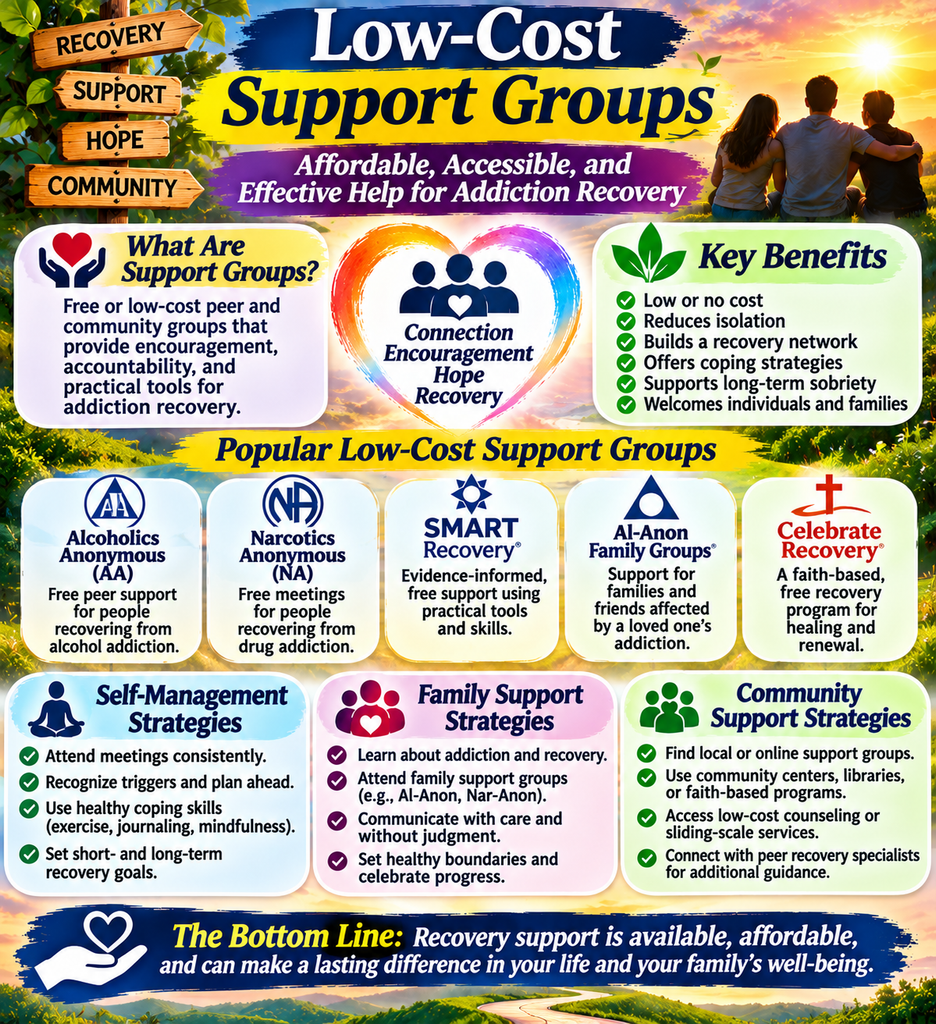
The journey toward addiction recovery can be overwhelming, particularly when financial challenges limit access to professional treatment and ongoing care. Fortunately, free and affordable support groups offer individuals and families valuable resources to navigate recovery without the burden of costly services. Organizations such as Alcoholics Anonymous, Narcotics Anonymous, SMART Recovery, and local community recovery programs provide safe, supportive environments where individuals can share experiences, develop effective coping skills, and receive encouragement from others facing similar challenges. These programs promote personal accountability, emotional well-being, and meaningful connections that strengthen long-term sobriety. By incorporating self-management techniques, family encouragement, and community-based resources, individuals can overcome financial obstacles while building a strong foundation for lasting recovery. Access to affordable support reminds individuals and families that healing should never be determined by financial circumstances and that hope, connection, and a healthier future remain within reach.
Understanding Low-Cost Support Groups for Addiction Recovery
Low-cost support groups are organized gatherings where individuals experiencing addiction, mental health challenges, or recovery-related difficulties can share experiences and receive encouragement.
Many groups are facilitated by trained peers or volunteers who have personal experience with addiction and recovery. Others are led by licensed mental health professionals or certified recovery specialists.
Unlike traditional psychotherapy, peer support groups generally focus on shared experiences, mutual encouragement, and practical recovery strategies rather than individualized clinical treatment.
Common types of low-cost support groups
- 12-step recovery groups: Alcoholics Anonymous and Narcotics Anonymous offer peer support and structured recovery principles.
- Evidence-informed recovery groups: SMART Recovery uses cognitive behavioral and motivational approaches to support behavior change.
- Family support groups: Al-Anon and Nar-Anon help relatives and friends affected by a loved one’s addiction.
- Community mental health groups: Some clinics and nonprofit organizations provide free or sliding-scale group counseling.
- Faith-based recovery programs: Religious organizations may offer recovery meetings, mentorship, and spiritual support.
- Online recovery communities: Virtual meetings can reduce transportation barriers and provide additional scheduling flexibility.
- Peer recovery centers: Community organizations may offer recovery coaching, educational workshops, and social activities.
These resources can help individuals build support networks without creating significant financial burdens.
Why Financial Barriers Affect Addiction Recovery
The financial consequences of addiction can extend beyond treatment expenses.
Individuals with substance use disorders may experience unemployment, reduced income, medical bills, housing instability, and transportation difficulties.
Families may also struggle with the cost of counseling, rehabilitation programs, childcare, and time away from work.
When treatment is financially inaccessible, individuals may delay seeking help or discontinue services prematurely.
Common financial challenges
- High out-of-pocket costs for residential treatment.
- Limited or inadequate insurance coverage.
- Transportation expenses for treatment appointments.
- Lost wages from attending recovery programs.
- Childcare costs during counseling or meetings.
- Limited availability of affordable mental health services.
- Prescription medication expenses.
- Housing instability and other basic living costs.
Low-cost support groups can help reduce some of these barriers by providing accessible, ongoing encouragement and social connection.
However, support groups should complement rather than replace medically necessary addiction treatment.
Benefits of Low-Cost Support Groups in Addiction Recovery
Participation in recovery support groups may provide psychological, emotional, and social benefits.
Connecting with others who have experienced addiction can reduce feelings of shame and isolation while promoting a sense of belonging.
Support groups also offer opportunities to learn practical coping skills and recognize potential relapse warning signs.
Potential benefits
- Affordable access: Many peer support groups are free or accept voluntary donations.
- Reduced isolation: Participants can connect with people who understand addiction-related challenges.
- Emotional encouragement: Members share experiences and offer mutual support.
- Accountability: Regular meetings can help individuals stay on track with recovery goals.
- Practical coping strategies: Participants learn approaches for managing cravings, stress, and triggers.
- Flexible participation: Some organizations provide in-person, online, evening, and weekend meetings.
- Long-term availability: Many groups allow continued participation throughout recovery.
- Community connection: Support groups can help individuals develop positive friendships and social networks.
Research supports Alcoholics Anonymous and professionally facilitated 12-step approaches as effective options for many people with alcohol use disorder. Evidence for other peer-support models varies, and individual preferences should guide participation.
Self-Management Strategies: Making the Most of Low-Cost Support Groups
Self-management involves developing practical skills to recognize substance use triggers, regulate emotions, and maintain healthy recovery behaviors.
Support groups can reinforce these skills by providing opportunities for shared learning, encouragement, and accountability.
Effective self-management strategies
- Attend meetings consistently: Establish a realistic schedule that supports regular participation.
- Set achievable recovery goals: Identify short-term and long-term objectives related to sobriety, health, and personal growth.
- Recognize personal triggers: Identify emotional distress, social situations, or environments associated with substance use.
- Practice healthy coping techniques: Use exercise, mindfulness, journaling, relaxation, and other stress-management activities.
- Build supportive relationships: Connect with trustworthy peers who encourage recovery.
- Develop a relapse prevention plan: Identify warning signs, coping responses, and emergency contacts.
- Track recovery progress: Record personal accomplishments, challenges, and changes in emotional well-being.
- Seek professional assistance when needed: Consult addiction specialists for medication, therapy, or additional treatment.
- Explore different groups: Choose meetings that align with personal values, cultural preferences, and recovery goals.
Individuals should understand that recovery is not always linear. If substance use returns, prompt reassessment and additional support are important.
Family Support Strategies: Helping Loved Ones Access Affordable Recovery Resources
Families often experience emotional and financial stress when supporting someone with addiction.
Low-cost family support groups can provide education, coping strategies, and opportunities to connect with others facing similar challenges.
Family involvement can strengthen recovery when it promotes healthy communication, appropriate boundaries, and engagement in treatment.
Practical family support strategies
- Encourage participation without pressure: Share information about affordable meetings and allow loved ones to make informed choices.
- Attend family support groups: Consider Al-Anon, Nar-Anon, or SMART Recovery Family & Friends.
- Practice compassionate communication: Express concerns without judgment, criticism, or shame.
- Establish healthy boundaries: Protect emotional and financial well-being while encouraging responsible behavior.
- Assist with practical barriers: Offer transportation, childcare, or help locating virtual meetings when appropriate.
- Recognize recovery milestones: Acknowledge treatment participation and positive behavioral changes.
- Participate in family counseling: Explore sliding-scale or community-based therapy when available.
- Learn about addiction: Understand substance use disorders, relapse risks, and evidence-based treatment options.
- Protect caregiver well-being: Maintain personal routines, friendships, and emotional support.
Family members should recognize that they cannot control another person’s recovery, but they can provide encouragement and create healthier environments.
Community Support Strategies: Expanding Affordable Addiction Recovery Services
Community organizations play an essential role in making addiction recovery resources accessible.
Local governments, healthcare providers, nonprofit organizations, libraries, and faith-based groups can collaborate to establish affordable recovery services.
These partnerships are particularly important for underserved communities where transportation, insurance coverage, and treatment availability may be limited.
Community-based strategies
- Provide free meeting spaces: Libraries, community centers, and faith organizations can host recovery support meetings.
- Expand peer recovery programs: Train and support certified peer recovery specialists.
- Offer virtual participation: Provide online meetings for individuals with transportation or mobility challenges.
- Develop transportation assistance: Coordinate public transit information, vouchers, or volunteer transportation programs.
- Create family education workshops: Teach addiction awareness, communication skills, and relapse prevention.
- Partner with healthcare providers: Connect support groups with outpatient treatment and medication services.
- Promote culturally responsive programs: Ensure meetings are inclusive and accessible to diverse populations.
- Support recovery-friendly employment: Connect participants with vocational training and job placement resources.
- Offer childcare assistance: Reduce barriers for parents attending treatment or support meetings.
- Increase public awareness: Share accurate information about free and affordable recovery resources.
Community partnerships can strengthen recovery networks while reducing the financial burden on individuals and families.
Free and Low-Cost Addiction Support Groups
Alcoholics Anonymous (AA)
Free peer-led meetings for people seeking recovery from alcohol problems. Voluntary contributions may be collected, but payment is not required. Find AA meetings
Local Service Resources – Narcotics Anonymous World Services
Narcotics Anonymous (NA)
Free peer support meetings for people recovering from drug addiction, using a 12-step approach. Find NA meetings
SMART Recovery USA Logo & Brand Assets (SVG, PNG and vector) – Brandfetch
SMART Recovery
Offers free mutual-support meetings using practical tools drawn from cognitive behavioral and motivational approaches. Find SMART Recovery meetings
Gettysburg Presbyterian Church
Al-Anon Family Groups
Free support meetings for families and friends affected by another person’s drinking. Find Al-Anon meetings
Celebrate Recovery – New Life Church
Celebrate Recovery
Christian faith-based recovery meetings that are generally free to attend, with optional materials or related activities that may carry costs. Explore Celebrate Recovery
How to Find Affordable Addiction Treatment Beyond Support Groups
Although peer support groups are valuable, some individuals require professional medical or behavioral health treatment.
Affordable treatment options may be available through community health centers, Medicaid-covered programs, nonprofit providers, and sliding-scale clinics.
Steps for finding affordable treatment
- Contact SAMHSA’s National Helpline at 1-800-662-HELP (4357) for confidential treatment information and referrals.
- Visit FindTreatment.gov to search for local addiction treatment providers.
- Ask community mental health centers about sliding-scale fees.
- Contact Medicaid or an insurance provider to identify covered treatment services.
- Explore federally qualified health centers for integrated medical and behavioral healthcare.
- Ask nonprofit recovery organizations about financial assistance and peer recovery services.
For individuals with opioid use disorder, medications such as buprenorphine and methadone can reduce overdose risk. For alcohol use disorder, medications such as naltrexone and acamprosate may be appropriate.
Low-cost peer support should not delay necessary medical treatment.
Overcoming Common Barriers to Support Group Participation
Even when support groups are free, individuals may encounter barriers that prevent consistent attendance.
Common obstacles include transportation problems, scheduling conflicts, social anxiety, stigma, and uncertainty about meeting expectations.
Strategies for overcoming barriers
- Attend virtual meetings when transportation is unavailable.
- Explore evening or weekend meetings.
- Ask whether first-time participants can observe without speaking.
- Try different meeting formats to find a comfortable environment.
- Consider secular or faith-based options based on personal preference.
- Request information about accessibility accommodations.
- Seek culturally responsive or identity-specific meetings when desired.
- Connect with a peer recovery coach for guidance.
Finding the right group may require experimentation. Individuals should feel respected, supported, and safe during participation.
The Role of Online Support Groups in Affordable Recovery
Virtual support groups have expanded access to recovery resources, particularly for individuals living in rural communities or experiencing mobility and transportation challenges.
Online meetings can provide flexible schedules and opportunities to connect with participants from different locations.
However, participants should consider privacy, confidentiality, and the limitations of online peer support.
Benefits of virtual recovery meetings
- Reduced transportation expenses.
- Greater scheduling flexibility.
- Access to meetings outside the local community.
- Opportunities for anonymous or limited-disclosure participation, depending on the platform.
- Continued support during illness or travel.
- Increased access for individuals with disabilities.
Virtual support may be especially helpful when combined with in-person treatment and supportive relationships.
Important Lessons About Low-Cost Addiction Support Groups
Low-cost recovery programs demonstrate that financial limitations do not have to prevent individuals from receiving meaningful support.
Important lessons include:
- Recovery support should be accessible: Financial barriers should not determine whether someone can seek help.
- Peer relationships matter: Shared experiences can reduce isolation and encourage recovery.
- Families need support: Loved ones benefit from education, boundaries, and emotional resources.
- Professional treatment remains essential when indicated: Support groups complement but do not replace medical care.
- Recovery requires ongoing commitment: Healthy routines, treatment engagement, and supportive relationships can strengthen progress.
- Community partnerships expand access: Collaboration can improve access to affordable services.
- Different recovery pathways are valid: Individuals may benefit from different combinations of peer support, therapy, medication, and community services.
Conclusion: Affordable Support Can Make Recovery More Accessible
Low-cost support groups provide an important pathway toward addiction recovery by offering encouragement, accountability, emotional connection, and practical coping strategies without substantial financial burdens. Organizations such as Alcoholics Anonymous, Narcotics Anonymous, SMART Recovery, and family support programs help individuals and loved ones navigate the challenges of substance use disorders while strengthening their recovery networks. Through self-management, compassionate family involvement, and accessible community resources, individuals can develop healthier habits, rebuild relationships, and maintain progress toward long-term recovery. Although peer support groups cannot replace necessary medical treatment, they can serve as valuable components of comprehensive addiction care. Recovery should not depend on financial status. With affordable resources, supportive relationships, and appropriate treatment, individuals and families can move toward healthier, more hopeful futures.
Frequently Asked Questions and Answers
Understanding Low-Cost Addiction Support Groups
1. What are low-cost support groups for addiction recovery?
Low-cost support groups are organized meetings where individuals affected by addiction can share experiences, receive encouragement, and learn practical recovery strategies. Many are free, while others request voluntary donations or charge minimal fees. These groups provide emotional support, accountability, and opportunities to connect with others facing similar challenges.
2. Are addiction recovery support groups really free?
Yes. Many well-established recovery groups, including Alcoholics Anonymous (AA) and Narcotics Anonymous (NA), do not charge membership fees. Some collect voluntary donations to cover meeting expenses, but contributions are not required to participate.
Other programs may offer free meetings, sliding-scale fees, or financial assistance.
3. What are the most common free or low-cost addiction support groups?
Several organizations provide affordable recovery support:
- Alcoholics Anonymous (AA): Peer support for individuals seeking recovery from alcohol problems.
- Narcotics Anonymous (NA): Support for people recovering from drug addiction.
- SMART Recovery: Evidence-informed meetings focused on practical behavior-change strategies.
- Al-Anon Family Groups: Support for relatives and friends affected by another person’s drinking.
- Nar-Anon Family Groups: Support for families affected by another person’s drug addiction.
- Celebrate Recovery: Christian faith-based recovery support.
- Community recovery centers: Local organizations offering peer coaching, education, and recovery activities.
4. How do support groups differ from professional addiction treatment?
Support groups generally provide peer encouragement, shared experiences, and practical coping strategies.
Professional addiction treatment may involve medical evaluations, behavioral therapy, medications, withdrawal management, and psychiatric care.
Support groups can complement professional treatment but should not replace necessary medical or mental health services.
5. Can someone attend a support group without health insurance?
Yes. Most free peer recovery groups do not require health insurance, referrals, or medical documentation.
Individuals can often attend meetings without providing detailed personal information, although specific registration and participation requirements vary.
Benefits of Low-Cost Support Groups
6. How do low-cost support groups help individuals maintain sobriety?
Support groups can provide accountability, encouragement, social connection, and opportunities to learn coping strategies.
Regular participation may help individuals recognize relapse warning signs, strengthen motivation, and establish supportive relationships.
Research provides particularly strong evidence for Alcoholics Anonymous and professionally facilitated 12-step approaches in supporting alcohol abstinence.
7. Can support groups reduce feelings of loneliness and isolation?
Yes. Addiction often contributes to social withdrawal, strained relationships, and feelings of shame.
Support groups provide opportunities to connect with people who understand recovery-related challenges. These relationships can promote belonging, emotional encouragement, and confidence.
8. Are online addiction support groups as helpful as in-person meetings?
Online support groups can provide meaningful emotional support and practical recovery guidance, particularly for individuals facing transportation, mobility, or scheduling barriers.
However, evidence comparing online and in-person outcomes varies. Some individuals benefit from combining both formats.
9. Can support groups help individuals experiencing both addiction and mental health conditions?
Yes. Peer support may help individuals experiencing substance use disorders alongside depression, anxiety, or trauma-related symptoms.
However, co-occurring mental health conditions often require professional evaluation and treatment.
Some communities offer specialized dual-recovery groups for individuals managing both substance use and mental health challenges.
10. How long should someone attend addiction recovery support groups?
There is no universal timeline.
Some individuals attend meetings frequently during early recovery and gradually adjust their participation. Others continue attending for years because they value the social connection and ongoing encouragement.
Participation should reflect individual needs, preferences, and recovery goals.
Self-Management Strategies
11. How can individuals make the most of low-cost recovery support groups?
Individuals can strengthen their participation by:
- Attending meetings consistently.
- Setting realistic recovery goals.
- Listening to others’ experiences.
- Developing healthy coping strategies.
- Building supportive peer relationships.
- Recognizing personal triggers.
- Creating a relapse prevention plan.
- Seeking professional treatment when needed.
12. What should someone expect during their first addiction support group meeting?
Most peer support meetings include introductions, discussion of recovery-related topics, and opportunities for participants to share experiences.
Many groups allow newcomers to listen without speaking.
Meeting structures vary, so individuals may wish to review the organization’s guidelines beforehand.
13. Can someone attend a support group while still using alcohol or drugs?
Policies vary by organization and meeting type.
Many groups welcome individuals who want help with substance use, even if they have not yet achieved sobriety. Some meetings ask participants not to attend while intoxicated or to refrain from sharing if they have recently used substances.
Individuals should contact the group or review its guidelines if they are unsure.
14. What coping strategies are commonly discussed in addiction support groups?
Common topics include:
- Identifying substance use triggers.
- Managing cravings.
- Developing healthy daily routines.
- Practicing mindfulness and relaxation.
- Improving emotional regulation.
- Establishing supportive relationships.
- Preventing relapse.
- Managing stressful situations without substances.
15. Can support groups help someone recover after a relapse?
Yes. Support groups may provide encouragement and help individuals reconnect with recovery goals following a return to substance use.
However, relapse may require reassessment of medical treatment, medications, therapy, and overdose prevention strategies.
For individuals using opioids, reduced tolerance after abstinence can significantly increase overdose risk.
Family Support Strategies
16. Are there free support groups for families affected by addiction?
Yes. Organizations such as Al-Anon, Nar-Anon, and SMART Recovery Family & Friends offer support for relatives and friends affected by another person’s substance use.
These programs can help families improve communication, establish healthy boundaries, and manage emotional stress.
17. How can families encourage loved ones to attend recovery meetings?
Families can share information about available groups, offer transportation, and encourage loved ones without judgment.
Participation should generally remain voluntary. Pressuring or threatening someone may increase resistance and damage communication.
18. What can family members learn from addiction support groups?
Family support groups often address:
- Understanding substance use disorders.
- Establishing healthy boundaries.
- Recognizing enabling behaviors.
- Improving communication.
- Managing guilt and emotional stress.
- Supporting treatment engagement.
- Protecting personal well-being.
19. Can family members attend support groups even if their loved one refuses treatment?
Yes. Family members can seek support regardless of whether the individual experiencing addiction participates in treatment.
Family support groups can provide education, emotional encouragement, and practical coping strategies.
20. How can families establish healthy boundaries during addiction recovery?
Families can establish clear expectations regarding respectful communication, financial assistance, household safety, and personal responsibilities.
Boundaries should protect well-being while encouraging accountability and access to appropriate treatment.
Community Support Strategies
21. Where can individuals find free addiction recovery meetings?
Free or low-cost meetings may be available through community centers, churches, libraries, nonprofit organizations, recovery centers, and online platforms.
Useful directories include:
| Organization | Meeting information |
|---|---|
| Alcoholics Anonymous | Local and online AA meetings |
| Narcotics Anonymous | Drug addiction recovery meetings |
| SMART Recovery | In-person and online recovery meetings |
| Al-Anon Family Groups | Support meetings for families |
| SAMHSA | Treatment and recovery resources |
22. Are there affordable recovery resources for people living in rural communities?
Yes. Virtual meetings, telephone-based peer support, telehealth services, and community outreach programs may improve access for individuals living in rural areas.
Availability varies by location, and some individuals may still face internet or transportation barriers.
23. Can community organizations create their own low-cost support groups?
Yes. Community organizations can collaborate with trained peer recovery specialists, nonprofit organizations, and healthcare providers to establish accessible recovery programs.
Important considerations include confidentiality, facilitator training, participant safety, accessibility, and referral pathways for professional treatment.
24. What should someone do if they cannot afford addiction treatment?
Individuals can explore Medicaid-covered services, federally qualified health centers, sliding-scale clinics, and publicly funded addiction treatment programs.
The SAMHSA National Helpline at 1-800-662-HELP (4357) provides confidential treatment information and referrals.
Individuals can also search FindTreatment.gov for treatment providers.
25. What is the most important benefit of low-cost addiction support groups?
The most important benefit is that meaningful recovery support can remain accessible even when financial resources are limited.
Low-cost support groups provide opportunities for connection, encouragement, practical coping skills, and ongoing participation in recovery.
Although they cannot replace necessary medical treatment, they can strengthen comprehensive recovery plans and help individuals and families build healthier futures.
Video: