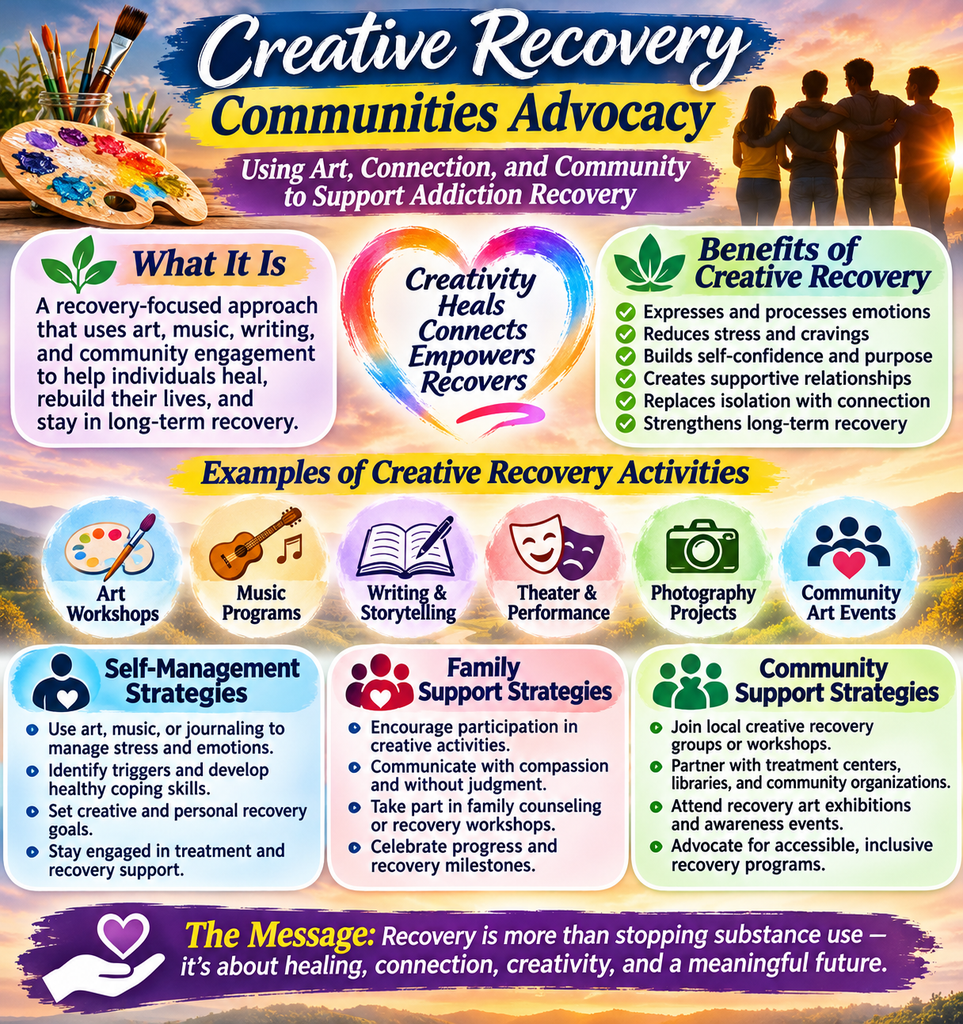
Addiction recovery involves more than overcoming substance dependence—it requires emotional healing, personal growth, meaningful relationships, and a renewed sense of purpose. Creative Recovery Communities Advocacy emphasizes using art, music, writing, storytelling, and community engagement to help individuals rebuild their lives after addiction. Creative expression provides opportunities to process difficult emotions, reduce isolation, and develop healthier coping mechanisms while strengthening connections with others who understand the challenges of recovery. By combining evidence-based addiction treatment with creative activities, family involvement, and community advocacy, individuals can discover new ways to express themselves, build resilience, and maintain long-term recovery. This article explores the role of creative recovery communities and practical self-management, family support, and community strategies that promote healing and lasting change.
Understanding Creative Recovery Communities Advocacy
Creative recovery communities bring together individuals affected by addiction through artistic expression, peer support, education, and community involvement.
Rather than focusing exclusively on substance use, these programs encourage participants to explore their identities, talents, relationships, and personal strengths.
Creative recovery advocacy promotes the belief that individuals experiencing addiction deserve dignity, treatment, opportunities for personal growth, and meaningful participation in society.
These initiatives may include:
- Art therapy and community painting workshops.
- Music programs and songwriting sessions.
- Creative writing, journaling, and poetry groups.
- Theater and storytelling activities.
- Photography and digital media projects.
- Community recovery exhibitions and public awareness campaigns.
- Peer-led workshops and recovery celebrations.
- Collaborative projects that promote addiction education and reduce stigma.
Creative activities can complement evidence-based treatment by providing opportunities for emotional expression, social connection, and healthy recreation.
However, creative recovery programs should not replace medically necessary addiction treatment, counseling, or medications.
The Connection Between Creativity, Addiction, and Emotional Healing
Individuals experiencing substance use disorders may struggle with emotional regulation, unresolved trauma, depression, anxiety, and feelings of isolation.
Creative expression offers an alternative way to explore difficult experiences, particularly when emotions are challenging to communicate verbally.
For example, painting may help someone express grief, while songwriting can provide an opportunity to explore personal experiences and recovery goals.
Writing about addiction may also help individuals reflect on triggers, identify behavioral patterns, and recognize personal progress.
Potential benefits of creative recovery activities
- Emotional expression: Provides constructive ways to communicate difficult feelings.
- Stress management: Encourages relaxation and engagement in meaningful activities.
- Improved self-awareness: Helps individuals recognize emotions, thoughts, and behavioral patterns.
- Social connection: Reduces isolation through shared creative experiences.
- Personal identity development: Encourages individuals to recognize strengths beyond addiction.
- Increased confidence: Builds self-esteem through learning and accomplishing creative goals.
- Recovery motivation: Creates opportunities to celebrate progress and develop a sense of purpose.
Although these activities may improve well-being and engagement, research on their direct effects on substance use outcomes is still developing.
The Role of Creative Recovery Advocacy in Reducing Addiction Stigma
Stigma remains a major barrier to addiction treatment and recovery.
Individuals with substance use disorders may experience discrimination, social rejection, employment difficulties, and negative assumptions about their character.
Creative recovery advocacy challenges these stereotypes by sharing personal experiences through art, storytelling, and community education.
Recovery exhibitions, documentaries, poetry readings, and public performances can help audiences understand addiction as a complex, treatable health condition.
These initiatives encourage communities to recognize that individuals in recovery are parents, professionals, artists, neighbors, and valued members of society.
Effective advocacy strategies
- Organize public art exhibitions featuring recovery-related themes.
- Encourage voluntary storytelling by individuals with lived recovery experiences.
- Develop educational campaigns explaining addiction and treatment.
- Partner with schools, healthcare organizations, and community centers.
- Promote respectful, person-first language.
- Advocate for accessible mental health and addiction treatment.
- Create recovery-friendly employment and volunteer opportunities.
- Recognize recovery milestones without pressuring individuals to disclose personal histories.
Creative advocacy can help replace shame and misinformation with education, compassion, and understanding.
Self-Management Strategies: Using Creativity to Strengthen Recovery
Self-management is an essential component of addiction recovery. Individuals must learn to recognize triggers, regulate emotions, manage cravings, and develop healthier routines.
Creative activities can provide constructive outlets for emotional distress while helping individuals rediscover personal interests and strengths.
Practical self-management strategies
- Practice creative journaling: Write about emotions, cravings, triggers, personal accomplishments, and recovery goals.
- Explore art therapy: Participate in structured creative activities with a qualified art therapist when available.
- Use music for emotional regulation: Listen to music, write songs, or learn an instrument to support relaxation and emotional expression.
- Develop healthy daily routines: Schedule creative activities alongside exercise, adequate sleep, nutritious meals, and recovery appointments.
- Recognize emotional triggers: Identify situations that increase cravings and develop alternative coping responses.
- Practice mindfulness through creativity: Use drawing, coloring, photography, or crafts to encourage present-moment awareness.
- Participate in recovery support groups: Combine creative activities with peer support and professional treatment.
- Set achievable creative goals: Complete a painting, write a poem, participate in a workshop, or develop a personal project.
- Create a relapse prevention plan: Identify warning signs, supportive contacts, and appropriate professional resources.
Creative activities should support rather than replace evidence-based addiction treatment. Individuals experiencing severe withdrawal, overdose risk, or significant psychiatric symptoms require appropriate medical care.
Family Support Strategies: Healing Relationships Through Creative Expression
Addiction often affects family communication, trust, emotional security, and relationships.
Creative recovery activities can provide opportunities for families to reconnect through shared experiences that are not exclusively focused on substance use.
For example, parents and children may participate in painting workshops, family storytelling projects, or music activities that encourage communication and positive interactions.
These activities may help family members express emotions, create new memories, and strengthen relationships.
Effective family support strategies
- Encourage creative participation: Support loved ones as they explore art, music, writing, or other meaningful hobbies.
- Organize family activities: Plan painting sessions, gardening projects, photography outings, or craft workshops.
- Practice nonjudgmental communication: Allow family members to express emotions without criticism or blame.
- Participate in family counseling: Address unresolved conflicts, establish boundaries, and improve communication.
- Recognize personal achievements: Celebrate creative accomplishments and recovery milestones.
- Respect emotional boundaries: Avoid pressuring loved ones to discuss traumatic experiences or disclose personal information.
- Promote healthy coping behaviors: Model constructive responses to stress and emotional challenges.
- Support treatment participation: Encourage professional counseling, recovery meetings, and appropriate medical care.
- Seek support for caregivers: Participate in family recovery groups and maintain personal emotional well-being.
Family healing requires patience, accountability, and consistent effort. Creative expression can help strengthen relationships, but it cannot substitute for professional intervention when serious family conflict, trauma, or unsafe behavior is present.
Community Support Strategies: Building Creative Recovery Networks
Community involvement is an important protective factor in addiction recovery.
Creative recovery communities provide opportunities for individuals to develop friendships, learn new skills, and participate in meaningful activities.
These programs may also connect participants with mental health professionals, peer recovery specialists, educational opportunities, and employment resources.
Community-based recovery strategies
- Establish creative recovery centers: Provide accessible spaces for art workshops, music programs, and peer support meetings.
- Partner with healthcare organizations: Integrate creative programming into outpatient and residential addiction treatment.
- Develop peer-led creative groups: Encourage individuals with lived recovery experience to facilitate supportive activities.
- Organize recovery art exhibitions: Display artwork that promotes awareness, resilience, and hope.
- Create storytelling workshops: Offer voluntary opportunities to share experiences through writing, poetry, and digital media.
- Collaborate with schools and universities: Develop prevention programs that combine addiction education with creative expression.
- Provide affordable community activities: Reduce financial barriers through free or low-cost workshops.
- Support recovery-friendly employment: Connect individuals with vocational training, mentorship, and creative career opportunities.
- Promote inclusive programming: Ensure activities are welcoming to people from different cultural, socioeconomic, and recovery backgrounds.
- Advocate for sustainable funding: Encourage partnerships, grants, and community investment in recovery-supportive programs.
Community organizations should also establish clear confidentiality practices, trauma-informed approaches, and referral pathways for participants who need additional treatment.
The Importance of Peer Support in Creative Recovery Communities
Peer support allows individuals to connect with others who have experienced similar challenges.
Within creative recovery communities, peer relationships may develop through shared artistic projects, storytelling sessions, and collaborative activities.
These connections can reduce loneliness while promoting accountability and mutual encouragement.
Peer recovery specialists can help participants navigate treatment resources, establish personal goals, and maintain connections with recovery services.
Benefits of peer-supported creative communities
- Reduced social isolation and increased belonging.
- Opportunities to learn from others’ recovery experiences.
- Encouragement during stressful periods.
- Increased motivation to participate in healthy activities.
- Development of communication and interpersonal skills.
- Greater awareness of local treatment and recovery resources.
- Opportunities for mentorship and community leadership.
Peer support is most effective when participants have access to appropriate professional care when needed.
How Creative Recovery Communities Can Support Long-Term Sobriety
Long-term recovery requires more than avoiding alcohol or drugs. Individuals often need to rebuild routines, establish meaningful relationships, and develop a sense of purpose.
Creative recovery communities can help participants establish a positive identity beyond their substance use history.
For example, someone who previously struggled with alcohol dependence may discover an interest in photography and begin volunteering at community events.
Another individual may use poetry to process difficult experiences and eventually mentor others entering recovery.
These activities can provide motivation, structure, and meaningful social engagement.
However, creative participation alone has not been established as a sufficient treatment for substance use disorders. Long-term recovery plans should incorporate appropriate clinical care, relapse prevention, and continuing support.
Challenges Facing Creative Recovery Communities
Although creative recovery initiatives offer promising opportunities, several barriers may limit their accessibility and effectiveness.
Common challenges include:
- Limited funding for arts-based recovery programs.
- Shortages of qualified art therapists and recovery professionals.
- Transportation difficulties in rural communities.
- Financial barriers to participating in workshops.
- Stigma surrounding addiction and mental health treatment.
- Limited research evaluating long-term substance use outcomes.
- Inadequate coordination between creative organizations and healthcare providers.
Addressing these barriers requires collaboration among community leaders, healthcare professionals, policymakers, and individuals with lived recovery experience.
Strategies for Expanding Creative Recovery Advocacy
Communities can strengthen recovery advocacy by developing programs that combine creativity, education, and evidence-based treatment.
Recommended actions
- Build community partnerships: Connect addiction treatment centers with local artists, libraries, schools, and nonprofit organizations.
- Develop accessible programs: Offer free workshops, flexible schedules, and virtual participation options.
- Train peer recovery leaders: Provide education in trauma-informed communication, confidentiality, and referral procedures.
- Encourage voluntary storytelling: Create safe opportunities for individuals to share recovery experiences.
- Measure program outcomes: Evaluate participation, satisfaction, social connectedness, and engagement in treatment.
- Promote public awareness: Use art exhibitions, social media, and community events to reduce addiction stigma.
- Support sustainable funding: Seek grants, charitable partnerships, and local government assistance.
These efforts can help establish recovery-supportive environments that promote dignity, inclusion, and meaningful community participation.
Community Resources for Creative Recovery and Addiction Support
| Organization | Available resources |
|---|---|
| Faces & Voices of Recovery | Recovery advocacy, community engagement, and education |
| SAMHSA | Addiction treatment information, prevention resources, and recovery support |
| FindTreatment.gov | Search for substance use and mental health treatment providers |
| SMART Recovery | Evidence-informed recovery meetings and family support |
| American Art Therapy Association | Information about professional art therapy and its applications |
| Alcoholics Anonymous | Peer support for individuals seeking recovery from alcohol addiction |
Conclusion: Creativity, Community, and Connection Can Strengthen Recovery
Creative Recovery Communities Advocacy demonstrates how artistic expression, meaningful relationships, and community involvement can complement addiction treatment and support emotional healing. Through art, music, writing, storytelling, and peer engagement, individuals can develop healthier coping strategies, strengthen self-confidence, and rediscover their sense of purpose. Families can contribute by encouraging creative participation, maintaining healthy boundaries, and supporting professional treatment, while communities can expand recovery opportunities through accessible programs and public advocacy. Although creative activities are not substitutes for evidence-based medical and behavioral healthcare, they can become valuable components of a comprehensive recovery plan. Recovery is not simply about leaving addiction behind—it is about building a meaningful future filled with connection, creativity, purpose, and hope.
Frequently Asked Questions and Answers
1. What is Creative Recovery Communities Advocacy?
Creative Recovery Communities Advocacy is an approach that uses artistic expression, peer support, and community engagement to strengthen addiction recovery. Activities such as painting, music, writing, photography, and storytelling give individuals opportunities to process emotions, develop healthy coping skills, and build supportive relationships. Advocacy efforts also promote addiction education, reduce stigma, and improve access to recovery resources.
2. How does creativity help individuals recovering from addiction?
Creative activities can help individuals express difficult emotions, manage stress, build confidence, and discover meaningful interests beyond substance use. Artistic expression may also encourage self-reflection and emotional awareness. These benefits can complement professional addiction treatment, although evidence that creative activities independently prevent relapse remains limited.
3. What types of creative activities are commonly used in recovery programs?
Creative recovery programs may incorporate:
- Painting, drawing, and sculpture.
- Music therapy, songwriting, and playing instruments.
- Journaling, poetry, and creative writing.
- Theater, drama, and storytelling.
- Photography and digital media projects.
- Dance and movement-based activities.
- Community art exhibitions and collaborative projects.
Participants can select activities based on their interests, abilities, and recovery goals.
4. What is the difference between creative recovery activities and professional art therapy?
Creative recovery activities include recreational and community-based artistic experiences that promote emotional expression and social connection.
Professional art therapy is a structured therapeutic intervention delivered by a qualified art therapist who uses creative processes to address specific psychological and treatment goals.
Both approaches may support well-being, but community art activities should not automatically be described as clinical art therapy.
5. Can creative recovery programs replace traditional addiction treatment?
No. Creative recovery programs should complement rather than replace evidence-based addiction treatment.
Individuals with substance use disorders may require behavioral therapy, medications, medically supervised withdrawal management, and ongoing clinical monitoring.
Creative activities can strengthen engagement, coping skills, and social support within a comprehensive recovery plan.
Self-Management Strategies for Creative Recovery
6. How can individuals use creativity to manage addiction cravings?
Creative activities may provide a constructive way to redirect attention, regulate emotions, and cope with stressful situations.
Helpful strategies include:
- Writing about cravings and identifying triggers.
- Drawing or painting during periods of emotional distress.
- Listening to calming music or practicing an instrument.
- Participating in photography or craft projects.
- Using creative journaling to monitor recovery progress.
- Contacting a recovery supporter when cravings become difficult to manage.
Persistent or escalating cravings may require adjustments to professional treatment.
7. How does creative expression improve emotional well-being during recovery?
Creative expression can provide opportunities to process grief, anger, guilt, anxiety, and other difficult emotions.
For some individuals, artistic activities offer an alternative way to communicate when discussing personal experiences feels overwhelming.
Creative participation may also increase confidence, encourage relaxation, and support a positive sense of identity.
8. Can creative hobbies help prevent addiction relapse?
Creative hobbies may help prevent relapse by reducing boredom, promoting healthy routines, and providing meaningful alternatives to substance use.
However, creative activities alone are not established relapse prevention treatments.
They are most beneficial when incorporated into individualized recovery plans that include appropriate clinical treatment, coping strategies, and supportive relationships.
9. How can individuals incorporate creative activities into their daily recovery routines?
Individuals can begin with small, achievable goals:
- Spend 15–20 minutes journaling or drawing.
- Listen to relaxing music during stressful periods.
- Attend a weekly art or writing workshop.
- Create a recovery journal documenting personal progress.
- Participate in collaborative community projects.
- Set realistic creative goals that encourage consistency.
The objective is to develop meaningful habits that support emotional stability and recovery.
10. How can creative expression help individuals rebuild their identity after addiction?
Substance use disorders can affect confidence, relationships, and personal identity.
Creative activities allow individuals to explore interests, recognize talents, and establish goals unrelated to substance use.
Someone who previously identified primarily through addiction-related experiences may begin developing a new identity as an artist, writer, musician, mentor, or community advocate.
Family Support Strategies
11. How can families support loved ones participating in creative recovery programs?
Families can encourage participation, recognize creative accomplishments, and provide nonjudgmental emotional support.
They may also participate in appropriate family workshops, attend exhibitions, and help loved ones access affordable creative activities.
Support should respect the individual’s independence, privacy, and personal recovery goals.
12. Can creative activities help repair family relationships damaged by addiction?
Creative activities may provide opportunities for positive interaction, improved communication, and shared experiences.
Family painting workshops, collaborative projects, and storytelling activities can encourage connection.
However, rebuilding trust also requires accountability, healthy boundaries, consistent behavior, and sometimes professional family counseling.
13. How can parents use creativity to teach children about addiction prevention?
Parents can use age-appropriate creative activities to encourage emotional awareness, healthy decision-making, and coping skills.
Examples include:
- Drawing emotions and discussing healthy ways to manage them.
- Creating stories about peer pressure and decision-making.
- Using music and movement to reduce stress.
- Developing family projects that encourage communication.
- Participating in school-based prevention activities.
These activities should be combined with accurate, developmentally appropriate education about substance use.
14. What role does family encouragement play in long-term recovery?
Supportive family relationships can reduce isolation and encourage continued participation in treatment.
Families can reinforce progress by acknowledging positive changes, maintaining respectful communication, and encouraging healthy routines.
However, encouragement should not become pressure or an attempt to control another person’s recovery.
15. How can families establish boundaries while supporting creative recovery?
Healthy boundaries help protect emotional well-being and encourage accountability.
Families can establish expectations regarding respectful communication, financial assistance, substance use in shared spaces, and participation in family activities.
Boundaries should be communicated clearly and consistently without using shame or punishment.
Community Support and Recovery Advocacy
16. Why are creative recovery communities important?
Creative recovery communities provide opportunities for individuals to build supportive relationships, participate in meaningful activities, and reduce social isolation.
They can also increase public awareness of addiction recovery and encourage communities to recognize the strengths and contributions of people with lived experience.
17. How can community organizations develop creative recovery programs?
Community organizations can establish programs by:
- Partnering with addiction treatment providers.
- Recruiting artists, musicians, and qualified facilitators.
- Offering free or affordable workshops.
- Providing accessible meeting spaces.
- Including trained peer recovery specialists.
- Establishing confidentiality and safety guidelines.
- Creating referral pathways for professional treatment.
- Evaluating participant satisfaction and program outcomes.
Programs should be inclusive, trauma-informed, and responsive to community needs.
18. How does creative recovery advocacy help reduce addiction stigma?
Creative advocacy allows individuals to share recovery experiences through artwork, writing, music, and public education.
These activities can challenge stereotypes by highlighting resilience, personal growth, and the possibility of recovery.
Advocacy should respect participants’ privacy and ensure that sharing personal experiences is always voluntary.
19. What role do peer recovery specialists play in creative recovery communities?
Peer recovery specialists use their lived experiences and professional training to provide encouragement, practical guidance, and connections to recovery resources.
Within creative programs, they may facilitate discussions, support participants, and help individuals access treatment or community services.
They do not replace licensed healthcare professionals when clinical treatment is required.
20. How can creative recovery communities improve access to addiction treatment?
Creative recovery organizations can collaborate with healthcare providers to offer treatment information, referrals, and supportive services.
Community events may also help individuals become more comfortable seeking professional assistance.
Accessible programs can reduce isolation and create opportunities for people to connect with recovery resources.
21. Can creative recovery communities help individuals experiencing homelessness or unemployment?
Yes. Creative community programs may provide social connection, structured activities, skill development, and opportunities for community participation.
When combined with housing assistance, vocational services, mental health treatment, and addiction care, these programs may contribute to broader recovery stability.
Creative activities alone cannot resolve housing insecurity or employment barriers.
22. What organizations support creative recovery and addiction advocacy?
Several organizations offer resources that can complement creative recovery initiatives.
| Organization | Available support |
|---|---|
| Faces & Voices of Recovery | Recovery advocacy, education, and community engagement |
| SAMHSA | Substance use treatment and recovery resources |
| American Art Therapy Association | Information about professional art therapy |
| SMART Recovery | Peer recovery meetings and family support |
| FindTreatment.gov | Addiction and mental health treatment referrals |
Long-Term Recovery and Community Impact
23. Can creative recovery programs support long-term sobriety?
Creative recovery programs may support long-term sobriety by encouraging meaningful activities, supportive relationships, and healthier coping behaviors.
However, long-term outcomes depend on multiple factors, including the severity of addiction, treatment participation, mental health needs, and environmental circumstances.
More research is needed to determine which creative interventions most effectively improve substance use outcomes.
24. What challenges do creative recovery communities face?
Common challenges include limited funding, shortages of qualified facilitators, transportation barriers, stigma, and difficulty sustaining programs.
Some communities may also lack coordination between creative organizations and healthcare providers.
Partnerships, grant funding, volunteer involvement, and program evaluation can help address these challenges.
25. What is the most important message of Creative Recovery Communities Advocacy?
The most important message is that recovery involves more than stopping substance use—it also involves rebuilding connection, purpose, confidence, and hope.
Creative recovery communities can help individuals discover meaningful interests, strengthen supportive relationships, and participate in community life.
When combined with evidence-based treatment and appropriate support, creative expression can become a valuable part of a comprehensive recovery journey.
Video: