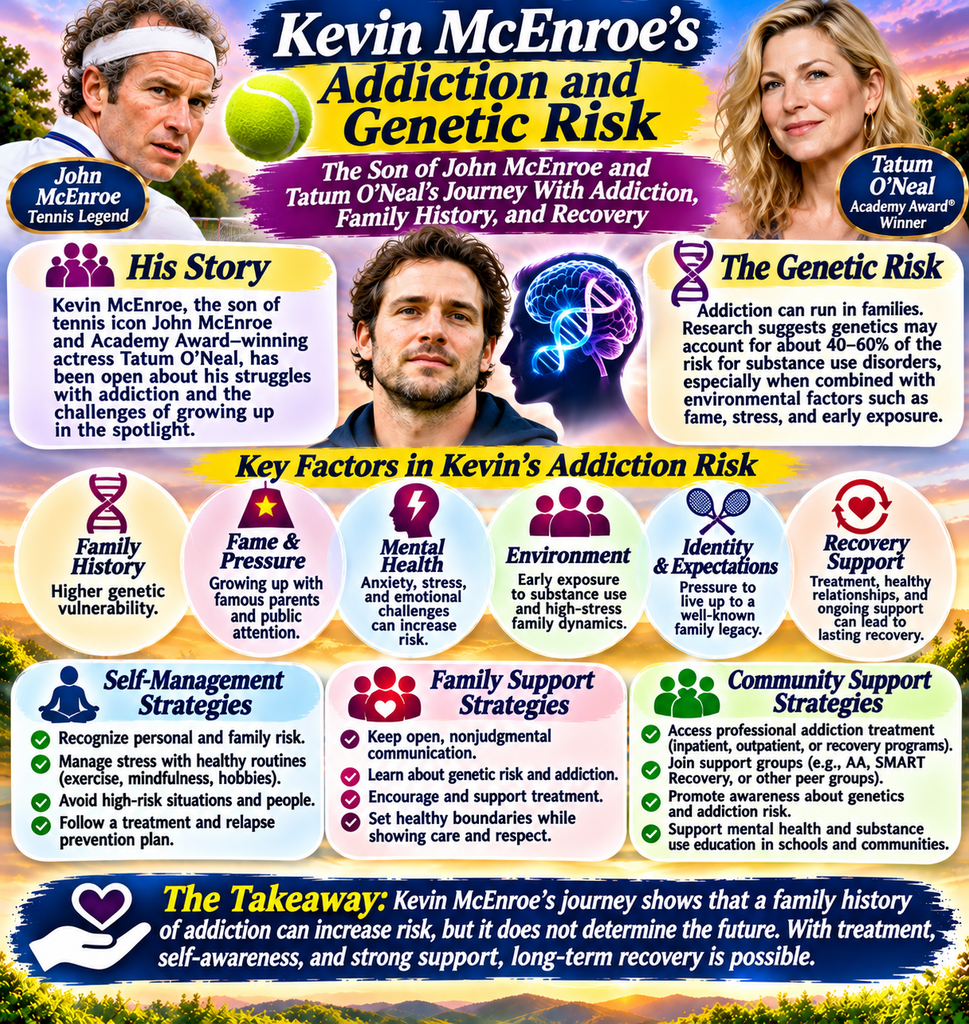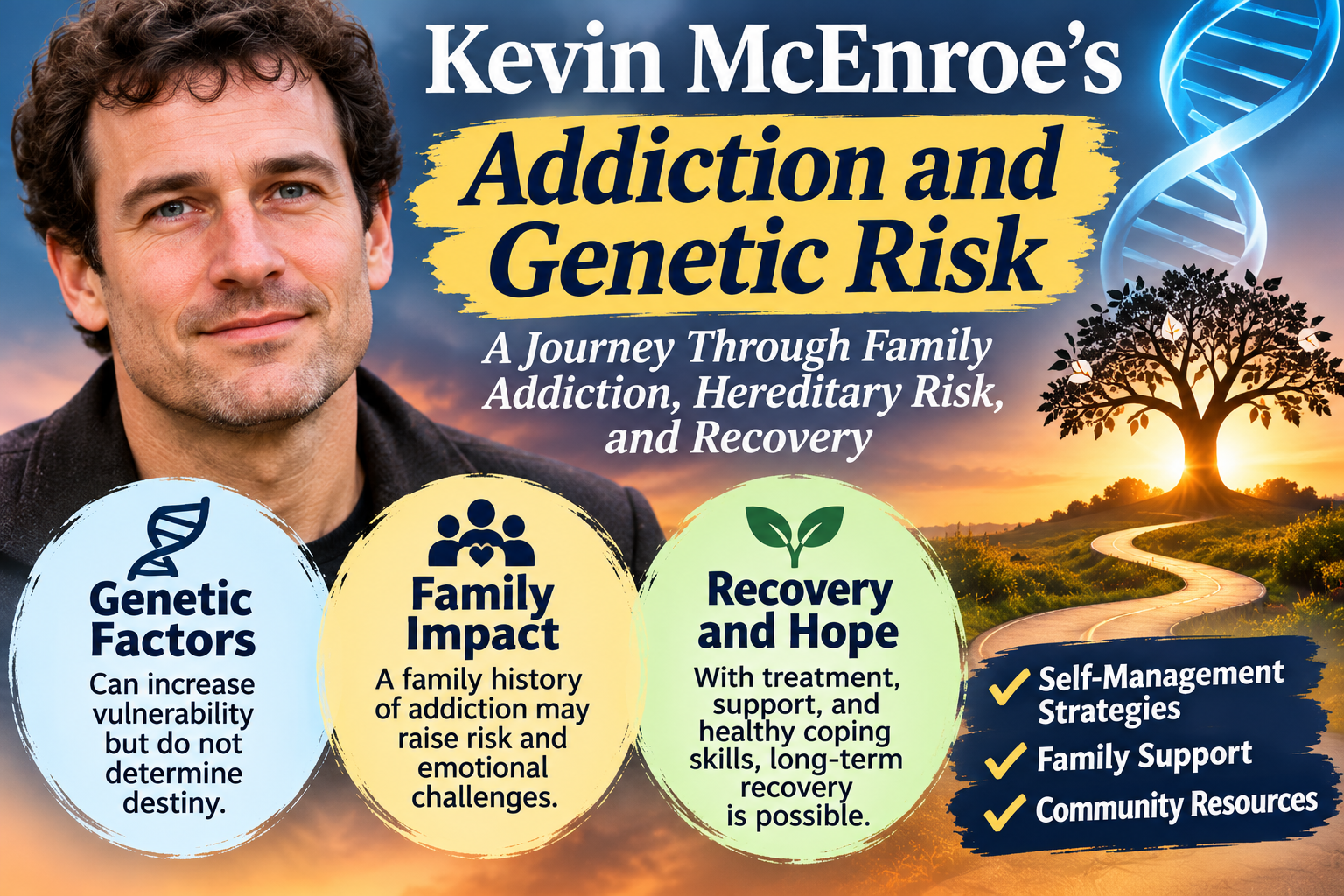
Addiction can affect multiple generations within a family, raising important questions about genetics, childhood experiences, emotional trauma, and environmental influences. Kevin McEnroe, the son of tennis legend John McEnroe and Academy Award-winning actress Tatum O’Neal, has openly discussed his struggles with alcohol, prescription medications, and heroin. Growing up surrounded by family addiction challenges, Kevin once feared that his genetic inheritance made substance dependence unavoidable. However, his journey through serious health complications, treatment, and sobriety demonstrates that genetic vulnerability does not determine a person’s future. By understanding Kevin McEnroe’s experiences, individuals and families can recognize hereditary addiction risks while exploring effective self-management, family support, and community-based strategies for long-term recovery.
Kevin McEnroe’s Early Life and Family History of Addiction
Kevin McEnroe grew up in a prominent family where professional success existed alongside significant personal challenges. His mother, Tatum O’Neal, publicly struggled with substance use, including heroin addiction. His maternal grandmother, actress Joanna Moore, also had a history of addiction.
Kevin has described feeling frightened and protective of his mother as a child. Following his parents’ separation in 1992, he experienced family instability and a difficult custody situation.
In interviews published in November 2026, Kevin explained that witnessing addiction across generations contributed to his belief that he was genetically destined to experience similar problems.
He expressed this fear by saying, “I thought our genes were cursed.” People.com+1
This statement reflects a common psychological challenge among individuals with a family history of addiction: the fear that hereditary risk makes recovery impossible.
However, addiction genetics are far more complex than a single inherited trait.
Kevin McEnroe’s Personal Struggles With Substance Use
Kevin has publicly described beginning to drink alcohol during high school and experimenting with prescription painkillers during college.
Over time, his substance use escalated to include alcohol, Xanax, and heroin.
Although he achieved professional success as a writer and published the novel Our Town, his addiction continued to interfere with his health and personal relationships.
In 2014, Kevin was arrested following a drug-related incident and subsequently entered treatment. He later experienced relapse, additional treatment attempts, and increasingly serious medical complications.
By 2019, his substance use had contributed to pancreatitis and severe liver failure. He spent approximately a month hospitalized before continuing treatment for addiction.
In November 2026 interviews, Kevin reported seven years of sobriety and described how writing, family relationships, and recovery community support helped transform his life. People.com+1
His experiences demonstrate that addiction can progress despite professional accomplishments, family resources, or previous treatment.
Understanding Genetic Factors in Addiction
Research indicates that genetic differences contribute substantially to an individual’s vulnerability to substance use disorders.
Twin, family, and adoption studies suggest that approximately 40–60% of the variation in addiction vulnerability across populations is attributable to genetic factors, although estimates differ by substance and study.
This does not mean that someone with a family history has a 40–60% chance of developing addiction. Heritability describes variation in risk across a population, not an individual’s predetermined outcome.
How genetics may influence addiction risk
- Brain reward pathways: Genetic differences can influence how individuals experience pleasure, reinforcement, and motivation.
- Dopamine signaling: Variations in neural signaling may affect reward processing and susceptibility to repeated substance use.
- Alcohol metabolism: Certain inherited enzyme variants influence how the body processes alcohol and can increase or decrease alcohol-related risk.
- Stress responses: Genetic differences may contribute to variations in emotional regulation and physiological responses to stress.
- Impulsivity and behavioral traits: Some inherited characteristics may influence risk-taking, sensation-seeking, or difficulty delaying gratification.
- Mental health vulnerability: Shared genetic factors can contribute to both psychiatric conditions and substance use disorders.
Addiction is polygenic, meaning many genetic variants contribute small effects rather than one gene determining the outcome.
Importantly, genetic testing cannot currently predict with clinical certainty whether a person will develop addiction.
The Relationship Between Genetics, Childhood Trauma, and Environment
Kevin McEnroe’s experiences illustrate how inherited vulnerability may interact with childhood stress and environmental exposures.
Growing up with a parent experiencing substance dependence can expose children to uncertainty, disrupted routines, emotional distress, and concerns about family safety.
These experiences may influence stress regulation, coping behaviors, and attitudes toward substance use.
However, children raised in families affected by addiction do not inevitably develop substance use disorders.
Environmental factors that may increase addiction risk
- Exposure to parental or household substance use.
- Adverse childhood experiences and unresolved trauma.
- Early initiation of alcohol or drug use.
- Untreated depression, anxiety, or other mental health conditions.
- Social environments where substance misuse is normalized.
- Chronic stress, family conflict, or emotional instability.
- Limited access to mental health services and supportive relationships.
Protective factors such as stable caregiving, supportive relationships, education, early intervention, and access to treatment can help reduce risk.
Genetics may influence vulnerability, but environmental experiences and protective behaviors also shape addiction outcomes.
A Turning Point: Severe Illness, Recovery, and Family Healing
One of the most significant turning points in Kevin McEnroe’s journey occurred when his substance use resulted in life-threatening liver complications.
His hospitalization emphasized the serious physical consequences of prolonged alcohol and drug misuse.
During his recovery, Kevin also faced another family crisis.
In 2020, his mother experienced an overdose followed by a stroke and coma. Kevin became involved in important medical decisions concerning her care.
Rather than allowing these experiences to reinforce hopelessness, Kevin described developing greater empathy for his mother and a stronger commitment to his own recovery.
His sister Emily’s sobriety also helped him recognize that meaningful change was possible within his family.
Kevin later began sharing his experiences through his writing and his newsletter, Serenity Side Down, using storytelling to explore addiction, family relationships, forgiveness, and personal growth. People.com+1
His journey demonstrates that recovery can involve more than physical abstinence. It may also include emotional healing, rebuilding trust, and developing a new sense of identity.
Self-Management Strategies: Breaking the Cycle of Generational Addiction
Individuals with a family history of addiction can take proactive steps to reduce risk and strengthen recovery.
Kevin McEnroe’s experience demonstrates how treatment, personal reflection, creative expression, and supportive relationships can help someone move beyond the belief that addiction is inevitable.
Practical self-management strategies
- Understand family history: Discuss known patterns of alcohol and drug problems with healthcare professionals to identify potential vulnerabilities.
- Avoid high-risk substance use: Consider abstaining from alcohol and nonmedical drug use, particularly when there is a strong family history of addiction.
- Seek early mental health support: Address anxiety, depression, trauma-related symptoms, and emotional distress before they become overwhelming.
- Develop healthy coping mechanisms: Practice exercise, mindfulness, journaling, meditation, and other stress-reduction activities.
- Use creative expression: Writing, music, painting, and storytelling can help individuals process difficult emotions.
- Participate in evidence-based treatment: Explore cognitive behavioral therapy, motivational interviewing, and appropriate addiction medications.
- Establish a relapse prevention plan: Recognize cravings, identify triggers, develop coping responses, and maintain access to professional support.
- Build a positive support network: Surround yourself with people who encourage healthy decisions and respect recovery goals.
- Monitor physical health: Attend medical appointments and follow treatment recommendations for addiction-related complications.
Individuals with alcohol or benzodiazepine dependence should not abruptly discontinue use without medical guidance because withdrawal can be dangerous. For opioid use disorder, medications such as buprenorphine or methadone can substantially reduce overdose risk.
Family Support Strategies: Preventing Addiction Across Generations
Family members play an important role in addiction prevention, treatment engagement, and long-term recovery.
Kevin McEnroe’s experiences with his mother and sister illustrate how family relationships can involve both emotional pain and meaningful opportunities for healing.
Families should understand that a history of addiction is a reason to increase awareness and protective support, not to assume that children will inevitably develop substance use disorders.
Effective family support strategies
- Discuss addiction openly: Provide age-appropriate education about substance use disorders and hereditary risk.
- Avoid shame and blame: Recognize addiction as a complex, treatable medical condition rather than a moral failure.
- Encourage early intervention: Seek professional guidance when substance use, behavioral changes, or emotional difficulties emerge.
- Create emotionally safe environments: Encourage family members to express concerns without fear of punishment or rejection.
- Establish healthy boundaries: Support recovery while avoiding behaviors that unintentionally sustain harmful substance use.
- Participate in family counseling: Address unresolved conflict, communication difficulties, and intergenerational stress.
- Model healthy coping behaviors: Demonstrate constructive ways to manage stress, disappointment, and emotional challenges.
- Celebrate recovery milestones: Recognize treatment participation, improved relationships, and personal accomplishments.
- Protect younger generations: Provide consistent caregiving, positive role models, and education about substance-related risks.
Family support does not mean controlling another person’s recovery. It means creating an environment where healthier decisions, professional treatment, and emotional healing are encouraged.
Community Support Strategies: Building Recovery Beyond the Family
Community resources provide essential assistance for individuals whose family histories include substance use disorders.
Kevin McEnroe has described finding support within the recovery community and using writing to share experiences that might help others feel less isolated.
His story demonstrates how social connection and meaningful activities can strengthen recovery.
Community-based recovery strategies
- Recovery support groups: Alcoholics Anonymous, Narcotics Anonymous, and SMART Recovery offer peer support and opportunities to develop coping skills.
- Family support programs: Al-Anon and SMART Recovery Family & Friends help loved ones understand addiction and establish healthier responses.
- Community mental health centers: Provide counseling, psychiatric evaluation, and treatment for co-occurring mental health conditions.
- Addiction treatment facilities: Offer outpatient services, residential treatment, withdrawal management, and medication-based treatment.
- Peer recovery coaching: Connect individuals with trained recovery supporters who can provide encouragement and practical guidance.
- Educational workshops: Teach families about addiction genetics, childhood adversity, relapse prevention, and overdose response.
- Youth prevention programs: Promote resilience, emotional regulation, and informed decision-making among adolescents.
- Creative recovery programs: Writing workshops, art therapy, and community storytelling projects may support emotional expression and connection.
- Recovery-friendly employment programs: Help individuals establish financial stability, meaningful routines, and long-term independence.
Community support can also help reduce stigma by reinforcing that addiction is a health condition deserving treatment, compassion, and understanding.
Can Genetic Testing Predict Addiction?
Genetic testing is an emerging area of addiction research, but current clinical applications remain limited.
Although researchers have identified genetic variants associated with substance use disorders, no genetic test can reliably determine whether an individual will develop addiction.
The National Institute on Alcohol Abuse and Alcoholism explains that alcohol use disorder risk involves many genes, each generally contributing a small effect, together with environmental influences. NIAAA+1
For individuals concerned about hereditary addiction, a detailed family history and clinical assessment are generally more useful than commercially marketed addiction-risk genetic tests.
Genetic testing should not replace professional evaluation or evidence-based treatment planning.
Important Lessons From Kevin McEnroe’s Recovery Journey
Kevin McEnroe’s experiences offer valuable insights into addiction, genetics, and family healing.
- Genetic vulnerability is not destiny: Having relatives with addiction increases risk but does not guarantee substance dependence.
- Childhood experiences matter: Family instability and exposure to substance use may influence emotional development and future risk.
- Addiction can affect multiple generations: Understanding family patterns can encourage prevention and early intervention.
- Recovery remains possible after serious complications: Appropriate medical care and ongoing treatment can help individuals rebuild their lives.
- Honest communication reduces isolation: Discussing addiction openly may help families overcome secrecy and stigma.
- Creative expression can support healing: Writing and storytelling can provide opportunities for emotional reflection.
- Family relationships can improve: Forgiveness, accountability, and consistent recovery efforts can help rebuild trust.
- Community support strengthens resilience: Positive relationships and recovery resources can help sustain long-term progress.
Resources for Addiction Prevention and Recovery
| Organization | Services |
|---|---|
| SAMHSA National Helpline | Confidential treatment information and referrals: 1-800-662-HELP (4357) |
| FindTreatment.gov | Locate addiction and mental health treatment services |
| National Institute on Alcohol Abuse and Alcoholism | Research and education about alcohol addiction and genetic risk |
| National Institute on Drug Abuse | Scientific information about addiction, prevention, and treatment |
| SMART Recovery | Recovery meetings and family support |
| Al-Anon Family Groups | Support for loved ones affected by alcohol addiction |
Conclusion: Genetics May Influence Addiction Risk, but Recovery Can Change the Future
Kevin McEnroe’s addiction and recovery journey demonstrates how genetic vulnerability, childhood experiences, and family substance use patterns can influence the development of addiction. Growing up in a family affected by substance dependence, Kevin once believed his inherited risk made addiction unavoidable. However, his experiences with serious health complications, professional treatment, family reconciliation, and recovery support challenged that belief. His story reinforces the importance of understanding hereditary addiction risk without allowing it to define personal identity or future possibilities. Through self-management, compassionate family relationships, early intervention, and accessible community resources, individuals can reduce addiction-related risks and build healthier lives. Genetics may influence vulnerability, but they do not determine destiny. With appropriate treatment, support, and perseverance, individuals and families can break harmful cycles and create a healthier future for the next generation.
Frequently Asked Questions and Answers
Understanding Kevin McEnroe’s Addiction Journey
1. Who is Kevin McEnroe, and why is his addiction story significant?
Kevin McEnroe is an American author and the son of tennis legend John McEnroe and actress Tatum O’Neal. He has publicly discussed his struggles with substance use and the challenges of growing up in a family affected by addiction. His story highlights how hereditary vulnerability, emotional experiences, and environmental influences can contribute to addiction risk without determining an individual’s future.
2. What substances did Kevin McEnroe struggle with?
Kevin McEnroe has publicly described struggles involving alcohol, prescription medications, and heroin. His substance use eventually contributed to serious health complications and the need for addiction treatment. His experiences illustrate how substance dependence can progressively affect physical health, emotional well-being, and personal relationships.
3. Does Kevin McEnroe have a family history of addiction?
Yes. His mother, Tatum O’Neal, has publicly discussed her struggles with substance use, including heroin addiction. His maternal grandmother, actress Joanna Moore, also experienced substance-related problems. This family history raised concerns for Kevin about whether he might inherit a vulnerability to addiction.
4. Did Kevin McEnroe believe he was genetically destined to develop addiction?
Kevin has described fearing that addiction was an unavoidable part of his family inheritance. However, genetic vulnerability does not mean someone will inevitably develop a substance use disorder. His recovery demonstrates that family history does not eliminate the possibility of meaningful behavioral change.
5. What health complications did Kevin McEnroe experience?
Kevin has discussed serious medical complications associated with his substance use, including pancreatitis and liver problems. These conditions can become life-threatening and require specialized medical treatment. His experiences emphasize the importance of early intervention, appropriate medical care, and ongoing recovery support.
6. What helped Kevin McEnroe pursue recovery?
Kevin has discussed the importance of treatment, personal reflection, family relationships, and recovery support. Writing and creative expression have also provided meaningful opportunities to process difficult experiences. His journey illustrates how recovery may involve rebuilding physical health, emotional stability, and personal identity.
Genetic Addiction Risk: Frequently Asked Questions
7. Is addiction hereditary?
Yes, genetics contribute significantly to addiction vulnerability. Research estimates that genetic differences account for approximately 40–60% of the variation in addiction risk across populations, depending on the substance and study.
However, this does not mean that someone with a family history has a 40–60% probability of developing addiction. Environmental influences, mental health, stress, and substance exposure also play important roles. NIAAA+1
8. Can addiction be passed from parents to children?
Parents can pass along genetic variants associated with increased vulnerability to substance use disorders. Children may also be influenced by shared environments, family stress, and exposure to substance use.
However, addiction does not follow a simple inheritance pattern. Many children with addicted parents never develop substance use disorders. MedlinePlus
9. Is there a specific gene responsible for addiction?
No. Researchers have identified numerous genetic variants associated with addiction vulnerability, but no single gene determines whether someone will develop a substance use disorder.
Addiction is considered a polygenic condition, meaning multiple genes contribute to risk alongside environmental factors.
10. How do genetic factors influence the brain’s response to drugs and alcohol?
Genetic differences may influence dopamine signaling, reward sensitivity, stress responses, impulse control, and how the body metabolizes substances.
These biological differences can affect how rewarding a substance feels and how susceptible an individual may be to repeated use or dependence.
11. Can genetic testing predict whether someone will become addicted?
Not reliably. Current genetic testing cannot accurately determine whether an individual will develop addiction.
The Substance Abuse and Mental Health Services Administration (SAMHSA) cautions that genetic risk tests have important limitations and should not replace comprehensive clinical assessments. SAMHSA
12. Does having a family history of addiction mean recovery is more difficult?
Not necessarily. Family history may increase vulnerability, but it does not determine treatment outcomes.
Recovery depends on numerous factors, including the type and severity of substance use, access to treatment, co-occurring mental health conditions, social support, and individual circumstances.
Self-Management and Addiction Prevention
13. How can individuals with a family history of addiction reduce their risk?
Individuals can take preventive steps to reduce substance-related risks:
- Learn about their family history of addiction.
- Avoid nonmedical drug use and consider avoiding alcohol.
- Seek early treatment for mental health concerns.
- Develop healthy coping mechanisms for stress.
- Maintain supportive relationships.
- Discuss medication risks with healthcare professionals.
- Seek professional assessment if substance use becomes difficult to control.
14. What role does mental health play in genetic addiction vulnerability?
Mental health conditions such as depression, anxiety, and post-traumatic stress disorder can increase susceptibility to problematic substance use.
Some genetic factors may contribute to both mental health conditions and substance use disorders. Environmental stressors and traumatic experiences may further increase vulnerability.
Treating co-occurring conditions can improve overall recovery outcomes.
15. Can writing and creative expression support addiction recovery?
Yes. Writing, journaling, and creative activities may help individuals process emotions, understand personal experiences, and develop healthier coping strategies.
In a November 2026 interview, Kevin McEnroe described writing about addiction and family experiences through his newsletter Serenity Side Down. He credited writing and his recovery community with helping him develop a healthier sense of identity. People.com
Creative expression can complement, but should not replace, appropriate addiction treatment.
16. What are effective self-management strategies for long-term recovery?
Effective strategies include recognizing triggers, participating in counseling, maintaining healthy routines, and developing a relapse prevention plan.
Individuals may also benefit from peer recovery meetings, exercise, mindfulness, and medications for substance use disorders when clinically indicated.
Family Support and Generational Healing
17. How can families prevent addiction from affecting future generations?
Families can reduce risk by creating stable environments, communicating openly about substance use, and teaching children healthy emotional coping skills.
Early intervention for mental health problems and substance misuse is particularly important.
18. How can parents discuss hereditary addiction risk with their children?
Parents should use age-appropriate language and explain that having relatives with addiction may increase vulnerability without making addiction inevitable.
Conversations should emphasize healthy decisions, emotional well-being, and seeking help when needed.
19. How did Kevin McEnroe’s family influence his recovery?
Kevin has described his sister Emily’s sobriety as an important source of hope. Seeing a family member make positive changes helped him recognize that recovery was possible.
He has also discussed developing greater understanding and compassion for his mother through their experiences with addiction and recovery. People.com
20. How can families support someone recovering from addiction?
Families can encourage recovery through practical and emotional support:
- Communicate without judgment or blame.
- Encourage professional treatment.
- Establish healthy boundaries.
- Participate in family counseling.
- Recognize progress and recovery milestones.
- Avoid providing money that supports harmful substance use.
- Seek support for their own emotional well-being.
Community Resources and Recovery Support
21. What community resources can help families affected by hereditary addiction?
Community resources include addiction treatment centers, mental health clinics, family counseling programs, peer recovery organizations, and prevention services.
Organizations such as Alcoholics Anonymous, Narcotics Anonymous, SMART Recovery, and Al-Anon offer additional support.
22. What treatments are available for people with genetic vulnerability to addiction?
Treatment should be based on clinical needs rather than genetic risk alone.
Evidence-based approaches may include cognitive behavioral therapy, motivational interviewing, contingency management, and medication.
For opioid use disorder, buprenorphine and methadone are effective treatment options. For alcohol use disorder, medications such as naltrexone and acamprosate may be appropriate. NIAAA
23. Can someone overcome addiction after experiencing serious medical complications?
Yes. Individuals can achieve meaningful recovery even after severe substance-related medical complications.
Kevin McEnroe’s experience with liver failure, hospitalization, rehabilitation, and subsequent sobriety demonstrates that significant health crises do not necessarily eliminate the possibility of recovery. However, permanent organ damage may remain, making continued medical monitoring essential. People.com
24. What is the most important lesson from Kevin McEnroe’s addiction and genetic risk journey?
The most important lesson is that genetic vulnerability does not determine destiny.
Kevin’s experiences demonstrate how family history, emotional stress, and environmental influences can contribute to addiction risk, while professional treatment, supportive relationships, and personal commitment can help individuals build healthier futures.
Video: