Societal expectations surrounding femininity can influence emotional well-being, relationships, self-esteem, and substance use behaviors. The term toxic femininity is sometimes used to describe harmful gender-related expectations or behaviors, such as excessive people-pleasing, emotional suppression, manipulation, unhealthy dependence, and pressure to maintain a perfect appearance. Although these behaviors are not exclusive to women and the term is not a clinical diagnosis, rigid gender expectations can contribute to emotional distress and unhealthy coping mechanisms. Some individuals may turn to alcohol, prescription medications, or illicit drugs to manage anxiety, depression, relationship conflict, or feelings of inadequacy. Understanding the relationship between harmful gender expectations and substance abuse can help individuals recognize emotional triggers, establish healthier boundaries, and seek appropriate treatment. This article explores the psychological and social factors that may contribute to substance use disorders and provides practical self-management, family support, and community-based strategies for recovery.
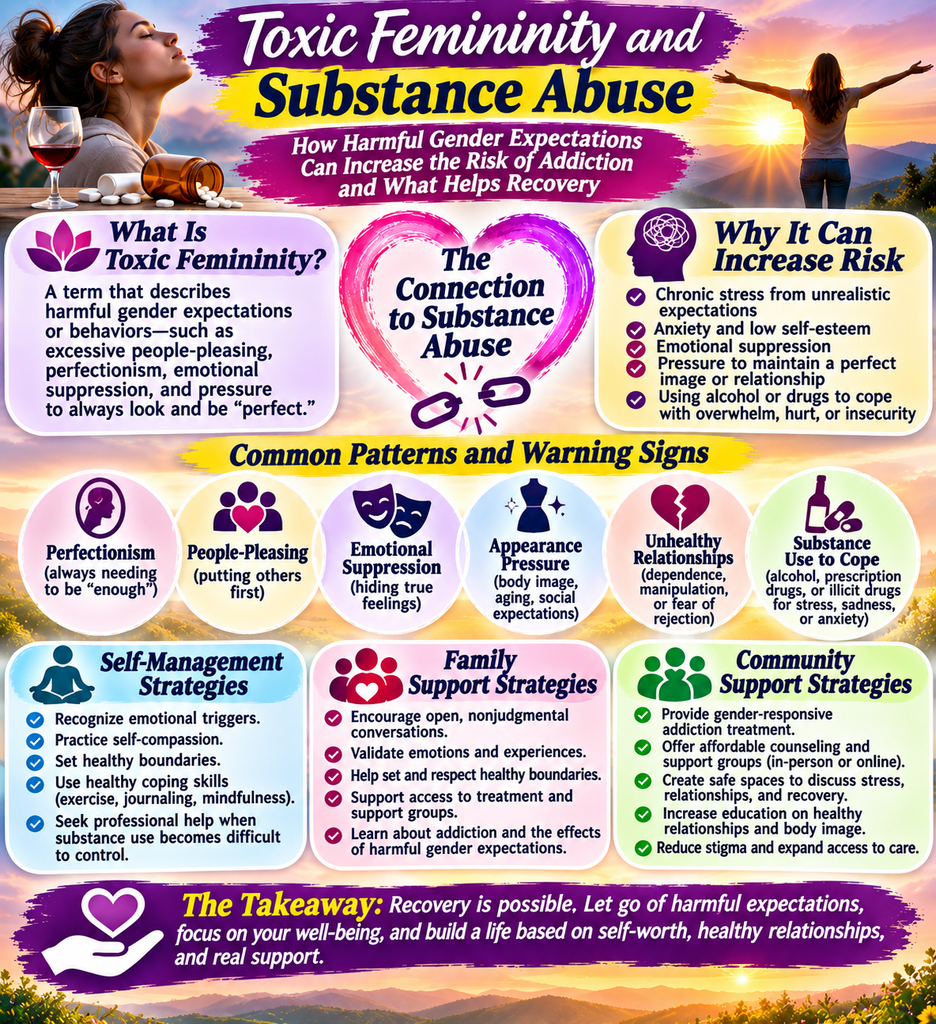
What Is Toxic Femininity?
Toxic femininity is a loosely defined social term describing harmful behaviors or expectations associated with traditional ideas about femininity.
Unlike substance use disorder, depression, or anxiety, toxic femininity is not a recognized psychiatric diagnosis. The term is also debated because it can reinforce gender stereotypes or unfairly label behaviors that occur across all genders.
A more clinically useful approach is to examine specific patterns, including emotional suppression, perfectionism, excessive caregiving, unhealthy relationship dynamics, and difficulties establishing boundaries.
These patterns may contribute to psychological distress when individuals feel pressured to prioritize others’ expectations over their own emotional needs.
Common patterns associated with harmful gender expectations
- Excessive people-pleasing: Prioritizing others’ needs while neglecting personal well-being.
- Perfectionism: Feeling pressured to maintain an ideal appearance, career, family, or relationship.
- Emotional suppression: Hiding anger, sadness, or frustration to appear agreeable.
- Unhealthy dependence: Relying excessively on external approval for self-worth.
- Indirect communication: Avoiding direct discussions of needs or conflict because of fear of rejection.
- Appearance-related pressure: Experiencing anxiety about body image, aging, or social expectations.
- Overidentification with caregiving: Feeling responsible for everyone else’s happiness or emotional stability.
- Relationship insecurity: Experiencing intense fear of abandonment or rejection.
These patterns do not automatically indicate psychological dysfunction or addiction. Their effects depend on severity, context, individual vulnerabilities, and available support.
Understanding the Connection Between Harmful Gender Expectations and Substance Abuse
Substance use disorders develop through complex interactions among biological, psychological, social, and environmental factors.
Rigid gender expectations may contribute to chronic stress, low self-esteem, and difficulties expressing emotions.
Some individuals use alcohol, sedatives, or other substances to temporarily relieve distress or cope with overwhelming responsibilities.
This pattern is sometimes described as self-medication.
Although substance use may provide temporary relief, repeated use can increase tolerance, dependence, and the risk of developing a substance use disorder.
Factors that may contribute to substance misuse
- Chronic stress from caregiving or relationship responsibilities.
- Anxiety associated with perfectionism and fear of failure.
- Depression related to emotional suppression or isolation.
- Unresolved childhood trauma or relationship abuse.
- Social pressure to maintain unrealistic beauty standards.
- Difficulty establishing healthy personal boundaries.
- Relationship conflict and emotional insecurity.
- Limited access to mental health treatment.
- Social environments where heavy drinking is normalized.
Importantly, these factors increase vulnerability in some individuals but do not establish a direct causal relationship between femininity and addiction.
The Role of Emotional Suppression in Addiction
Emotional suppression occurs when individuals repeatedly hide or avoid expressing their feelings.
Some women may feel pressured to remain nurturing, agreeable, and emotionally available even when experiencing significant distress.
Over time, suppressing difficult emotions may contribute to anxiety, resentment, emotional exhaustion, and unhealthy coping patterns.
For example, someone who feels unable to express anger in a relationship may use alcohol to relax or temporarily escape emotional discomfort.
Potential consequences of emotional suppression
- Increased psychological distress.
- Difficulty identifying and communicating personal needs.
- Emotional exhaustion and burnout.
- Increased reliance on avoidance-based coping.
- Relationship dissatisfaction.
- Reduced willingness to seek professional support.
Learning healthy emotional regulation skills can reduce distress and support recovery.
Perfectionism, Body Image, and Substance Use
Unrealistic expectations regarding appearance, career success, parenting, and relationships can contribute to chronic stress.
Social media may intensify these pressures by encouraging comparisons with idealized lifestyles and physical appearances.
Some individuals may misuse alcohol, stimulants, or prescription medications to manage stress, control weight, or cope with feelings of inadequacy.
Body image dissatisfaction can also coexist with eating disorders, depression, anxiety, and substance use disorders.
Warning signs of unhealthy perfectionism
- Persistent fear of criticism or failure.
- Excessive concern about appearance.
- Difficulty accepting mistakes.
- Overworking despite exhaustion.
- Avoiding social situations because of insecurity.
- Using substances to cope with stress or emotional discomfort.
- Feeling personally inadequate despite meaningful accomplishments.
Professional evaluation may be appropriate when these patterns interfere with daily functioning or contribute to substance misuse.
Unhealthy Relationships and Addiction Risk
Relationship dynamics can influence emotional health and substance use behaviors.
Individuals experiencing controlling relationships, emotional manipulation, or intimate partner violence may develop anxiety, depression, or trauma-related symptoms.
Some may use substances to manage emotional distress or feelings of helplessness.
However, abusive behavior should not be attributed to femininity itself. Manipulation, coercion, and emotional abuse can occur among people of any gender.
Relationship warning signs
- Repeated emotional manipulation or intimidation.
- Pressure to use alcohol or drugs.
- Isolation from supportive friends or relatives.
- Excessive monitoring or controlling behavior.
- Fear of expressing personal opinions.
- Financial control or dependence.
- Repeated violations of personal boundaries.
Individuals experiencing abuse may benefit from trauma-informed counseling, safety planning, and confidential support services.
Self-Management Strategies: Building Emotional Strength and Preventing Substance Misuse
Self-management involves developing healthier ways to manage emotions, establish boundaries, and respond to stressful situations.
For individuals struggling with harmful gender expectations and substance use, treatment should address both addiction-related behaviors and underlying psychological distress.
Effective self-management strategies
- Recognize emotional triggers: Identify situations involving rejection, criticism, relationship conflict, or overwhelming responsibilities.
- Practice assertive communication: Express personal needs and concerns respectfully without excessive guilt.
- Establish healthy boundaries: Learn to decline unreasonable requests and protect emotional well-being.
- Challenge perfectionistic thinking: Replace unrealistic expectations with achievable goals and self-compassion.
- Develop healthy coping mechanisms: Practice exercise, mindfulness, journaling, relaxation, or creative activities.
- Seek professional counseling: Consider cognitive behavioral therapy, dialectical behavior therapy, or trauma-focused treatment when clinically appropriate.
- Address substance use early: Consult an addiction specialist if alcohol or drug use becomes difficult to control.
- Strengthen self-esteem: Focus on personal values, abilities, and accomplishments rather than external approval.
- Create a relapse prevention plan: Identify warning signs, supportive contacts, and strategies for managing cravings.
- Build supportive relationships: Connect with people who respect personal boundaries and encourage healthy decisions.
For individuals with significant alcohol or benzodiazepine dependence, abruptly stopping use can cause dangerous withdrawal symptoms and may require medical supervision.
Family Support Strategies: Encouraging Healthy Relationships and Recovery
Families can influence emotional development, self-esteem, and attitudes toward substance use.
Supportive family environments encourage open communication, emotional expression, and healthy boundaries.
When addiction is present, family members may experience guilt, frustration, fear, or uncertainty about how to help.
Practical family support strategies
- Encourage emotional honesty: Create opportunities for family members to discuss difficult feelings without judgment.
- Avoid reinforcing harmful stereotypes: Do not pressure women or girls to remain agreeable, attractive, or self-sacrificing at the expense of their well-being.
- Promote healthy boundaries: Respect individual needs, privacy, and personal independence.
- Recognize substance use warning signs: Notice escalating alcohol use, medication misuse, or significant behavioral changes.
- Encourage professional treatment: Help loved ones access addiction and mental health services.
- Practice supportive communication: Express concern without criticism, threats, or shame.
- Participate in family counseling: Address conflict, communication difficulties, and unhealthy relationship patterns.
- Model healthy coping behaviors: Demonstrate constructive responses to stress and emotional challenges.
- Support recovery milestones: Recognize treatment engagement and positive behavioral changes.
- Protect caregiver well-being: Encourage family members to maintain their own support networks and emotional health.
Families should remember that recovery is an individual process. Compassionate support can encourage treatment engagement, but it cannot guarantee another person’s recovery.
Community Support Strategies: Addressing Gender Expectations and Addiction Stigma
Community organizations can help reduce substance use risks by promoting mental health education, supportive relationships, and accessible treatment.
Programs addressing harmful gender expectations should avoid stereotyping women and instead focus on emotional health, healthy relationships, trauma prevention, and individual empowerment.
Community-based strategies
- Expand gender-responsive addiction treatment: Provide services that address trauma, caregiving responsibilities, and other relevant barriers.
- Offer affordable counseling: Increase access to sliding-scale mental health and addiction treatment.
- Develop peer support groups: Create safe environments for discussing emotional stress, relationship difficulties, and recovery.
- Provide childcare assistance: Reduce barriers for parents attending treatment or counseling.
- Promote healthy relationship education: Teach communication skills, consent, boundaries, and how to recognize abuse.
- Support trauma-informed services: Train professionals to recognize the effects of adverse experiences and interpersonal violence.
- Address body image pressures: Develop educational programs promoting realistic expectations and positive self-image.
- Encourage community advocacy: Reduce stigma surrounding women’s mental health and substance use disorders.
- Improve treatment referrals: Connect individuals with addiction specialists, mental health professionals, and social services.
- Create inclusive recovery programs: Recognize differences in culture, socioeconomic circumstances, identity, and personal experiences.
Community programs should focus on measurable needs and evidence-based interventions rather than assuming that particular personality traits cause addiction.
The Importance of Gender-Responsive Addiction Treatment
Gender-responsive treatment recognizes that individuals may face different social, psychological, and practical barriers when seeking addiction care.
For some women, treatment challenges may include caregiving responsibilities, pregnancy-related concerns, intimate partner violence, trauma histories, or fear of losing child custody.
Effective programs address these barriers while respecting individual circumstances.
Components of comprehensive gender-responsive care
- Screening for substance use and co-occurring mental health conditions.
- Trauma-informed counseling.
- Evidence-based behavioral therapies.
- Medication treatment when clinically appropriate.
- Reproductive and general healthcare services.
- Family counseling and parenting support.
- Assistance with childcare, housing, and transportation.
- Peer recovery services.
- Relapse prevention planning.
- Long-term recovery follow-up.
Treatment should remain individualized rather than relying on assumptions about gender roles.
Breaking the Cycle of Shame and Substance Abuse
Shame can discourage individuals from acknowledging substance-related problems or seeking professional assistance.
People experiencing addiction may fear being judged as irresponsible parents, inadequate partners, or unsuccessful professionals.
These concerns can be especially difficult when social expectations emphasize perfection, emotional control, and caregiving.
Reducing shame requires compassionate communication, accurate addiction education, and supportive treatment environments.
Recovery programs can help individuals separate their personal worth from their substance use history while encouraging responsibility for behavioral change.
Important Lessons About Harmful Gender Expectations and Addiction
Understanding the relationship between gender expectations and substance use offers several important lessons:
- Addiction is multifactorial: Genetics, mental health, trauma, substance exposure, and environmental influences contribute to risk.
- Gender expectations can influence emotional health: Rigid social roles may contribute to stress and unhealthy coping behaviors.
- Emotional suppression can become harmful: Healthy communication and emotional regulation are important protective skills.
- Perfectionism may increase distress: Unrealistic expectations can contribute to anxiety and avoidance-based coping.
- Healthy boundaries support recovery: Assertiveness and personal independence can improve emotional well-being.
- Family relationships matter: Supportive communication and appropriate boundaries may strengthen engagement in treatment.
- Community resources reduce barriers: Affordable, trauma-informed services improve access to care.
- Recovery is possible: Evidence-based treatment and sustained support can help individuals rebuild healthier lives.
Resources for Addiction, Mental Health, and Relationship Support
| Organization | Available services |
|---|---|
| SAMHSA | Substance use treatment information and recovery resources |
| FindTreatment.gov | Locate addiction and mental health treatment providers |
| National Institute of Mental Health | Mental health education and research |
| National Domestic Violence Hotline | Confidential support for relationship abuse and safety planning |
| SMART Recovery | Recovery meetings and family support |
| National Institute on Alcohol Abuse and Alcoholism | Alcohol use disorder education and treatment information |
Conclusion: Breaking Harmful Expectations and Building Healthier Recovery Pathways
The relationship between toxic femininity and substance abuse is best understood through the effects of rigid gender expectations, emotional suppression, perfectionism, unhealthy relationship dynamics, and chronic stress. Although the term toxic femininity is not a clinical diagnosis and should not be used to stereotype women, examining harmful behavioral patterns can help individuals identify emotional vulnerabilities and develop healthier coping strategies. Through self-management, compassionate family involvement, professional addiction treatment, and supportive community resources, individuals can strengthen emotional resilience, establish healthy boundaries, and reduce reliance on substances. Recovery begins with recognizing that personal worth is not determined by perfection, approval, or traditional gender expectations. With appropriate treatment, self-awareness, and meaningful support, individuals can build healthier relationships and a more fulfilling life free from substance dependence.
Frequently Asked Questions and Answers
Understanding Toxic Femininity and Substance Abuse
1. What is toxic femininity?
Toxic femininity is a nonclinical term sometimes used to describe harmful expectations or behaviors associated with traditional ideas about femininity. Examples include excessive self-sacrifice, pressure to appear perfect, emotional suppression, and dependence on external approval. These patterns are not exclusive to women, and the term should not be used to stereotype or diagnose individuals.
2. How is toxic femininity connected to substance abuse?
Harmful gender expectations may contribute to emotional distress, low self-esteem, relationship conflict, and chronic stress. Some individuals use alcohol, prescription medications, or illicit drugs to temporarily manage these feelings. Repeated substance use as a coping mechanism can increase the risk of developing a substance use disorder. However, there is no established direct causal relationship between toxic femininity and addiction.
3. Can excessive people-pleasing increase addiction risk?
Excessive people-pleasing may contribute to emotional exhaustion, anxiety, and difficulty establishing healthy boundaries. Individuals who consistently prioritize others’ needs may neglect their own mental health. When substances become a primary method of coping with distress, addiction risk may increase.
4. Does perfectionism contribute to substance use disorders?
Perfectionism can create persistent pressure to meet unrealistic expectations regarding appearance, relationships, parenting, or professional success. Some individuals may use substances to cope with anxiety, fear of failure, or emotional exhaustion. However, perfectionism alone does not cause addiction.
5. How does emotional suppression influence substance misuse?
Emotional suppression involves repeatedly hiding or avoiding difficult feelings such as sadness, anger, or frustration. When individuals lack healthy coping strategies, they may turn to substances for temporary relief. Learning emotional regulation and communication skills can reduce reliance on avoidance-based coping behaviors.
Psychological and Emotional Risk Factors
6. Can low self-esteem contribute to addiction?
Low self-esteem may increase vulnerability to substance misuse when individuals use alcohol or drugs to manage insecurity, social anxiety, or feelings of inadequacy. Counseling, supportive relationships, and self-compassion can help strengthen emotional well-being.
7. How do unhealthy relationships influence substance abuse?
Controlling relationships, emotional manipulation, coercion, and interpersonal violence can contribute to psychological distress. Some individuals may use substances to cope with fear, anxiety, or trauma-related symptoms. These relationship patterns can affect people of any gender and should not be attributed to femininity itself.
8. Can body image pressure increase substance misuse?
Yes. Persistent dissatisfaction with appearance may contribute to anxiety, depression, disordered eating, or unhealthy coping behaviors. Some individuals misuse stimulants, alcohol, or prescription medications in response to appearance-related pressures. Professional assessment may be necessary when body image concerns interfere with daily functioning.
9. What role does childhood trauma play in addiction vulnerability?
Adverse childhood experiences, including abuse, neglect, household substance use, and family instability, can increase vulnerability to substance use disorders. Trauma may affect emotional regulation, stress responses, and coping behaviors. However, experiencing childhood adversity does not mean someone will inevitably develop addiction.
10. Can social media contribute to emotional distress and substance use?
Social media may intensify unrealistic expectations about appearance, relationships, and lifestyle. Frequent social comparison can contribute to body dissatisfaction and emotional distress in some individuals. However, the relationship between social media use and substance misuse is complex and influenced by multiple factors.
Self-Management Strategies for Recovery
11. How can individuals overcome harmful gender expectations?
Individuals can begin by identifying unrealistic expectations and developing healthier emotional and behavioral patterns.
- Recognize excessive people-pleasing and perfectionism.
- Practice assertive communication.
- Establish personal boundaries.
- Challenge negative self-talk.
- Develop realistic goals.
- Seek counseling when emotional distress becomes overwhelming.
12. What coping strategies can reduce substance use risk?
Healthy coping strategies include exercise, mindfulness, journaling, relaxation techniques, creative activities, and supportive social relationships. Individuals should also identify substance use triggers and develop alternative responses to stressful situations.
13. Can therapy help individuals struggling with perfectionism and addiction?
Yes. Cognitive behavioral therapy can help individuals recognize unhelpful thought patterns and develop healthier coping behaviors. Dialectical behavior therapy skills may improve emotional regulation and distress tolerance. Treatment should also address substance use directly when a substance use disorder is present.
14. How can individuals establish healthier boundaries?
Healthy boundaries involve communicating personal needs, declining unreasonable requests, and protecting emotional well-being. Individuals can practice saying no without excessive guilt, limiting exposure to harmful relationships, and seeking support when boundaries are repeatedly violated.
15. What are warning signs that someone may be using substances to cope with emotional distress?
Potential warning signs include:
- Increasing alcohol or drug use during stressful periods.
- Using substances to manage sadness, anxiety, or anger.
- Difficulty relaxing without alcohol or medication.
- Concealing substance use from loved ones.
- Neglecting responsibilities because of substance use.
- Experiencing cravings or withdrawal symptoms.
- Continuing substance use despite negative consequences.
These signs warrant further assessment but do not establish a diagnosis on their own.
Family Support Strategies
16. How can families support someone struggling with substance misuse and emotional pressure?
Families can provide encouragement, listen without judgment, and help loved ones access professional treatment. Supportive communication and respect for personal boundaries can strengthen engagement in recovery.
17. How can parents prevent harmful gender expectations from affecting children?
Parents can encourage emotional expression, independence, healthy relationships, and realistic expectations. Children should learn that their worth is not determined by appearance, perfection, or constantly meeting others’ needs.
18. Can family counseling help address unhealthy relationship patterns?
Yes. Family counseling may improve communication, clarify boundaries, and address recurring conflicts. However, when coercive control or intimate partner violence is present, individual safety planning and specialized services may be more appropriate than joint counseling.
19. What is the difference between supporting and enabling someone with addiction?
Supporting someone involves encouraging treatment, providing emotional reassurance, and promoting accountability. Enabling refers to behaviors that unintentionally make harmful substance use easier, such as repeatedly providing money for drugs or concealing dangerous behavior.
Families should focus on safety, compassionate communication, and appropriate boundaries.
20. How can families help reduce shame surrounding addiction?
Families can use respectful language, avoid moral judgments, and recognize addiction as a treatable health condition. Encouraging professional care and acknowledging recovery progress can help reduce stigma and emotional isolation.
Community Support and Addiction Treatment
21. What community resources can help individuals experiencing addiction and emotional distress?
Helpful resources include community mental health centers, addiction treatment programs, peer recovery groups, trauma-informed counseling services, and family support organizations.
Programs should address individual needs rather than assume that gender-related expectations affect everyone in the same way.
22. What is gender-responsive addiction treatment?
Gender-responsive addiction treatment considers how social roles, trauma, caregiving responsibilities, discrimination, and healthcare barriers may influence treatment needs. Services may include counseling, medication, childcare assistance, reproductive healthcare, and family support.
23. Can support groups help individuals develop healthier relationships?
Yes. Support groups may provide opportunities to discuss emotional challenges, learn coping strategies, and build supportive relationships. Groups such as SMART Recovery, Alcoholics Anonymous, and other peer recovery organizations can complement professional treatment.
24. How can communities reduce addiction stigma associated with gender expectations?
Communities can promote accurate addiction education, encourage respectful communication, expand affordable treatment, and challenge stereotypes about gender and substance use. Public awareness campaigns should emphasize individual experiences rather than labeling women or men according to rigid behavioral expectations.
25. Where can individuals find addiction and mental health support?
Several organizations provide information and assistance:
| Organization | Available support |
|---|---|
| SAMHSA | Addiction treatment information and recovery resources |
| FindTreatment.gov | Substance use and mental health treatment referrals |
| SMART Recovery | Peer recovery meetings and family support |
| National Institute of Mental Health | Mental health education |
| National Domestic Violence Hotline | Confidential relationship abuse support and safety planning |
| 988 Suicide & Crisis Lifeline | Crisis support by calling or texting 988 |
Video: