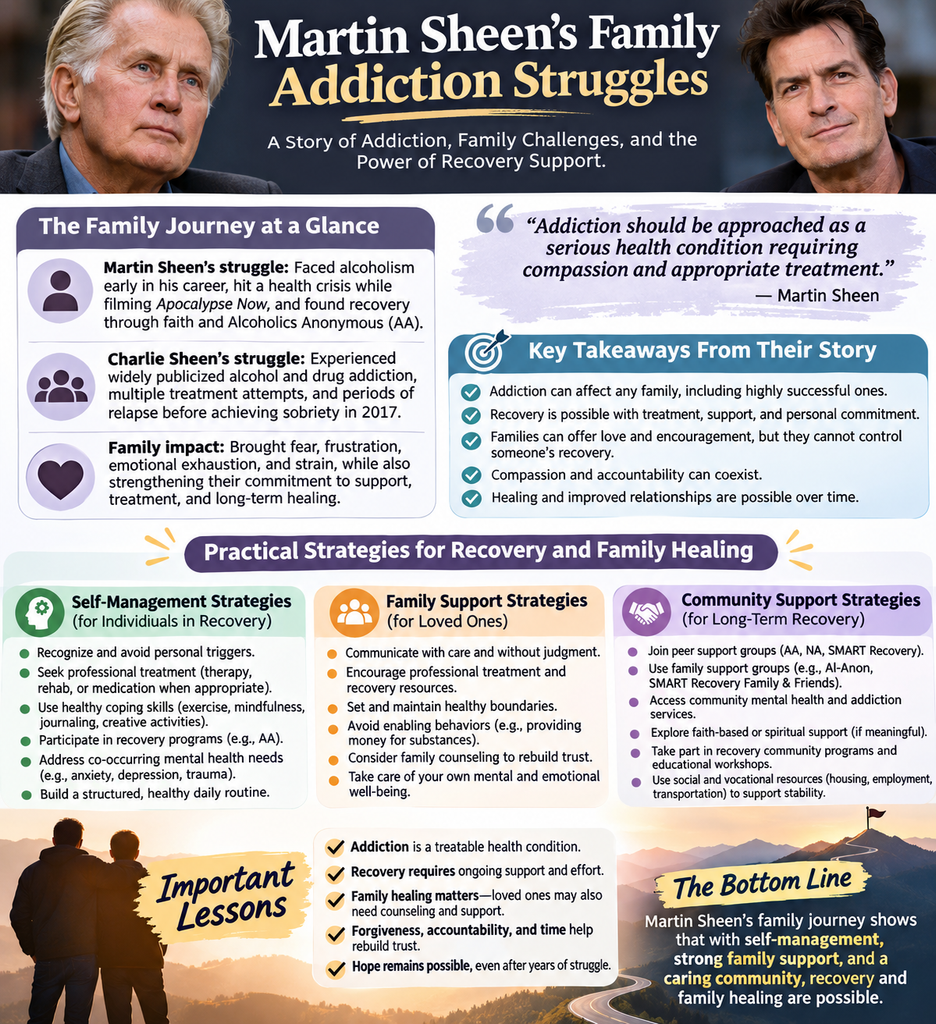
Addiction affects more than the individual struggling with substance use—it can deeply impact an entire family. Acclaimed actor Martin Sheen has openly discussed his experiences with alcoholism and the challenges of supporting his son, Charlie Sheen, through highly publicized struggles involving substance use and recovery. Their family’s journey highlights the emotional difficulties of addiction, including fear, strained relationships, and the challenge of balancing unconditional love with healthy boundaries. By exploring Martin Sheen’s experiences, families can better understand the importance of self-management, compassionate communication, professional treatment, and community support in promoting lasting recovery.
Martin Sheen’s Personal Battle With Alcohol Addiction
Before confronting addiction within his family, Martin Sheen experienced his own struggles with alcohol. During the early years of his acting career, he faced significant professional pressure, emotional stress, and unhealthy drinking patterns.
While filming Apocalypse Now in the Philippines, Sheen experienced a serious health crisis. He later described this period as a turning point that encouraged him to reevaluate his lifestyle, personal relationships, and spiritual beliefs.
Sheen has publicly credited his Catholic faith and involvement with Alcoholics Anonymous as important influences in his recovery. His personal experience helped him understand the difficulties of substance dependence and the importance of maintaining compassion for others struggling with addiction. Christianity Today+1
His journey demonstrates that recovery is not simply about eliminating alcohol. It also involves rebuilding emotional stability, developing healthier coping mechanisms, and strengthening relationships.
Charlie Sheen’s Addiction and Its Impact on the Family
Martin Sheen’s son, Charlie Sheen, experienced widely documented struggles with alcohol and drug addiction. Despite achieving tremendous professional success, Charlie faced repeated periods of substance misuse, treatment, relapse, and personal difficulties.
As a father, Martin experienced the emotional challenges familiar to many families affected by addiction: uncertainty, frustration, fear, and the desire to protect a loved one from potentially life-threatening consequences.
During the 1990s, Martin became involved in efforts to help Charlie obtain treatment. He later explained that he sought support through Alcoholics Anonymous because he needed guidance in responding to his son’s addiction. CBS News+1
In a 2011 interview, Martin emphasized that addiction should be approached as a serious health condition requiring compassion and appropriate treatment rather than simply punishment or criticism. The Guardian
Charlie has since spoken publicly about achieving sobriety in 2017. In 2025, he discussed how recovery helped him reconnect with his children and develop a greater appreciation for fatherhood. AP News+1
Their experiences highlight an important reality: family support can encourage recovery, but the individual must ultimately participate in the process of change.
Understanding the Emotional Impact of Addiction on Families
Addiction often creates emotional and psychological challenges that extend across generations. Parents may experience guilt, believing they somehow contributed to their child’s substance use. Siblings may feel neglected, while spouses and children may struggle with uncertainty and broken trust.
Martin Sheen’s family experiences illustrate several common challenges:
- Fear and anxiety: Worrying about overdose, relapse, or other serious health consequences.
- Emotional exhaustion: Feeling overwhelmed by repeated crises and unsuccessful attempts to help.
- Guilt and self-blame: Questioning whether different parenting decisions could have prevented addiction.
- Strained relationships: Experiencing conflict, disappointment, and difficulty rebuilding trust.
- Loss of control: Recognizing that love and encouragement cannot force someone to accept treatment.
- Public stigma: Facing judgment, embarrassment, or unwanted attention because of a family member’s addiction.
Understanding these emotional responses helps families recognize that they also deserve counseling, support, and opportunities for healing.
Self-Management Strategies: Building a Foundation for Recovery
Self-management is an essential component of addiction recovery. Individuals must develop practical skills to recognize triggers, regulate emotions, manage cravings, and maintain healthy daily routines.
Martin Sheen’s emphasis on spirituality, personal accountability, and recovery support offers useful lessons for individuals seeking long-term sobriety.
Effective self-management strategies
- Recognize personal triggers: Identify situations, emotions, relationships, or environments associated with substance use.
- Seek professional treatment: Consult addiction specialists for assessment, evidence-based therapy, and medication when appropriate.
- Develop healthy coping mechanisms: Practice mindfulness, exercise, journaling, relaxation techniques, or creative activities.
- Participate in recovery programs: Consider Alcoholics Anonymous, SMART Recovery, or other supportive recovery communities.
- Address co-occurring mental health conditions: Obtain appropriate treatment for anxiety, depression, trauma, or other psychiatric disorders.
- Establish structured routines: Maintain consistent sleep schedules, balanced nutrition, physical activity, and meaningful daily goals.
- Create a relapse prevention plan: Identify warning signs, emergency contacts, coping strategies, and steps for obtaining additional treatment.
Recovery is rarely a perfectly linear process. Setbacks may occur, but they should prompt reassessment and additional support rather than shame or abandonment.
For individuals with significant alcohol dependence, abruptly stopping drinking can cause dangerous withdrawal symptoms. Medical evaluation and supervised withdrawal management may be necessary.
Family Support Strategies: Helping Without Enabling Addiction
Martin Sheen’s experiences demonstrate the difficult balance between supporting a loved one and recognizing personal limitations.
In a 2018 interview, he acknowledged that parents cannot control every decision their children make and emphasized the importance of relying on community support. Us
Families can play an important role in recovery by providing emotional stability, encouraging treatment, and establishing healthy boundaries.
Practical family support strategies
- Communicate without judgment: Express concern using calm, respectful language rather than accusations or criticism.
- Encourage professional treatment: Help loved ones explore counseling, rehabilitation programs, and appropriate medical care.
- Establish healthy boundaries: Clearly communicate which behaviors are unacceptable and what actions family members will take to protect themselves.
- Avoid enabling behaviors: Do not repeatedly provide money for substances, conceal harmful behavior, or shield someone from every consequence.
- Practice active listening: Allow loved ones to express fears, frustrations, and emotional struggles without immediate criticism.
- Recognize progress: Acknowledge treatment participation, improved communication, and positive lifestyle changes.
- Seek family counseling: Work with qualified professionals to address conflict, improve communication, and rebuild trust.
- Protect personal well-being: Maintain friendships, hobbies, emotional support, and healthy routines outside the caregiving role.
Families should also understand that boundaries are not punishments. They are protective measures that promote emotional safety and healthier relationships.
Importantly, family members should not withhold emergency medical assistance to avoid enabling someone. Overdose, severe withdrawal, suicidal behavior, and other immediate dangers require urgent professional intervention.
Community Support Strategies: Strengthening Recovery Through Connection
Addiction recovery becomes more sustainable when individuals and families have access to supportive communities, healthcare professionals, and recovery resources.
Martin Sheen has frequently discussed the importance of faith, community engagement, and helping others. His advocacy demonstrates how meaningful social connections can provide emotional support during difficult periods.
Community-based recovery strategies
- Peer support groups: Alcoholics Anonymous, Narcotics Anonymous, and SMART Recovery provide opportunities to connect with others who understand addiction.
- Family support organizations: Al-Anon and SMART Recovery Family & Friends offer education, emotional support, and coping strategies.
- Mental health services: Community mental health centers provide counseling, psychiatric evaluations, and treatment for co-occurring disorders.
- Addiction treatment programs: Outpatient, intensive outpatient, residential, and medication-based services can address different levels of treatment need.
- Faith-based organizations: Spiritual communities may offer encouragement, mentorship, and a sense of belonging when consistent with personal preferences.
- Recovery community organizations: Peer recovery coaches and recovery centers can assist with practical needs and ongoing support.
- Educational workshops: Community programs can teach families about addiction, relapse prevention, overdose response, and effective communication.
- Social and vocational services: Housing assistance, employment programs, and transportation resources can help reduce barriers to recovery.
Community support is especially important for families experiencing isolation, financial hardship, or limited access to addiction treatment.
The Role of Forgiveness, Accountability, and Rebuilding Trust
One of the most challenging aspects of addiction recovery involves repairing relationships damaged by substance use.
Forgiveness can be meaningful, but it does not require overlooking harmful behavior or immediately restoring trust.
Rebuilding relationships requires consistency, honesty, accountability, and time.
Individuals in recovery can demonstrate meaningful change by attending treatment, honoring commitments, communicating openly, and accepting responsibility for past behavior.
Families can encourage this process by recognizing genuine progress while maintaining appropriate expectations.
Martin and Charlie Sheen’s relationship illustrates how family connections can evolve over time. In the 2025 documentary, aka Charlie Sheen, Charlie reflected on his experiences with addiction and his relationship with his father. Martin and Charlie’s brother Emilio Estevez chose not to appear on camera but supported the documentary. Netflix Tudum
Their story reinforces the possibility of improving family relationships even after years of difficult experiences.
Important Lessons From Martin Sheen’s Family Journey
Martin Sheen’s experiences provide valuable insights for individuals and families navigating substance use disorders.
- Addiction is a treatable health condition: Effective treatment should address biological, psychological, and social factors.
- Family members cannot control recovery: Encouragement matters, but individuals must participate in their treatment decisions.
- Compassion and accountability can coexist: Loving someone does not require accepting harmful or unsafe behavior.
- Recovery requires ongoing support: Counseling, peer support, healthy routines, and appropriate medical care can help sustain progress.
- Family healing matters: Loved ones may need their own counseling and recovery resources.
- Hope remains possible: Relationships can improve, and individuals can rebuild meaningful lives following addiction.
Resources for Individuals and Families Affected by Addiction
Several organizations offer education, treatment referrals, and recovery support.
| Organization | Available support |
|---|---|
| SAMHSA National Helpline | Confidential substance use treatment referrals and information: 1-800-662-HELP (4357) |
| FindTreatment.gov | Search for substance use and mental health treatment providers |
| Al-Anon Family Groups | Support for families and friends affected by another person’s drinking |
| SMART Recovery | Evidence-informed recovery meetings and family support resources |
| Alcoholics Anonymous | Peer support for individuals seeking recovery from alcohol addiction |
| 988 Suicide & Crisis Lifeline | 24/7 crisis support by calling or texting 988 |
Conclusion: Recovery Begins With Understanding, Compassion, and Support
Martin Sheen’s family addiction struggles demonstrate that substance use disorders can affect anyone, regardless of fame, financial success, or family background. His personal recovery experiences and efforts to support his son Charlie highlight the emotional challenges families face when someone they love struggles with addiction. Through self-management, professional treatment, healthy family boundaries, and community support, individuals can build healthier lives while repairing damaged relationships. Although recovery requires patience, accountability, and ongoing commitment, Martin Sheen’s family journey reminds us that addiction does not have to define a person’s future. With compassion, appropriate treatment, and continued support, recovery and family healing are possible.
Frequently Asked Questions and Answers
Understanding Martin Sheen’s Family Addiction Journey
1. Did Martin Sheen struggle with alcohol addiction?
Yes. Martin Sheen has publicly discussed his struggles with alcoholism during his acting career. He has credited Alcoholics Anonymous, spirituality, and personal reflection as important influences in his recovery. His experiences have shaped his understanding of addiction and the importance of compassionate support.
2. How did Martin Sheen’s addiction affect his family?
Alcohol addiction can create emotional stress, uncertainty, and relationship difficulties within families. Martin Sheen has acknowledged personal challenges related to his drinking and recovery. However, the specific emotional effects on each family member should not be assumed beyond what they have publicly shared.
3. Did Charlie Sheen struggle with drug and alcohol addiction?
Yes. Charlie Sheen has openly discussed his history of alcohol and drug misuse, treatment experiences, and recovery. His substance use struggles received extensive media attention and affected his professional and personal life.
4. How did Martin Sheen respond to Charlie Sheen’s addiction?
Martin Sheen publicly expressed concern for his son’s health and well-being. He encouraged treatment and emphasized that addiction requires compassion, understanding, and professional intervention. His approach illustrates the difficult balance between parental love and recognizing that recovery cannot be forced.
5. Did Martin Sheen seek support while dealing with his son’s addiction?
Yes. Martin Sheen has discussed seeking guidance through Alcoholics Anonymous while navigating his son’s substance use struggles. His experience demonstrates that family members may benefit from their own emotional support, even when they are not the individuals actively using substances.
6. Has Charlie Sheen achieved sobriety?
Charlie Sheen has publicly stated that he stopped drinking in December 2017. He has described sobriety as an important part of improving his health, personal relationships, and responsibilities as a father. Recovery remains an ongoing process, and an individual’s current status should be based on their own verified public statements.
7. What role did spirituality play in Martin Sheen’s recovery?
Martin Sheen has described his Catholic faith as an important source of meaning, accountability, and emotional strength. Spirituality can provide hope and community connection during recovery, although it is not a substitute for evidence-based addiction treatment.
8. What does Martin Sheen’s family experience teach us about addiction?
His family’s experiences highlight that addiction can affect people regardless of fame, wealth, or professional success. They also demonstrate that recovery may require professional treatment, personal commitment, family support, and sustained behavioral changes.
Self-Management and Addiction Recovery
9. What self-management strategies can help someone overcome addiction?
Self-management involves developing healthy habits and coping skills that support recovery.
- Identify emotional and environmental triggers.
- Participate in professional addiction treatment.
- Practice mindfulness, exercise, and stress management.
- Develop a structured daily routine.
- Attend recovery support meetings.
- Create a relapse prevention plan.
- Address co-occurring mental health conditions.
These strategies are most effective when combined with individualized, evidence-based treatment.
10. What motivated Charlie Sheen to stop drinking?
Charlie Sheen has explained that realizing his alcohol use interfered with his ability to care for his children became a major turning point. He described being unable to drive his daughter to an appointment because he had been drinking. This experience helped motivate his decision to pursue sobriety. ABC News+1
11. Can someone recover from addiction after multiple relapses?
Yes. Relapse does not mean that long-term recovery is impossible. Substance use disorders are treatable, and individuals may require adjustments to medications, therapy, recovery support, or their living environment.
Relapse should be taken seriously because overdose risk can increase after a period of reduced substance use and lowered tolerance.
Family Support and Healthy Boundaries
12. How can parents support an adult child struggling with addiction?
Parents can express concern without judgment, encourage professional treatment, and provide emotional support while maintaining healthy boundaries. They should avoid taking responsibility for every decision their adult child makes.
Martin Sheen’s experiences demonstrate that parents can remain loving and supportive while recognizing the limits of their control.
13. What is the difference between helping and enabling someone with addiction?
Helping involves encouraging treatment, providing emotional support, and assisting with healthy recovery goals.
Enabling refers to behaviors that unintentionally make continued harmful substance use easier, such as repeatedly providing money used to purchase drugs or concealing dangerous behavior.
Families should focus on supportive actions that promote safety, accountability, and engagement in treatment.
14. How can families establish healthy boundaries?
Healthy boundaries involve communicating expectations and protecting personal well-being.
- Refuse to tolerate violence or threatening behavior.
- Avoid providing money that may support substance use.
- Establish expectations about respectful communication.
- Protect children from unsafe situations.
- Encourage treatment without using shame or humiliation.
- Seek counseling when family conflict becomes overwhelming.
Boundaries should be consistent, realistic, and focused on safety rather than punishment.
15. Can addiction cause long-term damage to family relationships?
Yes. Addiction can contribute to broken trust, financial difficulties, emotional distress, and strained communication. However, relationships can improve through consistent recovery efforts, counseling, accountability, and time.
16. How can families rebuild trust after addiction?
Rebuilding trust requires patience and meaningful behavioral changes. Individuals in recovery can demonstrate accountability by keeping commitments, communicating honestly, and participating in treatment.
Families can support progress while recognizing that forgiveness and restored trust may occur at different rates.
17. Can parents experience guilt when their children develop addiction?
Yes. Parents frequently question whether their decisions contributed to a child’s substance use. However, addiction develops through a complex interaction of genetic, environmental, psychological, and social factors.
Family counseling can help parents address guilt, understand addiction, and develop healthier responses.
Community Support and Professional Treatment
18. Why are community support groups important for addiction recovery?
Community support groups reduce isolation and provide opportunities to learn coping strategies from others with similar experiences. Alcoholics Anonymous, Narcotics Anonymous, and SMART Recovery are examples of peer-based recovery resources.
Support groups can complement professional treatment but should not replace necessary medical care.
19. What resources are available for families affected by addiction?
Families can access several helpful organizations:
- Al-Anon Family Groups: Emotional support for people affected by someone else’s drinking.
- SMART Recovery Family & Friends: Practical communication and coping strategies.
- SAMHSA: Substance use treatment information and referrals.
- Community mental health centers: Counseling and behavioral health services.
- Family therapy programs: Professional assistance with communication, boundaries, and relationship repair.
20. What treatments are most effective for alcohol and drug addiction?
Effective treatment depends on the substance involved, severity of dependence, medical history, and individual needs.
Treatment may include cognitive behavioral therapy, motivational interviewing, contingency management, and medication.
For alcohol use disorder, medications such as naltrexone, acamprosate, and disulfiram may be considered when clinically appropriate. For opioid use disorder, buprenorphine and methadone are effective medications associated with reduced overdose mortality.
21. What should families do if their loved one refuses addiction treatment?
Families can maintain respectful communication, express specific concerns, and offer information about treatment options. Motivational interviewing principles and approaches such as Community Reinforcement and Family Training (CRAFT) may help families encourage engagement in treatment.
If immediate danger exists, including suspected overdose, severe withdrawal, or suicidal behavior, emergency assistance is necessary.
22. What is the most important lesson from Martin Sheen’s family addiction struggles?
The central lesson is that addiction affects the entire family, but recovery and healing are possible.
Martin Sheen’s experiences demonstrate the importance of compassion, accountability, healthy boundaries, and continued support. In public interviews, he has emphasized the need to approach his son’s addiction with understanding while recognizing the seriousness of the condition.
Video: