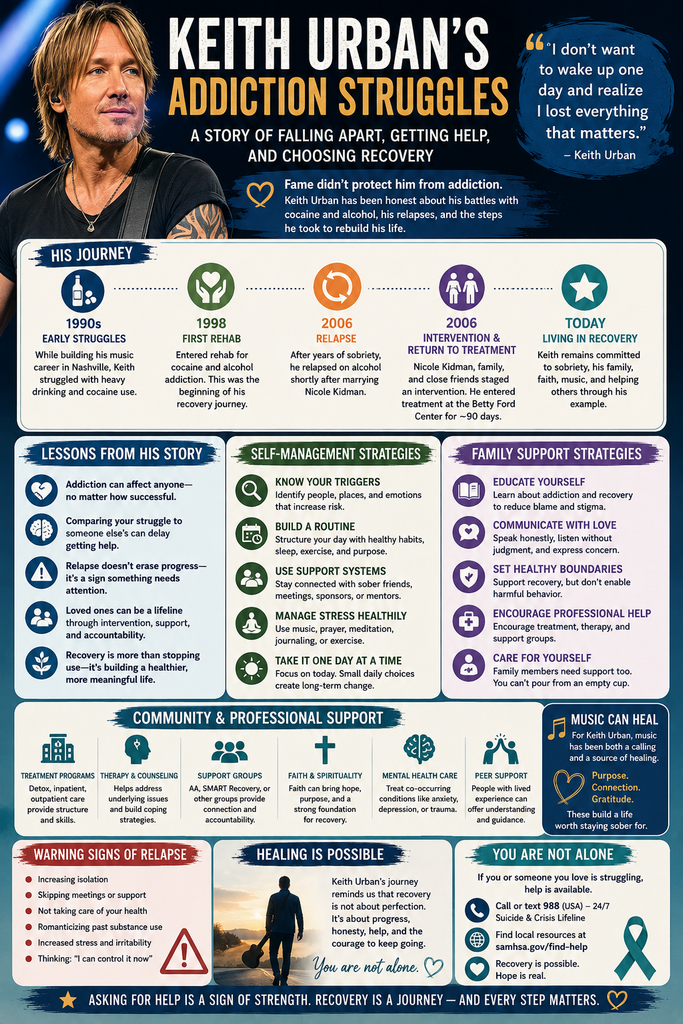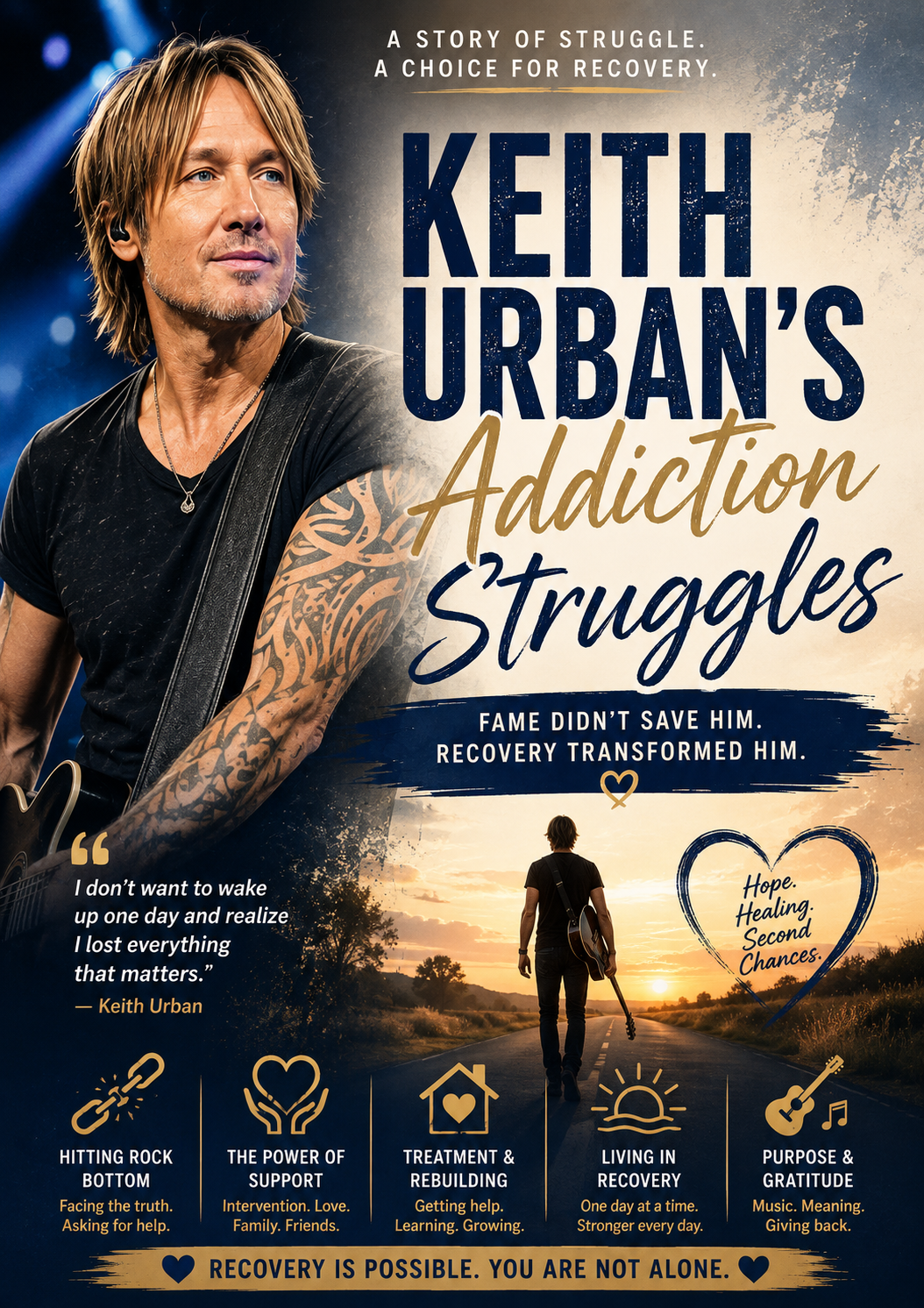
Keith Urban is known internationally for his successful country music career, but behind his professional achievements was a long struggle with alcohol and other drug use. Urban has publicly discussed cocaine use, heavy drinking, treatment, relapse, and the work required to maintain recovery.
His story demonstrates an important reality about addiction: professional success does not protect someone from developing a substance use disorder. A person can continue working, performing, maintaining relationships, and appearing successful while privately experiencing serious problems.
Urban has also described how comparing his drinking with his father’s alcohol problems delayed his recognition of his own alcoholism. He eventually realized that another person’s addiction did not have to look exactly like his for his own drinking to be harmful.
Keith Urban’s Early Struggles With Drugs and Alcohol
Urban has spoken about heavy alcohol and cocaine use during the earlier years of his career. His substance use became particularly problematic during the 1990s, when he was attempting to establish himself professionally in Nashville.
He later described periods of intense drug use when he was away from the structure of performing and working. Eventually, the consequences became difficult to ignore.
Urban entered rehabilitation in 1998 for problems involving cocaine and alcohol. Treatment helped him establish a period of sobriety, but his experience also demonstrated that completing rehabilitation does not make someone permanently immune to relapse.
Relapse and Returning to Treatment
In 2006, only months after marrying Nicole Kidman, Urban experienced another serious period of alcohol-related problems. He publicly acknowledged that he had moved away from his recovery and voluntarily entered treatment. Contemporary reports described him entering the Betty Ford Center and postponing professional commitments to address his health.
Urban later described an intervention involving Kidman and close friends as an important turning point.
What was initially expected to be approximately 30 days of treatment ultimately became about 90 days. Urban later explained that treatment involved learning much more than simply abstaining from substances. He began examining other areas of his life and recovery that required attention.
That distinction is important.
Stopping substance use is an essential part of recovery, but recovery frequently requires much more than simply stopping.
What Keith Urban’s Story Teaches About Relapse
Relapse does not necessarily occur because someone suddenly decides that recovery no longer matters. Warning signs can develop gradually.
Urban described his situation before entering treatment in 2006 not as one dramatic event but as an accumulation of smaller problems that indicated his life and recovery were becoming unmanageable.
This illustrates why relapse prevention should include monitoring changes such as:
- Increasing isolation
- Returning to environments associated with substance use
- Disconnecting from recovery support
- Romanticizing previous substance use
- Increasing stress without healthy coping strategies
- Becoming less accountable
- Neglecting sleep and basic self-care
- Believing recovery no longer requires attention
- Hiding emotional difficulties from supportive people
Recognizing these patterns early can provide an opportunity to seek help before substance use returns or becomes more severe.
Self-Management Strategies for Recovery
Urban’s personal treatment plan is his own, and another person’s recovery should not simply be copied from a celebrity’s experience. However, several evidence-based principles are useful for people recovering from substance use disorders.
Helpful self-management strategies include:
- Identify personal triggers for alcohol or drug use.
- Develop a written relapse-prevention plan.
- Maintain regular contact with supportive people.
- Attend treatment or recovery meetings when helpful.
- Establish predictable daily routines.
- Protect adequate sleep and nutrition.
- Use exercise and other healthy activities to manage stress.
- Avoid people and environments strongly associated with previous substance use when necessary.
- Learn to recognize emotional warning signs before they become crises.
- Address loneliness instead of isolating.
- Seek professional help when cravings or relapse warning signs increase.
- Treat co-occurring mental health conditions when present.
- Create meaningful activities that provide purpose beyond substance use.
Recovery strategies should also change when circumstances change. A system that worked during one stage of recovery may need adjustment during periods of stress, loss, travel, relationship problems, or major life transitions.
Learn Your Own Definition of a Problem
One particularly useful lesson from Urban’s story involves comparison.
He has explained that recognizing his alcoholism took time partly because his drinking did not resemble his father’s.
People sometimes tell themselves:
“I don’t drink every day.”
“I still have a job.”
“I’m not as bad as that person.”
“I’ve never been arrested.”
But addiction is not diagnosed by comparing yourself with the person experiencing the most severe consequences.
A better question is:
“What is alcohol or drug use doing to my health, relationships, responsibilities, choices, and ability to control my behavior?”
Family Support Strategies
Family involvement can be extremely important, but families cannot single-handedly cure another person’s addiction.
Urban has publicly credited Kidman, friends, and family with providing significant support when he returned to treatment. After his 2006 rehabilitation stay, he specifically thanked his wife, family, friends, and fans for supporting him.
Families supporting someone with addiction can:
- Learn about substance use disorders.
- Talk about concerning behavior when the person is sober.
- Encourage professional treatment.
- Avoid supplying money that supports substance use.
- Establish clear boundaries.
- Avoid covering up serious consequences.
- Recognize relapse warning signs.
- Support recovery without trying to control every decision.
- Participate in family therapy when appropriate.
- Develop an emergency plan for overdose or other crises.
- Seek counseling or peer support for themselves.
- Protect their own emotional and physical well-being.
Supporting recovery does not mean accepting dangerous or abusive behavior.
Family members can love someone while maintaining firm boundaries.
The Importance of Intervention
Urban’s experience also demonstrates how intervention from loved ones can sometimes become an important turning point.
An intervention does not necessarily need to resemble a dramatic television confrontation. Depending on the circumstances, it may involve a structured conversation in which family members clearly describe their concerns, establish boundaries, and encourage treatment.
When the situation is complicated or potentially volatile, families may benefit from guidance from addiction professionals rather than attempting an intervention without preparation.
The objective should be to connect someone with appropriate treatment—not to humiliate or punish them.
Community and Professional Support Strategies
Long-term recovery often requires more than individual determination.
Community resources may include:
- Addiction medicine professionals
- Primary care clinicians
- Psychiatrists and therapists
- Residential treatment programs
- Intensive outpatient programs
- Outpatient addiction treatment
- Peer recovery specialists
- Alcoholics Anonymous
- SMART Recovery
- Family therapy
- Recovery community organizations
- Faith communities when desired by the individual
- Mental health and substance use crisis services
Treatment should be individualized. Some people benefit from medications for alcohol use disorder, behavioral therapies, mutual-help programs, structured treatment, or combinations of these approaches.
Recovery Is More Than Abstinence
One of the strongest lessons from Urban’s public discussion of rehabilitation was his recognition that abstinence was only the beginning.
Long-term recovery may require learning how to manage:
- Stress
- Relationships
- Loneliness
- Shame
- Success and failure
- Cravings
- Emotional distress
- Work pressures
- Unstructured time
- Personal identity
Removing alcohol or drugs creates an opportunity to address these issues rather than automatically resolving them.
Recovery therefore becomes less about simply asking, “How do I avoid drinking or using today?” and increasingly about asking, “How do I build a life that supports continued recovery?”
Success Does Not Eliminate Addiction Risk
Keith Urban’s story challenges the stereotype that addiction only affects people who have lost everything.
He achieved considerable professional success while struggling privately with substances. Eventually, however, recovery required prioritizing treatment over immediate career obligations. In 2006, professional appearances were postponed while he entered rehabilitation.
Sometimes choosing recovery means temporarily stepping away from responsibilities that seem urgent to protect something more fundamental—health and life.
Conclusion
Keith Urban’s addiction journey illustrates that substance use disorders can affect people regardless of talent, wealth, relationships, or professional achievement. His public accounts describe years of alcohol and cocaine problems, treatment, relapse, intervention, and a renewed commitment to recovery.
His experience also highlights an important lesson: treatment is not merely about removing a substance. Recovery can require rebuilding routines, relationships, coping skills, accountability, and a sense of purpose.
Self-management helps individuals recognize triggers and protect their recovery. Families can provide support while maintaining healthy boundaries. Treatment professionals and recovery communities can provide expertise, structure, and connection.
A relapse does not erase everything a person learned before it. It signals that something needs attention.
Recovery is not simply returning to the person you were before addiction. It can become the process of building a life in which you no longer need substances to escape from yourself.
Frequently Asked Questions
Here are some common questions:
1. Did Keith Urban struggle with addiction?
Yes. Keith Urban has publicly discussed struggles involving alcohol and cocaine, as well as treatment, relapse, and recovery.
2. When did Keith Urban’s substance use become a serious problem?
Urban has described significant alcohol and cocaine use during the earlier years of his career, particularly while trying to establish himself in Nashville during the 1990s.
3. What substances did Keith Urban struggle with?
Urban has publicly discussed problematic alcohol use and cocaine use.
4. Did Keith Urban go to rehabilitation?
Yes. Urban has spoken about entering rehabilitation in 1998. He later returned to treatment in 2006 after experiencing problems with alcohol again.
5. Did Keith Urban experience relapse?
Yes. His public story includes relapse after an earlier period of recovery. Relapse can occur in substance use disorders and should be taken seriously as a reason to reassess treatment and recovery supports.
6. What happened in 2006?
Urban entered treatment at the Betty Ford Center in 2006 after an intervention involving people close to him. He temporarily stepped away from professional commitments to concentrate on recovery.
7. Did Nicole Kidman help Keith Urban during his addiction struggles?
Urban has publicly credited Nicole Kidman and other loved ones with supporting him during a critical period in his recovery. Their experience illustrates how family involvement can sometimes encourage someone to return to treatment.
8. Can family members cure someone’s addiction?
No. Families can encourage treatment, establish boundaries, provide emotional support, and participate in family therapy, but they cannot control another person’s recovery.
9. What does Keith Urban’s relapse teach about recovery?
It demonstrates that completing rehabilitation does not guarantee that relapse will never occur. Long-term recovery may require continued attention to triggers, coping strategies, relationships, accountability, and support.
10. What are common warning signs that recovery may be becoming unstable?
Possible warning signs can include increasing isolation, reconnecting with substance-using environments, skipping treatment or recovery activities, romanticizing previous substance use, hiding problems, increasing stress, and believing that recovery no longer requires attention.
11. Does relapse mean treatment has failed?
Not necessarily. Relapse can indicate that a person’s treatment or recovery plan needs to be reassessed. Returning to treatment promptly can help prevent further harm.
12. How can someone manage addiction recovery?
Helpful strategies can include identifying triggers, developing a relapse-prevention plan, maintaining supportive relationships, creating healthy routines, managing stress, protecting sleep, participating in treatment, and asking for help when cravings or warning signs increase.
13. What can families learn from Keith Urban’s experience?
Families can learn about addiction, communicate concerns without humiliation, encourage professional treatment, maintain healthy boundaries, avoid enabling harmful behavior, recognize relapse warning signs, and seek support for themselves.
14. Is an intervention always necessary?
No. Every situation is different. Some people voluntarily seek treatment, while others may benefit from structured conversations or professionally guided interventions. The purpose should be to connect the person with appropriate care rather than to punish or shame.
15. Can successful people develop addiction?
Absolutely. Substance use disorders can affect people regardless of fame, income, intelligence, career achievement, or family background. External success does not reveal everything occurring in someone’s private life.
16. Why is comparing one person’s addiction with another person’s dangerous?
Comparison can delay recognition of a problem. Someone does not need to experience another person’s level of substance use or consequences before seeking help. What matters is how substance use affects that individual’s health, relationships, responsibilities, safety, and control over use.
17. What professional resources can support addiction recovery?
Depending on individual needs, support may include addiction medicine, primary care, counseling, psychiatry, residential or outpatient treatment, medications when clinically appropriate, peer recovery services, Alcoholics Anonymous, SMART Recovery, and other recovery organizations.
18. What is the main lesson from Keith Urban’s addiction journey?
His public experience demonstrates that addiction can exist alongside extraordinary professional success and that returning to treatment after relapse can be an important part of recovery. Recovery involves more than stopping alcohol or drugs—it can also involve rebuilding coping skills, relationships, routines, accountability, health, and purpose.
Video: Keith Urban’s Addiction Struggles: From Substance Use to Recovery