Can you enjoy the holidays without alcohol or drugs, even when family gatherings, emotional stress, and social expectations threaten your recovery?
The holiday season is often associated with celebration, togetherness, and happiness. However, for individuals recovering from substance use disorders, this time of year can bring unexpected challenges. Family disagreements, financial pressures, loneliness, grief, alcohol-centered celebrations, and disrupted routines may increase stress and trigger cravings.
For someone navigating addiction recovery, holiday gatherings can create difficult decisions about attending parties, declining drinks, managing uncomfortable conversations, and protecting emotional well-being.
Fortunately, staying sober during holiday chaos is possible with preparation, healthy boundaries, self-management strategies, supportive relationships, and accessible community resources.
Understanding how holiday stress affects recovery can help individuals and families create safer celebrations while maintaining meaningful connections.
The goal is not to eliminate every stressful situation. It is to develop practical strategies that protect recovery, strengthen emotional resilience, and allow people to experience the holidays without relying on substances.
Understanding Why the Holidays Can Threaten Sobriety
The holidays introduce emotional, environmental, and social changes that may increase vulnerability to substance use.
Although not everyone experiences increased cravings during the holiday season, certain situations can create additional challenges.
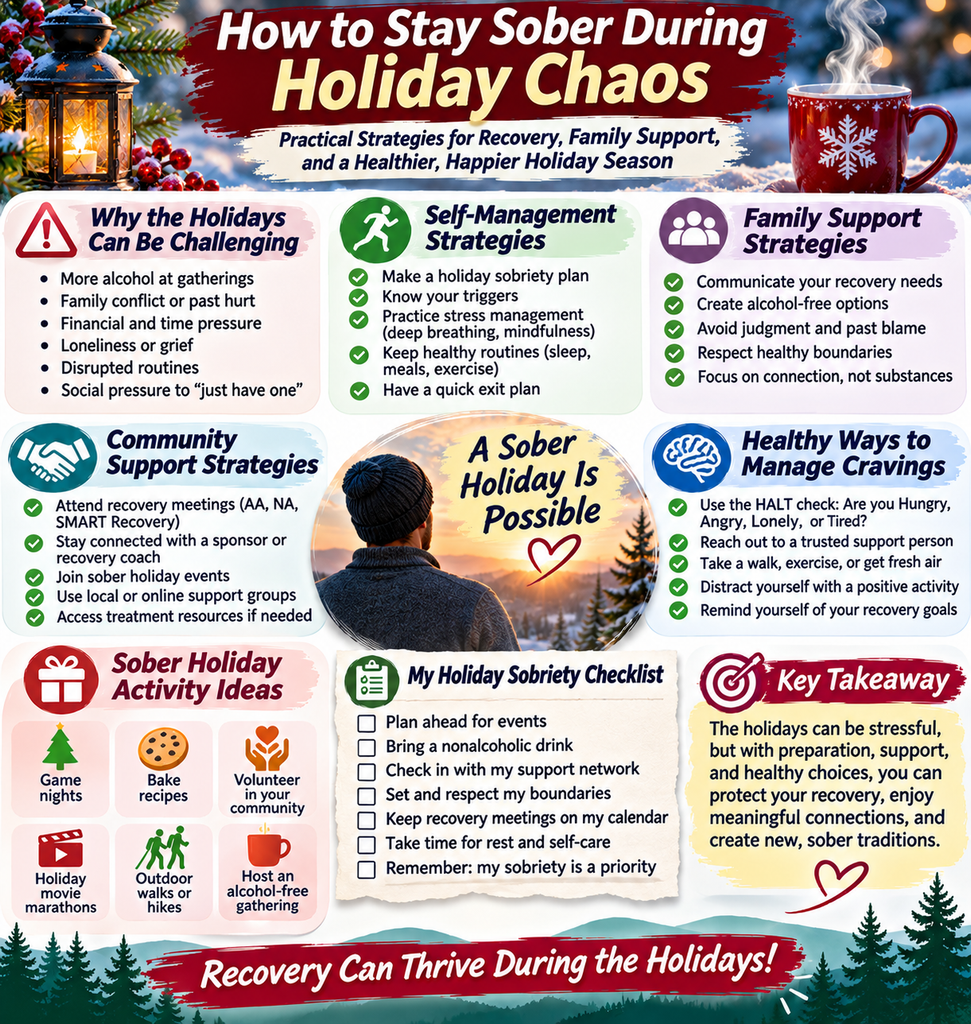
Common Holiday Addiction Triggers
- Alcohol-centered celebrations: Holiday parties and family gatherings may normalize excessive drinking.
- Family conflict: Unresolved disagreements or strained relationships can increase emotional distress.
- Financial pressure: Gift shopping, travel expenses, and social expectations may create anxiety.
- Loneliness and isolation: Individuals separated from loved ones may feel sad or disconnected.
- Grief and loss: Holidays can intensify memories of loved ones who have died.
- Social pressure: Friends or relatives may encourage drinking without understanding recovery needs.
- Disrupted routines: Travel, late-night celebrations, and missed support meetings can interfere with recovery habits.
- Unrealistic expectations: Pressure to create a perfect holiday may contribute to emotional exhaustion.
Recognizing these triggers before they occur can help individuals develop healthier responses.
Self-Management Strategies: Preparing for Holiday Recovery Challenges
Self-management involves recognizing emotional warning signs, managing cravings, establishing healthy routines, and making intentional choices that support sobriety.
A proactive holiday recovery plan can reduce uncertainty and improve confidence.
Create a Personalized Holiday Sobriety Plan
Before attending holiday events, consider the situations that may challenge your recovery.
Helpful planning strategies include:
- Identify gatherings where alcohol or drugs may be present.
- Decide which events feel emotionally and physically safe.
- Arrange independent transportation when possible.
- Establish a realistic arrival and departure time.
- Bring a nonalcoholic beverage.
- Identify a trusted person who understands your recovery goals.
- Schedule recovery meetings before and after stressful events.
- Prepare an exit plan if cravings or emotional distress become overwhelming.
Having a plan allows individuals to make decisions before encountering high-pressure situations.
Practice Saying No Without Feeling Guilty
Declining alcohol or drugs can feel uncomfortable, especially when others expect participation.
However, individuals do not owe anyone a detailed explanation of their recovery.
Simple responses include:
- “No, thank you. I’m not drinking tonight.”
- “I’m focusing on my health.”
- “I’ll have sparkling water instead.”
- “I’m good with what I have.”
- “I have an early morning tomorrow.”
A confident, respectful response is often sufficient.
Remember: Protecting your sobriety is more important than meeting someone else’s expectations.
Managing Holiday Cravings and Emotional Stress
Cravings can occur unexpectedly, particularly when individuals encounter familiar environments, emotional triggers, or substance-related memories.
Cravings are temporary experiences, but they may feel intense.
Use the HALT Technique
HALT encourages individuals to assess whether they are experiencing four common vulnerabilities.
H
Hungry: Eat regularly
A
Angry: Process emotions
L
Lonely: Reach out
T
Tired: Rest and recharge
HALT is a practical self-check tool, not a replacement for clinical addiction treatment.
Healthy Strategies for Managing Cravings
- Practice slow breathing or mindfulness for several minutes.
- Leave environments where substance use becomes difficult to resist.
- Contact a sponsor, counselor, or trusted support person.
- Take a short walk or engage in physical activity.
- Use grounding techniques to manage anxiety.
- Remind yourself of your reasons for maintaining sobriety.
- Seek additional professional support if cravings persist or intensify.
Individuals with opioid or alcohol use disorders should also continue prescribed medications and recommended clinical treatment during the holidays.
Family Support Strategies: Creating Recovery-Friendly Celebrations
Family gatherings can be sources of comfort, but they may also introduce emotional pressure.
Relatives may unintentionally trigger distress by discussing past substance use, questioning recovery progress, or encouraging alcohol consumption.
Families can help by creating welcoming environments that respect recovery needs.
How Families Can Support Sobriety
Communicate with compassion
- Ask loved ones how they would prefer to be supported.
- Avoid judgmental comments about previous substance use.
- Respect privacy regarding addiction treatment.
- Recognize that recovery is an ongoing process.
- Offer encouragement without excessive monitoring.
Create alcohol-free opportunities
- Provide appealing nonalcoholic beverages.
- Organize activities that do not revolve around drinking.
- Consider hosting an alcohol-free gathering.
- Avoid pressuring anyone to consume alcohol.
- Offer quiet spaces for guests who feel overwhelmed.
Respect healthy boundaries
- Allow individuals to decline invitations without guilt.
- Avoid demanding explanations about sobriety.
- Respect decisions to leave gatherings early.
- Do not encourage reconciliation with unsafe or harmful family members.
- Recognize that emotional safety may require limiting contact.
Family members can support recovery without assuming responsibility for another person’s decisions.
Navigating Difficult Family Relationships During the Holidays
Holiday celebrations sometimes bring together relatives with unresolved conflicts.
For individuals recovering from addiction, these situations may increase stress, resentment, anxiety, or emotional vulnerability.
Strategies for Handling Family Conflict
- Identify sensitive topics before attending gatherings.
- Establish boundaries regarding conversations about addiction.
- Avoid engaging in arguments when emotions escalate.
- Take breaks when feeling overwhelmed.
- Ask a supportive relative to help redirect uncomfortable conversations.
- Consider shorter visits or alternative celebrations.
- Seek family counseling when relationship difficulties persist.
When Skipping a Gathering Is the Healthiest Choice
Not every holiday event is appropriate for someone in recovery.
Declining an invitation may be beneficial when an environment involves active substance use, repeated boundary violations, threats, or severe emotional distress.
Choosing not to attend does not mean rejecting family relationships.
It may represent a necessary step toward protecting physical health, emotional well-being, and recovery stability.
Community Support Strategies: Staying Connected During Holiday Stress
Community support can provide encouragement and accountability during periods of increased stress.
Peer recovery meetings, counseling services, faith communities, and sober social groups may offer alternatives to alcohol-centered celebrations.
Strengthening Recovery Connections
Individuals can:
- Attend Alcoholics Anonymous or Narcotics Anonymous meetings.
- Participate in SMART Recovery meetings.
- Join virtual support groups while traveling.
- Maintain contact with recovery coaches or sponsors.
- Attend sober holiday celebrations.
- Volunteer with local community organizations.
- Participate in wellness activities, such as exercise or meditation groups.
The Importance of Sober Holiday Events
Recovery-friendly holiday activities can help individuals develop positive memories without substance use.
Examples include community dinners, holiday movie nights, volunteering, outdoor walks, creative workshops, and family game nights.
These activities can strengthen social connection and reduce the belief that holiday enjoyment requires alcohol or drugs.
Coping With Holiday Loneliness, Grief, and Depression
For some individuals, the holidays are emotionally difficult because of bereavement, family separation, or painful memories.
These experiences may increase the desire to escape uncomfortable emotions through substance use.
Healthy Ways to Manage Holiday Grief
- Acknowledge sadness without judging yourself.
- Create meaningful traditions honoring loved ones.
- Spend time with supportive friends or family members.
- Participate in counseling or grief support groups.
- Volunteer or engage in meaningful community activities.
- Maintain realistic expectations about holiday happiness.
- Practice self-compassion during emotionally difficult moments.
Grief does not follow a predictable timeline, and individuals should not feel pressured to appear happy throughout the holiday season.
When sadness becomes persistent, severe, or interferes with daily functioning, professional mental health evaluation may be appropriate.
Maintaining Recovery Routines During Holiday Travel
Travel can disrupt sleep, medication schedules, nutrition, and access to recovery meetings.
Planning ahead can reduce these challenges.
Holiday Travel Recovery Checklist
My holiday travel plan
Pack prescribed medications and keep them accessible.
Identify recovery meetings or telehealth options at the destination.
Schedule check-ins with a trusted support person.
Maintain regular meals, hydration, and sleep when possible.
Arrange safe transportation and an exit plan.
Carry naloxone if opioid overdose exposure is a concern.
Traveling during recovery does not have to be avoided, but maintaining access to treatment and support is important.
Managing Financial Stress Without Turning to Substances
Holiday spending can create financial strain, especially when people feel obligated to buy expensive gifts or attend many events.
Financial anxiety may contribute to cravings or emotional distress.
Healthy Financial Self-Management Strategies
- Establish a realistic holiday budget.
- Prioritize essential expenses over gifts.
- Consider handmade or inexpensive presents.
- Avoid borrowing money to meet unrealistic expectations.
- Discuss financial limitations openly with trusted family members.
- Focus on meaningful experiences rather than material purchases.
Financial stability can reduce unnecessary stress and support overall recovery.
Creating New Sober Holiday Traditions
Sobriety offers an opportunity to develop meaningful holiday experiences that do not revolve around substance use.
New traditions can strengthen personal identity, family relationships, and emotional well-being.
Ideas for Alcohol-Free Holiday Traditions
Holiday baking
Prepare favorite recipes with friends or family.
Holiday light walks
Explore festive displays and enjoy outdoor activities.
Community volunteering
Support local food banks, shelters, or charitable events.
Family game nights
Create relaxed, substance-free opportunities for connection.
These activities can help individuals rediscover enjoyment, connection, and purpose during recovery.
Recognizing Holiday Relapse Warning Signs
Relapse prevention includes recognizing changes in thoughts, emotions, and behaviors that may signal increased vulnerability.
Potential Warning Signs
- Withdrawing from supportive relationships.
- Skipping treatment appointments or recovery meetings.
- Romanticizing previous substance use.
- Experiencing persistent cravings.
- Returning to high-risk environments.
- Neglecting sleep, nutrition, or personal responsibilities.
- Feeling increasingly hopeless or emotionally overwhelmed.
These signs do not guarantee relapse, but they may indicate that additional support is needed.
What to Do When Warning Signs Appear
- Contact a healthcare professional or addiction counselor.
- Review the existing relapse prevention plan.
- Increase contact with recovery supporters.
- Discuss whether treatment adjustments are necessary.
- Avoid high-risk situations while stabilizing recovery.
For individuals with opioid use disorder, returning to opioid use after abstinence can significantly increase overdose risk because tolerance may decrease.
Holiday Recovery Advocacy: How Communities Can Make a Difference
Addiction recovery advocacy is especially important during the holidays, when social expectations and treatment access challenges may increase.
Communities can promote recovery-friendly environments through education, outreach, and practical assistance.
Community Advocacy Strategies
- Organize alcohol-free holiday events.
- Support extended-hour or virtual recovery meetings.
- Promote access to evidence-based addiction treatment.
- Distribute naloxone and provide overdose prevention education.
- Offer transportation assistance for treatment appointments.
- Provide holiday meals and social activities for individuals experiencing isolation.
- Encourage employers to respect recovery-related healthcare needs.
- Educate families about stigma and compassionate communication.
Community organizations can also collaborate with healthcare providers to improve access to treatment during holiday closures.
Recovery advocacy means creating environments where people can celebrate, connect, and seek help without fear of judgment.
Benefits and Challenges of Holiday Sobriety
| Potential benefits | Common challenges |
|---|---|
| Improved clarity and emotional awareness | Social pressure to drink |
| Reduced substance-related health risks | Exposure to familiar triggers |
| More meaningful family interactions | Unresolved family conflict |
| Improved financial decision-making | Holiday spending pressure |
| Greater confidence in coping skills | Loneliness and grief |
| Opportunities for new traditions | Disrupted daily routines |
Recognizing both the benefits and challenges helps individuals approach the holidays with realistic expectations.
Building a Personal Holiday Sobriety Action Plan
A written plan can help individuals prepare for stressful situations and respond to cravings before they escalate.
My Holiday Sobriety Plan
Fill in your personal strategies, then copy the completed plan to keep it handy during holiday events.
My biggest holiday trigger
My healthy coping strategy
My trusted support contact
My personal boundary
My exit plan
A personal recovery plan should be reviewed with a qualified treatment professional when possible, especially for individuals experiencing persistent cravings or recent substance use.
Addiction Recovery Resources During the Holidays
Individuals and families can access several organizations that provide addiction treatment information and recovery support.
- FindTreatment.gov — Search for addiction and mental health treatment providers.
- SAMHSA — National treatment information and referral resources. Call 1-800-662-HELP (4357).
- Alcoholics Anonymous — In-person and online peer recovery meetings.
- Narcotics Anonymous — Peer support for people recovering from drug addiction.
- SMART Recovery — Mutual-support programs emphasizing coping skills and self-management.
- Nar-Anon Family Groups — Support for families affected by addiction.
- 988 Suicide & Crisis Lifeline — Call or text 988 in the United States for immediate emotional crisis support.
Individuals experiencing severe alcohol or benzodiazepine withdrawal symptoms should seek urgent medical evaluation rather than attempting unsupervised withdrawal.
Conclusion: Choosing Recovery Over Holiday Pressure
The holiday season can bring emotional challenges, social pressure, financial stress, and unexpected addiction triggers. However, these experiences do not have to determine someone’s recovery journey.
By developing self-management skills, establishing healthy boundaries, maintaining treatment routines, and seeking family and community support, individuals can navigate holiday celebrations with greater confidence.
Families can contribute by respecting recovery needs, offering encouragement, and creating welcoming environments that do not depend on alcohol or drugs.
Communities can strengthen recovery through accessible treatment, sober activities, peer support, and compassionate advocacy.
Most importantly, holiday sobriety does not require perfection. It requires preparation, self-awareness, support, and a willingness to seek help when challenges arise.
The greatest holiday gift you can give yourself is the opportunity to protect your health, strengthen your recovery, and create meaningful memories without substances.
Recovery is possible during every season, including the most stressful ones.
Understanding addiction can save lives. Protect your peace, celebrate your progress, and remember that your recovery matters.
Frequently Asked Questions and Answers
Understanding Holiday Sobriety Challenges
1. Why are the holidays challenging for people recovering from addiction?
The holidays often involve changes in routines, increased social expectations, and exposure to alcohol or other substances.
Common challenges include:
- Family disagreements and unresolved conflicts.
- Alcohol-centered celebrations.
- Financial pressure from shopping and travel.
- Loneliness or separation from loved ones.
- Grief and painful holiday memories.
- Social pressure to drink.
- Disrupted sleep and treatment schedules.
Recognizing these challenges early can help individuals develop effective coping strategies.
2. Can holiday stress increase the risk of addiction relapse?
Yes. Stress can increase cravings and make it more difficult to manage emotional triggers.
Holiday-related stress may affect sleep, mood, concentration, and decision-making.
However, stress does not automatically cause relapse. With preparation, treatment adherence, and supportive relationships, individuals can navigate stressful situations while maintaining recovery.
3. What are the most common holiday addiction triggers?
Common triggers include:
- Seeing others consume alcohol or drugs.
- Returning to places associated with previous substance use.
- Feeling pressured to participate in drinking traditions.
- Experiencing arguments or criticism from relatives.
- Feeling lonely or excluded.
- Remembering loved ones who have died.
- Becoming physically exhausted or emotionally overwhelmed.
Triggers vary by individual, making personalized recovery planning important.
4. Is it normal to experience cravings during holiday celebrations?
Yes. Cravings can occur even after extended periods of sobriety.
Environmental cues, familiar social situations, emotional stress, and substance-related memories may activate cravings.
Experiencing a craving does not mean someone has failed in recovery.
The important step is recognizing the craving and responding with effective coping strategies rather than acting on it automatically.
5. Should someone in recovery avoid all holiday parties?
Not necessarily.
Some individuals can comfortably attend celebrations where alcohol is present, while others may benefit from avoiding these environments, particularly during early recovery.
Decisions should consider personal triggers, recovery stability, available support, and the ability to leave when necessary.
Protecting recovery should take priority over social expectations.
Self-Management Strategies for Holiday Sobriety
6. How can someone prepare for a sober holiday season?
Creating a holiday sobriety plan can reduce uncertainty and improve confidence.
Helpful steps include:
- Identify potentially stressful gatherings.
- Decide which events feel safe to attend.
- Schedule recovery meetings and counseling appointments.
- Prepare responses to offers of alcohol.
- Arrange independent transportation.
- Identify trusted support contacts.
- Develop an exit plan for overwhelming situations.
Preparation helps individuals respond to challenges before they escalate.
7. How can someone politely refuse alcohol at a holiday party?
Simple, confident responses can help reduce social pressure.
Examples include:
- “No, thank you. I’m not drinking.”
- “I’ll have sparkling water instead.”
- “I’m focusing on my health.”
- “I’m happy with what I have.”
- “I have an early morning tomorrow.”
Individuals do not need to disclose their addiction history or explain their recovery decisions.
8. What should someone do when experiencing strong holiday cravings?
Cravings can be managed through practical coping strategies.
Helpful approaches include:
- Step away from the triggering environment.
- Practice slow breathing or mindfulness.
- Contact a sponsor, counselor, or trusted friend.
- Take a walk or engage in physical activity.
- Eat a meal or drink water if needed.
- Remind yourself of your recovery goals.
- Seek additional professional support if cravings persist.
For opioid or alcohol use disorders, continuing prescribed medications and treatment is especially important.
9. What is the HALT technique, and how does it help recovery?
HALT is a self-awareness tool that encourages individuals to recognize four common vulnerabilities.
H
Hungry: Eat a meal
A
Angry: Manage emotions
L
Lonely: Reach out
T
Tired: Get rest
HALT helps individuals identify unmet physical or emotional needs that may contribute to cravings.
It is a practical coping tool, not a replacement for addiction treatment.
10. How can mindfulness help someone stay sober during the holidays?
Mindfulness encourages awareness of thoughts, emotions, and physical sensations without immediately reacting.
Helpful techniques include:
- Deep breathing exercises.
- Guided meditation.
- Grounding exercises.
- Mindful walking.
- Brief periods of quiet reflection.
Mindfulness may help reduce stress and improve emotional regulation when used alongside appropriate treatment.
11. Why is maintaining a daily routine important during holiday recovery?
Consistent routines can support emotional stability and reduce unnecessary stress.
Important habits include regular sleep, balanced meals, physical activity, medication adherence, and continued participation in recovery activities.
Although holiday schedules may require flexibility, maintaining core recovery practices can help individuals remain connected to their goals.
12. What should someone do if holiday stress becomes overwhelming?
When stress becomes difficult to manage, individuals should consider reducing commitments and seeking additional support.
Helpful actions include:
- Taking breaks from stressful activities.
- Declining unnecessary invitations.
- Contacting a mental health professional.
- Attending additional recovery meetings.
- Practicing relaxation techniques.
- Prioritizing sleep and physical well-being.
Persistent anxiety, depression, or severe cravings may require professional evaluation.
Family Support and Holiday Relationships
13. How can families support someone staying sober during the holidays?
Families can create supportive environments by respecting recovery needs and avoiding unnecessary pressure.
Helpful strategies include:
- Offering appealing nonalcoholic beverages.
- Avoiding judgmental comments about addiction.
- Respecting decisions not to attend certain events.
- Creating substance-free activities.
- Encouraging continued treatment.
- Listening compassionately.
- Recognizing recovery progress.
Family support should emphasize understanding rather than control.
14. Should families remove alcohol from holiday gatherings?
Alcohol-free gatherings may be especially helpful for individuals in early recovery or those who identify alcohol exposure as a significant trigger.
However, needs vary.
Families should communicate respectfully about expectations and consider creating environments where everyone feels comfortable.
A person’s recovery should not depend entirely on controlling other people’s behavior, but reasonable accommodations can provide meaningful support.
15. How can someone handle difficult family members during the holidays?
Healthy boundaries can help protect emotional well-being.
Strategies include:
- Limiting conversations about sensitive subjects.
- Avoiding arguments when emotions escalate.
- Taking breaks from stressful interactions.
- Setting a reasonable departure time.
- Asking supportive relatives for assistance.
- Declining invitations when necessary.
Individuals are not obligated to remain in environments that threaten their safety or recovery.
16. What should families avoid saying to someone in recovery?
Comments that minimize addiction or question recovery efforts may increase shame and emotional distress.
Examples to avoid include:
- “Can’t you just have one drink?”
- “You should be over your addiction by now.”
- “Why can’t you control yourself?”
- “You’re ruining the holiday.”
- “Everyone else is drinking.”
Instead, families can ask what support would be helpful and respect the individual’s response.
17. How can someone rebuild family relationships during sober holidays?
Holiday gatherings may provide opportunities for positive connection.
Helpful approaches include:
- Participating in meaningful family traditions.
- Practicing honest and respectful communication.
- Following through on commitments.
- Acknowledging past difficulties when appropriate.
- Respecting family members’ emotional boundaries.
- Considering family counseling when needed.
Rebuilding trust takes time and should not be rushed simply because it is the holiday season.
Holiday Loneliness, Grief, and Mental Health
18. Why can loneliness increase during the holidays?
The holidays often emphasize family gatherings, relationships, and social connection.
Individuals experiencing separation, grief, or limited social support may feel excluded or isolated.
Loneliness can increase emotional distress and may contribute to cravings for some individuals.
Maintaining supportive relationships and participating in meaningful activities can help reduce isolation.
19. How can someone cope with grief without turning to alcohol or drugs?
Grief can intensify during holidays associated with loved ones who have died.
Healthy coping strategies include:
- Acknowledging painful emotions.
- Creating traditions that honor loved ones.
- Talking with trusted friends or relatives.
- Attending grief counseling or support groups.
- Participating in meaningful community activities.
- Allowing time for rest and reflection.
Grief does not need to disappear for someone to maintain sobriety.
20. Can holiday depression increase the risk of relapse?
Depression can complicate addiction recovery by affecting motivation, sleep, emotional regulation, and coping abilities.
Individuals experiencing persistent sadness, hopelessness, or loss of interest should consider professional mental health evaluation.
Integrated treatment is particularly important when depression and substance use disorders occur together.
If someone experiences suicidal thoughts or an emotional crisis in the United States, they can call or text 988 for immediate support.
Community Support and Sober Holiday Activities
21. Why are recovery meetings important during the holidays?
Recovery meetings can provide connection, encouragement, and opportunities to discuss difficult experiences.
They may be especially valuable when holiday travel or social expectations disrupt regular support networks.
Alcoholics Anonymous, Narcotics Anonymous, SMART Recovery, and other mutual-support organizations offer meetings that may be available in person or online.
22. What are some enjoyable alcohol-free holiday activities?
Holiday baking
Prepare favorite recipes with family or friends.
Holiday light walks
Enjoy festive displays and outdoor exercise.
Community volunteering
Support people experiencing hardship.
Family game nights
Create meaningful substance-free traditions.
These activities provide opportunities for connection, enjoyment, and positive holiday memories.
23. How can communities support people recovering from addiction during the holidays?
Communities can strengthen recovery support by:
- Organizing alcohol-free holiday events.
- Offering accessible recovery meetings.
- Providing transportation to treatment.
- Supporting affordable counseling services.
- Expanding access to medications for addiction treatment.
- Distributing naloxone and overdose prevention information.
- Creating welcoming activities for people experiencing loneliness.
Community support helps reduce isolation and encourages continued engagement in recovery.
24. What if someone cannot attend recovery meetings while traveling?
Virtual recovery meetings can help individuals maintain support during travel.
People can also schedule telephone or video check-ins with sponsors, recovery coaches, counselors, or trusted friends.
Before traveling, individuals should confirm medication availability and identify local treatment resources when necessary.
Relapse Prevention and Recovery Safety
25. What are the warning signs of a possible holiday relapse?
Potential warning signs include:
- Increasing cravings.
- Avoiding supportive relationships.
- Missing treatment appointments.
- Romanticizing previous substance use.
- Returning to high-risk environments.
- Neglecting sleep or personal responsibilities.
- Feeling persistently hopeless or overwhelmed.
These signs do not guarantee relapse, but they may indicate that additional support is needed.
26. What should someone do after drinking or using drugs during the holidays?
A return to substance use should be addressed promptly and without shame.
Recommended steps include:
- Prioritizing immediate medical safety.
- Contacting a healthcare professional or addiction counselor.
- Reconnecting with supportive individuals.
- Reviewing possible triggers.
- Updating the recovery plan.
- Discussing whether treatment changes are needed.
For people with opioid use disorder, returning to opioid use after abstinence can substantially increase overdose risk because tolerance decreases.
27. Is it safe to stop drinking alcohol suddenly before the holidays?
Not always.
Individuals with significant physical dependence on alcohol may experience dangerous withdrawal symptoms, including seizures and delirium tremens.
Those who drink heavily or have a history of withdrawal symptoms should obtain medical guidance before abruptly stopping alcohol.
Severe withdrawal symptoms require urgent medical evaluation.
28. How can someone create a holiday relapse prevention plan?
A practical plan should identify triggers, coping strategies, support contacts, and emergency options.
My Holiday Recovery Plan
Complete these prompts to create a personal plan you can copy and keep for holiday events.
My biggest holiday triggers
Healthy coping strategies I will use
My trusted support person
Boundaries I will maintain
My exit plan
Encouragement and Recovery Advocacy
29. What is the most important mindset for staying sober during holiday chaos?
A helpful mindset is recognizing that recovery deserves priority over social pressure, unrealistic expectations, and holiday traditions.
Individuals do not need to attend every gathering, satisfy every relative, or create a perfect celebration.
Maintaining sobriety involves making choices that support health, safety, and emotional well-being.
30. What is the most important message about holiday sobriety?
The holidays can be meaningful and enjoyable without alcohol or drugs.
With preparation, healthy coping strategies, family encouragement, and community support, individuals can navigate stressful situations while protecting recovery.
Sobriety is not about missing out on holiday celebrations. It is about creating healthier experiences, strengthening relationships, and building meaningful memories without substance use.
Video: