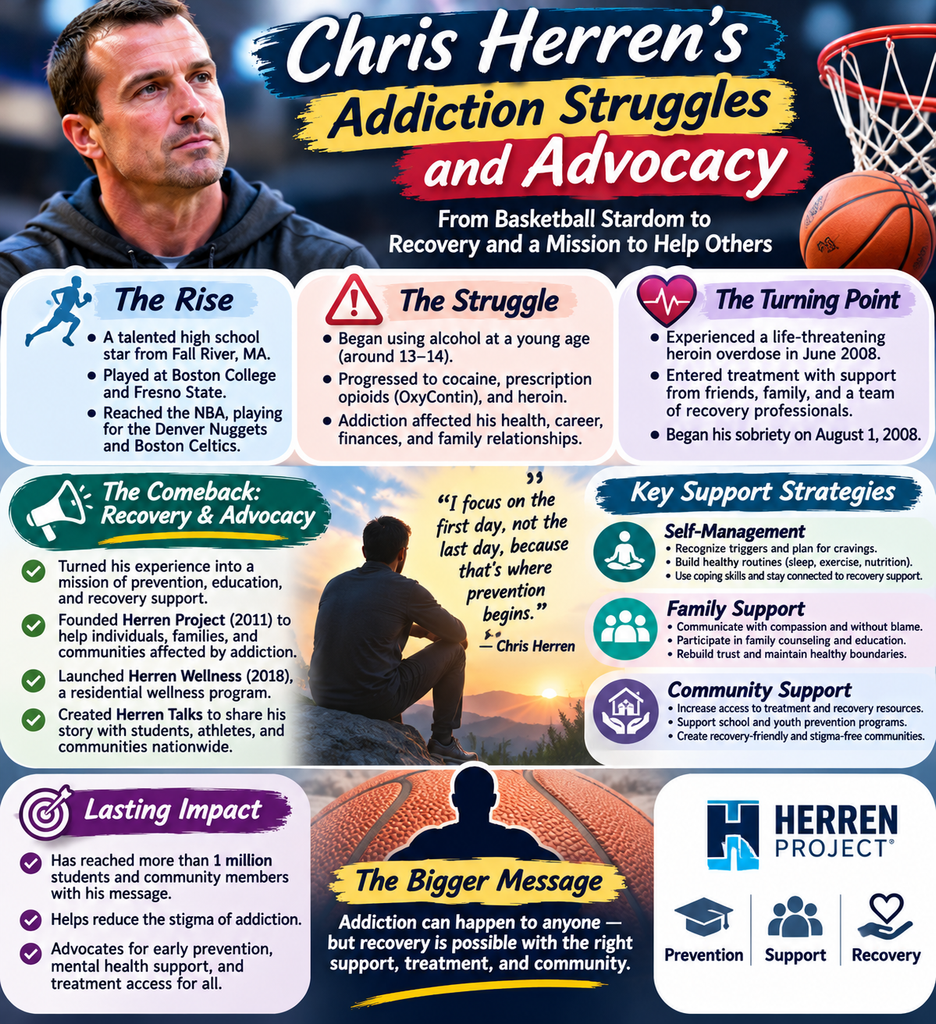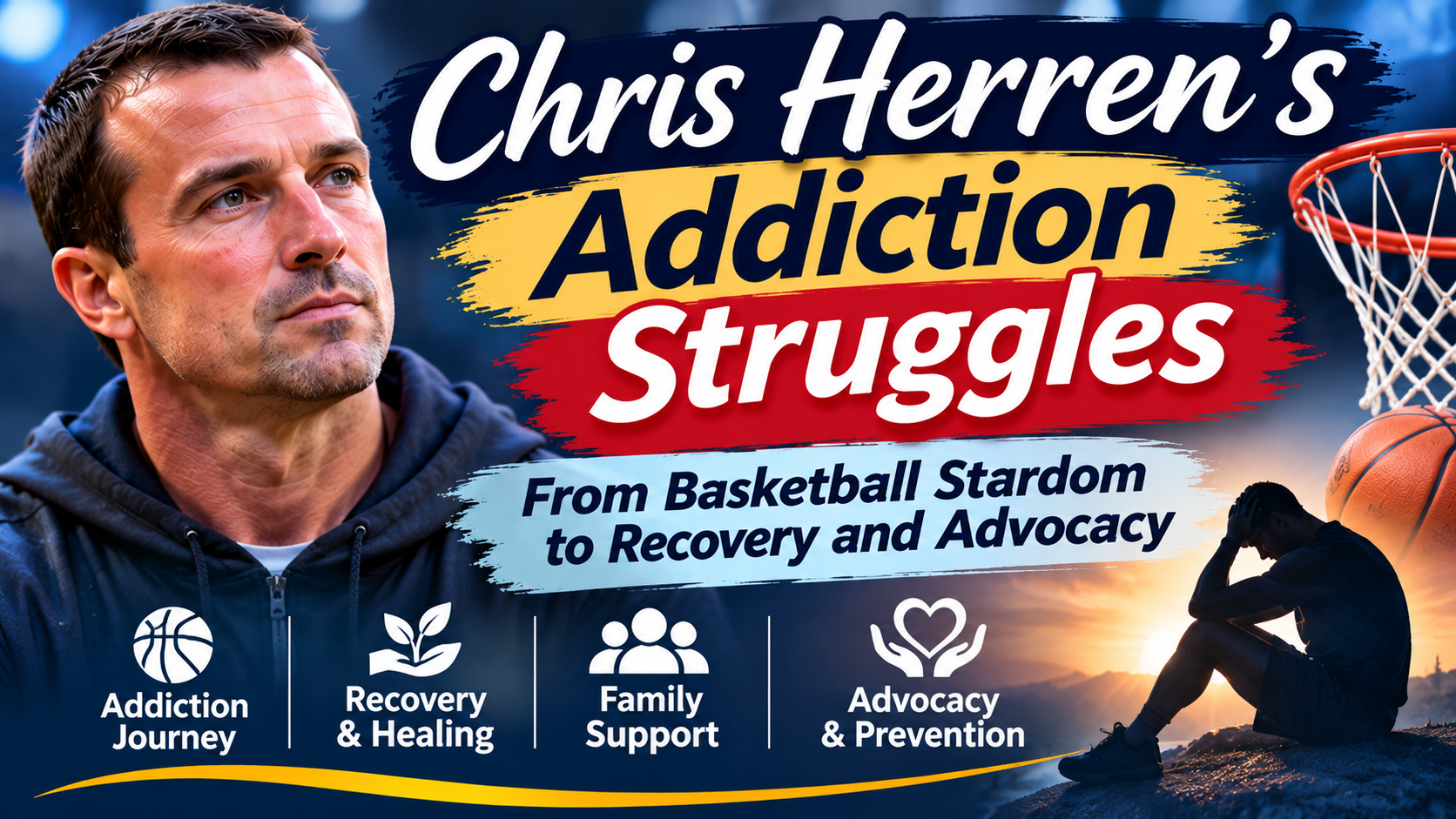
Chris Herren, a former NBA basketball player, struggled with alcohol, cocaine, prescription opioids, and heroin, nearly losing his career, family, and life. After entering recovery in 2008, he transformed his personal struggles into a mission of addiction prevention, education, and advocacy. Through Herren Project, Herren Wellness, and Herren Talks, he promotes early intervention and access to treatment. His inspiring journey highlights how self-management, family support, professional treatment, and community involvement can help individuals overcome addiction, rebuild their lives, and discover a renewed sense of purpose.
Understanding Chris Herren’s Addiction Struggles
Early Exposure to Alcohol and Drugs
Herren grew up in Fall River, Massachusetts, where basketball became an important part of his identity.
As a teenager, he was recognized for his exceptional athletic abilities and eventually drew national attention as a high school basketball standout.
However, behind his athletic achievements, Herren began experimenting with alcohol at approximately age 13 or 14.
He later described growing up in an environment where alcohol misuse was present, contributing to his early exposure to substance-related problems.
As he entered college, his substance use escalated to cocaine. After repeated failed drug tests, Herren was dismissed from Boston College and later continued his basketball career at Fresno State.
Despite opportunities for treatment and professional success, his addiction continued to progress. Regence+1
The Progression From Cocaine to Opioids
Herren’s substance use eventually involved prescription opioids, particularly OxyContin, followed by heroin.
During his professional basketball career, he experienced severe opioid dependence, making it increasingly difficult to function without substances.
His addiction affected multiple areas of his life:
- Physical health: Opioid dependence, withdrawal symptoms, and overdoses threatened his well-being.
- Mental health: Shame, anxiety, emotional distress, and isolation complicated his struggles.
- Professional career: Substance use interfered with his ability to maintain his NBA career.
- Family relationships: Addiction created emotional strain and damaged trust.
- Financial stability: Obtaining drugs became increasingly expensive.
- Personal identity: His substance use began overshadowing his achievements and responsibilities.
Herren’s experiences demonstrate how addiction can progressively affect individuals regardless of talent, professional accomplishments, or financial opportunities.
The Turning Point: Overdose, Treatment, and Recovery
In June 2008, Herren experienced a heroin overdose that nearly ended his life.
According to Herren Project, he was discharged from the hospital while still struggling with withdrawal symptoms and without adequate financial resources or health insurance.
Friends subsequently provided emotional and financial assistance, helping him enter an extended treatment program.
Herren identifies August 1, 2008, as the beginning of his sustained sobriety. Nonprofit Helping with Substance Use Disorder
Important Lessons From His Turning Point
- Overdose is a medical emergency: Immediate intervention can prevent death and create opportunities for treatment.
- Treatment access matters: Financial barriers and inadequate insurance can delay essential addiction care.
- Recovery requires ongoing support: Professional treatment, family involvement, and community resources can strengthen long-term recovery.
- Compassion can encourage treatment: Nonjudgmental support may help individuals seek assistance.
- Recovery is possible after repeated setbacks: Previous unsuccessful treatment attempts do not eliminate the possibility of sustained recovery.
His experience emphasizes the importance of making addiction treatment available before individuals experience life-threatening consequences.
Self-Management Strategies: Building a Sustainable Recovery Lifestyle
Self-management involves developing practical skills that help individuals recognize triggers, regulate emotions, maintain healthy routines, and respond effectively to cravings.
Herren has emphasized the importance of continued involvement in recovery communities, honest self-reflection, and maintaining meaningful relationships.
Recognizing Triggers and Emotional Vulnerabilities
Substance use can become associated with stress, insecurity, social pressure, emotional pain, and specific environments.
Helpful strategies include:
- Identify situations, emotions, and relationships associated with substance use.
- Recognize early warning signs of relapse.
- Develop a written relapse prevention plan.
- Practice mindfulness, relaxation, and emotional regulation.
- Maintain contact with trusted recovery supporters.
- Seek professional assistance when cravings become difficult to manage.
Herren’s prevention message encourages individuals to examine the emotional circumstances surrounding initial substance use rather than focusing exclusively on the most severe consequences of addiction.
Establishing Healthy Daily Routines
A structured lifestyle can support emotional stability and reduce exposure to high-risk situations.
Individuals may benefit from:
- Maintaining consistent sleep and wake schedules.
- Participating in regular physical activity.
- Eating balanced meals and staying hydrated.
- Attending scheduled treatment appointments.
- Developing healthy hobbies and recreational activities.
- Setting achievable personal and professional goals.
These routines can complement clinical treatment and help individuals rebuild confidence.
Using Evidence-Based Addiction Treatment
Recovery approaches should reflect each individual’s clinical needs.
For opioid use disorder, medications such as buprenorphine and methadone are effective treatments that reduce overdose risk and mortality.
Extended-release naltrexone may be appropriate for selected patients who have completed opioid withdrawal.
Behavioral counseling, recovery coaching, and peer support can complement medical treatment.
Although Herren’s personal recovery story emphasizes abstinence and ongoing community involvement, medication-assisted approaches remain important evidence-based options for people with opioid use disorder.
Family Support Strategies: Healing Relationships and Rebuilding Trust
Addiction affects entire families, often creating emotional distress, uncertainty, financial difficulties, and communication problems.
Herren has openly discussed how his substance use affected his wife, Heather, and their children.
He has also emphasized the importance of being emotionally present for his family following recovery.
In a 2023 interview, Herren explained that family participation is a major component of his wellness program because relatives may need their own recovery and healing process. Connecticut Public
Encouraging Compassionate Communication
Families can support recovery by creating an environment where concerns can be discussed without unnecessary judgment.
Helpful approaches include:
- Listen actively and acknowledge emotional difficulties.
- Avoid blaming or labeling the individual.
- Express concern using calm, respectful language.
- Encourage professional treatment and recovery participation.
- Recognize positive changes without expecting immediate perfection.
Establishing Healthy Boundaries
Family support should not require accepting unsafe or harmful behavior.
Families can:
- Set clear expectations regarding respectful communication.
- Avoid providing resources that directly enable substance use.
- Protect children and vulnerable family members.
- Encourage accountability and personal responsibility.
- Seek professional guidance when boundaries become difficult to maintain.
Participating in Family Counseling
Family therapy can help relatives understand addiction, address emotional injuries, and improve communication.
Family education may include:
- Understanding how addiction affects brain function and behavior.
- Recognizing relapse warning signs.
- Learning overdose prevention strategies.
- Developing healthier conflict-resolution skills.
- Understanding the benefits of medication and behavioral treatment.
- Rebuilding trust through consistent actions.
Herren’s journey demonstrates that family relationships can become an important source of motivation and support, while acknowledging that families also need independent opportunities for healing.
Chris Herren’s Addiction Recovery Advocacy
Following his recovery, Herren began sharing his experiences publicly to educate others about substance use disorders.
His advocacy emphasizes prevention, access to treatment, family support, and community wellness.
Herren Project: Helping Individuals and Families
In 2011, Herren founded Herren Project, a nonprofit organization dedicated to addiction prevention and recovery support.
The organization offers services such as:
- Recovery resource navigation.
- Individual and family recovery support.
- Online family support groups.
- Recovery coaching and housing scholarships.
- School-based prevention initiatives.
- Community wellness education.
Herren Project focuses on reducing barriers to recovery and helping individuals find appropriate support services. Nonprofit Helping with Substance Use Disorder
Herren Wellness: Supporting Healthier Lifestyles
In 2018, Herren established Herren Wellness, a residential wellness program focused on helping individuals develop healthier, substance-free lifestyles.
Its approach incorporates wellness education, personal growth, community connection, and recovery-oriented activities.
Programs such as Herren Wellness highlight the potential value of addressing lifestyle factors alongside addiction recovery.
However, wellness services should not be assumed to replace medical detoxification, medication treatment, or specialized psychiatric care when those services are needed.
Herren Talks: Educating Students and Communities
Through Herren Talks, Herren shares his experiences with students, educators, parents, athletes, and community organizations.
His presentations emphasize:
- Recognizing early substance use warning signs.
- Understanding the risks associated with alcohol and drug experimentation.
- Addressing emotional insecurity and peer pressure.
- Encouraging honest conversations about mental health.
- Promoting healthy coping strategies.
- Supporting individuals before substance use escalates.
His educational work has reached more than one million students and community members, according to his organization’s biography. Herren Talks
The Importance of Early Prevention: Understanding the First Day
One of Herren’s most recognizable prevention messages encourages people to examine the circumstances surrounding the beginning of substance use.
Rather than focusing only on overdoses, arrests, or other serious consequences, he encourages students and families to consider why someone initially turns to alcohol or drugs.
Why Early Prevention Matters
Adolescence is a period of significant brain development, emotional growth, and increased sensitivity to peer influence.
Early substance use can increase the risk of developing later substance-related problems, although not everyone who experiments with alcohol or drugs develops addiction.
Prevention strategies include:
- Encouraging open conversations about substance use.
- Teaching emotional regulation and stress-management skills.
- Identifying depression, anxiety, trauma, and other vulnerabilities.
- Providing healthy recreational opportunities.
- Promoting positive relationships with trusted adults.
- Establishing clear expectations about substance use.
- Connecting students with counseling when needed.
Herren’s approach encourages adults to understand the emotional and social factors influencing adolescent behavior.
Community Support Strategies: Creating Recovery-Friendly Environments
Community involvement can help individuals maintain recovery and reduce feelings of isolation.
Herren’s advocacy demonstrates how schools, healthcare organizations, families, and nonprofit programs can collaborate to support prevention and treatment.
Expanding Access to Addiction Treatment
Communities can strengthen recovery resources by:
- Increasing access to evidence-based substance use treatment.
- Supporting affordable outpatient and residential services.
- Expanding access to medications for opioid use disorder.
- Offering transportation and housing assistance.
- Supporting recovery coaching and peer mentorship.
- Providing naloxone and overdose prevention education.
Building Supportive Recovery Communities
Community recovery initiatives may include:
- Alcoholics Anonymous and Narcotics Anonymous meetings.
- SMART Recovery and other mutual-support programs.
- Recovery-friendly recreational activities.
- Peer mentorship and recovery coaching.
- Family support groups.
- Employment and educational opportunities.
- Community awareness events.
These services can help individuals build relationships that support long-term wellness.
Strengthening School-Based Prevention
Schools can play an important role in identifying early emotional and behavioral concerns.
Helpful initiatives include:
- Age-appropriate substance use education.
- Accessible school counseling services.
- Student wellness clubs.
- Peer support and mentorship programs.
- Parent education workshops.
- Training educators to recognize warning signs.
Herren Project Clubs and Wellness Week with Herren are examples of initiatives designed to encourage healthier choices and positive school environments.
Challenges and Barriers to Addiction Recovery
Herren’s experiences illustrate several challenges that can interfere with treatment access and sustained recovery.
| Challenge | Potential support strategy |
|---|---|
| Shame and stigma | Compassionate education and nonjudgmental support |
| Financial barriers | Treatment scholarships and affordable services |
| Persistent cravings | Medication treatment and relapse prevention planning |
| Family conflict | Family counseling and healthy boundaries |
| Social isolation | Peer recovery meetings and community involvement |
| Emotional distress | Mental health evaluation and counseling |
| Limited treatment availability | Telehealth, outpatient programs, and referral services |
| Fear of seeking help | Confidential counseling and supportive outreach |
His story also highlights the importance of making treatment available before individuals experience severe medical, financial, or legal consequences.
The Role of Mental Health in Addiction Recovery
Mental health and substance use disorders frequently interact.
Some individuals use alcohol or drugs to cope with emotional pain, anxiety, depression, trauma, or feelings of inadequacy.
Substance use can temporarily alter emotional experiences while ultimately worsening psychological distress and increasing dependence.
Herren’s prevention message encourages young people to explore the emotional reasons behind their decisions.
Supporting Emotional Well-Being
Helpful strategies include:
- Screening for depression, anxiety, and trauma-related symptoms.
- Encouraging honest conversations about emotional distress.
- Providing access to qualified mental health professionals.
- Teaching coping and problem-solving skills.
- Promoting healthy sleep, exercise, and social connections.
- Offering integrated treatment for co-occurring mental health and substance use disorders.
Recognizing emotional vulnerabilities early may reduce the likelihood that individuals turn to substances as a primary coping strategy.
Key Lessons From Chris Herren’s Recovery Journey
Herren’s experiences offer valuable insights for individuals, families, healthcare professionals, and communities.
Addiction can affect anyone. Professional success, athletic talent, and financial opportunities do not eliminate the risk of substance use disorders.
Early intervention matters. Recognizing concerning patterns of alcohol or drug use before severe consequences develop can improve opportunities for treatment.
Recovery is possible after repeated setbacks. Previous treatment attempts or relapses do not determine someone’s future.
Family support can strengthen recovery. Compassionate communication, healthy boundaries, and family counseling can help rebuild relationships.
Professional treatment is essential. Evidence-based medical and behavioral interventions can improve recovery outcomes and reduce serious health risks.
Community resources can save lives. Affordable treatment, peer support, prevention education, and recovery housing can help individuals access care.
Personal experiences can inspire meaningful advocacy. Herren has used his recovery journey to educate others and expand access to support services.
Resources for Individuals and Families
Individuals seeking addiction treatment or family support can explore these organizations:
- Herren Project — Recovery resources, family support, prevention programs, and scholarships.
- Herren Talks — Educational presentations about addiction prevention and recovery.
- FindTreatment.gov — Locate substance use and mental health treatment providers.
- SAMHSA — National addiction treatment information and referrals.
- SMART Recovery — Mutual-support programs emphasizing coping skills and self-management.
- Nar-Anon Family Groups — Support for families affected by another person’s addiction.
For confidential treatment referrals in the United States, contact SAMHSA’s National Helpline at 1-800-662-HELP (4357).
For a suspected opioid overdose, administer naloxone if available and call 911 immediately.
Conclusion: Turning Addiction Into a Mission of Hope
Chris Herren’s journey from basketball stardom through severe addiction to sustained recovery and public advocacy demonstrates the possibility of meaningful personal transformation.
His experiences reveal how substance use disorders can affect physical health, emotional well-being, professional success, and family relationships.
They also highlight the importance of recognizing addiction early, seeking professional treatment, rebuilding supportive relationships, and developing healthier coping strategies.
Through Herren Project, Herren Wellness, and Herren Talks, he has turned his personal experiences into initiatives that educate young people, support families, and help individuals seeking recovery.
His story reinforces an important message: recovery is not simply about stopping substance use. It is about rebuilding a meaningful life, strengthening relationships, and creating opportunities for lasting change.
With compassionate families, accessible treatment, and supportive communities, more individuals can find the resources they need to recover.
Understanding addiction can save lives. Recovery is possible, and every person deserves the opportunity to heal.
Frequently Asked Questions and Answers
Understanding Chris Herren’s Addiction Struggles
1. Who is Chris Herren?
Chris Herren is a former American professional basketball player who played for the Denver Nuggets and Boston Celtics in the NBA.
He was a highly regarded high school basketball player from Fall River, Massachusetts, and later played college basketball at Boston College and Fresno State.
Today, he is widely recognized for his addiction recovery advocacy, public speaking, and prevention initiatives.
2. What substances did Chris Herren struggle with?
Herren has publicly discussed addiction involving several substances throughout his life, including:
- Alcohol during his teenage years.
- Cocaine during college.
- Prescription opioids, including OxyContin.
- Heroin during his professional basketball career and afterward.
His experiences demonstrate how substance use can escalate and lead to serious physical, psychological, and social consequences.
3. At what age did Chris Herren begin using alcohol?
Herren has described beginning to drink alcohol around age 13 or 14.
He has frequently emphasized that his addiction story did not begin with heroin or an overdose. It began much earlier, when alcohol and other substances became part of his adolescent experiences.
His prevention message encourages families and educators to recognize early substance use and explore the emotional and social circumstances surrounding it.
4. How did Chris Herren’s addiction affect his basketball career?
Although Herren reached the NBA, his substance use interfered with his professional development and personal stability.
Addiction contributed to difficulties maintaining consistent performance, meeting professional responsibilities, and sustaining his career.
His experiences demonstrate that athletic talent, financial opportunities, and professional recognition do not protect individuals from developing substance use disorders.
5. How did his addiction progress from cocaine to opioids?
Herren has described using cocaine during college and later developing dependence on prescription opioids, including OxyContin.
His opioid use eventually progressed to heroin.
However, this progression is not inevitable. Not everyone who uses alcohol, cocaine, or prescription opioids develops addiction or transitions to heroin.
Risk depends on multiple factors, including genetics, mental health, substance exposure, environmental influences, and access to treatment.
6. Did Chris Herren experience a drug overdose?
Yes. Herren has publicly discussed surviving multiple overdoses, including a serious heroin overdose in June 2008.
Following that overdose, he faced significant barriers to treatment, including limited financial resources and a lack of health insurance.
Friends eventually helped him access extended addiction treatment. Nonprofit Helping with Substance Use Disorder
His experience highlights the importance of immediate overdose response, naloxone availability, and timely access to medical care.
7. When did Chris Herren become sober?
Herren identifies August 1, 2008, as the beginning of his sustained sobriety.
He has credited treatment, family relationships, supportive friends, and ongoing involvement in recovery as important influences in his life. Herren Talks
8. What motivated Chris Herren to seek recovery?
Several experiences contributed to Herren’s decision to pursue recovery, including overdoses, damaged family relationships, and the possibility of losing his life.
His desire to become a consistently present father and husband became a key motivator.
His journey shows that personal motivation can support recovery, especially when combined with professional treatment and ongoing support.
Self-Management and Recovery Strategies
9. What self-management strategies can individuals learn from Chris Herren’s recovery?
Herren’s experiences highlight the importance of developing healthy habits and maintaining recovery support.
Helpful strategies include:
- Identifying emotional triggers and high-risk situations.
- Participating in addiction treatment and recovery meetings.
- Establishing consistent sleep, exercise, and nutrition routines.
- Practicing mindfulness and emotional regulation.
- Building relationships with supportive individuals.
- Creating a personalized relapse prevention plan.
- Seeking professional assistance when cravings intensify.
These are general recovery recommendations, not necessarily a complete description of Herren’s personal treatment.
10. Why is recognizing emotional triggers important?
Emotional triggers such as stress, shame, loneliness, anxiety, or insecurity can increase the desire to use substances.
Recognizing these triggers allows individuals to develop healthier coping strategies.
For example, someone who experiences cravings after stressful situations may benefit from counseling, physical activity, relaxation techniques, or contacting a recovery supporter.
11. What role does mental health play in addiction recovery?
Mental health conditions and substance use disorders frequently occur together.
Depression, anxiety, trauma-related symptoms, and emotional distress can complicate recovery.
Integrated treatment that addresses both mental health and substance use is often beneficial.
Herren’s prevention message emphasizes understanding the emotional circumstances surrounding substance use rather than focusing exclusively on its consequences.
12. Can someone recover from opioid addiction without medication?
Some individuals achieve sustained recovery without medication. However, buprenorphine and methadone are evidence-based first-line treatments for opioid use disorder because they substantially reduce overdose risk and mortality.
Extended-release naltrexone may be appropriate for selected individuals.
Counseling, peer support, and wellness activities can complement medication treatment, but they should not be considered equivalent substitutes for medications proven to reduce opioid-related deaths.
13. How can someone prevent relapse after addiction treatment?
Relapse prevention involves recognizing warning signs and maintaining access to treatment and supportive relationships.
Useful strategies include:
- Developing a written recovery plan.
- Continuing recommended medications and counseling.
- Avoiding or preparing for high-risk environments.
- Attending recovery support meetings.
- Monitoring changes in sleep, mood, and stress.
- Seeking additional treatment when warning signs appear.
A return to substance use does not erase previous recovery progress, but it should prompt reassessment of treatment and overdose risk.
Family Support and Relationships
14. How did Chris Herren’s addiction affect his family?
Herren has publicly described the emotional distress his addiction caused his wife, Heather, and their children.
His substance use contributed to damaged trust, instability, and periods of separation.
Rebuilding family relationships became an important part of his recovery. Worcester State University News
15. How can families support someone experiencing addiction?
Families can provide support through compassionate communication and appropriate boundaries.
Helpful approaches include:
- Listening without unnecessary judgment.
- Encouraging professional treatment.
- Learning about substance use disorders.
- Establishing clear expectations and boundaries.
- Participating in family counseling.
- Recognizing recovery progress.
- Seeking support for their own emotional well-being.
Family members can encourage treatment, but they cannot independently control another person’s recovery.
16. Why are healthy boundaries important during addiction recovery?
Healthy boundaries protect family relationships and reduce situations that may unintentionally support harmful behavior.
Examples include refusing to provide money for substance use, maintaining household safety expectations, and encouraging professional treatment.
Boundaries should be communicated respectfully and consistently, not used as punishment.
17. Can families rebuild trust after addiction?
Yes. Trust can gradually improve through honest communication, consistent behavior, accountability, and respect for boundaries.
Family counseling may help relatives address unresolved emotional injuries.
However, rebuilding trust takes time, and each family member may recover emotionally at a different pace.
18. What should families do if someone refuses treatment?
Families should maintain compassionate communication while prioritizing safety.
They can offer information about treatment, establish healthy boundaries, and seek professional guidance.
Community Reinforcement and Family Training (CRAFT) is one evidence-based approach that helps families improve communication and encourage treatment engagement.
Chris Herren’s Advocacy and Community Support
19. What is the Herren Project?
Herren Project is a nonprofit organization founded by Chris Herren in 2011.
It provides free resources and support related to substance use prevention, treatment navigation, and long-term recovery.
Its services include:
- Recovery resource navigation.
- Recovery coaching and housing scholarships.
- Online family support groups.
- Prevention education for schools.
- Community wellness initiatives.
The organization emphasizes compassionate, individualized support. Nonprofit Helping with Substance Use Disorder
20. What is Herren Wellness?
Herren Wellness is a residential health and wellness organization founded in 2018.
Its approach emphasizes personal growth, recovery support, healthy routines, and emotional well-being.
The organization describes combining holistic strategies with medical and clinical support for continuity of care. Chris Herren
Individuals considering admission should confirm which medical, psychiatric, and medication services are available.
21. What is Herren Talks?
Herren Talks is Chris Herren’s public speaking and educational initiative.
Through presentations to schools, athletic organizations, and communities, he discusses substance use, emotional well-being, recovery, and prevention.
His official website reports that he has spoken to more than two million students, athletes, and community members since 2009. Chris Herren
22. What does Chris Herren mean by focusing on “the first day”?
Herren encourages people to examine why substance use begins rather than concentrating only on its most severe consequences.
His message asks young people to consider the emotional and social pressures that influence their decisions.
This approach emphasizes:
- Self-confidence and emotional well-being.
- Peer pressure and social acceptance.
- Early intervention.
- Healthy coping skills.
- Honest conversations about substance use.
His documentary The First Day explores this prevention philosophy. Herren Project
23. How does Chris Herren help prevent substance use among teenagers?
Herren encourages schools and communities to discuss substance use before serious problems develop.
His prevention efforts promote emotional awareness, positive decision-making, healthy relationships, and access to supportive adults.
Herren Project Clubs and Wellness Week initiatives also encourage students to develop healthier lifestyles.
24. Why are community support programs important in addiction recovery?
Community programs provide resources that individuals may not be able to access on their own.
They can offer:
- Affordable treatment referrals.
- Peer recovery support.
- Family education.
- Recovery housing assistance.
- Overdose prevention services.
- Employment and educational support.
- Recovery-friendly social activities.
These resources help reduce isolation and strengthen long-term recovery opportunities.
25. How can schools help prevent addiction?
Schools can support prevention by combining accurate substance use education with mental health and social-emotional support.
Effective approaches may include counseling access, parent education, positive peer mentorship, and early identification of concerning substance use.
Fear-based messages alone are generally insufficient. Prevention is stronger when students develop practical coping skills and supportive relationships.
Lessons, Recovery, and Hope
26. What are the biggest lessons from Chris Herren’s addiction journey?
His experiences demonstrate several important principles:
- Addiction can affect individuals regardless of professional success.
- Early substance use deserves attention.
- Overdose survivors need timely access to treatment.
- Recovery may require multiple treatment attempts.
- Family relationships can become important sources of support.
- Long-term recovery involves continued self-management.
- Lived experience can inspire meaningful community advocacy.
27. What should someone do after experiencing an opioid relapse?
A person returning to opioid use should seek prompt professional support and review their treatment plan.
Recommended steps include contacting a healthcare provider, discussing medication treatment, ensuring naloxone is available, and reconnecting with recovery supporters.
Overdose risk can be especially high after abstinence because opioid tolerance decreases.
If an overdose is suspected, administer naloxone if available and call 911 immediately.
28. Where can individuals and families find addiction treatment resources?
The following organizations provide treatment information and support:
- Herren Project — Recovery resources, family support, and prevention education.
- FindTreatment.gov — Search for addiction and mental health treatment providers.
- SAMHSA — National substance use treatment information.
- SMART Recovery — Recovery support and self-management resources.
- Nar-Anon Family Groups — Support for relatives and friends affected by addiction.
In the United States, SAMHSA’s National Helpline is available at 1-800-662-HELP (4357).
29. Why is Chris Herren’s recovery story inspiring?
Herren’s story demonstrates how individuals can rebuild their lives following severe substance use disorders.
After experiencing professional setbacks, overdoses, and damaged relationships, he pursued recovery and redirected his efforts toward helping others.
His advocacy highlights the importance of compassion, access to treatment, and second chances.
30. What is the most important message from Chris Herren’s addiction struggles?
Chris Herren’s journey reinforces that addiction is a treatable medical condition and that recovery is possible.
His experiences also demonstrate the importance of early prevention, family support, evidence-based treatment, and accessible community resources.
Rather than allowing his addiction history to define his future, Herren has used his experiences to educate others and expand recovery opportunities.
Video: