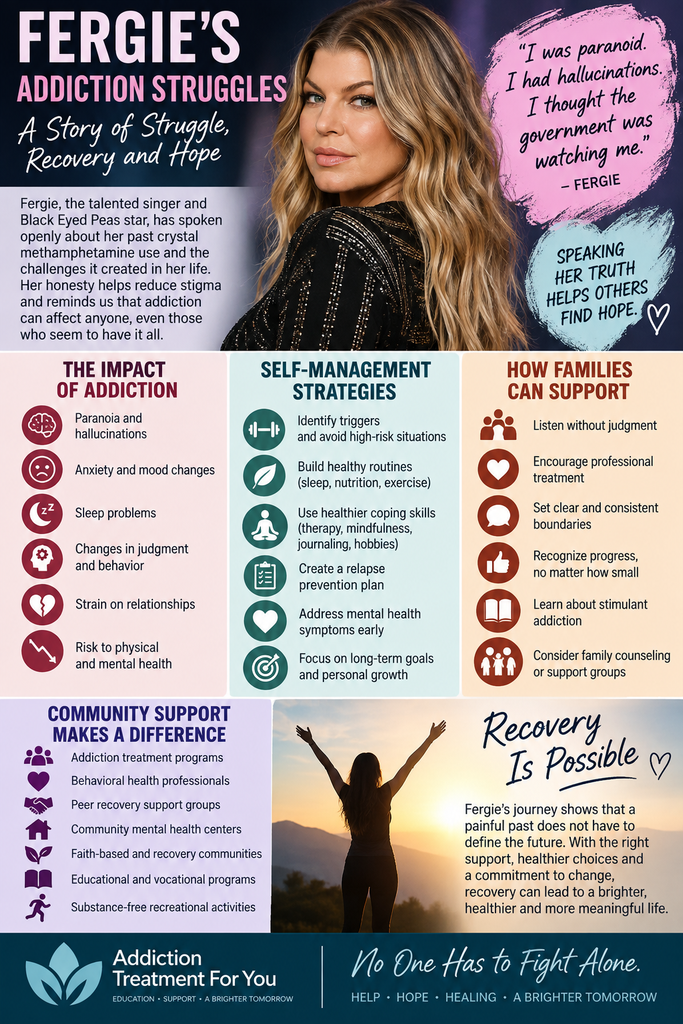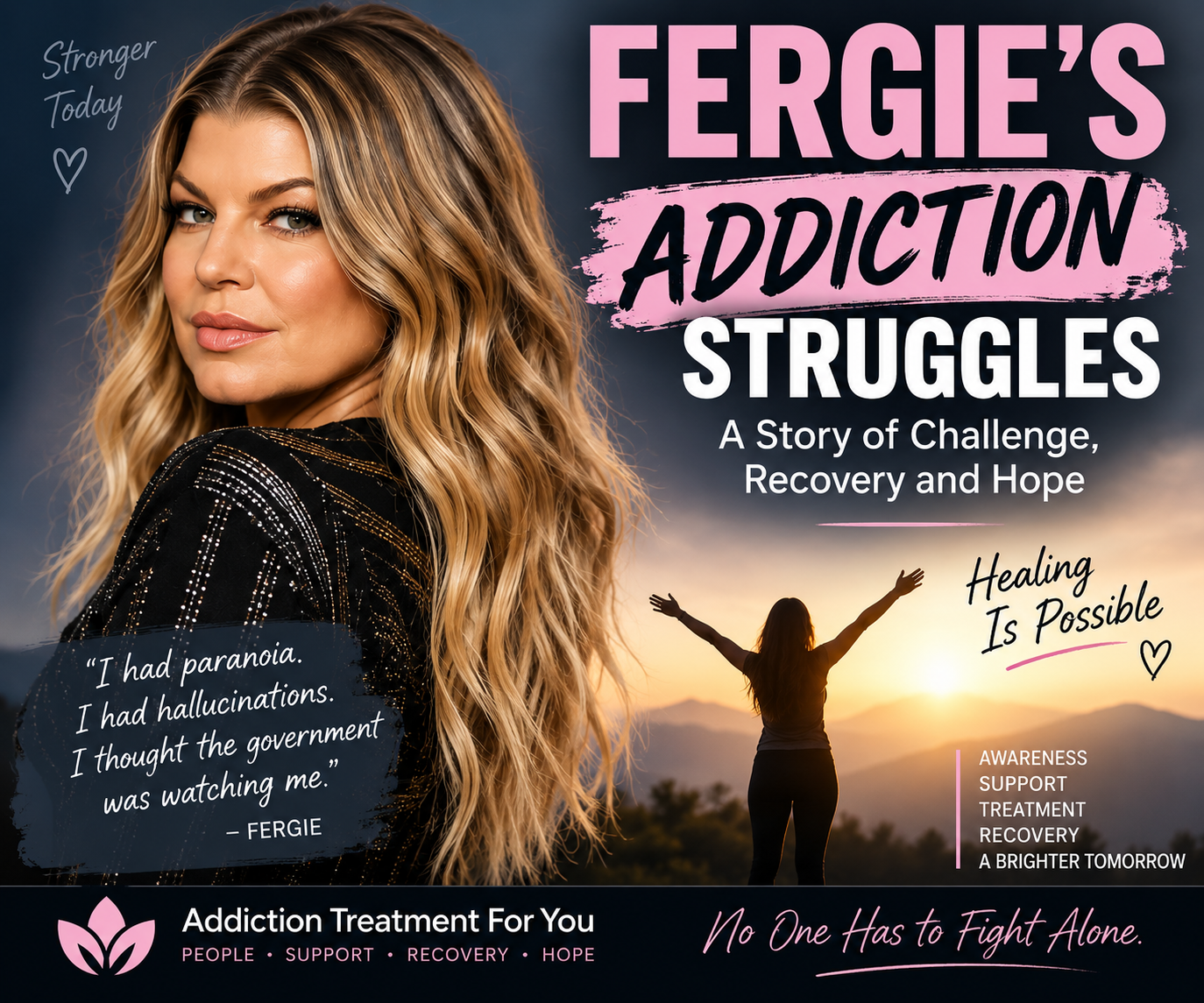
Fergie, best known as a member of the Black Eyed Peas and for her successful solo career, has spoken openly about a difficult period involving crystal methamphetamine use before achieving greater stability in her life. Her experience demonstrates an important reality about substance use disorders: outward talent, ambition, and professional success do not necessarily protect someone from addiction.
Fergie has described how methamphetamine use seriously affected her mental and emotional well-being. At the height of her substance use, she experienced paranoia and hallucinations. She has spoken publicly about believing that government agencies were following her and described the frightening psychological consequences of prolonged drug use.
Her story is especially valuable for addiction education because stimulant addiction can alter thinking, behavior, sleep, judgment, and emotional regulation. Methamphetamine use can also contribute to anxiety, agitation, and psychotic symptoms such as paranoia and hallucinations. These experiences can become severe enough that professional medical or psychiatric evaluation is necessary.
Recognizing That Something Had to Change
An important turning point in Fergie’s story was recognizing how destructive her substance use had become. Recovery often begins when a person becomes able to see the difference between the temporary effects of a drug and what the substance is taking away from everyday life.
Fergie has discussed turning toward therapy, spirituality, and personal reflection as she moved away from methamphetamine. Her experience should not be interpreted as a universal recovery formula. Every person’s needs are different, and people struggling with stimulant addiction may benefit from professional assessment and evidence-based treatment.
Self-Management Strategies
Recovery requires more than simply avoiding a substance. It often involves learning new ways to handle emotions, stress, cravings, and situations previously associated with drug use.
- Identify triggers: Recognize people, environments, emotions, and situations associated with previous substance use.
- Create structure: Regular sleep, meals, exercise, and daily responsibilities can help rebuild stability.
- Develop healthier coping skills: Therapy, mindfulness, exercise, journaling, hobbies, and spiritual practices may provide alternatives to substance use.
- Avoid high-risk environments: Creating distance from people or situations strongly associated with drug use can support early recovery.
- Address mental health symptoms: Persistent paranoia, hallucinations, depression, anxiety, or other psychiatric symptoms should be professionally evaluated.
- Build a relapse-prevention plan: Know personal warning signs and decide ahead of time whom to contact when cravings or emotional distress increase.
- Practice self-awareness: Recovery includes recognizing problems early rather than waiting until they become overwhelming.
How Families Can Support Recovery
Addiction affects families as well as the individual using substances. Loved ones can provide meaningful support without attempting to control another person’s recovery.
Families can learn about stimulant addiction and understand that behavioral changes may be influenced by powerful effects on the brain. Education can reduce misunderstanding while still allowing relatives to establish appropriate boundaries.
Helpful family strategies include:
- Listen without immediately criticizing or lecturing.
- Encourage professional treatment when needed.
- Establish clear and consistent boundaries.
- Avoid providing money or resources that could unintentionally support continued substance use.
- Recognize positive recovery behaviors and progress.
- Learn the warning signs of relapse.
- Develop an emergency plan for severe psychiatric or medical symptoms.
- Consider counseling or support groups for family members.
Support and accountability can exist together. Caring about someone does not require ignoring harmful behavior.
Community Support Strategies
Recovery can become more sustainable when individuals have supportive connections outside their immediate family. Isolation may increase vulnerability, while healthy relationships can provide accountability, encouragement, and a sense of belonging.
Community resources may include:
- Addiction treatment programs
- Behavioral health professionals
- Peer recovery specialists
- Recovery support groups
- Community mental health centers
- Primary care providers
- Faith-based recovery communities when desired
- Vocational and educational programs
- Substance-free recreational activities
For methamphetamine use disorder specifically, professional programs may use behavioral treatments such as contingency management and cognitive behavioral approaches. Treatment should be individualized according to the person’s medical, psychiatric, and social needs.
Understanding Fergie’s Journey
Fergie’s experience illustrates how addiction can coexist with extraordinary talent and professional achievement. A successful public image does not reveal what someone may be experiencing privately.
Her descriptions of paranoia and hallucinations also demonstrate why methamphetamine addiction should not be reduced to a question of willpower. Chronic stimulant use can have profound effects on the brain and behavior. At the same time, recovery involves personal responsibility—recognizing harmful patterns, seeking appropriate support, and repeatedly choosing behaviors that protect recovery.
Perhaps one of the most useful lessons from Fergie’s story is that a destructive period does not have to define the rest of a person’s life. Recovery can involve rebuilding routines, relationships, identity, and purpose over time.
Moving Forward
Fergie’s willingness to discuss her past has helped bring attention to the realities of methamphetamine addiction. Her experience reminds families to look beyond judgment and ask a more productive question: What support can help this person move toward lasting change?
For someone currently struggling with stimulant addiction, the path may look different from Fergie’s. Professional treatment, behavioral therapy, supportive relationships, structured routines, and community recovery resources can all become parts of a comprehensive recovery plan.
Recovery is rarely one dramatic moment. More often, it is a continuing process of making healthier decisions, recognizing vulnerabilities, accepting support, and rebuilding a life in which substances are no longer the center of the story.
Frequently Asked Questions
Here are some common questions:
1. What addiction did Fergie struggle with?
Fergie has publicly discussed struggling with crystal methamphetamine use before becoming internationally famous with the Black Eyed Peas. She has described this period as extremely difficult and has spoken openly about the psychological effects she experienced.
2. How did methamphetamine affect Fergie?
Fergie has said that her methamphetamine use was associated with severe paranoia and hallucinations. She described believing that government agencies were following or monitoring her. Methamphetamine can cause significant changes in mood, sleep, judgment, and perception, particularly with heavy or prolonged use.
3. Did Fergie experience drug-induced psychosis?
Her descriptions of hallucinations and intense paranoia are consistent with symptoms that can occur with stimulant-induced psychosis. However, a specific clinical diagnosis should not be assigned to a public figure unless it has been reliably disclosed or documented.
4. Why did Fergie start using drugs?
Fergie has discussed experimenting with drugs when she was younger and eventually becoming heavily involved with crystal methamphetamine. Addiction rarely develops from one factor alone. Biological vulnerability, environment, stress, social influences, and psychological factors can all contribute to substance use disorders.
5. What helped Fergie stop using crystal meth?
Fergie has credited several factors with helping her move away from methamphetamine, including therapy, spirituality, and recognizing how severely drugs were affecting her life. Her experience represents her individual journey rather than a treatment plan that will work for everyone.
6. Did Fergie go to rehabilitation for her addiction?
Fergie has spoken publicly about therapy and other approaches that helped her recovery. When discussing her history, it is better not to assume that she followed a particular rehabilitation program unless supported by her own statements or reliable reporting.
7. Can someone recover from methamphetamine addiction?
Yes. Methamphetamine use disorder is treatable. Recovery may involve behavioral therapy, contingency management, counseling, treatment for co-occurring mental health problems, peer support, and ongoing relapse-prevention strategies. Recovery often requires continued support rather than a single intervention.
8. What self-management strategies can help with stimulant recovery?
Helpful strategies can include identifying triggers, avoiding high-risk environments, maintaining regular sleep and nutrition, exercising, developing healthy coping skills, creating a relapse-prevention plan, and staying connected with supportive people. Professional treatment remains important, particularly when cravings or psychiatric symptoms are severe.
9. How can families support someone recovering from methamphetamine addiction?
Families can learn about addiction, communicate without constant judgment, encourage treatment, and establish healthy boundaries. They can also watch for significant behavioral changes and seek professional assistance when necessary. Supporting recovery does not mean enabling continued substance use.
10. What community resources can support recovery?
Community support may include addiction treatment programs, behavioral health clinics, peer recovery organizations, community mental health centers, primary care services, and mutual-support groups. These resources can help reduce isolation and provide ongoing accountability.
11. Can paranoia and hallucinations continue after methamphetamine use stops?
For some people, psychiatric symptoms improve after stopping methamphetamine, while others may experience persistent or recurring symptoms. Hallucinations, severe paranoia, extreme agitation, or dangerous behavior warrant prompt professional evaluation.
12. Can relapse happen after someone has stopped using methamphetamine?
Yes. Relapse can occur with substance use disorders and should be treated as a signal that the recovery plan needs reassessment. Recognizing triggers early and reconnecting with treatment and supportive people can help prevent a temporary setback from becoming a prolonged return to use.
13. What can people learn from Fergie’s addiction journey?
Her story demonstrates that addiction can affect people regardless of talent, career success, wealth, or public image. It also illustrates the importance of recognizing when substance use has become destructive and finding healthier ways to cope.
14. Why is Fergie speaking publicly about her past important?
Public discussions about addiction can challenge stigma and remind people that substance use disorders are health conditions that deserve appropriate treatment and support. At the same time, celebrity recovery stories should complement—not replace—evidence-based addiction education.
15. What is the central message of Fergie’s recovery story?
A difficult period involving addiction does not have to determine the rest of someone’s life. Recovery can involve rebuilding physical and emotional health, developing healthier coping strategies, repairing relationships, and creating a meaningful life beyond substance use.
Video: Life after meth: Fergie’s incredible recovery #transformation #inspiration #recovery