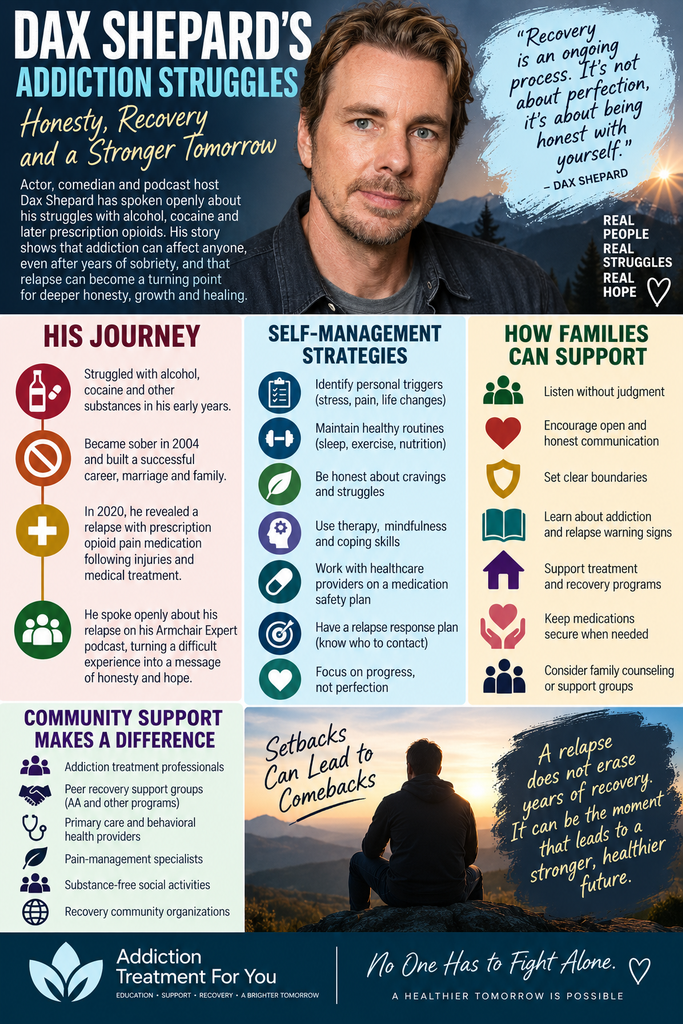
Actor, comedian, and podcast host Dax Shepard has spoken openly about his struggles with alcohol and other drugs, as well as the challenges of maintaining recovery. His experience provides an important reminder that addiction recovery is not always a straight path. Even after many years without alcohol or illicit drugs, vulnerability can remain, and relapse can occur.
Shepard has described a history involving alcohol, cocaine, and other substance use. He became sober in 2004 and later built a life that included marriage, fatherhood, acting, and a successful podcast. However, in 2020, he publicly revealed that he had relapsed, involving prescription opioid pain medication following injuries and medical procedures.
His decision to discuss the relapse publicly became an important part of his recovery story.
When Long-Term Recovery Meets New Vulnerability
One of the most valuable lessons from Shepard’s experience is that years of recovery do not necessarily eliminate addiction risk.
After experiencing significant physical injuries and undergoing medical treatment, Shepard was prescribed opioid pain medication. He has explained that his use eventually moved beyond taking medication strictly as prescribed. He began hiding aspects of his use and recognized familiar patterns of secrecy and dishonesty.
This demonstrates why prescription medications can require careful monitoring for someone with a history of substance use disorder. Needing legitimate pain treatment does not represent failure, but previous addiction can make communication with healthcare professionals particularly important.
The Role of Honesty in Dax Shepard’s Recovery
Shepard eventually disclosed what was happening to people close to him and discussed the relapse publicly on his Armchair Expert podcast.
His experience illustrates an important principle of recovery: secrecy can allow addiction to grow, while honesty creates opportunities for intervention.
Warning signs that someone may need additional support can include:
- Hiding or minimizing substance use
- Taking medication differently than prescribed
- Becoming increasingly preoccupied with obtaining medication
- Withdrawing from supportive people
- Rationalizing behaviors that previously would have raised concern
- Missing recovery meetings or treatment appointments
- Becoming defensive when loved ones express concern
These behaviors do not automatically prove that someone has relapsed, but they may indicate that a conversation or professional assessment is needed.
Self-Management Strategies for Long-Term Recovery
Long-term recovery requires continued attention even when life is going well. A strong recovery plan should evolve as circumstances change.
Helpful self-management strategies include:
- Recognize personal triggers. Pain, stress, grief, insomnia, conflict, and major life changes can increase vulnerability.
- Maintain recovery routines. Counseling, recovery meetings, exercise, meditation, or other established practices should not automatically disappear when someone feels better.
- Practice early honesty. Discuss cravings and concerning behaviors before they become larger problems.
- Develop a medication safety plan. People with addiction histories can discuss their recovery status with healthcare providers before receiving potentially habit-forming medications.
- Monitor changes in thinking. Rationalizing, bargaining, and secrecy can be early warning signs.
- Protect sleep and physical health. Exhaustion and untreated pain can make coping more difficult.
- Create a relapse response plan. Decide in advance whom to contact and what steps to take if substance use returns.
Relapse prevention is not based on perfection. It is based on recognizing risk and responding quickly.
How Family Support Can Make a Difference
Shepard has publicly discussed his relationship with actress Kristen Bell and the importance of honesty within his recovery. A partner or family member cannot recover for another person, but supportive relationships can make it harder for addiction to remain hidden.
Families can help by:
- Listening without immediately attacking or shaming
- Encouraging honest conversations about cravings and relapse
- Establishing clear boundaries around substance use
- Supporting participation in treatment and recovery programs
- Learning about addiction and relapse warning signs
- Keeping potentially risky medications appropriately secured
- Encouraging communication with healthcare providers
- Seeking counseling or support for themselves when needed
Family support should combine compassion with accountability. Protecting someone from every consequence of addiction can unintentionally become enabling.
Community Support Strategies
Recovery becomes stronger when responsibility does not rest entirely on one person or one family.
Community resources can create multiple layers of support, including:
- Addiction treatment professionals
- Primary care and behavioral health providers
- Peer recovery specialists
- Alcoholics Anonymous and other mutual-support programs
- Individual and family counseling
- Recovery community organizations
- Medication management when appropriate
- Substance-free social and recreational activities
- Pain-management specialists familiar with addiction recovery
Having several sources of support can be especially valuable during stressful periods, medical procedures, or major life transitions.
Addiction, Pain, and Prescription Medication
Shepard’s story also raises an important issue for people recovering from addiction: How should legitimate pain be treated?
People with a history of addiction still deserve effective pain treatment. Avoiding all pain medication is not automatically the safest or most appropriate approach. Instead, healthcare professionals and patients can discuss addiction history, alternative treatments, medication quantities, monitoring, and follow-up.
When opioids are medically necessary, an individualized safety plan can help balance adequate pain management with relapse prevention.
Relapse Does Not Erase Years of Recovery
One of the most damaging beliefs surrounding addiction is that relapse means everything accomplished beforehand has been lost.
It does not.
The healthier relationships, coping skills, insight, and periods of sobriety developed during recovery still matter. A relapse signals that something needs attention and that the treatment or recovery plan may need to be strengthened.
Shepard’s decision to publicly acknowledge his relapse rather than continue hiding it illustrates how accountability can become a turning point.
What Dax Shepard’s Journey Can Teach Families
Dax Shepard’s experience shows that addiction can remain relevant even after years of successful recovery. Career accomplishments, marriage, parenting, and long periods of sobriety do not make someone immune to relapse.
His story also demonstrates why families should pay attention not only to substance use itself but also to secrecy, isolation, rationalization, and changes in established recovery behaviors.
Most importantly, recovery should not be measured solely by whether someone has ever relapsed. It can also be measured by what happens afterward.
Does the person tell the truth? Do they reconnect with support? Do they examine what happened? Do they change their recovery plan?
Those actions can transform relapse from a hidden crisis into an opportunity for renewed treatment and growth.
Moving Forward
Dax Shepard’s willingness to talk publicly about addiction and relapse helps challenge the idea that successful recovery must look perfect.
Recovery is an ongoing process requiring self-awareness, accountability, and connection. Self-management can help individuals recognize their vulnerabilities. Families can provide support while maintaining healthy boundaries. Treatment professionals and recovery communities can provide additional structure when personal coping strategies are no longer enough.
The lesson is not that relapse is inevitable. It is that recovery deserves continued attention—even after years of sobriety.
When warning signs appear, reaching out early can make an enormous difference. A relapse does not have to become the end of someone’s recovery story. It can become the moment when honesty, treatment, and support begin again.
Frequently Asked Questions
Here are some common questions:
1. What substances has Dax Shepard struggled with?
Dax Shepard has publicly discussed a history of problematic alcohol and drug use, including cocaine. He has also spoken openly about a 2020 relapse involving prescription opioid pain medication after injuries and medical procedures.
2. When did Dax Shepard first become sober?
Shepard has said that he became sober in 2004. He maintained many years of recovery before publicly revealing his 2020 relapse involving prescription opioids.
3. What contributed to Dax Shepard’s 2020 relapse?
Shepard has explained that injuries, surgeries, pain, and access to prescription opioid medication created a difficult situation. Over time, his medication use became problematic, and he began hiding aspects of his behavior from people close to him.
4. Why is Dax Shepard’s relapse important to discuss?
His experience demonstrates that long-term recovery does not eliminate every future vulnerability. Stress, physical pain, medications, emotional difficulties, and major life events can introduce new relapse risks even after years of sobriety.
5. Did Dax Shepard hide his relapse?
Shepard has described secrecy and dishonesty surrounding his opioid use. Eventually, he disclosed what was happening and publicly discussed his relapse on his Armchair Expert podcast.
6. Did his relapse erase his previous years of sobriety?
No. A relapse does not erase the coping skills, relationships, insight, and healthier behaviors developed during previous years of recovery. However, relapse is an important warning that the person’s recovery or treatment plan needs reassessment.
7. What role has honesty played in Dax Shepard’s recovery?
Honesty has been a major theme in Shepard’s public discussions of addiction. His experience illustrates how secrecy can allow problematic substance use to continue, while disclosure can reconnect someone with accountability and support.
8. How has Kristen Bell supported Dax Shepard?
Shepard and his wife, actress Kristen Bell, have publicly discussed aspects of recovery, communication, and their relationship. Family members can provide encouragement and accountability, but they cannot take responsibility for another person’s sobriety.
9. What self-management strategies can help prevent relapse?
Helpful strategies include recognizing triggers, maintaining recovery routines, attending counseling or support meetings, discussing cravings early, protecting sleep, managing stress, and developing a relapse-response plan. People with addiction histories should also communicate openly with healthcare providers about medications that may carry misuse risks.
10. Can people recovering from addiction safely receive prescription opioids for pain?
A history of addiction does not mean someone should be denied appropriate pain treatment. Treatment should be individualized. Patients can discuss their addiction history with healthcare professionals and develop a plan that considers non-opioid options when appropriate, limited medication quantities, monitoring, and follow-up.
11. What warning signs may suggest that recovery is becoming unstable?
Possible warning signs include increasing secrecy, isolation, cravings, rationalizing substance use, taking medication differently than prescribed, withdrawing from recovery activities, and becoming defensive when others express concern. These signs do not automatically prove relapse, but they deserve attention.
12. How can families support someone after a relapse?
Families can listen without humiliation or excessive criticism while still maintaining clear boundaries. They can encourage professional treatment, support renewed participation in recovery programs, and avoid behaviors that unintentionally enable continued substance use.
13. What community resources can support long-term recovery?
Resources may include addiction treatment programs, behavioral health professionals, primary care providers, peer recovery specialists, Alcoholics Anonymous or other mutual-support groups, recovery community organizations, family counseling, and pain-management specialists familiar with substance use disorders.
14. Does relapse mean addiction treatment has failed?
Not necessarily. Substance use disorders can have a chronic and recurring course. Relapse indicates that risks have increased and the treatment or recovery plan may need to be strengthened, modified, or restarted.
15. What can people learn from Dax Shepard’s addiction journey?
His story highlights the importance of continued self-awareness, honesty, and support. Someone can have a successful career, a loving family, and many years of recovery while still experiencing vulnerability to addiction.
16. What is the main message of Dax Shepard’s recovery story?
Recovery does not require pretending that setbacks never happen. What matters is recognizing problems, telling the truth, accepting appropriate help, and returning to behaviors that support recovery. A relapse can be serious without becoming the end of someone’s recovery journey.
Video: Relapse doesn’t mean failure: Dax Shepard’s lesson #motivation #sobriety