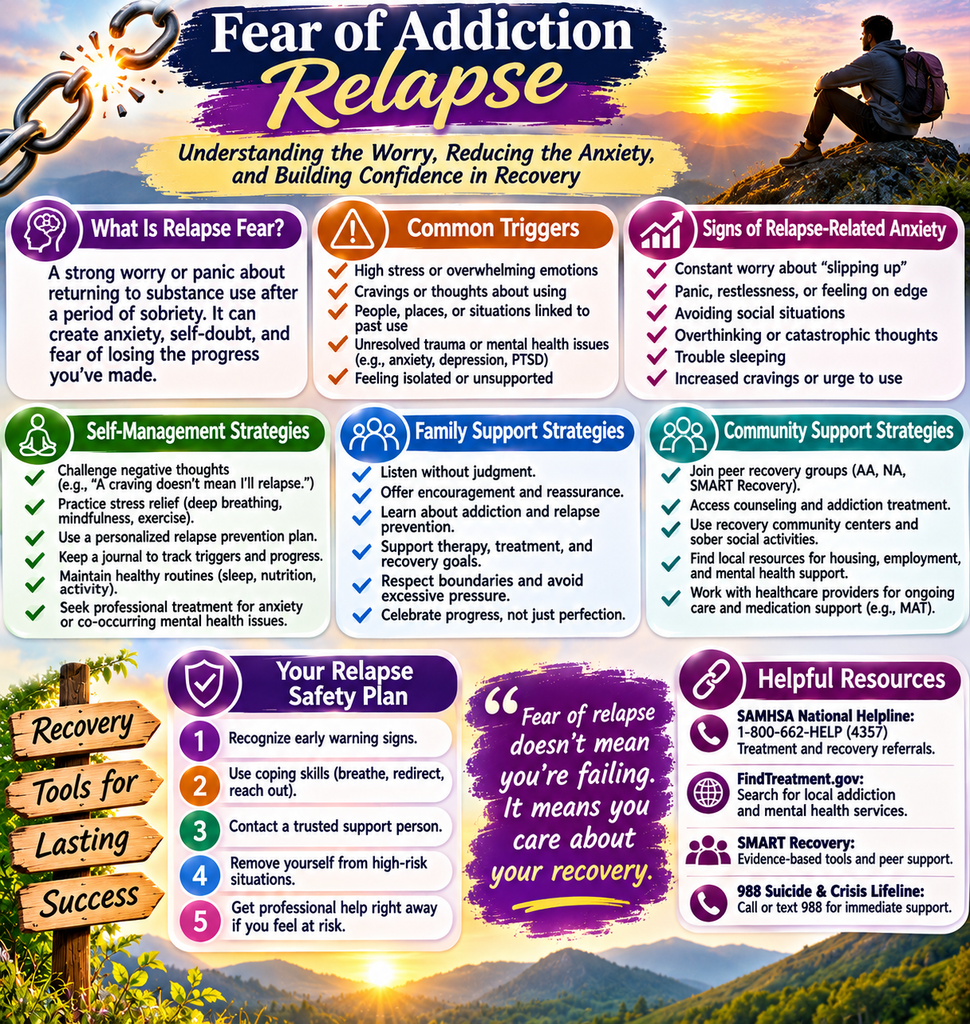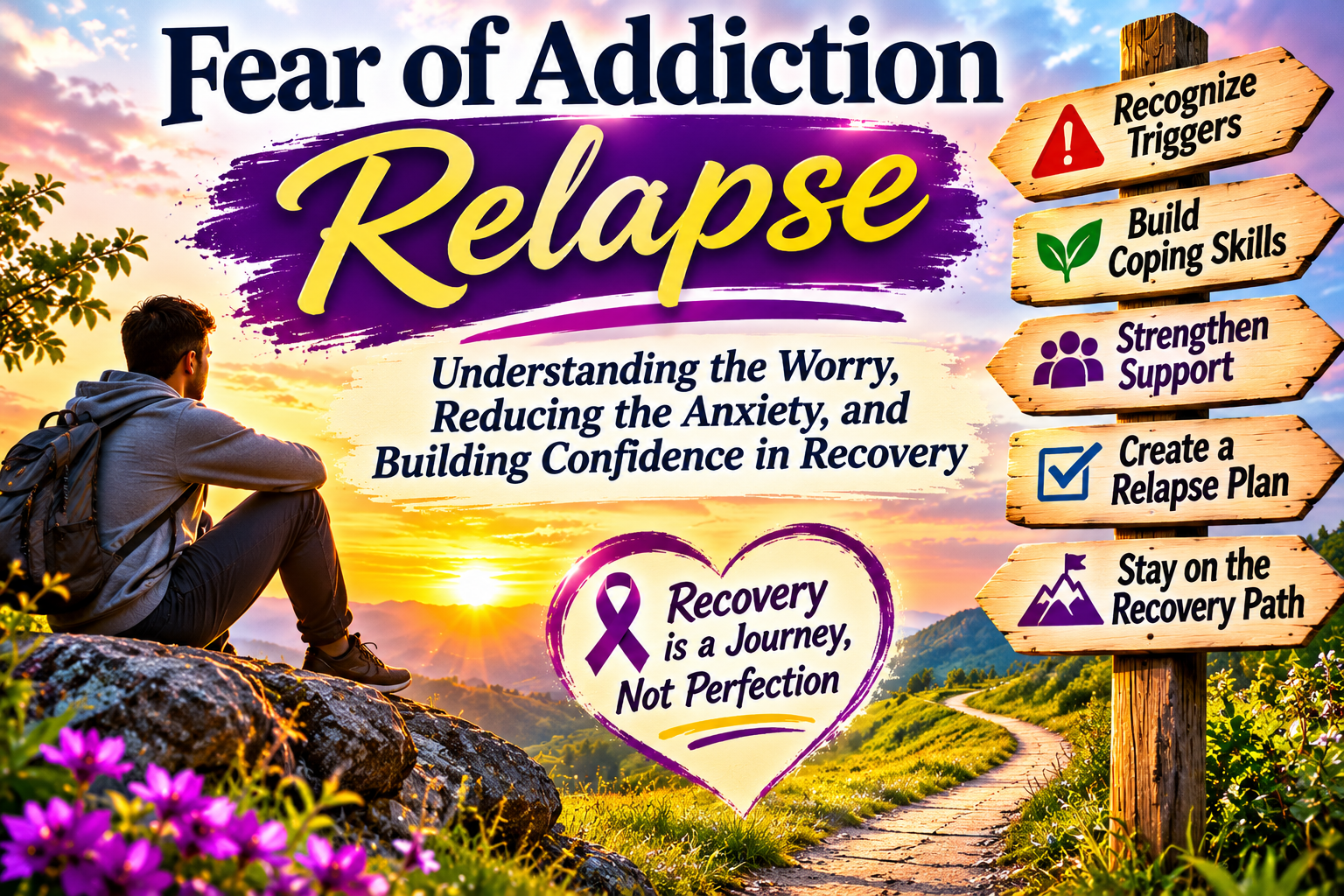
Recovery from addiction is a journey that requires commitment, emotional resilience, and ongoing support. While achieving sobriety is an important milestone, many individuals experience another difficult challenge: the persistent fear of relapse. Even after months or years of recovery, thoughts about returning to substance use can trigger anxiety, panic attacks, self-doubt, and overwhelming worry.
For some individuals, the fear of relapse becomes so intense that it interferes with daily activities, relationships, and emotional well-being. They may constantly monitor their thoughts, avoid social situations, or interpret ordinary stress as a warning that their recovery is failing.
Although concern about relapse can encourage healthy precautions, excessive fear can create emotional distress and undermine confidence. Experiencing cravings, intrusive thoughts, or anxiety does not automatically mean relapse is inevitable.
Understanding the relationship between anxiety and addiction recovery, developing effective self-management strategies, and building strong family and community support systems can help individuals replace panic with preparation, confidence, and hope.
Understanding the Fear of Relapse
Relapse refers to a return to substance use after a period of reduction or abstinence. In some recovery frameworks, a distinction is made between a brief return to use and a more sustained return to problematic substance use.
The fear of relapse is particularly common among individuals who have experienced previous setbacks, severe withdrawal symptoms, overdose, damaged relationships, or significant consequences from addiction.
People may worry about losing the progress they have made, disappointing loved ones, or returning to harmful behaviors.
Why Does Relapse Anxiety Occur?
Several psychological and environmental factors may contribute:
- Previous relapse experiences: Past setbacks can increase fear of repeating harmful patterns.
- Unresolved trauma: Traumatic memories may trigger anxiety and unhealthy coping responses.
- Cravings and triggers: Exposure to substances, stressful environments, or emotional reminders can create uncertainty.
- Perfectionism: Believing recovery must be flawless may intensify fear of making mistakes.
- Family expectations: Concern about disappointing loved ones can increase emotional pressure.
- Co-occurring mental health conditions: Anxiety disorders, depression, PTSD, and panic disorder may complicate recovery.
- Lack of support: Social isolation can make ordinary recovery challenges feel overwhelming.
The goal is not to eliminate every concern about relapse but to develop a realistic, manageable response to potential risks.
Recognizing the Signs of Relapse-Related Panic
Fear of relapse may produce physical, emotional, and behavioral symptoms.
Emotional and Psychological Symptoms
- Persistent worry about returning to alcohol or drug use.
- Catastrophic thinking, such as believing one craving will destroy recovery.
- Excessive guilt about previous substance use.
- Fear of losing family relationships or employment.
- Difficulty trusting personal coping abilities.
- Repeatedly seeking reassurance about sobriety.
- Avoiding activities because of possible exposure to triggers.
Physical Symptoms
- Rapid heartbeat or palpitations.
- Shortness of breath.
- Sweating or trembling.
- Muscle tension.
- Dizziness or lightheadedness.
- Gastrointestinal discomfort.
- Difficulty sleeping.
These symptoms can occur during panic attacks, but they may also have medical causes, including substance withdrawal. New or severe symptoms, particularly chest pain, fainting, or significant breathing difficulty, require medical assessment.
The Difference Between Relapse Warning Signs and Anxiety
One important aspect of recovery is learning to distinguish actual changes in relapse risk from anxiety-driven predictions.
| Relapse warning signs | Anxiety about relapse |
|---|---|
| Increasing desire to use substances | Fear that cravings might develop |
| Reconnecting with substance-using environments | Avoiding situations because of anticipated triggers |
| Discontinuing treatment or recovery support | Excessively worrying about treatment effectiveness |
| Planning or rationalizing substance use | Repeatedly imagining worst-case scenarios |
| Returning to behaviors associated with past substance use | Constantly monitoring thoughts for evidence of relapse |
These experiences can overlap. Neither column provides a diagnosis, and a professional assessment may be helpful when the distinction is unclear.
Self-Management Strategies: Turning Relapse Panic Into Recovery Confidence
1. Recognize and Challenge Catastrophic Thinking
Individuals experiencing relapse anxiety may interpret normal emotional changes as signs of impending failure.
For example, feeling stressed after work may lead to thoughts such as, “If I feel this anxious, I will eventually start drinking again.”
Cognitive Behavioral Therapy (CBT) techniques can help identify and challenge these assumptions.
Helpful strategies include:
- Identify thoughts that predict inevitable failure.
- Examine evidence supporting or contradicting those predictions.
- Replace catastrophic statements with realistic alternatives.
- Focus on present actions rather than imagined future outcomes.
- Practice self-compassion when difficult thoughts arise.
A more balanced thought might be: “Feeling anxious does not mean I will relapse. I can use my coping skills and contact someone for support.”
2. Develop a Personalized Relapse Prevention Plan
A written relapse prevention plan helps individuals respond to warning signs without becoming overwhelmed.
An effective plan may include:
- Identifying personal triggers.
- Recognizing early behavioral changes.
- Listing coping strategies for cravings.
- Establishing emergency support contacts.
- Scheduling regular counseling or recovery meetings.
- Identifying high-risk situations.
- Developing steps to take after a return to substance use.
Having a plan reduces uncertainty and encourages problem-solving rather than panic.
3. Practice Grounding Techniques During Panic
Grounding exercises can help individuals redirect attention away from catastrophic thoughts.
One useful approach is the 5-4-3-2-1 technique.
The 5-4-3-2-1 Grounding Exercise
When anxiety increases, gently bring your attention back to your surroundings.
- 5things you can see
- 4things you can feel
- 3things you can hear
- 2things you can smell
- 1thing you can taste
This exercise can help manage anxiety but is not a substitute for medical assessment when symptoms may reflect withdrawal or another medical emergency.
4. Use Healthy Coping Strategies for Cravings
Cravings are common during addiction recovery and do not necessarily indicate that a person will return to substance use.
Helpful techniques include:
- Practice urge surfing by observing cravings without acting on them.
- Delay decisions about substance use while engaging in a safer activity.
- Contact a sponsor, counselor, or trusted supporter.
- Participate in physical activity.
- Practice breathing exercises.
- Avoid environments strongly associated with previous substance use.
- Follow prescribed medication treatment.
Cravings often fluctuate in intensity, and individuals can learn to respond without automatically acting on them.
5. Maintain Healthy Daily Routines
Sleep deprivation, emotional exhaustion, and chronic stress can increase vulnerability to both anxiety and substance use.
Helpful routines include:
- Maintaining consistent sleep and wake times.
- Eating regular, balanced meals.
- Participating in physical activity.
- Scheduling relaxation and recreational activities.
- Attending treatment appointments.
- Reducing excessive caffeine when it worsens anxiety.
- Avoiding alcohol or nonprescribed substances as coping tools.
6. Seek Professional Treatment for Persistent Anxiety
When fear of relapse interferes with daily functioning, professional mental health treatment may be necessary.
Evidence-based approaches include:
- Cognitive Behavioral Therapy: Helps address catastrophic thinking and avoidance.
- Exposure-based therapy: May help with anxiety-related avoidance under professional guidance.
- Mindfulness-based relapse prevention: Combines awareness practices with relapse prevention skills.
- Integrated treatment: Addresses substance use disorders and co-occurring anxiety simultaneously.
- Medication management: May be appropriate for diagnosed anxiety disorders or substance use disorders.
For opioid use disorder, medications such as buprenorphine and methadone substantially reduce overdose risk. For alcohol use disorder, medications such as naltrexone and acamprosate may help reduce the risk of returning to drinking.
Treatment should be individualized by a qualified healthcare professional.
Family Support Strategies: Helping Loved Ones Manage Relapse Anxiety
Families often experience their own fears about relapse. Previous experiences involving substance use, financial problems, conflict, or overdose can make loved ones understandably concerned.
However, excessive monitoring, repeated accusations, or constant questioning may increase stress and damage trust.
1. Encourage Open Communication
Family members can create supportive conversations by:
- Asking about emotional well-being without interrogation.
- Listening without immediately offering criticism.
- Acknowledging that recovery can involve uncertainty.
- Encouraging discussion of cravings and stress.
- Avoiding assumptions that anxiety indicates substance use.
2. Provide Reassurance Without Reinforcing Fear
Compassionate reassurance can help individuals feel supported.
For example, a family member might say:
“I understand that you’re worried about relapse. Feeling afraid doesn’t mean you’re failing. Let’s focus on what helps you feel supported today.”
Families should also encourage individuals to develop their own coping skills rather than relying exclusively on repeated reassurance.
3. Participate in Family Education and Counseling
Family therapy can help relatives understand addiction, anxiety, relapse prevention, and healthy communication.
Benefits may include:
- Improved understanding of substance use disorders.
- Reduced conflict and blame.
- Clearer expectations and boundaries.
- Stronger communication skills.
- Better preparation for high-risk situations.
- Increased support for long-term recovery.
4. Establish Healthy Boundaries
Supporting recovery does not require sacrificing personal well-being.
Families can:
- Establish expectations for respectful behavior.
- Encourage treatment participation.
- Avoid providing resources that directly support harmful substance use.
- Protect their own emotional and financial stability.
- Seek support groups or counseling for themselves.
5. Celebrate Progress Without Demanding Perfection
Recovery is an ongoing process, and progress should be recognized.
Families can acknowledge:
- Consistent treatment participation.
- Improved emotional regulation.
- Honest communication about cravings.
- Healthy decision-making.
- Rebuilding trust.
- Personal and professional accomplishments.
Community Support Strategies: Strengthening Recovery Networks
1. Expand Access to Addiction and Mental Health Treatment
Communities can reduce relapse-related anxiety by ensuring individuals have access to professional care.
Important services include:
- Affordable outpatient and residential treatment.
- Integrated mental health and addiction programs.
- Medication treatment for opioid and alcohol use disorders.
- Telehealth counseling.
- Recovery housing.
- Transportation assistance.
- Crisis intervention services.
2. Encourage Peer Recovery Support
Peer recovery groups connect individuals with others who understand the challenges of maintaining recovery.
Examples include:
- Alcoholics Anonymous (AA).
- Narcotics Anonymous (NA).
- SMART Recovery.
- Recovery Dharma.
- Local recovery community organizations.
Peer support can provide encouragement, accountability, and opportunities to learn practical coping strategies.
3. Promote Recovery-Friendly Environments
Communities can support recovery by:
- Reducing stigma surrounding addiction and relapse.
- Encouraging employers to support treatment access.
- Providing educational and vocational opportunities.
- Creating substance-free social activities.
- Supporting recovery community centers.
- Offering family education programs.
4. Provide Crisis and Relapse Prevention Resources
Individuals and families can access several national resources.
| Organization | Support |
|---|---|
| FindTreatment.gov | Locate mental health and substance use treatment providers. |
| SAMHSA | Treatment information and referrals. National Helpline: 1-800-662-HELP (4357). |
| SMART Recovery | Evidence-informed recovery meetings and self-management tools. |
| Alcoholics Anonymous | Peer support for alcohol recovery. |
| Narcotics Anonymous | Peer support for drug recovery. |
| 988 Suicide & Crisis Lifeline | Call or text 988 for immediate emotional crisis support. |
What to Do When You Feel Close to Relapsing
When cravings become intense, or someone feels at immediate risk of returning to substance use, a clear action plan can help.
Your Immediate Recovery Safety Plan
Use this checklist to identify supportive actions. It is not a substitute for emergency care.
Steps completed
Move away from substances or high-risk environments.
Contact a trusted recovery supporter, sponsor, or clinician.
Use grounding or breathing exercises to manage anxiety.
Follow your prescribed treatment and relapse prevention plan.
Arrange a same-day clinical check-in if cravings remain intense.
If substance use has occurred, seek support promptly rather than withdrawing from treatment.
Overdose prevention matters: After a period of abstinence, tolerance to opioids can decrease, increasing overdose risk if use resumes. Naloxone should be available when opioid exposure is possible. An unresponsive person or someone with slow or absent breathing requires immediate emergency assistance.
For individuals dependent on alcohol or benzodiazepines, abruptly stopping use can cause dangerous withdrawal. Medical supervision may be necessary.
Important Lessons About Relapse Anxiety
Fear of relapse can be distressing, but it does not have to control recovery.
Several important principles can help:
- Fear is not failure. Anxiety does not automatically predict substance use.
- Cravings are manageable. Experiencing an urge does not mean someone must act on it.
- Preparation builds confidence. A realistic relapse prevention plan reduces uncertainty.
- Support strengthens recovery. Family, professionals, and peers can provide valuable assistance.
- Treatment remains important. Co-occurring anxiety and substance use disorders often benefit from integrated care.
- A setback does not erase progress. Returning to treatment promptly can reduce harm and help restore recovery momentum.
Conclusion: Moving From Relapse Panic to Recovery Confidence
Panicking about relapse is a challenging experience that can affect individuals at any stage of addiction recovery. Fear of returning to substance use may arise from previous setbacks, unresolved trauma, cravings, anxiety disorders, or the pressure to maintain sobriety.
Although awareness of relapse risks is important, constant worry can interfere with emotional well-being and daily functioning.
By learning to recognize anxiety-driven thoughts, practicing grounding techniques, developing personalized relapse prevention plans, and accessing professional treatment, individuals can build greater confidence in their ability to manage difficult situations.
Families contribute by providing emotional understanding, healthy boundaries, and practical support. Communities strengthen recovery by expanding access to treatment, reducing stigma, and creating supportive environments.
Recovery is not about living in constant fear of relapse. It is about developing the skills, confidence, and support needed to respond to challenges without losing hope.
Every healthy decision, every request for support, and every step toward emotional stability represents meaningful progress on the path to long-term recovery.
Frequently Asked Questions and Answers
Understanding the Fear of Addiction Relapse
1. What is the fear of addiction relapse?
Fear of addiction relapse refers to persistent worry or anxiety about returning to alcohol or drug use after a period of abstinence or reduced substance use.
Individuals may fear losing control, damaging relationships, experiencing withdrawal, or returning to previous harmful behaviors.
Some concern about relapse can encourage healthy precautions. However, excessive fear may interfere with emotional well-being and daily functioning.
2. Why do people panic about relapsing?
Relapse-related panic may develop because of previous experiences, unresolved emotional distress, or uncertainty about maintaining recovery.
Common contributing factors include:
- Previous relapse experiences.
- Fear of disappointing family members.
- Past overdose or withdrawal experiences.
- Unresolved trauma.
- Anxiety or panic disorders.
- Persistent cravings.
- Low confidence in coping abilities.
- Perfectionism and unrealistic recovery expectations.
3. Is fear of relapse normal during addiction recovery?
Yes. Concern about relapse is understandable, particularly during early recovery or stressful life transitions.
However, persistent anxiety, panic attacks, or excessive avoidance should not be dismissed as unavoidable parts of recovery.
Professional treatment can help individuals manage anxiety while strengthening relapse prevention skills.
4. Does thinking about relapse mean someone is going to relapse?
No. Thinking about substance use, experiencing cravings, or worrying about relapse does not automatically predict a return to use.
Thoughts and urges are not the same as actions.
Individuals can learn to recognize these experiences, respond with healthy coping strategies, and seek support when necessary.
5. Can fear of relapse actually increase relapse risk?
Excessive fear may contribute indirectly to relapse vulnerability when it causes chronic stress, insomnia, social withdrawal, or avoidance of treatment.
For some individuals, anxiety may also increase the temptation to use substances for temporary emotional relief.
Managing anxiety and maintaining effective treatment can help reduce these risks.
Recognizing Relapse Warning Signs
6. What are the early warning signs of addiction relapse?
Warning signs vary among individuals but may include:
- Increasing cravings or thoughts about substance use.
- Withdrawing from supportive relationships.
- Missing counseling or recovery meetings.
- Romanticizing previous substance use.
- Returning to high-risk environments.
- Increased secrecy or dishonesty.
- Neglecting sleep, nutrition, or emotional well-being.
- Planning or rationalizing substance use.
These signs warrant attention but do not guarantee relapse. NCBI
7. How can someone distinguish relapse anxiety from actual relapse warning signs?
Relapse anxiety primarily involves fear about what might happen, while warning signs may involve behavioral changes that increase the likelihood of substance use.
For example, worrying about attending a party is different from actively planning to drink at that party.
However, anxiety and relapse risk can overlap. A counselor can help identify whether someone needs anxiety treatment, additional recovery support, or both.
8. Can cravings occur even after years of sobriety?
Yes. Cravings can reappear after extended periods of recovery, particularly during stressful events or exposure to reminders of previous substance use.
Cravings do not erase recovery progress.
Using coping techniques, maintaining treatment, and seeking support can help individuals manage these experiences.
9. What are common emotional triggers for relapse?
Common emotional triggers include:
- Stress and frustration.
- Loneliness and social isolation.
- Depression and anxiety.
- Anger or resentment.
- Shame and guilt.
- Boredom.
- Grief and relationship difficulties.
- Emotional exhaustion.
Positive emotions and celebrations can also become triggers when previously associated with substance use. JAMA Network
10. Can panic attacks be mistaken for cravings or withdrawal symptoms?
Yes. Panic attacks, cravings, and substance withdrawal can share symptoms such as rapid heartbeat, sweating, trembling, and anxiety.
However, alcohol and benzodiazepine withdrawal can cause seizures and other life-threatening complications.
Individuals experiencing new, severe, or unexplained symptoms should receive medical evaluation rather than assuming they are caused by anxiety.
Self-Management Strategies for Relapse Anxiety
11. What should someone do when they begin panicking about relapse?
The first priority is to reduce immediate distress and assess whether there is an actual risk of substance use.
Helpful steps include:
- Move to a quiet, safe environment.
- Practice slow, comfortable breathing.
- Use grounding techniques.
- Identify the thought or situation triggering anxiety.
- Contact a trusted recovery supporter.
- Review the personalized relapse prevention plan.
- Seek professional assistance if symptoms continue or intensify.
12. What is the 5-4-3-2-1 grounding technique?
The 5-4-3-2-1 technique redirects attention from frightening thoughts toward the present environment.
5-4-3-2-1 Grounding Exercise
5
Things you can see
4
Things you can feel
3
Things you can hear
2
Things you can smell
1
Thing you can taste
Grounding exercises may reduce panic symptoms, but they do not replace medical treatment when withdrawal or another medical problem is suspected.
13. How can Cognitive Behavioral Therapy help with relapse anxiety?
Cognitive Behavioral Therapy (CBT) helps individuals recognize and modify unhelpful thinking patterns.
For example, someone might think, “If I experience one craving, my recovery is over.”
CBT encourages a more realistic response: “A craving is uncomfortable, but I can manage it without using substances.”
CBT can also strengthen problem-solving, coping, and relapse prevention skills. NIAAA
14. What is urge surfing, and how does it help manage cravings?
Urge surfing is a mindfulness technique that encourages individuals to observe cravings without automatically acting on them.
Instead of fighting the craving, the person notices its intensity, physical sensations, and changes over time.
Helpful steps include:
- Acknowledge the craving without judgment.
- Notice where the urge is felt in the body.
- Observe changes in intensity.
- Practice calm breathing.
- Allow the craving to fluctuate while avoiding substance use.
- Contact a recovery supporter if the urge becomes difficult to manage.
15. What should a personalized relapse prevention plan include?
A comprehensive plan should identify:
- Personal emotional and environmental triggers.
- Early warning signs.
- Coping strategies for cravings.
- Supportive people and emergency contacts.
- Counseling and recovery meeting schedules.
- Medication treatment when prescribed.
- Steps to take after a return to substance use.
- Overdose prevention and emergency procedures when relevant.
The plan should be reviewed regularly and updated as circumstances change.
16. Can medications help prevent addiction relapse?
Yes. Evidence-based medications can significantly improve outcomes for certain substance use disorders.
For opioid use disorder, buprenorphine and methadone reduce overdose and mortality risk. Extended-release naltrexone is another treatment option for appropriately selected patients.
For alcohol use disorder, medications such as naltrexone and acamprosate can help reduce drinking or support abstinence.
Medication selection should be individualized and supervised by a qualified healthcare professional.
17. How can someone rebuild confidence after a previous relapse?
A previous return to substance use does not mean future recovery is impossible.
Helpful approaches include:
- Identify circumstances that contributed to the setback.
- Review what coping strategies were helpful.
- Adjust the treatment plan.
- Set achievable recovery goals.
- Reconnect with supportive individuals.
- Practice self-compassion while maintaining accountability.
- Recognize progress rather than focusing exclusively on mistakes.
The National Institute on Alcohol Abuse and Alcoholism emphasizes that returning to drinking can indicate a need to adjust treatment rather than evidence of permanent failure. NIAAA
Family Support Strategies
18. How can family members help someone who is afraid of relapse?
Families can provide emotional understanding and practical assistance.
Supportive actions include:
- Listening without judgment.
- Encouraging open communication.
- Avoiding accusations or excessive monitoring.
- Helping identify early warning signs.
- Supporting counseling and recovery appointments.
- Respecting personal boundaries.
- Recognizing meaningful progress.
19. What should families avoid saying to someone experiencing relapse anxiety?
Families should avoid statements that increase shame or pressure, such as:
- “You’re going to relapse again.”
- “You should be stronger than this.”
- “After everything we’ve done, you better not fail.”
- “If you’re having cravings, you’re obviously not serious about recovery.”
Instead, families can acknowledge the person’s fear and encourage healthy coping strategies.
20. Can family members develop anxiety about a loved one’s relapse?
Yes. Families who have experienced previous addiction-related crises may become fearful of another setback.
Some relatives develop hypervigilance, constantly monitoring behavior for signs of substance use.
Family counseling, education, and peer support can help relatives manage their own distress while maintaining healthy boundaries.
21. How does family therapy help prevent relapse?
Family therapy can improve communication, reduce conflict, and establish healthier recovery expectations.
It may also help families develop practical plans for responding to warning signs or a return to substance use.
SAMHSA identifies supportive family relationships, positive coping skills, and engagement in recovery activities as important protective factors. SAMHSA Store
Community Support Strategies
22. Why are peer recovery groups important for managing relapse anxiety?
Peer recovery groups provide opportunities to connect with people who understand addiction and recovery.
Potential benefits include:
- Reduced social isolation.
- Shared coping strategies.
- Emotional encouragement.
- Accountability.
- Opportunities to develop sober friendships.
- Greater confidence in managing difficult situations.
Groups such as Alcoholics Anonymous, Narcotics Anonymous, and SMART Recovery offer different approaches to peer support.
23. How can communities help reduce fear of relapse?
Communities can support recovery by:
- Expanding access to affordable addiction treatment.
- Providing integrated mental health services.
- Supporting recovery housing.
- Offering employment and educational opportunities.
- Developing substance-free recreational activities.
- Reducing addiction-related stigma.
- Increasing access to medication treatment.
- Supporting families affected by substance use disorders.
SAMHSA describes health, home, purpose, and community as four important dimensions of recovery. SAMHSA
24. Where can someone find professional help for relapse anxiety?
Several organizations provide treatment information and recovery support.
| Organization | Resources |
|---|---|
| FindTreatment.gov | Search for addiction and mental health treatment providers. |
| SAMHSA | Treatment information and National Helpline: 1-800-662-HELP (4357). |
| SMART Recovery | Mutual-support meetings and self-management tools. |
| Alcoholics Anonymous | Peer support for alcohol recovery. |
| Narcotics Anonymous | Peer support for drug recovery. |
| 988 Suicide & Crisis Lifeline | Call or text 988 for immediate emotional crisis support. |
Responding to Relapse and Building Long-Term Recovery
25. What should someone do if they feel close to relapsing?
When the urge to use substances becomes overwhelming, taking immediate action can reduce risk.
Recommended steps include:
- Leave environments associated with substance use.
- Contact a sponsor, counselor, or trusted supporter.
- Avoid access to alcohol, drugs, or drug paraphernalia.
- Attend a recovery meeting.
- Follow the prescribed treatment plan.
- Request urgent professional support when necessary.
For individuals with opioid use disorder, maintaining access to naloxone is an important overdose prevention measure.
26. What happens if someone relapses despite their efforts?
A return to substance use should prompt immediate attention to safety and treatment needs.
Important actions include:
- Seek medical attention when overdose or withdrawal is possible.
- Contact an addiction treatment professional.
- Review circumstances contributing to substance use.
- Reestablish treatment and recovery support.
- Consider whether medication or counseling adjustments are needed.
- Avoid allowing guilt or shame to delay seeking help.
After abstinence, opioid tolerance may decrease, making a return to previous doses particularly dangerous.
27. Is relapse an inevitable part of addiction recovery?
No. Although relapse can occur, it is not inevitable.
Many individuals maintain long-term recovery through appropriate treatment, coping strategies, medication when indicated, and supportive relationships.
Recovery experiences vary, and treatment should be adjusted to individual needs.
28. What is the most important lesson about fear of addiction relapse?
The most important lesson is that recovery requires preparation and support, not constant fear.
Individuals can acknowledge relapse risks without allowing anxiety to control their lives.
Developing effective coping skills, maintaining professional treatment, and building supportive relationships can strengthen confidence and emotional stability.
Video: