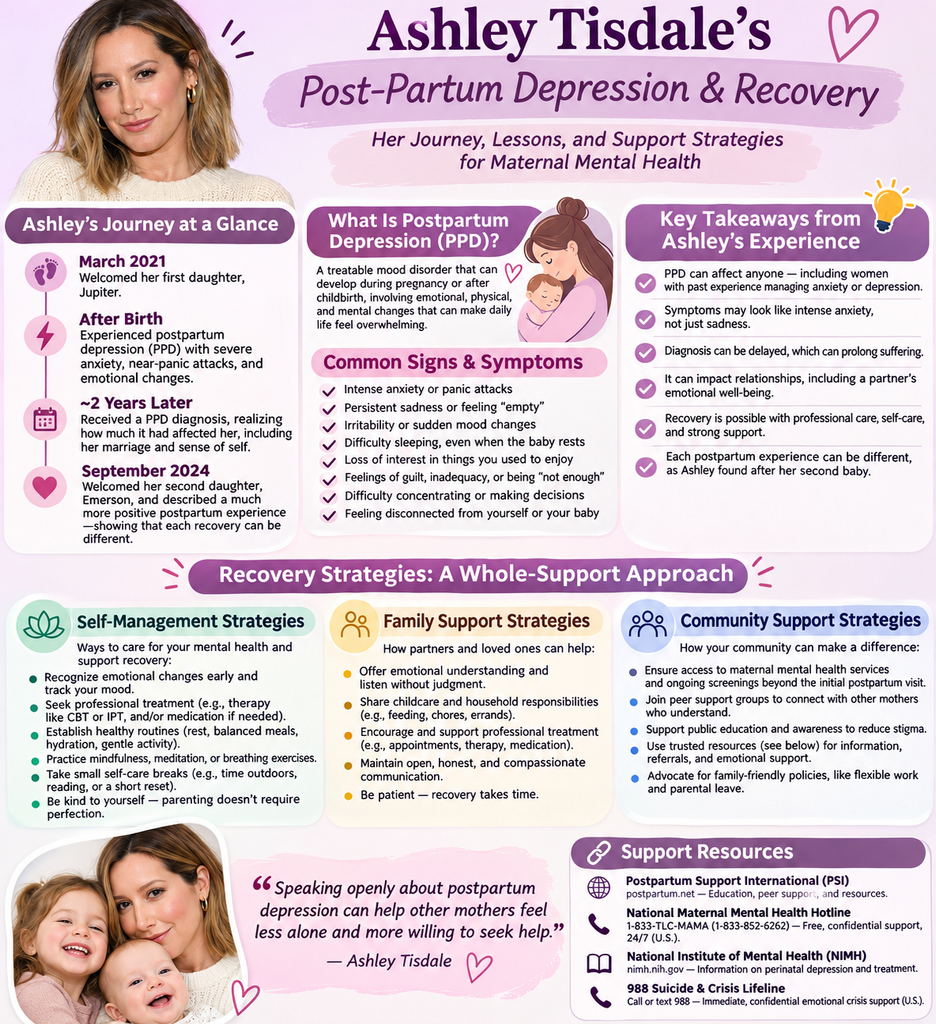
Motherhood is often portrayed as a joyful and fulfilling experience, but for many women, the emotional challenges following childbirth can be overwhelming. Actress, singer, and entrepreneur Ashley Tisdale has helped bring attention to the emotional realities of motherhood by openly discussing her experiences with postpartum recovery, anxiety, changing identity, and the pressures of parenting.
Her willingness to discuss maternal mental health highlights an important message: Becoming a mother does not mean a woman must sacrifice her emotional well-being or struggle in silence. Postpartum depression (PPD) is a treatable mental health condition that can affect women regardless of their financial stability, professional success, or family circumstances.
Understanding the emotional challenges of postpartum recovery, recognizing warning signs, and developing self-management, family, and community support strategies can help mothers navigate this vulnerable period with greater confidence and compassion.
Ashley Tisdale’s Personal Journey With Postpartum Depression
Ashley Tisdale, widely recognized for her role in High School Musical, welcomed her first daughter, Jupiter, with her husband, Christopher French, in March 2021. Although she had previously developed strategies to manage anxiety and depression, she experienced unexpected emotional difficulties after childbirth.
In a September 2026 episode of her husband’s podcast, Recovering, Tisdale revealed that her postpartum depression involved severe anxiety, near-panic attacks, emotional changes, and significant strain on her marriage. She also explained that she did not receive a postpartum depression diagnosis until approximately two years after giving birth.
Tisdale described feeling unprepared for the intensity of her symptoms, particularly because her established anxiety-management techniques were no longer providing the relief she expected. Us+1
Her experience illustrates several important realities:
- Postpartum depression may appear primarily as intense anxiety rather than persistent sadness.
- Women with previous mental health challenges may experience new or worsening symptoms after childbirth.
- Delayed recognition and diagnosis can prolong emotional suffering.
- Postpartum depression may affect communication, relationships, and confidence in parenting.
- Recovery can involve professional treatment, emotional support, and adjustments to daily routines.
Tisdale welcomed her second daughter, Emerson, in September 2024. She subsequently described a much more positive postpartum experience, emphasizing that each pregnancy and recovery period can be different. Scary Mommy
Understanding Postpartum Depression
Postpartum depression is a mood disorder that develops during pregnancy or after childbirth. It involves a combination of biological, psychological, and social factors.
Hormonal changes following delivery, sleep deprivation, previous anxiety or depression, stressful life events, and insufficient support can contribute to the development of symptoms.
Unlike the temporary emotional changes commonly called the baby blues, postpartum depression involves symptoms that are more persistent, severe, or disruptive to daily functioning.
Common Warning Signs
- Persistent sadness, hopelessness, or emotional emptiness.
- Excessive worrying, anxiety, or panic attacks.
- Irritability, anger, or sudden mood changes.
- Difficulty sleeping even when the baby is resting.
- Loss of interest in previously enjoyable activities.
- Feelings of guilt, inadequacy, or worthlessness.
- Difficulty concentrating or making decisions.
- Feeling disconnected from oneself or the baby.
- Withdrawal from friends, family, or social activities.
- Thoughts of self-harm or suicide in severe cases.
Postpartum depression does not always look the same in every woman. Some mothers continue working, caring for their children, and maintaining responsibilities while experiencing substantial emotional distress.
Important: Thoughts of suicide, harming the baby, hallucinations, delusions, or severe confusion require urgent assessment. Postpartum psychosis is a psychiatric emergency.
Self-Management Strategies for Postpartum Depression Recovery
Ashley Tisdale has discussed incorporating meditation, time outdoors, therapy, and brief self-care breaks into her mental health routine. In a 2023 interview with Wondermind, she emphasized how taking small moments throughout the day helped her manage anxiety and emotional overwhelm. Wondermind
Although these strategies may support recovery, moderate or severe postpartum depression generally requires professional assessment and may benefit from psychotherapy, medication, or both.
1. Recognize Emotional Changes Early
Self-awareness helps mothers identify symptoms that may require additional support.
Practical strategies include:
- Monitor mood changes, anxiety, sleep, and energy levels.
- Keep a journal to identify patterns and triggers.
- Discuss persistent symptoms with an obstetrician or mental health professional.
- Complete recommended postpartum depression screenings.
- Seek evaluation when symptoms interfere with daily functioning.
2. Prioritize Professional Mental Health Treatment
Evidence-based treatment is central to postpartum depression recovery.
Recommended approaches include:
- Cognitive Behavioral Therapy (CBT): Helps identify unhelpful thought patterns and develop healthier coping strategies.
- Interpersonal Psychotherapy (IPT): Addresses relationship changes, role transitions, and interpersonal stress.
- Medication management: Antidepressants or other appropriate treatments may be recommended depending on symptom severity and individual circumstances.
- Postpartum-specific treatment: Certain medications are approved for postpartum depression and require individualized clinical assessment.
Women who are breastfeeding should discuss medication benefits and risks with their healthcare professionals rather than automatically discontinuing treatment.
3. Establish Healthy Daily Routines
The physical demands of caring for a newborn can intensify emotional exhaustion.
Helpful practices include:
- Arrange protected periods of uninterrupted sleep whenever possible.
- Eat balanced meals and maintain hydration.
- Participate in gentle physical activity after medical clearance.
- Practice breathing exercises, mindfulness, or meditation.
- Schedule short periods of personal relaxation.
- Avoid using alcohol or nonprescribed drugs to manage emotional distress.
4. Practice Self-Compassion
New mothers may experience unrealistic expectations about their appearance, parenting abilities, and emotional resilience.
Recovery involves accepting that motherhood requires adjustment and that emotional challenges do not indicate personal failure.
Helpful reminders include:
- Parenting does not require perfection.
- Asking for help demonstrates awareness and responsibility.
- Emotional recovery may take time.
- Personal identity and interests remain important after childbirth.
- Mental health treatment is an investment in both maternal and family well-being.
Family Support Strategies: Helping Mothers Through Postpartum Depression
Family relationships can significantly influence a mother’s emotional recovery.
Tisdale has publicly described how postpartum depression affected her marriage. Her husband, Christopher French, discussed supporting her through practical household responsibilities, childcare, patience, and emotional understanding. People.com
Her experience demonstrates why postpartum depression should be understood as a family health concern rather than an individual struggle.
1. Provide Emotional Understanding
Partners and relatives should recognize that postpartum depression is a medical condition, not a reflection of a mother’s love for her child.
Families can help by:
- Listening without criticizing or minimizing symptoms.
- Acknowledging feelings of anxiety, sadness, or frustration.
- Avoiding statements that pressure mothers to feel grateful or happy.
- Encouraging open discussions about emotional well-being.
- Recognizing that symptoms may fluctuate throughout recovery.
2. Share Parenting and Household Responsibilities
Practical assistance can reduce stress and create opportunities for rest.
Supportive actions include:
- Sharing nighttime feeding and childcare duties when feasible.
- Preparing meals and completing household chores.
- Managing errands and appointments.
- Providing opportunities for uninterrupted sleep.
- Helping coordinate childcare during therapy or medical visits.
3. Encourage Treatment Without Judgment
Family members may recognize behavioral changes before a mother feels comfortable discussing them.
They can:
- Encourage consultation with an obstetrician or mental health professional.
- Offer transportation or childcare during appointments.
- Help identify postpartum mental health specialists.
- Support prescribed treatment plans.
- Attend family counseling when appropriate and welcomed.
4. Protect Healthy Communication
Postpartum depression may create misunderstandings and emotional tension between partners.
Couples can strengthen communication by:
- Discussing concerns during calm moments.
- Avoiding blame and personal criticism.
- Identifying each partner’s emotional and practical needs.
- Establishing realistic expectations for parenting responsibilities.
- Seeking couples counseling when relationship difficulties persist.
Partners also need opportunities for rest and emotional support. Compassion should coexist with healthy boundaries and attention to everyone’s safety.
Community Support Strategies for Maternal Mental Health
Community-based resources help mothers access education, professional treatment, peer connections, and practical assistance.
Tisdale has emphasized the importance of discussing postpartum experiences openly so mothers feel less isolated. Her public advocacy contributes to broader conversations about maternal mental health and the need for continued care after childbirth. E! Online+1
1. Expand Access to Maternal Mental Health Services
Healthcare systems can improve postpartum care by:
- Conducting routine depression and anxiety screenings during pregnancy and postpartum visits.
- Repeating screenings beyond the initial six-week postpartum appointment.
- Offering referrals to therapists specializing in perinatal mental health.
- Providing telehealth services for mothers with transportation or childcare barriers.
- Coordinating care among obstetricians, primary care clinicians, pediatricians, and mental health specialists.
2. Encourage Peer Support Groups
Connecting with other mothers who have experienced postpartum depression can reduce isolation and provide encouragement.
Peer groups may offer:
- Opportunities to share personal experiences.
- Education about postpartum emotional changes.
- Practical parenting and coping strategies.
- Support for partners and family members.
- Connections to professional treatment resources.
3. Promote Public Education and Awareness
Community organizations, employers, and healthcare professionals can help reduce stigma by:
- Hosting maternal mental health workshops.
- Sharing accurate educational materials.
- Encouraging discussions about postpartum depression.
- Training professionals to recognize warning signs.
- Promoting workplace flexibility and family leave policies.
4. Connect Families With Trusted Resources
The following organizations offer information, referrals, or emotional support.
- Postpartum Support International: Education, peer support, and connections to perinatal mental health resources.
- National Maternal Mental Health Hotline: Free, confidential support in the United States at 1-833-TLC-MAMA (1-833-852-6262), available 24/7.
- National Institute of Mental Health: Educational information about perinatal depression, symptoms, and treatment.
- 988 Suicide & Crisis Lifeline: Call or text 988 for immediate emotional crisis support in the United States.
Lessons From Ashley Tisdale’s Recovery Journey
Ashley Tisdale’s experiences offer valuable lessons for mothers, families, and healthcare professionals.
1. Postpartum depression can affect anyone. Professional success, financial stability, and supportive relationships do not eliminate the risk of developing maternal mental health conditions.
2. Symptoms may be misunderstood or overlooked. Tisdale’s delayed diagnosis illustrates the importance of recognizing anxiety, panic symptoms, irritability, and other less stereotypical presentations.
3. Recovery is not identical for every pregnancy. Her contrasting postpartum experiences demonstrate that symptoms can vary considerably between pregnancies.
4. Family involvement can strengthen recovery. Emotional reassurance, shared responsibilities, and supportive communication help create a healthier recovery environment.
5. Speaking openly can reduce stigma. Public conversations about postpartum depression may encourage mothers to recognize symptoms and seek professional help.
6. Mental health care should continue beyond childbirth. Screening and follow-up should not end after a single postpartum visit, particularly when symptoms persist or emerge later.
Conclusion: Recovery Begins With Recognition, Compassion, and Support
Ashley Tisdale’s journey with postpartum depression highlights the emotional challenges that can accompany motherhood, even when a woman has previous experience managing anxiety and access to family support. Her experience demonstrates that postpartum depression may present through intense anxiety, emotional instability, relationship difficulties, and a loss of personal identity rather than sadness alone.
Effective recovery involves recognizing symptoms early, accessing evidence-based mental health treatment, developing healthy self-management practices, and building strong family and community support systems.
Her willingness to share her experiences reminds mothers that seeking help is not a sign of weakness and that emotional healing deserves the same attention as physical recovery.
Postpartum depression does not define a mother’s strength, love, or ability to parent. With appropriate treatment, understanding, and ongoing support, recovery is possible.
Frequently Asked Questions and Answers
Ashley Tisdale’s Personal Experience
1. Who is Ashley Tisdale, and why is her postpartum depression journey important?
Ashley Tisdale is an American actress, singer, and entrepreneur best known for her role in High School Musical. As a mother of two daughters, she has publicly discussed the emotional challenges of motherhood, including postpartum depression and anxiety.
Her story helps challenge the misconception that successful women with supportive families cannot experience significant mental health difficulties after childbirth.
2. Did Ashley Tisdale experience postpartum depression after giving birth?
Yes. Ashley Tisdale has publicly discussed experiencing postpartum depression following the birth of her first daughter, Jupiter, in March 2021.
She described intense anxiety, emotional distress, and difficulties adjusting to motherhood. Her experience demonstrates that postpartum depression can involve more than sadness and may significantly affect a mother’s emotional well-being.
3. What symptoms did Ashley Tisdale experience?
Tisdale has described several emotional challenges, including:
- Severe anxiety and near-panic attacks.
- Feeling emotionally overwhelmed.
- Difficulty managing symptoms using previously effective coping strategies.
- Emotional changes affecting her relationship with her husband.
- Challenges adjusting to her identity and responsibilities as a mother.
Her experiences highlight the importance of recognizing anxiety-related symptoms as possible indicators of postpartum depression.
4. How long did it take Ashley Tisdale to receive a postpartum depression diagnosis?
Tisdale has reported that she did not receive a postpartum depression diagnosis until approximately two years after the birth of her first daughter.
Her experience emphasizes the importance of continued maternal mental health screening and follow-up, particularly when symptoms persist beyond the early postpartum period.
5. Did Ashley Tisdale experience postpartum depression after her second pregnancy?
Ashley Tisdale welcomed her second daughter, Emerson, in September 2024. She has described her postpartum experience after her second pregnancy as more positive than her first.
Her experience illustrates that postpartum mental health symptoms can vary between pregnancies. Experiencing postpartum depression once does not guarantee that symptoms will recur, although it increases the risk.
Understanding Postpartum Depression
6. What is postpartum depression?
Postpartum depression (PPD) is a mood disorder that can develop during pregnancy or after childbirth. It involves persistent emotional and psychological symptoms that interfere with daily functioning.
Symptoms may include sadness, anxiety, irritability, hopelessness, sleep disturbances, and difficulty bonding with the baby. Postpartum depression is a treatable medical condition, not a sign of weakness or poor parenting.
7. What causes postpartum depression?
Postpartum depression develops through a combination of biological, psychological, and environmental factors.
Potential contributing factors include:
- Rapid hormonal changes following childbirth.
- Previous depression or anxiety disorders.
- Sleep deprivation and physical exhaustion.
- Stressful life events or relationship difficulties.
- Limited emotional or practical support.
- Financial difficulties or major lifestyle changes.
- A personal or family history of mood disorders.
No single factor explains every case of postpartum depression.
8. How is postpartum depression different from the baby blues?
The baby blues typically involve mild sadness, tearfulness, or mood changes that begin shortly after childbirth and resolve within approximately two weeks.
Postpartum depression involves more severe or persistent symptoms that may interfere with relationships, childcare, work, or daily activities.
Symptoms lasting longer than two weeks, worsening rapidly, or causing significant impairment warrant professional evaluation.
9. Can postpartum depression occur months after childbirth?
Yes. Postpartum depressive symptoms may develop or become apparent months after delivery. Although the formal diagnostic timeframe for peripartum onset is narrower, clinicians recognize that postpartum mental health concerns can extend throughout the first year and sometimes beyond.
Tisdale’s delayed diagnosis illustrates why ongoing mental health assessment is important. Scary Mommy
10. Can postpartum depression affect mothers who already have anxiety?
Yes. A history of anxiety or depression increases the risk of postpartum mental health difficulties.
Tisdale explained that coping techniques she had previously learned were less effective when she experienced postpartum depression. This demonstrates why new or worsening symptoms should be reassessed rather than assuming existing coping strategies will always be sufficient. Amazon Music
Self-Management and Professional Treatment
11. What self-management strategies can help with postpartum depression?
Self-management strategies can complement professional treatment and improve emotional resilience.
Helpful approaches include:
- Maintaining a consistent sleep routine when possible.
- Practicing mindfulness and relaxation exercises.
- Participating in gentle physical activity.
- Eating nutritious meals and staying hydrated.
- Scheduling short periods of personal time.
- Monitoring emotional symptoms.
- Communicating openly about mental health concerns.
These strategies should support, rather than replace, evidence-based treatment when depression is present.
12. What treatments are available for postpartum depression?
Effective treatments include psychotherapy, medication, and coordinated mental health care.
Common options include:
- Cognitive Behavioral Therapy (CBT): Helps individuals recognize and change unhelpful thinking patterns.
- Interpersonal Psychotherapy (IPT): Addresses relationship difficulties, social support, and major life transitions.
- Antidepressant medication: May help manage moderate to severe symptoms.
- Postpartum-specific medications: Zuranolone and brexanolone are approved treatments for postpartum depression in appropriate patients, with specific safety considerations and monitoring requirements.
- Combined treatment: Psychotherapy and medication may be recommended together.
Treatment decisions should consider symptom severity, breastfeeding, medication safety, personal preferences, and previous treatment responses.
13. How long does recovery from postpartum depression take?
Recovery varies among individuals. Some mothers improve within several weeks of beginning treatment, while others require several months or longer.
Factors influencing recovery include symptom severity, access to treatment, previous mental health conditions, sleep quality, and available support.
Regular follow-up helps clinicians evaluate progress and adjust treatment when necessary.
14. Can postpartum depression return after another pregnancy?
Yes. Women who have experienced postpartum depression have an increased risk of recurrence during subsequent pregnancies.
However, recurrence is not inevitable.
Tisdale described a significantly more positive postpartum experience after welcoming her second daughter, Emerson. She credited preparation, increased confidence, and a postpartum care plan developed with her doula as helpful factors. Us
Family Support and Relationships
15. How did postpartum depression affect Ashley Tisdale’s marriage?
Tisdale discussed experiencing substantial relationship difficulties during her first postpartum period. In a September 2026 episode of her husband Christopher French’s podcast, Recovering, she described how severe anxiety and emotional changes contributed to marital tension.
French discussed providing patience, practical assistance, and emotional support throughout that difficult period. People.com
Their experience illustrates how postpartum depression can affect both partners and why communication and shared responsibilities matter.
16. How can husbands or partners support mothers experiencing postpartum depression?
Partners can provide meaningful assistance through emotional understanding and practical involvement.
Supportive actions include:
- Listening without criticism or judgment.
- Sharing nighttime childcare and household responsibilities.
- Encouraging professional mental health treatment.
- Helping arrange appointments and childcare.
- Offering reassurance without minimizing symptoms.
- Recognizing warning signs of worsening depression.
- Seeking counseling when relationship difficulties persist.
17. What should family members avoid saying to a mother with postpartum depression?
Families should avoid comments that dismiss emotional distress or create guilt.
Examples include telling a mother she should simply be happy, comparing her experience with other mothers, or suggesting that depression means she does not love her child.
Instead, family members can acknowledge her feelings, ask what support she needs, and offer specific assistance.
18. Can postpartum depression affect bonding with the baby?
Yes. Some mothers experience difficulty feeling emotionally connected to their babies, particularly when depression, anxiety, or exhaustion is severe.
Tisdale described feeling sad, anxious, and guilty during her first postpartum experience. She later reported feeling a more immediate emotional connection following the birth of her second daughter. Us
Difficulty bonding does not mean a mother lacks love for her child. With treatment and support, emotional connection can strengthen over time.
Community Support and Maternal Mental Health Awareness
19. Why are postpartum depression support groups important?
Support groups give mothers opportunities to connect with others who understand their experiences.
Benefits may include:
- Reduced feelings of isolation.
- Emotional validation and encouragement.
- Education about postpartum symptoms.
- Practical coping strategies.
- Referrals to professional services.
- Opportunities to build supportive relationships.
Peer support is especially helpful when combined with appropriate clinical care.
20. How can healthcare professionals improve postpartum depression detection?
Healthcare professionals can improve maternal mental health outcomes through systematic screening, early intervention, and coordinated follow-up.
Recommended practices include:
- Screening during pregnancy and postpartum visits.
- Using validated tools such as the Edinburgh Postnatal Depression Scale (EPDS).
- Assessing anxiety symptoms in addition to depression.
- Evaluating suicidal thoughts and other urgent psychiatric symptoms.
- Offering timely referrals for treatment.
- Coordinating care with pediatricians, primary care clinicians, and mental health specialists.
- Continuing assessment beyond the traditional six-week postpartum visit.
21. What community resources are available for mothers experiencing postpartum depression?
Several organizations provide education, referrals, and emotional support.
- Postpartum Support International: postpartum.net — Support groups, education, and provider referrals.
- National Maternal Mental Health Hotline: 1-833-852-6262 — Free, confidential, 24-hour support in the United States.
- National Institute of Mental Health: nimh.nih.gov — Evidence-based mental health information.
- 988 Suicide & Crisis Lifeline: Call or text 988 for immediate mental health crisis support.
For hallucinations, delusions, severe confusion, or imminent danger to the mother or baby, emergency medical evaluation is necessary.
Recovery, Advocacy, and Lessons Learned
22. Why does Ashley Tisdale openly discuss postpartum depression?
Tisdale has explained that she wants to reduce stigma surrounding depression and help others feel less isolated.
In a May 2026 interview, she discussed how her own mental health experiences motivated her to speak publicly about anxiety, depression, and motherhood. Scary Mommy
Her advocacy encourages women to recognize that postpartum depression can affect anyone, including those who appear confident, successful, and emotionally prepared for motherhood.
23. What can mothers learn from Ashley Tisdale’s second postpartum experience?
Her second experience emphasizes the importance of preparation and individualized care.
Before her second delivery, Tisdale worked with a doula to establish a postpartum support plan and arranged additional professional check-ins. She subsequently described feeling more emotionally stable and connected to her baby. Us
Although planning cannot guarantee prevention, identifying risks and establishing support before childbirth may help mothers receive assistance sooner.
24. What is the most important lesson from Ashley Tisdale’s postpartum depression journey?
The most important lesson is that postpartum depression is a treatable medical condition that deserves recognition, compassion, and timely intervention.
Her experience demonstrates that:
- Mental health symptoms may be difficult to recognize.
- Anxiety can be a prominent feature of postpartum depression.
- Delayed diagnosis may prolong emotional distress.
- Partners and families can play an important supportive role.
- Professional care and practical support can improve recovery.
- Every pregnancy and postpartum experience may be different.
Video: