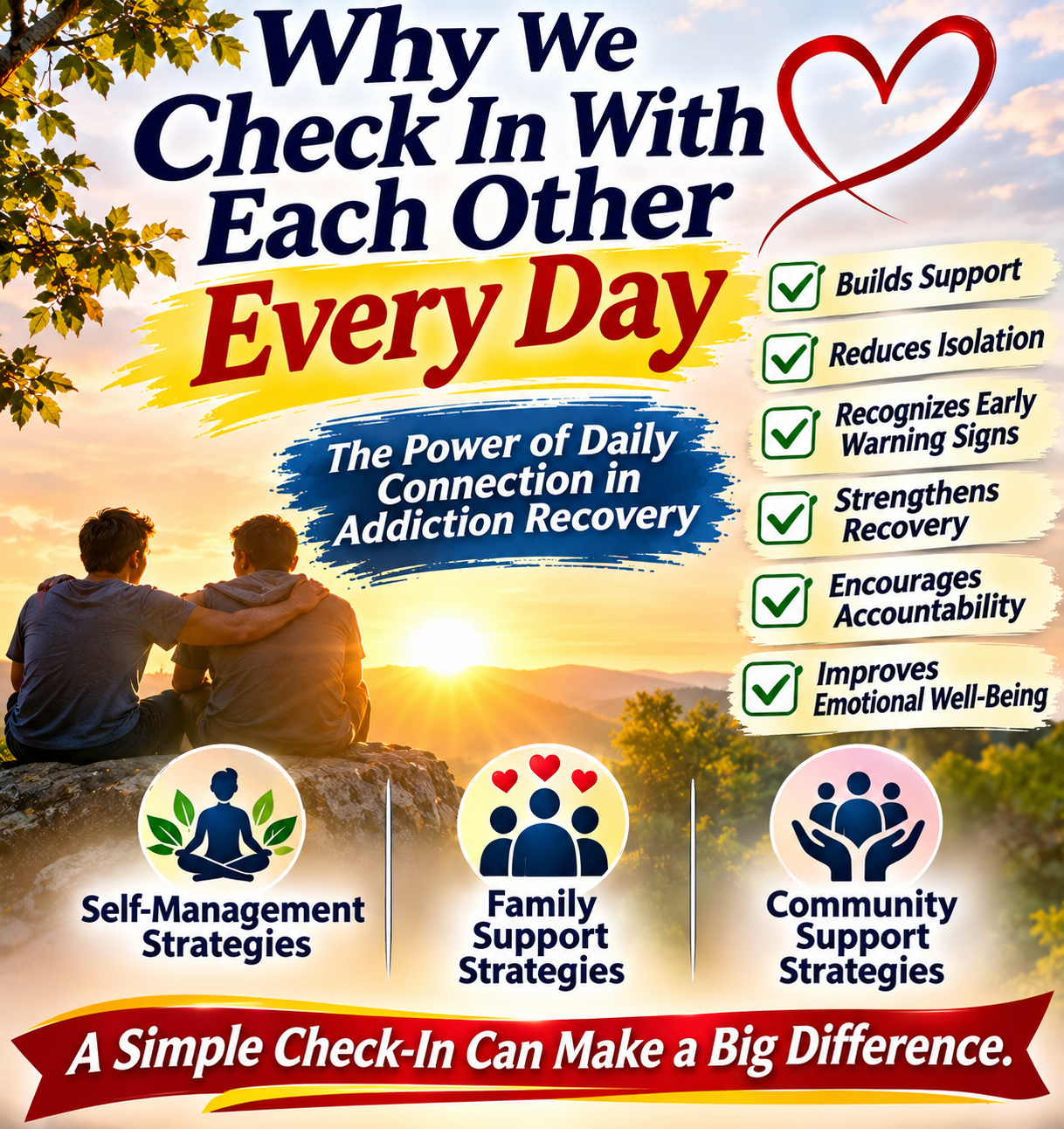
Can a simple daily conversation help someone maintain sobriety, manage emotional stress, and feel less alone during addiction recovery?
Recovery from substance use disorders involves more than avoiding drugs or alcohol. It requires rebuilding emotional stability, developing healthy coping skills, strengthening relationships, and establishing a supportive environment.
One of the simplest yet most meaningful recovery strategies is checking in with each other every day.
A daily check-in may involve a short conversation, text message, phone call, or personal reflection. These moments create opportunities to express feelings, recognize warning signs, celebrate progress, and ask for help before challenges become overwhelming.
For individuals recovering from addiction, daily communication can reduce isolation and encourage accountability. Families benefit from greater understanding, while communities can build supportive relationships that promote long-term recovery.
However, daily check-ins should be supportive, not controlling. Their purpose is to encourage honest communication, emotional safety, and meaningful connection.
Understanding why we check in with each other every day can help individuals, families, and communities create stronger recovery networks where no one has to face addiction alone.
What Does Checking In Every Day Mean?
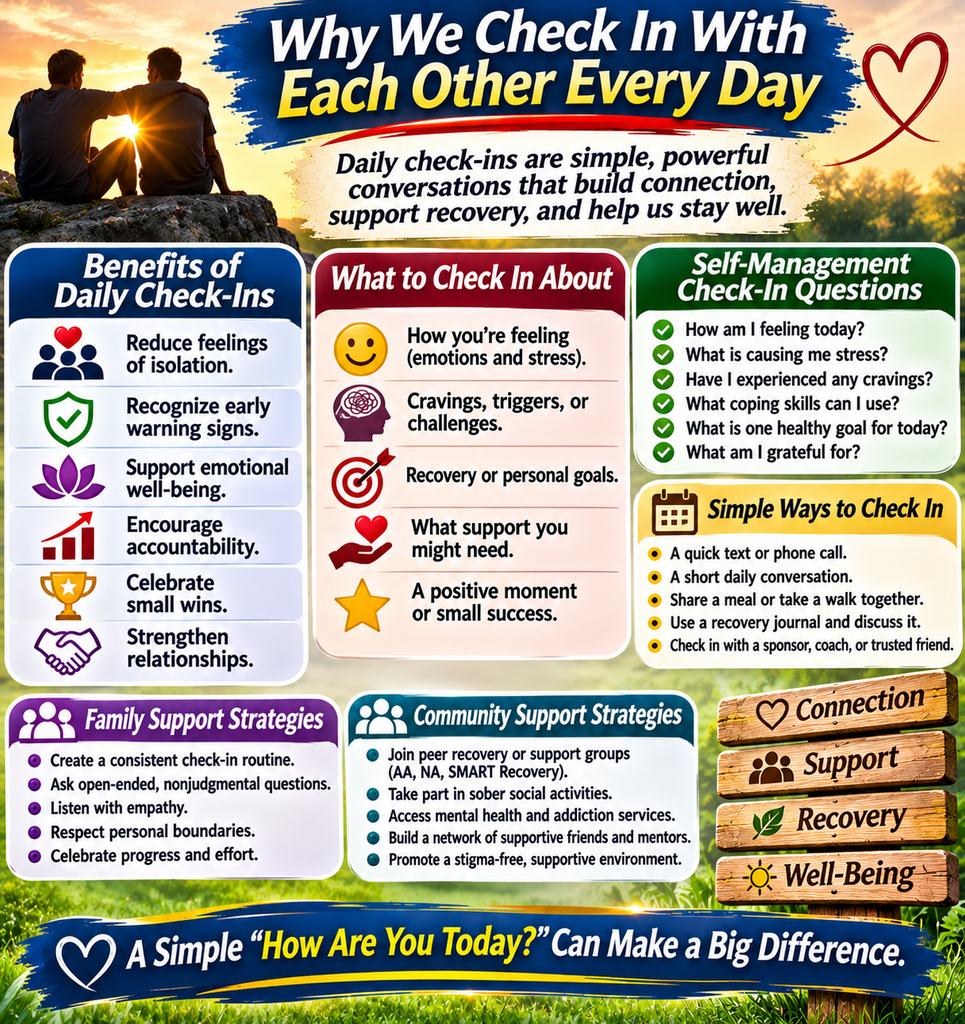
A daily check-in is a brief, intentional opportunity to assess emotional well-being, discuss challenges, and connect with supportive people.
Check-ins can take different forms depending on individual preferences and recovery needs.
Examples include:
- Asking someone how they are feeling emotionally.
- Discussing cravings or stressful situations.
- Sharing positive experiences and achievements.
- Identifying challenges that require additional support.
- Offering encouragement without judgment.
- Reviewing personal recovery goals.
- Expressing gratitude or appreciation.
- Asking whether someone needs practical assistance.
Daily check-ins do not need to be lengthy or complicated. Even a five-minute conversation can provide an opportunity for meaningful connection.
The most important elements are consistency, compassion, and respect.
Why Daily Check-Ins Matter in Addiction Recovery
Substance use disorders can affect emotional regulation, relationships, decision-making, and social functioning.
During recovery, individuals may experience stress, loneliness, cravings, anxiety, or uncertainty about their progress.
Regular communication can help identify these challenges before they become more difficult to manage.
1. Reducing Isolation and Loneliness
Isolation can contribute to emotional distress and make recovery more challenging.
Individuals who feel disconnected from others may have fewer opportunities to discuss cravings, recognize unhealthy patterns, or seek assistance.
Daily check-ins can help by:
- Creating a sense of belonging.
- Encouraging meaningful conversations.
- Reducing feelings of loneliness.
- Strengthening supportive relationships.
- Providing opportunities to ask for help.
Social connection is an important component of recovery, although it does not replace professional treatment.
2. Recognizing Early Warning Signs of Relapse
Changes in mood, behavior, and daily routines may indicate increased vulnerability to renewed substance use.
Regular check-ins provide opportunities to identify concerns early.
Possible warning signs include:
- Increased irritability or anxiety.
- Withdrawing from supportive relationships.
- Changes in sleep or appetite.
- Missing treatment appointments.
- Experiencing stronger cravings.
- Returning to environments associated with previous substance use.
- Feeling hopeless or overwhelmed.
These signs are not proof that someone has resumed substance use. They indicate that additional support or assessment may be helpful.
3. Encouraging Emotional Awareness
Recovery often involves learning to recognize and manage emotions without relying on substances.
Daily check-ins encourage individuals to identify what they are feeling and why.
For example, someone may recognize that anger is connected to workplace stress, sadness is related to relationship difficulties, or anxiety is associated with financial concerns.
Identifying emotions can help individuals choose healthier responses rather than reacting impulsively.
4. Building Accountability Without Judgment
Accountability can support recovery when it is based on mutual respect.
A supportive check-in might involve asking whether someone attended a counseling appointment, followed their treatment plan, or practiced a coping strategy.
However, accountability should not become surveillance.
Healthy accountability includes:
- Mutually agreed-upon recovery goals.
- Respect for personal boundaries.
- Encouragement rather than punishment.
- Honest communication about difficulties.
- Recognition of progress and effort.
5. Celebrating Small Recovery Achievements
Recovery involves many meaningful accomplishments that may not be immediately visible.
Daily check-ins create opportunities to recognize progress such as attending therapy, managing a craving, improving sleep, or reconnecting with loved ones.
Celebrating these achievements can strengthen motivation and confidence.
Self-Management Strategies: Learning to Check In With Yourself
Before communicating with others, individuals can benefit from developing the habit of checking in with themselves.
Self-check-ins promote emotional awareness, identify triggers, and encourage healthier decision-making.
1. Practice a Daily Emotional Check-In
Set aside five minutes each morning or evening to reflect on your emotional state.
Ask yourself:
- How am I feeling today?
- What is causing me stress?
- Have I experienced cravings?
- What situations might challenge my recovery?
- What support do I need?
- What is one positive thing I accomplished?
Writing answers in a journal can help identify patterns over time.
2. Use the HALT Method
HALT is a commonly used self-awareness tool for recovery.
H
Hungry
Have I eaten and taken care of my physical needs?
A
Angry
Am I experiencing frustration or unresolved emotions?
L
Lonely
Do I need connection or encouragement?
T
Tired
Am I physically or emotionally exhausted?
Recognizing these needs may help individuals respond to discomfort before it escalates.
HALT is a practical reflection tool, not a validated diagnostic test or substitute for addiction treatment.
3. Track Cravings and Triggers
Cravings can occur during recovery, especially when individuals encounter stress or reminders of previous substance use.
A daily check-in can include:
- Rating craving intensity from 0 to 10.
- Identifying situations associated with cravings.
- Recording coping strategies used.
- Recognizing patterns.
- Contacting a trusted supporter when necessary.
Tracking can help individuals and healthcare professionals develop more effective recovery plans.
4. Establish a Daily Recovery Routine
Consistent routines can provide structure and reduce uncertainty.
Helpful habits include:
- Maintaining regular sleep schedules.
- Eating balanced meals.
- Participating in appropriate physical activity.
- Taking prescribed medications.
- Attending scheduled treatment appointments.
- Practicing relaxation techniques.
- Making time for meaningful social connections.
5. Recognize When Professional Help Is Needed
Daily check-ins may reveal symptoms that require additional care.
Individuals should contact healthcare professionals when experiencing persistent depression, escalating cravings, severe anxiety, or difficulty maintaining treatment goals.
For opioid use disorder, medications such as buprenorphine and methadone can reduce overdose risk. For alcohol use disorder, medications such as naltrexone and acamprosate may support treatment.
Daily check-ins should complement, not replace, evidence-based medical care.
Family Support Strategies: Creating a Safe Space for Daily Conversations
Families can play an important role in recovery by providing emotional support, encouragement, and stability.
However, family communication should emphasize understanding rather than monitoring or controlling another person’s behavior.
1. Establish a Consistent Check-In Routine
Families may choose a convenient time for brief conversations.
Examples include:
- Talking during breakfast.
- Calling during a lunch break.
- Sharing thoughts after dinner.
- Sending a supportive text message.
- Taking a short evening walk together.
The goal is to create predictable opportunities for connection without making communication feel obligatory.
2. Ask Open-Ended Questions
Open-ended questions encourage meaningful conversations.
Instead of asking only whether someone has used drugs or alcohol, families can ask:
- What was the most challenging part of your day?
- How have you been feeling emotionally?
- What helped you manage stress today?
- Is there anything you would like support with?
- What is something positive that happened?
These questions encourage reflection without making individuals feel interrogated.
3. Practice Active Listening
Active listening involves paying attention, acknowledging emotions, and avoiding immediate criticism.
Helpful techniques include:
- Maintaining appropriate eye contact.
- Allowing the person to finish speaking.
- Reflecting what you heard.
- Avoiding assumptions.
- Asking whether advice or listening would be more helpful.
Sometimes, being heard is more valuable than receiving immediate solutions.
4. Respect Personal Boundaries
Not everyone wants to discuss recovery every day.
Families should respect privacy and allow individuals to decide how much they feel comfortable sharing.
Healthy boundaries include:
- Avoiding repeated questioning about substance use.
- Not demanding access to private messages.
- Respecting treatment confidentiality.
- Allowing time for personal reflection.
- Agreeing on appropriate communication expectations.
5. Encourage Family Members to Check In With Themselves
Addiction affects the emotional well-being of loved ones.
Family members may experience worry, frustration, exhaustion, or uncertainty.
They can benefit from asking themselves:
- Am I taking care of my own health?
- Do I feel emotionally overwhelmed?
- Am I respecting healthy boundaries?
- Do I need counseling or peer support?
- Am I maintaining meaningful activities outside caregiving?
Supporting someone in recovery should not require neglecting personal well-being.
Community Support Strategies: Building a Culture of Connection
Communities can strengthen recovery by creating opportunities for meaningful relationships, peer support, and access to professional services.
1. Encourage Peer Recovery Check-Ins
Peer recovery programs often emphasize connection and mutual encouragement.
Individuals may benefit from communicating with sponsors, recovery coaches, or trusted peers.
Community organizations can facilitate:
- Peer support meetings.
- Recovery coaching.
- Telephone check-in programs.
- Online recovery communities.
- Group wellness activities.
- Mentorship programs.
2. Promote Recovery-Friendly Workplaces
Workplaces can support employees by encouraging respectful communication and providing access to confidential mental health resources.
Helpful strategies include:
- Employee assistance programs.
- Mental health education.
- Flexible scheduling for treatment appointments.
- Supportive management practices.
- Confidential referrals to healthcare professionals.
- Policies that reduce stigma.
3. Strengthen Community Recovery Programs
Recovery community organizations can provide opportunities for ongoing social engagement.
Programs may include:
- Sober recreational activities.
- Volunteer opportunities.
- Educational workshops.
- Family support meetings.
- Recovery-focused social events.
- Peer mentorship.
4. Improve Access to Mental Health and Addiction Treatment
Community connection is valuable, but individuals also need access to professional healthcare.
Communities can support recovery by expanding:
- Outpatient addiction treatment.
- Medication treatment for opioid use disorder.
- Mental health counseling.
- Crisis intervention services.
- Transportation assistance.
- Telehealth appointments.
- Affordable recovery support programs.
5. Reduce Stigma Through Everyday Conversations
Simple conversations can help normalize discussions about addiction and mental health.
Communities can encourage people to ask for assistance without fear of humiliation or discrimination.
Respectful language and accurate education reinforce the understanding that substance use disorders are treatable medical conditions.
A Simple Five-Minute Daily Recovery Check-In
A structured check-in can help individuals communicate consistently without feeling overwhelmed.
My Daily Connection Checklist
A simple reflection tool for recovery and well-being
- How am I feeling emotionally today?
- Have I experienced cravings or stressful triggers?
- What healthy coping strategy can I use?
- Who can I reach out to for support?
- What is one positive thing I accomplished today?
Challenges and Barriers to Daily Check-Ins
Although daily check-ins can support recovery, they are not always easy to maintain.
| Challenge | Supportive solution |
|---|---|
| Fear of judgment | Use compassionate, noncritical language |
| Difficulty expressing emotions | Begin with simple questions or journaling |
| Busy schedules | Use brief text messages or planned calls |
| Family conflict | Consider counseling or facilitated conversations |
| Feeling monitored | Agree on boundaries and voluntary participation |
| Limited social connections | Explore peer recovery programs |
| Emotional exhaustion | Adjust frequency and encourage self-care |
Check-ins should be adapted to each person’s needs. More frequent contact is not automatically better, and daily communication is not a requirement for successful recovery.
Important Lessons About Daily Check-Ins
1. Connection can reduce isolation. Meaningful relationships provide opportunities for encouragement and emotional support.
2. Small conversations can reveal important needs. Brief check-ins may help individuals recognize stress, cravings, or other challenges.
3. Accountability works best with compassion. Supportive communication encourages honesty without creating fear or shame.
4. Families need emotional support, too. Recovery affects loved ones, and their well-being matters.
5. Community relationships strengthen recovery networks. Peer support and accessible services can help individuals maintain meaningful connections.
6. Consistency matters more than perfection. A missed conversation does not represent failure.
7. Professional treatment remains essential when indicated. Check-ins complement medical care but cannot replace evidence-based addiction treatment.
Conclusion: One Conversation Can Make a Difference
Checking in with each other every day is a simple way to strengthen relationships, encourage emotional awareness, and create opportunities for support during addiction recovery.
For individuals recovering from substance use disorders, daily reflection can help identify triggers, recognize achievements, and determine when additional assistance is needed.
Families can encourage recovery through compassionate conversations, active listening, and healthy boundaries. Communities can strengthen these efforts through peer support programs, accessible treatment, and stigma reduction.
The goal is not to monitor every decision or demand constant reassurance. It is to create an environment where individuals feel comfortable expressing their needs and seeking assistance.
Sometimes, the most meaningful support begins with a simple question: “How are you really doing today?”
A few minutes of genuine connection can remind someone that they matter, that support is available, and that they do not have to face difficult moments alone.
Addiction Recovery and Family Support Resources
- SAMHSA FindTreatment.gov — Find substance use and mental health treatment services.
- SAMHSA National Helpline — Call 1-800-662-HELP (4357) for confidential referrals.
- Alcoholics Anonymous — Peer recovery meetings.
- SMART Recovery — Recovery support and self-management tools.
- Nar-Anon Family Groups — Support for loved ones affected by addiction.
- 988 Suicide & Crisis Lifeline — Call or text 988 for immediate mental health crisis support.
Frequently Asked Questions and Answers
Understanding the Importance of Daily Check-Ins
1. Why is it important to check in with each other every day?
Daily check-ins create opportunities to maintain emotional connections, recognize concerns, and offer support.
For individuals recovering from addiction, these conversations can help identify stress, cravings, and other challenges before they become overwhelming.
Regular communication can also strengthen trust and remind individuals that people care about their well-being.
2. What does a daily check-in involve?
A daily check-in is a brief conversation or personal reflection focused on emotional and physical well-being.
It may include:
- Asking how someone is feeling.
- Discussing stressful experiences.
- Identifying cravings or triggers.
- Sharing personal achievements.
- Offering encouragement.
- Asking whether additional support is needed.
Check-ins can be adapted to individual preferences and do not need to follow a strict format.
3. How long should a daily check-in last?
A meaningful check-in may take only five to ten minutes.
Some individuals prefer a quick text message, while others benefit from longer conversations.
The quality of communication is generally more important than its duration.
4. Can daily check-ins help prevent addiction relapse?
Daily check-ins may help prevent relapse by encouraging emotional awareness, accountability, and early recognition of warning signs.
For example, someone who notices increasing cravings or emotional distress may be more likely to seek assistance when supportive communication is already established.
However, daily check-ins alone are not a proven substitute for evidence-based addiction treatment or a comprehensive relapse prevention plan.
5. Why is emotional connection important during addiction recovery?
Emotional connection can reduce loneliness and strengthen a person’s sense of belonging.
Individuals who feel supported may find it easier to discuss challenges, ask for help, and remain engaged in recovery activities.
Meaningful relationships can also encourage healthier coping behaviors.
Mental Health and Emotional Awareness
6. How can daily check-ins improve mental health?
Regular supportive conversations can help individuals express emotions, recognize stressors, and feel less isolated.
Check-ins may also create opportunities to identify symptoms of anxiety, depression, or emotional exhaustion.
They should complement professional mental health care when treatment is needed.
7. Can daily check-ins reduce loneliness?
Yes. Regular social interaction can help individuals feel connected and supported.
For people recovering from addiction, loneliness may contribute to emotional distress and increase vulnerability to substance use.
A supportive conversation can remind someone that meaningful relationships remain available.
8. What emotional warning signs should people look for during check-ins?
Possible warning signs include:
- Persistent sadness or hopelessness.
- Increased anxiety or irritability.
- Withdrawal from family and friends.
- Significant changes in sleep.
- Loss of interest in enjoyable activities.
- Increased cravings.
- Difficulty managing everyday responsibilities.
- Statements suggesting emotional exhaustion or despair.
These signs do not necessarily indicate relapse, but they may warrant additional support or professional assessment.
9. What questions encourage meaningful emotional conversations?
Helpful questions include:
- How are you really feeling today?
- What was the most difficult part of your day?
- Is anything causing you stress?
- What helped you feel better today?
- Is there something you need support with?
- What is one thing you are grateful for?
Open-ended questions encourage reflection and allow individuals to share at their own pace.
10. What should someone do if a person expresses hopelessness during a check-in?
Respond calmly, listen without judgment, and take their concerns seriously.
If the person expresses thoughts of suicide or self-harm, ask directly about their immediate safety and help them connect with appropriate crisis services.
In the United States, call or text 988 for suicide and mental health crisis support. Call 911 when there is immediate danger.
Self-Management Strategies for Daily Check-Ins
11. How can individuals check in with themselves every day?
A self-check-in involves reflecting on emotions, behaviors, and recovery needs.
Individuals can ask themselves:
- How am I feeling emotionally?
- Have I experienced cravings?
- What situations are causing stress?
- Am I getting enough sleep?
- Have I followed my treatment plan?
- What healthy coping strategy can I use today?
Journaling can help identify patterns and encourage self-awareness.
12. What is the HALT method in addiction recovery?
HALT is a commonly used recovery reflection tool that encourages individuals to recognize four basic needs.
H
Hungry
Attend to nutrition and physical needs.
A
Angry
Recognize frustration and emotional stress.
L
Lonely
Seek healthy social connection.
T
Tired
Prioritize rest and adequate sleep.
HALT can help people identify unmet needs, but it is not a diagnostic instrument or replacement for treatment.
13. How can individuals track cravings during daily check-ins?
Individuals can rate cravings on a scale from 0 to 10 and identify circumstances associated with increased urges.
They may record:
- Craving intensity.
- Emotional triggers.
- Environmental triggers.
- Coping strategies used.
- Whether additional support was needed.
This information can help guide discussions with addiction treatment professionals.
14. What healthy coping skills can be discussed during check-ins?
Helpful coping skills include:
- Mindfulness and breathing exercises.
- Physical activity.
- Journaling.
- Spending time outdoors.
- Attending recovery meetings.
- Practicing relaxation techniques.
- Connecting with supportive friends.
- Participating in enjoyable hobbies.
The most effective strategies depend on the individual’s needs and treatment goals.
15. Can daily check-ins improve personal accountability?
Yes, when accountability is voluntary, compassionate, and based on mutually agreed-upon goals.
Individuals may use check-ins to discuss treatment attendance, medication adherence, healthy routines, and personal progress.
Accountability should not involve intimidation, surveillance, or punishment.
Family Support Strategies
16. How can families use daily check-ins to support addiction recovery?
Families can establish regular opportunities for supportive communication.
Helpful approaches include:
- Asking open-ended questions.
- Listening without judgment.
- Encouraging healthy coping skills.
- Recognizing recovery achievements.
- Offering practical assistance.
- Respecting privacy and personal boundaries.
Family check-ins should focus on emotional connection rather than interrogating someone about substance use.
17. What should families avoid during daily check-ins?
Families should avoid:
- Repeated accusations.
- Shaming or criticizing.
- Demanding detailed disclosures.
- Comparing recovery progress with others.
- Threatening punishment for honest communication.
- Ignoring the person’s emotional needs.
- Turning every conversation into a discussion about addiction.
Respectful communication can help create a safer environment for honesty.
18. How can parents check in with teenagers about substance use?
Parents can establish open communication by asking about school, friendships, stress, and emotional well-being.
Helpful strategies include:
- Choosing calm, private settings.
- Listening before offering advice.
- Discussing substance-related risks accurately.
- Establishing age-appropriate boundaries.
- Encouraging healthy activities.
- Seeking professional assessment when concerns arise.
Regular conversations can make it easier for teenagers to ask for help.
19. Can daily check-ins help rebuild trust after addiction?
Daily check-ins can provide opportunities to demonstrate consistency, honesty, and mutual respect.
However, rebuilding trust usually requires time and sustained behavioral changes.
Family counseling may help address unresolved conflicts and establish healthier communication patterns.
20. Why should family members also check in with themselves?
Supporting someone with addiction can create emotional and practical challenges.
Family members may experience anxiety, frustration, fatigue, or uncertainty.
Self-check-ins can help loved ones recognize their own needs, maintain healthy boundaries, and seek support when necessary.
Community Support Strategies
21. How can recovery support groups encourage daily check-ins?
Recovery groups may offer opportunities for members to discuss challenges, celebrate progress, and connect with others with similar experiences.
Some individuals also maintain regular contact with sponsors, recovery coaches, or trusted peers.
Examples include Alcoholics Anonymous, Narcotics Anonymous, SMART Recovery, and other community recovery organizations.
22. What role do recovery coaches and peer mentors play?
Recovery coaches and peer mentors provide practical encouragement, share recovery-related experiences, and help individuals connect with appropriate services.
They may assist with:
- Identifying recovery goals.
- Building healthy routines.
- Finding treatment resources.
- Developing supportive relationships.
- Navigating challenging situations.
- Encouraging continued engagement in care.
Peer support complements professional treatment.
23. Can workplaces benefit from employee check-ins?
Yes. Respectful workplace check-ins can help employees communicate concerns, identify stressors, and access appropriate support.
Employers can encourage mental health awareness, confidential employee assistance programs, and flexible access to treatment services.
Employees should not be pressured to disclose private medical information.
24. How can communities promote meaningful daily connections?
Communities can encourage social connection through:
- Peer recovery meetings.
- Volunteer programs.
- Community wellness activities.
- Sober social gatherings.
- Mentorship opportunities.
- Family support workshops.
- Accessible mental health services.
These programs can help reduce isolation and strengthen local recovery networks.
25. Can virtual check-ins be effective?
Yes. Phone calls, text messages, video conversations, and online recovery meetings can provide meaningful connection.
Virtual communication may be particularly helpful for individuals with transportation barriers, demanding schedules, or limited local support.
However, virtual check-ins should not replace in-person medical assessment when clinically necessary.
Challenges and Healthy Boundaries
26. What if someone does not want to participate in daily check-ins?
Participation should generally be voluntary.
Some individuals prefer less frequent communication or different forms of support.
Respecting personal boundaries can prevent check-ins from becoming intrusive or emotionally exhausting.
The goal is meaningful connection, not forced participation.
27. Can checking in too frequently become unhealthy?
Yes. Excessive questioning or monitoring may increase stress, resentment, or feelings of lost independence.
Healthy check-ins should balance connection with privacy and autonomy.
Families and individuals can agree on appropriate communication frequency and expectations.
28. What should someone do if a loved one stops responding to check-ins?
Start with a respectful message that expresses concern without making accusations.
For example:
“I haven’t heard from you and wanted to make sure you’re okay. I’m here if you want to talk.”
If there is a credible concern about overdose, suicide, or immediate danger, seek emergency assistance rather than waiting for a reply.
29. How can daily check-ins continue during stressful periods?
During busy or emotionally demanding periods, check-ins can be simplified.
Options include:
- Sending a short supportive message.
- Making a brief phone call.
- Sharing a meal.
- Taking a walk together.
- Scheduling a conversation when both people are available.
Consistency can be helpful, but flexibility prevents check-ins from becoming another source of stress.
30. What is the most important lesson about checking in every day?
The most important lesson is that meaningful connection can make recovery feel less isolating.
A simple conversation may help someone recognize emotional needs, discuss challenges, and seek assistance.
Checking in is not about controlling someone’s recovery. It is about reminding them that they matter and that support is available.
Daily Check-In Practice: Five Questions to Ask
My Daily Connection Checklist
- A simple reflection tool for recovery and well-being
- How am I feeling emotionally today?
- Have I experienced cravings or stressful triggers?
- What healthy coping strategy can I use?
- Who can I reach out to for support?
- What is one positive thing I accomplished today?
Use these questions for personal reflection or as a starting point for a supportive conversation.
Conclusion: A Simple Conversation Can Strengthen Recovery
Daily check-ins can help individuals recovering from addiction develop emotional awareness, recognize challenges, and maintain meaningful relationships.
Self-management strategies encourage individuals to reflect on their feelings, identify triggers, and practice healthier coping skills.
Families can strengthen recovery through compassionate communication, active listening, and appropriate boundaries.
Communities can expand these efforts by providing peer support, accessible treatment, and opportunities for social connection.
Although daily check-ins cannot replace evidence-based addiction treatment, they can be a valuable part of a comprehensive recovery support system.
Sometimes, the most powerful words we can offer are simple: “How are you doing today? I’m here if you need me.”
Addiction Recovery and Family Support Resources
- SAMHSA FindTreatment.gov — Find addiction and mental health treatment.
- SAMHSA National Helpline — Call 1-800-662-HELP (4357).
- Alcoholics Anonymous — Alcohol recovery support.
- Narcotics Anonymous — Drug recovery support.
- SMART Recovery — Evidence-informed recovery support.
- Al-Anon Family Groups — Support for families affected by alcohol misuse.
- 988 Suicide & Crisis Lifeline — Call or text 988 for mental health crisis assistance.
Video: