Can a successful professional athlete struggle with prescription opioid misuse while appearing to have everything under control?
Roy Halladay, one of Major League Baseball’s most respected pitchers, achieved extraordinary success throughout his career. Known for his discipline, determination, and competitive spirit, Halladay became a two-time Cy Young Award winner and was later inducted into the National Baseball Hall of Fame.
However, behind his athletic accomplishments were personal challenges involving chronic pain, prescription medications, and mental health.
Following his tragic death in a plane crash on November 7, 2017, toxicology findings revealed several substances in his system, including medications associated with pain management. His story raised important questions about prescription opioid safety, substance misuse, and the pressures experienced by professional athletes.
Although publicly available information does not establish every aspect of Halladay’s personal experience with addiction, his story provides an opportunity to examine the dangers of opioid misuse and the importance of self-management, family involvement, and community support.
Understanding these challenges can help individuals and families recognize warning signs, reduce stigma, and seek appropriate treatment before substance-related complications become life-threatening.
Roy Halladay’s Journey: From Athletic Excellence to Prescription Opioid Dependence
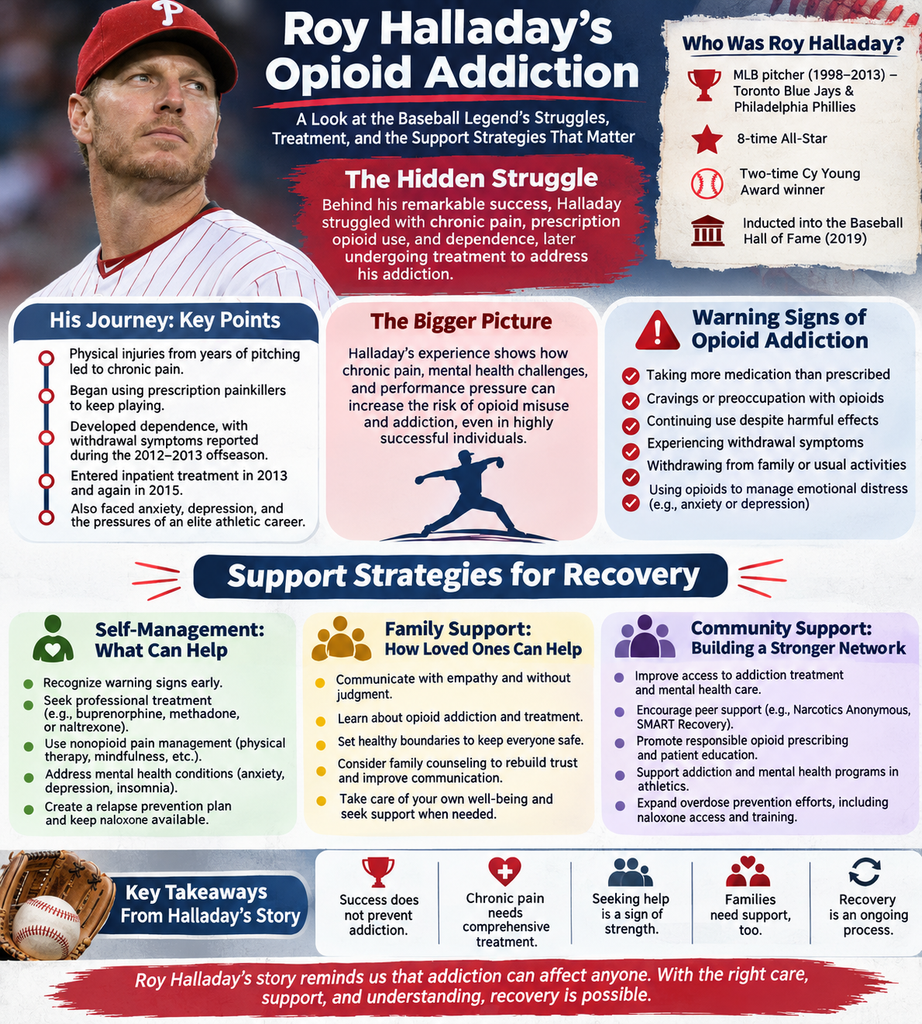
Roy Halladay played 16 seasons in Major League Baseball with the Toronto Blue Jays and Philadelphia Phillies. His remarkable career included eight All-Star selections, a perfect game, and a postseason no-hitter.
Despite his accomplishments, Halladay experienced significant physical and emotional challenges. Repeated injuries, including chronic back and shoulder pain, affected his ability to perform at the level he expected of himself.
According to a 2020 ESPN investigation, Halladay began using prescription painkillers to continue pitching through injuries. His wife, Brandy Halladay, described how his medication use progressed into dependence, with withdrawal symptoms becoming apparent during the 2012–2013 offseason.
Halladay reportedly underwent inpatient treatment in 2013 and again in 2015. His struggles also involved anxiety, depression, and the pressures of maintaining an elite athletic career. 6abc Philadelphia+1
His experience demonstrates how chronic pain and psychological distress can contribute to substance use disorders, even among highly successful individuals.
Understanding the Connection Between Chronic Pain and Opioid Addiction
Prescription opioids, including oxycodone, hydrocodone, morphine, and hydromorphone, are powerful medications used to treat certain types of moderate to severe pain.
Although opioids can provide pain relief, prolonged use increases the risk of physical dependence, tolerance, and opioid use disorder.
Several factors may contribute to problematic opioid use:
- Chronic injuries: Persistent pain can encourage continued medication use when other treatments are insufficient.
- Physical dependence: The body adapts to opioids, potentially causing withdrawal symptoms when medication is reduced or discontinued.
- Tolerance: Some individuals require increasing doses to achieve the same effect.
- Psychological stress: Anxiety, depression, and performance pressure may increase vulnerability to problematic substance use.
- Fear of losing independence: Individuals may conceal symptoms because they worry about employment, relationships, or their reputation.
- Stigma: Fear of judgment can delay treatment and encourage isolation.
Importantly, physical dependence alone does not establish opioid use disorder. Addiction involves a problematic pattern of use associated with impaired control, harm, or significant distress.
Self-Management Strategies for Opioid Addiction Recovery
Self-management involves developing practical skills to recognize symptoms, participate in treatment, manage pain, and reduce the risk of recurrence.
Halladay’s experience illustrates why effective recovery requires attention to both physical discomfort and emotional well-being.
1. Recognize the warning signs
Early recognition of problematic opioid use can prevent serious complications.
Warning signs may include:
- Taking more medication than prescribed or struggling to reduce use.
- Experiencing cravings or preoccupation with medication.
- Continuing opioid use despite harmful consequences.
- Experiencing withdrawal symptoms between doses.
- Withdrawing from family, friends, or usual activities.
- Using medications to manage emotional distress rather than their intended medical purpose.
2. Seek professional addiction treatment
Individuals experiencing opioid dependence or addiction should consult qualified healthcare professionals rather than attempting to manage withdrawal alone.
Evidence-based treatments for opioid use disorder include:
- Buprenorphine: Reduces withdrawal symptoms and cravings and lowers overdose risk.
- Methadone: Provides structured, effective treatment for opioid use disorder.
- Extended-release naltrexone: Blocks opioid effects and may be appropriate after complete opioid withdrawal.
- Behavioral therapies: Help individuals develop coping skills, address triggers, and manage coexisting psychological conditions.
Medication treatment should be individualized. Counseling and peer support can improve overall recovery, but they should not be required as conditions for receiving effective medication.
3. Develop healthier chronic pain management strategies
For individuals whose opioid use began with an injury, pain management remains essential.
Strategies may include:
- Physical therapy and individualized rehabilitation exercises.
- Nonopioid medications when medically appropriate.
- Cognitive behavioral therapy for chronic pain.
- Relaxation, mindfulness, and stress-management techniques.
- Improve sleep and support a gradual return to meaningful activities.
- Consultation with pain management and addiction specialists.
The objective is to improve daily functioning and quality of life while minimizing medication-related risks.
4. Address underlying mental health conditions
Depression, anxiety, insomnia, and substance use disorders can reinforce one another.
Integrated mental health and addiction treatment may help individuals identify emotional triggers, develop coping strategies, and improve overall functioning.
5. Establish a relapse prevention plan
Recovery is an ongoing process rather than a single treatment event.
A practical prevention plan should include:
- Identifying high-risk situations and early warning signs.
- Scheduling regular medical and behavioral health follow-ups.
- Maintaining connections with supportive individuals.
- Keeping naloxone available to reverse an opioid overdose.
- Developing a plan for responding to cravings or renewed opioid use.
Important: Detoxification alone is not an effective treatment for opioid use disorder and can increase overdose vulnerability if opioid use resumes after tolerance declines. Ongoing evidence-based treatment is essential.
Family Support Strategies: Helping Loved Ones Through Addiction
Family members often recognize changes in behavior before individuals are ready to discuss their substance use.
Brandy Halladay publicly described her concerns about her husband’s medication dependence and efforts to help him receive treatment. Her decision to share their experiences later helped bring attention to the hidden struggles experienced by people living with addiction. 6abc Philadelphia+1
Families can provide meaningful support without assuming responsibility for controlling another person’s recovery.
1. Encourage open and compassionate communication
Approach conversations about addiction with empathy rather than accusations.
Helpful strategies include:
- Expressing concern about specific behaviors or symptoms.
- Listening without interrupting or judging.
- Avoiding labels that create shame.
- Encouraging professional assessment and treatment.
- Acknowledging that addiction is a treatable medical condition.
2. Learn about opioid addiction
Education helps families distinguish between physical dependence, withdrawal, opioid use disorder, and recovery.
Understanding these differences can reduce misunderstandings and promote appropriate responses.
3. Establish healthy boundaries
Supporting someone with addiction does not require ignoring harmful behavior.
Families can establish boundaries involving medication safety, financial responsibilities, transportation, and household expectations.
Boundaries should protect everyone’s safety while preserving dignity and opportunities for treatment.
4. Participate in family counseling
Family therapy can help address:
- Communication difficulties.
- Emotional stress and mistrust.
- Changes in family responsibilities.
- Conflict related to substance use.
- Rebuilding relationships during recovery.
5. Recognize caregiver stress
Supporting someone with addiction can produce anxiety, exhaustion, and emotional distress.
Family members should consider counseling, peer support, and regular self-care.
Community Support Strategies: Building a Stronger Recovery Network
Recovery is often more sustainable when individuals have access to healthcare, social support, and community resources.
Halladay’s story also highlights the importance of reducing stigma in professional sports, where individuals may fear that seeking treatment will be interpreted as weakness.
1. Improve access to addiction treatment
Communities can strengthen recovery services by expanding access to:
- Outpatient and residential addiction treatment.
- Buprenorphine and methadone treatment.
- Integrated mental health and chronic pain services.
- Affordable healthcare and insurance navigation.
- Recovery coaching and peer support.
2. Encourage peer recovery programs
Peer support groups provide opportunities to connect with people who understand addiction and recovery.
Examples include:
- Narcotics Anonymous
- SMART Recovery
- Recovery Dharma
- Local recovery community organizations.
Peer groups can complement medical treatment by offering encouragement, accountability, and social connection.
3. Promote responsible opioid prescribing
Healthcare organizations should encourage appropriate prescribing practices, medication monitoring, patient education, and individualized pain management.
Patients should understand the risks of combining opioids with alcohol, benzodiazepines, or other sedating medications.
4. Support addiction education in athletics
Professional and amateur sports organizations can implement programs addressing:
- Chronic pain and injury management.
- Prescription medication safety.
- Mental health screening.
- Confidential addiction treatment referrals.
- Healthy transitions from competitive sports into retirement.
5. Expand overdose prevention programs
Community organizations can distribute naloxone, provide overdose recognition training, and connect individuals to evidence-based treatment.
Reducing barriers to these services can save lives.
Lessons From Roy Halladay’s Story
Halladay’s life provides several important lessons about addiction, physical health, and emotional well-being.
Success does not prevent addiction. Professional achievements, financial stability, and public recognition do not eliminate vulnerability to substance use disorders.
Chronic pain requires comprehensive treatment. Pain management should address physical functioning, emotional health, and medication safety.
Seeking help demonstrates strength. Addiction treatment is an appropriate healthcare intervention, not a personal failure.
Families need support, too. Loved ones benefit from education, counseling, and resources that help them navigate difficult situations.
Recovery requires ongoing care. Treatment may involve medications, therapy, supportive relationships, and long-term follow-up.
Remembering Roy Halladay Beyond Addiction
Halladay died at age 40 in a plane crash in the Gulf of Mexico. Toxicology testing identified several substances, including opioids, amphetamine, and medications used for sleep and mental health conditions.
The National Transportation Safety Board documented his substance use history and circumstances surrounding the crash. However, toxicology findings alone do not establish that opioid impairment caused the accident, and his death should not be described as an opioid overdose. AOPA+2
His legacy extends beyond his medical struggles. He was an exceptional athlete, husband, father, and individual whose experiences remind us that people can face significant challenges regardless of their accomplishments.
His family’s willingness to discuss addiction and mental health has helped encourage greater understanding and compassion.
Conclusion: Understanding Addiction Can Save Lives
Roy Halladay’s journey demonstrates that opioid addiction can affect anyone, including individuals admired for their strength, discipline, and extraordinary achievements.
His experiences with chronic pain, prescription medications, and mental health challenges emphasize the importance of recognizing warning signs and seeking comprehensive treatment.
Effective recovery involves more than stopping substance use. It requires appropriate medical care, emotional support, healthy coping strategies, and a community that encourages treatment without judgment.
Families can make a difference through compassionate communication, education, and healthy boundaries. Communities can strengthen recovery by improving treatment access, expanding overdose prevention, and reducing stigma.
Roy Halladay’s story reminds us that behind every struggle with addiction is a human being deserving of understanding, dignity, and compassionate care.
Recovery is possible. Asking for help can be the first step toward a healthier future.
Frequently Asked Questions and Answers
Roy Halladay’s Life and Addiction Journey
1. Who was Roy Halladay?
Roy Halladay was an American professional baseball pitcher who played for the Toronto Blue Jays and Philadelphia Phillies from 1998 to 2013.
He earned two Cy Young Awards, appeared in eight All-Star Games, pitched a perfect game in 2010, and threw a postseason no-hitter. He was posthumously inducted into the National Baseball Hall of Fame in 2019.
2. Did Roy Halladay struggle with opioid addiction?
Yes. Public accounts from his family and subsequent reporting described his struggles with prescription painkiller dependence and treatment for substance use problems.
His experience illustrates that addiction can affect individuals regardless of their professional achievements, financial security, or public recognition.
3. How did Roy Halladay’s opioid problems begin?
Halladay experienced significant physical pain associated with the demands of professional baseball.
According to accounts published after his death, prescription pain medications became part of his efforts to manage injuries and continue competing.
Over time, his medication use reportedly progressed into dependence, demonstrating how legitimate pain treatment can sometimes develop into problematic opioid use.
4. What prescription opioids were associated with Roy Halladay?
Public reporting described Halladay’s use of prescription opioid painkillers during his career.
His postmortem toxicology report identified morphine and hydromorphone, among other substances. However, toxicology findings do not establish precisely which medications he regularly used, whether they were prescribed, or the circumstances of their use.
5. Did Roy Halladay receive addiction treatment?
Yes. Family accounts and investigative reporting indicate that Halladay received inpatient treatment in 2013 and 2015.
His experiences emphasize that seeking treatment is an important step in addressing substance use disorders. Some individuals require multiple treatment episodes or adjustments to their recovery plans.
6. Did Roy Halladay experience mental health challenges?
Public reporting and statements from his family described Halladay’s struggles with anxiety and depression.
Mental health symptoms and substance use disorders can occur together, making integrated treatment particularly important.
However, the specific relationship between Halladay’s mental health symptoms and medication use cannot be fully determined from publicly available information.
7. How did Roy Halladay die?
Roy Halladay died on November 7, 2017, at age 40, when the aircraft he was piloting crashed into the Gulf of Mexico near Florida.
His death was classified as an accident. Toxicology findings identified multiple substances in his system, but he did not die from an opioid overdose.
The circumstances of the aviation accident should not be confused with a fatal overdose.6abc Philadelphia+2
Understanding Opioid Addiction and Chronic Pain
8. Why are professional athletes vulnerable to prescription opioid misuse?
Professional athletes may experience repeated injuries, chronic pain, intense performance expectations, and pressure to return to competition quickly.
Prescription opioids can temporarily relieve pain but carry risks of tolerance, dependence, and addiction.
Athletes may also hesitate to disclose medication problems because of concerns about their careers or public image.
9. What is the difference between opioid dependence and opioid addiction?
Physical dependence occurs when the body adapts to repeated opioid exposure, potentially producing withdrawal symptoms when use stops.
Opioid addiction, clinically called opioid use disorder, involves a problematic pattern of opioid use that causes significant impairment or distress.
A person can develop physical dependence while taking opioids exactly as prescribed without necessarily developing addiction.
10. What are common warning signs of opioid addiction?
Warning signs may include:
- Taking larger doses than prescribed.
- Experiencing strong cravings.
- Difficulty controlling opioid use.
- Continuing medication use despite harmful consequences.
- Neglecting responsibilities or relationships.
- Seeking additional prescriptions without appropriate medical justification.
- Experiencing withdrawal symptoms and using opioids to relieve them.
No single symptom establishes a diagnosis. A qualified healthcare professional should evaluate the overall pattern.
11. Can chronic pain and depression increase the risk of opioid addiction?
Yes. Chronic pain and depression can interact in ways that increase vulnerability to problematic substance use.
Persistent pain may disrupt sleep, reduce daily functioning, and contribute to emotional distress.
Comprehensive treatment should address pain, mental health symptoms, and substance use together.
12. Can prescription opioid addiction happen even when medication was originally prescribed appropriately?
Yes. Prescription opioids have legitimate medical uses, but some patients develop opioid use disorder during treatment.
Risk depends on multiple factors, including treatment duration, dosage, individual vulnerability, and coexisting medical or psychological conditions.
Self-Management and Recovery Strategies
13. What self-management strategies help individuals recovering from opioid addiction?
Effective strategies include:
- Seeking a professional addiction assessment.
- Taking medications for opioid use disorder as prescribed.
- Identifying personal triggers and warning signs.
- Attending scheduled medical appointments.
- Developing healthy stress-management skills.
- Addressing chronic pain through comprehensive treatment.
- Maintaining supportive relationships.
- Keeping naloxone available for overdose emergencies.
Self-management works best as part of a professional treatment plan, not as a substitute for medical care.
14. What medications are effective for opioid use disorder?
Three FDA-approved medications are available:
- Buprenorphine: Reduces opioid cravings and withdrawal symptoms.
- Methadone: Reduces cravings and withdrawal through structured opioid treatment programs.
- Naltrexone: Blocks opioid effects and can be initiated after an appropriate opioid-free interval.
Buprenorphine and methadone have particularly strong evidence for reducing overdose mortality. Treatment should be individualized according to clinical needs and patient preferences. CDC+1
15. Is detoxification alone enough to treat opioid addiction?
No. Detoxification addresses the immediate symptoms of withdrawal but does not adequately treat the underlying disorder.
Individuals who complete detoxification without ongoing treatment remain vulnerable to renewed opioid use and overdose, particularly because their opioid tolerance may decrease.
Long-term treatment with evidence-based medications is strongly recommended when appropriate.
16. How can individuals manage chronic pain without relying exclusively on opioids?
Pain management strategies may include:
- Physical therapy and rehabilitation.
- Nonopioid medications when appropriate.
- Cognitive behavioral therapy for chronic pain.
- Mindfulness and relaxation exercises.
- Individualized physical activity.
- Sleep improvement.
- Consultation with pain management specialists.
Patients taking opioids regularly should not abruptly discontinue treatment without medical guidance.
17. How can someone prevent a recurrence of opioid misuse?
A recovery prevention plan should identify triggers, establish supportive relationships, and provide clear steps for responding to cravings.
Regular follow-up, appropriate medication treatment, mental health care, and access to naloxone can help reduce risks.
A return to opioid use does not mean treatment has failed. It signals a need to reassess the treatment plan and strengthen support.
Family Support and Addiction Recovery
18. How did Roy Halladay’s family respond to his addiction struggles?
Halladay’s wife, Brandy, and other people close to him recognized his difficulties and helped facilitate treatment.
Following his death, his family encouraged compassion and discouraged judgment about his personal struggles.
Their public statements reinforced the importance of remembering individuals as more than their medical conditions. 6abc Philadelphia+1
19. How can families support someone struggling with opioid addiction?
Families can provide support by:
- Communicating with empathy and respect.
- Encouraging professional treatment.
- Learning about addiction and withdrawal.
- Supporting medication-based treatment.
- Avoiding blame and stigmatizing language.
- Establishing healthy boundaries.
- Participating in family counseling when appropriate.
- Learning how to recognize and respond to an overdose.
20. What should family members avoid when helping someone with addiction?
Families should avoid shaming, threatening, or attempting to force recovery through punishment.
They should also avoid providing medications without medical guidance or assuming they can personally control another individual’s substance use.
Compassionate support, appropriate boundaries, and professional treatment are more constructive approaches.
21. Why is family counseling beneficial during addiction recovery?
Family counseling can improve communication, reduce conflict, and help rebuild trust.
It also provides opportunities to discuss emotional distress, treatment expectations, and the effects of addiction on family relationships.
Family members may benefit from their own counseling or support groups, even when the person experiencing addiction is not participating in treatment.
Community Support and Addiction Prevention
22. What community resources are available for opioid addiction recovery?
Community resources include:
- Addiction medicine clinics and opioid treatment programs.
- Mental health counseling services.
- Narcotics Anonymous and SMART Recovery.
- Recovery community organizations.
- Peer recovery coaching.
- Naloxone distribution programs.
- Family support organizations.
- Telehealth addiction treatment services.
These resources can improve access to treatment, reduce isolation, and support long-term recovery.
23. How can professional sports organizations help prevent opioid addiction?
Athletic organizations can implement comprehensive programs involving injury prevention, safer pain management, mental health screening, and confidential addiction treatment.
Educational programs should address prescription opioid risks, performance pressure, and the challenges athletes may experience after retirement.
24. Why is reducing addiction stigma important?
Stigma can discourage individuals from acknowledging substance use problems or seeking treatment.
Public education helps reinforce that opioid use disorder is a treatable medical condition rather than a character flaw.
Respectful communication can encourage earlier intervention and strengthen recovery support.
25. What role does naloxone play in opioid overdose prevention?
Naloxone is an emergency medication that rapidly reverses opioid overdose effects, particularly life-threatening respiratory depression.
Family members and community members should learn to recognize overdose symptoms, administer naloxone, and call 911 immediately.
Additional naloxone doses may be needed, and emergency evaluation remains essential even when breathing improves.
Lessons From Roy Halladay’s Life
26. What can healthcare professionals learn from Roy Halladay’s experiences?
His story emphasizes the importance of evaluating chronic pain, prescription medication use, mental health, and potential substance use disorders together.
Healthcare professionals should consider:
- Routine screening for problematic substance use.
- Individualized pain management plans.
- Careful assessment of medications and drug interactions.
- Mental health evaluation and treatment.
- Early referrals to addiction specialists.
- Shared decision-making and nonjudgmental communication.
27. Does professional success protect someone from addiction?
No. Substance use disorders can affect people from all educational, professional, and socioeconomic backgrounds.
Halladay’s experiences demonstrate that extraordinary talent, discipline, and achievement do not eliminate vulnerability to addiction.
28. What is the most important lesson from Roy Halladay’s opioid addiction struggles?
One important lesson is that people experiencing addiction deserve appropriate healthcare, compassion, and opportunities for recovery.
Halladay’s experiences also highlight the importance of addressing chronic pain and mental health needs before problems become more severe.
His life should be remembered for both his extraordinary baseball achievements and the broader lessons his family’s openness has helped bring to public attention.
29. Where can individuals and families find help for opioid addiction?
In the United States, several resources provide confidential information and treatment referrals.
- FindTreatment.gov — Search for substance use and mental health treatment facilities.
- SAMHSA National Helpline — Call 1-800-662-HELP (4357).
- Nar-Anon Family Groups — Support for families affected by substance use.
- 988 Suicide & Crisis Lifeline — Call or text 988 for mental health or emotional crisis support.
Video: