Can wealth, professional success, and public recognition protect someone from opioid addiction?
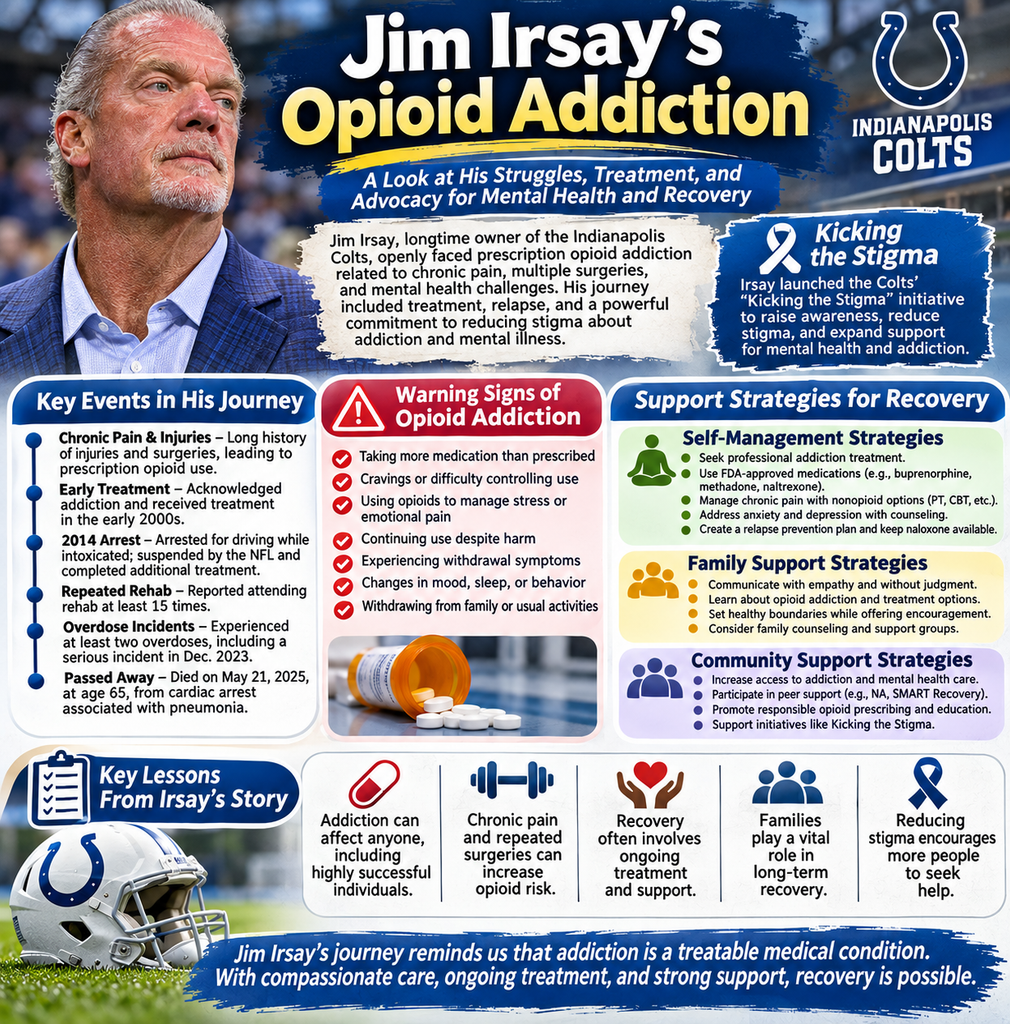
Jim Irsay, the longtime owner of the Indianapolis Colts, experienced decades of challenges involving prescription opioid addiction, chronic pain, and mental health. Despite his accomplishments as an NFL team owner and philanthropist, Irsay openly acknowledged that substance use disorders affected his personal life and required repeated treatment.
His addiction reportedly developed following injuries, numerous surgeries, and prolonged exposure to prescription pain medications. Throughout his life, he experienced periods of recovery, relapse, and serious medical complications.
Irsay also became an outspoken advocate for mental health awareness, helping launch the Indianapolis Colts’ Kicking the Stigma initiative to encourage conversations about mental illness and addiction.
Following his death on May 21, 2025, additional reporting raised questions about his treatment, medication use, and medical care during his final years.
His experiences provide important lessons about opioid use disorder, the complexities of recovery, and the role of professional treatment, family involvement, and community support.
Understanding Jim Irsay’s journey can help individuals recognize the warning signs of addiction, reduce stigma, and appreciate why recovery requires ongoing medical care and compassionate support.
Who Was Jim Irsay?
Jim Irsay was an American businessman and longtime owner of the Indianapolis Colts. He became the team’s principal owner in 1997 following the death of his father, Robert Irsay.
Under his leadership, the Colts achieved significant success, including winning Super Bowl XLI in 2007.
Beyond football, Irsay was known for his charitable contributions, music memorabilia collection, and efforts to promote mental health awareness.
However, his public accomplishments existed alongside longstanding struggles with prescription medications and addiction.
Irsay died at age 65 on May 21, 2025. His legacy includes both his contributions to professional football and his willingness to discuss the challenges of addiction and mental health.
Jim Irsay’s Opioid Addiction Journey
Early Injuries and Prescription Pain Medication
Irsay’s problems with prescription opioids were linked to physical injuries and repeated surgeries.
He had participated in competitive athletics and powerlifting, activities that contributed to significant orthopedic problems and chronic pain.
Prescription opioids became part of his pain management, but prolonged use eventually contributed to dependence and addiction.
His experiences demonstrate how opioid use disorder can develop in individuals who initially receive medications for legitimate medical conditions.
Public Recognition of His Addiction
Irsay’s substance use difficulties became publicly known in the early 2000s.
In 2002, he acknowledged problems involving prescription pain medications and reported receiving treatment.
He later described periods of sobriety and the importance of maintaining recovery through ongoing support.
However, his experiences also demonstrated that recovery is not always linear.
The 2014 Arrest and Treatment
In March 2014, Irsay was arrested in Carmel, Indiana, after police stopped him for erratic driving.
Authorities discovered prescription medications in his vehicle, and he subsequently pleaded guilty to operating a vehicle while intoxicated.
The NFL suspended him for six games and imposed a $500,000 fine.
The incident brought renewed attention to his substance use and the difficulties of maintaining recovery while managing chronic pain and personal responsibilities.
Repeated Rehabilitation and Overdose Experiences
In a 2023 interview with HBO’s Real Sports, Irsay discussed his history of addiction treatment and revealed that he had attended rehabilitation programs at least 15 times.
He also described surviving a previous overdose after attempting to detoxify himself while combining multiple medications.
In December 2023, emergency personnel responded to his Indiana home after he was found unconscious. Police classified the incident as a suspected overdose and administered naloxone.
Subsequent investigative reporting described another overdose later that month, followed by a prolonged hospitalization.
These events emphasize the potentially life-threatening consequences of opioid misuse, particularly when opioids are combined with other medications. The Washington Post+1
His Final Years and Death
Jim Irsay died on May 21, 2025, at a Beverly Hills hotel.
His death certificate attributed his death to cardiac arrest associated with pneumonia and underlying heart conditions. No autopsy was performed.
In January 2026, reporting confirmed that federal authorities were investigating circumstances surrounding his death and the medical treatment he received, including prescriptions for opioids and administration of ketamine.
It is important not to characterize Irsay’s death as a confirmed fatal opioid overdose. The publicly documented cause of death and the questions raised by investigative reporting are distinct. The Washington Post+1
Understanding the Connection Between Chronic Pain and Opioid Addiction
Jim Irsay’s experiences illustrate how chronic pain, prescription medication exposure, and psychological stress can interact to increase the risk of opioid use disorder.
Prescription opioids, including oxycodone, hydrocodone, and morphine, can provide relief for certain types of severe pain. However, prolonged use may produce tolerance, physical dependence, and, in some individuals, addiction.
Several factors can increase vulnerability:
- Chronic pain: Persistent discomfort may encourage prolonged reliance on prescription painkillers.
- Repeated surgeries: Multiple procedures can increase exposure to opioid medications.
- Physical dependence: The body adapts to opioids, causing withdrawal symptoms when medications are reduced or discontinued.
- Psychological distress: Anxiety, depression, and emotional stress may complicate pain management and recovery.
- Medication interactions: Combining opioids with benzodiazepines, alcohol, or other sedatives increases the risk of respiratory depression and overdose.
- Stigma: Fear of criticism may discourage individuals from acknowledging problems or seeking treatment.
Physical dependence is not identical to addiction. Opioid use disorder involves a problematic pattern of use that results in significant impairment or distress.
Self-Management Strategies for Opioid Addiction Recovery
Self-management involves recognizing symptoms, participating in treatment, developing healthier coping mechanisms, and reducing the risk of recurrence.
Irsay’s history of repeated treatment demonstrates why opioid addiction often requires ongoing medical care rather than a single intervention.
1. Recognize Early Warning Signs
Identifying problematic opioid use can encourage earlier intervention.
Warning signs may include:
- Taking medication more frequently or in larger doses than prescribed.
- Experiencing strong cravings or difficulty controlling use.
- Continuing opioid use despite negative consequences.
- Obtaining medication from multiple sources without coordinated medical care.
- Using opioids to manage emotional distress.
- Experiencing withdrawal symptoms when medication is unavailable.
- Neglecting responsibilities or withdrawing from relationships.
Individuals experiencing these symptoms should seek evaluation from qualified healthcare professionals.
2. Seek Evidence-Based Addiction Treatment
Professional treatment is one of the most important components of recovery.
FDA-approved medications for opioid use disorder include:
- Buprenorphine: Reduces cravings and withdrawal symptoms while lowering overdose risk.
- Methadone: Provides effective treatment for opioid use disorder through certified opioid treatment programs.
- Extended-release naltrexone: Blocks opioid effects and may be appropriate after complete opioid withdrawal.
Behavioral interventions, including cognitive behavioral therapy and motivational interviewing, can help individuals address emotional triggers, develop coping skills, and strengthen recovery.
Buprenorphine and methadone have strong evidence for reducing overdose mortality. Counseling can complement medication treatment but should not be a prerequisite for receiving it.
3. Develop a Comprehensive Chronic Pain Management Plan
Because Irsay’s addiction history was closely associated with injuries and repeated surgeries, his experience highlights the importance of individualized pain management.
Strategies may include:
- Physical therapy and rehabilitation.
- Nonopioid medications when clinically appropriate.
- Cognitive behavioral therapy for chronic pain.
- Mindfulness and relaxation techniques.
- Sleep improvement and stress management.
- Consultation with pain management and addiction specialists.
For patients already taking opioids regularly, medication changes should be medically supervised. Abrupt discontinuation can cause significant withdrawal and other complications.
4. Address Mental Health Conditions
Irsay publicly discussed anxiety and the importance of mental health awareness.
Individuals experiencing both opioid addiction and mental health symptoms may benefit from integrated treatment.
Helpful approaches include:
- Regular mental health evaluations.
- Counseling for anxiety, depression, or trauma-related symptoms.
- Developing healthy emotional coping strategies.
- Maintaining consistent sleep and activity routines.
- Building supportive social relationships.
5. Create a Relapse Prevention Plan
Recovery often involves periods of progress and setbacks. A return to substance use should prompt reassessment and treatment adjustments rather than shame or abandonment.
An individualized plan should include:
- Identifying triggers and high-risk situations.
- Recognizing early behavioral changes.
- Maintaining regular healthcare appointments.
- Continuing prescribed addiction treatment.
- Establishing emergency contacts.
- Keeping naloxone readily available.
- Developing a plan for obtaining immediate help after renewed opioid use.
Important: Detoxification alone is not recommended as treatment for opioid use disorder. Loss of opioid tolerance after withdrawal increases overdose risk if opioid use resumes.
Family Support Strategies: Helping Loved Ones Through Addiction
Addiction can affect the entire family, creating emotional distress, uncertainty, and difficult decisions about treatment and safety.
Irsay was the father of three daughters, who were also involved in the Indianapolis Colts organization. His daughter Carlie Irsay-Gordon assumed team leadership responsibilities during his 2014 suspension.
Although the private details of his family’s responses to addiction are not fully public, his experiences illustrate why families benefit from education, boundaries, and professional guidance.
1. Encourage Compassionate Communication
Family members should approach addiction conversations with empathy rather than blame.
Helpful strategies include:
- Expressing concern about specific behaviors.
- Listening without judgment.
- Avoiding stigmatizing labels.
- Encouraging professional treatment.
- Recognizing that recovery may involve setbacks.
Compassionate communication can make it easier for individuals to discuss their difficulties openly.
2. Learn About Opioid Addiction
Understanding the medical aspects of addiction helps families respond appropriately.
Family education should include:
- Differences between physical dependence and opioid use disorder.
- Common withdrawal symptoms.
- Evidence-based treatment options.
- Risks associated with combining sedating medications.
- Overdose recognition and naloxone administration.
- The importance of long-term recovery support.
3. Establish Healthy Boundaries
Supporting a loved one does not mean accepting dangerous or harmful behavior.
Families may establish boundaries involving medication safety, financial responsibilities, transportation, and household expectations.
Boundaries should promote safety while respecting the individual’s dignity and autonomy.
4. Participate in Family Counseling
Family therapy can help address communication problems, emotional stress, and relationship difficulties associated with addiction.
Counseling may also help family members understand treatment expectations and develop realistic recovery goals.
5. Protect Family Members’ Emotional Well-Being
Family members may experience anxiety, frustration, exhaustion, or feelings of helplessness.
Helpful strategies include:
- Seeking individual counseling.
- Joining family support groups.
- Maintaining personal routines and relationships.
- Practicing stress management.
- Recognizing when additional professional assistance is needed.
Family members can provide meaningful support, but they cannot independently control another person’s recovery.
Community Support Strategies: Building Stronger Recovery Networks
One of Jim Irsay’s most significant contributions outside football was his commitment to mental health awareness.
His personal experiences influenced his advocacy and efforts to encourage people to seek help without embarrassment or fear of judgment.
1. The Kicking the Stigma Initiative
In 2020, the Indianapolis Colts launched Kicking the Stigma, an initiative designed to increase awareness, reduce stigma, and expand access to mental health resources.
The program became an important part of Irsay’s public advocacy.
Through educational campaigns, partnerships, and charitable support, the initiative encouraged conversations about mental illness and substance use disorders.
Irsay’s involvement demonstrated how individuals with public influence can help normalize discussions about seeking treatment. WFYI+1
2. Expand Access to Addiction Treatment
Communities can strengthen recovery by increasing access to:
- Addiction medicine specialists.
- Buprenorphine and methadone treatment.
- Outpatient and residential services.
- Integrated chronic pain and mental health care.
- Affordable counseling.
- Telehealth addiction services.
- Peer recovery coaching.
Treatment should be accessible regardless of financial circumstances or insurance status.
3. Encourage Peer Support Programs
Peer recovery organizations can provide encouragement, shared experiences, and ongoing social connection.
Examples include:
- Narcotics Anonymous
- SMART Recovery
- Recovery Dharma
- Local recovery community organizations.
Peer support can complement professional medical treatment, although it does not replace medication treatment when indicated.
4. Improve Prescription Medication Safety
Healthcare systems can reduce opioid-related harm by promoting responsible prescribing, medication reconciliation, patient education, and individualized pain management.
Important strategies include:
- Reviewing prescription drug monitoring program information.
- Assessing medication interactions.
- Avoiding unnecessary combinations of opioids and sedatives.
- Offering naloxone to patients at increased overdose risk.
- Screening for substance use disorders.
- Coordinating care among multiple healthcare professionals.
5. Strengthen Overdose Prevention Programs
Community overdose prevention programs can provide naloxone, education, and referrals to addiction treatment.
People should recognize warning signs such as:
- Slow or absent breathing.
- Unresponsiveness.
- Blue or gray lips.
- Pinpoint pupils.
- Gurgling or abnormal breathing.
If an overdose is suspected, call 911 immediately, administer naloxone, provide rescue breathing or CPR according to training and dispatcher instructions, and remain with the individual until emergency personnel arrive.
Challenges and Barriers to Long-Term Recovery
Jim Irsay’s history illustrates several challenges that can complicate addiction treatment.
| Challenge | Potential support strategy |
|---|---|
| Chronic pain and repeated surgeries | Integrated pain management and addiction care |
| Prescription opioid dependence | Medically supervised treatment and monitoring |
| Anxiety and emotional distress | Mental health counseling and appropriate treatment |
| Recurrent substance use | Ongoing treatment and relapse prevention planning |
| Stigma and public scrutiny | Confidential, compassionate healthcare |
| Multiple medications | Coordinated prescribing and medication reviews |
| Family stress | Family counseling and peer support |
These challenges demonstrate why comprehensive addiction treatment should address physical, psychological, and social needs simultaneously.
Lessons From Jim Irsay’s Opioid Addiction Journey
Irsay’s experiences provide important lessons for individuals, families, healthcare professionals, and communities.
1. Addiction can affect anyone. Financial success, professional achievements, and access to resources do not eliminate vulnerability to substance use disorders.
2. Chronic pain and addiction require coordinated treatment. Addressing opioid use without adequately managing pain may leave important needs unmet.
3. Recovery is not always linear. Repeated treatment episodes or a return to substance use do not mean recovery is impossible.
4. Medication safety is essential. Combining opioids with other sedating medications can produce serious complications, including respiratory depression.
5. Families benefit from education and support. Compassionate communication, appropriate boundaries, and professional guidance can improve family well-being.
6. Public advocacy can reduce stigma. Irsay’s involvement with Kicking the Stigma helped encourage greater awareness of mental health and addiction.
7. Long-term recovery requires ongoing care. Effective treatment often involves medication, behavioral healthcare, pain management, and supportive relationships.
Remembering Jim Irsay Beyond Addiction
Jim Irsay’s legacy extends beyond his struggles with opioid addiction.
As owner of the Indianapolis Colts, he helped guide the organization through periods of remarkable success and contributed to the growth of professional football in Indianapolis.
His philanthropic activities supported numerous charitable causes, while his mental health advocacy encouraged public conversations about conditions that are frequently misunderstood.
His willingness to acknowledge addiction helped challenge the assumption that successful individuals are immune to substance use disorders.
Although his final years involved serious health problems and unresolved questions about his medical treatment, his life illustrates both the challenges of addiction and the value of promoting compassionate care.
Conclusion: Understanding Addiction Can Save Lives
Jim Irsay’s opioid addiction journey demonstrates that substance use disorders are complex medical conditions that can affect individuals regardless of wealth, professional success, or public recognition.
His experiences with chronic pain, prescription medication dependence, repeated rehabilitation, and mental health challenges highlight the importance of comprehensive treatment and long-term support.
Self-management strategies can help individuals recognize warning signs, participate in treatment, and develop healthier coping skills. Families can provide encouragement, establish appropriate boundaries, and seek counseling when needed.
Communities can strengthen recovery by expanding access to evidence-based treatment, supporting overdose prevention, and reducing stigma.
Through his Kicking the Stigma initiative, Irsay also helped demonstrate the importance of speaking openly about mental health and addiction.
His story reminds us that addiction does not define a person’s worth. Recovery deserves compassion, evidence-based treatment, and continued support.
Addiction Treatment and Family Support Resources
- SAMHSA FindTreatment.gov — Locate addiction and mental health treatment services.
- SAMHSA National Helpline — Call 1-800-662-HELP (4357) for confidential treatment referrals.
- Nar-Anon Family Groups — Support for families affected by addiction.
- 988 Suicide & Crisis Lifeline — Call or text 988 for emotional or mental health crisis support.
- Indianapolis Colts Kicking the Stigma — Mental health awareness and community resources.
Frequently Asked Questions and Answers
Jim Irsay’s Life and Addiction Journey
1. Who was Jim Irsay?
Jim Irsay was an American businessman and longtime owner of the Indianapolis Colts football franchise. He became the team’s principal owner in 1997 and helped guide the organization to a Super Bowl victory in 2007.
Beyond football, Irsay was recognized for his philanthropy, music memorabilia collection, and mental health advocacy. He died on May 21, 2025, at age 65.
2. Did Jim Irsay struggle with opioid addiction?
Yes. Irsay publicly acknowledged longstanding problems with prescription pain medications, including opioids.
He described undergoing numerous rehabilitation treatments and experiencing periods of sobriety and relapse.
His experiences demonstrate that opioid use disorder is a medical condition that can affect individuals across all socioeconomic backgrounds.
3. How did Jim Irsay’s opioid addiction begin?
Irsay linked his prescription painkiller problems to physical injuries, chronic pain, and multiple orthopedic surgeries.
Prescription opioids were initially used to manage pain, but his medication use eventually developed into a serious substance use problem.
His experience illustrates how prolonged opioid exposure can increase the risk of dependence and addiction in susceptible individuals.
4. What prescription medications were associated with Jim Irsay’s addiction?
Irsay publicly discussed his dependence on prescription painkillers, including opioids.
Reports concerning his medical history and later treatment also described the use of powerful pain medications.
However, not every medication mentioned in public reporting can be independently verified as having been misused. Prescription opioid exposure, physical dependence, and opioid use disorder should be distinguished when discussing his history.
5. How many times did Jim Irsay enter rehabilitation?
In a 2023 interview with HBO’s Real Sports, Irsay stated that he had attended rehabilitation programs at least 15 times.
His repeated treatment experiences demonstrate the chronic and sometimes recurrent nature of substance use disorders.
Multiple treatment episodes do not necessarily indicate that recovery is impossible. They may reflect the need for continued care, different treatment approaches, or additional support.
6. What happened during Jim Irsay’s 2014 arrest?
In March 2014, Irsay was arrested in Carmel, Indiana, following a traffic stop.
Police discovered prescription medications in his vehicle. He subsequently pleaded guilty to a misdemeanor charge of operating a vehicle while intoxicated.
The NFL suspended him for six games and fined him $500,000. Irsay later disputed the circumstances surrounding his arrest during a 2023 interview. NFL+1
7. Did Jim Irsay experience an opioid overdose?
Irsay publicly acknowledged surviving a serious drug overdose after attempting to detoxify himself and combining multiple medications.
In December 2023, emergency responders also attended to him after he was found unconscious at his home. Police described the incident as a suspected overdose.
A subsequent Washington Post investigation reported two overdoses in December 2023, including another incident that resulted in prolonged hospitalization. The Washington Post+1
8. Did Jim Irsay experience mental health challenges?
Irsay openly discussed the emotional effects of difficult childhood experiences, family relationships, and addiction.
His public advocacy emphasized the importance of recognizing mental health challenges and encouraging individuals to seek professional assistance.
Although mental health and addiction frequently overlap, the specific diagnoses and treatment details of any individual should not be assumed without reliable documentation.
9. How did Jim Irsay die?
Jim Irsay died on May 21, 2025, at the Beverly Hills Hotel in California.
His death certificate listed cardiac arrest associated with pneumonia, with underlying heart conditions contributing.
No autopsy or postmortem toxicology testing was performed. Consequently, the precise contribution, if any, of medication use to his death has not been established.
10. Was Jim Irsay’s death caused by an opioid overdose?
His death has not been officially established as an opioid overdose.
Investigative reporting raised concerns about his opioid prescriptions and other medical treatments during his final years. In January 2026, federal authorities were reported to be investigating his death and the addiction specialist who treated him.
An investigation does not itself establish wrongdoing or prove that opioids caused his death. The Washington Post+2
Understanding Prescription Opioid Addiction
11. Why can chronic pain increase the risk of opioid addiction?
Chronic pain can lead to prolonged exposure to prescription opioids, particularly when pain remains difficult to manage.
Opioids can produce physical dependence and tolerance. Some individuals also develop opioid use disorder, characterized by impaired control over use despite harmful consequences.
Comprehensive pain management can reduce reliance on opioids while improving physical functioning and quality of life.
12. What is the difference between opioid dependence and opioid addiction?
Physical dependence occurs when the body adapts to repeated opioid exposure, potentially causing withdrawal symptoms when medication is reduced or stopped.
Opioid addiction, clinically called opioid use disorder, involves problematic opioid use associated with significant distress or impairment.
Physical dependence can occur during appropriate medical treatment without addiction developing.
13. What are common warning signs of opioid addiction?
Warning signs may include:
- Taking larger doses than prescribed.
- Experiencing intense cravings.
- Difficulty controlling medication use.
- Continuing opioid use despite negative consequences.
- Using opioids to cope with emotional distress.
- Neglecting responsibilities or relationships.
- Spending excessive time obtaining or using opioids.
- Repeated unsuccessful attempts to reduce use.
A professional assessment is necessary to determine whether someone meets diagnostic criteria for opioid use disorder.
14. Can opioid addiction affect wealthy or successful individuals?
Yes. Addiction can affect people regardless of income, education, occupation, or social status.
Financial resources may improve access to certain healthcare services, but they do not eliminate biological vulnerability, psychological stress, or the risk of recurrent substance use.
Irsay’s experiences illustrate why addiction should be understood as a medical condition rather than a reflection of professional success or personal worth.
Self-Management and Recovery Strategies
15. What self-management strategies help individuals recover from opioid addiction?
Effective strategies include:
- Seeking evaluation from an addiction specialist.
- Following an individualized treatment plan.
- Taking prescribed medications for opioid use disorder.
- Identifying triggers and high-risk situations.
- Attending medical and mental health appointments.
- Developing healthy stress-management techniques.
- Establishing consistent sleep and activity routines.
- Maintaining supportive relationships.
- Keeping naloxone accessible.
Self-management should complement professional care rather than replace it.
16. What medications are effective for treating opioid use disorder?
Three FDA-approved medications are available:
- Buprenorphine: Reduces withdrawal symptoms and cravings and lowers overdose risk.
- Methadone: Provides effective maintenance treatment through certified opioid treatment programs.
- Naltrexone: Blocks opioid effects and can be used after an appropriate opioid-free period.
Buprenorphine and methadone have particularly strong evidence for reducing overdose mortality.
Medication treatment can be combined with counseling, peer support, and other services according to individual needs.
17. Is detoxification alone sufficient to treat opioid addiction?
No. Detoxification addresses acute withdrawal symptoms but does not adequately treat the underlying opioid use disorder.
After detoxification, reduced opioid tolerance can increase overdose risk if use resumes.
Ongoing treatment, particularly with evidence-based medications, is important for reducing overdose risk and supporting recovery.
18. How can individuals manage chronic pain while recovering from opioid addiction?
An individualized pain management plan may include:
- Physical therapy and rehabilitation.
- Nonopioid medications when appropriate.
- Cognitive behavioral therapy for chronic pain.
- Mindfulness and relaxation exercises.
- Gradual physical activity.
- Sleep improvement.
- Consultation with pain management specialists.
Patients should not abruptly discontinue long-term prescribed opioids without medical supervision.
19. What should someone do after experiencing a relapse?
A return to opioid use should prompt reassessment rather than shame or abandonment of treatment.
Recommended steps include contacting a healthcare professional, reviewing triggers, adjusting treatment when needed, and strengthening recovery support.
Because overdose risk can increase after a period of abstinence, access to naloxone and evidence-based medications is particularly important.
Family Support and Addiction Recovery
20. How did Jim Irsay’s family respond to his addiction struggles?
Irsay’s three daughters, Carlie Irsay-Gordon, Casey Foyt, and Kalen Jackson, were involved in the Indianapolis Colts organization.
Carlie assumed leadership responsibilities during his 2014 NFL suspension.
Following his death, his daughters publicly acknowledged his experiences with addiction and mental health while emphasizing his philanthropy, personal legacy, and commitment to helping others.
The full details of his family’s private efforts to support his recovery have not been publicly established. NFL+1
21. How can families support someone struggling with opioid addiction?
Families can help by:
- Communicating with empathy and without judgment.
- Encouraging professional addiction treatment.
- Learning about opioid use disorder.
- Supporting prescribed medication treatment.
- Establishing appropriate boundaries.
- Participating in family counseling.
- Recognizing overdose warning signs.
- Keeping naloxone available.
- Encouraging ongoing treatment after setbacks.
22. Why are healthy boundaries important in addiction recovery?
Healthy boundaries protect the safety and well-being of everyone involved.
Families may establish expectations concerning medication safety, financial responsibilities, transportation, and household behavior.
Boundaries should be communicated respectfully and should not be used to shame or punish someone for experiencing addiction.
23. How can family counseling improve addiction recovery?
Family counseling helps individuals and loved ones improve communication, address conflict, rebuild trust, and understand the effects of addiction.
It can also help families develop realistic expectations about treatment and recovery.
Family members may benefit from counseling even when the individual experiencing addiction is not participating in treatment.
Community Support and Mental Health Advocacy
24. What is Jim Irsay’s Kicking the Stigma initiative?
Kicking the Stigma is a mental health awareness initiative launched by the Indianapolis Colts in 2020 with Irsay’s involvement.
The initiative promotes education, reduces stigma, supports mental health organizations, and encourages people to seek professional help.
It became an important part of Irsay’s philanthropic legacy.
25. How did Jim Irsay’s personal experiences influence his advocacy?
Irsay’s experiences with addiction helped shape his public discussions about mental health and substance use disorders.
By acknowledging his struggles, he helped challenge the perception that addiction only affects certain groups of people.
His advocacy encouraged greater openness about treatment, emotional distress, and the importance of compassionate support.
26. What community resources can support opioid addiction recovery?
Community resources include:
- Addiction medicine clinics and opioid treatment programs.
- Mental health counseling services.
- Narcotics Anonymous and SMART Recovery.
- Peer recovery coaching.
- Recovery community organizations.
- Naloxone distribution programs.
- Family support groups.
- Telehealth addiction services.
These services can reduce isolation, improve access to treatment, and support long-term recovery.
27. Why is reducing addiction stigma important?
Stigma can discourage individuals from disclosing substance use problems or seeking professional treatment.
Public education can help people understand that opioid use disorder is a treatable medical condition.
Reducing stigma encourages earlier intervention, compassionate communication, and better access to recovery resources.
28. What should someone do if they suspect an opioid overdose?
An opioid overdose is a medical emergency.
Warning signs include unresponsiveness, slow or absent breathing, abnormal gurgling sounds, and blue or gray lips.
If an overdose is suspected:
- Call 911 immediately.
- Administer naloxone if available.
- Provide rescue breathing or CPR according to dispatcher instructions and training.
- Give additional naloxone doses if needed.
- Stay with the person until emergency services arrive.
Naloxone can reverse opioid-induced respiratory depression and save lives.
Lessons From Jim Irsay’s Addiction Journey
29. What can healthcare professionals learn from Jim Irsay’s experiences?
His experiences emphasize the importance of comprehensive care for individuals with chronic pain and substance use disorders.
Healthcare professionals should consider:
- Screening for opioid use disorder.
- Evaluating mental health symptoms.
- Reviewing prescription medications and potential interactions.
- Coordinating treatment among healthcare providers.
- Offering evidence-based medications for opioid use disorder.
- Providing naloxone and overdose prevention education.
- Maintaining appropriate long-term follow-up.
30. What is the most important lesson from Jim Irsay’s opioid addiction?
One of the most important lessons is that addiction can affect anyone and may require ongoing treatment, even after periods of improvement.
Irsay’s experiences highlight the need to address chronic pain, substance use, mental health, and social support together.
His advocacy also demonstrates how discussing addiction openly can encourage others to seek help.
Conclusion: Understanding Addiction Can Save Lives
Jim Irsay’s opioid addiction journey illustrates the complexity of substance use disorders and the challenges individuals may face while managing chronic pain and emotional distress.
His history of repeated rehabilitation, overdose experiences, and public advocacy emphasizes that addiction treatment often requires long-term medical care and support.
Self-management strategies help individuals recognize warning signs and participate in treatment. Families can provide encouragement, establish healthy boundaries, and seek professional guidance. Communities can improve recovery outcomes by expanding access to evidence-based care and reducing stigma.
Through the Kicking the Stigma initiative, Irsay helped bring greater public attention to mental health and addiction.
His story reminds us that addiction does not define a person’s worth. Compassion, treatment, and ongoing support can help people build healthier futures.
Addiction Treatment and Family Support Resources
- SAMHSA FindTreatment.gov — Locate addiction and mental health treatment services.
- SAMHSA National Helpline — Call 1-800-662-HELP (4357).
- Nar-Anon Family Groups — Family support for substance use disorders.
- 988 Suicide & Crisis Lifeline — Call or text 988 for mental health crisis support.
- Indianapolis Colts Kicking the Stigma — Mental health awareness and community initiatives.
Video: