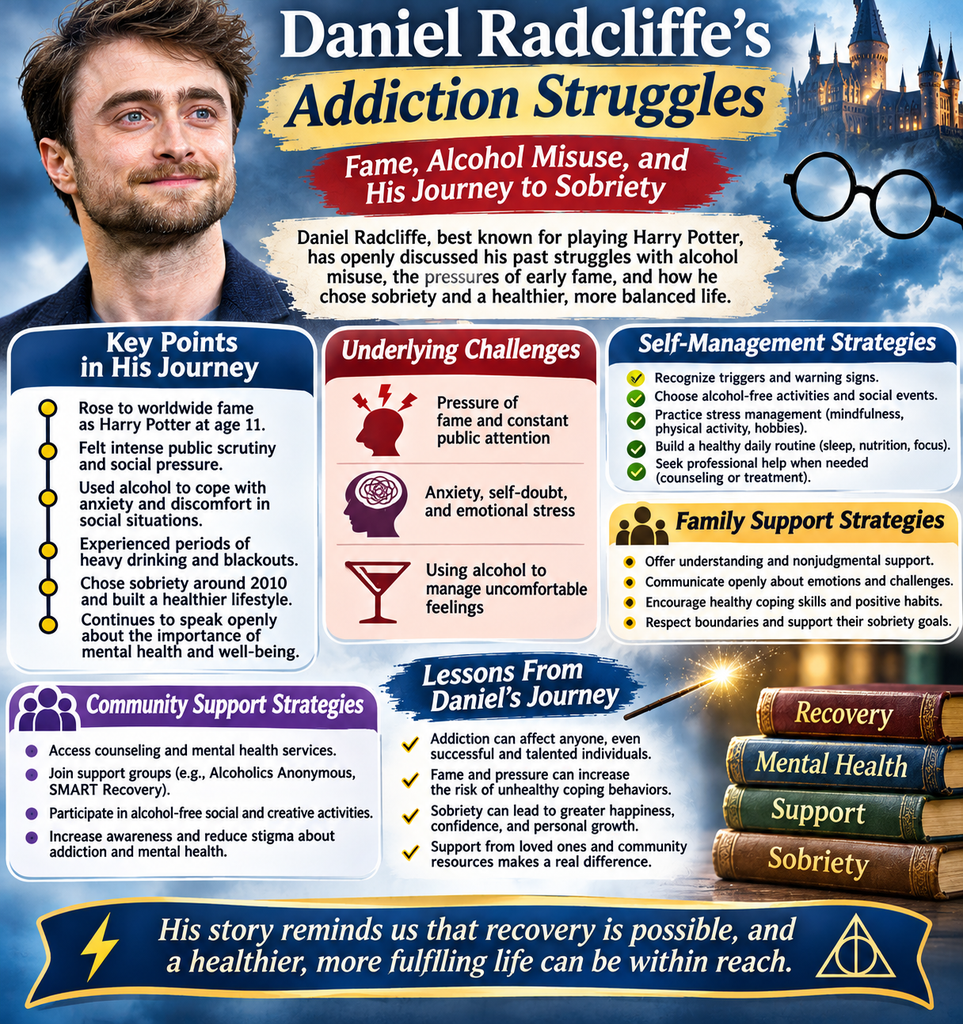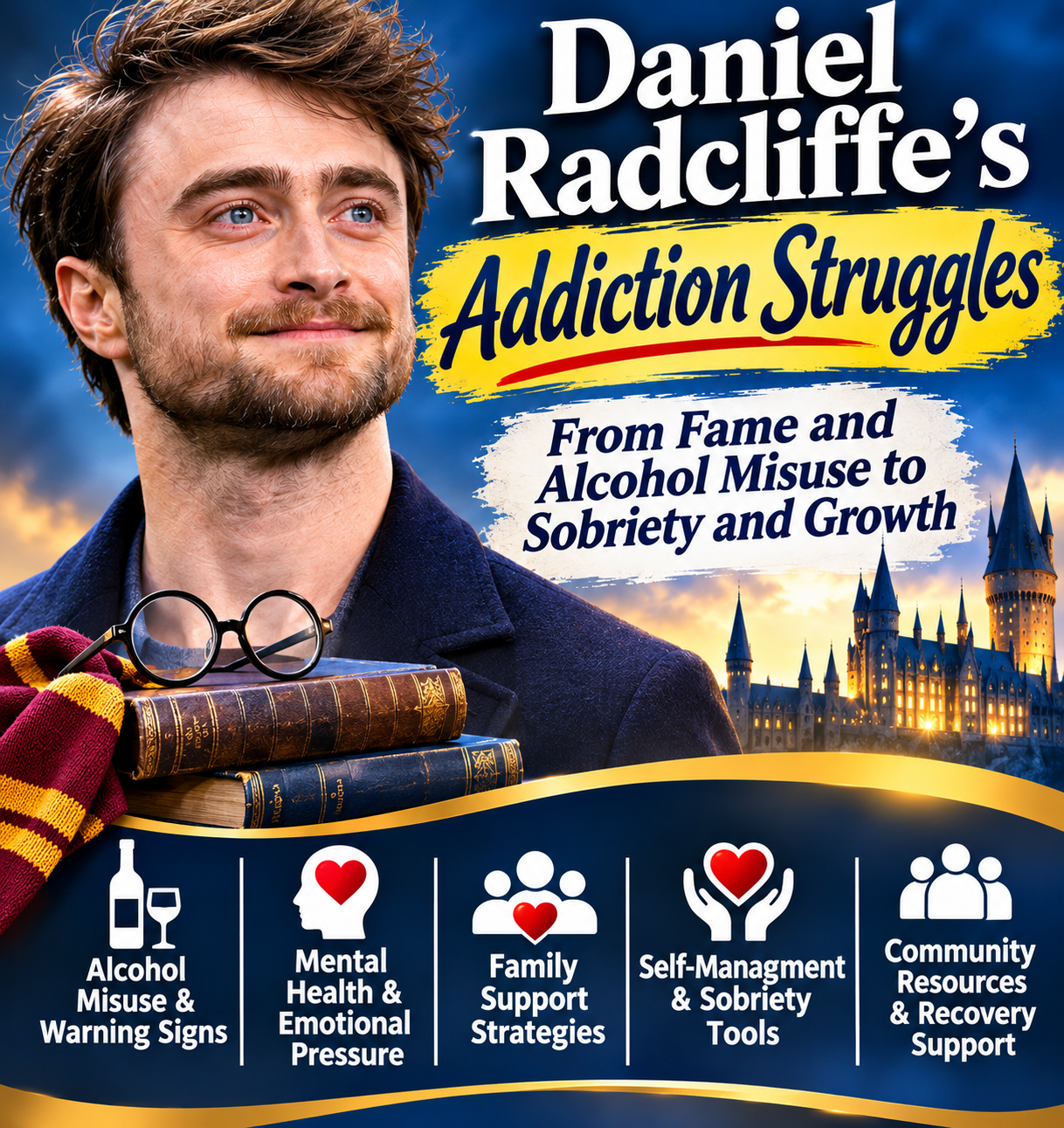
Can childhood fame, overwhelming public expectations, and emotional pressure contribute to unhealthy drinking habits?
Daniel Radcliffe, internationally recognized for portraying Harry Potter in the blockbuster film franchise, has openly discussed his past struggles with alcohol misuse and his decision to embrace sobriety.
Growing up in the public spotlight brought extraordinary opportunities, but it also created challenges involving identity, self-confidence, and constant attention. As Radcliffe transitioned from child actor to adulthood, he experienced periods of heavy drinking and acknowledged using alcohol to cope with uncomfortable emotions and public scrutiny.
Unlike many celebrity stories centered on rehabilitation facilities or public scandals, Radcliffe’s experience highlights the importance of personal reflection, supportive relationships, and developing healthier coping strategies.
He has publicly discussed becoming sober around 2010 and finding greater stability and satisfaction in his life without alcohol.
His journey offers valuable lessons about recognizing problematic drinking, managing emotional stress, and building a supportive environment for long-term sobriety.
Understanding Daniel Radcliffe’s experiences can help individuals and families recognize the warning signs of alcohol misuse, reduce stigma, and encourage healthier choices through self-management, family involvement, and community support.
Who Is Daniel Radcliffe?
Daniel Radcliffe is a British actor who became internationally famous after being cast as Harry Potter at age 11. He starred in eight Harry Potter films between 2001 and 2011, growing up in front of millions of viewers.
Following the franchise, Radcliffe established an independent acting career through films, television productions, and Broadway performances.
However, the transition from childhood fame to adult independence was not always easy. Radcliffe has described feeling watched in public and worrying about whether he could establish a successful career beyond Harry Potter.
These pressures contributed to his unhealthy relationship with alcohol.
Daniel Radcliffe’s Struggles With Alcohol
Early Fame and Emotional Pressure
Radcliffe became a household name before reaching adolescence. While fame brought opportunities, it also created challenges that many young adults never experience.
He has explained that being recognized in public made ordinary social situations uncomfortable.
When he visited bars or social gatherings, he sometimes felt that people were observing and judging his behavior. Drinking became a way to temporarily reduce that discomfort.
Unfortunately, the more he drank, the more attention he attracted, creating a cycle of anxiety and increased alcohol consumption. The Independent+1
When Drinking Became a Problem
Radcliffe acknowledged that his drinking became particularly problematic during the later Harry Potter films, including the production period of Harry Potter and the Half-Blood Prince.
In a 2011 interview with GQ, he described becoming reliant on alcohol to enjoy social experiences.
He later disclosed experiencing alcohol-related blackouts and periods of isolation. His drinking affected his physical well-being, relationships, and sense of personal identity. CBS News+1
Recognizing the Need for Change
Radcliffe gradually recognized that drinking was interfering with the life he wanted.
He realized that attempting to maintain a lifestyle centered on parties and excessive alcohol consumption was not making him happy.
Rather than continuing to drink socially, he decided that abstaining from alcohol was a healthier choice.
He has described several attempts to stop drinking before establishing sustained sobriety.
Choosing Sobriety and Building a Healthier Life
Radcliffe initially stopped drinking in 2010, although later interviews indicate that his path to sustained sobriety included setbacks.
In a 2015 interview, he reported having been alcohol-free for more than two years.
He credited supportive friends and family, personal determination, and a simpler lifestyle with helping him change his relationship with alcohol.
In later interviews, he described finding greater happiness in his relationships, acting career, and everyday activities. ABC News+2
Understanding the Connection Between Fame, Anxiety, and Alcohol Misuse
Radcliffe’s experience illustrates how psychological stress and social expectations can contribute to unhealthy drinking.
Alcohol temporarily reduces anxiety in some individuals by affecting brain systems involved in inhibition and emotional regulation. However, repeated heavy drinking can worsen anxiety, disrupt sleep, and increase the risk of alcohol use disorder.
Several factors may increase vulnerability:
- Public scrutiny: Constant attention can create stress and self-consciousness.
- Performance expectations: Fear of failure may contribute to unhealthy coping behaviors.
- Social pressure: Individuals may believe drinking is necessary to participate in social activities.
- Identity challenges: Major life transitions can create uncertainty about personal goals and values.
- Emotional avoidance: Alcohol may become a way to escape uncomfortable feelings.
- Isolation: Excessive drinking can interfere with relationships and meaningful activities.
Although Radcliffe’s experiences involved celebrity, these risk factors can affect college students, working professionals, parents, and individuals navigating major life changes.
Self-Management Strategies for Alcohol Addiction Recovery
Self-management involves developing practical skills to recognize harmful drinking patterns, manage emotional stress, and maintain healthier daily routines.
Radcliffe’s decision to change his lifestyle offers lessons that can be applied to alcohol recovery more broadly.
1. Recognize Unhealthy Drinking Patterns
The first step toward recovery is identifying how alcohol affects physical health, emotional well-being, and daily functioning.
Warning signs may include:
- Drinking more than intended.
- Difficulty stopping after beginning to drink.
- Using alcohol to manage anxiety or emotional distress.
- Experiencing blackouts or memory gaps.
- Continuing to drink despite relationship problems.
- Avoiding responsibilities because of drinking.
- Repeatedly attempting to reduce alcohol consumption without success.
Recognizing these patterns early can encourage timely intervention.
2. Identify Emotional Triggers
Radcliffe described using alcohol to cope with uncomfortable feelings associated with fame and social situations.
For individuals recovering from alcohol misuse, identifying triggers can help prevent recurring harmful behaviors.
Common triggers include:
- Social anxiety.
- Stressful work environments.
- Loneliness or boredom.
- Relationship conflicts.
- Negative self-talk.
- Celebrations where alcohol is expected.
Keeping a journal or discussing triggers with a counselor can help individuals identify patterns and develop healthier responses.
3. Develop Healthier Coping Strategies
Alcohol may temporarily reduce emotional discomfort, but it does not resolve the underlying causes of stress.
Healthier alternatives include:
- Practicing mindfulness and relaxation exercises.
- Participating in regular physical activity.
- Maintaining consistent sleep schedules.
- Pursuing hobbies and creative interests.
- Spending time with supportive friends.
- Using cognitive behavioral techniques to manage negative thoughts.
- Seeking professional counseling when necessary.
These strategies can help individuals develop emotional resilience without relying on alcohol.
4. Establish Alcohol-Free Social Activities
Radcliffe has discussed finding satisfaction in quieter activities and meaningful relationships rather than drinking-centered social events.
Individuals in recovery may benefit from:
- Meeting friends for coffee or meals.
- Participating in recreational sports.
- Attending concerts or community events without alcohol.
- Joining hobby or volunteer groups.
- Exploring outdoor activities.
- Spending quality time with family.
Sobriety does not require withdrawing from social life. Instead, it can provide opportunities to develop relationships and activities that support healthier choices.
5. Seek Evidence-Based Treatment When Needed
Although Radcliffe has discussed personal lifestyle changes and social support, his experience should not be interpreted as evidence that professional treatment is unnecessary.
Effective treatments for alcohol use disorder include:
- Cognitive behavioral therapy (CBT): Helps individuals identify and change unhealthy thinking and behavioral patterns.
- Motivational interviewing: Strengthens personal motivation for change.
- Naltrexone: Can reduce heavy drinking and alcohol cravings.
- Acamprosate: Helps support abstinence in individuals who have stopped drinking.
- Behavioral support programs: Provide ongoing encouragement and coping strategies.
For individuals with significant physical alcohol dependence, abruptly stopping alcohol can cause dangerous withdrawal, including seizures and delirium tremens. Medical assessment and supervised withdrawal management may be necessary.
6. Create a Long-Term Recovery Plan
A recovery plan can help individuals maintain progress during stressful periods.
Important components include:
- Identifying personal triggers.
- Developing alternative coping strategies.
- Establishing realistic recovery goals.
- Scheduling regular healthcare appointments.
- Maintaining supportive relationships.
- Preparing for high-risk situations.
- Seeking additional treatment if drinking resumes.
Recovery is an ongoing process that may require adjustments over time.
Family Support Strategies: Helping Loved Ones Through Alcohol Addiction
Family support can play an important role in recovery by providing emotional stability, encouragement, and practical assistance.
Radcliffe has spoken positively about the support he received from family members, friends, and colleagues while navigating the pressures of fame.
His experiences demonstrate the importance of maintaining relationships with people who value an individual beyond professional achievements or public recognition.
1. Encourage Open and Compassionate Communication
Families should approach discussions about alcohol misuse with empathy rather than blame.
Helpful strategies include:
- Expressing concern about specific behaviors.
- Listening without interrupting.
- Avoiding judgmental language.
- Encouraging professional treatment when appropriate.
- Recognizing positive changes and progress.
2. Provide Emotional Support
Individuals experiencing alcohol misuse may also struggle with shame, anxiety, or low self-esteem.
Family members can help by offering reassurance, encouraging healthy activities, and maintaining meaningful connections.
Emotional support should focus on understanding rather than attempting to control another person’s decisions.
3. Establish Healthy Boundaries
Healthy boundaries protect both the individual experiencing addiction and family members.
Examples include:
- Avoiding pressure to drink at family gatherings.
- Refusing to participate in unsafe behaviors.
- Establishing clear expectations around alcohol use.
- Encouraging accountability without humiliation.
- Supporting treatment while maintaining personal well-being.
4. Encourage Family Counseling
Family therapy can improve communication, address conflicts, and help rebuild trust.
It can also help loved ones understand the relationship between addiction, emotional distress, and recovery.
5. Celebrate Recovery Milestones
Families can acknowledge meaningful achievements such as:
- Attending treatment appointments.
- Developing healthier coping skills.
- Rebuilding relationships.
- Maintaining alcohol-free routines.
- Reaching personal recovery goals.
Recognition should focus on progress and well-being rather than perfection.
Community Support Strategies: Building a Stronger Recovery Network
Community support helps individuals develop social connections, access treatment, and reduce the isolation sometimes associated with addiction.
Radcliffe’s experiences also illustrate how public conversations about alcohol misuse can challenge stigma.
1. Expand Access to Alcohol Addiction Treatment
Communities can strengthen recovery by providing:
- Affordable outpatient addiction treatment.
- Medically supervised withdrawal services.
- Mental health counseling.
- Medication management.
- Telehealth services.
- Recovery coaching.
- Integrated treatment for co-occurring conditions.
2. Encourage Peer Support Programs
Peer recovery organizations let individuals share experiences and build supportive relationships.
Examples include:
- Alcoholics Anonymous
- SMART Recovery
- Recovery Dharma
- Local sober living and recovery community organizations.
These programs can complement professional treatment and help reduce feelings of isolation.
3. Promote Alcohol-Free Community Activities
Communities can create environments where alcohol is not necessary for social participation.
Examples include:
- Alcohol-free festivals.
- Recreational sports leagues.
- Volunteer opportunities.
- Community wellness programs.
- Creative workshops.
- Sober social gatherings.
4. Improve Mental Health Education
Educational programs should explain how anxiety, depression, social pressure, and alcohol misuse may interact.
Schools, workplaces, and community organizations can promote early recognition and confidential access to support.
5. Reduce Stigma Through Public Awareness
When public figures discuss their experiences with addiction, they can encourage others to recognize similar challenges.
Radcliffe’s openness helps demonstrate that problematic alcohol use is not limited to any particular profession or background.
However, recovery experiences vary, and no single person’s journey represents every individual’s treatment needs.
Challenges and Barriers to Recovery
| Challenge | Support strategy |
|---|---|
| Social anxiety | CBT, counseling, relaxation techniques |
| Public or workplace pressure | Stress management and healthy boundaries |
| Alcohol-centered social activities | Develop alcohol-free alternatives |
| Fear of judgment | Confidential treatment and peer support |
| Emotional isolation | Family counseling and meaningful connections |
| Alcohol cravings | Behavioral treatment and appropriate medication |
| Risk of renewed drinking | Ongoing follow-up and relapse prevention planning |
Lessons From Daniel Radcliffe’s Recovery Journey
Radcliffe’s experiences provide several important lessons about alcohol misuse and personal growth.
1. Success does not eliminate vulnerability to addiction. Professional achievements and public recognition do not protect individuals from substance use disorders.
2. Emotional stress can contribute to unhealthy drinking. Anxiety, social pressure, and uncertainty may encourage alcohol use as a coping mechanism.
3. Recognizing a problem is an important first step. Awareness of alcohol-related harm can motivate individuals to seek change.
4. Recovery may involve setbacks. Multiple attempts to stop drinking do not mean lasting recovery is impossible.
5. Supportive relationships matter. Friends, family, and trusted professionals can provide encouragement and stability.
6. Sobriety can create opportunities for personal growth. Reducing or eliminating alcohol may improve relationships, health, and emotional well-being.
7. Professional treatment remains important. Individuals with alcohol use disorder may benefit from medications, counseling, and ongoing recovery support.
Daniel Radcliffe’s Life Beyond Alcohol Misuse
Radcliffe has continued to establish a successful acting career beyond Harry Potter, appearing in independent films, television projects, and theater productions.
His work has demonstrated his versatility and commitment to pursuing roles that challenge him creatively.
In more recent interviews, he has described the importance of family life, meaningful work, and maintaining a healthier personal routine.
His experiences illustrate how individuals can move beyond periods of unhealthy substance use and develop fulfilling lives centered on personal values and supportive relationships.
Conclusion: Recovery Is About Building a Healthier Life
Daniel Radcliffe’s journey from childhood fame to sobriety demonstrates that alcohol misuse can affect anyone, including individuals who appear successful and confident.
His experiences with emotional stress, social pressure, and unhealthy drinking emphasize the importance of recognizing warning signs and developing healthier coping strategies.
Self-management can help individuals identify triggers, establish alcohol-free routines, and participate in appropriate treatment. Families can provide encouragement, understanding, and healthy boundaries. Communities can strengthen recovery through accessible treatment, peer support, and stigma reduction.
Radcliffe’s story also reminds us that recovery is not simply about avoiding alcohol. It involves developing self-awareness, strengthening relationships, and building a life that supports long-term emotional and physical well-being.
Recovery is possible, and a healthier future can begin with the decision to seek help and make meaningful changes.
Alcohol Addiction Treatment and Family Support Resources
- SAMHSA FindTreatment.gov — Locate alcohol and mental health treatment services.
- SAMHSA National Helpline — Call 1-800-662-HELP (4357) for confidential referrals.
- Alcoholics Anonymous — Peer support for people seeking sobriety.
- SMART Recovery — Evidence-informed recovery support.
- Al-Anon Family Groups — Support for people affected by another person’s drinking.
Frequently Asked Questions and Answers
1. Who is Daniel Radcliffe?
Daniel Radcliffe is a British actor who became internationally famous for portraying Harry Potter in the film adaptations of J.K. Rowling’s novels.
He began playing Harry Potter at age 11 and appeared in eight films between 2001 and 2011.
Following the franchise, Radcliffe continued his acting career in independent films, television productions, and theater.
2. Did Daniel Radcliffe struggle with addiction?
Radcliffe has publicly acknowledged experiencing problematic alcohol use during his late teenage years and early adulthood.
He described drinking excessively, experiencing blackouts, and using alcohol to manage discomfort associated with fame and public attention.
Although he has openly discussed his unhealthy relationship with alcohol, it is important to distinguish his personal descriptions from a formally documented clinical diagnosis of alcohol use disorder.
3. When did Daniel Radcliffe’s drinking become problematic?
Radcliffe described experiencing significant drinking problems during the later years of filming the Harry Potter series.
He acknowledged that alcohol became an unhealthy coping mechanism as he navigated adolescence, adulthood, and the pressures of international fame.
His experiences demonstrate how substance misuse can develop during major life transitions.
4. Why did Daniel Radcliffe use alcohol?
Radcliffe has explained that he sometimes drank to manage anxiety, self-consciousness, and discomfort in public situations.
Being constantly recognized made ordinary social activities challenging. Alcohol temporarily reduced his inhibitions but sometimes led to behavior that attracted additional unwanted attention.
This created a difficult cycle involving emotional discomfort and excessive drinking.
5. Did Daniel Radcliffe drink while filming Harry Potter?
Radcliffe has acknowledged arriving at work while still affected by drinking from the previous night.
However, he has stated that he did not drink alcohol on the film sets.
He has also discussed how his drinking affected his memories of certain periods of production.
6. Did Daniel Radcliffe experience alcohol-related blackouts?
Yes. Radcliffe has described experiencing blackouts associated with excessive drinking.
An alcohol-related blackout occurs when intoxication interferes with the brain’s ability to form new memories.
A person experiencing a blackout may remain conscious and continue interacting with others but later be unable to remember events.
Blackouts are warning signs of potentially dangerous alcohol consumption.
7. When did Daniel Radcliffe become sober?
Radcliffe initially stopped drinking around 2010, although later interviews indicate that his journey included additional attempts to maintain sobriety.
By 2015, he publicly described having maintained more than two years without alcohol.
His experience illustrates that recovery may involve setbacks before an individual establishes sustained behavioral changes.
8. Did Daniel Radcliffe attend rehabilitation for alcohol addiction?
Radcliffe has not publicly confirmed completing a formal inpatient rehabilitation program for alcohol addiction.
He has emphasized personal determination, supportive relationships, and lifestyle changes.
His experience should not be interpreted as evidence that rehabilitation or professional treatment is unnecessary for others.
9. What motivated Daniel Radcliffe to stop drinking?
Radcliffe recognized that excessive drinking was damaging his physical health, emotional well-being, and relationships.
He also realized that alcohol was not helping him achieve the happiness or confidence he wanted.
He has described how friends expressed concern and how he ultimately needed to make the decision to stop drinking himself. Shortlist+1
10. How has sobriety affected Daniel Radcliffe’s life?
Radcliffe has described greater happiness, emotional stability, and satisfaction with everyday life since moving away from alcohol.
He has continued developing his acting career while placing greater value on meaningful relationships and personal well-being.
His experience illustrates how sobriety can create opportunities for personal growth.
Understanding Alcohol Misuse and Mental Health
11. How can fame and public scrutiny contribute to alcohol misuse?
Public scrutiny can increase stress, self-consciousness, and fear of judgment.
Some individuals use alcohol to temporarily reduce these uncomfortable feelings.
However, repeated drinking may worsen anxiety, impair judgment, and increase the risk of alcohol use disorder.
12. What is the connection between anxiety and alcohol addiction?
Alcohol can temporarily reduce feelings of anxiety by affecting brain systems involved in emotional regulation.
However, excessive or repeated drinking may contribute to:
- Increased anxiety between drinking episodes.
- Sleep disturbances.
- Emotional instability.
- Impaired decision-making.
- Physical dependence.
- Difficulty managing stress without alcohol.
Individuals experiencing both anxiety and problematic drinking may benefit from integrated mental health and addiction treatment.
13. What are common warning signs of alcohol use disorder?
Warning signs may include:
- Drinking more than intended.
- Difficulty controlling alcohol consumption.
- Experiencing strong cravings.
- Continuing to drink despite negative consequences.
- Developing alcohol tolerance.
- Experiencing withdrawal symptoms.
- Neglecting responsibilities or relationships.
- Repeated unsuccessful attempts to reduce drinking.
A healthcare professional can evaluate these symptoms using established diagnostic criteria.
14. Can alcohol-related blackouts cause permanent brain damage?
Alcohol-related blackouts occur when intoxication interferes with memory formation.
A blackout does not automatically mean permanent brain damage has occurred. However, repeated heavy drinking can increase the risk of cognitive impairment, injuries, and other serious health complications.
Persistent memory problems should be evaluated by a healthcare professional.
15. Can someone develop alcohol addiction without drinking every day?
Yes. Alcohol use disorder is not defined solely by daily drinking.
Some individuals experience problematic binge drinking, loss of control, cravings, or harmful consequences despite drinking intermittently.
The diagnosis depends on the overall pattern of alcohol use and its effects on functioning.
Self-Management Strategies for Alcohol Recovery
16. What self-management strategies can help individuals stop drinking?
Helpful strategies include:
- Recognizing unhealthy drinking patterns.
- Identifying emotional and environmental triggers.
- Developing healthier coping skills.
- Establishing alcohol-free routines.
- Participating in physical activity and hobbies.
- Maintaining consistent sleep schedules.
- Seeking counseling when appropriate.
- Building supportive relationships.
- Creating a relapse prevention plan.
People with significant physical alcohol dependence should seek medical guidance before stopping abruptly because withdrawal can be life-threatening.
17. What coping strategies can replace drinking to manage anxiety?
Healthier alternatives include:
- Mindfulness and breathing exercises.
- Cognitive behavioral therapy.
- Regular physical activity.
- Journaling and emotional reflection.
- Relaxation techniques.
- Creative hobbies.
- Spending time with supportive people.
- Professional mental health counseling.
These strategies can help individuals manage emotional discomfort without relying on alcohol.
18. What treatments are available for alcohol use disorder?
Evidence-based treatment options include:
- Cognitive behavioral therapy (CBT): Helps change unhealthy thoughts and behaviors.
- Motivational interviewing: Encourages individuals to strengthen their motivation for change.
- Naltrexone: Can reduce heavy drinking and alcohol cravings.
- Acamprosate: Supports abstinence after alcohol cessation.
- Disulfiram: May be appropriate for selected patients under medical supervision.
- Peer recovery support: Provides encouragement and accountability.
Treatment should be individualized according to the person’s medical needs, goals, and preferences.
19. How can individuals prevent a return to harmful drinking?
A prevention plan should include:
- Identifying high-risk situations.
- Developing alternatives to drinking.
- Maintaining supportive relationships.
- Continuing appropriate treatment.
- Recognizing early warning signs.
- Planning responses to cravings.
- Seeking help promptly after renewed alcohol use.
A return to drinking does not mean recovery has failed. It may indicate that the treatment plan needs adjustment.
Family Support and Recovery
20. How did Daniel Radcliffe’s family and friends support his sobriety?
Radcliffe has credited supportive friends and family members with helping him maintain perspective during difficult periods.
He has also explained that their encouragement was important, although his decision to stop drinking ultimately had to come from himself. The Independent+1
21. How can families help someone struggling with alcohol addiction?
Families can provide support by:
- Communicating without judgment.
- Encouraging professional treatment.
- Learning about alcohol use disorder.
- Supporting alcohol-free activities.
- Establishing healthy boundaries.
- Participating in family counseling.
- Recognizing recovery progress.
- Seeking support for their own emotional well-being.
22. Why are healthy boundaries important in addiction recovery?
Healthy boundaries protect family relationships and personal well-being.
Families can establish expectations concerning alcohol use, transportation safety, financial responsibilities, and household behavior.
Boundaries should encourage safety and accountability without humiliating or punishing the individual.
23. What should families avoid when helping someone with alcohol addiction?
Families should avoid:
- Shaming or criticizing the individual.
- Minimizing harmful drinking behaviors.
- Pressuring someone to drink socially.
- Attempting to control every aspect of recovery.
- Ignoring their own emotional needs.
- Assuming that one setback means treatment has failed.
Supportive communication and professional guidance can improve the recovery environment.
Community Support and Addiction Prevention
24. What community resources can help individuals recovering from alcohol addiction?
Community resources include:
- Outpatient addiction treatment programs.
- Mental health counseling services.
- Alcoholics Anonymous.
- SMART Recovery.
- Recovery Dharma.
- Sober social groups.
- Community wellness programs.
- Peer recovery coaching.
These services can provide encouragement, access to treatment, and meaningful social connections.
25. How can communities reduce alcohol addiction stigma?
Communities can reduce stigma through education, public awareness campaigns, and respectful communication.
Schools, workplaces, and healthcare organizations can encourage early recognition and provide confidential access to treatment.
Public figures who discuss their experiences with alcohol misuse can also help normalize conversations about seeking assistance.
26. Why are alcohol-free social activities important during recovery?
Alcohol-free activities provide opportunities to maintain friendships and participate in meaningful experiences without drinking.
Examples include recreational sports, volunteer programs, creative workshops, outdoor activities, and community events.
These activities can help individuals establish healthier routines and reduce exposure to high-risk situations.
Lessons From Daniel Radcliffe’s Recovery Journey
27. What can young adults learn from Daniel Radcliffe’s experiences?
Radcliffe’s experiences illustrate that social pressure, anxiety, and uncertainty can contribute to unhealthy drinking.
Young adults can benefit from recognizing their emotional triggers, developing healthy coping strategies, and seeking support when alcohol begins interfering with their well-being.
28. Does professional success protect someone from alcohol addiction?
No. Alcohol use disorder can affect individuals regardless of fame, income, education, or professional achievements.
Radcliffe’s experiences demonstrate that public success does not eliminate personal struggles or the need for emotional support.
29. What is the most important lesson from Daniel Radcliffe’s journey?
One important lesson is that recognizing unhealthy drinking patterns and making meaningful lifestyle changes can improve well-being.
His experiences also emphasize the value of supportive relationships, personal responsibility, and developing healthier ways to manage emotional stress.
Recovery looks different for everyone, and professional treatment may be necessary.
30. Where can individuals and families find help for alcohol addiction?
Several organizations provide treatment information and recovery support:
- SAMHSA FindTreatment.gov — Find substance use and mental health treatment services.
- SAMHSA National Helpline — Call 1-800-662-HELP (4357).
- Alcoholics Anonymous — Peer support for individuals seeking sobriety.
- SMART Recovery — Recovery support based on evidence-informed behavioral strategies.
- Al-Anon Family Groups — Support for families affected by another person’s drinking.
Conclusion: Recovery Is Possible With Understanding and Support
Daniel Radcliffe’s experiences with alcohol misuse illustrate how emotional stress, public scrutiny, and major life transitions can contribute to unhealthy drinking.
His decision to pursue sobriety highlights the importance of recognizing harmful patterns, developing healthier coping strategies, and maintaining meaningful relationships.
Self-management strategies can help individuals address triggers and establish healthier routines. Families can provide encouragement, compassion, and appropriate boundaries. Communities can strengthen recovery by improving access to treatment and reducing stigma.
Daniel Radcliffe’s story reminds us that past struggles do not have to determine the future. Recovery can create opportunities for healthier relationships, emotional growth, and a more fulfilling life.
Video: