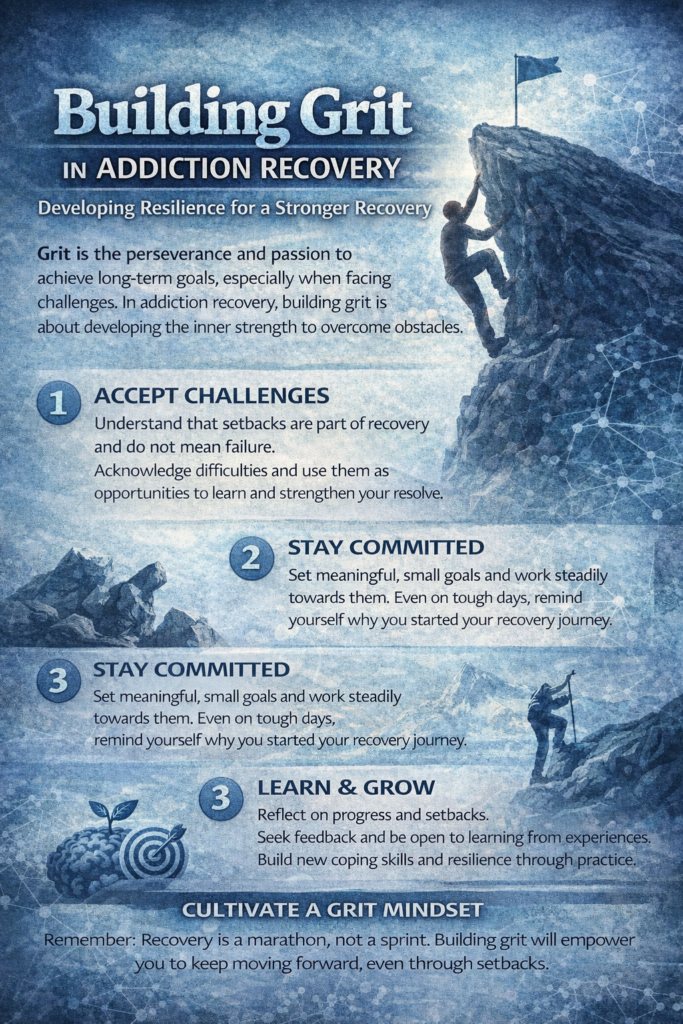
Building grit plays a huge role in beating addiction and sticking with recovery, even when things get tough. Grit means sticking with your goals and bouncing back whenever life throws a curveball. It’s what helps people push through setbacks and stay focused. In addiction recovery, it’s what keeps you showing up, no matter how rocky things get. Here’s my guide to understanding grit, how to grow more of it, and why it matters if you’re working toward recovery.
What Grit Means in Addiction Recovery
Grit isn’t about having superhuman discipline or toughing everything out alone. It’s steady determination, learning from slip-ups, and finding ways to keep going. In recovery, it often means getting back up after a relapse, making it through cravings without giving in, or reaching out for help even when you’d rather not.
Tons of research link grit with long-term success. Psychologist Angela Duckworth describes grit as passion and perseverance for big goals. That lines up perfectly with addiction recovery, which isn’t a fast sprint but more like running an unpredictable marathon where new surprises show up all the time.
How Grit Can Help with Recovery
You might wonder why grit gets so much attention in recovery. Here’s how grit makes a difference:
- Keeps You on Track: Recovery comes with plenty of ups and downs. Grit helps you look beyond today’s rough patch to your long-term goal.
- Supports Relapse Prevention: Setbacks don’t have to spiral into disaster. Grit treats setbacks as learning opportunities rather than reasons to stop trying.
- Strengthens Coping Skills: People with grit often build steady routines and coping tricks that really stick.
- Boosts Confidence: Each new challenge you overcome proves you can handle more than you once thought.
For folks working through recovery, growing grit can be what keeps them moving on days when nothing else seems to work. It’s the inner push that says, “Try again,” no matter how many times you fall.
Kickstarting Grit: Foundational Strategies
Grit isn’t something you’re just born with—you can create it over time. Here’s how to jumpstart your grit and keep it growing while on the road to recovery:
- Start with Realistic Goals: Begin with tiny changes and build from there. Hitting little milestones (like a solid week clean, then a month) locks in your progress and keeps motivation alive.
- Know That Everybody Messes Up: Perfection isn’t possible. Slip-ups are part of recovery. Grit means being ready to stand up after a fall, not demanding that you never trip.
- Treat Yourself Kindly: Being harsh chews away at willpower. Check in with yourself and treat yourself like you’d treat a struggling friend.
- Remind Yourself Why: Find a deep, personal reason to get clean. Maybe it’s your kids, your job goals, or just a peaceful life. Hang onto this reason during rough spots.
- Count on Your Support Network: Leaning on others is not a weakness. Support from friends, family, groups, or a therapist really pays off when resolve gets shaky.
Common Roadblocks to Building Grit in Recovery
Sticking with recovery is tough, and obstacles are normal. Some frequent hurdles along the path include:
- Shame and Self-Doubt: Addiction often brings guilt, which smothers motivation if it isn’t faced. Self-compassion breaks that stuck feeling.
- Not Enough Support: Handling everything solo makes it tough to bounce back. Reaching out to others or support groups can change the game.
- Getting Frustrated with Slow Progress: Slow improvement can be discouraging. Noticing small wins—like a few days of better sleep or a good mood—helps you keep things in perspective.
- Scared of Relapse: Worrying about making the same mistake can freeze you. Grit accepts fear but doesn’t let fear call all the shots.
Shame and Self-Doubt
These feelings creep in after a slip, making it hard to keep going. Instead of beating yourself up, forgive yourself and focus on what’s possible now. Sharing your story with someone you trust—like a sponsor or therapist—can help you change that negative self-talk and grow more grit step by step.
Not Enough Support
Going alone in recovery drains people really fast. Even having just one reliable person or group to lean on makes a big difference. There are tons of online chats and support meetings where new allies are waiting to help you stick with it.
Getting Frustrated with Slow Progress
Quick fixes are rare. A small habit tracker or a personal journal lets you see how sticking with the work brings about change, even if it’s slow.
Scared of Relapse
Relapses can feel embarrassing, but they don’t cancel all the work you’ve put in. Learning why they happen and finding ways to handle cravings can make you even grittier for the future.
Practical Tips to Boost Grit during Recovery
Day by day, you can build grit without major life changes. Here are some handy ideas:
- Track Your Progress: Small wins add up. Writing them down, even in a phone note, gives you proof that your hard work is getting somewhere.
- Set Up Tiny Routines: Small routines—like a morning walk, reading, or a nightly support text—take very little effort but help support willpower over time.
- Step Out of Your Comfort Zone: Trying fresh sober hobbies or connecting with new people builds grit and lifts your mood.
- Take Time to Reflect: Weekly reflection helps you notice what’s improving and what could use a tweak. Adjust your approach as you go.
- Recognize All Wins: Every achievement, no matter how small, counts. Celebrate each one—like getting through a party or having an honest talk—as another brick in your foundation.
Many people find that regular conversations with peers or mentors in recovery also boost their grit. Sometimes, just hearing “me too” from someone who’s been there can give you energy to keep at it.
Understanding the Big Picture: Why Grit Isn’t Everything
While grit is powerful, it’s not the only part of recovery. The strongest path often blends grit with coping tools, accountability, therapy, honesty, and the ability to laugh when things get tough. Rest is critical, too—without it, grit can turn into stubbornness that only leads to burnout. Don’t be afraid to switch up your path or take a breather. Grit is most effective when balanced with self-care and flexibility.
Frequently Asked Questions
Here are some quick Q&As about grit in addiction recovery:
Question: What if I’m not naturally gritty?
Answer: Grit can grow no matter your starting point. Focus on the next step, not a flawless finish. Try setting tiny goals and celebrate small wins.
Question: How should I handle setbacks without losing motivation?
Answer: See each setback as a lesson. Journaling or sharing your story with someone supportive can help you regain strength. Each time you come back after a fall, your grit gets a bit stronger.
Question: Can grit make therapy or medical help unnecessary?
Answer: Grit is a very useful trait, but it isn’t a replacement for professional help. Mixing grit with therapy, medication if you need it, and support groups gives you a much sturdier base for recovery.
Wrapping Up: Why Grit Matters for Recovery
Recovering from addiction is a marathon. Grit doesn’t make everything easy, but it can make the toughest days a little simpler to handle and make each win even sweeter. It encourages you to keep getting up, keep trying new things, and cheer yourself on, no matter how slow progress feels. Building grit won’t happen all at once, but even tiny steps count. If you need more support or inspiration, check out groups like SMART Recovery and SAMHSA’s National Helpline, where you can pick up solid tools to get tougher and grittier on your recovery ride.
If you’re struggling right now, remember grit can start small—sometimes all you need to do is take the next step. Tomorrow is another chance to make progress, even if today was rough. Keep at it and keep leaning on support as you go.
Video: The Persistence That Saves Lives #sobriety #recovery #strength