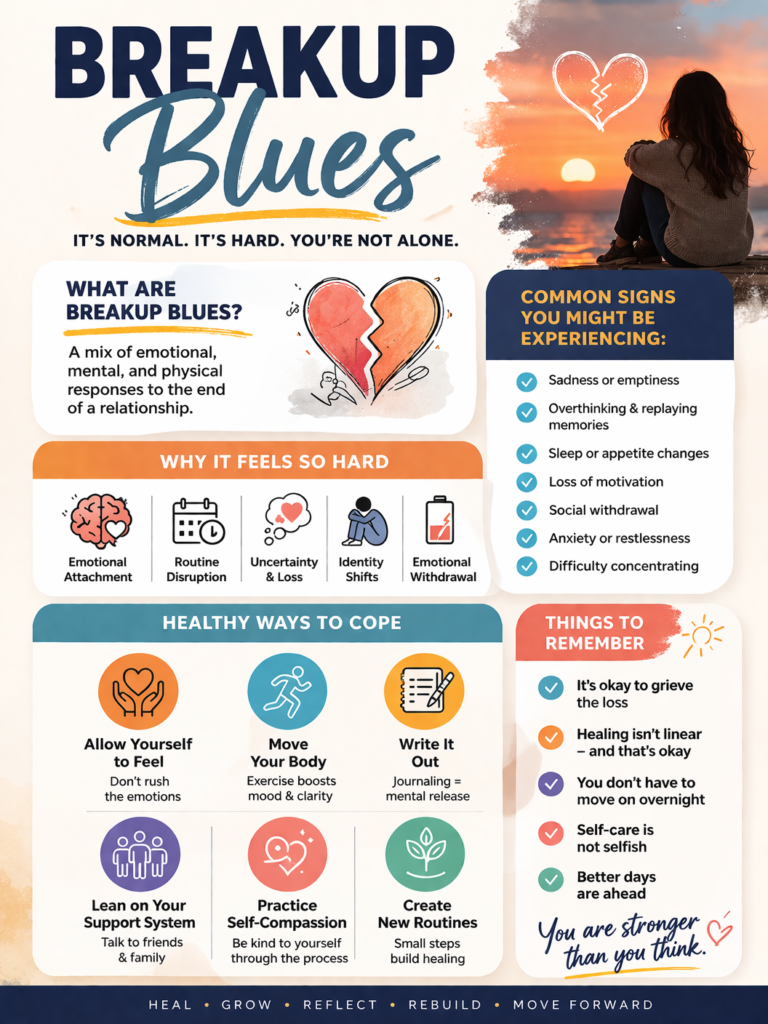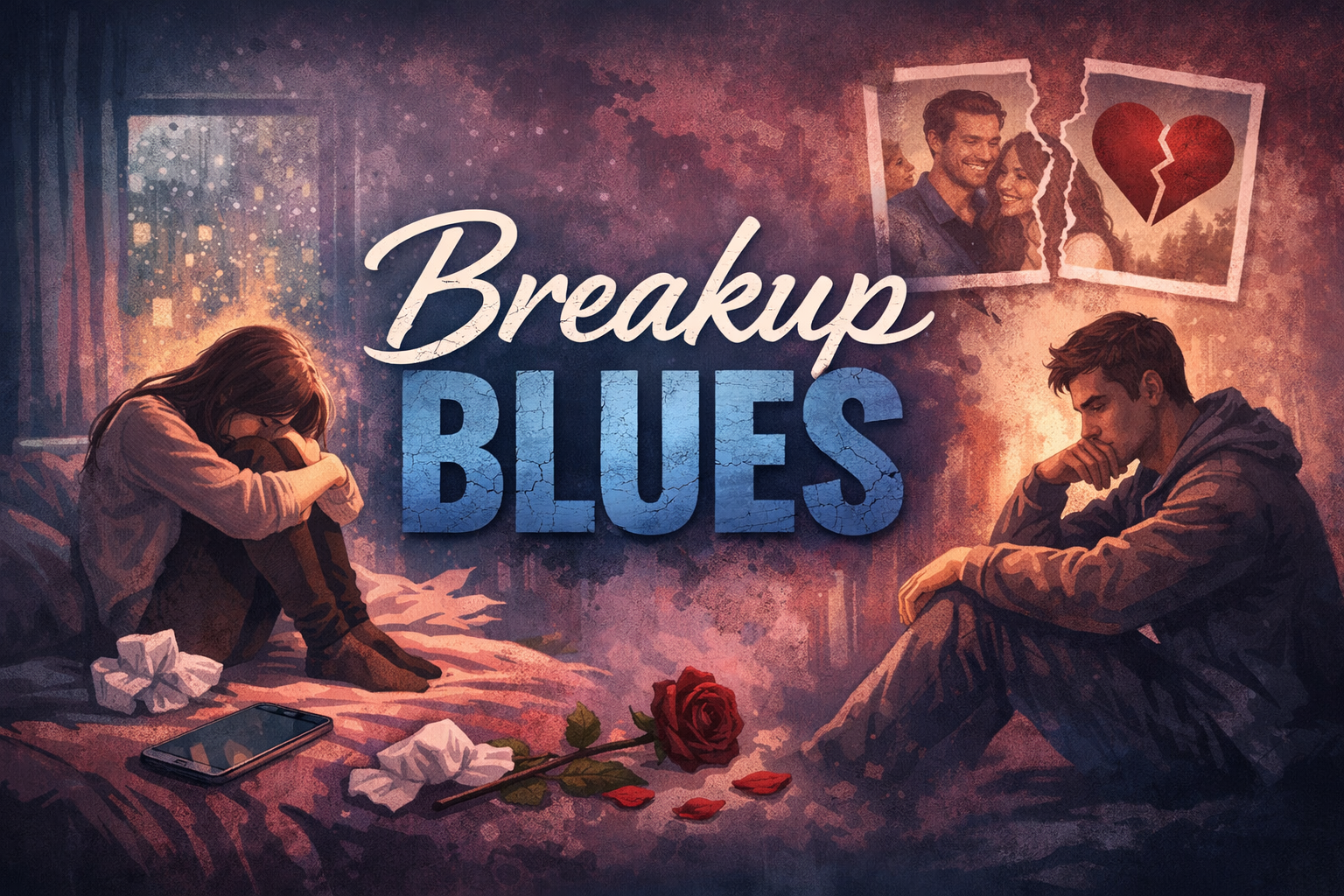
The end of a relationship often brings more than just emotional pain—it brings disruption. Daily routines shift, future plans dissolve, and a sense of identity tied to the relationship can feel suddenly uncertain. This experience, often referred to as the “breakup blues,” is a natural response to loss, rooted in both emotional attachment and psychological habit. While sadness, longing, and reflection are expected parts of the process, they can sometimes linger or intensify in ways that make it difficult to move forward. Understanding the breakup blues means recognizing not only the depth of the loss, but also the patterns of thought and behavior that can keep someone feeling stuck.
Beyond the Breakup Blues: When Heartache Becomes a Habit
There’s a reason people call it the “breakup blues.” After a relationship ends, sadness isn’t just expected—it’s almost required. You lose not only a person, but a routine, a sense of identity, and a version of the future you once imagined. Grief, in this context, is not a sign of weakness. It’s evidence that something meaningful existed.
But what happens when that sadness doesn’t soften with time? What happens when it stops being something you move through and starts becoming something you live in?
That’s where the breakup blues can quietly shift into something more complicated.
The Difference Between Grief and Getting Stuck
Healthy emotional processing is dynamic. It moves. One day you feel okay, the next day you don’t—but over time, there’s a gradual loosening of the emotional grip.
Getting stuck feels different.
It looks like:
- Replaying the relationship over and over, searching for a different ending
- Checking their social media compulsively, even when it hurts
- Comparing everyone new to them—and finding them lacking
- Holding onto the pain because letting go feels like losing them completely
In these moments, sadness isn’t just an emotion anymore. It becomes a pattern—a loop the mind returns to, almost automatically.
Why the Mind Holds On
There’s a psychological reason this happens. Relationships activate the brain’s reward system. Love, attachment, and even conflict can create powerful emotional reinforcement. When the relationship ends, your brain doesn’t immediately “update” to the loss.
Instead, it keeps reaching.
You’re not just missing a person—you’re craving a familiar emotional state. Even the pain can feel oddly comforting because it’s tied to something known. Letting go, on the other hand, feels like stepping into uncertainty.
So the mind does what it’s designed to do: it repeats what feels familiar, even if it hurts.
When Sadness Becomes a Compulsion
At a certain point, the breakup blues can shift from feeling sad to needing to feel sad.
This might sound counterintuitive, but emotional habits form just like behavioral ones. You may find yourself:
- Seeking out reminders that trigger sadness
- Avoiding closure because it would force you to move on
- Romanticizing the relationship beyond its reality
- Using the pain as a way to stay connected
It’s no longer just about them—it’s about maintaining the emotional bond through memory and feeling.
Letting Go Without Losing Meaning
One of the biggest fears after a breakup is this: If I stop feeling this, did it even matter?
The answer is yes—it mattered. And it can matter without controlling you.
Letting go doesn’t mean forgetting. It means allowing the relationship to exist as something that shaped you, rather than something that defines you. You don’t have to erase the past to stop reliving it.
Moving Forward (Without Rushing It)
Healing isn’t about forcing yourself to “get over it.” It’s about gently interrupting the patterns that keep you stuck.
That can look like:
- Noticing when you’re replaying the same thoughts—and choosing to step away
- Creating new routines that aren’t tied to the relationship
- Allowing yourself to feel sadness without feeding it
- Being honest about what the relationship actually was—not just what it felt like
Over time, the intensity fades—not because you stopped caring, but because you stopped circling the same emotional space.
Final Thought
The breakup blues are real, and they deserve to be felt. But they’re meant to be a passage, not a place you live forever.
At some point, healing asks a quiet but difficult question:
Are you honoring what you lost—or are you holding onto the pain to avoid letting go?
The answer to that question is often where real moving on begins.
Breaking the Breakup Blues: Practical Strategies to Move Forward
Breakups don’t just hurt—they disrupt. Your routines change, your thoughts feel louder, and even small moments can trigger a wave of emotion you didn’t expect. One minute you’re fine, the next you’re replaying conversations from months ago.
This is the breakup blues—a mix of grief, withdrawal, and emotional habit. And while time helps, what you do with that time matters even more.
Healing isn’t passive. It’s something you can actively support.
1. Interrupt the Thought Loop
After a breakup, the mind tends to replay—What went wrong? Could I have fixed it? Do they miss me?
These thoughts feel productive, but they often just keep you stuck.
Instead of trying to “win” the thoughts, practice noticing them:
- “I’m replaying again.”
- “This isn’t giving me a new answer.”
Then gently redirect your attention—go for a walk, change your environment, or engage in something that requires focus.
You’re not suppressing thoughts—you’re refusing to feed the loop.
2. Set Boundaries with Triggers
Healing becomes harder when you’re constantly reopening the wound.
Common triggers include:
- Checking their social media
- Re-reading old messages
- Listening to songs tied to memories
You don’t need perfect discipline—but you do need intentional distance.
Think of it this way: space isn’t punishment. It’s protection.
3. Rebuild Structure (Even When You Don’t Feel Like It)
Breakups leave gaps—especially in your daily routine. That empty space often gets filled with overthinking.
Create simple anchors in your day:
- A consistent wake-up time
- A daily walk or workout
- A small goal (even something like cooking or reading)
Structure gives your mind somewhere to go other than the past.
4. Feel Without Amplifying
Avoiding emotions doesn’t work—but neither does amplifying them.
There’s a difference between:
- Feeling sad
- Reinforcing sadness by diving deeper into it repeatedly
Let yourself feel what comes up, but try not to stack it with extra triggers (like intentionally looking at old photos right when you’re already emotional).
Let emotions pass through—not spiral.
5. Reality-Check the Relationship
After a breakup, it’s easy to remember only the highs.
To balance this, gently remind yourself:
- What wasn’t working
- What needs weren’t being met
- Why the relationship ended
This isn’t about becoming negative—it’s about becoming accurate.
6. Replace, Don’t Just Remove
If you remove something (like texting them or spending time together), you need to replace it—or the absence will feel overwhelming.
Ask yourself:
- What gave me a connection? → Can I reach out to friends instead?
- What gave me comfort? → Can I build new routines around that?
- What filled my time? → What can I explore now?
Healing works best when you’re not just letting go, but also moving forward.
7. Be Patient with the Process
There’s no clean timeline for moving on. Some days will feel like progress, others like you’re back at the beginning.
You’re not.
Healing isn’t linear—it’s layered.
What matters is not whether you feel better every day, but whether you’re slowly loosening the hold the past has on you.
Final Thought
The breakup blues aren’t just about missing someone—they’re about adjusting to life without them, mentally and emotionally.
You don’t have to rush that process. But you also don’t have to stay stuck in it.
With small, consistent choices—interrupting thought loops, setting boundaries, rebuilding your routine—you begin to shift from reacting to the breakup… to recovering from it.
And that’s where real healing starts.
Helping Them Heal: Family Support Strategies for the Breakup Blues
When someone in your family is going through a breakup, it’s easy to underestimate the impact. From the outside, it might look like “just a relationship ending.” But from the inside, it can feel like a loss of identity, stability, and emotional safety—all at once.
As a family member, you may want to fix it, speed up their healing, or say the right thing to make the pain disappear. But support during the breakup blues isn’t about fixing.
It’s about showing up in ways that actually help.
1. Validate the Pain (Without Minimizing It)
One of the most common—but unhelpful—responses is:
- “You’ll find someone better.”
- “It wasn’t meant to be.”
- “At least it didn’t last longer.”
While well-intentioned, these can feel dismissive.
Instead, try:
- “I can see how much this is hurting you.”
- “That relationship mattered, and it makes sense you’re upset.”
Validation doesn’t make the pain worse—it makes the person feel less alone in it.
2. Listen More Than You Advise
When someone is heartbroken, they often don’t need solutions—they need space to process.
Let them:
- Repeat the same story
- Ask the same questions
- Express confusion or regret
Even if you’ve heard it before, your patience communicates something powerful: their feelings are worth your time.
3. Gently Discourage Harmful Patterns
Support doesn’t mean agreeing with everything.
If you notice behaviors that are keeping them stuck—like constantly checking their ex’s social media or isolating themselves—you can gently intervene:
- “I’ve noticed that checking their profile seems to make you feel worse.”
- “Do you think taking a break from that might help?”
The key is tone: supportive, not controlling.
4. Encourage Routine Without Pressure
Breakups can disrupt daily life. Your role isn’t to force productivity, but to gently reintroduce structure.
You might:
- Invite them on a walk
- Suggest shared meals
- Encourage small, manageable activities
Instead of “You need to get out more,” try:
- “Want to go with me? No pressure if not.”
This keeps the door open without overwhelming them.
5. Avoid Taking Over Their Healing
It’s tempting to “rescue” someone you love—but healing is something they have to do, not something you can do for them.
Avoid:
- Speaking negatively about their ex in extreme ways (it can complicate their emotions)
- Pushing them to move on quickly
- Making decisions for them
Support works best when it empowers—not replaces—their process.
6. Be Mindful of Emotional Contagion
When someone is deeply upset, it can affect the emotional tone of the whole household.
It’s okay to:
- Maintain your own routines
- Set gentle boundaries if needed
- Take care of your own emotional well-being
You can be present for them without absorbing all of their pain.
7. Know When Extra Help Might Be Needed
Sometimes, the breakup blues go deeper—turning into prolonged distress, isolation, or signs of depression.
If you notice:
- Persistent withdrawal from daily life
- Significant changes in sleep or appetite
- Expressions of hopelessness
It may be helpful to encourage professional support:
- “I wonder if talking to someone could help you through this.”
Framing it as support—not a problem—makes a big difference.
Final Thought
You don’t need the perfect words to support someone through heartbreak.
What matters most is consistency, patience, and presence.
In many ways, family support isn’t about pulling someone out of their pain—it’s about sitting with them long enough that they eventually find their own way out… knowing they were never alone in the process.
Beyond the Breakup Blues: Using Community Resources to Heal
Breakups have a way of shrinking your world. What once felt full—shared plans, conversations, routines—can suddenly feel quiet and empty. It’s easy to retreat inward, to process everything alone.
But healing doesn’t have to happen in isolation.
While personal coping strategies are important, community resources can play a powerful role in helping you move through the breakup blues. They provide structure, connection, and perspective—three things that heartbreak often disrupts.
1. Support Groups: Shared Experience, Reduced Isolation
There’s something uniquely powerful about being in a space where people get it without explanation.
Support groups—whether in-person or online—offer:
- A sense of normalization (“I’m not the only one feeling this way”)
- A place to share without judgment
- Exposure to different coping strategies
Hearing others talk about their healing process can make your own feel more possible.
2. Counseling Services: Guided Emotional Processing
Sometimes, friends and family aren’t enough—not because they don’t care, but because they aren’t trained to help you unpack complex emotional patterns.
Professional counseling can help you:
- Understand attachment patterns
- Break repetitive thought cycles
- Process unresolved emotions
- Build healthier relationship expectations
Many communities offer:
- Low-cost clinics
- University counseling centers
- Sliding-scale therapists
Support doesn’t have to be inaccessible.
3. Community Activities: Rebuilding Connection Through Action
After a breakup, one of the hardest things to rebuild is connection.
Community-based activities can help reintroduce that naturally:
- Fitness classes
- Volunteer opportunities
- Book clubs or creative groups
- Local events or workshops
These aren’t just distractions—they’re opportunities to form new associations, routines, and even relationships over time.
4. Faith and Spiritual Communities (If Relevant)
For some people, spiritual or faith-based spaces provide grounding during emotional upheaval.
These communities can offer:
- A sense of meaning during loss
- Structured gatherings and support networks
- Opportunities for reflection and reassurance
This isn’t about belief—it’s about whether the space provides comfort and connection for you.
5. Online Communities: Accessible, But Intentional
Online spaces can be a double-edged sword.
Healthy engagement looks like:
- Participating in supportive forums or moderated groups
- Consuming content that encourages growth and perspective
Less helpful patterns include:
- Constantly revisiting breakup-related content that reinforces sadness
- Comparing your healing to others
Use online communities as a tool, not a loop.
6. Educational Resources: Understanding Your Experience
Sometimes, clarity reduces distress.
Podcasts, books, and workshops on topics like:
- Attachment styles
- Emotional regulation
- Relationship patterns
…can help you make sense of what you’re feeling.
When you understand why something hurts, it often becomes easier to work through.
7. Crisis and Mental Health Resources (When Needed)
If the breakup blues become overwhelming—leading to intense distress, hopelessness, or inability to function—more immediate support may be necessary.
Community resources can include:
- Mental health hotlines
- Crisis text services
- Walk-in mental health clinics
Reaching out in these moments isn’t a sign of weakness—it’s a form of self-preservation.
Final Thought
Breakups can make life feel smaller—but healing often comes from expanding your world again, little by little.
Community resources don’t replace your personal healing process—they support it. They remind you that even though the relationship ended, the connection itself didn’t.
And sometimes, the most important step forward isn’t “moving on”…
It’s simply reaching out.
Frequently Asked Questions
Here are some common questions:
1. What are the “breakup blues”?
The breakup blues refer to the emotional distress that follows the end of a relationship. This can include sadness, loneliness, confusion, anxiety, and even physical symptoms like fatigue or changes in sleep. It’s a normal response to loss and emotional detachment.
2. How long do breakup blues usually last?
There’s no fixed timeline. For some people, the intensity fades within weeks, while for others it can take months. Healing depends on factors like the length of the relationship, emotional attachment, and available support. What matters most is gradual progress—not speed.
3. Is it normal to still think about my ex all the time?
Yes. After a breakup, your mind often replays memories as it tries to process what happened. However, if these thoughts feel constant or intrusive, it may help to actively interrupt the pattern and redirect your focus.
4. Why does a breakup feel so physically painful?
Emotional pain activates similar brain pathways as physical pain. In addition, the loss of emotional attachment can trigger stress responses in the body, leading to symptoms such as chest tightness, low energy, or changes in appetite.
5. Am I healing, or am I just stuck?
Healing usually involves gradual emotional shifts—even if inconsistent. Feeling “stuck” often looks like repeating the same thoughts, behaviors, or emotional cycles without change. Awareness of these patterns is the first step toward moving forward.
6. Should I stay in contact with my ex?
It depends, but in many cases, taking space is helpful—especially early on. Continued contact can reinforce emotional attachment and make it harder to process the breakup. Boundaries create room for healing.
7. Why do I miss them even if the relationship wasn’t healthy?
You’re not just missing the person—you’re missing familiarity, routine, and emotional connection. The brain often prioritizes what feels known over what is objectively healthy, which can make letting go more difficult.
8. Is it unhealthy to still feel sad after a long time?
Not necessarily. However, if sadness remains intense, interferes with daily functioning, or doesn’t improve over time, it may be helpful to seek additional support, such as counseling or therapy.
9. What are some healthy ways to cope with breakup blues?
Helpful strategies include:
- Staying physically active
- Talking to supportive people
- Writing or journaling thoughts
- Setting boundaries with triggers
- Building new routines
The goal is not to avoid feelings, but to prevent getting stuck in them.
10. Can breakup blues turn into depression?
Yes, in some cases. If symptoms like persistent hopelessness, withdrawal, or lack of motivation continue or worsen, it may indicate depression. Seeking professional help can provide support and guidance.
11. Why does healing feel non-linear?
Healing doesn’t follow a straight path. You may feel better one day and worse the next. This doesn’t mean you’re not progressing—it means your mind is processing the loss in layers.
12. Will I ever feel like myself again?
Yes. While it may not feel like it in the moment, most people gradually regain a sense of self—often with greater insight, resilience, and emotional clarity than before.
Final Note
The breakup blues can feel overwhelming, but they are also a natural part of emotional recovery. With time, awareness, and support, the intensity fades—and space opens up for growth, healing, and new beginnings.
Conclusion
The breakup blues are not something to “get over” quickly—they are something to move through with awareness and patience. While time plays a role in healing, it is the small, intentional choices—interrupting unhelpful thought patterns, rebuilding routines, and seeking support—that gradually loosen the hold of the past. Letting go does not mean forgetting or diminishing what the relationship meant; it means allowing it to become part of your story without defining your present. In the end, healing from a breakup is not just about losing someone—it’s about rediscovering yourself beyond them.
Video: How Your Brain Gets Trapped After a Breakup #emotionalhealth #psychology #healing