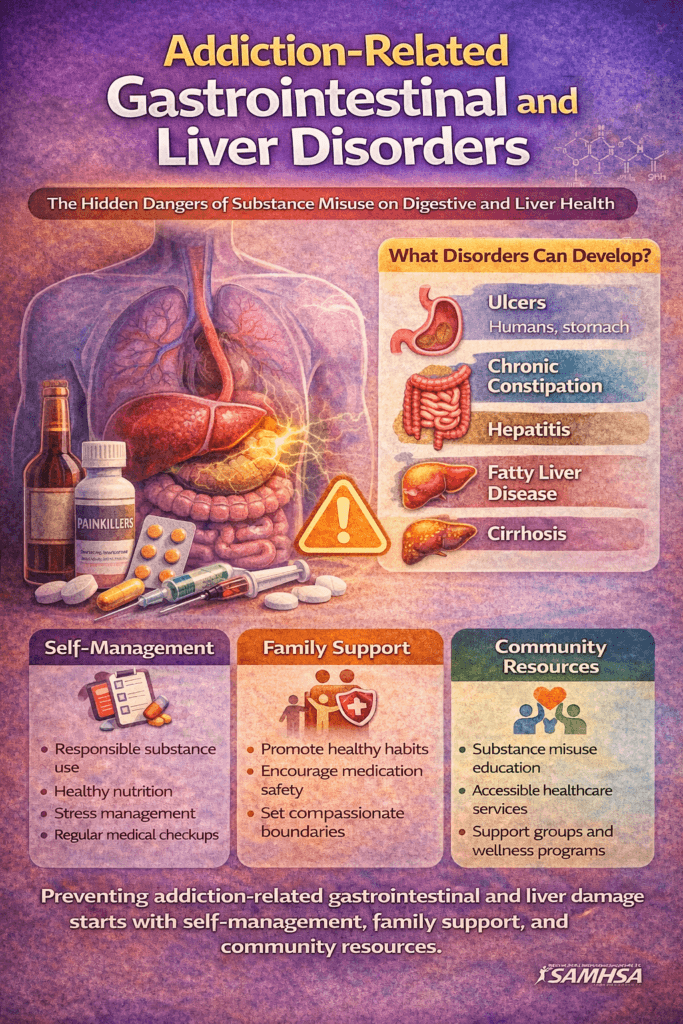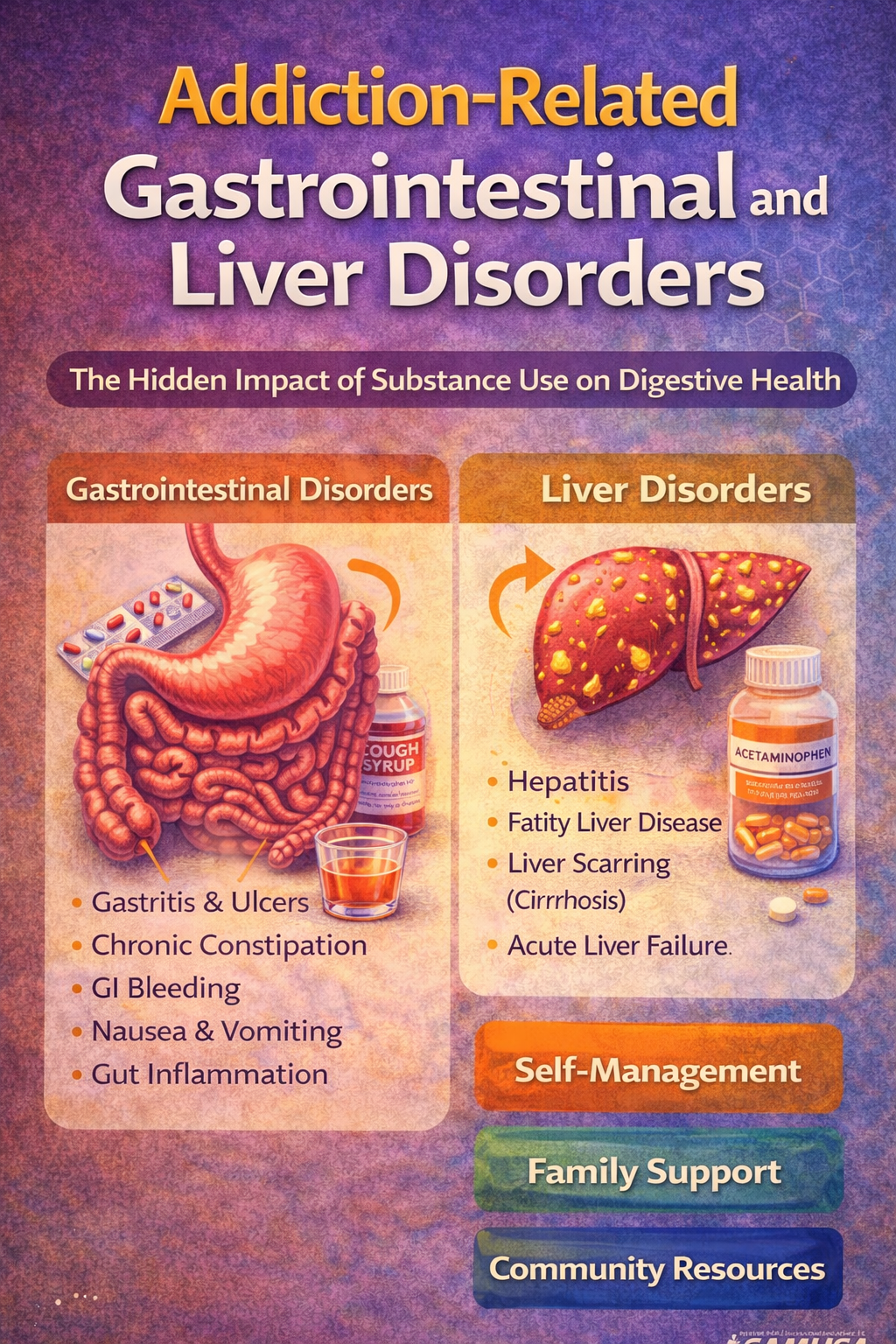
Addiction-related gastrointestinal and liver disorders are serious but often preventable health consequences of substance misuse. Alcohol, drugs, and improperly used medications place continuous stress on the digestive system and overwhelm the liver’s ability to detoxify the body. Over time, this can lead to chronic stomach irritation, ulcers, constipation, hepatitis, fatty liver disease, and even life-threatening cirrhosis. Preventing these conditions requires more than medical treatment after damage occurs. True prevention happens when individuals practice effective self-management, families provide informed and compassionate support, and communities offer accessible resources and education that reduce substance misuse and promote healthy living. When these three levels of protection work together, the risk of addiction-related organ damage can be greatly reduced.
Addiction in Gastrointestinal and Liver Disorders: The Hidden Impact of Substance Use on Digestive Health
Addiction does not only affect the brain and behavior — it also profoundly impacts the body’s vital organ systems. Among the most severely affected are the gastrointestinal (GI) tract and the liver, both responsible for digestion, detoxification, and nutrient absorption. Chronic substance use alters gut function, damages liver tissue, disrupts metabolism, and weakens the body’s ability to maintain internal balance. Understanding how addiction contributes to gastrointestinal and liver disorders is essential for early medical intervention, comprehensive treatment planning, and long-term recovery outcomes.
How Addiction Affects the Gastrointestinal System
Substances such as alcohol, opioids, stimulants, and certain prescription medications interfere with normal digestive function. Opioids slow intestinal movement, leading to chronic constipation, abdominal pain, and bloating. Alcohol irritates the stomach lining, increasing the risk for gastritis, ulcers, and acid reflux. Stimulants reduce blood flow to the intestines, sometimes causing severe abdominal cramping or ischemic bowel injury. Long-term substance use also disrupts the gut microbiome, weakening immune function and increasing inflammation throughout the digestive tract.
Liver Damage and Addiction
The liver is the body’s primary detoxification organ, processing alcohol, drugs, and medications. Repeated exposure to high toxin levels overwhelms liver cells, leading to fatty liver disease, hepatitis, fibrosis, and cirrhosis. Alcohol-related liver disease is one of the most common and life-threatening consequences of addiction. In addition, misuse of acetaminophen, opioids, or other medications can cause acute liver failure. When liver function declines, the body struggles to filter toxins, regulate hormones, and metabolize nutrients.
Nutritional Deficiencies and Metabolic Disruption
Addiction often replaces healthy eating habits with poor nutrition. Substance use suppresses appetite, impairs absorption of vitamins and minerals, and increases metabolic stress. Deficiencies in B-vitamins, iron, folate, and protein are common and contribute to fatigue, anemia, cognitive impairment, and weakened immunity. These nutritional deficits further worsen GI and liver conditions.
The Cycle Between Physical Illness and Addiction
Gastrointestinal pain, nausea, and liver discomfort may drive continued substance use as individuals attempt to self-medicate physical distress. Unfortunately, this deepens organ damage and reinforces addiction patterns. Without treating both the medical and behavioral components, recovery efforts often fail.
Integrated Treatment Approaches
Effective care requires addressing substance use disorder and digestive health simultaneously. Medical detoxification, addiction counseling, nutritional rehabilitation, liver function monitoring, and GI treatment plans work together to restore physical stability. Lifestyle changes, such as hydration, balanced nutrition, medication management, and abstinence, help the digestive system and liver begin to heal.
Conclusion
Addiction in gastrointestinal and liver disorders represents a serious but often overlooked medical consequence of substance use. Damage to digestion and detoxification systems can become life-threatening if left untreated. With early detection, integrated medical care, nutritional support, and sustained recovery efforts, the body can heal and regain vital function. Treating addiction is not only about changing behavior — it is about restoring whole-body health and giving individuals a true second chance at wellness.
Self-Management Strategies to Prevent Addiction-Related Gastrointestinal and Liver Disorders
Substance addiction does not only affect mental and emotional health — it can seriously damage the gastrointestinal system and liver. Alcohol, opioids, stimulants, and misused medications strain digestion, disrupt nutrient absorption, and overwhelm the liver’s detoxification capacity. Over time, this can lead to gastritis, ulcers, chronic constipation, hepatitis, fatty liver disease, and cirrhosis. The good news is that many of these conditions are preventable. Through self-management strategies, individuals can reduce substance-related harm, protect digestive health, and prevent addiction from progressing into serious gastrointestinal and liver disorders.
Monitor and Limit Substance Use
The most effective prevention strategy is avoiding or reducing substance use. Following prescribed medication instructions exactly, avoiding alcohol misuse, and refusing recreational drug use significantly decrease stress on the GI tract and liver. Self-monitoring consumption patterns increases awareness and prevents escalation into dependence.
Adopt Healthy Nutrition Habits
Balanced nutrition protects digestive organs and supports liver repair. Eating regular meals rich in protein, fiber, fruits, vegetables, and whole grains improves gut function and reduces inflammation. Avoiding excessive processed foods, sugary drinks, and greasy meals further protects the digestive system.
Stay Hydrated
Adequate water intake supports digestion, prevents constipation, and helps the liver flush toxins efficiently. Dehydration worsens GI discomfort and intensifies medication side effects.
Practice Medication Safety
Taking medications only as prescribed, avoiding mixing substances, and checking for drug interactions protect the liver from toxic overload. Never exceeding recommended doses of pain relievers or cough medicines prevents accidental liver injury.
Manage Stress Without Substances
Stress is a common trigger for substance misuse. Mindfulness, breathing exercises, yoga, physical activity, journaling, and counseling help manage stress without relying on alcohol or drugs.
Support Gut Health Naturally
Probiotic-rich foods, fiber intake, and regular physical movement support a healthy gut microbiome, reduce inflammation, and strengthen immunity.
Recognize Early Warning Signs
Persistent nausea, vomiting, abdominal pain, yellowing of the skin or eyes, unexplained fatigue, or loss of appetite may signal developing GI or liver damage. Seeking medical evaluation early prevents progression.
Engage in Preventive Medical Care
Regular health checkups, liver function tests, and digestive screenings help detect early organ stress and provide opportunities for intervention before serious disease develops.
Build Healthy Daily Structure
Consistent sleep, meals, exercise, and relaxation routines stabilize the body’s internal rhythms and reduce vulnerability to substance cravings.
Conclusion
Preventing addiction-related gastrointestinal and liver disorders begins with proactive self-management. By limiting substance use, practicing medication safety, nourishing the body, managing stress, and monitoring physical health, individuals can protect vital digestive organs and maintain long-term wellness. Small daily choices create powerful safeguards against addiction-related disease — empowering individuals to sustain both recovery and physical health.
Family Support Strategies to Prevent Addiction-Related Gastrointestinal and Liver Disorders
Substance addiction does not only affect the individual — it impacts the entire family’s health and stability. Chronic misuse of alcohol, drugs, or prescription medications can lead to serious gastrointestinal and liver disorders, including ulcers, chronic constipation, hepatitis, and cirrhosis. Families play a crucial role in early prevention, lifestyle guidance, and emotional support, which can help stop harmful patterns before physical illness develops. With education, communication, and structured support, families can help loved ones avoid addiction and protect long-term digestive and liver health.
Promote Healthy Household Habits
Families can create home environments that encourage nutritious meals, hydration, and regular eating schedules. Balanced diets rich in fiber, vitamins, and lean proteins support gut and liver health while reducing reliance on substances that harm digestion.
Encourage Responsible Medication Use
Helping loved ones follow prescription instructions, avoid dose escalation, and properly store medications prevents misuse that can lead to liver toxicity. Families can also dispose of unused medications safely to reduce the risk of misuse.
Reduce Alcohol and Substance Exposure at Home
Limiting alcohol availability, discouraging recreational drug use, and modeling healthy coping behaviors create safer environments that reduce addiction risk.
Support Stress Management
Families can encourage physical activity, relaxation routines, hobbies, and open discussions about stress. Healthy stress outlets reduce the likelihood of turning to substances for relief.
Maintain Open Communication
Nonjudgmental conversations about substance risks, emotional struggles, and health concerns help loved ones seek help early before addiction develops.
Recognize Early Warning Signs
Changes in appetite, mood, sleep, secrecy around substances, stomach complaints, or unexplained fatigue may signal developing addiction or physical harm. Early family intervention allows timely medical care.
Encourage Preventive Healthcare
Families can remind loved ones to attend routine medical checkups, liver function tests, and digestive screenings to detect early organ stress.
Set Compassionate Boundaries
Clear family expectations regarding substance use protect both the individual and household well-being while avoiding enabling behaviors.
Seek Education and Support
Family education programs and support groups teach effective prevention strategies, communication skills, and coping strategies to promote long-term resilience.
Conclusion
Families are powerful protectors against addiction-related gastrointestinal and liver disorders. By promoting healthy routines, encouraging medication safety, reducing exposure to substances, supporting stress management, and remaining attentive to warning signs, families can help prevent physical illness before it begins. When families act together, they create a foundation of wellness that safeguards both recovery and long-term digestive and liver health.
Community Resource Strategies to Prevent Addiction-Related Gastrointestinal and Liver Disorders
Addiction is not only a behavioral health issue — it is also a major contributor to serious medical conditions, including gastrointestinal and liver disorders. Alcohol misuse, drug dependence, and unsafe medication practices place continuous strain on the digestive system and the liver’s detoxification processes. Preventing these health consequences requires more than individual effort. Community-based resources provide education, healthcare access, early screening, and support systems that reduce substance misuse and protect long-term physical health. When communities invest in prevention and wellness, they help stop addiction before it progresses into chronic disease.
Public Education and Awareness Programs
Community health campaigns that teach the risks of alcohol misuse, drug dependence, and unsafe medication use help residents make informed health choices. Education on liver health, digestive wellness, and addiction prevention encourages early behavior change.
Accessible Primary Healthcare Services
Community clinics that offer routine checkups, liver function tests, and digestive screenings enable early detection of organ stress. When healthcare is easy to access, individuals are more likely to seek help before addiction or medical damage progresses.
Substance Use Prevention Programs
Local prevention initiatives, school-based education, and youth outreach programs reduce early exposure to drugs and alcohol. Delaying or preventing substance use significantly lowers the lifetime risk of addiction and related organ disease.
Mental Health and Stress-Management Services
Community counseling centers, mindfulness programs, and stress-management workshops provide healthy coping alternatives to substance use, reducing addiction vulnerability.
Safe Medication Management Programs
Pharmacy-led medication education, prescription monitoring, and safe disposal programs prevent misuse of pain relievers, sedatives, and other drugs that strain the liver and GI system.
Nutrition and Wellness Initiatives
Community nutrition classes, food assistance programs, and wellness workshops promote balanced diets that support digestive and liver health, particularly among vulnerable populations.
Support Groups and Peer Networks
Peer-led recovery and prevention groups provide encouragement, accountability, and shared learning experiences that reinforce substance-free lifestyles.
Policy and Environmental Supports
Community policies limiting alcohol outlet density, enforcing age restrictions, and regulating prescription distribution help reduce easy access to harmful substances.
Conclusion
Preventing addiction-related gastrointestinal and liver disorders requires strong community engagement and accessible resources. Through education, healthcare access, mental health support, safe medication practices, nutrition initiatives, and policy measures, communities build environments that promote wellness and discourage substance misuse. When prevention becomes a shared responsibility, individuals gain the support they need to protect both their recovery and their long-term physical health.
Frequently Asked Questions
Here are some common questions:
What are addiction-related gastrointestinal and liver disorders?
These are digestive and liver health conditions caused or worsened by chronic substance use, including alcohol, drugs, and misused medications. They affect how the body digests food and removes toxins.
Which substances most commonly cause these disorders?
Alcohol is the leading cause, followed by opioids, stimulants, sedatives, and misused over-the-counter or prescription medications.
How does addiction affect the gastrointestinal system?
Substance use can slow or irritate digestion, disrupt gut bacteria, cause inflammation, ulcers, nausea, vomiting, and chronic constipation.
How does addiction damage the liver?
The liver processes toxins from substances. Repeated exposure overwhelms liver cells, leading to fatty liver disease, hepatitis, scarring, and cirrhosis.
What are common gastrointestinal symptoms of substance misuse?
Stomach pain, bloating, constipation, diarrhea, nausea, vomiting, acid reflux, and poor appetite are common symptoms.
What are common signs of liver damage from addiction?
Fatigue, yellowing of the skin or eyes, dark urine, abdominal swelling, nausea, easy bruising, and confusion can signal liver injury.
Are these disorders reversible?
Early-stage GI irritation and fatty liver disease can often improve with abstinence, medical care, and healthy lifestyle changes. Advanced cirrhosis is usually permanent.
Why do people with GI or liver pain continue using substances?
Some individuals self-medicate discomfort or emotional distress, which worsens organ damage and strengthens addiction.
How can self-management help prevent these disorders?
Healthy nutrition, hydration, medication safety, stress management, limiting substance use, and routine medical checkups protect digestive and liver health.
How does family support help prevention?
Families encourage healthy routines, monitor medication safety, reduce substance exposure at home, and recognize early warning signs.
How do community resources help prevention?
Community clinics, education programs, mental health services, and addiction prevention initiatives provide support before medical damage occurs.
Can someone recover if they already have organ damage?
Yes. Medical treatment, addiction recovery care, lifestyle changes, and ongoing monitoring can slow damage and improve quality of life.
When should someone seek medical help?
If experiencing persistent stomach pain, nausea, vomiting, fatigue, yellow skin, or heavy substance use, medical evaluation is needed immediately.
Are these conditions life-threatening?
Yes. Untreated liver failure, cirrhosis, internal bleeding, and severe GI disorders can be fatal.
Can addiction-related GI and liver disorders be prevented?
Yes. Early substance-use prevention, education, healthy living, family involvement, and community healthcare access greatly reduce risk.
Conclusion
Addiction-related gastrointestinal and liver disorders do not develop overnight, and they do not have to be inevitable. Through self-management strategies such as responsible substance use, healthy eating, stress management, and regular medical care, individuals can protect their digestive and liver health. Family support reinforces accountability, early risk recognition, and stable home environments that discourage harmful behaviors. Community resources further strengthen prevention through education, healthcare access, and wellness programs. When personal responsibility, family involvement, and community support align, addiction is less likely to progress into serious physical illness — allowing individuals to maintain recovery, vitality, and long-term well-being.
Video: Stomach Pain? Your Addiction Might Be the Reason #GIDamage #SubstanceUse #HealthTruth