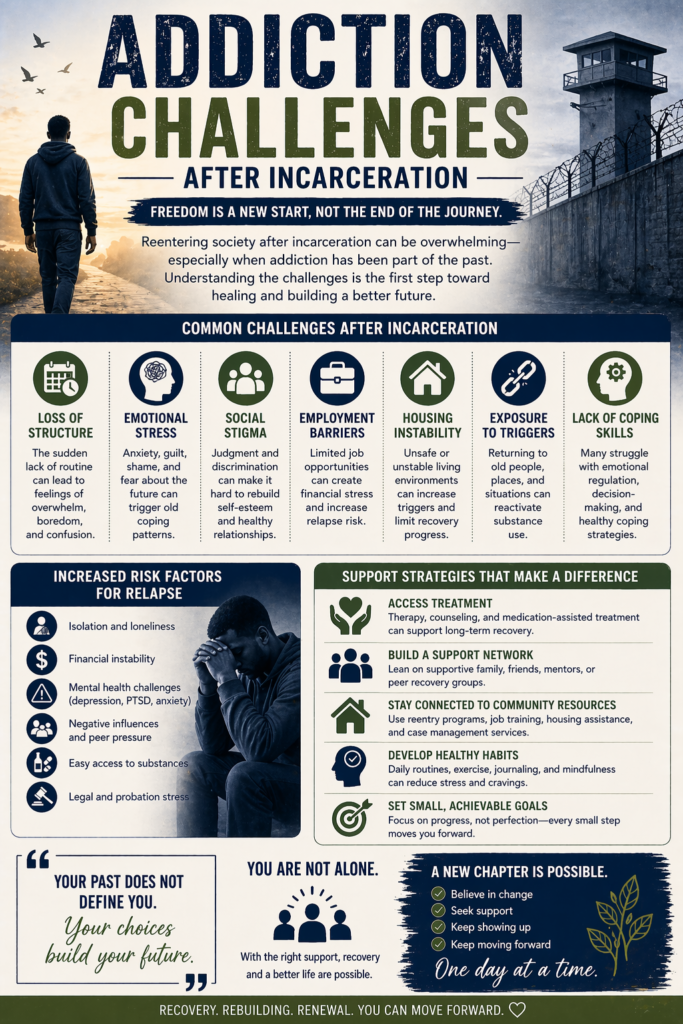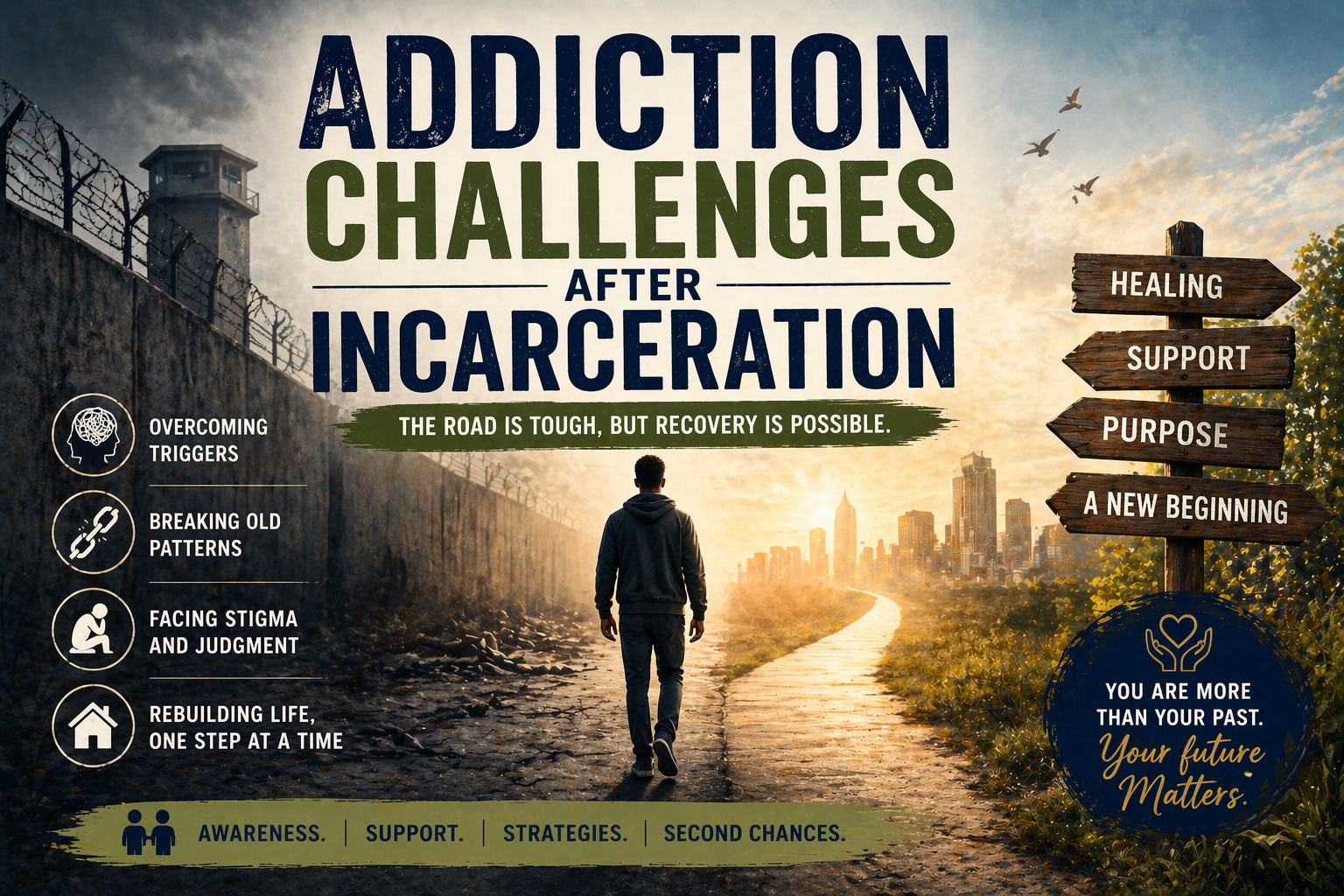
Addiction challenges after incarceration are often more complex than they appear on the surface. While release from a structured environment may symbolize a fresh start, it also brings a sudden shift into a world filled with choices, responsibilities, and pressures. For individuals with a history of substance use, this transition can reintroduce triggers such as stress, instability, and exposure to previous environments. Without adequate support and coping strategies, the risk of relapse increases—not due to lack of effort, but because of the intensity of the adjustment process. Understanding these challenges is essential for creating realistic expectations and effective support systems.
Starting Over Isn’t Simple: Addiction and Life Challenges After Incarceration
Reentry into society after incarceration is often described as a “second chance.” But for many individuals—especially those struggling with addiction—it doesn’t feel like freedom. It can feel overwhelming, uncertain, and at times, isolating. The transition from a highly structured environment to one filled with choices, pressures, and expectations can expose unresolved struggles, including substance use.
Understanding the challenges that come with addiction after incarceration is essential—not just for individuals, but for families, communities, and systems involved in reentry support.
The Overlap Between Incarceration and Addiction
A significant number of incarcerated individuals have a history of substance use. During incarceration:
- Access to substances may be limited
- Behavior is controlled by strict routines
- External accountability is constant
Upon release, that structure disappears almost overnight. Without adequate support, the risk of relapse increases—not because of lack of effort, but because the environment has changed dramatically.
1. Loss of Structure
Incarceration provides:
- Fixed schedules
- Clear rules
- Predictable routines
After release, individuals must suddenly manage:
- Time
- Responsibilities
- Decisions
This shift can feel disorienting. Without structure, cravings and impulsive behaviors can become harder to manage.
2. Emotional Overload
Freedom brings more than opportunity—it brings emotion.
Common experiences include:
- Anxiety about the future
- Guilt or shame about the past
- Fear of failure
- Difficulty adjusting to independence
For someone with a history of addiction, these emotions can become triggers for substance use.
3. Stigma and Identity Struggles
Many individuals face:
- Social stigma related to incarceration
- Judgment from others
- Limited trust in relationships
Internally, they may struggle with:
- “Who am I now?”
- “Can I actually change?”
When identity is tied to past behavior, it can make recovery feel harder to maintain.
4. Limited Access to Opportunities
Reentry often includes barriers such as:
- Difficulty finding employment
- Housing instability
- Limited access to healthcare or treatment
These challenges create stress—and stress is one of the strongest drivers of relapse.
5. Rebuilding Relationships
Relationships may have been strained or broken during incarceration.
After release:
- Trust may need to be rebuilt
- Family dynamics may have changed
- Support systems may be uncertain
Without stable connections, individuals may feel isolated—another major risk factor for addiction.
6. Exposure to Old Environments
Returning to the same environment where substance use previously occurred can:
- Reactivate habits
- Increase exposure to triggers
- Reconnect individuals with high-risk social circles
Without new coping strategies, these environments can make change difficult.
7. Lack of Coping Skills
Incarceration limits opportunities to practice:
- Decision-making
- Emotional regulation
- Real-world problem-solving
Without these skills, individuals may revert to familiar coping mechanisms—such as substance use.
What Supports Recovery After Incarceration?
Addressing addiction after incarceration requires more than individual effort—it requires support systems.
Effective strategies include:
- Structured routines: Creating daily schedules to replace lost structure
- Access to treatment: Therapy, recovery programs, and medical support
- Peer support: Connecting with others who understand the experience
- Skill-building programs: Employment training, life skills, emotional regulation
- Stable housing and employment support: Reducing stress and increasing stability
The Role of Community and Support Systems
Successful reentry is not just about avoiding relapse—it’s about building a sustainable life.
Communities can help by:
- Reducing stigma
- Expanding access to resources
- Supporting second-chance opportunities
- Encouraging reintegration rather than exclusion
When support is present, outcomes improve significantly.
Final Thought
Life after incarceration is often more complex than people expect—especially when addiction is part of the picture. The challenge isn’t just staying sober—it’s learning how to live, decide, cope, and connect in a completely different environment.
Recovery in this context isn’t just about avoiding substances.
It’s about rebuilding identity, creating stability, and learning how to navigate freedom—one step at a time.
Because freedom alone isn’t enough.
Support, structure, and understanding are what turn it into a real second chance.
Taking Control After Release: Self-Management Strategies for Addiction Challenges After Incarceration
Reentry after incarceration is often described as freedom—but for many, it feels like being dropped into a world with too many choices and not enough guidance. When addiction is part of the picture, this transition becomes even more complex. Old triggers return, structure disappears, and emotional pressure builds quickly.
Self-management becomes essential in this phase. It’s not about perfection—it’s about learning how to navigate daily life, regulate emotions, and respond to challenges in ways that support recovery rather than undermine it.
Why Self-Management Matters After Incarceration
During incarceration, much of life is externally controlled:
- Schedules are fixed
- Decisions are limited
- Accountability is constant
After release, that control shifts entirely to the individual. Self-management helps bridge that gap by:
- Replacing external structure with internal structure
- Building awareness of triggers and behaviors
- Supporting consistent, healthier decision-making
It’s the foundation for stability in an otherwise unpredictable transition.
1. Rebuild Structure Intentionally
One of the biggest adjustments is the sudden loss of routine.
Start small:
- Wake up and go to sleep at consistent times
- Plan basic daily activities (meals, errands, downtime)
- Set 1–3 priorities each day
Structure reduces overwhelm and limits idle time—when cravings and negative patterns often increase.
2. Recognize Triggers Early
Triggers after incarceration can include:
- Stress about finances or employment
- Returning to old environments
- Feelings of shame, fear, or isolation
Self-management starts with awareness:
- What situations make you feel overwhelmed?
- When do urges or cravings show up?
- What thoughts come with them?
Recognizing patterns early makes them easier to manage.
3. Use the Pause Strategy
Impulsivity is a common challenge during reentry.
When faced with a craving or stressful moment:
- Pause for a few seconds
- Take a slow breath
- Delay action, even briefly
This small gap can prevent automatic decisions that lead back to old habits.
4. Manage Emotional Overload
Reentry brings intense emotions:
- Anxiety about the future
- Guilt about the past
- Fear of failure
Instead of suppressing them:
- Name what you’re feeling
- Write it down or talk it out
- Remind yourself that emotions pass
Managing emotions reduces the need to escape them through substance use.
5. Create Micro-Habits for Stability
Small actions build consistency.
Examples:
- Drinking water when stressed
- Taking a short walk instead of isolating
- Checking in with yourself once a day
- Reaching out to one supportive person
These habits may seem minor—but they create momentum.
6. Set Realistic Expectations
One of the biggest risks is expecting immediate success.
Avoid:
- “I need to fix everything right now.”
Instead:
- Focus on daily progress
- Accept that setbacks may happen
- Measure success in consistency, not perfection
This reduces pressure and supports long-term change.
7. Build Internal Accountability
Without external supervision, accountability has to come from within.
You can:
- Set personal goals (small and achievable)
- Reflect on your day (what worked, what didn’t)
- Track progress informally
Self-awareness becomes your guide instead of external control.
8. Limit Exposure to High-Risk Situations
Some environments increase the likelihood of relapse.
Be intentional about:
- Who you spend time with
- Where you go
- Situations that feel unstable or unsafe
This isn’t avoidance—it’s strategic decision-making.
9. Strengthen Decision-Making Skills
After incarceration, decision-making can feel overwhelming.
Simplify it:
- Focus on one decision at a time
- Ask: “Does this move me forward or backward?”
- Give yourself time before major choices
Clear thinking improves with practice.
10. Know When to Seek Support
Self-management doesn’t mean doing everything alone.
It’s important to recognize when additional help is needed:
- Persistent cravings or relapse risk
- Difficulty managing emotions
- Feeling overwhelmed or stuck
Support can include:
- Counseling or therapy
- Recovery programs
- Community reentry services
Asking for help is part of self-management, not a failure of it.
Final Thought
Life after incarceration requires more than staying out of trouble—it requires learning how to live differently. Addiction adds another layer of complexity, but it also makes self-management even more important.
You’re not just managing cravings or stress.
You’re rebuilding structure, identity, and direction.
And that doesn’t happen all at once.
It happens through small, consistent choices—every single day.
Because real freedom isn’t just about being released.
It’s about learning how to manage what comes next.
Rebuilding Together: Family Support Strategies for Addiction Challenges After Incarceration
Reentry after incarceration is often described as a fresh start—but for individuals navigating addiction, it can feel more like stepping into uncertainty. The structure of incarceration is gone, responsibilities return quickly, and emotional pressures can build fast. In this transition, family support becomes one of the most influential factors in whether someone stabilizes—or struggles.
But support isn’t just about being there. It’s about understanding what the person is facing and responding in ways that actually help.
Why Family Support Matters
After incarceration, individuals often face:
- Loss of structure
- Emotional overwhelm
- Social stigma
- Increased exposure to triggers
For someone with a history of addiction, these challenges can increase relapse risk. Families can either:
- Reduce that pressure and create stability, or
- Unintentionally adds stress that makes recovery harder
Support works best when it’s intentional, informed, and consistent.
1. Understand the Transition, Not Just the Behavior
It’s easy to focus on what someone is doing—but understanding why matters more.
After incarceration, individuals may:
- Struggle with decision-making
- Feel overwhelmed by freedom and responsibility
- Experience anxiety, shame, or fear
Recognizing this helps families respond with perspective instead of frustration.
2. Create Stability Through Routine
One of the biggest losses after incarceration is structure.
Families can help by:
- Encouraging consistent daily routines
- Supporting regular sleep and meal patterns
- Helping plan simple, predictable activities
Stability reduces stress, and lower stress means fewer triggers for substance use.
3. Communicate Without Judgment
Conversations can easily become tense, especially if trust has been broken.
Avoid:
- Constant criticism or reminders of the past
- Interrogation-style questioning
Instead:
- Use calm, open-ended communication
- Listen without interrupting
- Focus on the present rather than past mistakes
Feeling heard reduces defensiveness and builds trust.
4. Set Clear, Healthy Boundaries
Support does not mean removing all limits.
Families should:
- Be clear about expectations
- Avoid enabling harmful behaviors
- Stay consistent with boundaries
Healthy boundaries provide structure while still encouraging accountability.
5. Recognize Emotional Triggers
Reentry can bring up:
- Stress about work or finances
- Fear of failure
- Feelings of isolation or rejection
Families can help by:
- Noticing emotional shifts early
- Offering support before situations escalate
- Encouraging healthy coping strategies
Understanding triggers helps prevent reactive cycles.
6. Support Without Controlling
It’s natural to want to “fix” everything—but too much control can backfire.
Avoid:
- Micromanaging decisions
- Constant monitoring
- Taking over responsibilities
Instead:
- Offer guidance when asked
- Encourage independence
- Ask, “How can I support you?”
Balance builds confidence.
7. Reinforce Progress, Not Just Problems
Recovery after incarceration is often gradual and uneven.
Families should:
- Acknowledge small wins
- Recognize effort, not just outcomes
- Avoid all-or-nothing thinking
Positive reinforcement builds motivation and self-belief.
8. Prepare for Setbacks Without Panic
Relapse or mistakes can happen—but how families respond matters.
Unhelpful reactions:
- Anger
- Blame
- “You’ve ruined everything.”
Helpful responses:
- Stay calm
- Focus on next steps
- Encourage getting back on track
Setbacks don’t erase progress—they’re part of the process.
9. Encourage External Support
Family support is important—but it’s not always enough on its own.
Encourage:
- Counseling or therapy
- Recovery programs
- Reentry services or support groups
These resources provide tools that families alone cannot.
10. Take Care of Your Own Role
Supporting someone through reentry and addiction can be emotionally demanding.
Families should:
- Recognize their own limits
- Avoid burnout
- Seek support if needed
Healthy support comes from a place of stability—not exhaustion.
Final Thought
Addiction challenges after incarceration are not just individual—they’re relational. The transition affects everyone involved, and family responses can either reinforce old patterns or help create new ones.
Support doesn’t mean perfection. It means consistency, understanding, and balance.
Because successful reentry isn’t just about staying out of trouble—
It’s about building a life that feels stable, supported, and worth maintaining.
And families, when informed and intentional, can be a powerful part of that process.
Stronger Reentry, Stronger Support: Community Resource Strategies for Addiction Challenges After Incarceration
Reentering society after incarceration is a complex transition—one that becomes even more challenging when addiction is part of the picture. While personal effort is essential, long-term success rarely happens in isolation. Community resources play a critical role in helping individuals navigate this period by providing structure, support, and opportunities for stability.
Understanding how to use these resources effectively can make the difference between repeated setbacks and sustainable progress.
Why Community Support Is Essential
After incarceration, individuals often face:
- Loss of structure
- Limited access to employment and housing
- Social stigma
- Emotional and psychological stress
These factors can increase the risk of relapse. Community resources help by:
- Replacing lost structure
- Providing guidance and accountability
- Reducing isolation
They shift recovery from individual struggle to a supported transition.
1. Reentry Programs and Transitional Services
Reentry programs are designed specifically to support individuals after incarceration.
They often provide:
- Case management and planning
- Job readiness training
- Housing assistance
- Life skills development
These programs help rebuild stability step by step, reducing the overwhelm that can trigger substance use.
2. Community-Based Addiction Treatment Services
Access to treatment is critical during reentry.
Local services may include:
- Outpatient counseling
- Intensive outpatient programs (IOPs)
- Medication-assisted treatment (MAT)
- Relapse prevention programs
These services help individuals:
- Understand triggers
- Develop coping strategies
- Maintain accountability
3. Peer Support and Recovery Groups
Peer-based support is especially powerful after incarceration.
Groups offer:
- Shared experiences and understanding
- A sense of belonging
- Practical strategies for managing cravings and stress
Being around others who have faced similar challenges reduces isolation and reinforces recovery.
4. Housing and Stability Resources
Stable housing is one of the strongest predictors of successful reentry.
Community resources may provide:
- Transitional housing
- Sober living environments
- Assistance with long-term housing placement
A stable environment reduces exposure to high-risk situations and supports consistent routines.
5. Employment and Skill-Building Programs
Finding employment after incarceration can be difficult—but it’s essential for independence and self-worth.
Community programs can help with:
- Resume building
- Job placement services
- Vocational training
- Employer partnerships for second-chance hiring
Employment creates structure and reduces financial stress, both of which support recovery.
6. Mental Health and Counseling Services
Addiction is often connected to underlying mental health challenges.
Community mental health services can:
- Address anxiety, depression, and trauma
- Provide coping strategies for emotional regulation
- Support long-term psychological stability
Treating both addiction and mental health together improves outcomes.
7. Legal and Advocacy Support
Navigating legal barriers after incarceration can be overwhelming.
Community organizations may assist with:
- Record expungement or legal advice
- Understanding rights and restrictions
- Advocacy for fair employment and housing access
Reducing these barriers lowers stress and increases opportunity.
8. Faith-Based and Cultural Organizations
For many individuals, support rooted in shared values is especially meaningful.
These groups can:
- Offer mentorship and guidance
- Provide emotional and social support
- Create a sense of belonging and accountability
They often serve as stable, non-judgmental environments during transition.
9. Coordinated Community Approach
The most effective support happens when resources work together.
This includes collaboration between:
- Reentry programs
- Treatment providers
- Housing services
- Employment agencies
A coordinated approach ensures consistency and reduces gaps in support.
How to Use Community Resources Effectively
- Start with one or two key supports (e.g., reentry program + support group)
- Stay consistent, even if progress feels slow
- Ask questions and seek guidance when unsure
- Combine practical support (housing, job) with emotional support (therapy, peers)
You don’t need every resource—just the right combination for your situation.
Final Thought
Addiction challenges after incarceration are not just about avoiding relapse—they’re about rebuilding a life in an environment that may not always be supportive by default.
Community resources help fill that gap. They provide structure where there is none, connection where there is isolation, and opportunity where there are barriers.
Because successful reentry isn’t just about staying free—
It’s about having the support, tools, and environment to stay stable.
Frequently Asked Questions
Here are some common questions:
1. Why is addiction a major concern after incarceration?
Because release removes structure while reintroducing stress, triggers, and access to substances. This combination increases the risk of relapse, especially without support.
2. Is relapse common after release?
Yes. The transition can be overwhelming, and many individuals face:
- Emotional stress
- Environmental triggers
- Lack of support
Relapse is a risk—but it’s not inevitable with the right strategies and resources.
3. Why does freedom feel overwhelming after incarceration?
During incarceration:
- Decisions are limited
- Schedules are fixed
After release:
- Choices increase anxiety
- Responsibility returns quickly
This shift can feel mentally and emotionally intense, especially for someone managing addiction.
4. What are the biggest challenges people face after release?
- Loss of structure
- Emotional stress (anxiety, guilt, fear)
- Difficulty finding work or housing
- Social stigma
- Exposure to old environments and triggers
5. How does stress impact addiction after incarceration?
Stress is one of the strongest triggers for substance use. Without healthy coping strategies, individuals may return to familiar habits to manage overwhelming emotions.
6. Why is structure so important after release?
Structure helps:
- Reduce idle time
- Create stability
- Lower stress
Without it, individuals may feel lost or overwhelmed, increasing relapse risk.
7. Can returning to the same environment increase relapse risk?
Yes. Old environments may include:
- Previous substance use settings
- Negative influences or peer pressure
- Unresolved stressors
These can quickly reactivate old habits.
8. What role does stigma play in recovery?
Stigma can:
- Limit job and housing opportunities
- Damage self-esteem
- Create isolation
All of these increase emotional stress and can make recovery more difficult.
9. Why is employment important in recovery?
Employment provides:
- Financial stability
- Structure and routine
- A sense of purpose
These factors support both mental health and sobriety.
10. What are healthy coping strategies after incarceration?
- Creating daily routines
- Exercising or staying active
- Talking to supportive people
- Journaling or reflecting
- Practicing mindfulness or breathing techniques
11. How can someone manage cravings after release?
- Pause before acting
- Avoid high-risk situations
- Use small coping habits (walking, hydration, calling someone)
- Stay connected to support systems
12. Is family support important?
Yes, but it must be balanced:
- Support without enabling
- Clear boundaries
- Open, non-judgmental communication
Healthy family involvement improves outcomes.
13. What if someone doesn’t have family support?
Community resources become essential:
- Support groups
- Reentry programs
- Counseling services
- Mentorship programs
No one has to go through reentry alone.
14. When should professional help be sought?
- Persistent cravings or relapse risk
- Difficulty managing emotions
- Feeling overwhelmed or stuck
- Mental health concerns (depression, anxiety, PTSD)
Early support improves long-term success.
15. Can people successfully recover after incarceration?
Yes. Many individuals build stable, meaningful lives after release. Success is more likely with:
- Structure
- Support
- Access to resources
- Consistent effort
16. What’s the biggest misconception about reentry and addiction?
That release alone solves the problem.
In reality, reentry is the beginning of a new challenge—not the end of one.
17. What is the ultimate goal after incarceration?
Not just avoiding substance use—but:
- Building stability
- Developing coping skills
- Creating purpose and direction
- Maintaining long-term well-being
Conclusion
Addressing addiction after incarceration requires more than focusing on abstinence—it requires understanding the broader context of reentry and the obstacles individuals face. By recognizing the impact of lost structure, emotional stress, social barriers, and environmental triggers, it becomes possible to respond with greater clarity and compassion. With the right combination of personal effort, family support, and community resources, individuals can move beyond survival mode and begin building stability and purpose. Ultimately, successful reentry is not just about avoiding relapse, but about creating a sustainable path forward in a new phase of life.
Video: Structure Saved Them in Prison, Then Disappeared #BreakTheCycle #RealStory