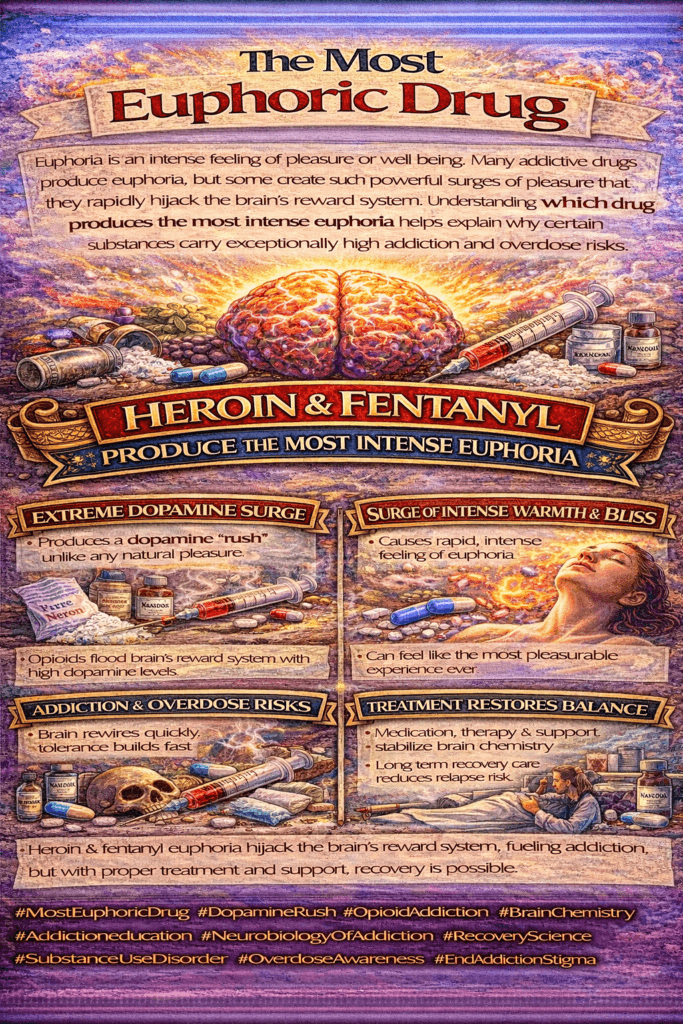
When the topic of euphoria comes up, few questions spark more curiosity than the idea of the “most euphoric drug.” This isn’t just trivia—it’s a subject researchers, clinicians, and the public have tried to understand for decades. Euphoria can range from mild feelings of well-being to intense waves of pleasure that feel almost unreal. Different substances produce these effects in different ways, based on how they interact with the brain’s reward, dopamine, and opioid systems, along with personal experience and context. In this discussion, I’ll explain what euphoria means scientifically, look at which drugs are most often described as highly euphoric, explore the risks involved, and outline key considerations to keep in mind.
What Does Euphoria Actually Mean?
Euphoria, in simple terms, is a state of intense happiness or pleasure. Sometimes people use the word to mean pure bliss. It’s that feeling of everything being perfect for a brief moment. The brain is jam-packed with chemicals (like dopamine and serotonin) that help trigger this. For some, that rush comes from running a marathon, while for others, certain substances can unlock something way more powerful.
What’s funny is that not everyone experiences euphoria the same way. Factors such as your genes, mental health, past experiences, and expectations all play a part. That’s why one person may call something life-changing while another just feels relaxed or kind of “meh.” A lot of this has to do with brain chemistry, especially how different drugs release (or mimic) those “feel-good” molecules in the brain’s reward pathways. Beyond the drugs, natural experiences like falling in love or achieving a long-held goal can also trigger euphoria in some people—for others, the feeling might be rare or fleeting due to their unique brain structure or neurochemical balances.
The Main Types of Euphoric Drugs
Substances that cause euphoria fall into a few groups. Here are the top picks people usually mention:
- Opioids: Drugs like heroin, morphine, and oxycodone. Opioids work by attaching to receptors in the brain, creating a rush and, often, a pretty dramatic wave of bliss. For some, that first experience is totally overwhelming.
- Stimulants: Cocaine and methamphetamine are the heavy hitters here. They crank up dopamine release, so everything can feel exciting, energetic, and just “up.” The euphoria is usually shorter and more intense than most opioids.
- Entactogens / Empathogens: Think of MDMA (the main thing in “Ecstasy”). This one doesn’t just cause euphoria; it throws in feelings of connection and empathy, which is part of what makes it so famous at parties and festivals.
- Dissociative: Substances like ketamine or nitrous oxide can cause a dreamy, floaty euphoric state, though in a very different way from the others above. It’s less “rush” and more of a surreal, pleasant distortion of reality.
- Cannabis: While not as extreme as some others, high THC strains can sometimes bring a real sense of euphoria, especially for new users or in the right setting.
Out of all these, people often argue about which one actually takes the title of “most euphoric.” There isn’t really a golden answer, but I’ll break down the most common contenders below, along with what makes them so powerful and risky. Let’s check out each in a bit more detail.
The Top Contenders: What’s Really the Most Euphoric Drug?
There’s always lively debate about which drug wins the title. Here’s where things usually land:
- Heroin: This opioid is famous (or infamous) for its euphoric “rush.” Many former users describe it as the peak of bliss, with the world melting away in pure pleasure. At least during the initial high. The sense of relief from pain or anxiety is also part of the story.
- Cocaine: Cocaine’s euphoria is often described as electric. It brings huge confidence, excitement, and a feeling of being on top of the world. The downside? The high is short, and the crash can be rough.
- MDMA (Ecstasy): This is the go-to for those chasing a “loved up” kind of euphoria. People talk about warmth, empathy, and a body buzz that just feels really good. The emotional side sets it apart, especially at music festivals or social gatherings.
- Methamphetamine: Similar to cocaine but tends to last longer, sometimes delivering an extended, hyperactive euphoria that can go for hours. It’s potent but can really take a toll on the mind and body.
- Nitrous oxide (Laughing Gas): While the high is very short, the giggly, floaty euphoria it brings is something some people chase repeatedly.
Scientists and people with firsthand experience often point to heroin and MDMA as two of the strongest when it comes to deep, profound euphoria. Each of these drugs works in a different way, so the actual high (and the aftereffects) can be pretty different. For example, heroin is more physically soothing and warm, while MDMA is intensely social and emotionally charged. The experiences can be influenced by the user’s intention, dose, method of use, and even environment. For those seeking euphoria, individual reports can be totally different—some call heroin’s feeling like “a warm blanket in your soul,” while others say MDMA is “the ultimate connection with people and music.”
Why Do Some Drugs Feel More Euphoric Than Others?
It all comes down to chemistry. Drugs that cause euphoria usually make the brain’s reward center light up like crazy. For opioids, it’s about mimicking our brain’s own “painkillers,” endorphins. Stimulants ramp up dopamine, so everything feels more intense and rewarding than everyday life.
Entactogens like MDMA don’t just raise serotonin and dopamine. They also release oxytocin, the so-called “love hormone,” which can create that impression of deep connection and joy. That’s why the feelings aren’t just about pleasure; they’re emotional, too. This combination of neurotransmitter release is why the high can feel unique compared to other drugs. Some researchers are studying why certain individuals report feeling only mild effects, suggesting that genetic differences can lead to markedly different brain responses.
Your mood beforehand, the setting, the people you’re with, and even your underlying brain chemistry all shape the way euphoria feels. This is why, on the same dose, two people might have very different experiences. Additionally, tolerance levels can rapidly adjust, making the initial euphoria harder to elicit on subsequent attempts. Environmental cues, previous use, and even cultural expectations can also influence how “euphoric” a drug feels to different people.
Major Risks Behind the Euphoria
Chasing euphoria with drugs isn’t just about the high; it comes with some pretty heavy risks. Here are some key things to be aware of:
- Addiction: The brain’s reward system can get hijacked. After repeated use, getting that same intense euphoria can take more and more of the drug. The learning brain starts to crave that feeling, which can lead to dependence.
- Tolerance: As tolerance builds, that once-powerful high feels weaker. This cycle can push people to use larger doses, which ramps up danger.
- Health consequences: Each drug brings its own set of health risks, ranging from mental fog and anxiety (with something like MDMA) to deadly overdoses (with opioids and high-dose stimulants).
- Mental Health Impact: Euphoria can sometimes be followed by crashes, anxiety, or depression, especially after stimulants.
- Legal Problems: Most euphoric drugs are tightly controlled or illegal in many countries. Being caught can bring legal trouble, fines, or even imprisonment.
It’s easy to see why careful research helps people make informed decisions about experimenting with any drug in this category. No drug is risk-free, especially when it comes to powerful psychoactive effects. The risks aren’t only about the substances themselves; unsafe environments, contaminated supplies, and combining drugs with alcohol or other substances can multiply the dangers. Taking extra precautions, such as researching, testing for adulterants, and not using alone, is recommended by most harm reduction organizations.
Things to Keep in Mind Before Exploring Euphoric Substances
It’s really important to understand that even though euphoria can sound tempting, the flip side often hurts way more than the high makes you feel good. Here’s what I always keep in mind when thinking about this topic:
- Personal and Family History: Those with a family history of addiction are usually at a higher risk.
- Physical Health: Underlying health problems can get worse or make drug reactions less predictable.
- Mental Health: Pre-existing anxiety, depression, or other conditions can sometimes get worse after a drug experience, especially after the high wears off.
- Setting and Company: Where you are and who you’re with can shape the experience, sometimes for better, sometimes for worse.
- Legal Issues: Even personal use can have long-term consequences if the law is broken.
Many people have found harm reduction organizations, medical experts, and peer support groups highly useful for understanding risks and making safer choices. These resources often offer advice on drug interactions, what to do in emergencies, and strategies for minimizing harm. Some experts also stress the importance of honesty with your healthcare provider about any drug use, so you can get support if things ever get rough.
Frequently Asked Questions
Here are some questions I hear a lot when this topic comes up:
Question: Is there a “safe” way to experience drug-induced euphoria?
Answer: No way is entirely safe, but some people try to reduce risk by starting small, testing substances for purity, and making sure they’re in a comfortable environment. Consulting harm reduction resources can help minimize risks.
Question: Why do some people get addicted after just one use?
Answer: We’re all wired differently. Some people have genetic vulnerabilities or mental health factors that make drugs more appealing or harder to resist after the first try.
Question: Which is more euphoric—heroin or MDMA?
Answer: It honestly depends on the person’s preferences and chemistry. Heroin brings a strong, physical warmth, while MDMA creates emotional highs. Many find MDMA more social and heroin more inwardly blissful.
Final Thoughts
Trying to figure out which drug is the “most euphoric” pushes you to look at chemistry, psychology, and real-life experiences together. Some people say nothing compares to that opioid rush, while others swear that stimulant or MDMA-induced highs are unbeatable. Either way, chasing euphoria comes with risks, so staying informed and cautious is super important. If you or someone you know is considering using one of these substances, reaching out to reputable organizations can be a smart first step for understanding potential effects and safety tips.
For those interested in learning more, organizations such as the Drug Science Group, the Harm Reduction Coalition, and the Substance Abuse and Mental Health Services Administration offer reliable, science-based information.
Video: How Euphoria Becomes An Unbreakable Cycle #addiction #psychology #dopamine