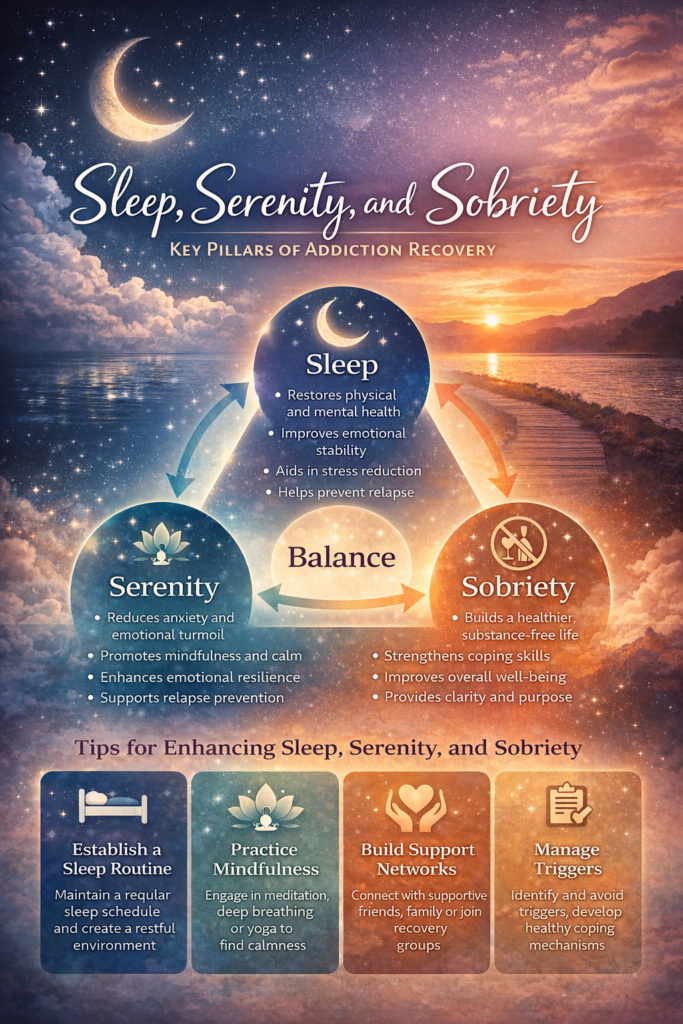
In addiction recovery, the journey toward healing is not only about staying sober—it’s about restoring balance to every aspect of life. Sleep, serenity, and sobriety are three foundational pillars that support long-term recovery and emotional well-being. Proper sleep ensures physical and mental restoration, serenity fosters emotional stability, and sobriety is the ultimate goal that unifies the two. Together, these elements create a resilient foundation for individuals to rebuild their lives, heal from past struggles, and thrive in recovery. By understanding the vital connection between these pillars, individuals can better navigate the challenges of recovery and build a healthier, balanced future.
Sleep, Serenity, and Sobriety: The Pillars of Lasting Recovery
Recovery from addiction isn’t just about staying sober; it’s about rebuilding the physical and emotional systems that were often compromised by substance use. Three of the most crucial yet often overlooked pillars in this journey are sleep, serenity, and sobriety.
Each of these elements plays a vital role in healing and maintaining recovery. While sobriety is the goal, sleep and serenity form the foundation upon which lasting recovery is built. Together, they foster the resilience and clarity needed to stay clean, improve mental health, and promote a more peaceful life.
The Role of Sleep in Recovery
For anyone in recovery, quality sleep is non-negotiable. After years of poor sleep habits, substances disrupting sleep cycles, or even insomnia brought on by addiction, learning to sleep well again is essential for physical and mental healing.
Why sleep matters in sobriety:
- Restores brain function: Sleep is the body’s natural reset button. Proper rest helps restore cognitive function, boosts mood, and supports emotional regulation.
- Regulates stress: Chronic sleep deprivation can lead to higher levels of stress and anxiety—two triggers that often lead to relapse.
- Improves overall health: Recovery takes a physical toll on the body, and sleep helps regenerate and repair damaged tissues, lower inflammation, and regulate hormones.
For many in recovery, focusing on sleep hygiene—things like creating a restful environment, avoiding caffeine late in the day, and sticking to a regular sleep schedule—can dramatically improve their overall well-being.
The Importance of Serenity in Sobriety
Serenity refers to a state of calm, peace, and mental clarity. In the face of the stress and emotional turbulence that addiction often brings, learning to cultivate serenity is key to maintaining sobriety.
How serenity enhances sobriety:
- Prevents emotional overwhelm: Serenity helps manage difficult emotions that might otherwise trigger cravings. It gives individuals the mental space needed to respond to challenges without feeling the urge to escape into substances.
- Fosters resilience: In recovery, life is bound to throw challenges your way. Serenity helps you approach these challenges with a clear, calm mind, rather than reacting impulsively or reverting to old coping mechanisms.
- Improves mindfulness: Serenity encourages mindfulness practices that help individuals stay present. Whether it’s through meditation, deep breathing, or other calming exercises, this emotional awareness strengthens the ability to stay grounded in sobriety.
Finding serenity in the chaos of recovery requires commitment to relaxation and mental wellness. It’s often cultivated through practices like yoga, meditation, or simply taking time to be still.
How Sleep, Serenity, and Sobriety Work Together
When it comes to addiction recovery, sleep, serenity, and sobriety are interconnected. One affects the others, and together they create a balanced foundation for long-term healing.
- Good sleep promotes serenity: When you are well-rested, you’re better equipped to handle the emotional rollercoaster that often comes with recovery. Sleep helps keep stress and anxiety at bay, which allows serenity to take root more easily.
- Serenity supports better sleep: The calmness you cultivate through meditation or other soothing practices also promotes better sleep. A serene mind is less likely to be plagued by restless thoughts or anxiety, which can keep you awake at night.
- Sobriety reinforces sleep and serenity: Staying sober removes the substances that have long been interfering with sleep and emotional regulation. Sobriety is the bedrock that enables healthier sleep patterns and greater emotional stability, allowing serenity to flourish.
Practical Tips for Building Sleep, Serenity, and Sobriety
- Prioritize Consistent Sleep: Establish a bedtime routine that promotes restful sleep. This could include winding down with a warm bath, avoiding screen time, and setting a consistent bedtime and wake-up time.
- Practice Mindfulness and Meditation: Regular meditation, mindfulness, or relaxation exercises can help cultivate a sense of serenity. Even five minutes a day can reduce stress and improve emotional well-being.
- Create a Balanced Routine: Incorporate healthy activities like exercise, meal planning, and social support into your daily routine. This holistic approach creates a stable environment that supports both sleep and serenity.
- Avoid Triggers: Identify and avoid situations or environments that may trigger cravings or cause stress. Surround yourself with supportive people and spaces that encourage peace and stability.
- Seek Support: Recovery groups or counseling can provide emotional support that encourages both sobriety and serenity. Sharing experiences with others facing similar challenges helps foster a sense of belonging and calm.
Closing Thought
Sleep, serenity, and sobriety are more than just individual goals—they are interconnected pillars that support one another on the journey of recovery. By committing to better sleep, emotional calmness, and maintaining sobriety, individuals in recovery can build a healthier, more resilient future. It’s not just about staying sober; it’s about nurturing your body, mind, and spirit to thrive in sobriety. Through rest, peace, and clarity, lasting recovery is possible.
Mastering Sleep, Serenity, and Sobriety: Self-Management Strategies for Lasting Recovery
In addiction recovery, the journey is not just about staying sober—it’s about rebuilding a life that supports long-term wellness. While sobriety is the foundation, it requires key components to truly thrive: sleep and serenity. These two often-overlooked factors play a crucial role in maintaining sobriety and ensuring lasting recovery.
To support your body, mind, and emotions, mastering self-management strategies around sleep, serenity, and sobriety is essential. By addressing these areas consciously, you can create a stable, resilient, and balanced foundation for recovery.
Why Sleep, Serenity, and Sobriety Matter Together
Sleep, serenity, and sobriety are deeply intertwined. Poor sleep and emotional unrest can lead to increased stress and cravings, making it harder to stay sober. Similarly, maintaining sobriety helps restore normal sleep cycles and emotional balance, allowing for better rest and peace of mind.
When managed effectively, these three elements help you:
- Recover physically and emotionally
- Regain mental clarity
- Prevent relapse triggers
- Create a stable, healthy routine that sustains your recovery
By focusing on self-management strategies in each of these areas, you build the strength and resilience needed to maintain sobriety.
1. Prioritizing Sleep in Recovery
Sleep is more than just rest; it’s essential for physical recovery and emotional regulation. In early recovery, sleep disturbances are common, but improving your sleep hygiene can drastically improve your overall well-being.
Self-management strategies for improving sleep:
- Create a Sleep Routine: Stick to a consistent sleep schedule. Going to bed and waking up at the same time each day helps regulate your internal clock and improves sleep quality.
- Set a Restful Environment: Create a calm and comfortable sleep space by keeping your room cool, dark, and quiet. Consider adding calming scents, like lavender, to promote relaxation.
- Avoid Stimulants: Limit caffeine, alcohol, and nicotine, especially in the hours leading up to bedtime. These substances can interfere with sleep quality.
- Practice Relaxation Techniques: Use meditation, breathing exercises, or progressive muscle relaxation before bed to calm your body and mind.
- Limit Screen Time: Avoid electronic devices such as phones, tablets, and computers for at least 30 minutes before bedtime, as blue light can interfere with your natural sleep cycle.
2. Cultivating Serenity in Recovery
Serenity is the ability to remain calm, peaceful, and untroubled. In recovery, emotional calmness is critical to managing stress, avoiding triggers, and preventing relapse. Serenity doesn’t mean avoiding emotions; it means learning how to handle them in healthy, constructive ways.
Self-management strategies for cultivating serenity:
- Mindfulness Meditation: Practice mindfulness daily to reduce stress and enhance emotional regulation. Start with just five minutes of focused breathing, gradually increasing your time as you become more comfortable.
- Journaling: Write down your thoughts and feelings to process and release pent-up emotions. This can help you understand your emotional patterns and triggers.
- Self-Compassion: Be kind to yourself during difficult moments. Practice self-compassion by treating yourself with the same understanding and care you would offer a friend.
- Engage in Relaxing Activities: Pursue hobbies or activities that promote relaxation, such as yoga, hiking, listening to music, or taking baths. These activities allow you to relax your mind and body.
- Social Support: Surround yourself with a supportive network of friends, family, or peers in recovery. Social support helps create a sense of connection and reduces isolation, a common trigger for anxiety.
3. Sustaining Sobriety with Self-Management
Sobriety is the cornerstone of recovery, but maintaining it requires conscious, ongoing effort. A key part of sustaining sobriety is managing cravings, addressing triggers, and reinforcing your commitment to a healthy, substance-free life.
Self-management strategies for maintaining sobriety:
- Identify Triggers: Recognize situations, people, or emotions that trigger cravings. Make a plan for how to avoid or manage these triggers before they lead to relapse.
- Develop Coping Mechanisms: Build a toolbox of healthy coping strategies to deal with stress, anxiety, and difficult emotions. These may include breathing exercises, reaching out to a support group, or going for a walk.
- Set Clear Boundaries: Learn to say no and set boundaries with people or situations that may jeopardize your sobriety. Protecting your recovery is a priority.
- Seek Support Regularly: Continue attending meetings, therapy sessions, or support groups, even when you feel confident in your sobriety. Regular support keeps you grounded and connected.
- Celebrate Milestones: Acknowledge and celebrate the progress you’ve made in your recovery. Celebrating small wins builds momentum and reinforces your commitment to sobriety.
The Power of Integrating Sleep, Serenity, and Sobriety
When you prioritize sleep, serenity, and sobriety, you’re not just surviving—you’re thriving in recovery. These self-management strategies help create a balanced, sustainable lifestyle that supports both your physical and emotional well-being. Each area reinforces the others, creating a resilient foundation for long-term sobriety and peace of mind.
Closing Thought
In addiction recovery, managing sleep, serenity, and sobriety isn’t just about responding to challenges as they arise—it’s about building the habits and mindset that allow you to face life’s difficulties with strength and clarity. By focusing on these key areas, you can develop the inner peace and stability needed for lasting recovery and create a life that is not only sober but also fulfilling and balanced.
Supporting Sleep, Serenity, and Sobriety: Family Strategies for a Balanced Recovery
Addiction recovery is a multifaceted journey, one that requires support from all areas of a person’s life. While sobriety is the most obvious goal, the journey toward long-term recovery is more sustainable when it is supported by sleep, serenity, and healthy emotional regulation. These components are often overlooked but are crucial in helping someone rebuild a strong foundation for a sober life.
As family members, your role is critical in creating a home environment that supports these three pillars—especially when someone is navigating recovery. Understanding the importance of sleep, serenity, and sobriety, and how your support can reinforce these aspects, can make a profound difference in your loved one’s long-term recovery success.
Why Sleep, Serenity, and Sobriety Matter in Recovery
The relationship between sleep, serenity, and sobriety is complex but essential. Addiction takes a toll on both the mind and the body, often disrupting healthy sleep patterns and emotional balance. In recovery, rebuilding these areas is crucial for the individual to regain stability and resilience. A lack of sleep or emotional turmoil can make sobriety more difficult to maintain, while serenity helps to manage emotions and prevent relapse triggers.
For families, understanding the connection between these elements allows you to offer the right support at the right time.
1. Supporting Healthy Sleep Patterns
Sleep is not just about rest; it’s a critical part of emotional and physical recovery. After years of disrupted sleep cycles, anxiety, or substance use, individuals in recovery often face sleep disturbances. Insomnia, difficulty staying asleep, or nightmares are common, but sleep is essential for restoring cognitive function, mood, and physical health.
How family members can support healthy sleep:
- Encourage a Consistent Sleep Schedule: Help your loved one stick to a routine that includes going to bed and waking up at the same time every day, even on weekends.
- Create a Restful Environment: Ensure the bedroom is conducive to rest—cool, dark, and quiet. Reducing screen time before bed and creating a calming atmosphere with soft music or essential oils can promote relaxation.
- Avoid Stimulants: Encourage healthy habits, such as avoiding caffeine, alcohol, and nicotine in the evening. These substances interfere with sleep cycles and can trigger cravings.
- Establish Pre-Sleep Relaxation Routines: Gentle activities such as reading, listening to calming music, or practicing deep-breathing exercises can help ease your loved one into a restful state.
2. Fostering Serenity: Calm Minds, Calm Bodies
Serenity, or emotional calmness, is crucial in addiction recovery. It helps to reduce stress, manage overwhelming feelings, and provides the clarity needed to stay on track. A peaceful, serene mindset reduces anxiety and helps avoid the emotional turmoil that can lead to relapse.
How family members can support serenity:
- Create a Calming Environment: Reduce stressors in the home by keeping spaces organized and peaceful. Encourage quiet, distraction-free areas where your loved one can relax.
- Encourage Mindfulness Practices: Invite your loved one to join you in mindfulness practices, such as meditation, yoga, or deep-breathing exercises. These activities promote emotional balance and focus.
- Be a Source of Calm: When tensions arise, respond calmly and gently. Your own emotional regulation serves as a model for approaching stressful situations.
- Respect Emotional Boundaries: Sometimes, serenity is about giving space. Encourage your loved one to express their emotions when they are ready, but also respect their need for solitude when necessary.
3. Reinforcing Sobriety with Compassionate Support
Sobriety is the cornerstone of recovery. But maintaining sobriety goes beyond just abstaining from substances. It involves managing cravings, dealing with triggers, and fostering an environment that supports a clean lifestyle. Without adequate support for emotional health and sleep, staying sober can become much more challenging.
How family members can support sobriety:
- Create a Sober-Friendly Home: If there are substances or triggers in the house, remove them. Keeping the environment clean and free of temptation reduces the risk of relapse.
- Be a Reliable Source of Emotional Support: Offer encouragement and a listening ear. Check in regularly with your loved one about their feelings and progress.
- Celebrate Milestones: Acknowledge and celebrate your loved one’s achievements—whether it’s their first week sober, one month, or one year. These milestones build confidence and motivation.
- Encourage Healthy Socialization: Support your loved one in finding new sober-friendly activities, hobbies, and social connections that strengthen their commitment to recovery.
Creating a Supportive Family Environment
To help someone maintain sobriety, serenity, and healthy sleep patterns, family members must foster an environment of safety, understanding, and patience. Recovery is not linear, and setbacks will happen. However, with a balanced approach to supporting sleep, serenity, and sobriety, you can help your loved one build the foundation for lasting recovery.
Closing Thought
As a family member, your support in helping your loved one balance sleep, serenity, and sobriety can have a profound impact on their recovery journey. These three pillars are not separate—they are interconnected, and each one plays a crucial role in sustaining the other. By creating a supportive, calm, and sober-friendly home environment, you provide your loved one with the tools they need to heal and maintain their recovery long-term.
With patience, understanding, and consistent support, you can help guide them toward a healthier, happier future.
Community Resources for Sleep, Serenity, and Sobriety: Supporting Lasting Recovery
Addiction recovery isn’t just about staying sober—it’s about healing the mind, body, and spirit. Sobriety is the foundation, but to truly rebuild a balanced life, individuals in recovery need more than just abstinence—they need the tools to improve sleep, cultivate serenity, and create a stable, sober lifestyle. Community resources can play a crucial role in strengthening these pillars of recovery, offering support and services that address each area comprehensively.
When communities come together to support individuals on their recovery journey, they provide not just a safety net but a strong foundation for lasting change.
Why Sleep, Serenity, and Sobriety Matter Together
Addiction recovery can be overwhelming, but focusing on sleep, serenity, and sobriety provides a holistic approach that addresses the physical, emotional, and psychological aspects of healing.
- Sleep restores the body and mind, improving physical health and emotional stability.
- Serenity helps individuals cope with stress, manage emotions, and stay grounded.
- Sobriety is the ultimate goal, but maintaining it requires emotional regulation, physical health, and strong mental clarity.
Together, these elements are interconnected and, when supported by community resources, enhance one another, providing a balanced path toward long-term recovery.
1. Community Resources for Better Sleep
Quality sleep is essential in recovery, but many people in early sobriety struggle with sleep disturbances. Addiction often disrupts sleep patterns, and without substances, the body must relearn how to rest. Community programs can provide a range of resources to help individuals get the sleep they need.
Community strategies to support sleep:
- Sleep Clinics and Support Groups: Community-based sleep centers can offer professional guidance and support to people with insomnia or other sleep disorders. Support groups that address the challenges of sleep during recovery can offer shared experiences and coping techniques.
- Mindfulness and Relaxation Programs: Many community centers offer classes on relaxation techniques, including progressive muscle relaxation, deep breathing exercises, and meditation. These practices can reduce anxiety and promote restful sleep.
- Substance-Free Social Spaces: Environments free from substances help eliminate the temptation of relapse and provide a safe space for people to relax and unwind, ultimately improving sleep quality.
2. Promoting Serenity through Community Support
Serenity—inner peace and emotional calm—is a cornerstone of recovery. Without emotional balance, the stresses of life can feel overwhelming, increasing the likelihood of relapse. Communities that focus on serenity provide individuals with emotional tools and social connections that help reduce anxiety, build emotional resilience, and maintain sobriety.
Community strategies to cultivate serenity:
- Counseling and Therapy Services: Community mental health services can offer individual or group therapy to help individuals process emotions, manage stress, and heal from trauma. Programs such as Cognitive Behavioral Therapy (CBT) and Dialectical Behavior Therapy (DBT) are particularly effective in helping people manage emotional struggles without resorting to substances.
- Meditation and Yoga Centers: Local yoga studios and community centers often offer classes designed to promote relaxation, emotional awareness, and mindfulness. Yoga and meditation can help calm the nervous system and reduce emotional reactivity, leading to greater serenity in recovery.
- Peer Support Networks: Recovery meetings, whether 12-step or non-12-step, provide emotional support and opportunities to share experiences. In these spaces, individuals can talk openly about their challenges, gain insight from others, and practice vulnerability—all of which contribute to emotional well-being and serenity.
3. Sobriety-Focused Community Resources
Sobriety is the ultimate goal of recovery, but it’s a difficult one to maintain without the right tools and support. The journey to lasting sobriety requires not only stopping the use of substances but also building healthier coping mechanisms, finding purpose, and developing a strong support system. Community resources are essential in offering the ongoing care and connections needed to stay sober.
Community strategies to support sobriety:
- Sober Living Communities: For individuals transitioning from rehab or early recovery, sober living houses offer a stable, substance-free environment where individuals can rebuild their lives with the help of peer support and structure.
- Support Groups and Recovery Meetings: Community-based support groups such as Narcotics Anonymous (NA), Alcoholics Anonymous (AA), and SMART Recovery offer regular meetings where individuals can share their progress, seek guidance, and maintain accountability. These groups help build a strong sense of community and support sobriety.
- Educational and Job Training Programs: Many community organizations offer vocational training, educational programs, and career counseling to help individuals rebuild their lives and find purpose. Gaining employment or pursuing education can provide a sense of achievement and a reason to stay sober.
4. Building a Network of Support
Recovery is not a solitary journey. Communities that foster a sense of belonging and connection play a vital role in the recovery process. These connections provide social support, encourage accountability, and reduce the sense of isolation that can lead to relapse.
Community strategies to build a network of support:
- Family and Friends Support Programs: Community-based programs that focus on family education and involvement help loved ones understand the recovery process and how to support individuals in recovery effectively.
- Social Support and Volunteering: Community volunteer opportunities can provide a sense of purpose and connectedness. Engaging in meaningful activities outside of addiction creates new, positive relationships that reinforce sobriety.
- Social Clubs and Recreational Activities: Many communities offer sober recreational activities such as sports leagues, hiking clubs, or movie nights. These offer a fun, sober social environment that promotes connection and enjoyment without substances.
Closing Thought
Building lasting recovery isn’t just about stopping substance use; it’s about creating a life that promotes health, happiness, and emotional balance. Sleep, serenity, and sobriety are essential parts of this process, and community resources are key to supporting each one.
By leveraging community-based services and programs, individuals in recovery can find the tools they need to restore their health, maintain their sobriety, and thrive in a supportive, connected environment. With these resources, long-term recovery becomes not just possible, but sustainable, providing a strong foundation for a fulfilling, substance-free life.
Frequently Asked Questions
Here are some common questions:
1. How are sleep, serenity, and sobriety connected?
Sleep, serenity, and sobriety are interconnected pillars in the recovery process. Healthy sleep helps restore the body and mind, which are crucial for emotional stability. Serenity—the state of calm and emotional balance—reduces stress and anxiety, helping maintain sobriety. When managed together, they create a stable foundation for lasting recovery.
2. Why is sleep important in addiction recovery?
Sleep plays a vital role in addiction recovery. Many people in recovery face sleep disturbances due to anxiety, stress, or past substance use. Proper sleep helps the brain and body heal, restores cognitive function, improves mood, and supports emotional regulation. It reduces the risk of relapse and supports physical health.
3. What are the benefits of serenity in recovery?
Serenity—emotional peace and calm—is essential for managing stress, reducing anxiety, and avoiding relapse triggers. It helps individuals navigate the emotional challenges of recovery without turning to substances for relief. Serenity enhances mental clarity, increases resilience, and supports better decision-making, all of which contribute to long-term sobriety.
4. How can I improve my sleep during recovery?
Improving sleep during recovery involves developing good sleep hygiene, including:
- Sticking to a regular sleep schedule
- Creating a calming bedtime routine (e.g., reading, meditating)
- Avoiding caffeine, alcohol, and screen time before bed
- Creating a comfortable sleep environment (cool, dark, quiet)
These practices help promote restful sleep and support emotional and physical healing.
5. How can I cultivate serenity in my life?
Cultivating serenity involves developing emotional awareness and resilience. Some strategies include:
- Practicing mindfulness and meditation to stay present
- Engaging in relaxation exercises (breathing techniques, yoga)
- Establishing healthy coping mechanisms for stress (journaling, talking with a supportive person)
- Creating a peaceful, stable environment free from emotional triggers
These practices help promote emotional balance, reducing anxiety and stress.
6. Can sleep disturbances lead to relapse in recovery?
Yes, sleep disturbances can contribute to relapse in recovery. Chronic lack of sleep increases stress, irritability, and anxiety, which can lead to cravings or emotional triggers. It also impairs decision-making and coping ability. Prioritizing healthy sleep can prevent these challenges and improve overall emotional well-being, reducing the risk of relapse.
7. How do serenity and sobriety support each other?
Serenity supports sobriety by creating emotional space to manage stress and emotional discomfort without turning to substances. In turn, sobriety enhances serenity by freeing the individual from the emotional chaos caused by substance use, allowing for more stable moods and clearer thinking. The relationship between serenity and sobriety reinforces a healthier, balanced lifestyle.
8. What are some practical tips for managing sleep, serenity, and sobriety together?
To effectively manage sleep, serenity, and sobriety, try these strategies:
- Sleep: Stick to a sleep schedule, avoid substances that disrupt sleep, and incorporate relaxation techniques before bed.
- Serenity: Practice mindfulness, engage in stress-reducing activities like yoga, and surround yourself with supportive people.
- Sobriety: Stay connected with support groups, build healthy coping strategies, and stay mindful of relapse triggers.
By prioritizing each aspect, you’ll foster a more balanced and sustainable recovery.
9. How long does it take to restore sleep and serenity in recovery?
Restoring sleep and serenity can take time, especially in early recovery. It’s normal to experience challenges as the body and mind adjust. While some people may see improvements in sleep within weeks, others may take longer. Cultivating serenity through meditation, therapy, or support groups can also take time. Patience and consistency are key—small steps each day lead to lasting changes.
10. How can family and community support sleep, serenity, and sobriety?
Family and community play a critical role by offering emotional support, understanding, and encouragement. Families can create a calm, structured environment, help establish sleep routines, and support efforts to engage in serenity practices. Community support groups and therapy offer spaces to share experiences and provide additional guidance in maintaining sobriety and emotional balance.
11. Can practicing serenity prevent relapse?
Yes, practicing serenity can help prevent relapse by equipping individuals with the tools to manage stress, anxiety, and difficult emotions without resorting to substances. A serene mindset helps individuals stay calm during high-stress situations, preventing them from making impulsive decisions or turning to old coping mechanisms.
12. What role does self-compassion play in sleep, serenity, and sobriety?
Self-compassion is crucial in all three areas. Being kind to yourself during recovery reduces feelings of shame, guilt, or self-criticism, which can contribute to stress or relapse. Self-compassion fosters emotional balance (serenity), supports mental health (sleep), and strengthens commitment to sobriety by encouraging self-care and patience.
13. How do I know if I’m achieving balance between sleep, serenity, and sobriety?
Achieving balance between sleep, serenity, and sobriety means feeling physically rested, emotionally calm, and confident in your sobriety. Signs of balance include:
- Getting consistent, restful sleep
- Feeling more emotionally stable and less reactive to stress
- Maintaining sobriety with fewer cravings or relapse triggers
If any of these areas feel out of balance, focus on implementing more supportive strategies for that area and seek guidance from professionals or support groups.
Conclusion
The path to lasting recovery requires more than just the absence of substances—it requires cultivating healthy habits, emotional resilience, and peace of mind. Sleep, serenity, and sobriety are integral to this process, each supporting and reinforcing the others. When managed effectively, these elements create a balanced foundation for recovery, reducing the risk of relapse and improving overall well-being. By prioritizing healthy sleep, emotional calm, and a sober lifestyle, individuals can achieve not only sobriety but a fulfilling, sustainable life free from addiction. Recovery is a journey, and with the support of these pillars, lasting transformation is possible.
Video: