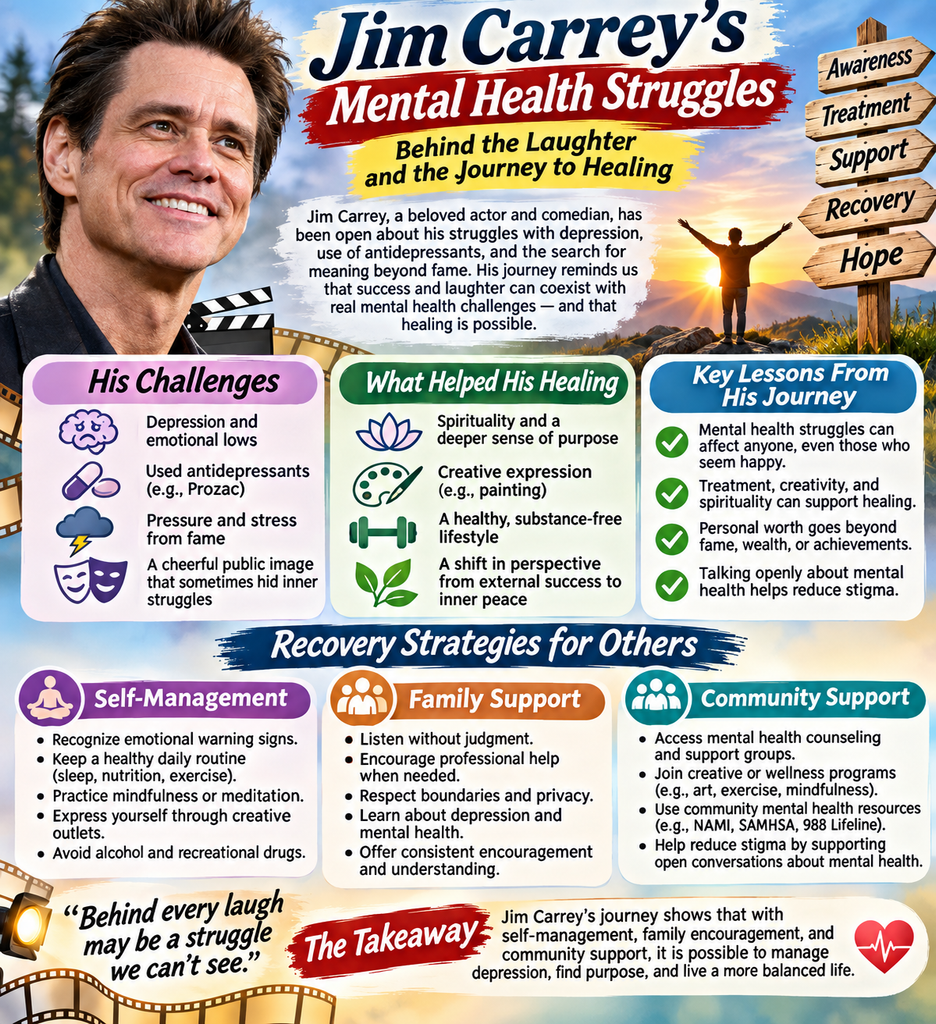
Behind the laughter of one of Hollywood’s most recognizable comedians lies a personal journey involving depression, emotional struggles, and the search for happiness beyond fame. Jim Carrey has openly discussed his experiences with depression, antidepressant treatment, and personal transformation, challenging the misconception that professional success guarantees emotional well-being.
His journey highlights the importance of recognizing mental health struggles, developing a healthy sense of identity, and finding purpose beyond external achievements. Through self-management, family encouragement, professional treatment, and community support, individuals experiencing similar challenges can develop healthier coping mechanisms and work toward emotional well-being.
Understanding Jim Carrey’s Mental Health Journey
Jim Carrey became internationally recognized through films such as The Mask, Ace Ventura: Pet Detective, Dumb and Dumber, and The Truman Show. His energetic performances and comedic personality brought happiness to millions.
However, being able to entertain others does not mean someone is immune to depression or emotional distress. Individuals who appear cheerful, successful, and confident may experience significant psychological difficulties in their private lives.
His story provides an opportunity to discuss several important mental health concerns:
- Depression behind a cheerful public personality.
- The emotional pressure of fame and professional expectations.
- The relationship between personal identity and professional success.
- The limitations of wealth and recognition in achieving happiness.
- The importance of mental health treatment and emotional self-awareness.
- Finding meaning and purpose beyond career accomplishments.
Childhood Experiences and Emotional Development
Born in Ontario, Canada, in 1962, Jim Carrey experienced financial hardship and family challenges during his childhood. After his father lost his job, the family struggled financially, and Carrey left school at age 16.
In a 2004 60 Minutes interview, Carrey recalled using comedy to cheer up his mother, who experienced health problems. He also described experiencing anger and frustration during his family’s financial difficulties. Paramount Press Express+1
Childhood adversity can influence emotional development and how individuals respond to stress later in life. However, these experiences do not automatically cause depression or other mental health disorders.
Potential psychological effects of childhood adversity include:
- Developing excessive responsibility for other people’s happiness.
- Difficulty expressing personal emotional needs.
- Using humor to manage uncomfortable emotions.
- Developing a strong need for external validation.
- Experiencing chronic stress and emotional exhaustion.
- Connecting personal worth with achievements.
Carrey’s childhood experiences provide a valuable opportunity to understand how early responsibilities and emotional challenges may shape coping behaviors.
Jim Carrey’s Struggles With Depression
In his 2004 interview with 60 Minutes, Carrey publicly acknowledged experiencing depression and taking fluoxetine, an antidepressant commonly known as Prozac. He explained that the medication had provided some relief but that he eventually discontinued it.
Carrey also described spirituality and avoiding alcohol and recreational drugs as important aspects of his personal approach to well-being. Paramount Press Express
Depression is more than temporary sadness. It is a mental health condition involving complex interactions between biological, psychological, social, and environmental factors.
Common symptoms of depression include:
- Persistent sadness or emotional emptiness.
- Loss of interest in previously enjoyable activities.
- Fatigue and decreased energy.
- Changes in appetite and sleeping patterns.
- Feelings of guilt, hopelessness, or worthlessness.
- Difficulty concentrating or making decisions.
- Social withdrawal and isolation.
- Thoughts of death or suicide.
Major depressive disorder typically involves symptoms lasting at least two weeks, causing significant distress or impairment in daily functioning.
Carrey’s openness demonstrates that depression can affect individuals regardless of intelligence, talent, wealth, or professional accomplishments.
The Hidden Pain Behind Humor
Humor can be a healthy coping mechanism that provides emotional relief, strengthens social relationships, and helps individuals manage difficult circumstances.
However, it can also become a defense mechanism when individuals use humor to avoid acknowledging emotional pain or discussing uncomfortable experiences.
The term smiling depression is sometimes used informally to describe individuals who appear happy and functional while privately experiencing depressive symptoms. It is not a separate clinical diagnosis.
Possible warning signs of concealed emotional distress include:
- Frequently joking about personal suffering.
- Avoiding serious conversations about emotions.
- Feeling responsible for entertaining others.
- Experiencing loneliness despite social popularity.
- Maintaining a cheerful appearance while feeling emotionally exhausted.
- Difficulty asking for assistance.
- Feeling pressured to hide vulnerability.
These behaviors are not proof of depression, nor should they be automatically attributed to Carrey. They illustrate why looking beyond someone’s public personality can be important.
The Impact of Fame, Success, and Personal Identity
Celebrity culture can create unrealistic expectations regarding happiness, appearance, success, and personal identity.
Individuals in highly visible professions may experience additional emotional pressures, including public criticism, reduced privacy, unpredictable career opportunities, and the expectation of maintaining a particular public image.
Potential mental health challenges associated with fame include:
- Performance anxiety.
- Fear of failure or rejection.
- Emotional burnout.
- Dependence on external validation.
- Difficulty establishing personal boundaries.
- Loss of privacy.
- Social isolation.
- Difficulty separating professional identity from personal identity.
Carrey’s public reflections encourage a broader discussion about finding personal value beyond professional achievements.
When happiness becomes entirely dependent on recognition, praise, or financial success, individuals may struggle to maintain emotional stability when those external circumstances change.
Jim Carrey’s Perspective on Antidepressants
Carrey’s discussion of antidepressant treatment generated public interest in how depression should be managed. His personal experience with fluoxetine included perceived benefits as well as dissatisfaction with some aspects of treatment.
However, individual experiences with antidepressants vary considerably.
| Treatment approach | Potential benefits |
|---|---|
| Antidepressant medications | Reduce depressive symptoms and improve functioning |
| Cognitive behavioral therapy (CBT) | Addresses negative thinking and behavioral patterns |
| Interpersonal therapy | Improves relationship functioning and emotional adjustment |
| Behavioral activation | Encourages meaningful activities and reduces avoidance |
| Mindfulness-based interventions | Supports emotional awareness and stress management |
| Lifestyle modifications | Complements professional treatment and supports well-being |
| Combined treatment | Addresses multiple biological and psychological factors |
Carrey’s decision to discontinue antidepressants should not be interpreted as a recommendation for others to stop medication.
Antidepressants can be effective and medically necessary, including for long-term treatment in some individuals. Abrupt discontinuation may cause discontinuation symptoms or contribute to a recurrence of depression.
Medication decisions should be made collaboratively with a qualified healthcare professional.
The Relationship Between Depression and Addiction
Depression and substance use disorders frequently coexist. Individuals experiencing emotional distress may turn to alcohol, recreational drugs, or other potentially addictive behaviors to temporarily escape uncomfortable emotions.
Although substances may provide short-term relief, repeated use can worsen depression, interfere with emotional regulation, and increase the risk of dependence.
The Depression and Substance Use Cycle
A possible self-medication cycle, not a description of Jim Carrey’s personal substance use history.
Factors that can contribute to co-occurring depression and addiction include:
- Unresolved trauma.
- Chronic stress and anxiety.
- Social isolation.
- Difficulty regulating emotions.
- Genetic vulnerability.
- Sleep disturbances.
- Limited access to mental health treatment.
Carrey’s previously stated preference for avoiding alcohol and recreational drugs offers an opportunity to discuss substance-free coping strategies. His public disclosure of depression, however, does not establish that he has a substance use disorder.
Individuals experiencing both depression and addiction may benefit from integrated treatment that addresses both conditions simultaneously.
Creative Expression as a Pathway to Healing
Beyond acting and comedy, Carrey has explored painting and other forms of artistic expression. His interest in visual art shows how creativity can offer opportunities for emotional expression and personal reflection. Memoirs and Misinformation
Creative activities may support mental health by providing meaningful engagement, reducing stress, and helping individuals explore emotions that are difficult to communicate verbally.
Examples of creative coping strategies include:
- Painting and drawing.
- Playing musical instruments.
- Writing poetry or personal journals.
- Photography.
- Gardening.
- Dance and movement.
- Creative storytelling.
- Participating in community art programs.
Creative expression can also provide enjoyable, substance-free activities for individuals recovering from addiction.
Although artistic activities can complement mental health treatment, they should not replace professional care when clinically indicated.
Spirituality, Mindfulness, and Personal Transformation
Carrey has publicly discussed the importance of spirituality in his personal life and emotional well-being. His reflections have included finding meaning beyond material success and developing a greater appreciation for the present moment.
In a 2017 interview, Carrey described an improvement in his experience of depression, explaining that periods of sadness no longer affected him as persistently as they once had. NME+1
Spirituality and mindfulness may help some individuals develop emotional resilience through:
- Increased self-awareness.
- Greater acceptance of difficult emotions.
- Reduced attachment to external validation.
- Developing gratitude.
- Strengthening personal values.
- Finding meaning during challenging experiences.
- Connecting with supportive communities.
Spiritual practices should respect individual beliefs and preferences. They can complement evidence-based treatment without implying that depression results from insufficient faith or spiritual commitment.
Self-Management Strategies for Mental Health Recovery
Self-management involves developing daily habits and coping skills that support emotional stability, improve functioning, and help individuals recognize worsening mental health symptoms.
Recognize emotional warning signs
Individuals should become familiar with changes in their thoughts, emotions, and behaviors that may indicate worsening depression.
These may include increased isolation, reduced motivation, persistent fatigue, irritability, or loss of interest in meaningful activities.
Establish a structured daily routine
Depression can interfere with motivation and daily functioning. Establishing a manageable routine can provide stability and reduce feelings of being overwhelmed.
Helpful self-management practices include:
- Maintaining consistent sleeping and waking schedules.
- Eating nutritious meals regularly.
- Participating in appropriate physical activity.
- Scheduling enjoyable and meaningful activities.
- Practicing mindfulness or relaxation exercises.
- Limiting alcohol and avoiding recreational drugs.
- Maintaining social connections.
- Attending scheduled healthcare appointments.
- Taking prescribed medications as directed.
- Monitoring changes in mood and behavior.
Develop an identity beyond achievement
Individuals may benefit from recognizing that their personal worth is not determined exclusively by their employment, accomplishments, appearance, financial status, or ability to make others happy.
Practice emotional honesty
Learning to communicate difficult emotions can reduce isolation and create opportunities for meaningful support.
Seeking assistance before symptoms become overwhelming is an important component of effective self-management.
Family Support Strategies
Families can play an important role in helping individuals experiencing depression feel understood, supported, and connected.
However, family members may struggle to recognize depression when a loved one appears successful, humorous, or capable of managing everyday responsibilities.
Encourage open communication
Conversations about mental health should emphasize understanding rather than criticism. Family members can acknowledge emotional pain without immediately attempting to solve every problem.
Helpful family support strategies include:
- Listening without judgment.
- Validating emotional experiences.
- Avoiding pressure to appear happy.
- Encouraging professional mental health evaluation.
- Offering practical assistance with daily responsibilities.
- Respecting personal privacy and boundaries.
- Supporting healthy recreational activities.
- Learning about depression and co-occurring disorders.
- Recognizing warning signs of suicidal behavior.
- Seeking family counseling when appropriate.
Support without creating unhealthy dependence
Family support should encourage independence and personal responsibility while recognizing that depression can significantly impair motivation and functioning.
Family members should also protect their own emotional well-being through healthy boundaries, education, and independent support.
Community Support Strategies
Community involvement can reduce social isolation, improve access to mental health treatment, and create environments where individuals feel comfortable seeking assistance.
Communities can support individuals experiencing depression through education, accessible healthcare, peer support, and meaningful opportunities for social connection.
| Community strategy | Potential benefit |
|---|---|
| Mental health education | Reduces misinformation and stigma |
| Peer support groups | Encourages connection and shared understanding |
| Affordable counseling | Improves access to professional treatment |
| Community art programs | Provides opportunities for creative expression |
| Workplace wellness programs | Supports employees experiencing emotional distress |
| Recovery-friendly events | Encourages substance-free social interaction |
| Faith-based support programs | Offers spiritual and social encouragement when desired |
| Crisis intervention services | Provides assistance during mental health emergencies |
| Integrated addiction treatment | Addresses co-occurring mental health and substance use disorders |
Communities should emphasize that mental health treatment is a form of healthcare rather than a sign of personal weakness.
Breaking the Stigma Surrounding Men’s Mental Health
Men may experience social expectations that discourage vulnerability, emotional expression, and help-seeking behaviors.
Some individuals attempt to manage depression independently because they fear being perceived as weak, incapable, or unsuccessful.
Depression in men may sometimes present with irritability, emotional withdrawal, excessive working, risk-taking, or increased substance use, alongside more commonly recognized depressive symptoms.
Carrey’s willingness to discuss depression publicly can help challenge stereotypes suggesting that successful men should remain emotionally unaffected by personal challenges.
Strategies for reducing men’s mental health stigma include:
- Encouraging open conversations about emotions.
- Normalizing professional counseling.
- Challenging unrealistic expectations of masculinity.
- Promoting peer support among men.
- Increasing mental health education in workplaces and schools.
- Recognizing diverse presentations of depression.
- Sharing responsible stories of recovery and resilience.
Seeking mental health treatment can be an important expression of personal responsibility and strength.
Recognizing When Professional Help Is Necessary
Although lifestyle changes and social support can improve emotional well-being, persistent or severe depression often requires professional evaluation.
Individuals should consider seeking professional assistance when they experience:
- Depressive symptoms lasting two weeks or longer.
- Significant difficulty performing everyday responsibilities.
- Persistent hopelessness or feelings of worthlessness.
- Increasing reliance on alcohol or other substances.
- Severe changes in sleeping or eating patterns.
- Loss of interest in previously meaningful activities.
- Increasing social isolation.
- Thoughts of self-harm or suicide.
Early intervention can help reduce complications, improve treatment outcomes, and prevent worsening symptoms.
Anyone experiencing suicidal thoughts or a mental health crisis can call or text 988 in the United States. For immediate danger or a life-threatening emergency, call 911.
Developing a Personal Mental Health Action Plan
A personalized mental health action plan can help individuals establish realistic goals, recognize warning signs, and maintain healthy coping strategies.
Personal Mental Health Checklist
Schedule a mental health evaluation. Discuss symptoms and appropriate treatment options.
Identify emotional triggers. Recognize situations that contribute to distress.
Establish healthy daily routines. Prioritize sleep, nutrition, and physical activity.
Practice creative expression. Choose a meaningful activity that supports emotional well-being.
Build a trusted support network: Identify family, friends, and professional resources.
Avoid substance-based coping. Develop healthier responses to emotional discomfort.
Follow an individualized treatment plan. Attend appointments and discuss medication concerns with your provider.
Develop a crisis safety plan. Identify warning signs, emergency contacts, and crisis resources.
Mental Health and Addiction Support Resources
| Organization | Services |
|---|---|
| National Institute of Mental Health (NIMH) | Depression education and mental health research |
| National Alliance on Mental Illness (NAMI) | Family education, advocacy, and peer support |
| Mental Health America | Mental health screening and educational resources |
| SAMHSA | Mental health and addiction treatment referrals |
| FindTreatment.gov | Mental health and substance use treatment providers |
| Depression and Bipolar Support Alliance | Peer support and mood disorder education |
| 988 Suicide & Crisis Lifeline | Crisis counseling and emotional support |
SAMHSA National Helpline: 1-800-662-HELP (4357).
Important Lessons From Jim Carrey’s Mental Health Journey
Jim Carrey’s public discussions of depression provide valuable opportunities to improve mental health awareness and encourage compassionate support.
Important lessons include:
- Success does not guarantee happiness. Professional accomplishments cannot eliminate every emotional challenge.
- Laughter does not always reflect emotional well-being. Individuals may experience depression while maintaining a cheerful public appearance.
- Mental health treatment is individualized. What works for one individual may not work for another.
- Creative expression can support healing. Meaningful activities provide opportunities for emotional exploration.
- Substances are not a sustainable solution to emotional pain. Healthy coping strategies and appropriate treatment offer safer alternatives.
- Personal worth extends beyond achievement. Individuals deserve respect and compassion regardless of their accomplishments.
- Family and community support matter. Supportive relationships can reduce isolation and encourage engagement in treatment.
- Recovery is possible. Appropriate treatment, emotional awareness, and ongoing support can improve quality of life.
Conclusion: Finding Healing Beyond the Laughter
Jim Carrey’s mental health journey reminds us that even people who bring happiness to millions can experience significant emotional struggles. His public discussions of depression, spirituality, creativity, and personal identity encourage a deeper understanding of mental health beyond outward appearances.
Through self-management, professional treatment, family encouragement, and community involvement, individuals experiencing depression can develop healthier coping strategies, strengthen emotional resilience, and reduce the risk of substance-based coping.
His journey also emphasizes that healing is not necessarily about achieving constant happiness. It involves learning to manage difficult emotions, recognize personal needs, accept support, and discover meaning beyond external expectations.
Behind every smile may be a struggle we cannot see. Compassion, understanding, and access to appropriate treatment can help transform emotional suffering into an opportunity for healing, growth, and renewed hope.
Frequently Asked Questions and Answers
Understanding Jim Carrey’s Mental Health Journey
1. What mental health struggles has Jim Carrey experienced?
Jim Carrey has publicly discussed experiencing depression and periods of emotional distress. In a 2004 interview with 60 Minutes, he revealed that he had taken antidepressant medication and later discontinued it. His experiences demonstrate that mental health challenges can affect anyone, regardless of professional success. Paramount Press Express
2. When did Jim Carrey publicly discuss his depression?
Carrey openly discussed his depression during a 2004 interview with CBS’s 60 Minutes. In 2017, he reported that his experience of depression had improved significantly and that periods of sadness were less persistent. Paramount Press Express+1
3. Did Jim Carrey’s childhood contribute to his mental health struggles?
Carrey has described childhood financial hardship and family difficulties. He also recalled using comedy to cheer up his mother, who experienced health problems. CBS News
Childhood adversity can influence emotional development, stress responses, and coping mechanisms. However, the exact causes of Carrey’s depression cannot be established from public interviews alone.
4. Why can successful celebrities experience depression?
Depression is influenced by biological, psychological, social, and environmental factors. Financial success and professional recognition do not provide immunity from mental illness.
Celebrities may also experience public criticism, performance pressure, reduced privacy, social isolation, and unrealistic expectations.
5. Does Jim Carrey still struggle with depression?
In 2017, Carrey reported significant improvement in his depression. NME
However, mental health symptoms can fluctuate throughout life. His current clinical status cannot be determined from historical interviews, and it would be inappropriate to speculate about his private medical condition.
Understanding Depression Behind the Laughter
6. Can someone appear happy while experiencing depression?
Yes. Individuals experiencing depression may continue working, socializing, smiling, and entertaining others while privately struggling with emotional distress.
Possible signs of concealed depression include:
- Emotional exhaustion.
- Social withdrawal.
- Persistent feelings of emptiness.
- Difficulty expressing vulnerability.
- Changes in sleeping or eating patterns.
- Loss of interest in meaningful activities.
- Feeling overwhelmed despite appearing successful.
7. What is smiling depression?
Smiling depression is an informal term describing individuals who maintain a cheerful outward appearance while experiencing depressive symptoms.
It is not a separate clinical diagnosis. Individuals with concealed depressive symptoms may still require professional evaluation and treatment.
8. Can humor be a coping mechanism for depression?
Yes. Humor can reduce tension, strengthen social connections, and provide temporary emotional relief.
However, humor may also become an avoidance mechanism if individuals consistently use jokes to prevent meaningful conversations about emotional pain.
Healthy coping involves balancing humor with emotional honesty and self-awareness.
9. Are comedians more likely to experience mental health problems?
Some research has explored relationships between creative professions and psychological distress. However, being a comedian does not automatically increase someone’s likelihood of developing depression.
Mental health risk depends on multiple individual, genetic, occupational, and environmental factors.
10. Why do people hide their depression?
Individuals may conceal depressive symptoms because of fear of judgment, embarrassment, professional consequences, or concerns about burdening others.
Some people also believe they must remain strong or cheerful to meet other people’s expectations.
Creating supportive environments can help individuals feel safer discussing their emotional struggles.
Depression Treatment and Emotional Healing
11. Did Jim Carrey take antidepressants?
Yes. Carrey publicly acknowledged taking fluoxetine, commonly known as Prozac, for depression. He reported that the medication had been helpful at one point but eventually decided to discontinue it. Paramount Press Express
His personal experience should not be considered a general recommendation against antidepressant treatment.
12. Should people stop taking antidepressants as Jim Carrey did?
No one should discontinue prescribed antidepressants solely because a celebrity has done so.
Antidepressants can be effective and medically necessary for many individuals. Abruptly stopping medication may cause discontinuation symptoms or increase the risk of depression returning.
Discuss medication changes with a qualified healthcare professional.
13. What treatment options are available for depression?
Depression treatment should be individualized according to symptom severity, medical history, personal preferences, and treatment response.
| Treatment | Potential benefit |
|---|---|
| Antidepressants | Reduce depressive symptoms and improve functioning |
| Cognitive behavioral therapy (CBT) | Addresses negative thinking and behavioral patterns |
| Interpersonal therapy | Improves interpersonal relationships |
| Behavioral activation | Reduces avoidance and encourages meaningful activities |
| Mindfulness-based therapy | Supports emotional awareness and stress management |
| Lifestyle modifications | Complement professional treatment |
| Combined treatment | Addresses multiple aspects of depression |
14. Can spirituality help individuals manage depression?
Spirituality may provide meaning, emotional comfort, hope, and social connection.
Carrey described spirituality as an important part of his personal well-being in his 2004 interview. Paramount Press Express
However, spiritual practices should complement rather than replace medically appropriate mental health treatment.
15. Can creative activities help with depression?
Yes. Creative expression can provide opportunities for emotional exploration, relaxation, and meaningful engagement.
Carrey’s interest in painting illustrates how creative pursuits can become part of an individual’s life beyond professional performance. Memoirs and Misinformation
Helpful creative activities may include painting, journaling, music, photography, gardening, and storytelling. These activities can complement professional mental health care.
Depression and Addiction
16. Did Jim Carrey struggle with drug or alcohol addiction?
His public discussions of depression do not establish that he has a substance use disorder.
In his 2004 interview, Carrey stated that he avoided alcohol and recreational drugs. Paramount Press Express
It is important to distinguish documented mental health experiences from unverified assumptions about addiction.
17. Can depression increase the risk of addiction?
Yes. Individuals experiencing depression may use alcohol or drugs to temporarily escape emotional discomfort.
Although substances may initially provide relief, repeated use can worsen depression, disrupt sleep, impair emotional regulation, and increase the risk of dependence.
The relationship between depression and addiction can be bidirectional, meaning either condition may contribute to the development or worsening of the other.
18. What is the relationship between emotional pain and substance use?
Some individuals use substances as a form of self-medication, creating a repeating pattern of emotional distress, temporary relief, worsening symptoms, and renewed substance use.
The Emotional Pain and Addiction Cycle
A general example of self-medication behavior, not Jim Carrey’s documented substance use history.
Integrated mental health and addiction treatment can help individuals address both conditions simultaneously.
Self-Management Strategies
19. What self-management strategies can help individuals cope with depression?
Effective self-management strategies include:
- Maintaining a consistent sleep schedule.
- Eating nutritious meals regularly.
- Participating in physical activity.
- Practicing mindfulness and relaxation techniques.
- Monitoring emotional triggers.
- Engaging in enjoyable activities.
- Avoiding substance-based coping mechanisms.
- Maintaining supportive relationships.
- Following prescribed treatment plans.
- Seeking assistance when symptoms worsen.
Small, achievable daily goals can help individuals gradually rebuild motivation and confidence.
20. How can someone develop an identity beyond professional success?
Individuals can develop a healthier sense of identity by recognizing that personal worth extends beyond employment, income, popularity, or accomplishments.
Developing meaningful relationships, exploring hobbies, practicing self-compassion, volunteering, and establishing personal values can help create a more balanced identity.
21. How can mindfulness help manage depression?
Mindfulness encourages individuals to observe thoughts and emotions without immediately reacting to them or judging themselves.
Regular mindfulness practice may help reduce rumination, improve emotional regulation, and increase awareness of negative thinking patterns.
Mindfulness-based cognitive therapy may also help prevent depressive relapse in some individuals.
22. What are healthy alternatives to hiding emotional pain?
Instead of suppressing emotions, individuals can practice emotional awareness and seek constructive ways to express their feelings.
Helpful approaches include:
- Talking with a trusted friend or counselor.
- Keeping a personal journal.
- Participating in support groups.
- Establishing healthy emotional boundaries.
- Practicing creative expression.
- Acknowledging personal limitations.
- Requesting assistance when overwhelmed.
Emotional honesty can reduce isolation and encourage meaningful connections.
Family Support Strategies
23. How can family members support someone experiencing depression?
Families can provide emotional stability, encouragement, and practical assistance.
Helpful family strategies include:
- Listening without criticism or judgment.
- Validating emotional experiences.
- Encouraging professional mental health treatment.
- Avoiding unrealistic expectations.
- Offering assistance with daily responsibilities.
- Respecting personal boundaries and privacy.
- Supporting healthy lifestyle changes.
- Recognizing signs of worsening depression.
Family members should understand that depression cannot simply be overcome through positive thinking or encouragement alone.
24. What should families avoid saying to someone with depression?
Certain statements may unintentionally minimize emotional pain or discourage individuals from seeking assistance.
| Avoid saying | Say instead |
|---|---|
| Just cheer up. | I’m here to listen. |
| You have everything. | Your feelings are valid. |
| Other people have it worse. | I want to understand what you’re experiencing. |
| You’re being too sensitive. | This sounds difficult for you. |
| You don’t look depressed. | How have you been feeling lately? |
| You should handle this yourself. | We can look for support together. |
Compassionate communication creates opportunities for trust, emotional honesty, and engagement in treatment.
25. How can families recognize hidden depression?
Families should pay attention to persistent changes in behavior rather than relying exclusively on someone’s outward appearance.
Warning signs may include withdrawal from relationships, unusual irritability, chronic fatigue, reduced motivation, increased substance use, persistent hopelessness, and changes in daily routines.
These changes warrant supportive conversations and, when appropriate, professional evaluation.
Community Support and Mental Health Advocacy
26. How can communities support individuals struggling with depression?
Communities can reduce barriers to mental health care by providing:
- Affordable counseling services.
- Peer support groups.
- Mental health education programs.
- Workplace wellness initiatives.
- Community art and recreational programs.
- Substance-free social activities.
- Crisis intervention services.
- Integrated mental health and addiction treatment.
- Mental health awareness campaigns.
Accessible community resources can reduce isolation and encourage early intervention.
27. How does Jim Carrey’s openness help reduce mental health stigma?
Carrey’s willingness to discuss his experiences challenges the assumption that individuals who appear successful, humorous, and confident cannot experience depression.
Public conversations about mental health can encourage individuals to recognize symptoms, seek assistance, and feel less ashamed of their experiences.
His example also helps reinforce the importance of discussing men’s mental health without judgment.
28. Why is mental health awareness particularly important for men?
Some men experience cultural and social expectations that discourage emotional vulnerability and help-seeking behavior.
Depression may be expressed through irritability, emotional withdrawal, risk-taking behaviors, excessive working, or substance use, alongside more commonly recognized symptoms.
Encouraging men to express emotions, participate in counseling, and develop supportive relationships can help address barriers to treatment.
Long-Term Mental Health Recovery
29. When should someone seek professional help for depression?
Professional assistance should be considered when depressive symptoms persist, worsen, or interfere with everyday functioning.
Important warning signs include:
- Persistent sadness or hopelessness.
- Loss of interest in previously enjoyable activities.
- Significant changes in sleep or appetite.
- Difficulty functioning at work or home.
- Increasing reliance on alcohol or drugs.
- Feelings of worthlessness.
- Persistent social isolation.
- Thoughts of self-harm or suicide.
Individuals experiencing suicidal thoughts or emotional crisis can call or text 988 in the United States. For immediate danger, call 911.
30. What important lessons can we learn from Jim Carrey’s mental health journey?
His publicly shared experiences offer several important lessons:
- Professional success does not guarantee happiness.
- Laughter does not always reflect emotional well-being.
- Depression is a legitimate health condition.
- Mental health treatment should be individualized.
- Creative expression can complement professional care.
- Personal worth extends beyond external achievements.
- Spirituality may provide comfort and meaning.
- Healthy coping strategies can reduce reliance on substances.
- Family and community support can encourage healing.
- Seeking professional help is an important step toward recovery.
Mental Health and Addiction Support Resources
| Organization | Available support |
|---|---|
| National Institute of Mental Health (NIMH) | Depression education and mental health research |
| National Alliance on Mental Illness (NAMI) | Family education, peer support, and advocacy |
| Mental Health America | Mental health screening and education |
| Depression and Bipolar Support Alliance | Peer support and mood disorder education |
| SAMHSA | Mental health and addiction treatment referrals |
| FindTreatment.gov | Professional treatment provider directory |
| 988 Suicide & Crisis Lifeline | Crisis intervention and emotional support |
SAMHSA National Helpline: 1-800-662-HELP (4357)
Video: