Can someone overcome years of substance dependence, rebuild their life, and use their experiences to help others struggling with addiction?
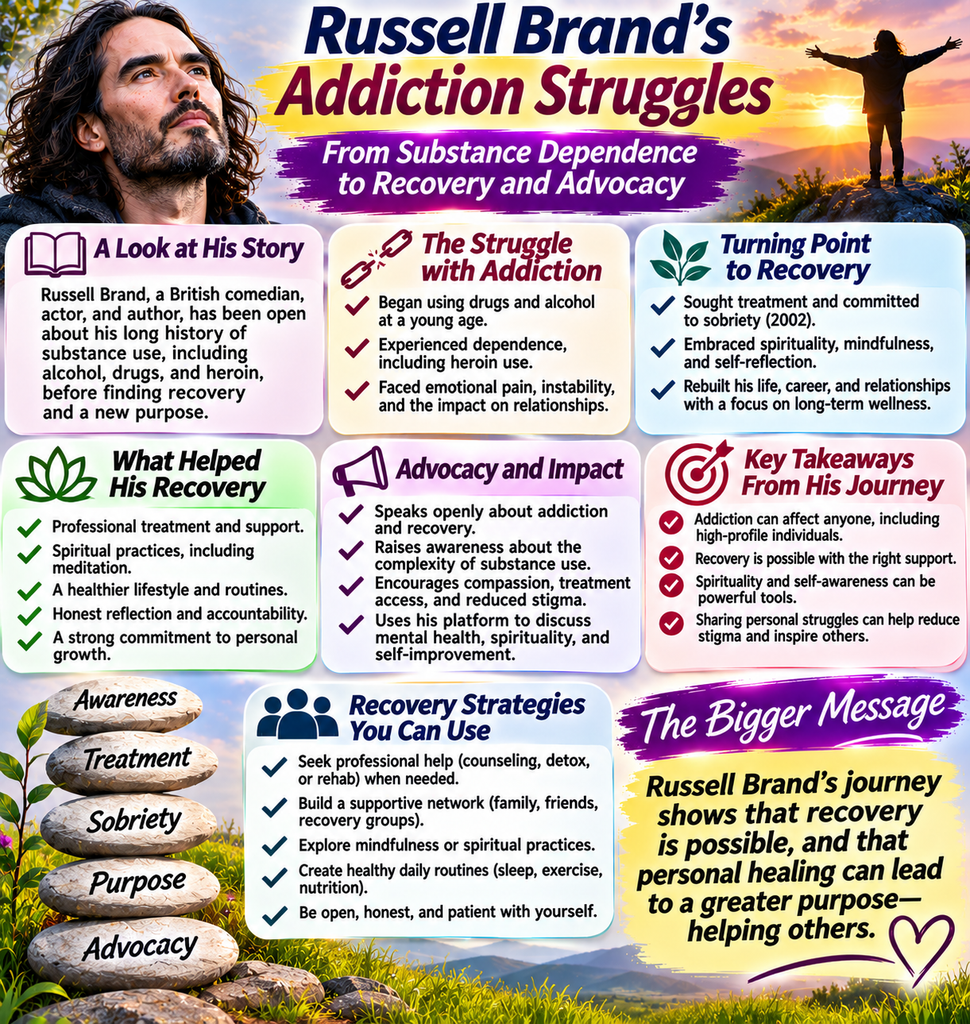
British comedian, actor, author, and media personality Russell Brand has publicly discussed his history of heroin addiction, alcohol misuse, and other compulsive behaviors. His experiences have become part of a broader public conversation about substance use disorders, emotional distress, recovery, and the importance of accessible addiction treatment.
Brand has described how substance use affected his health, relationships, and career before he entered recovery in 2002. He later became an advocate for abstinence-based recovery, mutual-help programs, and addressing the psychological and emotional factors that can contribute to addiction.
His books, including Recovery: Freedom from Our Addictions and My Booky Wook, explore his experiences with addiction, compulsive behavior, and personal transformation.
However, his recovery philosophy represents one individual’s experience. Effective addiction treatment varies, and medical care, behavioral therapy, medications, and harm-reduction services remain essential options.
Russell Brand’s journey offers an opportunity to examine how self-management, family relationships, and community support can contribute to long-term recovery.
Russell Brand’s Early Life and Addiction Challenges
Russell Brand was born on June 4, 1975, in Grays, Essex, England. His early life included family disruption, emotional difficulties, and experiences that he later connected to his struggles with substance use.
Brand has publicly discussed using drugs and alcohol during his youth and early adulthood. His substance use eventually included heroin, a highly addictive opioid associated with dependence, withdrawal, overdose, and other serious medical complications.
His addiction affected multiple areas of his life, including professional responsibilities and personal relationships.
Factors That Can Contribute to Addiction
Although no single factor fully explains an individual’s substance use disorder, several influences can increase vulnerability:
- Childhood adversity: Family instability, neglect, or traumatic experiences may increase the risk of later substance use problems.
- Emotional distress: Anxiety, depression, loneliness, and difficulty managing emotions may contribute to substance use.
- Genetic vulnerability: Inherited factors influence susceptibility to substance use disorders.
- Environmental influences: Social networks, drug availability, and stressful environments can affect substance use patterns.
- Changes in brain function: Repeated substance exposure can alter reward processing, motivation, stress responses, and self-control.
Understanding these factors helps explain why addiction is more complex than a lack of willpower.
The Turning Point: Seeking Help and Beginning Recovery
Brand has identified December 13, 2002, as the beginning of his sobriety.
He has described receiving encouragement from people close to him and entering a structured rehabilitation program.
His recovery involved participation in mutual-help programs, personal reflection, and changes in daily behavior.
Several important recovery principles emerge from his account:
- Recognizing when substance use has become harmful.
- Accepting assistance from trusted individuals.
- Seeking structured addiction treatment.
- Developing accountability through supportive relationships.
- Changing environments and routines associated with substance use.
- Maintaining ongoing recovery activities after initial treatment.
For people dependent on alcohol or sedatives, medically supervised withdrawal may be necessary because abrupt cessation can cause dangerous complications. For opioid use disorder, medications such as buprenorphine and methadone are evidence-based treatments that reduce overdose mortality.
Recovery should be individualized according to clinical needs, personal goals, and available support.
Self-Management Strategies: Building a Foundation for Sobriety
Self-management involves recognizing triggers, regulating emotions, developing healthy routines, and actively participating in recovery.
Brand has frequently discussed the importance of daily recovery practices, self-awareness, and personal accountability.
Recognizing Addiction Triggers
Triggers are situations, emotions, environments, or memories associated with substance use.
Common examples include:
- Stress, anxiety, or emotional exhaustion.
- Loneliness and social isolation.
- Conflict in personal relationships.
- Exposure to substances or people associated with previous use.
- Celebrations or social situations involving alcohol or drugs.
- Feelings of shame, disappointment, or inadequacy.
Identifying triggers helps individuals develop strategies to manage cravings before they intensify.
Establishing Healthy Daily Routines
Structured routines can reduce uncertainty and provide stability during recovery.
Helpful practices include:
- Maintaining consistent sleep and wake times.
- Participating in regular physical activity.
- Eating balanced meals and staying hydrated.
- Attending scheduled counseling or recovery meetings.
- Practicing meditation, mindfulness, or relaxation techniques.
- Setting achievable personal and professional goals.
- Making time for enjoyable substance-free activities.
Brand has described meditation and spiritual practices as important aspects of his recovery philosophy.
Although these practices may support emotional regulation, they should complement—not replace—evidence-based addiction treatment.
Developing Strategies for Managing Cravings
Cravings are common during recovery and do not necessarily indicate treatment failure.
Practical techniques include:
- Urge surfing: Observing cravings without immediately acting on them.
- Delay techniques: Waiting before responding to an urge while using a coping strategy.
- Distraction: Engaging in exercise, creative activities, or supportive conversations.
- Cognitive restructuring: Identifying and challenging thoughts that encourage substance use.
- Recovery planning: Keeping a written plan for managing high-risk situations.
For individuals with opioid use disorder, medication treatment can substantially reduce cravings and overdose risk.
Practicing Self-Compassion
People experiencing addiction often struggle with shame and negative self-perceptions.
Self-compassion involves recognizing mistakes without allowing them to define one’s identity.
Recovery is strengthened when individuals focus on learning, accountability, and constructive behavior rather than punishment or humiliation.
Family Support Strategies: Strengthening Relationships During Recovery
Addiction can significantly affect family relationships through broken trust, emotional distress, financial instability, and unpredictable behavior.
Brand has acknowledged the importance of supportive relationships in his recovery. During his 20th sobriety anniversary in 2022, he publicly thanked the people who had helped him remain abstinent and emphasized that recovery requires ongoing support. The Independent
Encouraging Recovery Without Judgment
Families can encourage treatment while maintaining realistic expectations.
Helpful strategies include:
- Listening without immediately criticizing or assigning blame.
- Encouraging professional assessment and treatment.
- Offering practical assistance with appointments or transportation.
- Learning about addiction and relapse prevention.
- Recognizing progress while maintaining accountability.
- Avoiding language that increases shame or discourages help-seeking.
Establishing Healthy Boundaries
Families should understand that compassion does not require accepting harmful or abusive behavior.
Healthy boundaries may include:
- Refusing to provide money that could support substance use.
- Establishing expectations regarding honesty and safety.
- Protecting children from dangerous situations.
- Encouraging personal responsibility.
- Seeking counseling for family members.
- Ending unsafe interactions when necessary.
Recovery from substance use does not excuse abusive conduct. Personal accountability, respect for others, and appropriate consequences remain essential.
Rebuilding Trust
Trust often requires sustained behavioral change, not promises alone.
Families can support healthier relationships through honest communication, consistent actions, and realistic expectations.
Family therapy may help address communication problems, unresolved conflicts, and patterns of enabling or codependency.
Community Support Strategies: Recovery Through Connection
Community support has played an important role in Brand’s public account of recovery.
He has frequently discussed the benefits of 12-step programs, peer relationships, and shared experiences among individuals recovering from addiction.
In a 2018 interview with the Los Angeles Times, Brand described meditation, exercise, and recovery fellowship as central components of his approach. Los Angeles Times
Participating in Peer Recovery Groups
Peer support groups can reduce isolation and encourage accountability.
Options include:
- Alcoholics Anonymous (AA): Peer support for people seeking recovery from alcohol problems.
- Narcotics Anonymous (NA): A 12-step fellowship for individuals recovering from drug addiction.
- SMART Recovery: Evidence-informed tools for managing addictive behaviors.
- Recovery Dharma: Peer support incorporating Buddhist-inspired mindfulness practices.
- LifeRing Secular Recovery: Abstinence-oriented support without a required spiritual framework.
Individuals should choose programs that align with their needs, preferences, and treatment goals.
Expanding Access to Professional Treatment
Communities can strengthen recovery outcomes by improving access to:
- Addiction medicine specialists.
- Medication treatment for opioid and alcohol use disorders.
- Outpatient and residential rehabilitation.
- Trauma-informed psychotherapy.
- Peer recovery coaching.
- Employment and housing assistance.
- Overdose prevention education and naloxone distribution.
Treatment should be accessible regardless of income, insurance coverage, or social circumstances.
Reducing Addiction Stigma
Public figures who discuss their addiction histories may encourage conversations about treatment and recovery.
However, recovery advocacy should remain grounded in scientific evidence rather than celebrity influence alone.
Communities can reduce stigma by using respectful language, promoting evidence-based care, and recognizing that substance use disorders are treatable health conditions.
Russell Brand’s Addiction Advocacy and Recovery Philosophy
Brand has used books, interviews, documentaries, and public appearances to discuss addiction treatment.
His 2012 documentary Russell Brand: From Addiction to Recovery examined substance dependence, rehabilitation, and his preference for abstinence-based programs.
He also discussed addiction policy before a British parliamentary committee, describing emotional distress and disconnection as important factors in his own substance use. Minutes of Evidence: HC 184-II
His Contributions to Addiction Awareness
Brand’s public discussions have emphasized:
- Addressing psychological and emotional distress associated with addiction.
- Participating in structured recovery programs.
- Maintaining supportive relationships.
- Practicing mindfulness and personal reflection.
- Encouraging people to seek help.
- Recognizing recovery as an ongoing process.
Important Limitations of His Approach
Brand has criticized opioid substitution treatments such as methadone in favor of abstinence-based recovery. The Guardian
However, medical evidence supports methadone and buprenorphine as highly effective treatments for opioid use disorder.
These medications can reduce overdose deaths, improve treatment retention, and support long-term recovery.
Medication-assisted recovery is legitimate recovery. Individuals should not discontinue prescribed medications because a public figure favors abstinence.
Recovery, Personal Accountability, and Public Controversy
A complete discussion of Russell Brand’s journey must also acknowledge that recovery from addiction and ethical conduct are separate issues.
In November 2026, Brand was convicted in a UK court of rape and sexual assault offenses, while being acquitted of other charges. The Guardian
His history of substance use and recovery does not explain away, justify, or diminish the seriousness of sexual violence.
This distinction is important for addiction education:
- Sobriety does not automatically establish that someone is trustworthy or safe.
- Recovery requires more than abstinence when harmful behaviors persist.
- Survivors of abuse deserve safety, dignity, and appropriate support.
- Individuals remain responsible for their conduct regardless of addiction history.
- Addiction treatment and accountability for violence should be addressed separately.
Brand’s documented substance recovery can be discussed without portraying his broader personal history as an uncomplicated example of successful transformation.
Lessons From Russell Brand’s Addiction Journey
Several practical lessons can be drawn from his experiences while recognizing the limitations of celebrity recovery narratives.
Recovery often requires professional intervention. Brand’s entry into rehabilitation demonstrates the importance of recognizing when substance use has become unmanageable.
Supportive relationships matter. Friends, family members, healthcare professionals, and peers can help individuals remain engaged in recovery.
Emotional health deserves attention. Addressing trauma, depression, anxiety, and unhealthy coping patterns may improve treatment outcomes.
There is no single recovery pathway. Abstinence-based programs help some individuals, while medications, behavioral therapies, and harm-reduction services are essential for others.
Recovery and accountability must coexist. Progress in overcoming substance dependence does not eliminate responsibility for harmful actions.
Conclusion: Understanding Addiction, Recovery, and Responsibility
Russell Brand’s publicly documented experiences with heroin addiction, alcohol misuse, rehabilitation, and long-term sobriety illustrate how substance dependence can affect a person’s health, relationships, and professional life.
His recovery account emphasizes self-awareness, structured treatment, supportive relationships, and ongoing personal development.
At the same time, his controversial treatment views and criminal convictions demonstrate why addiction education should distinguish personal recovery narratives from medical evidence and broader questions of accountability.
For individuals and families affected by addiction, the central lesson is that recovery requires an individualized approach that may combine medical treatment, psychological care, healthy boundaries, and community support.
Recovery is possible, evidence-based treatment saves lives, and lasting personal change requires both support and accountability.
Frequently Asked Questions and Answers
Understanding Russell Brand’s Addiction History
1. Who is Russell Brand, and why is his addiction journey widely discussed?
Russell Brand is a British comedian, actor, author, and media personality who has publicly discussed his history of drug and alcohol addiction.
His experiences with substance dependence and rehabilitation have been documented through interviews, books, and documentaries. His public discussions have contributed to conversations about addiction treatment, recovery, emotional distress, and substance use stigma.
2. What substances was Russell Brand addicted to?
Brand has publicly described struggling with heroin addiction, alcohol misuse, and the use of other recreational drugs.
Heroin is a highly addictive opioid that can cause physical dependence, intense cravings, withdrawal symptoms, respiratory depression, and fatal overdose.
Substance use disorders are treatable medical conditions that require individualized care.
3. What factors contributed to Russell Brand’s addiction struggles?
Brand has associated his substance use with emotional distress, difficult childhood experiences, and attempts to escape uncomfortable feelings.
More generally, factors that may contribute to addiction include:
- Childhood adversity and trauma.
- Depression, anxiety, and emotional distress.
- Genetic vulnerability.
- Social and environmental influences.
- Difficulty developing healthy coping mechanisms.
- Changes in brain reward and stress-response systems.
Addiction typically develops through multiple interacting factors rather than a single cause.
4. When did Russell Brand begin his recovery journey?
Brand entered rehabilitation in December 2002 at age 27. He identifies December 13, 2002, as the beginning of his sobriety.
His treatment involved an abstinence-based rehabilitation program and participation in a 12-step recovery fellowship. Subsaga+1
5. What motivated Russell Brand to seek addiction treatment?
Brand has described reaching a point where substance use was seriously affecting his personal and professional life.
The intervention of Chip Somers, an addiction recovery professional associated with Focus12, helped encourage him to enter treatment.
His experiences illustrate how compassionate intervention and access to professional services can help individuals recognize the need for change.
6. How did addiction affect Russell Brand’s career and relationships?
Brand has described losing professional opportunities and damaging personal relationships during his years of substance use. Los Angeles Times
Addiction can affect multiple areas of functioning, including employment, financial stability, physical health, emotional regulation, and relationships.
Recovery may require addressing these consequences alongside substance use itself.
7. Did Russell Brand attend rehabilitation?
Yes. Brand received treatment through Focus12, a British addiction rehabilitation organization.
His treatment included structured recovery activities, abstinence-based practices, and continued peer support.
Although rehabilitation can provide an important foundation, long-term recovery often requires ongoing treatment and lifestyle changes.
8. Has Russell Brand written books about addiction recovery?
Yes. His books include:
- Recovery: Freedom from Our Addictions (2017): Explores his interpretation of the 12-step recovery process.
- My Booky Wook (2007): An autobiography discussing his early life, career, substance use, and personal struggles.
These books provide personal perspectives on addiction rather than individualized medical treatment recommendations.
Self-Management and Addiction Recovery Strategies
9. What self-management strategies has Russell Brand discussed?
Brand has publicly emphasized structured recovery practices, meditation, physical activity, personal reflection, spirituality, and peer support.
Individuals recovering from addiction may benefit from:
- Recognizing personal triggers.
- Maintaining regular sleep and exercise routines.
- Practicing emotional regulation.
- Attending recovery meetings.
- Seeking professional counseling.
- Developing meaningful personal goals.
- Maintaining accountability with trusted support people.
These practices should complement appropriate medical and psychological treatment.
10. How can mindfulness help individuals recover from addiction?
Mindfulness involves developing awareness of thoughts, emotions, cravings, and physical sensations without immediately reacting.
Potential benefits include improved emotional regulation, reduced stress, and greater awareness of triggers for substance use.
Mindfulness techniques may include meditation, breathing exercises, grounding practices, and urge surfing.
However, mindfulness alone is not sufficient treatment for many substance use disorders.
11. How can someone identify addiction triggers?
Identifying triggers involves examining situations and emotional experiences associated with substance use.
Common triggers include:
- Loneliness and social isolation.
- Anxiety, depression, and stress.
- Relationship conflict.
- Financial difficulties.
- Exposure to drugs or alcohol.
- Unresolved trauma.
- Feelings of rejection or inadequacy.
Keeping a recovery journal can help individuals recognize patterns and develop healthier responses.
12. How can individuals manage cravings during addiction recovery?
Cravings are common during recovery and may occur even after extended periods of abstinence.
Helpful approaches include:
- Urge surfing: Observing cravings without immediately acting on them.
- Delay techniques: Allowing cravings time to decrease while practicing coping skills.
- Distraction: Engaging in exercise, hobbies, or meaningful activities.
- Cognitive restructuring: Challenging thoughts that encourage substance use.
- Peer support: Contacting a counselor, sponsor, or trusted friend.
- Medication treatment: Using evidence-based medications when clinically indicated.
Persistent cravings should be discussed with an addiction treatment professional.
13. What role does spirituality play in Russell Brand’s recovery?
Brand has described spiritual development as an important component of his personal recovery philosophy.
Spirituality may provide some individuals with a sense of purpose, hope, belonging, and emotional connection.
However, recovery does not require religious or spiritual beliefs. Secular recovery programs, behavioral therapies, and medication-based treatment can also support meaningful recovery.
14. How can exercise and healthy routines support addiction recovery?
Regular physical activity and structured daily routines may improve mood, sleep, stress management, and overall physical health.
Helpful practices include:
- Maintaining consistent sleep schedules.
- Eating balanced meals.
- Participating in regular physical activity.
- Scheduling counseling and recovery meetings.
- Developing enjoyable substance-free activities.
- Establishing achievable daily goals.
Healthy routines can provide stability while individuals develop new coping mechanisms.
15. Can self-forgiveness help someone overcome addiction?
Self-forgiveness may help individuals reduce shame and remain engaged in recovery.
It involves acknowledging previous harmful behaviors, accepting responsibility, and focusing on constructive change.
Forgiveness does not mean ignoring consequences or expecting others to immediately restore trust.
Self-compassion and personal accountability can coexist.
Addiction Treatment and Recovery Philosophy
16. What is the 12-step recovery program Russell Brand promotes?
The 12-step approach is a recovery framework originally developed by Alcoholics Anonymous.
It emphasizes recognizing problematic behavior, accepting support, personal reflection, accountability, repairing harm when appropriate, and helping others.
Brand adapted elements of this approach in his 2017 recovery book.
Although 12-step programs benefit many individuals, they are not the only effective recovery pathway.
17. Does Russell Brand support abstinence-based recovery?
Yes. Brand has historically advocated for abstinence-based recovery, including during his 2012 testimony before the British Parliament.
His personal philosophy emphasizes avoiding intoxicating substances while developing psychological, social, and spiritual support systems.
He has also expressed opposition to opioid maintenance treatments such as methadone. HC1774-iv+1
However, his personal treatment preferences should not override established medical evidence.
18. Is abstinence the only effective treatment for opioid addiction?
No. Evidence-based medication treatment is an essential component of opioid use disorder care.
FDA-approved medications include:
| Medication | Therapeutic purpose |
|---|---|
| Buprenorphine | Reduces opioid cravings and withdrawal symptoms through partial opioid receptor activation. |
| Methadone | Reduces cravings and withdrawal through controlled opioid receptor activation. |
| Naltrexone | Blocks opioid receptor effects and requires an appropriate opioid-free interval before initiation. |
The CDC recommends medication treatment for opioid use disorder because it reduces overdose risk and overall mortality. Detoxification alone is not recommended as treatment for opioid use disorder. CDC+1
Medication-supported recovery is legitimate recovery.
19. What types of psychotherapy can help individuals struggling with addiction?
Several therapeutic approaches may support addiction recovery:
- Cognitive behavioral therapy (CBT): Identifies and modifies unhelpful thoughts and behaviors.
- Dialectical behavior therapy (DBT): Develops emotional regulation and distress tolerance skills.
- Motivational interviewing: Strengthens motivation for behavioral change.
- Contingency management: Uses structured incentives to reinforce treatment-related behaviors.
- Trauma-focused psychotherapy: Addresses underlying trauma-related symptoms when clinically appropriate.
- Family therapy: Improves communication and relationship functioning.
Treatment should be individualized based on clinical needs and co-occurring mental health conditions.
20. Does experiencing a relapse mean addiction treatment has failed?
No. Returning to substance use may indicate that a treatment plan needs reassessment.
Potential contributing factors include untreated psychiatric symptoms, environmental triggers, social isolation, medication interruptions, and inadequate coping strategies.
Individuals who experience relapse should reconnect with treatment promptly.
Reduced opioid tolerance following abstinence can significantly increase overdose risk.
Family Support and Healthy Relationships
21. How can families support someone struggling with addiction?
Families can encourage recovery through compassionate communication, practical assistance, and healthy boundaries.
Helpful strategies include:
- Listening without judgment.
- Encouraging professional treatment.
- Learning about substance use disorders.
- Offering assistance with transportation and appointments.
- Supporting prescribed medications.
- Recognizing progress while maintaining realistic expectations.
- Participating in family counseling.
Family members should also prioritize their own emotional and physical well-being.
22. How can families encourage recovery without enabling harmful behavior?
Families can demonstrate compassion without providing resources that facilitate harmful substance use.
Healthy boundaries may include:
- Refusing to finance substance use.
- Protecting children from unsafe situations.
- Establishing expectations for respectful communication.
- Encouraging personal responsibility.
- Avoiding attempts to conceal harmful behavior.
- Seeking professional guidance when safety concerns arise.
Supporting recovery does not require sacrificing personal safety, financial stability, or emotional health.
23. How can someone rebuild trust after addiction damages relationships?
Rebuilding trust often requires consistent behavioral change over time.
Individuals can demonstrate accountability by communicating honestly, attending treatment, respecting boundaries, fulfilling responsibilities, and addressing previous harm when appropriate.
Family members may need time and professional support to process their experiences.
Forgiveness should never be demanded, and reconciliation is not always appropriate or safe.
24. Can family counseling improve addiction recovery outcomes?
Family counseling can help address communication difficulties, resentment, disrupted trust, and emotional distress.
Potential benefits include:
- Improving understanding of addiction.
- Developing healthier boundaries.
- Reducing blame and conflict.
- Strengthening communication skills.
- Establishing realistic recovery expectations.
- Supporting family members’ emotional well-being.
When abuse or coercive control is present, individual counseling and specialized safety services may be more appropriate than joint counseling.
Community Support and Addiction Advocacy
25. How has Russell Brand contributed to addiction awareness?
Brand has discussed addiction through books, interviews, documentaries, and public testimony.
His 2012 documentary, Russell Brand: From Addiction to Recovery, explored his substance use history and treatment philosophy.
He has also advocated for greater recognition of addiction as a health issue and improved access to rehabilitation services.
His advocacy should be evaluated separately from the scientific evidence supporting different treatment approaches.
26. What community resources can help individuals recovering from addiction?
Communities can strengthen recovery opportunities by providing:
- Affordable addiction treatment.
- Medication treatment for substance use disorders.
- Mental health counseling.
- Peer recovery coaching.
- Recovery housing.
- Employment assistance.
- Transportation services.
- Naloxone distribution.
- Overdose prevention education.
Comprehensive community services can reduce barriers that interfere with long-term recovery.
27. What peer support groups are available for addiction recovery?
Several organizations provide recovery support:
- Alcoholics Anonymous (AA): A 12-step fellowship for alcohol recovery.
- Narcotics Anonymous (NA): Peer support for recovery from drug addiction.
- SMART Recovery: Skills-based tools for managing addictive behaviors.
- Recovery Dharma: Mindfulness-oriented recovery support.
- LifeRing Secular Recovery: A secular, abstinence-oriented recovery community.
- Celebrate Recovery: A Christian faith-based recovery program.
Individuals should select programs that align with their personal beliefs, clinical needs, and recovery goals.
28. How can communities reduce addiction stigma?
Addiction stigma can discourage people from discussing substance use problems or accessing professional treatment.
Communities can reduce stigma by using person-first language, promoting public education, improving access to treatment, and supporting people returning to employment and education.
Recognizing substance use disorders as treatable medical conditions can encourage more compassionate and effective responses.
Recovery, Personal Accountability, and Long-Term Healing
29. Does addiction recovery automatically resolve harmful personal behavior?
No. Recovery from substance use does not automatically resolve abusive behavior, unhealthy relationship patterns, or other harmful conduct.
Sobriety and ethical accountability are separate issues.
Important principles include:
- Addiction does not excuse abuse or violence.
- Individuals remain responsible for their actions.
- Survivors of harmful behavior deserve safety and support.
- Behavioral change may require additional specialized treatment.
- Public recovery advocacy does not establish personal trustworthiness.
Russell Brand’s addiction history should be examined without automatically presenting every aspect of his personal life as a model for recovery.
30. What is the most important lesson from Russell Brand’s addiction struggles?
Brand’s documented recovery experiences illustrate that individuals can seek treatment and develop healthier routines after years of substance dependence.
Key lessons include recognizing emotional triggers, accepting professional help, building supportive relationships, maintaining healthy habits, and staying accountable for personal behavior.
However, no celebrity’s recovery experience should be treated as a universal model.
Effective recovery is individualized, evidence-based, and supported by compassion, accountability, and continued access to care.
Addiction and Mental Health Resources
| Organization | Services |
|---|---|
| SAMHSA National Helpline | 1-800-662-HELP (4357) — confidential treatment referrals |
| 988 Suicide & Crisis Lifeline | Call or text 988 for crisis support |
| SMART Recovery | Recovery meetings and self-management tools |
| Alcoholics Anonymous | Peer support for alcohol recovery |
| Narcotics Anonymous | Peer support for drug addiction recovery |
| FindTreatment.gov | Addiction treatment facility locator |
| Al-Anon | Support for families affected by alcohol use |
Video: