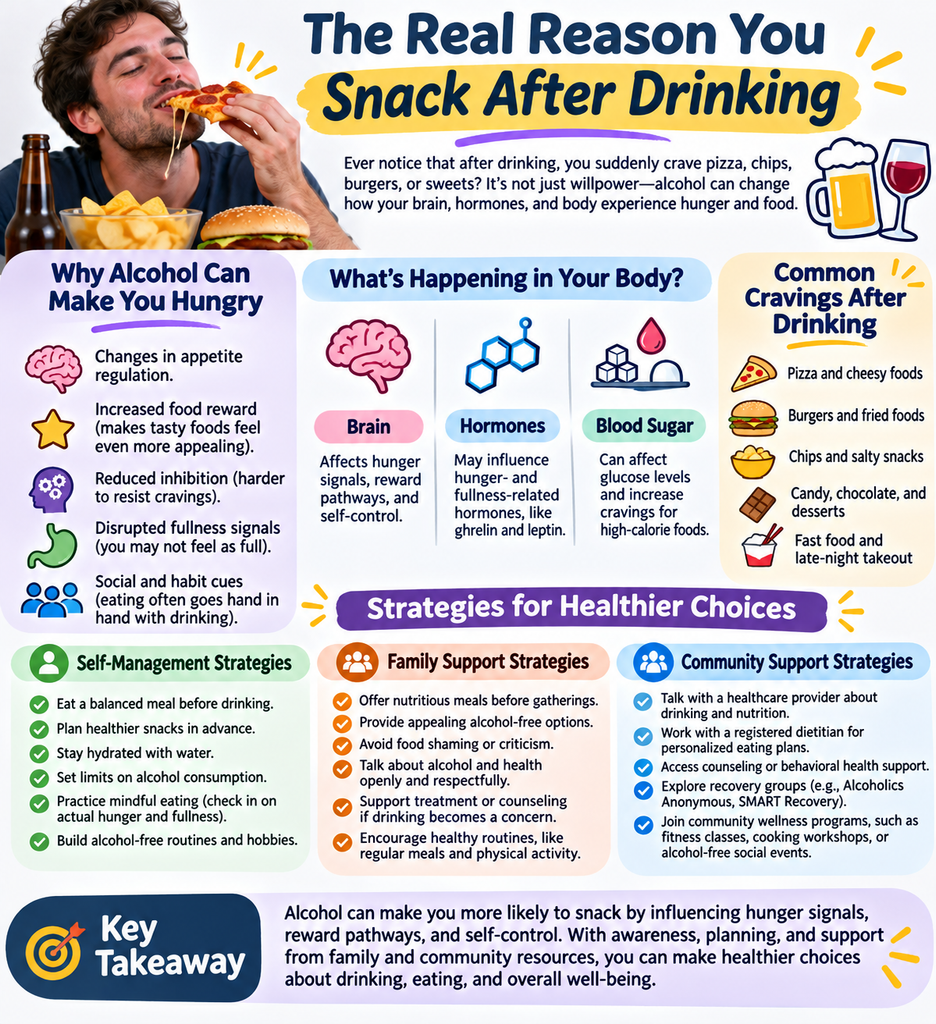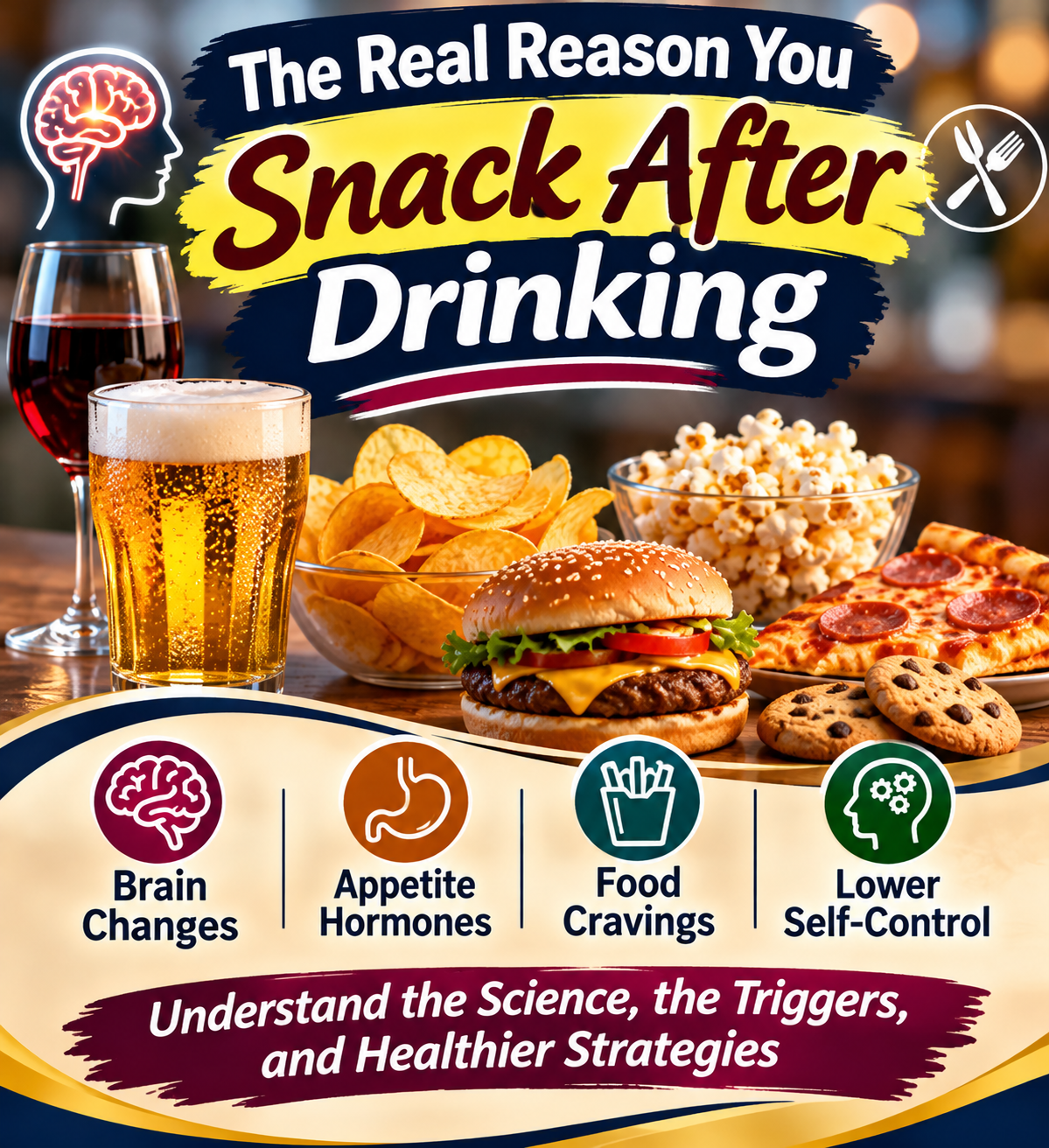
Have you ever noticed that after drinking alcohol, you suddenly crave pizza, chips, burgers, sweets, or other high-calorie foods? Even after eating a full meal, alcohol can make certain foods seem especially appealing. This common experience is sometimes called the “drunk munchies.”
But why does drinking alcohol make people want to snack?
The answer involves several biological and psychological processes, including changes in brain activity, appetite regulation, reward signaling, and decision-making. Alcohol can influence the brain’s response to food while reducing the ability to recognize or respond to normal fullness cues.
For individuals struggling with alcohol misuse or working toward recovery, understanding these changes can help them recognize unhealthy patterns and develop better strategies for managing cravings.
By exploring the relationship between alcohol and appetite through self-management, family support, and community resources, individuals can make more informed choices about drinking, nutrition, and long-term wellness.
Why Does Alcohol Make You Hungry?
Alcohol can influence hunger through several interacting mechanisms.
The brain regulates appetite using signals from the digestive system, hormones, and neural circuits involved in hunger, reward, and decision-making.
Alcohol can interfere with these processes, sometimes increasing the desire to eat even when the body has consumed sufficient calories.
Common reasons for increased snacking after drinking
- Changes in appetite regulation: Alcohol may influence brain pathways involved in hunger and food-seeking behavior.
- Increased food reward: Alcohol can make highly palatable foods seem more appealing.
- Reduced inhibition: Drinking can impair judgment and make it harder to resist tempting foods.
- Disrupted fullness signals: Alcohol may interfere with normal responses to hunger and satiety.
- Social influences: Drinking often occurs in environments where snacks and high-calorie foods are readily available.
- Habit formation: Repeatedly pairing alcohol with certain foods can create learned associations and cravings.
These effects vary depending on alcohol intake, individual physiology, food availability, and whether someone has eaten before drinking.
How Alcohol Affects the Brain’s Hunger Signals
The hypothalamus plays an important role in regulating appetite, energy balance, and food intake.
Research involving animals suggests that alcohol can activate certain hunger-related neurons, including agouti-related peptide (AgRP) neurons, which normally help stimulate feeding.
However, findings from animal studies do not establish that this mechanism fully explains alcohol-related hunger in humans.
Alcohol also affects brain systems involved in reward processing and impulse control.
Brain-related effects that may increase snacking
- Appetite signaling: Alcohol may alter neural activity associated with hunger.
- Reward sensitivity: Foods rich in fat, sugar, or salt may become especially appealing.
- Impaired executive function: Reduced inhibitory control can make impulsive food choices more likely.
- Learned associations: Familiar combinations, such as beer and pizza, may trigger automatic eating habits.
- Altered food-related attention: Drinking may increase attention to appealing foods in certain environments.
Together, these mechanisms help explain why individuals sometimes consume more food after drinking than they originally intended.
Does Alcohol Affect Hunger Hormones?
Several hormones help regulate appetite and fullness, including ghrelin, leptin, and insulin.
Alcohol may influence these hormones, but the effects are complex and depend on factors such as drinking patterns, metabolic health, and nutritional status.
Hormones involved in appetite regulation
- Ghrelin: Often called the hunger hormone, ghrelin helps stimulate appetite. Alcohol’s effects on ghrelin vary across studies and populations.
- Leptin: Helps communicate information about energy stores and satiety. Chronic heavy drinking may disrupt normal metabolic regulation.
- Insulin: Regulates blood glucose. Alcohol can affect glucose metabolism, particularly when consumed without adequate food.
- GLP-1: Helps regulate appetite, digestion, and satiety. Researchers are also investigating its relationship with alcohol reward and consumption.
Although these hormones contribute to appetite regulation, alcohol-related snacking cannot be explained by a single hormonal change.
Why Do People Crave Junk Food After Drinking?
Alcohol-related snacking often involves foods that are high in fat, refined carbohydrates, salt, or sugar.
These foods may become particularly appealing because alcohol can affect reward processing and weaken self-control.
Common alcohol-related food cravings
- Pizza and other cheesy foods.
- Burgers and fried foods.
- Potato chips and salty snacks.
- Candy, chocolate, and desserts.
- Fast food and late-night takeout.
- Sugary beverages and sweet snacks.
Why these foods are appealing
Highly palatable foods activate reward-related pathways in the brain.
Alcohol can also reduce inhibitory control, making immediate rewards more influential in food decisions.
Additionally, social settings and learned habits may contribute to cravings. Someone who regularly eats pizza after drinking may begin associating alcohol with that specific food.
These associations can persist even when physical hunger is minimal.
Does Drinking Alcohol Cause Weight Gain?
Alcohol can contribute to weight gain, but the relationship depends on overall dietary patterns, drinking frequency, activity levels, and individual metabolism.
Alcohol contains approximately seven calories per gram, compared with four calories per gram for carbohydrates and protein.
Alcoholic beverages may also contain additional calories from mixers, sugar, and other ingredients.
Ways alcohol may contribute to excess calorie intake
- Alcohol itself provides calories.
- Mixed drinks may contain added sugar.
- Drinking may increase food intake in some situations.
- Reduced inhibition may encourage larger portions.
- Alcohol can disrupt sleep, which may influence appetite regulation.
- Frequent heavy drinking may interfere with healthy routines.
However, not everyone who drinks alcohol gains weight. The overall relationship between alcohol consumption and body weight is influenced by multiple factors.
Self-Management Strategies: How to Reduce Snacking After Drinking
Understanding alcohol’s effects on appetite can help individuals develop healthier eating and drinking habits.
Self-management involves recognizing triggers, preparing for social situations, and making deliberate decisions about alcohol consumption.
Practical self-management strategies
- Eat before drinking: A balanced meal containing protein, fiber, and healthy fats may reduce hunger and slow alcohol absorption.
- Plan food choices: Prepare satisfying snacks before social events rather than relying on impulsive late-night decisions.
- Stay hydrated: Drink water regularly, particularly when consuming alcohol.
- Monitor drinking patterns: Recognize whether increased snacking occurs after particular amounts or types of alcohol.
- Practice mindful eating: Pay attention to physical hunger, fullness, and emotional triggers.
- Avoid skipping meals: Restricting food before drinking may increase hunger and alcohol-related risks.
- Establish alcohol limits: Reducing alcohol consumption can help limit alcohol-related impairment and excess calorie intake.
- Develop alternative evening routines: Consider alcohol-free social activities, relaxation exercises, or hobbies.
Why planning ahead matters
Alcohol can impair judgment and make it harder to follow intentions established before drinking.
Preparing meals, snacks, and transportation arrangements in advance reduces the need to make decisions while intoxicated.
For individuals with alcohol use disorder, reducing or stopping drinking may require professional treatment rather than self-management alone.
Family Support Strategies: Encouraging Healthier Habits Without Judgment
Family members can influence drinking and eating behaviors through shared routines, social expectations, and emotional support.
However, criticism about weight, food choices, or alcohol consumption can increase shame and discourage open communication.
Supportive families can encourage healthier habits while respecting personal autonomy.
How families can provide support
- Encourage balanced meals: Offer nutritious foods before gatherings involving alcohol.
- Provide alcohol-free options: Make nonalcoholic beverages available without pressuring anyone to drink.
- Avoid food shaming: Don’t criticize someone for eating after drinking.
- Promote healthy routines: Encourage regular meals, physical activity, and adequate sleep.
- Discuss alcohol concerns respectfully: Focus on health and safety rather than appearance or weight.
- Recognize problematic drinking patterns: Encourage professional assessment when alcohol use causes harm.
- Support treatment participation: Help loved ones access counseling or addiction services when needed.
- Establish healthy boundaries: Avoid behaviors that facilitate dangerous drinking.
Supporting someone with alcohol use disorder
If a family member frequently drinks heavily and experiences loss of control, the priority should be addressing alcohol-related health risks rather than focusing exclusively on snacking.
Families can encourage professional evaluation, provide emotional support, and help create safer environments.
Community Support Strategies: Promoting Healthy Choices and Alcohol Awareness
Community resources can help individuals understand alcohol’s effects on nutrition, physical health, and behavior.
Public health programs, healthcare organizations, and recovery groups provide opportunities for education, screening, and treatment.
Community resources that can help
- Primary care clinics: Provide screening for unhealthy alcohol use and evaluation of nutritional or metabolic concerns.
- Registered dietitians: Help individuals develop balanced eating patterns without unnecessary restriction.
- Behavioral health professionals: Address emotional eating, stress, and problematic alcohol consumption.
- Alcohol treatment programs: Provide counseling, medication management, and recovery support.
- Peer support groups: Alcoholics Anonymous and SMART Recovery offer support for individuals seeking to change their drinking behaviors.
- Community wellness programs: Encourage healthy cooking, physical activity, and stress management.
- Public health education: Promotes awareness of alcohol-related health risks and healthier lifestyle choices.
The role of alcohol screening
Healthcare professionals can use validated screening tools, such as the AUDIT-C, to identify potentially unhealthy drinking patterns.
Individuals who screen positive may benefit from additional assessment, brief behavioral counseling, or specialized addiction treatment.
Early identification can help prevent alcohol-related complications.
When Does Alcohol-Related Snacking Become a Concern?
Occasional increased appetite after drinking does not necessarily indicate an eating disorder or alcohol use disorder.
However, certain patterns may suggest that professional evaluation would be beneficial.
Warning signs to recognize
- Frequently drinking more than intended.
- Experiencing difficulty controlling alcohol consumption.
- Regularly eating large amounts of food while intoxicated and feeling distressed afterward.
- Using alcohol or food to cope with persistent emotional distress.
- Experiencing memory blackouts or other dangerous drinking consequences.
- Developing significant sleep, digestive, or metabolic problems.
- Continuing to drink despite negative health or relationship consequences.
Individuals experiencing these concerns may benefit from evaluation by a healthcare professional.
It is important to avoid assuming that overeating after drinking automatically indicates addiction or an eating disorder.
The Connection Between Alcohol, Emotional Eating, and Addiction Recovery
Alcohol and food can both become associated with emotional coping.
Some individuals drink to manage stress, anxiety, loneliness, or difficult emotions. Others may turn to highly palatable foods for temporary comfort.
These behaviors can sometimes overlap, particularly when alcohol reduces self-control.
Strategies for healthier emotional coping
- Identify emotional triggers associated with drinking or overeating.
- Practice mindfulness and emotional awareness.
- Develop stress-management skills.
- Seek counseling for persistent emotional distress.
- Maintain regular meals and adequate nutrition.
- Build supportive relationships.
- Avoid rigid dieting or punitive responses after overeating.
- Seek specialized care when symptoms suggest an eating disorder.
For individuals in early addiction recovery, appetite and eating patterns may change as the body adjusts to reduced alcohol consumption.
Balanced nutrition and compassionate self-care can support recovery without creating unnecessary food-related anxiety.
Frequently Overlooked Facts About Alcohol and Hunger
Several misconceptions surround alcohol-related appetite changes.
Myth: Alcohol always makes everyone hungry.
Alcohol may increase food intake in some individuals and situations, but responses vary.
Myth: Alcohol-related cravings are caused only by low blood sugar.
Blood glucose changes may contribute in certain circumstances, but reward processing, reduced inhibition, habits, and social cues also play important roles.
Myth: Eating greasy food reverses intoxication.
Food may slow alcohol absorption when consumed before or during drinking, but eating afterward does not rapidly eliminate alcohol already absorbed into the bloodstream.
Myth: Drinking water prevents alcohol-related overeating.
Hydration supports general health but does not reliably prevent appetite changes or reverse alcohol-related impairment.
Myth: Snacking after drinking means someone has an addiction.
Alcohol-related snacking is common and does not independently establish alcohol use disorder.
Resources for Alcohol Awareness and Healthy Lifestyle Support
Individuals concerned about alcohol consumption or related health behaviors can access several national resources.
National Institute on Alcohol Abuse and Alcoholism: Learn about alcohol and health.
NIAAA Alcohol Treatment Navigator: Find evidence-based alcohol treatment.
SAMHSA National Helpline: 1-800-662-HELP (4357), providing confidential treatment referrals and information.
SMART Recovery: Explore recovery support meetings.
FindTreatment.gov: Locate addiction treatment services.
Conclusion: Understanding Why Alcohol Triggers Snacking
The desire to snack after drinking is not simply a matter of weak willpower. Alcohol can influence appetite regulation, reward processing, impulse control, and learned eating habits.
These changes may make highly palatable foods more appealing and increase the likelihood of eating beyond normal hunger levels.
Understanding the relationship between alcohol and appetite allows individuals to develop healthier strategies, including balanced nutrition, mindful eating, drinking less, and recognizing emotional triggers.
Families can encourage positive habits without shame or judgment, while community resources provide education, professional guidance, and addiction treatment when needed.
The most important lesson is that understanding how alcohol affects the brain and body empowers individuals to make informed decisions about their health.
Healthy choices begin with awareness, and lasting change is supported by knowledge, compassion, and practical strategies.
Frequently Asked Questions and Answers
Understanding Alcohol and Hunger
1. Why do people get hungry after drinking alcohol?
Alcohol can influence brain pathways involved in hunger, reward, and decision-making.
It may increase the appeal of certain foods while reducing the ability to resist cravings. Social settings, learned habits, and food availability also contribute to increased snacking.
However, not everyone experiences increased hunger after drinking.
2. What are the “drunk munchies”?
The term “drunk munchies” describes the desire to eat snacks or large amounts of food after consuming alcohol.
People may crave pizza, burgers, chips, sweets, or other highly palatable foods.
This experience may result from alcohol-related changes in appetite signaling, reduced inhibition, and learned associations between drinking and eating.
3. How does alcohol affect the brain’s hunger signals?
Alcohol influences brain regions involved in appetite regulation, including the hypothalamus.
Animal research suggests that alcohol can activate certain hunger-related neurons, such as agouti-related peptide (AgRP) neurons.
However, researchers are still investigating how these mechanisms contribute to increased food consumption in humans.
4. Why do people crave junk food after drinking?
Alcohol can increase the appeal of foods rich in fat, sugar, and salt.
It also impairs inhibitory control, making it more difficult to resist immediately rewarding food choices.
Environmental factors, including late-night restaurants, social gatherings, and established eating habits, can further influence cravings.
5. Does alcohol make food taste better?
Alcohol may change how individuals perceive food rewards and increase the appeal of certain flavors or foods.
However, its effects on taste perception are variable.
In many situations, increased eating may be related more to reward processing and reduced inhibition than to changes in taste itself.
Alcohol, Hormones, and Metabolism
6. Does alcohol increase the hunger hormone ghrelin?
Alcohol can influence ghrelin, a hormone involved in appetite regulation.
However, research findings vary depending on drinking patterns, nutritional status, and individual physiology.
Alcohol-related hunger cannot be explained solely by increased ghrelin levels.
7. Does alcohol affect leptin and fullness signals?
Leptin helps regulate energy balance and communicates information about the body’s energy stores.
Alcohol may affect leptin signaling and other metabolic processes, particularly with prolonged heavy consumption.
However, the relationship between alcohol and satiety is complex, and not all studies show consistent effects.
8. Can alcohol cause low blood sugar and increase hunger?
Yes, alcohol can contribute to low blood glucose, particularly when consumed without adequate food or in individuals using certain diabetes medications.
Alcohol interferes with the liver’s ability to produce glucose through gluconeogenesis.
However, low blood sugar is not the primary explanation for every episode of alcohol-related snacking.
Symptoms such as sweating, shaking, confusion, or weakness may indicate hypoglycemia and require prompt attention.
9. Does alcohol affect dopamine and food cravings?
Alcohol influences dopamine signaling in the brain’s reward pathways.
These pathways help regulate motivation, reinforcement, and responses to pleasurable experiences.
Alcohol-related changes in reward processing may increase the appeal of highly palatable foods, contributing to impulsive eating.
10. Does drinking alcohol slow metabolism?
The body prioritizes alcohol metabolism because ethanol cannot be stored in the same way as carbohydrates or fat.
During alcohol metabolism, fat oxidation may temporarily decrease.
However, this does not mean that alcohol permanently slows metabolism.
Long-term weight changes depend on overall energy intake, drinking patterns, activity levels, and individual metabolic factors.
Alcohol and Weight Management
11. Can snacking after drinking cause weight gain?
Yes. Alcohol provides approximately seven calories per gram, and additional food consumption can increase total calorie intake.
Frequent consumption of calorie-dense alcoholic beverages and late-night snacks may contribute to weight gain over time.
However, occasional snacking does not automatically cause significant weight gain.
12. Why do people eat more than usual when intoxicated?
Alcohol impairs executive functioning, including judgment, attention, and inhibitory control.
As a result, individuals may have more difficulty following planned eating habits or recognizing when they have eaten enough.
The effects depend on the amount of alcohol consumed and individual differences.
13. Does drinking on an empty stomach increase food cravings?
Drinking without eating generally leads to faster alcohol absorption and may increase intoxication.
It can also leave individuals physically hungry, making food more appealing.
Eating a balanced meal before drinking may help reduce hunger and slow alcohol absorption, although it does not eliminate alcohol-related risks.
14. Can alcohol-related snacking interfere with weight-loss goals?
Yes. Alcoholic beverages and additional snacks can increase daily calorie consumption.
Alcohol may also disrupt sleep, reduce motivation for physical activity, and make planned food choices more difficult.
Individuals pursuing weight-management goals may benefit from reducing alcohol consumption and developing consistent nutrition habits.
15. Does eating greasy food help someone sober up?
No. Eating greasy food after drinking does not rapidly eliminate alcohol from the bloodstream.
Food consumed before or during drinking can slow alcohol absorption, but once alcohol has entered the bloodstream, the liver must metabolize it.
Time is necessary for alcohol elimination. Coffee, cold showers, and greasy foods do not reverse intoxication.
Self-Management Strategies for Healthier Choices
16. How can someone prevent excessive snacking after drinking?
Helpful strategies include:
- Eating a balanced meal before consuming alcohol.
- Preparing satisfying snacks in advance.
- Limiting alcohol consumption.
- Drinking water regularly.
- Practicing mindful eating.
- Recognizing emotional and social triggers.
- Maintaining regular meals throughout the day.
- Choosing alcohol-free activities when appropriate.
These strategies may reduce impulsive eating but cannot guarantee that alcohol will not influence appetite.
17. What are healthier snacks to choose after drinking?
Hungry individuals may benefit from satisfying foods containing protein, fiber, and other nutrients.
Examples include Greek yogurt, fruit, whole-grain crackers, hummus, nuts, and sandwiches.
However, the goal should be balanced nutrition rather than restricting food or creating guilt about eating.
18. Can mindful eating reduce alcohol-related cravings?
Mindful eating involves paying attention to hunger, fullness, emotions, and eating habits.
It may help individuals recognize whether they are eating because of physical hunger, stress, social cues, or habit.
However, alcohol-related impairment can make mindful decision-making more difficult, particularly after heavy drinking.
19. Does drinking water reduce alcohol-related hunger?
Water supports hydration and may help individuals distinguish thirst from hunger in some situations.
However, drinking water does not reliably prevent alcohol-related cravings or reverse intoxication.
Hydration should complement balanced nutrition and safer drinking decisions.
20. Can reducing alcohol consumption improve eating habits?
Yes. Reducing alcohol consumption may help some individuals improve sleep, maintain consistent meal routines, and make more deliberate food choices.
It can also reduce alcohol-related calorie intake.
People with significant physical alcohol dependence should seek medical advice before abruptly stopping because withdrawal can be dangerous.
Family and Community Support Strategies
21. How can families encourage healthier eating and drinking habits?
Families can support healthier choices by offering balanced meals, providing alcohol-free beverages, and organizing activities that do not center on drinking.
They should avoid criticizing individuals about their weight or food consumption.
Compassionate communication and positive encouragement can help create a supportive environment.
22. What should families do if alcohol-related eating becomes a frequent problem?
Families should consider whether excessive drinking, emotional distress, or other health concerns are contributing to the behavior.
Rather than focusing exclusively on food consumption, they can encourage professional assessment and discuss alcohol-related risks respectfully.
If alcohol use disorder is suspected, evidence-based addiction treatment may be appropriate.
23. Can community programs help people manage alcohol-related eating behaviors?
Yes. Community resources may include primary care clinics, registered dietitians, behavioral health professionals, and addiction treatment programs.
These services can help individuals evaluate drinking patterns, address nutritional concerns, and develop healthier coping strategies.
24. When should someone seek professional help for drinking and overeating?
Professional evaluation may be beneficial when individuals experience:
- Difficulty controlling alcohol consumption.
- Frequent episodes of heavy drinking.
- Blackouts or dangerous intoxication.
- Repeated loss-of-control eating accompanied by distress.
- Persistent guilt or anxiety related to food.
- Significant changes in weight or physical health.
- Continued alcohol use despite negative consequences.
Healthcare professionals can assess whether alcohol use disorder, an eating disorder, or another medical condition may be present.
25. What is the most important lesson about alcohol and food cravings?
Alcohol-related snacking is influenced by biological, psychological, and environmental factors rather than simply a lack of willpower.
Understanding how alcohol affects appetite, reward processing, and decision-making can help individuals make more informed choices.
Awareness, balanced nutrition, reduced alcohol consumption, supportive relationships, and professional guidance when needed can promote healthier long-term habits.
Video: