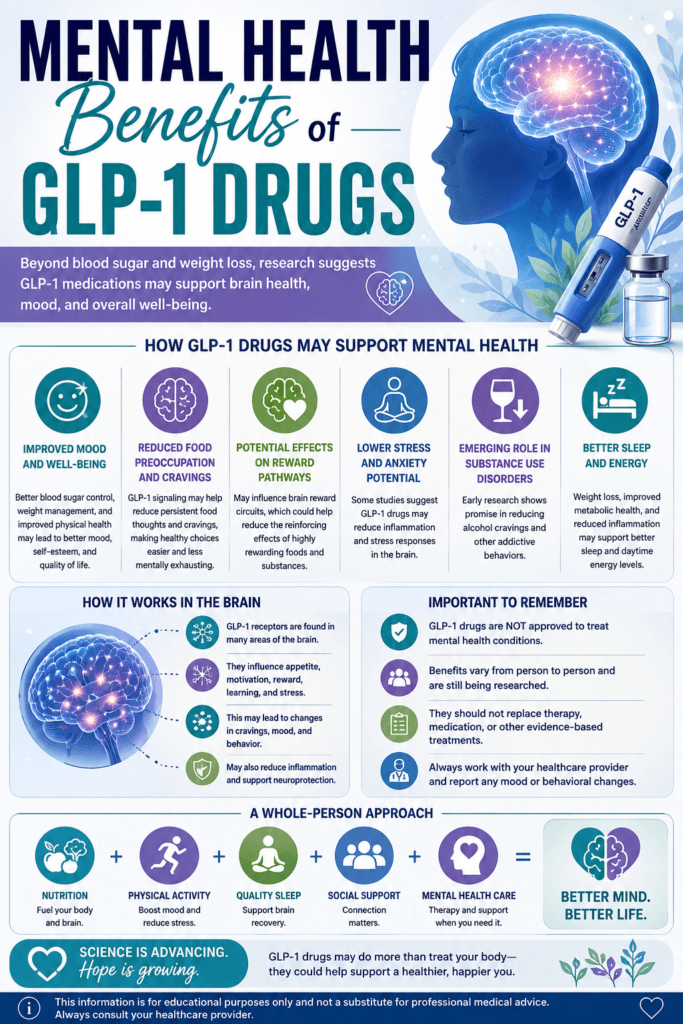
GLP-1 medications are widely used to treat type 2 diabetes and obesity, but researchers are increasingly examining whether their effects may extend to mental and behavioral health. Because GLP-1 receptors are found in brain regions involved in appetite, reward, motivation, and stress responses, scientists are investigating whether these medications could influence mood, cravings, emotional eating, and addictive behaviors. Improvements in weight-related health, mobility, sleep, and metabolic functioning may also indirectly contribute to better psychological well-being. Although early findings are encouraging in some areas, GLP-1 medications are not established treatments for most mental health conditions, and additional research is needed to understand their benefits, risks, and long-term effects.
Mental Health Benefits of GLP-1 Drugs
GLP-1 receptor agonists, such as semaglutide and tirzepatide—which also act on GIP receptors—are best known for treating type 2 diabetes and obesity. Researchers are increasingly interested in whether these medications may also influence mental health and addictive behaviors. However, GLP-1 drugs are not currently established treatments for depression, anxiety, or most psychiatric disorders, so potential mental health benefits should be discussed cautiously.
How GLP-1 Drugs May Affect the Brain
GLP-1 receptors are present not only in the gastrointestinal system but also in areas of the brain involved in appetite, reward, motivation, and stress responses. This has led researchers to investigate whether GLP-1 medications might influence behaviors beyond eating.
Potential effects being studied include:
- Reduced reward-driven behavior: GLP-1 signaling may modulate brain reward pathways, potentially reducing the reinforcing effects of food and certain addictive substances.
- Less food preoccupation: Some people report reduced cravings or persistent thoughts about food while taking these medications.
- Improved quality of life: Successful treatment of obesity or diabetes may improve mobility, sleep, physical functioning, confidence, and overall well-being, thereby indirectly supporting mental health.
- Possible effects on substance cravings: Researchers are studying GLP-1 medications for alcohol and other substance use disorders because of their potential effects on reward and craving.
- Potential neurobiological effects: Research is examining possible relationships between GLP-1 signaling, inflammation, brain function, and neuroprotection, although many of these applications remain experimental.
GLP-1 Drugs and Depression
The relationship between GLP-1 medications and depression is complicated. Improvements in physical health, metabolic control, mobility, and weight-related quality of life may improve mood for some individuals. Researchers are also investigating whether GLP-1 receptor signaling has more direct effects on mood-related brain pathways.
However, GLP-1 medications should not be considered substitutes for established depression treatments, such as psychotherapy or appropriately prescribed psychiatric medications.
GLP-1 Drugs and Addiction
One of the most interesting emerging areas involves addiction. GLP-1 medications may alter reward processing and reduce the motivation to seek highly rewarding substances or behaviors. Research has particularly examined alcohol consumption and craving, with early clinical findings generating interest in whether GLP-1-based treatments could eventually complement established addiction treatments.
This does not mean that someone with an alcohol or substance use disorder should begin a GLP-1 medication specifically for addiction without appropriate medical evaluation. More research is needed to determine which patients might benefit, appropriate dosing, long-term effectiveness, and how these medications compare with existing treatments.
Mental Health Risks Still Need Attention
Potential benefits should be balanced against possible difficulties. Gastrointestinal side effects, rapid changes in eating patterns or body weight, expectations surrounding weight loss, and pre-existing eating or body-image concerns can affect psychological well-being. Significant mood or behavioral changes during treatment should be discussed with the prescribing clinician.
A Whole-Person Approach
The most appropriate way to think about GLP-1 medications and mental health is as an emerging area of research rather than a new psychiatric cure. For individuals who appropriately receive these medications for diabetes or weight management, improvements in physical health may contribute to better psychological well-being. Their potential direct effects on reward, craving, addiction, mood, and brain health are scientifically promising but still being investigated.
Mental health care should therefore remain comprehensive, combining appropriate medical treatment with psychological support, healthy nutrition, physical activity, adequate sleep, social connection, and evidence-based treatment for any diagnosed mental health or substance use disorder.
Self-Management Strategies to Understand the Mental Health Benefits of GLP-1 Drugs
GLP-1 medications may affect more than appetite and blood sugar. Researchers are studying their possible influence on reward, cravings, mood, and other aspects of psychological well-being. Because many of these mental health effects are still being investigated, self-management should focus on monitoring personal changes while using the medication according to medical guidance.
Track Mood and Emotional Changes
Tracking emotional well-being can help determine whether changes occur during treatment.
- Record mood, anxiety, stress, motivation, and energy levels.
- Notice whether emotional well-being changes as physical health improves.
- Track significant or persistent changes in mood or behavior.
- Discuss concerning psychological changes with a healthcare professional.
Monitor Cravings and Reward-Seeking Behaviors
GLP-1 medications affect brain pathways associated with appetite and reward, making cravings an important area to observe.
- Notice changes in food cravings or persistent thoughts about food.
- Pay attention to changes in interest in alcohol, nicotine, or other substances.
- Track whether impulsive or reward-seeking behaviors change.
- Do not assume reduced cravings mean an addiction has been treated.
Develop Healthy Coping Strategies
Medication should not replace skills for managing difficult emotions.
- Use exercise, relaxation, mindfulness, hobbies, and social activities to manage stress.
- Maintain supportive relationships.
- Develop strategies for handling emotional eating without relying exclusively on appetite suppression.
- Continue counseling or behavioral therapy when recommended.
Maintain Healthy Nutrition and Hydration
Reduced appetite can make it easier to unintentionally eat or drink too little.
- Follow nutritional recommendations provided by healthcare professionals.
- Maintain adequate hydration.
- Focus on balanced, nutrient-dense meals.
- Report persistent vomiting, inability to maintain hydration, or other significant adverse effects.
Protect Body Image and Self-Esteem
Weight loss can influence psychological well-being in both positive and negative ways.
- Avoid measuring personal worth solely by body weight.
- Set health-oriented goals rather than focusing exclusively on appearance.
- Be cautious about unrealistic expectations promoted through social media.
- Seek support if eating patterns or body-image concerns become distressing.
Continue Existing Mental Health Treatment
GLP-1 medications should not automatically replace established psychiatric or addiction treatment.
- Continue prescribed mental health medications unless the treating clinician recommends a change.
- Attend psychotherapy or counseling when appropriate.
- Continue evidence-based treatment for substance use disorders.
- Tell healthcare professionals about all medications and substances you are using.
Set Realistic Expectations
Some people may experience improved well-being as their physical health, mobility, sleep, or confidence improves. Others may notice little psychological change. Research into the direct antidepressant, anti-anxiety, and anti-addiction effects of GLP-1 medications is still developing.
Work With Healthcare Professionals
Regular follow-up provides an opportunity to evaluate physical and psychological outcomes together. Discuss appetite, weight changes, side effects, mood, cravings, substance use, eating behaviors, and overall quality of life with the treatment team.
The best self-management approach is to view GLP-1 medication as one component of whole-person health rather than a stand-alone mental health treatment. Monitoring emotional and behavioral changes while maintaining healthy routines and appropriate professional care can help individuals recognize potential benefits without overlooking limitations or risks.
Family Support Strategies to Understand the Mental Health Benefits of GLP-1 Drugs
Families can play an important role in supporting someone taking a GLP-1 medication. Although these medications are primarily used for conditions such as type 2 diabetes and obesity, researchers are studying their possible effects on mood, reward pathways, cravings, and addictive behaviors. Families should understand that these potential mental health benefits are promising areas of research rather than guaranteed outcomes or replacements for established psychiatric treatment.
Learn About GLP-1 Medications Together
Accurate information can prevent unrealistic expectations and misinformation.
- Learn why the medication was prescribed and what outcomes are expected.
- Understand common side effects and appropriate precautions.
- Recognize that weight loss and improved metabolic health may indirectly improve quality of life and emotional well-being.
- Distinguish established medical benefits from emerging mental health research.
- Encourage questions during healthcare appointments.
Provide Emotional Support Without Focusing on Weight
Weight-related comments can affect self-esteem and body image.
- Focus conversations on overall health rather than appearance.
- Celebrate improvements in energy, mobility, daily functioning, or healthy behaviors.
- Avoid repeatedly asking how much weight the person has lost.
- Discourage comparisons with other people taking GLP-1 medications.
- Reinforce that personal worth is not determined by body size.
Watch for Changes in Mood and Behavior
Family members may notice behavioral changes that the individual does not immediately recognize.
- Pay attention to significant changes in mood, anxiety, motivation, sleep, or social interaction.
- Encourage open conversations about emotional well-being.
- Take persistent or concerning behavioral changes seriously.
- Encourage professional evaluation when mental health symptoms emerge or worsen.
Support Healthy Eating Without Policing Food
GLP-1 medications can substantially decrease appetite, so family support should encourage adequate nutrition rather than excessive restriction.
- Provide balanced and nutritious food choices.
- Encourage adequate hydration.
- Respect changes in appetite and portion size.
- Avoid pressuring the individual to eat excessively or criticizing reduced portions.
- Encourage medical or nutritional guidance when eating becomes difficult.
Recognize Changes in Cravings
Researchers are studying whether GLP-1 medications can influence brain reward systems and reduce cravings for alcohol or other substances.
- Notice positive changes without assuming addiction has been cured.
- Encourage continued participation in established addiction treatment.
- Support recovery routines, counseling, and peer support when applicable.
- Avoid encouraging someone to test whether they can safely return to substance use simply because cravings have decreased.
Encourage Continued Mental Health Treatment
Potential psychological benefits from GLP-1 medications should not replace established treatment without clinical guidance.
- Encourage attendance at counseling or psychotherapy.
- Support adherence to prescribed psychiatric treatment.
- Never encourage abruptly stopping antidepressants or other psychiatric medications.
- Help coordinate appointments when the individual wants assistance.
Promote Healthy Family Activities
Families can reinforce behavioral changes that support both physical and mental health.
- Exercise or take walks together.
- Prepare nutritious meals as a family.
- Encourage adequate sleep.
- Plan enjoyable activities that promote social connection.
- Develop stress-management strategies that do not revolve around food or substances.
Maintain Realistic Expectations
GLP-1 medications are not currently a universal treatment for depression, anxiety, or addiction. Some individuals may experience improved psychological well-being as their physical health improves, while others may experience little change.
The most helpful family approach combines education, encouragement, observation, and respect. Rather than viewing GLP-1 drugs as a mental health cure, families can support the person’s overall health while encouraging appropriate medical, psychological, nutritional, and addiction care when needed.
Community Resource Strategies to Understand the Mental Health Benefits of GLP-1 Drugs
Community resources can help people understand both the established uses of GLP-1 medications and emerging research into their possible effects on mood, cravings, reward processing, and overall psychological well-being. Because GLP-1 drugs are not established treatments for most mental health disorders, community education should clearly distinguish scientific evidence from social-media claims and personal testimonials.
Healthcare and Primary Care Resources
Healthcare professionals can provide individualized information about GLP-1 medications and determine whether treatment is medically appropriate.
- Encourage regular follow-up with primary care clinicians and prescribing specialists.
- Provide education about benefits, side effects, and medication safety.
- Screen for depression, anxiety, substance use, and eating-related concerns when appropriate.
- Coordinate physical and behavioral healthcare.
- Refer patients to specialists when additional support is needed.
Mental Health Services
Community behavioral health programs can help individuals address psychological concerns that medication alone may not resolve.
- Provide access to psychologists, counselors, social workers, and psychiatric professionals.
- Offer evidence-based psychotherapy for depression, anxiety, trauma, and other conditions.
- Educate patients that GLP-1 medications should not automatically replace established psychiatric treatment.
- Encourage monitoring of significant mood or behavioral changes.
Addiction Treatment and Recovery Programs
Researchers are investigating whether GLP-1 medications may influence alcohol and other substance cravings through brain reward pathways. Community addiction services remain essential.
- Provide substance-use screening and assessment.
- Offer evidence-based treatment for alcohol and other substance use disorders.
- Connect individuals with counseling and peer recovery programs.
- Educate patients that decreased cravings do not necessarily mean an addiction has resolved.
- Encourage continued recovery support even when cravings improve.
Pharmacists and Medication Education
Community pharmacists are accessible resources for medication-related questions.
- Explain how prescribed GLP-1 medications should be used.
- Review potential medication interactions.
- Educate patients about common adverse effects.
- Encourage appropriate storage and medication management.
- Refer patients back to their prescriber when concerning symptoms develop.
Nutrition and Wellness Programs
Because GLP-1 medications can substantially affect appetite and eating patterns, nutritional support may be valuable.
- Connect individuals with registered dietitians when appropriate.
- Provide education about balanced nutrition and adequate hydration.
- Promote sustainable physical activity.
- Address healthy eating without excessive emphasis on body weight.
- Encourage realistic and individualized health goals.
Community and Peer Support
Support groups can reduce isolation and provide opportunities to discuss experiences with chronic illness, weight management, mental health, or recovery.
- Encourage the use of professionally facilitated support groups when available.
- Provide opportunities for healthy social connection.
- Promote programs addressing stress management and emotional wellness.
- Remind participants that another person’s experience with a medication does not predict their own response.
Health Literacy and Public Education Programs
Community organizations can help people evaluate the rapidly growing amount of GLP-1 information available online.
- Teach individuals how to identify reliable medical information.
- Correct misinformation about GLP-1 drugs being a cure for depression or addiction.
- Explain the difference between clinical research and personal testimonials.
- Provide educational programs through libraries, schools, healthcare systems, and community centers.
Community strategies should present GLP-1 medications within a whole-person healthcare model. Primary care, behavioral health services, addiction programs, pharmacists, dietitians, and community organizations can work together to help people understand potential psychological benefits while recognizing that research continues to evolve. This approach promotes informed decisions without overstating what GLP-1 medications can currently accomplish.
Frequently Asked Questions
Here are some common questions:
1. What are GLP-1 drugs?
GLP-1 receptor agonists are medications primarily used to treat type 2 diabetes and obesity. Examples include semaglutide and liraglutide. Tirzepatide works on both GIP and GLP-1 receptors. These medications influence appetite, blood sugar regulation, and signals between the digestive system and the brain.
2. Can GLP-1 drugs improve mental health?
Possibly, but the evidence is still developing. Some people may experience improvements in quality of life or emotional well-being as their physical health, mobility, sleep, or metabolic health improves. Researchers are also investigating whether GLP-1 signaling has more direct effects on brain pathways involved in reward and behavior.
3. Can GLP-1 medications treat depression?
GLP-1 medications are not established treatments for depression. Research is examining possible relationships between GLP-1 signaling, inflammation, metabolism, and mood, but people with depression should continue evidence-based treatment recommended by their healthcare professionals.
4. Can GLP-1 drugs reduce anxiety?
Research into anxiety is preliminary. Improvements in physical health or quality of life could indirectly reduce distress for some individuals, but GLP-1 medications should not currently be considered standard anti-anxiety treatments.
5. Why might GLP-1 medications reduce food cravings?
GLP-1 medications influence appetite, satiety, and brain reward pathways. Some people experience less hunger, fewer cravings, or reduced preoccupation with food while taking them.
6. What does “food noise” mean?
“Food noise” is an informal term describing frequent or intrusive thoughts about eating and food. Some people taking GLP-1 medications report experiencing fewer of these thoughts, although individual responses vary.
7. Could GLP-1 drugs help with alcohol cravings?
This is an active area of research. Early clinical evidence suggests GLP-1-based medications may influence alcohol craving or consumption in some individuals, potentially through reward-related brain pathways. More research is needed before they can be considered routine treatments for alcohol use disorder.
8. Can GLP-1 drugs help with other addictions?
Researchers are studying their potential effects on nicotine and other substance-use behaviors. The scientific interest is significant, but evidence varies by substance and is not yet sufficient to replace established addiction treatments.
9. Do GLP-1 drugs affect the brain directly?
GLP-1 receptors are present in several brain regions involved in appetite, reward, motivation, and other functions. This brain-gut connection is one reason researchers are investigating effects extending beyond blood sugar and body weight.
10. Can losing weight improve psychological well-being?
For some people, improvements in mobility, physical functioning, sleep, metabolic health, or ability to participate in activities can improve quality of life. However, weight loss does not automatically resolve depression, anxiety, trauma, or other mental health conditions.
11. Could GLP-1 treatment negatively affect mental health?
Individual experiences vary. Changes in appetite, eating patterns, body image, expectations about weight loss, medication side effects, or underlying psychiatric conditions may affect psychological well-being. Significant mood or behavioral changes should be discussed with a healthcare professional.
12. Should someone stop antidepressants after starting a GLP-1 medication?
Not without medical guidance. A GLP-1 medication should not be considered a substitute for antidepressants, psychotherapy, or other established mental health treatments. Medication changes should be made with the prescribing clinician.
13. Can GLP-1 medications replace addiction treatment?
No. Even if future research establishes a therapeutic role for GLP-1 medications in certain addictions, comprehensive treatment may still involve counseling, behavioral interventions, social support, and established medications when indicated.
14. How can families support someone taking a GLP-1 medication?
Families can focus on overall health rather than weight alone, encourage nutritious eating and physical activity, support mental health treatment, avoid stigmatizing comments, and encourage communication with healthcare professionals about emotional or behavioral changes.
15. What is the key message about GLP-1 drugs and mental health?
GLP-1 medications have generated exciting research into the connection between metabolic health, brain reward systems, cravings, and psychological well-being, but they should not be presented as mental health cures. Their potential psychiatric and addiction-related benefits require continued clinical research, while established mental health treatments remain essential.
Conclusion
The potential mental health benefits of GLP-1 drugs represent a promising but still developing area of medicine. Some individuals may experience improvements in quality of life, reduced food-related cravings, or changes in reward-driven behaviors, while researchers continue to investigate possible applications involving mood and substance use disorders. These medications should not be viewed as replacements for psychotherapy, psychiatric medications, addiction treatment, or other evidence-based interventions when those treatments are needed. A whole-person approach that combines appropriate medical supervision with healthy nutrition, physical activity, emotional support, and behavioral healthcare provides the strongest foundation for well-being. As research progresses, a clearer understanding of how GLP-1 medications affect both physical and mental health should continue to emerge.
Video: GLP-1: The Weight Loss Drug That’s Also Good for Your Mind #weightloss #glp1