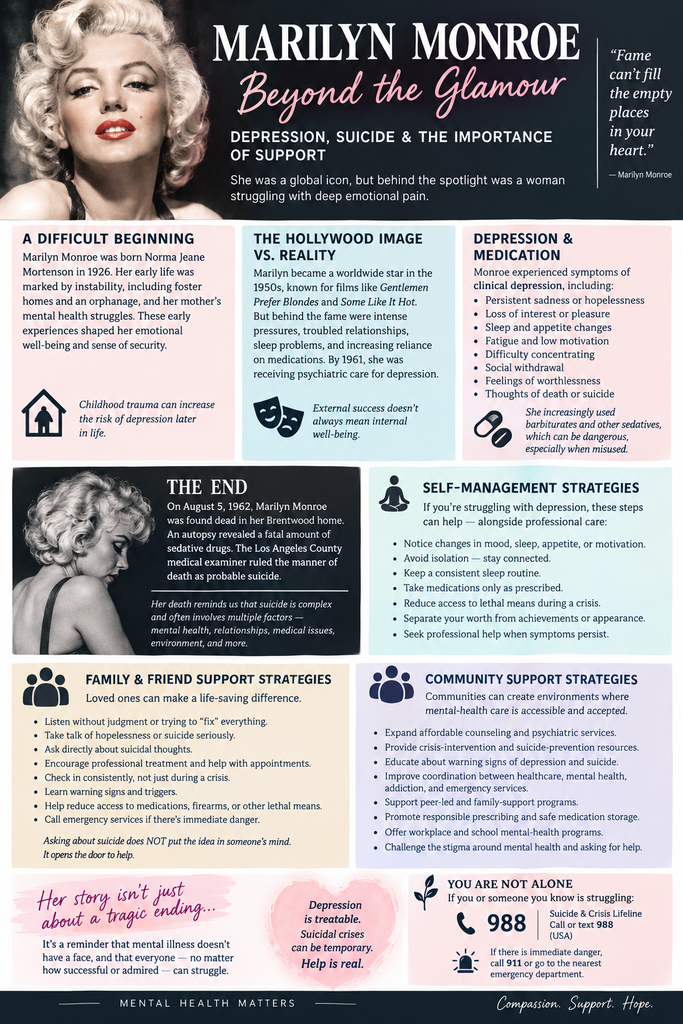
Marilyn Monroe remains one of Hollywood’s most recognizable stars, yet the glamorous public image associated with her was very different from the emotional difficulties documented during her life. Born Norma Jeane Mortenson in 1926, Monroe experienced an unstable childhood that included foster homes and an orphanage while her mother struggled with serious mental health problems. As an adult, Monroe achieved extraordinary fame but also experienced troubled relationships, intense public scrutiny, sleep difficulties, emotional distress, and increasing reliance on medications. Historical accounts report that by 1961 she was struggling with depression and receiving psychiatric care.
Monroe died at age 36 in August 1962 from an overdose of sedative medications. The Los Angeles County medical examiner classified the manner of death as probable suicide. Her story should therefore be discussed carefully—not as a romanticized Hollywood tragedy, but as an opportunity to understand depression, suicide risk, medication safety, isolation, and the importance of sustained mental-health support.
Behind the Marilyn Monroe Image
Monroe became internationally famous during the 1950s through movies such as Gentlemen Prefer Blondes, The Seven Year Itch, and Some Like It Hot. Behind that success, however, was a woman attempting to establish herself as a serious actress while living under extraordinary expectations surrounding her appearance and public persona.
Her early life was marked by instability. She spent portions of her childhood living with foster families and in an orphanage because her mother could not consistently care for her. Historical accounts also describe Monroe experiencing a childhood stutter and later struggling with the pressures surrounding her public identity.
During adulthood, additional difficulties accumulated. Her marriages ended in divorce, her professional relationships could be turbulent, and her physical and emotional health deteriorated. By 1961, she had been admitted to hospitals for psychiatric observation and rest, and accounts describe her as experiencing significant depression.
Her experience illustrates an important mental-health lesson: external success does not necessarily reflect internal well-being. Wealth, beauty, popularity, and professional achievement do not protect someone from depression or suicidal thoughts.
Depression, Insomnia & Medication
Monroe’s difficulties were not limited to sadness. Historical accounts describe increasing use of barbiturates and other sedating medications during the later years of her career. One recent historical review notes that her dependence on barbiturates intensified as she struggled personally and professionally.
Depression can affect much more than mood. Depending on the individual, symptoms can include:
- Persistent sadness, emptiness, or hopelessness
- Loss of pleasure or interest
- Changes in sleep or appetite
- Fatigue and reduced motivation
- Difficulty concentrating or making decisions
- Social withdrawal and isolation
- Feelings of worthlessness or excessive guilt
- Thoughts about death or suicide
Not every person experiences depression in the same way. Someone may continue working, smiling, socializing, or appearing successful while experiencing significant emotional distress privately.
Monroe’s Death
On August 5, 1962, Monroe was found dead in her Brentwood home. An autopsy identified a fatal concentration of sedative drugs, and authorities ultimately classified her death as a probable suicide.
Although conspiracy theories about her death have persisted for decades, they should not replace the documented evidence surrounding her serious mental-health difficulties and medication use.
Her death also highlights why suicidal behavior rarely should be reduced to one event, relationship, disappointment, or diagnosis. Suicide is complex and can involve interacting psychological, social, medical, environmental, and substance-related factors.
Self-Management Strategies
If someone is experiencing depression or identifies with parts of Monroe’s story, self-management can complement—not replace—professional treatment.
Helpful strategies may include:
- Recognize changes early. Track persistent changes in mood, sleep, appetite, motivation, concentration, or social activity.
- Avoid isolation. Maintain regular contact with trusted friends, relatives, clinicians, or peer-support networks.
- Create a consistent sleep routine. Depression and insomnia can reinforce each other, making healthy sleep habits particularly important.
- Use medications only as prescribed. Combining medications, changing doses independently, or using sedatives in unsafe ways can have serious consequences.
- Reduce access to lethal means during a crisis. A safety plan can identify warning signs, coping strategies, supportive people, professional resources, and ways to make the environment safer.
- Separate identity from achievement. A person’s worth should not depend entirely on appearance, popularity, productivity, relationships, or career success.
- Seek professional care when symptoms persist. Psychotherapy, medication when appropriate, and coordinated psychiatric or medical treatment can significantly improve depression.
Family and Friend Support Strategies
Monroe’s story also demonstrates why people surrounding someone with depression should look beyond appearances. A person who seems successful or socially active may still need substantial emotional support.
Families and friends can help by:
- Listening without immediately criticizing, lecturing, or trying to solve every problem.
- Taking statements about hopelessness, death, or suicide seriously.
- Asking directly about suicidal thoughts when there is concern.
- Encouraging professional mental-health evaluation and ongoing treatment.
- Helping the person attend appointments or organize medications when appropriate.
- Checking in consistently rather than providing support only during an obvious crisis.
- Learning the individual’s warning signs and triggers.
- Helping reduce access to medications, firearms, or other potentially lethal means when suicide risk is present.
- Calling emergency services or obtaining urgent crisis assistance when someone appears to be in immediate danger.
Asking someone directly whether they are thinking about suicide does not put the idea into their mind. A compassionate, straightforward conversation can create an opportunity for the person to disclose distress and receive help.
Community Support Strategies
Depression and suicide prevention should not depend entirely on individuals and their families. Communities can create environments where seeking mental health care is normal and accessible.
Important community approaches include:
- Expanding affordable counseling and psychiatric services.
- Providing crisis-intervention programs and suicide-prevention resources.
- Educating communities about warning signs of depression and suicide.
- Improving coordination between primary care, mental health, addiction, and emergency services.
- Supporting peer-led and family-support programs.
- Promoting responsible prescribing and safe medication storage.
- Providing workplace mental-health programs and employee assistance services.
- Challenging stigma surrounding depression, psychiatric treatment, and asking for help.
Schools, healthcare organizations, workplaces, faith communities, and community organizations can all contribute to earlier recognition and intervention.
What Marilyn Monroe’s Story Can Teach Us
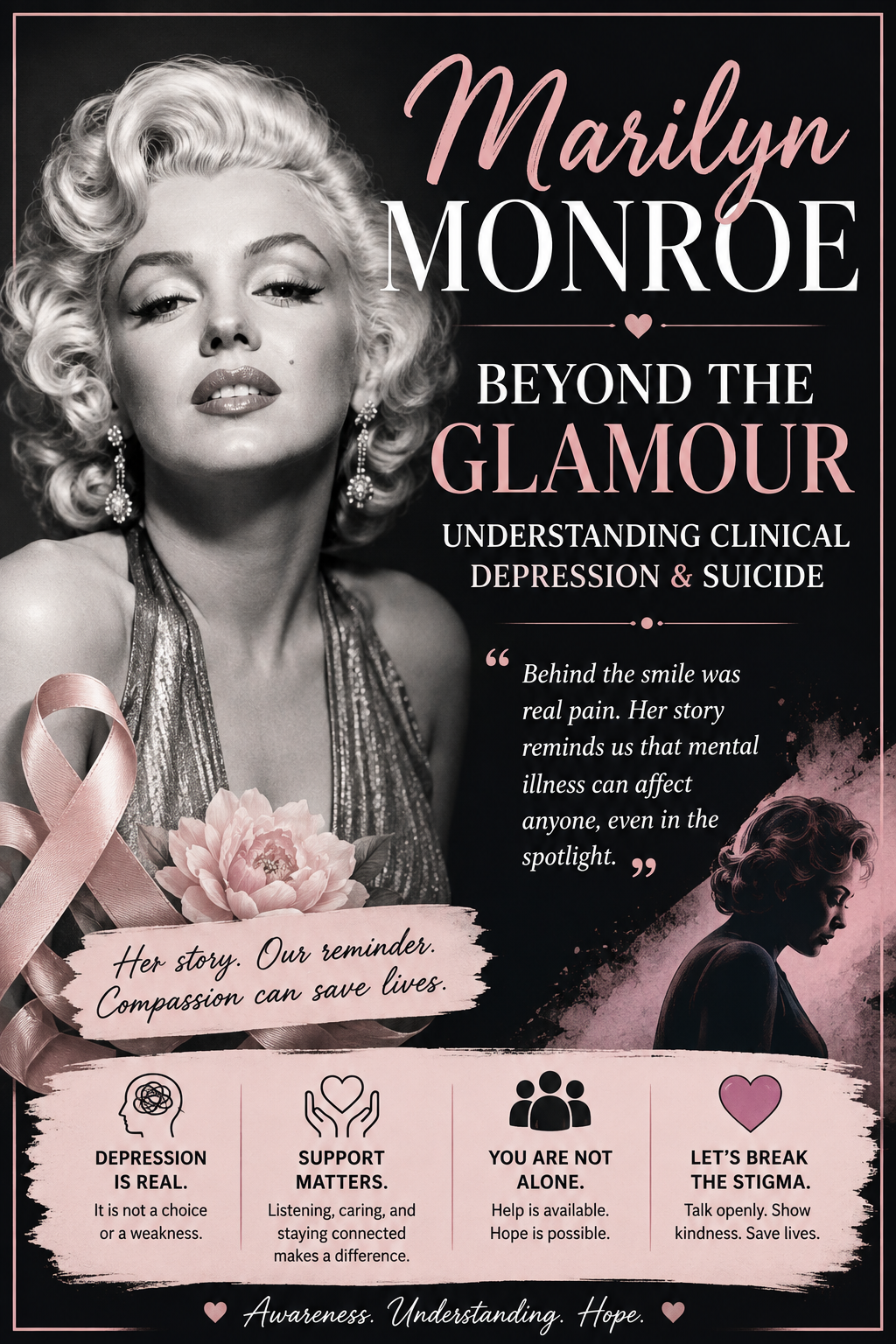
Marilyn Monroe’s life reminds us that mental illness does not have a particular appearance. Someone can be admired by millions and still experience profound loneliness or psychological pain.
Her story also demonstrates why depression should be treated as a legitimate health condition rather than a weakness in character. Modern treatment offers options that were unavailable or substantially less developed during Monroe’s lifetime, including evidence-based psychotherapies, improved antidepressant treatment, coordinated psychiatric care, safety planning, and specialized suicide-prevention programs.
Perhaps the most important lesson is to look beyond the public image. Instead of asking why someone who appeared to “have everything” could become depressed, a more useful question is: What suffering might we be unable to see, and how can we respond before that suffering becomes a crisis?
Conclusion
Marilyn Monroe’s legacy is much larger than the circumstances of her death. She was an ambitious performer who sought greater control over her career and wanted to be respected for her abilities, while simultaneously experiencing significant emotional and psychological difficulties. Historical evidence documents depression, psychiatric treatment, increasing reliance on sedating medications, and ultimately a fatal overdose ruled a probable suicide.
Her experience provides a lasting reminder that fame and success cannot substitute for mental-health care, supportive relationships, medication safety, and human connection. Depression is treatable, and suicidal crises can be temporary even when the suffering feels overwhelming. Recognizing warning signs, maintaining meaningful connections, seeking professional treatment, and creating accessible community resources can help people find another path through periods of severe emotional pain.
Crisis note: In the United States, anyone experiencing suicidal thoughts or concerned about someone who may be at risk can call or text 988 for the Suicide & Crisis Lifeline. If there is immediate danger, call 911 or go to the nearest emergency department.
Frequently Asked Questions
Here are some common questions:
1. Did Marilyn Monroe have clinical depression?
Historical accounts indicate that Marilyn Monroe experienced significant depression and received psychiatric treatment, particularly during the later years of her life. However, modern diagnostic terminology should be applied cautiously because we cannot retrospectively confirm every aspect of a current DSM diagnosis.
2. What mental health problems did Marilyn Monroe experience?
Accounts of Monroe’s life describe depression, severe emotional distress, insomnia, anxiety, difficulties in relationships, and periods of psychiatric treatment. Her mental health appeared to worsen during periods of intense personal and professional stress.
3. Did Marilyn Monroe have a difficult childhood?
Yes. Monroe, born Norma Jeane Mortenson, experienced considerable instability in childhood. Her mother had serious mental health difficulties, and Monroe spent time living with foster families and in an orphanage. Childhood adversity can increase vulnerability to later mental health problems, although it does not determine a person’s future.
4. Did fame contribute to Marilyn Monroe’s depression?
It is impossible to identify one cause of her depression. However, extraordinary public scrutiny, demanding work, relationship difficulties, concerns about her career, and the pressure of maintaining her Hollywood image may have contributed to her emotional distress.
5. Did Marilyn Monroe have insomnia?
Yes. Historical accounts frequently describe Monroe struggling with significant sleep problems. She used sedating medications, including barbiturates, during a period when these drugs were more commonly prescribed.
6. Was Marilyn Monroe receiving treatment for depression?
Yes. Monroe received psychiatric care during her life and underwent psychoanalysis. In 1961, she was also hospitalized during a period of serious emotional difficulties.
7. How did Marilyn Monroe die?
Monroe was found dead at her home in Los Angeles in August 1962 at age 36. Toxicology findings showed lethal levels of sedative medications in her body.
8. Was Marilyn Monroe’s death officially ruled a suicide?
The Los Angeles County coroner concluded that Monroe died from acute barbiturate poisoning and classified the manner of death as probable suicide.
9. Are the conspiracy theories surrounding her death proven?
No. Numerous theories have circulated since Monroe’s death, but speculation should be distinguished from documented medical and investigative findings. The official conclusion remains probable suicide.
10. Does depression always look like extreme sadness?
No. Depression may involve hopelessness, irritability, fatigue, sleep or appetite changes, difficulty concentrating, loss of interest, isolation, feelings of worthlessness, or suicidal thoughts. Some people continue working and appearing happy publicly despite experiencing serious depression privately.
11. Does success protect someone from depression or suicide?
No. Fame, wealth, attractiveness, professional achievement, and social status do not provide immunity from mental illness. Monroe’s experience is a powerful example of why outward appearances should not be used to judge someone’s emotional well-being.
12. What warning signs of suicide should families recognize?
Warning signs can include talking about wanting to die, expressing hopelessness, withdrawing from others, giving away important possessions, dramatically changing behavior, increasing substance use, experiencing severe sleep disturbances, or appearing to believe that others would be better off without them. Any expression of suicidal intent should be taken seriously.
13. Should you ask someone directly if they are thinking about suicide?
Yes. Asking directly and compassionately, “Are you thinking about suicide?” does not cause suicidal thoughts. It can provide an opportunity for someone to disclose what they are experiencing and receive help.
14. How can someone manage depression?
Self-management can support professional treatment. Helpful approaches may include:
- Maintaining regular sleep, meals, and physical activity
- Staying connected instead of becoming isolated
- Identifying emotional triggers and warning signs
- Taking medications exactly as prescribed
- Avoiding alcohol or non-prescribed drugs as coping mechanisms
- Developing a suicide safety plan when appropriate
- Participating consistently in psychotherapy and medical care
- Seeking immediate help when suicidal thoughts develop
15. How can family members support someone with severe depression?
Family members can listen without judgment, maintain regular contact, encourage professional treatment, learn warning signs, help the person follow a safety plan, and reduce access to potentially lethal medications, firearms, or other means during periods of elevated suicide risk.
16. What community resources can help?
Primary care offices, mental health clinics, psychiatrists, therapists, crisis centers, emergency departments, peer support organizations, and community mental health programs can provide different levels of assistance. Treatment should be matched to the severity and immediacy of the person’s symptoms.
17. What can we learn from Marilyn Monroe’s story?
Perhaps the strongest lesson is that mental illness does not have a particular appearance. Someone who seems successful, confident, attractive, or happy may be experiencing significant suffering privately. Recognizing changes, listening without judgment, and connecting people with appropriate treatment can make a meaningful difference.
18. What should someone do during a suicidal crisis?
In the United States, call or text 988 to reach the Suicide & Crisis Lifeline. If someone has attempted suicide, has an immediate plan or access to lethal means, or cannot remain safe, call 911 or go to the nearest emergency department.
Video: What They Didn’t Tell You About Marilyn Monroe #marilynmonroe #facts