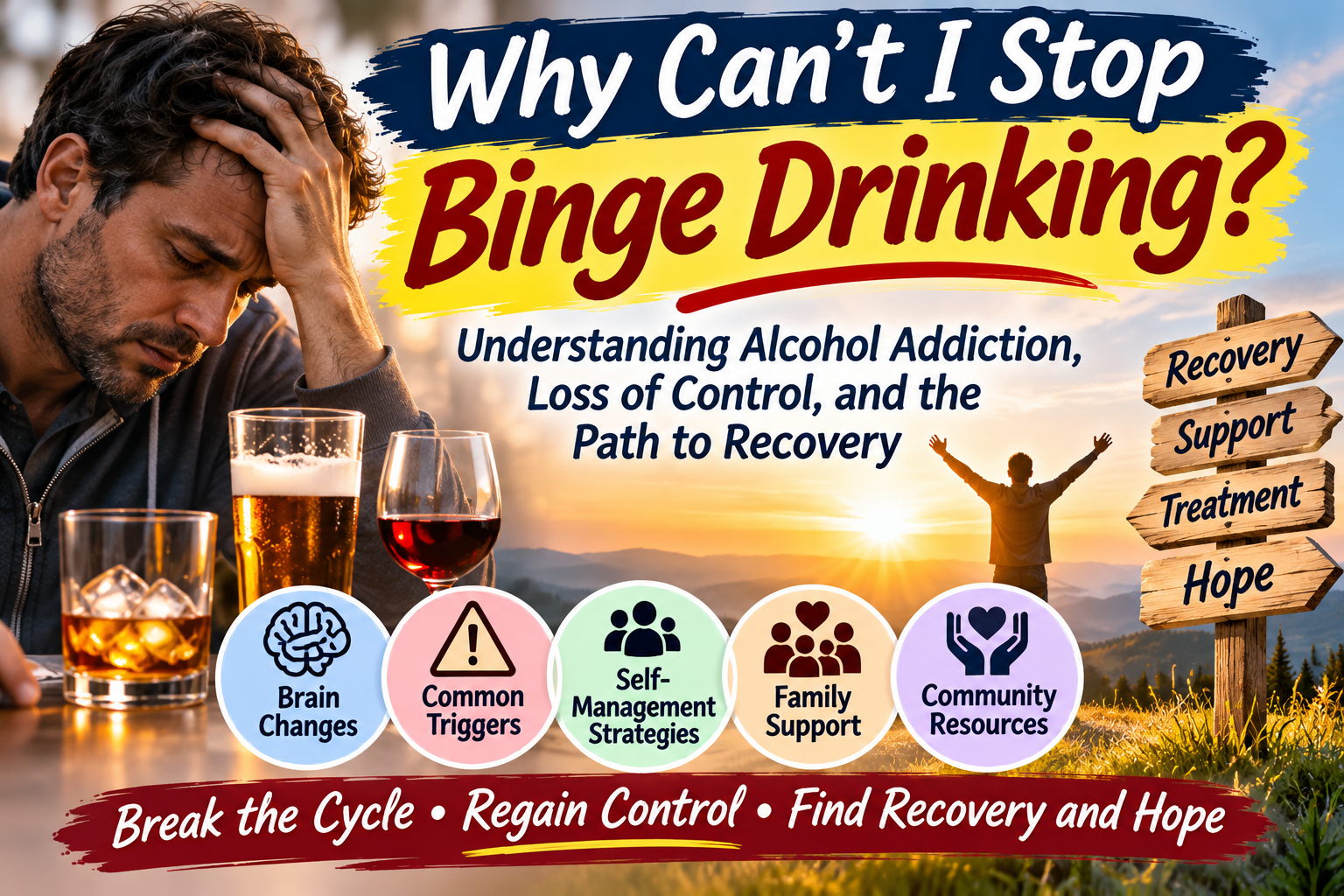
Have you ever planned to have just one or two drinks but ended up drinking far more than intended? Binge drinking can become a destructive cycle of temporary pleasure, impaired judgment, regret, and unsuccessful attempts to cut back. Beyond self-control, alcohol affects the brain’s reward system, decision-making, and emotional regulation, while stress, genetics, and social influences can reinforce harmful drinking patterns. Repeated binge drinking increases the risk of addiction, health complications, and relationship difficulties. However, through evidence-based treatment, self-management strategies, family encouragement, and community support, individuals can break the cycle, regain control, and achieve lasting recovery.
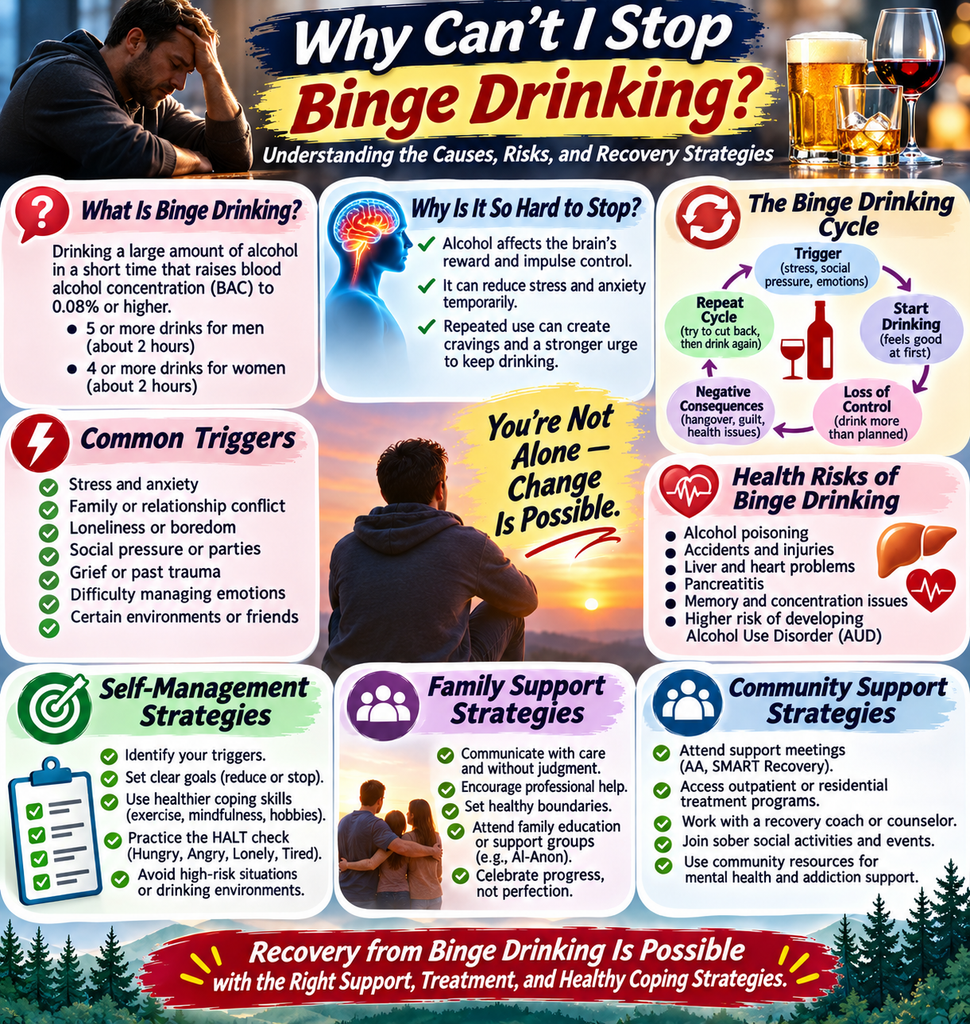
What Is Binge Drinking?
Binge drinking refers to consuming enough alcohol in a relatively short period to raise blood alcohol concentration (BAC) to approximately 0.08% or higher.
According to the National Institute on Alcohol Abuse and Alcoholism (NIAAA), this typically occurs when an adult consumes:
- Five or more standard drinks for men within approximately two hours.
- Four or more standard drinks for women within approximately two hours.
These thresholds are approximate and do not account for every individual’s body size, metabolism, medications, or other health factors.
What Counts as One Standard Drink?
Beer
12 oz at 5% alcohol
Wine
5 oz at 12% alcohol
Spirits
1.5 oz at 40% alcohol
Each example contains approximately 14 grams of pure alcohol, equivalent to one U.S. standard drink. Stronger beverages and larger pours may contain multiple standard drinks.
Binge drinking is a pattern of alcohol consumption, not a diagnosis by itself. However, frequent binge drinking can increase the risk of developing alcohol use disorder.
Why Can’t Some People Stop Once They Start Drinking?
Alcohol affects several brain systems involved in reward, motivation, inhibition, and behavioral control.
During drinking, alcohol can temporarily produce feelings of relaxation, confidence, or pleasure. However, it also impairs the brain’s ability to evaluate consequences and regulate impulses.
How Alcohol Affects the Brain
- Reward system: Alcohol influences dopamine signaling, reinforcing behaviors associated with pleasurable experiences.
- Prefrontal cortex: Alcohol impairs judgment, planning, and impulse control.
- GABA signaling: Alcohol enhances inhibitory neurotransmission, contributing to sedation and reduced anxiety.
- Glutamate signaling: Alcohol suppresses excitatory signaling, affecting memory and cognitive functioning.
- Stress pathways: Repeated heavy drinking can alter stress responses and contribute to anxiety or irritability when alcohol is unavailable.
These effects help explain why someone may genuinely intend to stop after two drinks but continue drinking after alcohol begins impairing decision-making.
The Cycle of Binge Drinking
A Common Binge Drinking Cycle
1
Emotional or social trigger
Stress, loneliness, celebration, or peer pressure
2
Initial alcohol use
Temporary relaxation or pleasure
3
Impaired control
More drinking than originally intended
4
Negative consequences
Hangover, anxiety, regret, or conflict
5
Renewed intention
Promises to reduce drinking without a concrete plan
6
Repeated exposure
Similar triggers restart the pattern
This is one possible pattern, not a sequence experienced by everyone who binge drinks.
Over time, repeated alcohol exposure may reinforce drinking habits, making behavior change increasingly difficult without additional support.
Psychological and Emotional Reasons Behind Binge Drinking
Some individuals use alcohol to cope with uncomfortable emotions rather than drinking solely for enjoyment.
Common psychological contributors include:
- Stress: Alcohol may temporarily reduce tension but can worsen stress regulation over time.
- Anxiety: Drinking may initially reduce social anxiety while increasing rebound anxiety afterward.
- Depression: Alcohol can temporarily numb sadness but may worsen depressive symptoms.
- Trauma: Some individuals use alcohol to avoid distressing memories or emotions.
- Loneliness: Drinking may become a way to escape feelings of isolation.
- Low self-esteem: Alcohol may temporarily increase confidence in social situations.
- Difficulty regulating emotions: Individuals may struggle to manage anger, frustration, or disappointment without substances.
Understanding Emotional Drinking
Consider someone who experiences intense work stress.
After a difficult day, they begin drinking to relax. Initially, alcohol reduces discomfort. However, continued drinking impairs judgment, making it harder to stop.
The following morning, the person experiences anxiety, fatigue, and regret.
Without healthier coping strategies, the next stressful day may trigger the same behavior.
This pattern demonstrates how alcohol can become an unhealthy coping mechanism.
Does Binge Drinking Mean Someone Has Alcohol Use Disorder?
Not necessarily.
Binge drinking describes a pattern of consumption, while alcohol use disorder is a clinical diagnosis involving impaired control, continued use despite harm, and other symptoms.
Under DSM-5-TR criteria, AUD is diagnosed when at least two of eleven specified symptoms occur within a 12-month period.
Potential symptoms include:
- Drinking more alcohol or for longer than intended.
- Repeated unsuccessful attempts to cut down.
- Spending significant time drinking or recovering from alcohol use.
- Experiencing strong cravings.
- Neglecting work, school, or family responsibilities.
- Continuing alcohol use despite relationship problems.
- Giving up important activities because of drinking.
- Drinking in physically dangerous situations.
- Continuing drinking despite physical or psychological harm.
- Developing tolerance.
- Experiencing withdrawal symptoms.
AUD severity is classified as mild, moderate, or severe according to the number of diagnostic criteria met.
Repeatedly being unable to stop drinking once started is an important warning sign that deserves clinical evaluation.
Self-Management Strategies: How to Break the Binge Drinking Cycle
Self-management involves recognizing triggers, developing healthier coping mechanisms, establishing realistic goals, and seeking appropriate treatment.
Identify Personal Drinking Triggers
Individuals can start by examining when, where, and why they binge drink.
Helpful questions include:
- Do I drink more when stressed or anxious?
- Do certain friends or environments encourage excessive drinking?
- Do I drink to escape difficult emotions?
- Do I lose control after my first few drinks?
- Do I experience cravings when alcohol is unavailable?
- Have I repeatedly tried to cut back without success?
A drinking journal may help identify patterns and guide conversations with healthcare professionals.
Develop a Personalized Alcohol Reduction or Abstinence Plan
Depending on the severity of drinking and the presence of AUD, treatment goals may involve reducing alcohol consumption or pursuing abstinence.
Helpful strategies include:
- Establish clear and measurable goals.
- Avoid situations that consistently trigger binge drinking.
- Plan alcohol-free activities.
- Identify supportive friends and family members.
- Develop coping strategies for cravings.
- Schedule regular healthcare follow-ups.
- Consider counseling or structured addiction treatment.
For individuals who repeatedly lose control after drinking begins, abstinence may be a more realistic and safer goal than attempting to limit consumption.
Important: People with significant alcohol dependence should not abruptly stop drinking without medical guidance because alcohol withdrawal can be dangerous.
Managing Alcohol Cravings Without Drinking
Cravings are temporary urges that may arise from emotional stress, environmental cues, or learned associations.
Practical Craving Management Techniques
- Delay the response: Give yourself time to evaluate the craving rather than acting immediately.
- Change your environment: Leave locations where excessive drinking is likely.
- Practice urge surfing: Observe the craving as a temporary sensation without acting on it.
- Use grounding techniques: Focus on breathing, physical sensations, or surroundings.
- Contact a support person: Speak with someone who understands your recovery goals.
- Engage in physical activity: Walking or exercise may reduce stress and provide distraction.
- Review personal motivations: Remind yourself why changing your drinking matters.
The HALT Technique
HALT encourages individuals to check whether they are:
- Hungry: Eat regular, balanced meals.
- Angry: Practice emotional regulation and conflict-management skills.
- Lonely: Connect with supportive individuals.
- Tired: Prioritize sleep and recovery.
HALT can help identify vulnerabilities that may intensify cravings, although it is not a substitute for evidence-based treatment.
Medical Treatment Options for Binge Drinking and Alcohol Use Disorder
For individuals experiencing recurrent binge drinking or AUD, professional treatment can improve outcomes.
Evidence-Based Medications
Several FDA-approved medications are available for alcohol use disorder.
| Medication | Primary role |
|---|---|
| Naltrexone | Reduces alcohol’s rewarding effects and can decrease heavy drinking |
| Acamprosate | Supports maintenance of abstinence after alcohol cessation |
| Disulfiram | Produces an unpleasant reaction when alcohol is consumed, discouraging drinking in appropriately selected patients |
Naltrexone may be particularly helpful for some individuals whose treatment goal is reducing heavy drinking.
However, medication selection requires evaluation of medical conditions, liver and kidney function, opioid use, contraindications, and patient preferences.
Behavioral Therapies
Evidence-based approaches include:
- Cognitive behavioral therapy (CBT).
- Motivational interviewing and motivational enhancement therapy.
- Contingency management in appropriate settings.
- Behavioral couples therapy.
- Relapse prevention counseling.
- Mutual-help programs such as Alcoholics Anonymous and SMART Recovery.
Medication and psychotherapy may be used together when appropriate.
Family Support Strategies: Helping Someone Who Cannot Stop Binge Drinking
Family members often experience worry, frustration, fear, and emotional exhaustion when a loved one repeatedly drinks excessively.
Although relatives cannot force someone to change, they can provide meaningful support.
Encourage Open and Compassionate Communication
Families can:
- Discuss concerns when the individual is sober.
- Describe specific behaviors rather than assigning labels.
- Avoid arguments during intoxication.
- Express concern about health and safety.
- Encourage professional evaluation.
- Recognize positive changes.
For example, saying “I’m worried because you’ve been drinking more than you planned” may be more productive than accusing someone of lacking self-control.
Establish Healthy Boundaries
Families should protect their own well-being while offering support.
Helpful boundaries include:
- Refusing to ride with an intoxicated driver.
- Avoiding financial assistance that directly supports harmful drinking.
- Protecting children from unsafe environments.
- Establishing expectations regarding respectful communication.
- Seeking professional support when conflict escalates.
Participate in Family Counseling
Family therapy can help relatives understand addiction and improve communication.
Approaches such as Community Reinforcement and Family Training (CRAFT) may help families encourage treatment engagement while reducing conflict.
Family members may also benefit from independent counseling or support groups.
Community Support Strategies: Creating a Recovery-Friendly Environment
Community resources can reduce isolation, provide accountability, and improve access to treatment.
Recovery Support Organizations
Individuals may benefit from:
- Alcoholics Anonymous meetings.
- SMART Recovery programs.
- Recovery coaching and peer mentorship.
- Outpatient addiction treatment.
- Community mental health services.
- Alcohol-free recreational activities.
- Supportive housing or recovery residences when appropriate.
How Communities Can Reduce Harmful Drinking
Community organizations can:
- Provide evidence-based alcohol education.
- Expand affordable treatment services.
- Promote confidential screening in healthcare settings.
- Support alcohol-free social activities.
- Encourage early intervention.
- Reduce stigma surrounding alcohol use disorder.
- Offer family education workshops.
Healthcare professionals can also use validated screening tools, such as AUDIT-C, to identify unhealthy alcohol use and provide appropriate brief interventions or treatment referrals.
How Binge Drinking Affects Physical Health
Repeated binge drinking can affect multiple organ systems.
Short-Term Health Risks
- Alcohol poisoning.
- Falls and traumatic injuries.
- Motor vehicle crashes.
- Impaired judgment and risky behavior.
- Dehydration and sleep disruption.
- Cardiac arrhythmias, including alcohol-associated atrial fibrillation.
- Acute pancreatitis.
Long-Term Health Risks
- Alcohol-associated liver disease.
- Hypertension and cardiovascular complications.
- Chronic pancreatitis.
- Cognitive impairment.
- Depression and anxiety symptoms.
- Increased risk of several cancers.
- Development or progression of alcohol use disorder.
Even individuals who do not drink every day can experience significant health consequences from repeated heavy drinking episodes.
Why Shame and Guilt Can Make Binge Drinking Worse
Many individuals feel embarrassed after drinking more than intended.
They may promise themselves they will never repeat the behavior, only to experience another episode.
Shame can contribute to secrecy, social withdrawal, and reluctance to seek help.
Breaking the Shame Cycle
Helpful approaches include:
- Recognize problematic drinking as a health concern rather than a character flaw.
- Practice self-compassion while accepting responsibility for behavior.
- Discuss drinking patterns honestly with a healthcare professional.
- Identify triggers instead of relying only on promises to change.
- Celebrate progress without expecting perfection.
- Seek additional support after setbacks.
A return to heavy drinking should prompt reassessment of coping strategies and treatment rather than abandonment of recovery goals.
Common Barriers to Overcoming Binge Drinking
| Challenge | Potential support strategy |
|---|---|
| Strong alcohol cravings | Medication treatment and coping skills |
| Social pressure | Alcohol-free activities and assertive communication |
| Anxiety or depression | Integrated mental health treatment |
| Repeated unsuccessful attempts to cut back | Professional AUD evaluation |
| Family conflict | Family counseling and healthy boundaries |
| Financial barriers | Community clinics and affordable treatment programs |
| Fear of withdrawal | Medically supervised withdrawal assessment |
| Shame and stigma | Peer support and compassionate healthcare |
Recognizing barriers helps individuals and families develop more realistic recovery plans.
Recognizing When Professional Help Is Needed
Professional evaluation is recommended when drinking becomes difficult to control or begins affecting health, relationships, or daily responsibilities.
Warning signs include:
- Repeatedly drinking more than intended.
- Experiencing blackouts or memory gaps.
- Drinking despite negative consequences.
- Hiding alcohol consumption.
- Experiencing strong cravings.
- Neglecting important responsibilities.
- Repeatedly attempting to stop without success.
- Experiencing shaking, sweating, nausea, or anxiety when alcohol wears off.
When Alcohol Withdrawal Becomes Dangerous
Alcohol withdrawal can begin within hours after alcohol consumption decreases in physically dependent individuals.
Symptoms may include tremors, sweating, nausea, anxiety, elevated heart rate, and insomnia.
Severe withdrawal can cause seizures, hallucinations, or delirium tremens.
Anyone with significant physical dependence, a history of withdrawal seizures, or severe withdrawal symptoms should seek medical evaluation before stopping alcohol abruptly.
Building a Personalized Plan to Stop Binge Drinking
A written plan can help individuals organize recovery goals and identify needed support.
My Alcohol Recovery Action Plan
Use this worksheet to organize your next steps. Discuss your goals and withdrawal risk with a healthcare professional.
My recovery goal
Stop drinking with appropriate medical guidance
Reduce heavy drinking with professional support
My biggest drinking trigger
My alternative coping strategy
My support person or resource
One action I will take this week
Addiction Recovery Resources
Individuals and families seeking help for binge drinking or alcohol use disorder can explore the following organizations:
- National Institute on Alcohol Abuse and Alcoholism (NIAAA) — Research and educational resources about alcohol-related health risks.
- NIAAA Alcohol Treatment Navigator — Guidance for finding evidence-based alcohol treatment.
- FindTreatment.gov — Search for substance use treatment providers.
- SAMHSA — Treatment information and referrals. National Helpline: 1-800-662-HELP (4357).
- Alcoholics Anonymous — Peer support for people seeking recovery from problematic alcohol use.
- SMART Recovery — Evidence-informed mutual support and self-management strategies.
- Al-Anon Family Groups — Support for families and friends affected by another person’s drinking.
Conclusion: Understanding Why You Can’t Stop Binge Drinking
Repeated binge drinking can become difficult to control because alcohol affects brain reward systems, decision-making, emotional regulation, and learned behaviors.
Psychological distress, social expectations, genetic vulnerability, and environmental triggers may further reinforce excessive drinking patterns.
However, struggling to control alcohol consumption does not mean change is impossible.
With appropriate assessment, evidence-based treatment, practical self-management skills, compassionate family support, and accessible community resources, individuals can reduce harmful drinking and work toward sustained recovery.
The most important step is recognizing when alcohol has begun controlling decisions rather than remaining a choice.
You do not have to wait for a serious medical emergency, damaged relationship, or major personal loss before seeking help.
Early intervention can prevent complications and create opportunities for healthier living.
Understanding addiction can save lives. Recovery is possible, and every step toward healthier choices matters.
Frequently Asked Questions and Answers
1. What is binge drinking?
Binge drinking is a pattern of alcohol consumption that raises blood alcohol concentration (BAC) to approximately 0.08% or higher.
According to the National Institute on Alcohol Abuse and Alcoholism (NIAAA), this typically occurs when an adult consumes:
- Five or more standard drinks for men within approximately two hours.
- Four or more standard drinks for women within approximately two hours.
The amount needed to reach this BAC varies with body size, metabolism, medications, and other individual factors.
2. Why can’t I stop drinking once I start?
Alcohol affects brain regions involved in judgment, decision-making, reward, and impulse control.
As alcohol consumption increases, the ability to evaluate consequences and regulate behavior becomes impaired.
For some individuals, the first few drinks also trigger strong urges to continue drinking.
Repeated difficulty stopping after drinking begins may be a warning sign of alcohol use disorder and deserves professional evaluation.
3. Does binge drinking mean I am an alcoholic?
Not necessarily.
Binge drinking describes a pattern of alcohol consumption, while alcohol use disorder is a medical diagnosis involving impaired control, continued drinking despite consequences, and other symptoms.
Under DSM-5-TR criteria, AUD is diagnosed when at least two of eleven specific symptoms occur within a 12-month period.
A healthcare professional can evaluate whether someone’s drinking meets these criteria.
4. Why do I keep binge drinking even when I regret it afterward?
Alcohol can temporarily produce pleasurable feelings or reduce emotional discomfort, reinforcing the desire to drink again.
Afterward, individuals may experience guilt, anxiety, physical discomfort, or regret.
However, when the same emotional or environmental triggers return, the learned association between alcohol and temporary relief may encourage repeated drinking.
Breaking this cycle often requires more than making promises to stop. It may involve behavioral changes, counseling, medication, and ongoing support.
5. Is binge drinking caused by a lack of willpower?
No. Binge drinking is influenced by biological, psychological, and environmental factors.
Alcohol affects reward pathways and impulse control, while genetics, emotional distress, and social environments can influence drinking behavior.
Personal decisions remain important, but repeated loss of control should be addressed as a potential health concern rather than simply a character flaw.
Understanding the Brain and Emotional Triggers
6. How does binge drinking affect the brain?
Alcohol influences several neurotransmitter systems involved in mood, motivation, memory, and behavior.
Important effects include:
- Increased inhibitory GABA signaling.
- Reduced excitatory glutamate signaling.
- Changes in dopamine-related reward processing.
- Impaired prefrontal cortex functioning.
- Disrupted memory formation and decision-making.
Repeated heavy alcohol exposure may also produce neuroadaptations that contribute to cravings, tolerance, and withdrawal.
7. Can stress cause someone to binge drink?
Stress can contribute to binge drinking, particularly when alcohol becomes a primary coping mechanism.
Some individuals drink to temporarily escape work pressure, relationship difficulties, financial concerns, or emotional exhaustion.
Although alcohol may initially reduce tension, it can worsen sleep, anxiety, and stress regulation over time.
Healthier coping strategies include exercise, counseling, relaxation techniques, and supportive relationships.
8. Why do I binge drink when I feel anxious or depressed?
Alcohol may temporarily reduce anxiety or emotional discomfort.
However, its effects are short-lived, and repeated drinking can worsen depressive symptoms, disrupt sleep, and increase anxiety.
People experiencing both problematic alcohol use and mental health symptoms may benefit from integrated treatment addressing both conditions.
9. Can trauma contribute to binge drinking?
Yes. Individuals who have experienced traumatic events may use alcohol to cope with intrusive memories, emotional distress, or difficulty regulating emotions.
However, trauma does not inevitably lead to substance use disorders.
Trauma-informed counseling, cognitive behavioral therapy, and appropriate mental health treatment can help individuals develop safer coping strategies.
10. Why do I binge drink more around certain friends?
Social environments can strongly influence alcohol consumption.
Individuals may drink more because of peer pressure, shared drinking traditions, expectations of social acceptance, or exposure to alcohol-related cues.
Spending time with people who respect drinking limits or support abstinence can make behavior change easier.
Recognizing Alcohol Use Disorder
11. What are the warning signs that binge drinking is becoming an addiction?
Potential warning signs include:
- Repeatedly drinking more than intended.
- Being unable to reduce alcohol consumption.
- Experiencing strong cravings.
- Hiding or minimizing drinking.
- Continuing alcohol use despite relationship problems.
- Neglecting responsibilities.
- Developing tolerance.
- Experiencing withdrawal symptoms.
- Drinking in dangerous situations.
A professional evaluation can determine whether these symptoms indicate alcohol use disorder.
12. Can someone have alcohol use disorder without drinking every day?
Yes.
Alcohol use disorder does not require daily alcohol consumption.
Some individuals drink primarily on weekends or during social events but repeatedly experience impaired control, cravings, and significant negative consequences.
The diagnosis depends on the pattern of symptoms rather than drinking frequency alone.
13. What is the difference between binge drinking and alcohol dependence?
Binge drinking refers to consuming a large amount of alcohol over a short period.
Physical alcohol dependence develops when the body adapts to repeated alcohol exposure, potentially producing withdrawal symptoms when drinking decreases or stops.
Alcohol use disorder is a broader diagnosis that may include impaired control, harmful consequences, tolerance, and withdrawal.
Physical dependence and AUD are related but are not identical.
14. Can binge drinking lead to alcohol withdrawal?
Yes, particularly when repeated heavy drinking has resulted in physical dependence.
Withdrawal symptoms may include:
- Tremors.
- Sweating.
- Anxiety and irritability.
- Nausea.
- Insomnia.
- Rapid heartbeat.
- Elevated blood pressure.
Severe withdrawal can cause seizures, hallucinations, or delirium tremens.
Individuals with significant alcohol dependence should seek medical guidance before abruptly stopping drinking.
15. Why do I experience anxiety after binge drinking?
Anxiety after heavy drinking is sometimes informally called “hangxiety.”
It may result from several factors, including alcohol-related changes in neurotransmitter activity, disrupted sleep, dehydration, and stress associated with events that occurred while intoxicated.
Repeated anxiety after drinking may indicate that alcohol is negatively affecting emotional well-being.
Reducing or stopping alcohol use with appropriate support can help address these symptoms.
Self-Management Strategies for Binge Drinking
16. How can I stop binge drinking?
The first step is recognizing your drinking patterns and determining whether you need professional treatment.
Helpful strategies include:
- Tracking alcohol consumption.
- Identifying emotional and environmental triggers.
- Establishing clear drinking or abstinence goals.
- Avoiding high-risk drinking environments.
- Developing healthier coping skills.
- Seeking counseling or addiction treatment.
- Considering medication for alcohol use disorder.
- Participating in recovery support programs.
For individuals who repeatedly lose control after their first drink, abstinence may be a more appropriate goal than attempting controlled drinking.
17. What should I do when I experience strong alcohol cravings?
Cravings can be managed through behavioral strategies and, when appropriate, medication.
Helpful approaches include:
- Delay acting on the craving.
- Leave environments associated with drinking.
- Practice slow breathing or mindfulness.
- Contact a trusted support person.
- Engage in exercise or another meaningful activity.
- Review personal reasons for reducing alcohol use.
- Seek professional assistance when cravings persist.
Medications such as naltrexone may reduce heavy drinking and cravings in appropriately selected patients.
18. What is the HALT technique for binge drinking recovery?
HALT encourages individuals to recognize four common physical and emotional vulnerabilities.
H
Hungry: Eat regularly
A
Angry: Regulate emotions
L
Lonely: Seek connection
T
Tired: Prioritize rest
HALT is a self-awareness strategy that can complement, but does not replace, evidence-based alcohol treatment.
19. Is it better to reduce drinking gradually or stop completely?
The appropriate goal depends on the individual’s drinking pattern, medical history, withdrawal risk, and treatment preferences.
Some individuals benefit from reducing heavy drinking, while others may need abstinence because of severe AUD, repeated loss of control, medical contraindications, or personal recovery goals.
People with significant physical dependence should not attempt unsupervised abrupt cessation or a self-directed taper without medical guidance.
20. What treatments are available for alcohol use disorder?
Evidence-based treatment options include medications, behavioral therapies, and recovery support.
| Treatment | Purpose |
|---|---|
| Naltrexone | Helps reduce heavy drinking and alcohol’s rewarding effects |
| Acamprosate | Supports abstinence after alcohol cessation |
| Disulfiram | Discourages drinking through an unpleasant alcohol reaction |
| Cognitive behavioral therapy | Helps identify and change harmful drinking patterns |
| Motivational enhancement therapy | Strengthens motivation for behavior change |
| Mutual-help groups | Provide peer support and ongoing encouragement |
Treatment should be individualized through consultation with a qualified healthcare professional.
Family Support Strategies
21. How can family members help someone who cannot stop binge drinking?
Families can encourage recovery through compassionate communication, education, and healthy boundaries.
Helpful approaches include:
- Discuss concerns when the person is sober.
- Avoid blaming or shaming language.
- Encourage professional evaluation.
- Offer assistance finding treatment.
- Respect personal recovery goals.
- Avoid providing resources that directly support harmful drinking.
- Seek family counseling when needed.
Family support can improve treatment engagement, but relatives cannot independently control another person’s drinking.
22. What should families avoid doing when someone binge drinks?
Families should avoid behaviors that increase conflict or create unsafe situations.
Examples include:
- Arguing with someone who is intoxicated.
- Making threats they cannot follow through on.
- Minimizing serious alcohol-related problems.
- Covering up dangerous behavior.
- Providing money specifically for alcohol.
- Ignoring their own emotional well-being.
Compassionate support should be combined with clear expectations and a focus on personal safety.
23. Can family counseling help someone stop binge drinking?
Yes. Family counseling can improve communication, address relationship conflict, and support participation in treatment.
Behavioral couples therapy and Community Reinforcement and Family Training (CRAFT) may be beneficial in appropriate circumstances.
Family members may also benefit from independent counseling or support groups such as Al-Anon.
Community Support and Recovery Advocacy
24. What community resources can help someone stop binge drinking?
Community resources include:
- Alcoholics Anonymous.
- SMART Recovery.
- Outpatient addiction treatment programs.
- Community mental health clinics.
- Peer recovery coaching.
- Recovery-friendly social activities.
- Primary care and addiction medicine services.
These resources can reduce isolation and improve access to professional and peer support.
25. Why is community support important for alcohol recovery?
Community support provides opportunities for encouragement, accountability, and social connection.
People attempting to change their drinking habits may struggle when their social environments revolve around alcohol.
Recovery-friendly communities offer alternatives that support healthier routines and relationships.
26. How can communities help prevent binge drinking?
Communities can reduce alcohol-related harm through:
- Evidence-based alcohol education.
- Screening and brief interventions in healthcare settings.
- Affordable treatment access.
- Youth prevention programs.
- Alcohol-free recreational activities.
- Public awareness campaigns.
- Policies that reduce hazardous alcohol consumption and impaired driving.
Prevention programs are most effective when they combine education with practical resources and supportive environments.
Health Risks and Long-Term Recovery
27. What health problems can repeated binge drinking cause?
Repeated binge drinking can increase the risk of:
- Alcohol poisoning.
- Falls and traumatic injuries.
- Motor vehicle crashes.
- Hypertension and cardiac arrhythmias.
- Liver disease.
- Pancreatitis.
- Cognitive impairment.
- Depression and anxiety symptoms.
- Several alcohol-associated cancers.
- Alcohol use disorder.
The severity of risk depends on drinking patterns, overall alcohol exposure, and individual health factors.
28. Can the brain recover after someone stops binge drinking?
Some alcohol-related changes in brain function and structure may improve after sustained reduction or cessation of drinking.
Improvements may occur in sleep, attention, memory, emotional regulation, and executive functioning.
However, the extent of recovery varies, and some alcohol-related neurological injuries may persist.
Early intervention improves the opportunity to prevent further harm.
29. What should I do if I binge drink again after trying to stop?
A return to binge drinking should prompt reassessment rather than abandonment of recovery goals.
Helpful steps include:
- Address immediate medical and safety concerns.
- Contact a healthcare professional or addiction counselor.
- Identify triggers that contributed to drinking.
- Review the existing treatment plan.
- Reconnect with supportive individuals.
- Consider whether medication or additional treatment is needed.
Repeated setbacks may indicate that the current treatment approach requires adjustment.
30. Where can I find professional help for binge drinking?
Several organizations provide treatment information and support:
- National Institute on Alcohol Abuse and Alcoholism (NIAAA) — Research and education about alcohol-related health risks.
- NIAAA Alcohol Treatment Navigator — Guidance for finding evidence-based alcohol treatment.
- FindTreatment.gov — Search for substance use treatment providers.
- SAMHSA — Treatment information and referrals.
- Alcoholics Anonymous — Peer support for people seeking recovery.
- SMART Recovery — Mutual support and self-management resources.
- Al-Anon Family Groups — Support for families and friends affected by problematic drinking.
SAMHSA’s National Helpline: 1-800-662-HELP (4357).
For severe withdrawal symptoms, seizures, confusion, or suspected alcohol poisoning, seek emergency medical assistance.
Video: