Questions about whether alcoholism is a choice or a disease have stirred up debate for years. For many people, it’s tough to sort out where personal decisions end and health conditions begin. Based on what I’ve learned and my own experience seeing friends and family struggle, there’s a lot more to the story than just picking one side or the other. Here, I’m breaking down the science, myths, and real-life impact behind alcoholism so you can get a clear picture of why this topic isn’t as simple as it might seem.
What Makes Alcoholism So Hard to Define?
Alcoholism, which is sometimes called alcohol use disorder (AUD), means you’re dealing with more than just a habit. It involves changes in brain chemistry, behavior, and even how you process stress and emotions. The American Psychiatric Association describes AUD as a pattern of drinking that leads to problems controlling alcohol use, ongoing use despite adverse consequences, and increased tolerance or withdrawal symptoms.
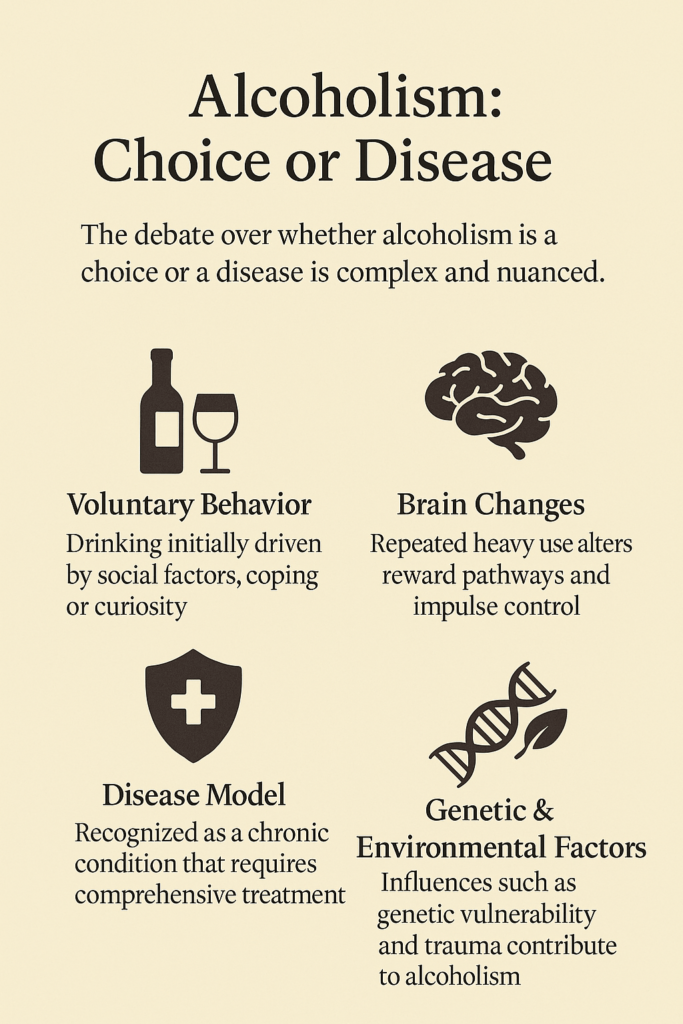
For a long time, people saw alcoholism as a personal failing, something someone could snap out of with enough willpower. However, newer research and firsthand accounts show that heavy, repeated drinking affects the brain’s reward and decision-making systems in ways you can’t just “choose” to undo overnight. Still, some folks say the decision to pick up that first drink remains a choice, adding to the issue’s complexity.
Breaking Down the “Choice” vs. “Disease” Debate
This debate usually takes two main sides: one that treats alcoholism as a health condition and another that puts more focus on personal responsibility. Here’s how each viewpoint plays out in real life and science.
- Alcoholism as a Disease: The disease model is supported by organizations like the National Institute on Alcohol Abuse and Alcoholism (NIAAA). It sees AUD as a chronic, recurring disease, kind of like diabetes or asthma. It’s recognized that genetics, environment, and life stress all play a role in whether someone develops severe drinking problems. Brain scans have shown that long-term alcohol use physically changes the parts of the brain that govern self-control, stress response, and pleasure.
- Alcoholism as a Choice: Some argue that calling alcoholism a disease takes away personal accountability. They suggest that, since the first drink is usually a decision, responsibility for what follows should also lie with the individual. People in this camp often believe that changing behavior (with enough motivation or the right environment) should be possible, just as it is for most bad habits.
How Genetics and Environment Play into It
One thing I’ve noticed from stories of recovery and relapse is that not everyone responds to alcohol the same way. There’s growing scientific proof that genetics makes some people more vulnerable to alcoholism. If you’ve got parents, grandparents, or siblings with alcohol use issues, you might be more likely to develop them yourself. According to the NIAAA, genetics accounts for about half the risk.
But it’s not just DNA. Your home life, stress load, friendships, access to alcohol, and even things like early exposure as a teen can seriously affect your risk. Trauma or mental health challenges can also nudge someone towards alcohol as a coping mechanism. That creates a cycle in which whatever started as a choice becomes hardwired in the brain over time.
Signs That Alcoholism Is More Than a Habit
It helps to see how alcohol can move beyond choice and take over daily life. Some of the clear warning flags go way beyond willpower or motivation. If you or someone you know is seeing signs like these, it’s usually not about “just saying no”:
- Cravings that hit without warning
- Needing to drink more to get the same effect (tolerance)
- Feeling sick, anxious, or irritable if you don’t drink (withdrawal)
- Drinking even when it clearly causes trouble at work, home, or with friends
- Trying but failing to cut back, even over and over again
These patterns hint that the brain and body have adapted to alcohol in a way that runs deeper than just habit. Medical professionals usually recognize this switch as a sign of disease.
Can People Really Recover, and What Does “Recovery” Even Mean?
Recovery from alcoholism is very possible, but it often takes more than just deciding to quit. For most people, it’s a process involving treatment, support systems, and significant lifestyle changes. Data from the Substance Abuse and Mental Health Services Administration (SAMHSA) shows that millions of people in the United States have overcome serious drinking problems, so hope is very real.
Recovery methods can differ, from counseling and medication to support groups like Alcoholics Anonymous (AA). Sometimes, healthcare providers recommend medications that make alcohol less rewarding or ease withdrawal symptoms. Social support and healthy coping skills also play a huge part. The main takeaway: recovery needs consistent attention and help, not just one tough choice.
It’s also helpful to talk openly with others who have gone through similar rides. Peer-led groups, such as SMART Recovery and AA, offer understanding and tools for dealing with regular life without reaching for a drink. Connecting with these communities often makes the recovery process less lonely and more successful—real stories can really inspire change.
Common Stumbling Blocks and How to Tackle Them
- Stigma: Calling alcoholism a “weakness” keeps many people from getting help. Being open to new info and talking to understand people can make a huge difference.
- Relapse: Getting back into drinking doesn’t mean you failed. Many people in recovery experience slips. The focus is often more about getting back on track than blaming the person.
- Mental Health: Many people with AUD have anxiety, depression, or other mental health conditions. Treating both at the same time works a lot better than focusing on just one.
- Access to Treatment: Finding good, affordable programs isn’t always easy. Community resources, online therapy, and support groups can be helpful paths to look into.
Stigma
The shame and judgment people feel about alcoholism can stop them from reaching out. Public attitudes are getting better with education and real stories, but there’s still progress to be made. Hearing from those in recovery or families who have been through it opens a window on just how hard alcoholism can hit and how strong people really are when they recover.
Many organizations are tackling stigma through awareness campaigns and by sharing first-person accounts. The more people realize that alcoholism touches people from all walks of life, the more likely society will shift to a more compassionate outlook. Communities that offer kindness and understanding, rather than shame, see better recovery rates and more people asking for help sooner.
Relapse
Slipping up with a drink isn’t uncommon and doesn’t mean someone is beyond help. What matters more is the ability to reach out and start again. Having a plan and support from people who “get it” can help keep slips from turning into a full return to drinking.
People in recovery often learn to recognize their triggers—many benefits from writing down strategies or keeping a contact list of supporters. Relapse prevention plans can make a big difference, especially during stressful times or essential events where drinking used to be common.
Mental Health
Many times, underlying mental health issues make it much tougher to stay sober. If “just quitting” hasn’t worked, it may help to look at whether anxiety, depression, or other struggles could be part of the picture. A healthcare provider can help steer through this side of things, and treatments addressing both mental health and AUD together can give recovery a real boost.
Access to Treatment
Not everyone has the same options for getting help. For some, good care is as close as a local clinic. For others, it could involve searching online for virtual support or talking to trusted friends or family for leads. Criminal justice systems, schools, and workplaces are also offering more programs to connect people to care.
The explosion of telehealth has made it easier for people in remote or rural areas to connect with therapists and medical professionals. There are countless resources online and by phone for those needing support, including free helplines, community centers, and certified counselors who specialize in addiction.
What Current Research Reveals About Alcoholism
Recent studies show that thinking of alcoholism as a spectrum is more useful than trying to fit it neatly into either the “choice” or “disease” box. For some people, drinking starts as a social habit but eventually turns into something they cannot control physically or emotionally. Brain imaging, genetic studies, and research on stress show that while choice plays a role in early use, it loses influence the deeper someone gets into addiction.
- Harvard Health Publishing highlights that recurring, out-of-control drinking responds better to medical and behavioral treatment than to punishment or willpower alone. Source.
- The National Institute on Drug Abuse (NIDA) explains that addiction rewires reward, judgment, and impulse pathways in the brain, making quitting without tools and support really difficult. Source.
As more data are gathered, scientists and healthcare providers continue to update treatment options and prevention strategies. New medications, counseling techniques, and even genetics-based approaches are improving recovery outcomes. The more we understand the layers of addiction, the closer we get to finding practical tools to help people stay on track.
Everyday Questions About Alcoholism
If you’re wondering how this info shapes real life, here are some common questions people have, along with straightforward answers.
Question: Can someone drink again in moderation after struggling with alcoholism?
Answer: For most people in recovery, sticking with complete sobriety is safer. Some studies suggest that some folks can return to moderate drinking, but the risk for slipping back into problem use is high.
Question: Are there medications that help people stop drinking?
Answer: Yes, FDA-approved medications like naltrexone, acamprosate, and disulfiram help some people lower cravings or reduce the effects of alcohol.
Question: Can therapy or support groups actually make a difference?
Answer: Absolutely. Talking through challenges with counselors, therapists, or others in recovery offers tools, hope, and a judgment-free zone. Many people find these relationships super crucial for staying healthy.
Question: How can family and friends support someone dealing with AUD?
Answer: Loved ones can offer vital support by listening without judgment, encouraging treatment, joining family counseling sessions, and learning more about addiction. Engaging together in support groups designed for families can make a big difference in the success of recovery.
Looking at the Big Picture
Calling alcoholism either a choice or a disease doesn’t quite capture the whole situation. From what I’ve seen and what most recent science shows, alcoholism usually starts with choices, but after a point, personal control is diminished by biological and mental changes. Help and recovery are both possible, especially when stigma is removed, and more people understand the true nature of addiction. Learning, compassion, and effective treatment work better than shame or blame every time. If you or someone you know is struggling, reaching out to a doctor or support group is a practical first step toward exploring solutions that actually help.
Video: How Voluntary Drinking Becomes Involuntary Addiction #brain #alcoholism #sobriety