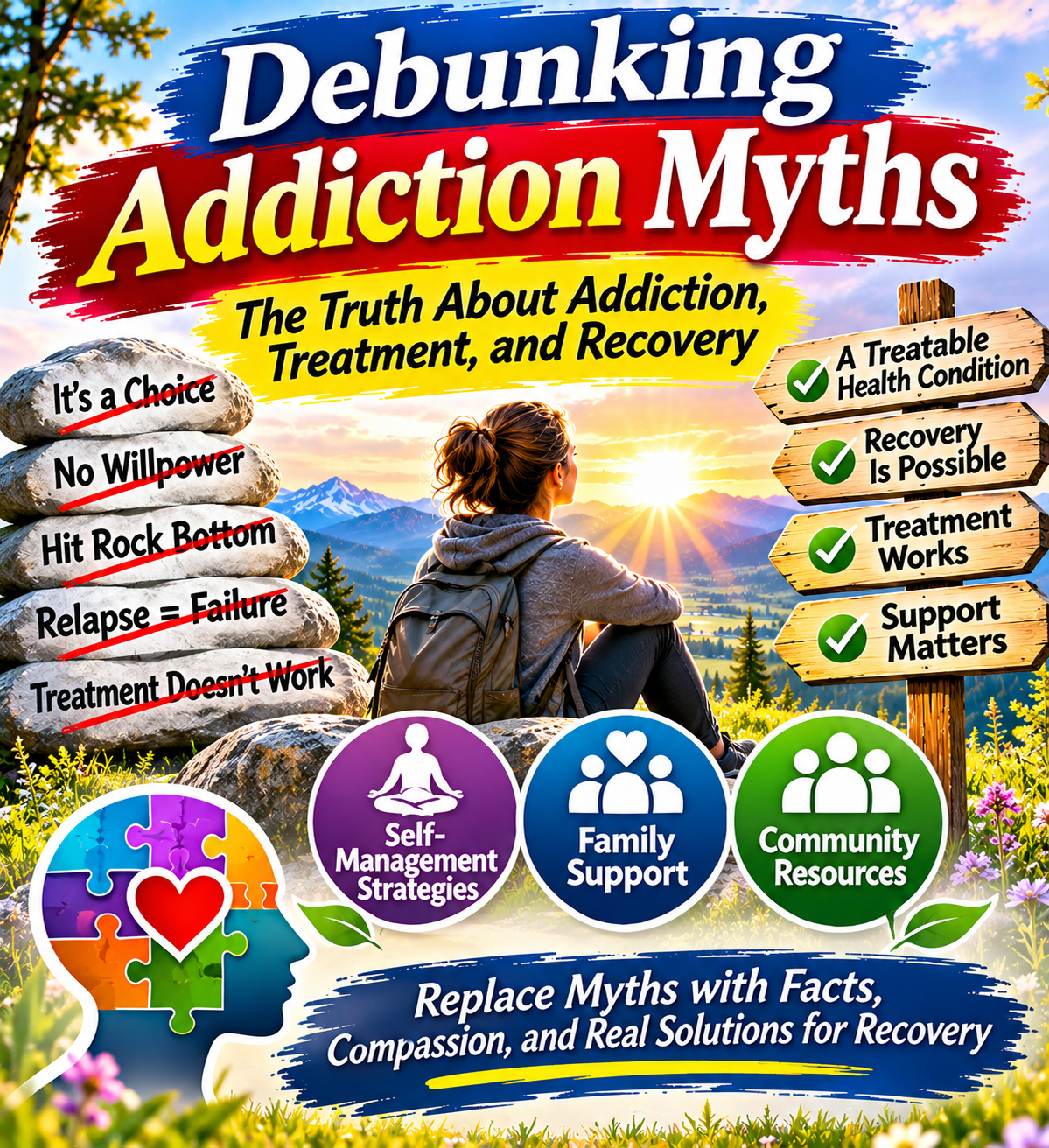
Addiction remains one of the most misunderstood health conditions in society. Despite decades of scientific research demonstrating that substance use disorders involve complex biological, psychological, and social factors, many people continue to believe harmful myths about addiction.
Some believe addiction is simply a choice, that individuals struggling with substance use lack willpower, or that someone must reach rock bottom before seeking treatment. Others assume relapse means failure or that medication-assisted treatment merely replaces one addiction with another.
These misconceptions create stigma, discourage individuals from seeking professional help, and place unnecessary emotional burdens on families.
The reality is that addiction is a treatable medical condition, and recovery is possible with appropriate treatment, personal commitment, family support, and community resources.
Understanding the truth about addiction helps individuals recognize warning signs, make informed treatment decisions, and develop healthier coping strategies.
This article explores ten common addiction myths, explains the scientific evidence behind each misconception, and provides practical self-management, family, and community support strategies.
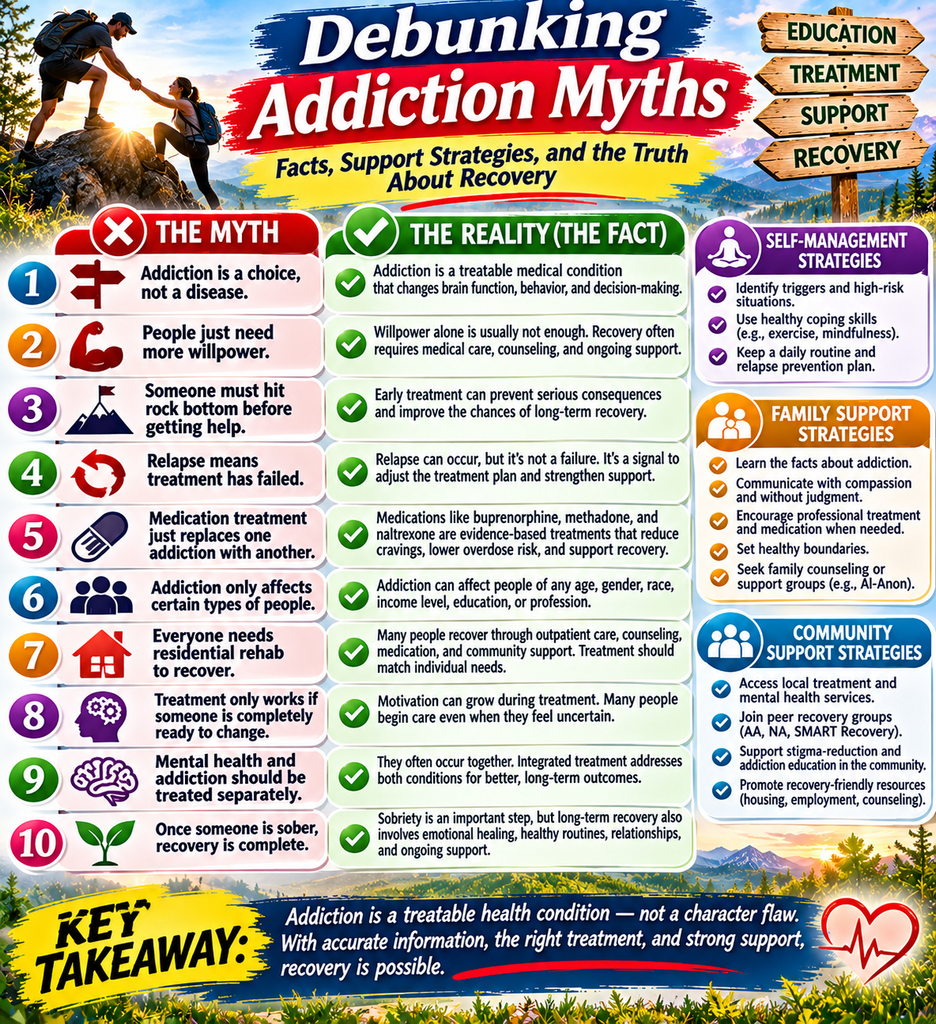
Myth 1: Addiction Is a Choice, Not a Disease
The Myth: People become addicted because they make poor decisions and lack personal responsibility.
The Reality: Substance use disorders are complex, treatable medical conditions involving changes in brain function, behavior, motivation, and self-regulation.
Although the initial decision to use a substance may be voluntary, repeated exposure can produce neuroadaptations that contribute to cravings, impaired control, and continued use despite harmful consequences.
Genetic vulnerability, environmental influences, trauma, mental health conditions, and early substance exposure can also increase addiction risk.
Strategies for Understanding Addiction
- Self-Management: Recognize that addiction is treatable and seek professional evaluation rather than relying exclusively on willpower.
- Family Support: Replace blaming statements with compassionate conversations that encourage treatment.
- Community Support: Promote educational programs explaining the biological, psychological, and social components of addiction.
Understanding addiction as a medical condition does not eliminate personal responsibility. Instead, it supports accountability through treatment, behavior change, and ongoing recovery efforts.
Myth 2: People With Addiction Just Need More Willpower
The Myth: Anyone can stop using drugs or alcohol if they are determined enough.
The Reality: Motivation is important, but addiction involves physiological dependence, conditioned behaviors, cravings, and changes in brain reward systems.
Some substances, including alcohol and benzodiazepines, can produce potentially life-threatening withdrawal symptoms when stopped abruptly after prolonged heavy use.
Others, including opioids, can cause severe withdrawal symptoms and carry substantial overdose risks.
Strategies for Strengthening Recovery
- Self-Management: Develop coping skills, identify triggers, and participate in evidence-based treatment.
- Family Support: Encourage treatment participation instead of criticizing someone for struggling to stop.
- Community Support: Expand access to medical withdrawal management, addiction counseling, and medication treatment.
Recovery requires more than determination. It often involves medical care, psychological support, and changes in daily routines.
Myth 3: Someone Must Hit Rock Bottom Before Getting Help
The Myth: People will not recover until they experience severe consequences such as losing their jobs, homes, or relationships.
The Reality: Waiting for a crisis can increase the risk of overdose, medical complications, legal difficulties, and family disruption.
Early intervention can help individuals address problematic substance use before severe consequences develop.
Motivational interviewing, screening and brief intervention, and accessible treatment programs can help individuals consider change even when they are uncertain about stopping.
Strategies for Early Intervention
- Self-Management: Seek help when substance use begins affecting health, responsibilities, or relationships.
- Family Support: Express concerns early and offer treatment resources without ultimatums or humiliation.
- Community Support: Provide accessible screening, prevention education, and early treatment services.
No one needs to lose everything before deserving help.
Myth 4: Relapse Means Addiction Treatment Has Failed
The Myth: If someone returns to substance use after treatment, recovery is impossible.
The Reality: Substance use disorders can involve periods of remission and recurrence.
A return to substance use does not erase previous progress, but it may indicate that treatment intensity, coping strategies, medications, or support systems need adjustment.
Relapse should never be minimized, particularly with opioids, because reduced tolerance after abstinence increases overdose risk.
Strategies for Responding to Relapse
- Self-Management: Recognize warning signs, contact treatment providers, and revise relapse prevention plans.
- Family Support: Respond with concern and accountability rather than shame or rejection.
- Community Support: Provide rapid access to continuing care, medications, overdose prevention services, and peer recovery support.
Relapse is not inevitable, and it should not be viewed as a required part of recovery.
Myth 5: Medication-Assisted Treatment Simply Replaces One Addiction With Another
The Myth: Medications such as methadone and buprenorphine merely substitute one drug for another.
The Reality: Medications for opioid use disorder are evidence-based treatments that reduce illicit opioid use and significantly lower overdose and mortality risk.
Methadone and buprenorphine help stabilize opioid receptors, reduce withdrawal symptoms, and control cravings.
Physical dependence on a prescribed medication is not the same as addiction, which involves impaired control and continued harmful use.
Strategies for Supporting Medication Treatment
- Self-Management: Discuss medication options with qualified healthcare professionals and follow prescribed treatment plans.
- Family Support: Learn how medications work and avoid stigmatizing individuals receiving treatment.
- Community Support: Expand access to buprenorphine, methadone, and extended-release naltrexone when appropriate.
Medication treatment can continue for as long as it is clinically beneficial. There is no universal requirement to discontinue treatment after a predetermined period.
Myth 6: Addiction Only Affects People From Certain Backgrounds
The Myth: Addiction primarily affects individuals experiencing poverty, unemployment, or unstable living conditions.
The Reality: Substance use disorders can affect people of every age, income level, educational background, and profession.
Physicians, teachers, executives, students, parents, and retirees can all develop substance use disorders.
Social and economic circumstances may influence risk, access to treatment, and recovery outcomes, but addiction is not limited to any demographic group.
Strategies for Reducing Stereotypes
- Self-Management: Recognize that needing addiction treatment does not diminish personal worth.
- Family Support: Avoid comparing a loved one’s struggles with stereotypes about who develops addiction.
- Community Support: Promote inclusive treatment programs that serve diverse populations.
Addiction should be recognized through clinical symptoms and behavioral patterns, not assumptions about appearance, employment, or social status.
Myth 7: People With Addiction Cannot Recover Without Residential Rehabilitation
The Myth: Everyone with addiction must enter a residential treatment facility to achieve sobriety.
The Reality: Many individuals recover through outpatient treatment, medications, counseling, peer support, and other community-based services.
Residential treatment can be appropriate for people with severe symptoms, unstable living environments, complex medical needs, or significant safety concerns.
However, treatment intensity should be determined through individualized clinical assessment.
Strategies for Choosing Treatment
- Self-Management: Discuss outpatient, intensive outpatient, residential, and medication treatment options with a qualified clinician.
- Family Support: Help loved ones access appropriate care without assuming that the most restrictive setting is always best.
- Community Support: Expand affordable outpatient services, telehealth, recovery housing, and transportation assistance.
Effective treatment is defined not by where it occurs but by its quality, accessibility, and appropriateness.
Myth 8: Addiction Treatment Works Only When Someone Is Completely Ready to Change
The Myth: Treatment cannot help individuals who are uncertain about recovery.
The Reality: Motivation often develops gradually.
Some individuals enter treatment because of family concerns, medical complications, workplace requirements, or legal pressures.
Motivational interviewing and other therapeutic approaches can help individuals explore uncertainty and identify personally meaningful reasons for change.
Strategies for Increasing Motivation
- Self-Management: Identify personal goals and consider how substance use affects health, relationships, and responsibilities.
- Family Support: Ask open-ended questions and avoid confrontational attempts to force change.
- Community Support: Provide low-barrier treatment services that welcome individuals at different stages of readiness.
People do not need perfect motivation before beginning treatment.
Myth 9: Mental Health Problems and Addiction Should Be Treated Separately
The Myth: Individuals must completely overcome addiction before receiving treatment for depression, anxiety, PTSD, or other psychiatric conditions.
The Reality: Mental health disorders and substance use disorders frequently occur together.
Untreated psychiatric symptoms can interfere with addiction recovery, while substance use can worsen mental health symptoms.
Integrated treatment addresses both conditions through coordinated medical care, psychotherapy, medication management, and psychosocial support.
Strategies for Managing Co-Occurring Disorders
- Self-Management: Monitor mood symptoms, attend appointments, and follow individualized treatment recommendations.
- Family Support: Encourage evaluation for both substance use and mental health concerns.
- Community Support: Develop integrated dual-diagnosis programs and improve coordination between addiction and psychiatric services.
Treatment does not always need to wait until someone achieves complete abstinence.
Myth 10: Once Someone Is Sober, Recovery Is Complete
The Myth: Stopping alcohol or drug use automatically resolves all addiction-related problems.
The Reality: Recovery often involves rebuilding physical health, emotional stability, relationships, employment, and social connections.
Some individuals continue experiencing cravings, mental health symptoms, or practical difficulties after stopping substance use.
Long-term recovery may involve ongoing medication, counseling, peer support, and lifestyle adjustments.
Strategies for Maintaining Recovery
- Self-Management: Maintain healthy routines, monitor triggers, and develop meaningful goals.
- Family Support: Recognize recovery progress while respecting boundaries and personal independence.
- Community Support: Provide continuing care, recovery housing, employment assistance, and supportive social activities.
Sobriety can be an important part of recovery, but recovery also involves improving health, functioning, and quality of life.
The Science Behind Addiction: Why Myths Persist
Addiction involves interactions among brain function, genetics, learning, environmental exposures, and personal experiences.
Repeated substance use can alter neural circuits involved in reward processing, motivation, stress responses, and decision-making.
These changes may contribute to persistent cravings and difficulty controlling substance use despite harmful consequences.
However, addiction does not eliminate an individual’s ability to make decisions, and brain changes are not necessarily permanent or identical across all substances and individuals.
Recovery can improve brain function, behavior, physical health, and emotional well-being.
Understanding addiction through a biopsychosocial framework helps explain why effective treatment often requires several complementary approaches.
Self-Management Strategies: Taking an Active Role in Recovery
Self-management allows individuals to participate actively in treatment and develop healthier responses to stress, cravings, and emotional challenges.
Practical Self-Management Techniques
- Identify personal triggers and high-risk situations.
- Develop healthy coping strategies such as exercise, mindfulness, and journaling.
- Maintain consistent sleeping and eating schedules.
- Participate in counseling and medication treatment when appropriate.
- Establish realistic short-term and long-term recovery goals.
- Build supportive relationships.
- Develop a relapse prevention and overdose safety plan.
- Seek timely professional help when symptoms worsen.
Self-management should complement evidence-based treatment rather than replace it.
Family Support Strategies: Replacing Stigma With Understanding
Families frequently experience fear, frustration, grief, and uncertainty when a loved one develops a substance use disorder.
Misconceptions about addiction may lead to blaming, shaming, or unrealistic expectations.
Education can help families respond more effectively.
How Families Can Promote Recovery
- Learn about addiction as a treatable medical condition.
- Avoid judgmental or stigmatizing language.
- Encourage treatment without waiting for a crisis.
- Support evidence-based medications.
- Establish healthy financial and emotional boundaries.
- Recognize relapse warning signs.
- Participate in family counseling when appropriate.
- Seek independent emotional support.
- Prioritize safety when violence, overdose, or severe psychiatric symptoms occur.
Family members cannot control another person’s recovery, but they can help create an environment that supports treatment and healthier behavior.
Community Support Strategies: Building a Recovery-Friendly Society
Community attitudes influence whether individuals feel safe seeking addiction treatment.
Stigma can discourage people from disclosing substance use problems, accessing healthcare, or participating in recovery programs.
Communities can reduce these barriers through education, accessible treatment, and supportive public policies.
Community Actions That Make a Difference
- Provide accurate addiction education in schools and workplaces.
- Expand access to medications for opioid use disorder.
- Offer affordable counseling and psychiatric services.
- Support peer recovery organizations.
- Increase access to naloxone and overdose prevention education.
- Promote recovery-friendly employment opportunities.
- Provide stable housing and transportation assistance.
- Encourage nonjudgmental healthcare practices.
- Develop programs for families affected by addiction.
- Support individuals returning to communities after incarceration or treatment.
Communities that emphasize healthcare access, dignity, and evidence-based treatment can help reduce preventable harms and strengthen recovery opportunities.
Addiction Myths vs. Facts: Quick Reference
| Common myth | Evidence-based fact |
|---|---|
| Addiction is simply a choice. | Addiction is a complex, treatable substance use disorder. |
| Willpower alone is enough. | Many people benefit from medical and psychological treatment. |
| People must hit rock bottom. | Early intervention can prevent serious consequences. |
| Relapse means failure. | A return to use calls for reassessment and support. |
| Medication treatment replaces addiction. | Medications can reduce cravings, substance use, and overdose risk. |
| Addiction affects only certain people. | Substance use disorders occur across all demographic groups. |
| Everyone needs residential rehabilitation. | Treatment intensity should match individual needs. |
| Treatment requires complete readiness. | Motivation can develop during treatment. |
| Mental health must be treated separately. | Integrated care is often recommended for co-occurring disorders. |
| Sobriety means recovery is finished. | Recovery may require ongoing medical, emotional, and social support. |
How to Recognize Addiction Misinformation
Misleading addiction information can appear on social media, websites, advertisements, and even within well-intentioned conversations.
Individuals and families should critically evaluate claims about treatment effectiveness.
Warning Signs of Addiction Misinformation
- Promises of a guaranteed cure.
- Claims that everyone must follow the same treatment program.
- Statements that medication treatment is not genuine recovery.
- Advice to abruptly stop alcohol or benzodiazepines without medical supervision.
- Claims that relapse is inevitable or that treatment never works.
- Programs that rely exclusively on shame, confrontation, or punishment.
- Treatment claims unsupported by credible clinical research.
Reliable information should reflect established medical evidence and acknowledge that treatment needs vary.
Where to Find Reliable Addiction Treatment and Support
Individuals and families can access several national resources in the United States.
- SAMHSA National Helpline: 1-800-662-HELP (4357) for treatment referrals and information.
- FindTreatment.gov: Find addiction and mental health treatment.
- National Institute on Drug Abuse: Research and education about addiction.
- Alcoholics Anonymous: Peer support for alcohol recovery.
- Narcotics Anonymous: Peer support for drug recovery.
- SMART Recovery: Evidence-informed recovery support meetings.
- 988 Suicide & Crisis Lifeline: Call or text 988 for emotional crisis support.
For a suspected opioid overdose, administer naloxone if available and call 911 immediately.
Conclusion: Replacing Addiction Myths With Knowledge, Compassion, and Evidence-Based Care
Addiction myths can create barriers that prevent individuals and families from seeking timely treatment.
Believing that addiction is simply a choice, that relapse means failure, or that medication treatment is not legitimate recovery can increase stigma and discourage effective care.
Scientific evidence demonstrates that substance use disorders are treatable conditions influenced by biological, psychological, and social factors.
For individuals, self-management strategies can strengthen coping skills, improve engagement in treatment, and support healthier daily routines.
For families, education, compassionate communication, and appropriate boundaries can help create supportive relationships.
For communities, accessible treatment services, recovery organizations, and stigma-reduction initiatives can improve opportunities for long-term recovery.
The most powerful way to challenge addiction myths is through accurate education, compassionate understanding, and access to evidence-based treatment.
Recovery is possible, and no one should be denied help because of misinformation or stigma.
Frequently Asked Questions and Answers
Understanding Addiction: Separating Myths From Facts
1. Is addiction a choice or a disease?
Myth: Addiction is simply a choice, and people can stop using substances whenever they want.
Fact: Addiction is a complex, treatable medical condition involving biological, psychological, behavioral, and environmental factors.
Although initial substance use may be voluntary, repeated exposure can produce changes in brain systems involved in reward, motivation, learning, and self-control.
These changes can contribute to cravings and continued substance use despite harmful consequences.
Recognizing addiction as a medical condition encourages evidence-based treatment while maintaining personal accountability.
2. Can someone overcome addiction through willpower alone?
Myth: People struggling with addiction simply need stronger determination.
Fact: Motivation is important, but willpower alone may not overcome physical dependence, cravings, withdrawal symptoms, and established behavioral patterns.
Effective treatment may include medications, counseling, behavioral therapies, and peer support.
Individuals with significant alcohol or benzodiazepine dependence should seek medical guidance before stopping abruptly because withdrawal can be life-threatening.
3. Does someone need to hit rock bottom before seeking addiction treatment?
Myth: Individuals must experience severe consequences before they are ready for recovery.
Fact: Early intervention can help prevent overdose, medical complications, family disruption, and other serious consequences.
People can benefit from treatment even when they are uncertain about stopping substance use.
Motivational interviewing and other supportive approaches can help individuals explore their reasons for change.
No one needs to lose everything before receiving help.
4. Does relapse mean addiction treatment has failed?
Myth: Returning to substance use means recovery is impossible.
Fact: Some substance use disorders involve periods of remission and recurrence.
A return to substance use may indicate that treatment needs adjustment or additional support.
Relapse is not inevitable, and it should never be considered harmless. Returning to opioid use after abstinence can be particularly dangerous because reduced tolerance increases overdose risk.
5. Is medication-assisted treatment just replacing one addiction with another?
Myth: Methadone and buprenorphine simply substitute one addictive drug for another.
Fact: Methadone and buprenorphine are evidence-based medications for opioid use disorder that reduce illicit opioid use and lower overdose and mortality risk.
Physical dependence on a prescribed medication is not the same as addiction.
Medications help stabilize brain function, control withdrawal symptoms, and reduce cravings.
Treatment duration should be individualized rather than limited by arbitrary deadlines.
6. Can addiction affect people who are financially successful?
Myth: Addiction only affects people experiencing poverty, unemployment, or unstable housing.
Fact: Substance use disorders can affect individuals from every socioeconomic background.
Healthcare professionals, business executives, students, parents, athletes, and entertainers can all experience addiction.
Financial stability may improve access to resources, but it does not eliminate biological or psychological vulnerability.
7. Is addiction caused entirely by genetics?
Myth: People with a family history of addiction are destined to develop the condition.
Fact: Genetics contribute significantly to addiction vulnerability, but they do not determine an individual’s future.
Environmental exposures, trauma, mental health, peer influences, age of substance initiation, and protective relationships also influence risk.
A family history of addiction increases susceptibility but does not guarantee that someone will develop a substance use disorder.
8. Can someone become addicted after using drugs only once?
Myth: A single exposure always causes addiction.
Fact: Addiction generally develops through patterns of substance use rather than automatically after one exposure.
However, even a single episode of substance use can cause serious harm, including overdose, poisoning, or dangerous impairment.
The risk varies depending on the substance, dose, contamination, route of administration, and individual vulnerability.
9. Is addiction a sign of weak character or poor morals?
Myth: People with addiction lack discipline, responsibility, or moral values.
Fact: Substance use disorders are medical conditions, not measures of personal worth.
People experiencing addiction may struggle with impaired control over substance use while still possessing meaningful strengths, values, and capabilities.
Treatment should promote responsibility and behavioral change without humiliation or stigma.
10. Can someone have an addiction even if they maintain a job and family responsibilities?
Myth: Individuals cannot have addiction if they remain professionally successful and fulfill daily obligations.
Fact: Some people continue working and maintaining relationships while experiencing clinically significant substance use problems.
Warning signs may include cravings, unsuccessful attempts to cut down, hazardous use, and continued substance use despite negative consequences.
Professional success does not rule out addiction.
Addiction Treatment and Recovery Myths
11. Does everyone with addiction need residential rehabilitation?
Myth: Residential rehabilitation is the only effective treatment.
Fact: Many individuals recover through outpatient care, medications, behavioral therapy, and community support.
Residential treatment may be appropriate for individuals with severe symptoms, unstable environments, or complex medical and psychiatric needs.
Treatment intensity should be determined through individualized assessment.
12. Can addiction be cured permanently?
Myth: A single treatment program permanently eliminates addiction.
Fact: Substance use disorders are treatable, and some individuals achieve sustained remission without ongoing symptoms.
Others require long-term treatment or continuing care.
No universal treatment guarantees permanent recovery for everyone.
The goal is sustained improvement in health, functioning, safety, and quality of life.
13. Is detoxification the same as addiction treatment?
Myth: Once withdrawal symptoms disappear, addiction has been treated.
Fact: Detoxification or withdrawal management addresses the immediate physical effects of stopping substance use.
It does not necessarily address cravings, behavioral patterns, psychological distress, or relapse risk.
For opioid use disorder, withdrawal management alone is not recommended as sufficient treatment because it does not adequately protect against overdose and recurrence of opioid use.
14. Is counseling unnecessary when someone takes addiction medication?
Myth: Medication eliminates the need for emotional and behavioral support.
Fact: Counseling can help individuals address stress, trauma, relationships, and recovery goals.
However, counseling is not a prerequisite for receiving effective medications for opioid use disorder.
Buprenorphine and methadone should not be withheld simply because someone cannot participate in psychotherapy.
Treatment should be individualized and patient-centered.
15. Are all addiction treatment programs equally effective?
Myth: Any rehabilitation program can produce the same results.
Fact: Treatment effectiveness depends on the methods used, the condition being treated, clinical quality, accessibility, and individual needs.
Evidence-based programs use appropriate medical treatment, validated behavioral interventions, and ongoing assessment.
Individuals should be cautious of programs that promise guaranteed cures or rely exclusively on shame, confrontation, or unproven methods.
Mental Health and Addiction Myths
16. Do addiction and mental health disorders always occur together?
Myth: Everyone with addiction has an underlying mental illness.
Fact: Substance use disorders and psychiatric conditions frequently coexist, but not every person with addiction has a separate mental health diagnosis.
Depression, anxiety, PTSD, bipolar disorder, and other conditions may complicate substance use treatment.
Comprehensive assessment helps identify which conditions require treatment.
17. Should mental health treatment wait until someone becomes sober?
Myth: Individuals must achieve complete abstinence before receiving psychiatric care.
Fact: Co-occurring substance use and mental health disorders often benefit from integrated treatment.
Treating depression, anxiety, trauma-related symptoms, or bipolar disorder alongside addiction can improve care coordination and address factors interfering with recovery.
Some assessments may require reassessment after intoxication or withdrawal resolves, but mental health care should not automatically be postponed.
18. Does trauma always cause addiction?
Myth: Everyone who experiences trauma eventually develops a substance use disorder.
Fact: Trauma can increase vulnerability to substance use problems, but many individuals exposed to traumatic experiences never develop addiction.
Genetic factors, social support, coping skills, environmental conditions, and access to treatment influence outcomes.
Trauma-informed care helps healthcare professionals provide safe, respectful treatment without assuming that all substance use results from trauma.
Family and Community Support Myths
19. Can family members force someone to recover from addiction?
Myth: Families can make someone recover through strict control, confrontation, or ultimatums.
Fact: Families can encourage treatment and establish healthy boundaries, but they cannot guarantee another person’s recovery.
Supportive communication, motivational approaches, and evidence-informed family interventions may improve engagement in treatment.
In emergencies, involuntary evaluation or treatment may be considered under applicable laws, but these measures require appropriate legal and clinical safeguards.
20. Does helping someone with addiction always mean enabling them?
Myth: Providing food, housing, transportation, or emotional support encourages continued substance use.
Fact: Helping and enabling are not the same.
Providing basic necessities, overdose prevention supplies, or transportation to treatment can reduce harm and support recovery.
Families should establish boundaries around dangerous behavior while avoiding unnecessary withdrawal of essential support.
21. Is addiction recovery possible without family support?
Myth: People cannot recover unless their families participate.
Fact: Family involvement can be valuable, but recovery is possible without it.
Some individuals have limited family contact, experience unsafe family relationships, or lack supportive relatives.
Peer recovery groups, counselors, recovery community centers, and trusted friends can provide meaningful support.
22. Do peer support groups replace professional addiction treatment?
Myth: Attending recovery meetings eliminates the need for medical treatment.
Fact: Peer support organizations can provide encouragement, accountability, and social connections.
However, they do not replace medically indicated treatments such as medications for opioid use disorder, withdrawal management, or psychiatric care.
Peer support is often most beneficial as part of a comprehensive recovery plan.
Long-Term Recovery and Prevention Myths
23. Is complete abstinence the only meaningful sign of recovery?
Myth: Any improvement that falls short of total abstinence has no value.
Fact: Abstinence is an important treatment goal for many individuals, particularly when continued substance use creates significant health risks.
However, reductions in substance use, overdose risk, infectious disease transmission, and other harms can also represent meaningful progress.
Recovery goals should be individualized while prioritizing safety and evidence-based care.
24. Can people maintain recovery without changing their lifestyle?
Myth: Stopping substance use is the only change necessary.
Fact: Recovery often involves addressing factors that contribute to substance use, including stress, social environments, untreated psychiatric symptoms, and unstable living conditions.
Healthy routines, supportive relationships, meaningful activities, and ongoing care can strengthen recovery.
Not everyone needs major lifestyle changes, but identifying and addressing personal risk factors is important.
25. What is the biggest misconception about addiction?
One of the most harmful misconceptions is that people with addiction are incapable of change.
Scientific evidence demonstrates that substance use disorders are treatable and that many individuals achieve meaningful improvements in health and functioning.
Recovery may involve medications, psychotherapy, behavioral changes, family education, and community support.
Addiction does not define a person’s character, potential, or future. Recovery is possible, and everyone deserves access to compassionate, evidence-based care.
Video: