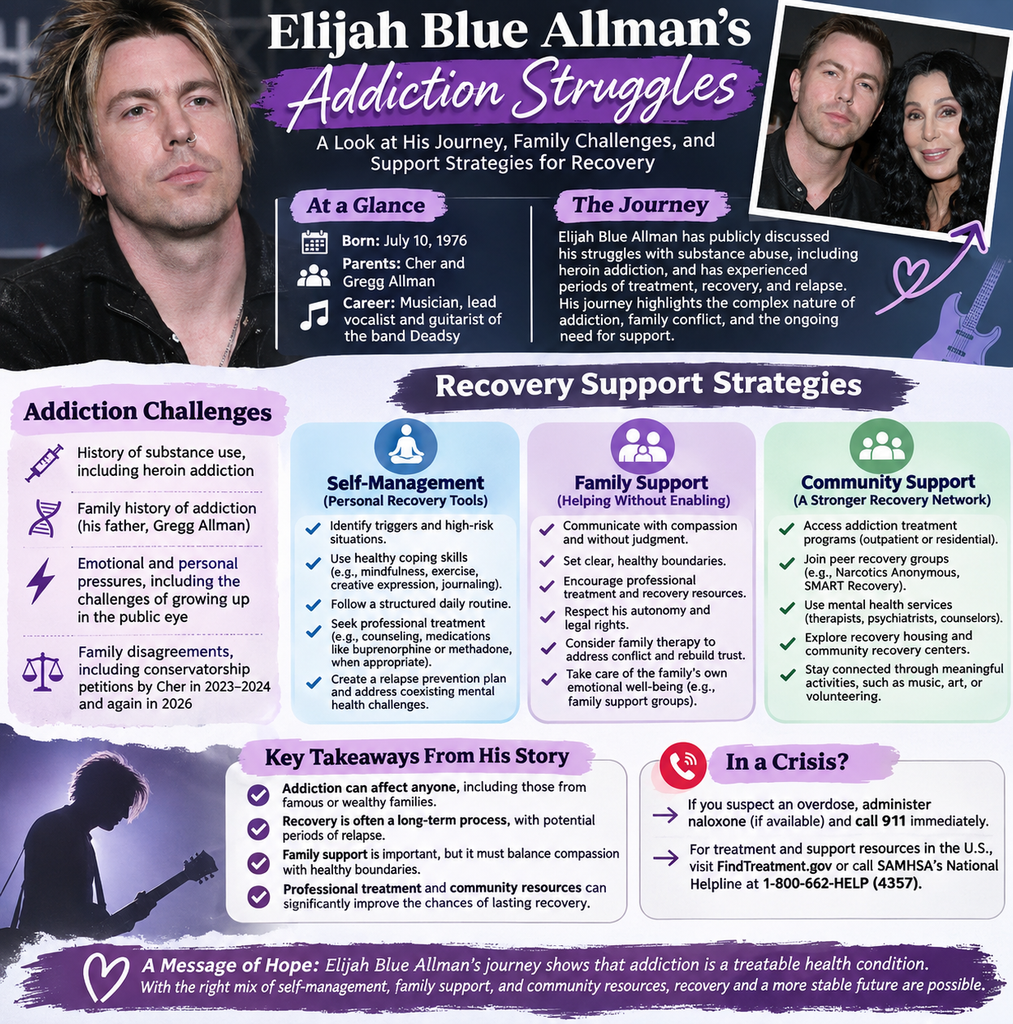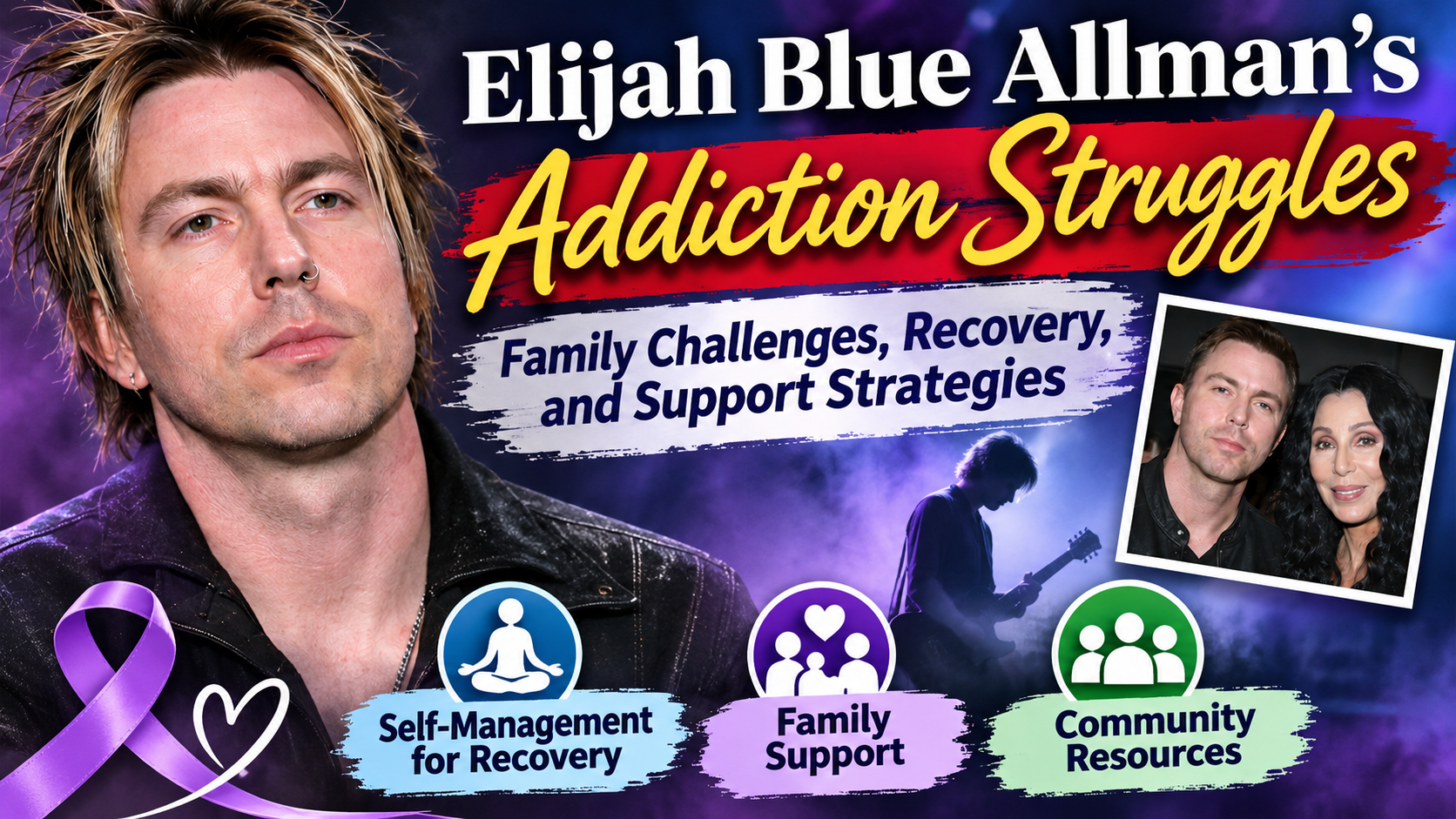
Growing up in a famous family may appear glamorous, but behind the public attention, individuals can experience emotional struggles, substance use disorders, and complicated family relationships. Elijah Blue Allman, the son of legendary entertainers Cher and Gregg Allman, has publicly discussed his experiences with substance abuse and recovery.
Born on July 10, 1976, Elijah Blue Allman followed his parents into the music industry, becoming the lead vocalist and guitarist of the industrial rock band Deadsy.
Despite his artistic achievements, his personal life has attracted attention because of his history of substance use, reported relapses, and family disagreements concerning his well-being.
His experiences illustrate how addiction can affect people regardless of their financial circumstances, social status, or family background.
Understanding Elijah’s journey provides an opportunity to explore three essential components of addiction recovery: self-management, family support, and community resources.
Understanding Elijah Blue Allman’s Addiction Struggles
Elijah Blue Allman has spoken publicly about substance use beginning during adolescence and his experiences with heroin addiction. He has also described periods of treatment and recovery.
His father, Gregg Allman, had a well-documented history of substance use problems. Although a family history of addiction can increase vulnerability through genetic and environmental influences, it does not determine whether someone will develop a substance use disorder.
Growing up surrounded by the pressures of celebrity culture may introduce unique challenges, but it would be inappropriate to assume that fame or any particular family relationship caused Elijah’s addiction.
Factors That Can Contribute to Substance Use Disorders
- Genetic vulnerability: A family history of addiction can increase susceptibility to substance use disorders.
- Early substance exposure: Beginning alcohol or drug use during adolescence is associated with a higher risk of later problems.
- Emotional distress: Anxiety, depression, trauma, and other psychological difficulties may coexist with substance use.
- Environmental influences: Social pressures, access to substances, and stressful circumstances can contribute to unhealthy patterns.
- Limited coping skills: Some individuals use substances to manage difficult emotions or escape distress.
Addiction is a complex, treatable medical condition involving changes in brain reward, motivation, learning, and self-regulation.
Recognizing these factors helps families replace blame and judgment with education, appropriate treatment, and compassionate support.
Family Conflicts and Concerns About His Well-Being
Elijah’s relationship with his mother, Cher, has received significant media attention.
In December 2023, Cher filed a petition seeking a temporary conservatorship over Elijah’s estate, expressing concerns about his ability to manage his finances in connection with alleged mental health and substance use difficulties.
The proposed conservatorship became a public family dispute. In September 2024, Cher withdrew the petition, ending that particular legal proceeding.
It is important to distinguish the family’s publicly reported concerns from independently established medical findings. A conservatorship petition does not, by itself, establish that someone is incapable of making decisions.
Lessons Families Can Learn
Families affected by addiction frequently struggle with questions about how much assistance to provide and when intervention becomes necessary.
Common challenges include:
- Recognizing the difference between helping and enabling unhealthy behaviors.
- Communicating concerns without threats, humiliation, or blame.
- Respecting an adult family member’s autonomy and legal rights.
- Establishing financial and emotional boundaries.
- Encouraging professional evaluation rather than relying exclusively on family intervention.
- Managing disagreements about treatment decisions.
Elijah’s publicly reported family difficulties highlight the importance of balancing concern for a loved one’s safety with respect for individual independence.
Self-Management Strategies for Addiction Recovery
Self-management involves developing the awareness, skills, and routines needed to support recovery.
For individuals with opioid use disorder or other substance use disorders, self-management is most effective when combined with evidence-based treatment and ongoing professional care.
Practical Self-Management Strategies
- Recognize personal triggers: Identify situations, emotions, environments, and relationships associated with cravings.
- Develop healthy coping mechanisms: Practice mindfulness, relaxation, exercise, creative expression, or journaling.
- Create a structured routine: Establish regular schedules for sleeping, eating, working, and recreation.
- Seek professional treatment: Participate in addiction counseling and medical treatment when indicated.
- Consider appropriate medications: For opioid use disorder, buprenorphine and methadone reduce overdose and mortality risks. Extended-release naltrexone is another option for appropriately selected patients.
- Develop a relapse prevention plan: Identify warning signs, supportive contacts, and steps to take if substance use returns.
- Maintain supportive relationships: Spend time with people who respect recovery goals.
- Address coexisting mental health conditions: Seek assessment and treatment for depression, anxiety, trauma-related symptoms, or other concerns.
The Importance of Recognizing Relapse Warning Signs
Recovery is not always straightforward. Some individuals experience a return to substance use after months or years of improvement.
Possible warning signs include increased cravings, withdrawal from supportive relationships, missed treatment appointments, and renewed contact with environments associated with previous drug use.
A return to substance use does not erase earlier progress. However, it should prompt reassessment of treatment, safety, and available support.
For people with opioid use disorder, relapse after a period of abstinence can be especially dangerous because reduced tolerance increases the risk of overdose.
Recovery requires more than willpower. It involves medical care, emotional support, practical coping skills, and long-term commitment.
Family Support Strategies: Helping Without Enabling
Family members often experience fear, frustration, sadness, and uncertainty when someone they love struggles with addiction.
Cher and Elijah’s public disagreements demonstrate how complicated family relationships can become when concerns about substance use, mental health, and personal independence overlap.
Although every family situation is different, several approaches can help create healthier relationships.
Effective Family Support Strategies
- Practice compassionate communication: Express concerns using supportive language rather than accusations.
- Set healthy boundaries: Clearly explain which behaviors and forms of assistance are acceptable.
- Avoid enabling harmful behavior: Do not conceal dangerous conduct or repeatedly assume responsibilities that prevent accountability.
- Encourage treatment participation: Offer assistance locating addiction specialists, counseling programs, or recovery services.
- Respect personal autonomy: Recognize that adults generally have the right to participate in decisions about their own care.
- Participate in family therapy: Work with trained professionals to address communication difficulties, trust, and conflict.
- Learn about addiction: Understand that substance use disorders involve biological, psychological, and social factors.
- Protect family members’ well-being: Seek counseling or support groups to manage stress and emotional exhaustion.
Understanding the Difference Between Support and Control
Families sometimes believe that taking complete control of a loved one’s finances, relationships, or treatment decisions will prevent further substance use.
However, excessive control may increase conflict and undermine trust.
Effective support generally emphasizes collaboration, clear boundaries, and professional guidance. More restrictive interventions may be appropriate in specific emergencies or legal circumstances, but they require individualized assessment and appropriate safeguards.
The goal is to promote safety and recovery while preserving dignity and independence whenever possible.
Community Support Strategies: Building a Strong Recovery Network
Community support plays a significant role in helping individuals maintain recovery and rebuild their lives.
For people experiencing long-term addiction challenges, professional treatment combined with supportive relationships can reduce isolation and improve access to care.
Community Resources That Support Recovery
- Addiction treatment programs: Outpatient clinics, residential facilities, and intensive outpatient programs provide structured treatment.
- Peer recovery groups: Narcotics Anonymous, SMART Recovery, and other mutual-help programs offer encouragement and accountability.
- Family support organizations: Nar-Anon and other family-focused groups help loved ones develop coping strategies.
- Mental health services: Psychiatrists, therapists, and counselors can assess and treat coexisting psychiatric conditions.
- Recovery community centers: These organizations offer peer mentoring, educational opportunities, and sober activities.
- Recovery housing: Supportive living environments may help individuals establish stability.
- Creative outlets: Music, art, volunteering, and other meaningful activities can strengthen social connections and personal identity.
For Elijah, music has been an important part of his public identity. More generally, creative expression can provide people in recovery with a constructive way to explore emotions and develop purpose.
However, music and other wellness activities should complement, rather than replace, evidence-based addiction treatment.
Recent Developments in Elijah Blue Allman’s Journey
Elijah’s challenges have continued beyond the original 2023–2024 conservatorship dispute.
In June 2025, media outlets reported that he had been hospitalized following concerns about his behavior and well-being. Los Angeles Times
In 2026, additional legal difficulties and renewed family concerns became public. Cher filed another conservatorship petition in April 2026, citing alleged deterioration in his mental health, substance use, and financial stability.
A judge declined to grant an emergency conservatorship in April. Subsequent reporting described continuing legal proceedings and disagreements among family members about appropriate oversight and treatment. Rolling Stone Australia+2
These developments demonstrate that addiction-related family challenges may continue over many years. They do not establish Elijah’s current diagnosis, substance use status, or eventual recovery outcome.
Important Lessons From Elijah Blue Allman’s Experience
Elijah’s publicly documented history offers several important lessons for individuals, families, and communities affected by addiction.
Addiction does not discriminate. Substance use disorders can affect individuals from every socioeconomic background, including people raised in wealthy or famous families.
Family history increases risk but does not determine destiny. Genetic vulnerability may contribute to addiction, but protective relationships, prevention, and early treatment can make a difference.
Recovery may require long-term care. Substance use disorders can involve periods of improvement and recurrence. Continuing treatment and adjusting recovery plans are essential.
Family support should balance compassion with boundaries. Loved ones can encourage treatment without sacrificing their own well-being or unnecessarily removing personal independence.
Professional treatment is essential. Evidence-based medications, behavioral therapies, and appropriate psychiatric care can improve outcomes.
Community connections reduce isolation. Peer support, meaningful activities, and stable relationships help people build healthier lives.
How Families Can Respond During an Addiction Crisis
When a loved one experiences a substance-related crisis, immediate safety becomes the priority.
Families should recognize signs of overdose, including unresponsiveness, slow or absent breathing, and unusual breathing sounds.
If an opioid overdose is suspected, administer naloxone if available, call 911, and provide rescue breathing or CPR according to emergency dispatcher instructions and training. Additional naloxone doses may be needed.
After the emergency, families can help connect the individual with addiction treatment, overdose prevention education, and ongoing recovery services.
For treatment referrals in the United States, contact FindTreatment.gov or SAMHSA’s National Helpline at 1-800-662-HELP (4357).
Conclusion: Addiction Recovery Requires Compassion, Treatment, and Continued Support
Elijah Blue Allman’s experience illustrates the complexity of substance use disorders and the challenges families face when trying to protect someone they love.
His history of addiction, periods of recovery, family disagreements, and recent legal difficulties demonstrate that recovery cannot always be understood as a simple journey from substance use to permanent sobriety.
For individuals struggling with addiction, self-management skills, professional treatment, and healthy daily routines can help establish a foundation for recovery.
For families, compassionate communication, appropriate boundaries, and respect for personal autonomy can strengthen relationships while encouraging accountability.
For communities, accessible treatment services, recovery organizations, and mental health resources provide essential opportunities for healing.
Ultimately, Elijah’s story is a reminder that addiction should be approached as a treatable health condition rather than a moral failure.
No family can guarantee another person’s recovery, but education, evidence-based treatment, and consistent support can create better opportunities for lasting change.
Recovery is not defined by perfection. It is built through continued care, resilience, and the willingness to seek help.
Frequently Asked Questions and Answers
1. Who is Elijah Blue Allman?
Elijah Blue Allman is an American musician born on July 10, 1976. He is the son of legendary singer Cher and rock musician Gregg Allman. He is best known as the lead vocalist and guitarist of the industrial rock band Deadsy. Beyond his musical career, he has received public attention for his history of substance use and complicated family relationships.
2. What addiction struggles has Elijah Blue Allman experienced?
Elijah Blue Allman has publicly discussed struggling with substance use, including heroin addiction, beginning during his teenage years. He has described experiences with addiction treatment and recovery. His history highlights the challenges associated with opioid dependence and the importance of long-term recovery support.
3. At what age did Elijah Blue Allman begin using drugs?
Elijah has reported experimenting with drugs around age 11. Early exposure to substances can increase the risk of developing substance use disorders because the adolescent brain is still developing, particularly in areas responsible for decision-making, impulse control, and emotional regulation.
4. Did Elijah Blue Allman’s family history contribute to his addiction?
His father, Gregg Allman, experienced well-documented struggles with alcohol and drugs. Research indicates that genetic factors contribute to vulnerability to substance use disorders. However, addiction develops through a combination of genetic, environmental, psychological, and social influences. Family history increases risk but does not guarantee that addiction will develop.
5. How did Elijah Blue Allman’s addiction affect his relationship with Cher?
Elijah and Cher have experienced publicly reported disagreements involving his well-being, financial independence, and treatment-related concerns. In December 2023, Cher sought a temporary conservatorship over his estate, citing concerns related to alleged substance use and mental health difficulties. She withdrew that petition in September 2024. Their experience illustrates how addiction-related concerns can create complicated family conflicts.
6. Why did Cher seek a conservatorship for Elijah Blue Allman?
Cher’s 2023 petition expressed concerns about Elijah’s ability to manage his financial affairs and protect his well-being. A conservatorship is a legal arrangement that may allow another person to manage certain decisions for an adult when specific legal requirements are met. However, having a substance use disorder does not automatically establish that someone needs a conservatorship.
7. Has Elijah Blue Allman attended addiction rehabilitation programs?
Elijah has publicly discussed receiving treatment for substance use problems. Addiction rehabilitation may involve medically supervised withdrawal management, residential treatment, outpatient counseling, medication-assisted treatment, and peer recovery support. His complete private treatment history is not publicly established.
8. Has Elijah Blue Allman experienced relapses?
Public accounts have described periods of recovery and renewed concerns about substance use. However, his current substance use and recovery status should not be assumed from media reports or family allegations. In general, recurrence of substance use can occur during recovery and indicates a need to reassess treatment rather than abandon recovery efforts.
9. What are the long-term health risks associated with heroin addiction?
Heroin use can cause serious physical and psychological complications, including:
- Opioid overdose and respiratory depression.
- Physical dependence and withdrawal symptoms.
- Increased risk of HIV and hepatitis C through shared injection equipment.
- Heart infections and other injection-related complications.
- Depression, anxiety, and social difficulties.
- Increased overdose risk after periods of abstinence because of reduced opioid tolerance.
Evidence-based treatment significantly reduces many of these risks.
10. How can self-management strategies help someone struggling with addiction?
Self-management strategies help individuals recognize triggers, manage cravings, and establish healthier routines. Effective approaches include identifying high-risk situations, practicing stress reduction, maintaining regular sleep and exercise, attending counseling, and developing a relapse prevention plan. For opioid use disorder, self-management should complement medical treatment, including medications such as buprenorphine or methadone when appropriate.
11. What role does mental health play in addiction recovery?
Mental health conditions and substance use disorders frequently occur together. Depression, anxiety, trauma-related disorders, and other psychiatric conditions can complicate recovery. Integrated treatment that addresses both substance use and mental health concerns can improve outcomes. It is important not to assign Elijah a particular psychiatric diagnosis without reliable clinical confirmation.
12. How can family members support someone experiencing addiction?
Families can provide emotional encouragement while maintaining healthy boundaries. Helpful strategies include:
- Communicating with compassion rather than judgment.
- Encouraging professional addiction treatment.
- Learning about substance use disorders.
- Participating in family counseling when appropriate.
- Establishing clear financial and personal boundaries.
- Respecting the individual’s dignity and autonomy.
- Seeking support for their own emotional well-being.
Family involvement can strengthen recovery, but relatives cannot independently control another person’s substance use.
13. What is the difference between helping and enabling someone with addiction?
Helping involves providing support that promotes safety, treatment, and personal responsibility. Enabling generally refers to behaviors that unintentionally maintain harmful patterns, such as repeatedly concealing dangerous behavior or removing accountability without addressing underlying problems.
However, providing food, shelter, overdose prevention supplies, or access to medical care should not automatically be considered enabling. Families benefit from individualized guidance when deciding how to set appropriate boundaries.
14. Can someone recover from heroin addiction after years of substance use?
Yes. Long-term recovery from heroin and other opioid use disorders is possible, even after repeated episodes of substance use. Medications such as methadone and buprenorphine are associated with substantial reductions in overdose and mortality risk. Counseling, stable housing, supportive relationships, and ongoing treatment can further strengthen recovery.
15. Why is relapse prevention important in addiction recovery?
Relapse prevention helps individuals recognize warning signs and respond before substance use escalates. Strategies include identifying triggers, maintaining treatment appointments, building supportive relationships, and developing emergency plans.
For individuals recovering from opioid addiction, a return to use can be particularly dangerous because tolerance decreases during abstinence. Access to naloxone and continued medical treatment are important safety measures.
16. How can community support programs help individuals like Elijah Blue Allman?
Community programs provide access to treatment, education, peer connections, and practical recovery resources. Organizations such as Narcotics Anonymous, SMART Recovery, and recovery community centers can help reduce isolation and strengthen motivation. Family members may also benefit from Nar-Anon and other support programs.
17. Can music and creative activities support addiction recovery?
Yes. Music, art, writing, and other creative activities may help individuals express emotions, manage stress, and develop a sense of purpose. As a professional musician, Elijah has maintained a public connection to music throughout his life. However, it would be speculative to claim that particular musical activities were responsible for his recovery. Creative expression is best viewed as a complement to evidence-based treatment.
18. What should families do when a loved one refuses addiction treatment?
Families can express concerns calmly, offer treatment options, and establish boundaries that protect everyone’s safety. Motivational interviewing approaches and Community Reinforcement and Family Training (CRAFT) may help relatives encourage treatment engagement without confrontation. In emergencies involving overdose, immediate danger, or severe impairment, emergency medical evaluation may be necessary.
19. What lessons can parents learn from Elijah Blue Allman’s experiences?
His publicly discussed substance use history reinforces the importance of early prevention, open communication, and recognizing potential warning signs in adolescents. Parents can reduce risks by discussing substance use without shame, monitoring significant behavioral changes, supporting emotional development, and obtaining professional assessments when concerns arise. Early intervention may prevent substance-related problems from becoming more severe.
20. What is the most important lesson from Elijah Blue Allman’s addiction struggles?
Elijah Blue Allman’s story demonstrates that addiction can affect anyone, regardless of fame, wealth, or family background. It also highlights how substance use concerns can complicate family relationships and decisions about personal independence.
The central lesson is that addiction is a treatable health condition requiring compassion, appropriate medical care, healthy boundaries, and continued support. Recovery is possible, but every individual’s experience is different.
Where Can Families Find Addiction Treatment and Support?
Individuals and families seeking assistance can contact the following U.S. resources:
- SAMHSA National Helpline: 1-800-662-HELP (4357), for treatment referrals and information.
- FindTreatment.gov: Find addiction and mental health treatment.
- Narcotics Anonymous: Find peer recovery meetings.
- SMART Recovery: Explore recovery meetings and resources.
- 988 Suicide & Crisis Lifeline: Call or text 988 for mental health or substance-related emotional crises.
If an opioid overdose is suspected, administer naloxone if available and call 911 immediately.
Video: