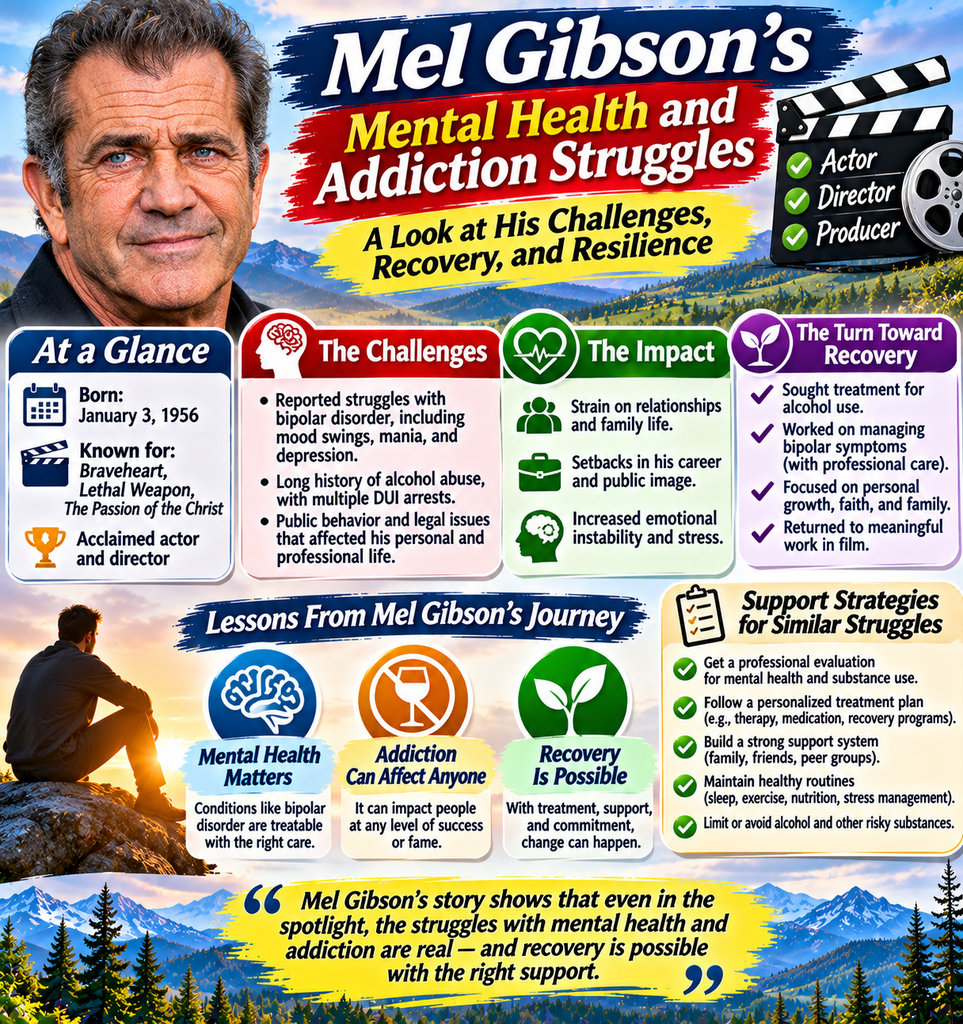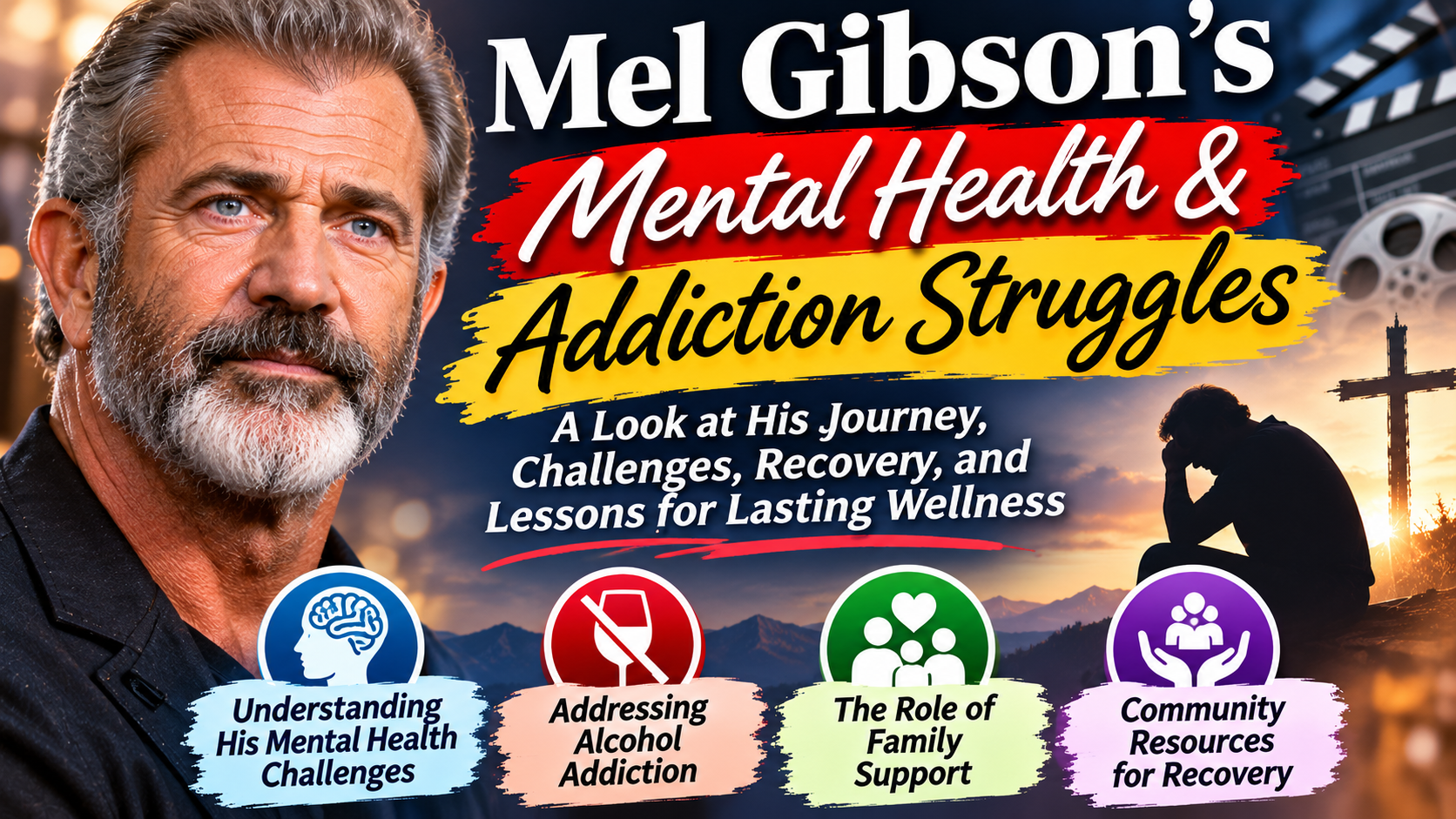
Mel Gibson is one of Hollywood’s most recognizable actors and filmmakers, known for his performances in Braveheart, Lethal Weapon, and The Patriot, and for directing The Passion of the Christ and Hacksaw Ridge.
Despite his professional achievements, Gibson’s personal life has included publicly documented alcohol-related problems, legal controversies, relationship conflicts, and reports concerning his mental health.
His experiences illustrate how mental health conditions and substance use problems can coexist, creating challenges that affect emotional regulation, relationships, judgment, and personal well-being.
Gibson has publicly discussed problems with alcohol, including his 2006 arrest for driving under the influence. He has also been associated with reports of bipolar disorder, although details of his clinical diagnosis, treatment, and current mental health status are not fully established in reliable public records.
His behavior during several public controversies has generated significant criticism, particularly regarding offensive remarks and interpersonal conflicts. Understanding the role of addiction and mental health does not excuse harmful behavior or remove personal accountability.
His story provides an opportunity to explore three essential components of recovery: self-management, family support, and community resources.
Understanding Mel Gibson’s Mental Health Challenges
Mental health difficulties can affect people regardless of fame, wealth, or professional success.
Gibson has been linked to public discussions of bipolar disorder, a psychiatric condition involving episodes of depression and mania or hypomania.
However, reports about a celebrity’s mental health should be interpreted carefully. A confirmed psychiatric diagnosis requires clinical evaluation, and the public does not have access to Gibson’s complete medical history.
What Is Bipolar Disorder?
Bipolar disorder is a mood disorder characterized by significant changes in mood, energy, activity, and functioning.
Symptoms vary depending on the type of bipolar disorder and the nature of the mood episode.
Possible symptoms include:
- Mania: Elevated or unusually irritable mood, increased energy, decreased need for sleep, racing thoughts, impulsivity, and potentially risky behavior.
- Hypomania: Similar symptoms that are less severe than full mania but represent a noticeable change in functioning.
- Depression: Persistent sadness, loss of interest, fatigue, changes in sleep, difficulty concentrating, and feelings of hopelessness.
- Mood instability: Episodes of significant mood changes that may disrupt work, relationships, and daily functioning.
Bipolar disorder should not be confused with ordinary mood swings, anger, or occasional emotional reactions.
It is also important to recognize that aggressive behavior, offensive language, or relationship conflict does not establish that someone is experiencing mania or another psychiatric episode.
How Mental Health Conditions Can Affect Daily Life
When mood disorders are untreated or inadequately managed, individuals may experience difficulties maintaining relationships, regulating emotions, following routines, and making decisions.
Treatment may involve mood-stabilizing medications, certain antipsychotic medications, psychotherapy, sleep regulation, and ongoing psychiatric monitoring.
For people with both bipolar disorder and substance use problems, integrated treatment addressing both conditions is particularly important.
Mel Gibson’s Publicly Documented Alcohol-Related Struggles
One of the most widely reported incidents involving Mel Gibson occurred in July 2006, when he was arrested for driving under the influence in Malibu, California.
During the incident, he made antisemitic remarks that generated widespread condemnation. Gibson subsequently apologized for his statements and acknowledged his drinking problem.
The incident demonstrated how alcohol-related impairment can increase the risk of dangerous decisions and serious consequences.
However, alcohol intoxication does not excuse discriminatory remarks or harmful behavior. Recovery requires both addressing substance use and taking responsibility for one’s actions.
How Alcohol Can Affect Mental Health
Excessive alcohol consumption can:
- Impair judgment and reduce behavioral inhibition.
- Increase impulsivity and emotional reactivity.
- Disrupt sleep and interfere with emotional regulation.
- Worsen symptoms of depression and anxiety.
- Complicate the management of bipolar disorder.
- Increase relationship conflicts and occupational difficulties.
- Contribute to physical dependence and alcohol use disorder.
For individuals experiencing bipolar disorder, alcohol can interfere with medication adherence, destabilize sleep patterns, and increase the risk of mood episodes.
Treating alcohol use and psychiatric symptoms together can improve overall functioning and reduce the likelihood of recurring problems.
Mel Gibson’s Recovery Journey: Recognizing the Need for Change
Gibson has spoken openly about his struggle to maintain sobriety over the years.
Following his 2006 arrest, he entered an alcohol recovery program. In an interview with Diane Sawyer, he discussed his drinking history and acknowledged the impact of his behavior on his family and others. ABC News+1
In a 2016 interview, Gibson reported achieving ten years of sobriety through participation in a 12-step recovery program. He also described previous periods of sobriety followed by a return to drinking. ABC News
These statements provide insight into his recovery experiences, although they do not independently establish his current sobriety status.
Important Lessons From His Recovery Experience
- Acknowledging a problem: Recognizing harmful alcohol use is an important step toward seeking treatment.
- Accepting accountability: Taking responsibility for harmful behavior is necessary for rebuilding trust.
- Participating in recovery programs: Peer support and structured treatment can help maintain sobriety.
- Recognizing relapse risks: Stress, emotional difficulties, and environmental triggers can increase vulnerability.
- Building long-term support: Recovery often requires continuing care rather than a single treatment episode.
- Developing healthier coping skills: Emotional regulation and stress management can reduce reliance on alcohol.
Recovery does not automatically repair damaged relationships or reverse previous behavior. Meaningful change requires sustained effort, accountability, and respect for others.
Self-Management Strategies for Mental Health and Addiction Recovery
Self-management is an essential component of maintaining emotional stability and preventing a return to problematic substance use.
For individuals experiencing both alcohol use disorder and bipolar disorder, treatment should address the interaction between substance use, mood symptoms, sleep patterns, and medication adherence.
Practical Self-Management Strategies
- Identify personal triggers: Recognize situations, emotions, and social environments associated with alcohol cravings.
- Develop a daily routine: Maintain consistent sleep, eating, exercise, and work schedules.
- Monitor mood changes: Track changes in energy, sleep, irritability, and depressive symptoms.
- Participate in professional treatment: Attend counseling and psychiatric appointments when indicated.
- Follow prescribed medication plans: Take medications as directed and discuss adverse effects with healthcare professionals.
- Practice stress reduction: Use mindfulness, breathing exercises, relaxation techniques, and healthy recreation.
- Develop a relapse prevention plan: Identify warning signs, emergency contacts, and steps for obtaining additional treatment.
- Build accountability: Work with trusted supporters, therapists, or recovery sponsors.
- Avoid high-risk situations: Limit exposure to circumstances associated with previous harmful drinking patterns.
Evidence-Based Treatment Options
Treatment for alcohol use disorder may include cognitive behavioral therapy, motivational interviewing, relapse prevention counseling, and medications such as naltrexone or acamprosate.
Treatment for bipolar disorder may involve mood stabilizers, certain atypical antipsychotics, psychotherapy, and regular monitoring.
When both conditions are present, coordinated care is important because alcohol can worsen mood symptoms and interfere with psychiatric treatment.
Individuals with significant alcohol dependence should not abruptly discontinue drinking without medical advice because withdrawal may cause seizures or other life-threatening complications.
Family Support Strategies: Healing Relationships and Establishing Boundaries
Alcohol use disorders and untreated mental health symptoms can place significant strain on family relationships.
Gibson’s personal life has included divorce and widely publicized conflicts involving former partners.
These events demonstrate the importance of discussing family safety, emotional boundaries, and accountability when substance use and relationship problems occur together.
However, mental illness and addiction should never be used to excuse intimidation, threats, or domestic violence.
Effective Family Support Strategies
- Communicate respectfully: Express concerns without humiliation, threats, or unnecessary confrontation.
- Encourage professional treatment: Help identify addiction specialists, psychiatrists, and appropriate counseling programs.
- Establish healthy boundaries: Clearly define acceptable behavior and consequences for harmful actions.
- Avoid enabling dangerous behavior: Do not conceal alcohol-related risks or repeatedly protect someone from appropriate accountability.
- Support treatment adherence: Encourage attendance at appointments and participation in recovery activities.
- Recognize emotional warning signs: Pay attention to significant changes in mood, behavior, sleep, and substance use.
- Seek individual counseling: Family members may need their own emotional support.
- Prioritize safety: When threats, coercion, or violence occur, focus on protecting those affected rather than attempting to resolve the situation through family discussions alone.
Rebuilding Trust After Addiction
Trust is often damaged when substance use contributes to dishonesty, broken promises, or unsafe behavior.
Rebuilding trust generally requires consistent actions over time.
Families may benefit from professional counseling, provided relationships are safe and all participants can engage voluntarily.
In situations involving domestic abuse, individual safety planning and specialized services are generally more appropriate than conventional couples counseling.
Supporting recovery does not mean tolerating harmful behavior. Compassion and accountability must work together.
Community Support Strategies: Creating a Strong Recovery Network
Community resources provide opportunities for individuals to receive treatment, develop supportive relationships, and maintain long-term recovery.
Gibson has publicly credited participation in a 12-step program as part of his sobriety journey. His experience illustrates the potential value of peer support, although recovery approaches should be individualized.
Community Resources That Support Recovery
- Alcoholics Anonymous (AA): Provides peer support through a 12-step recovery approach.
- SMART Recovery: Offers practical, evidence-informed tools for managing addictive behaviors.
- Outpatient addiction programs: Provide counseling, medication management, and relapse prevention services.
- Mental health clinics: Offer psychiatric evaluation and treatment for mood disorders and other conditions.
- Dual-diagnosis treatment programs: Address coexisting mental health and substance use disorders.
- Family support groups: Al-Anon and similar organizations help relatives cope with a loved one’s drinking.
- Recovery community centers: Provide peer mentoring, educational programs, and sober social activities.
- Faith-based support organizations: May provide additional emotional and spiritual support when aligned with an individual’s beliefs.
Why Community Connections Matter
Social isolation can increase stress and make recovery more difficult.
Supportive communities provide opportunities to share experiences, develop accountability, and receive encouragement during challenging periods.
Recovery groups can also help individuals recognize that they are not alone.
For people with bipolar disorder and alcohol use disorder, community support is most effective when integrated with appropriate medical and psychiatric treatment.
Understanding the Relationship Between Bipolar Disorder and Alcohol Addiction
Research has demonstrated that bipolar disorder and substance use disorders frequently coexist.
Several factors may contribute to this association, including impulsivity during certain mood episodes, attempts to manage distressing symptoms, and shared biological vulnerabilities.
However, not everyone with bipolar disorder develops addiction, and most people with mental health conditions are not violent.
Why Integrated Treatment Is Important
When bipolar disorder and alcohol use disorder occur together, individuals may experience:
- Increased difficulty maintaining stable mood patterns.
- Disrupted sleep and daily functioning.
- Greater challenges with medication adherence.
- Increased risk of psychiatric hospitalization.
- Higher rates of relationship and occupational difficulties.
- Greater risk of recurrence of substance use or mood symptoms.
Integrated treatment may include medication management, psychotherapy, substance use counseling, and relapse prevention planning.
Gibson reportedly referred to a bipolar diagnosis in material included in the 2008 documentary Acting Class of 1977. Later interviews have presented a less clear picture of how he described that diagnosis. His current diagnosis and treatment remain private. ABC News+1
Accountability, Public Controversies, and Personal Growth
One of the most important lessons from Gibson’s experiences is the distinction between understanding a person’s struggles and excusing harmful behavior.
Alcohol intoxication may impair judgment, but it does not remove responsibility for discrimination, threats, or abuse.
Similarly, having a mental health condition does not automatically explain harmful conduct.
Steps Toward Meaningful Accountability
- Acknowledge harmful actions without minimizing their consequences.
- Accept responsibility rather than blaming alcohol or mental illness.
- Seek treatment for substance use and psychiatric symptoms.
- Develop healthier communication and emotional regulation skills.
- Respect the boundaries and decisions of people who have been harmed.
- Demonstrate behavioral changes consistently over time.
- Recognize that forgiveness and reconciliation cannot be demanded.
Recovery should involve improvements in personal health and behavior while respecting the rights and safety of others.
Recognizing Warning Signs of Coexisting Mental Health and Addiction Problems
Early identification of symptoms can help individuals receive appropriate treatment before problems become more severe.
Warning Signs to Watch For
- Increasing alcohol consumption or repeated unsuccessful attempts to stop drinking.
- Using alcohol to manage emotional distress.
- Significant changes in sleep, energy, or mood.
- Episodes of unusually elevated energy or impulsive behavior.
- Persistent sadness, hopelessness, or loss of interest.
- Neglecting professional or family responsibilities.
- Withdrawal from supportive relationships.
- Continuing alcohol use despite medical, legal, or interpersonal consequences.
These symptoms warrant professional assessment but do not automatically establish a particular diagnosis.
Individuals experiencing suicidal thoughts, severe mania, psychosis, or dangerous alcohol withdrawal require urgent evaluation.
Important Lessons From Mel Gibson’s Mental Health and Addiction Struggles
Gibson’s publicly discussed experiences offer several lessons for individuals and families affected by mental health and addiction challenges.
1. Addiction can affect anyone. Financial success, professional recognition, and fame do not prevent alcohol use disorder.
2. Mental health and addiction may coexist. Treating both conditions together can improve recovery outcomes.
3. Recovery may involve setbacks. A return to substance use should prompt reassessment and additional treatment rather than hopelessness.
4. Family support requires boundaries. Loved ones can provide encouragement without accepting dangerous or abusive behavior.
5. Community resources strengthen recovery. Peer support, counseling, and ongoing treatment can reduce isolation and improve accountability.
6. Personal responsibility remains essential. Mental illness and alcohol intoxication do not excuse harmful actions.
7. Long-term recovery is possible. Gibson’s reported periods of sobriety illustrate that people can make meaningful changes after years of problematic drinking.
Developing a Comprehensive Mental Health and Addiction Recovery Plan
A personalized recovery plan should address medical, psychological, social, and behavioral needs.
| Recovery area | Recommended approach |
|---|---|
| Mental health | Psychiatric assessment, treatment, and mood monitoring |
| Alcohol addiction | Evidence-based treatment, relapse prevention, and medications when appropriate |
| Self-management | Stress reduction, consistent routines, and trigger awareness |
| Family relationships | Healthy boundaries, communication, and safety planning |
| Community support | Recovery groups, peer mentoring, and professional services |
| Accountability | Accepting responsibility and demonstrating behavioral change |
| Crisis prevention | Emergency contacts, withdrawal risk assessment, and safety planning |
Recovery plans should be developed collaboratively with qualified healthcare professionals and adjusted as individual needs change.
Where to Find Mental Health and Addiction Support
Individuals and families experiencing alcohol-related problems or mental health challenges can access several resources in the United States.
- SAMHSA National Helpline: 1-800-662-HELP (4357), for substance use treatment information and referrals.
- 988 Suicide & Crisis Lifeline: Call or text 988 for immediate mental health crisis support.
- FindTreatment.gov: Find mental health and addiction treatment services.
- Alcoholics Anonymous: Find AA meetings and recovery support.
- SMART Recovery: Explore recovery tools and support meetings.
- National Alliance on Mental Illness: Mental health education and family support.
- National Domestic Violence Hotline: Confidential domestic violence support or 1-800-799-SAFE (7233).
For immediate danger, call 911.
Conclusion: Mel Gibson’s Journey and the Importance of Mental Health, Recovery, and Accountability
Mel Gibson’s publicly documented struggles with alcohol, his reported mental health history, and his personal controversies demonstrate the complexity of addiction and emotional well-being.
His acknowledgment of alcohol problems and reported participation in recovery programs illustrate the importance of recognizing harmful behaviors and seeking assistance.
At the same time, his experiences highlight the need to distinguish addiction treatment from accountability for harmful actions.
For individuals, self-management strategies such as recognizing triggers, maintaining healthy routines, and participating in professional treatment can strengthen recovery.
For families, compassionate communication, clear boundaries, and appropriate safety measures can protect relationships and personal well-being.
For communities, accessible addiction treatment, psychiatric services, and peer recovery organizations provide essential opportunities for support.
Ultimately, recovery is more than abstaining from alcohol. It involves developing healthier behaviors, strengthening emotional regulation, accepting responsibility, and maintaining meaningful connections.
Mental health challenges and addiction do not eliminate the possibility of personal growth. With evidence-based treatment, accountability, and consistent support, lasting change is possible.
Frequently Asked Questions and Answers
Understanding Mel Gibson’s Mental Health and Addiction History
1. What mental health and addiction struggles has Mel Gibson experienced?
Mel Gibson has publicly acknowledged a history of problematic alcohol use and has experienced alcohol-related legal difficulties, including a 2006 DUI arrest. He has also been associated with public reports of bipolar disorder.
His experiences demonstrate how substance use problems, emotional challenges, relationship difficulties, and public controversies can intersect. However, his current psychiatric diagnosis, treatment, and sobriety status should not be assumed from historical reporting.
2. Has Mel Gibson been diagnosed with bipolar disorder?
Gibson has been reported as discussing a bipolar diagnosis in the documentary Acting Class of 1977. However, public statements and subsequent reporting have not consistently clarified his diagnostic history.
Bipolar disorder is a psychiatric condition characterized by episodes of mania or hypomania and, in many cases, depression. A confirmed diagnosis requires a comprehensive clinical assessment.
It is important not to interpret Gibson’s controversial statements, anger, or relationship conflicts as proof of a particular psychiatric condition.
3. What is the connection between bipolar disorder and alcohol addiction?
Bipolar disorder and alcohol use disorder frequently occur together. Possible contributing factors include shared biological vulnerabilities, impulsivity during certain mood episodes, and attempts to manage distressing symptoms through drinking.
Alcohol can also worsen mood instability, interfere with sleep, and complicate psychiatric treatment.
When both disorders are present, integrated treatment that addresses mental health and substance use simultaneously is generally recommended.
4. When did Mel Gibson’s alcohol problems become public?
Gibson’s alcohol-related problems received widespread attention following his July 2006 DUI arrest in Malibu, California.
During that incident, he made antisemitic remarks that generated significant criticism. He later apologized and publicly acknowledged problems with alcohol.
The incident illustrates the dangers of alcohol-impaired judgment, although intoxication does not excuse discriminatory or harmful behavior.
5. Has Mel Gibson participated in addiction recovery programs?
Yes. Gibson has publicly discussed participating in Alcoholics Anonymous and a 12-step recovery approach.
He has described periods of sobriety and acknowledged that maintaining recovery required continued effort.
Peer support programs can provide accountability, encouragement, and practical tools for maintaining abstinence, particularly when combined with appropriate medical and behavioral treatment.
6. Has Mel Gibson experienced relapses during recovery?
Gibson has discussed previous periods of sobriety followed by a return to drinking.
A return to substance use can occur during recovery from alcohol use disorder. It should prompt reassessment of triggers, treatment effectiveness, coping strategies, and available support.
Relapse does not erase previous progress, but it can carry serious medical, psychological, and social consequences.
7. How long has Mel Gibson reportedly maintained sobriety?
In a 2016 interview, Gibson stated that he had achieved ten years of sobriety through a 12-step program. He also acknowledged previous periods of sobriety lasting several years before returning to alcohol use. ABC News+1
His reported achievement illustrates the possibility of long-term recovery, although his current sobriety status has not been independently verified.
8. Can alcohol worsen symptoms of bipolar disorder?
Yes. Alcohol can interfere with sleep, mood regulation, and medication effectiveness. For individuals with bipolar disorder, heavy drinking may contribute to mood instability and increase the risk of psychiatric complications.
Alcohol use may also make it more difficult to distinguish substance-induced symptoms from an underlying mood episode.
9. What self-management strategies help individuals with alcohol addiction and mental health challenges?
Effective self-management strategies include:
- Identifying emotional triggers and alcohol cravings.
- Maintaining consistent sleep and daily routines.
- Monitoring changes in mood, energy, and behavior.
- Participating in counseling and psychiatric treatment.
- Taking prescribed medications as directed.
- Practicing mindfulness, relaxation, and stress management.
- Developing a relapse prevention plan.
- Maintaining contact with trusted recovery supporters.
Self-management should complement evidence-based medical treatment rather than replace it.
10. What medications are available for alcohol use disorder?
Three FDA-approved medications are commonly used to treat alcohol use disorder:
- Naltrexone: Helps reduce alcohol’s rewarding effects and may decrease heavy drinking.
- Acamprosate: Helps individuals maintain abstinence after stopping alcohol.
- Disulfiram: Produces unpleasant physical reactions when alcohol is consumed and may be appropriate for selected patients.
Medication selection depends on medical history, treatment goals, liver and kidney function, concurrent opioid use, and other clinical considerations.
There is no reliable basis to claim that Gibson personally used any of these medications.
11. How can family members support someone struggling with addiction?
Families can encourage treatment, provide emotional support, and establish healthy boundaries.
Helpful strategies include:
- Communicating concerns without humiliation or judgment.
- Encouraging professional addiction and mental health treatment.
- Avoiding behaviors that conceal dangerous substance use.
- Supporting healthy routines and treatment adherence.
- Establishing clear financial and interpersonal boundaries.
- Seeking individual or family counseling when appropriate.
- Protecting their own physical and emotional well-being.
Family support can improve recovery engagement, but relatives cannot guarantee another person’s sobriety.
12. How have Mel Gibson’s personal controversies affected discussions about mental health and addiction?
Gibson’s public controversies have involved offensive remarks, relationship conflicts, and allegations of abusive behavior.
These events raise important questions about accountability, emotional regulation, and the consequences of harmful actions.
Mental illness and addiction may influence behavior, but neither condition automatically causes violence or excuses discrimination, intimidation, or abuse.
Recovery requires addressing substance use while accepting responsibility for actions that harm others.
13. Can addiction treatment help repair damaged family relationships?
Addiction treatment can help individuals improve communication, emotional regulation, and behavioral consistency.
However, repairing relationships requires more than achieving sobriety. It may involve acknowledging harm, respecting boundaries, demonstrating lasting behavioral change, and accepting that reconciliation is not always possible.
When domestic violence or coercive control is present, safety planning and specialized services should take priority over conventional couples counseling.
14. What community support programs are helpful for alcohol addiction?
Several organizations provide valuable recovery resources:
- Alcoholics Anonymous: A peer-based 12-step recovery program.
- SMART Recovery: A recovery approach emphasizing self-management and behavioral change.
- Outpatient addiction clinics: Counseling, medication management, and relapse prevention.
- Dual-diagnosis programs: Integrated treatment for coexisting psychiatric and substance use disorders.
- Al-Anon: Support for families and friends affected by another person’s drinking.
- Recovery community centers: Peer mentoring, sober activities, and social support.
The most appropriate program depends on individual preferences, clinical needs, and treatment goals.
15. What is dual diagnosis, and why is it important?
Dual diagnosis refers to the presence of both a mental health disorder and a substance use disorder.
For example, an individual may experience bipolar disorder and alcohol use disorder simultaneously.
Integrated treatment is important because untreated symptoms in either condition may interfere with recovery from the other.
Coordinated psychiatric care, addiction treatment, medication management, and psychosocial support can improve outcomes.
16. Can stress and anger contribute to alcohol relapse?
Stress, anger, interpersonal conflict, and emotional distress can increase cravings and vulnerability to renewed alcohol use.
Healthy coping strategies include recognizing emotional warning signs, practicing relaxation techniques, engaging in physical activity, and seeking counseling.
Cognitive behavioral therapy can help individuals identify unhelpful thinking patterns and develop more effective responses to stressful situations.
17. What warning signs suggest someone needs professional help for alcohol addiction?
Potential warning signs include:
- Drinking more alcohol than intended.
- Repeated unsuccessful attempts to reduce drinking.
- Experiencing strong cravings.
- Continuing to drink despite relationship or legal problems.
- Neglecting work or family responsibilities.
- Developing alcohol tolerance or withdrawal symptoms.
- Using alcohol in dangerous situations, such as driving.
- Continuing alcohol use despite worsening physical or psychological health.
A qualified healthcare professional can assess these symptoms using established diagnostic criteria.
18. Can someone recover from alcohol addiction after repeated relapses?
Yes. Alcohol use disorder is treatable, and sustained recovery is possible even after multiple returns to drinking.
Treatment may involve medications, psychotherapy, mutual-help groups, and long-term monitoring.
A recurrence of alcohol use should prompt reassessment of the recovery plan, including medication options, psychiatric symptoms, social stressors, and available support.
Individuals with significant alcohol dependence should seek medical advice before abruptly stopping because withdrawal can be life-threatening.
19. What lessons can families learn from Mel Gibson’s experiences?
Gibson’s publicly documented experiences highlight several important principles:
- Addiction can affect individuals regardless of professional success.
- Recovery often requires long-term commitment and support.
- Mental health conditions and substance use disorders may coexist.
- Family encouragement should be balanced with healthy boundaries.
- Peer recovery organizations can provide valuable accountability.
- Personal responsibility remains essential, even when addiction is present.
- Professional treatment can help individuals develop healthier coping skills.
His story also demonstrates that understanding the medical aspects of addiction does not require minimizing the consequences of harmful behavior.
20. What is the most important lesson from Mel Gibson’s mental health and addiction struggles?
The central lesson is that addiction recovery involves more than stopping alcohol use.
Long-term recovery may require emotional awareness, professional treatment, supportive relationships, accountability, and meaningful behavioral changes.
Gibson’s publicly reported experiences with alcoholism and recovery demonstrate that people can pursue positive change after serious personal difficulties.
Addiction and mental health challenges are treatable, but lasting recovery requires continued care, responsibility, and support.
Mental Health and Addiction Recovery Resources
Individuals and families seeking help can access these U.S. resources:
- SAMHSA National Helpline: 1-800-662-HELP (4357).
- 988 Suicide & Crisis Lifeline: Call or text 988.
- FindTreatment.gov: Find mental health and addiction treatment.
- Alcoholics Anonymous: Find AA meetings.
- SMART Recovery: Find recovery support meetings.
- National Alliance on Mental Illness: Mental health education and family support.
- National Domestic Violence Hotline: 1-800-799-SAFE (7233).
Video: