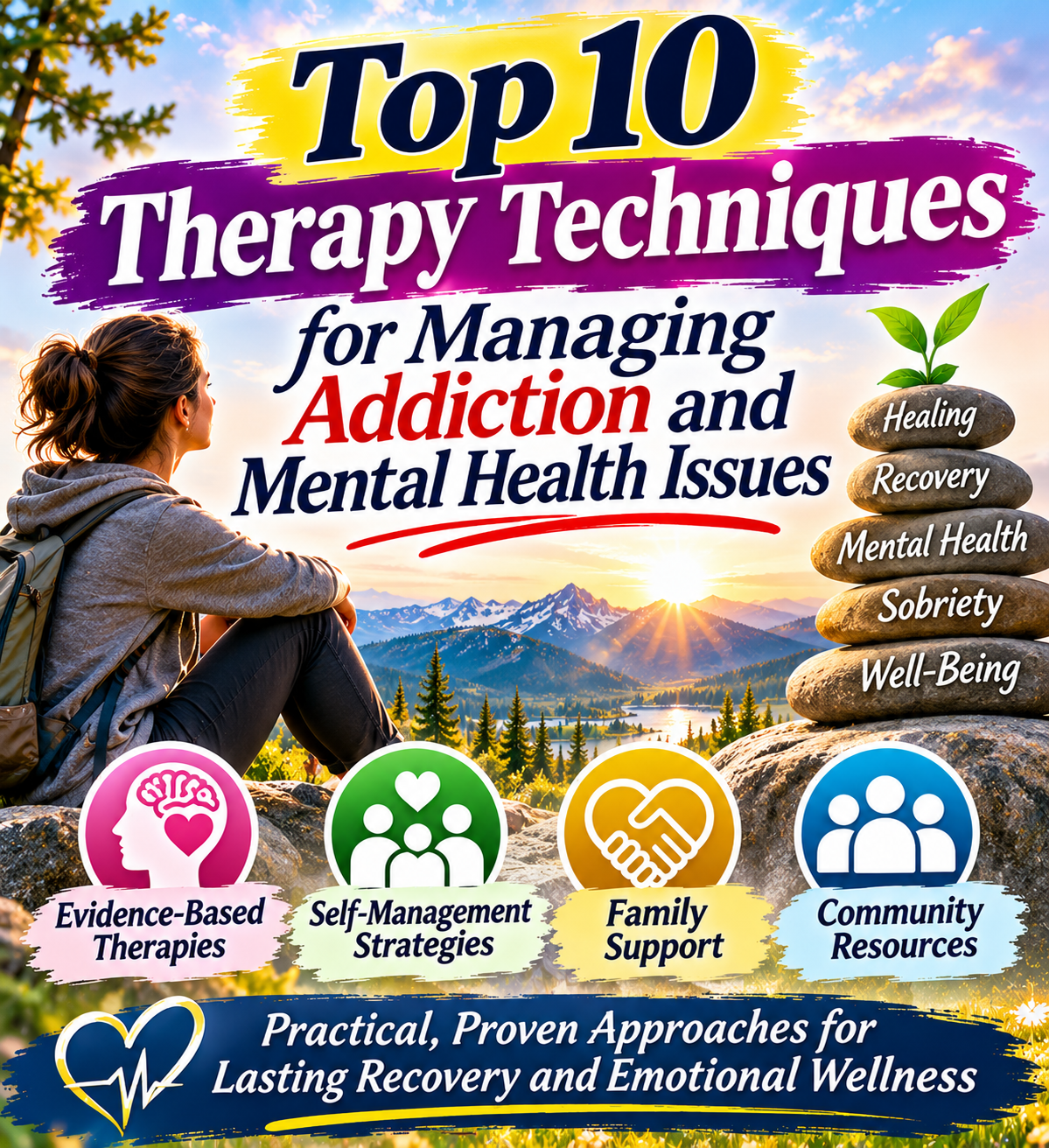
Addiction and mental health disorders frequently occur together, creating complex challenges that affect emotional stability, relationships, decision-making, and overall quality of life.
Individuals struggling with substance use disorders may also experience depression, anxiety, post-traumatic stress disorder (PTSD), bipolar disorder, or other psychiatric conditions. This combination is commonly referred to as co-occurring disorders or dual diagnosis.
For some individuals, substance use begins as an attempt to cope with emotional distress, trauma, or overwhelming life circumstances. Others may develop mental health symptoms that are triggered or worsened by repeated substance use.
Regardless of which condition develops first, effective treatment should address both mental health and addiction rather than focusing on one problem while ignoring the other.
Fortunately, several evidence-based therapeutic approaches can help individuals understand their behaviors, regulate emotions, manage cravings, and develop healthier coping mechanisms.
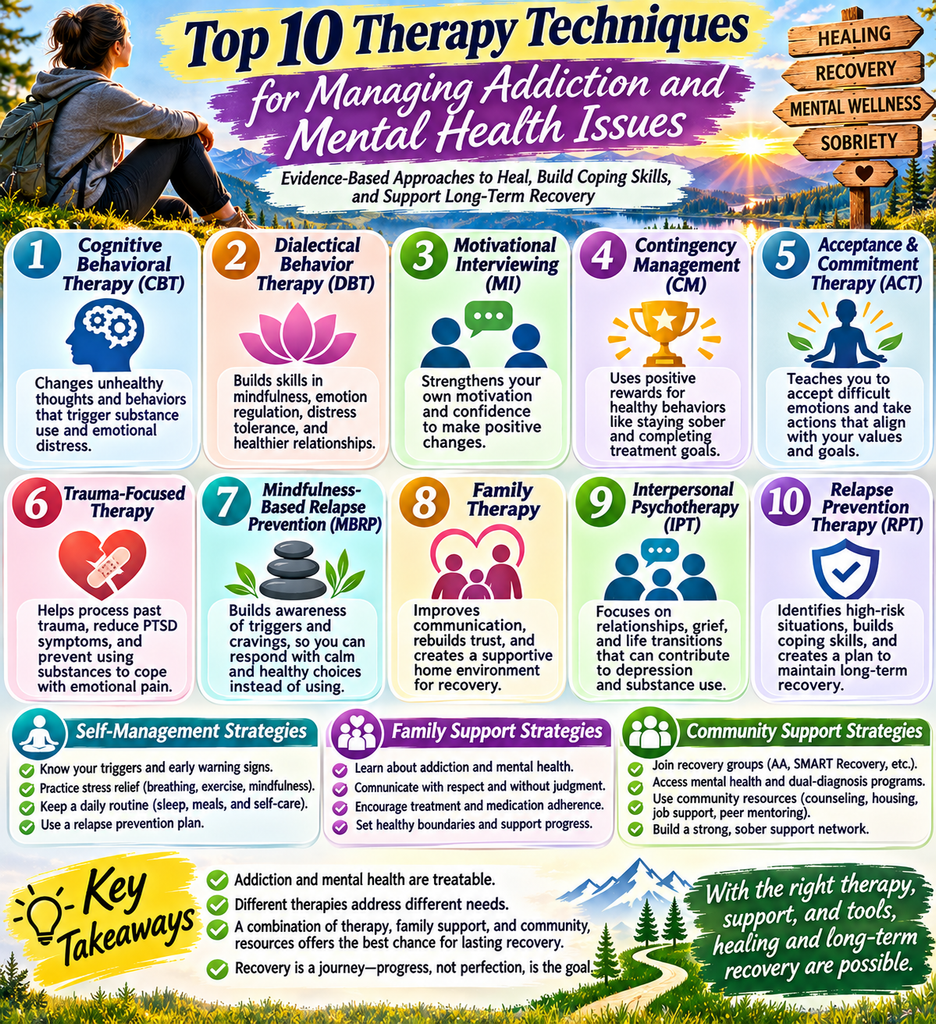
The following ten therapy techniques can support recovery when appropriately selected for an individual’s needs.
Each approach is discussed in relation to three essential components of recovery: self-management, family support, and community resources.
Cognitive Behavioral Therapy (CBT): Changing Unhealthy Thinking Patterns
Cognitive Behavioral Therapy is one of the most widely researched psychological treatments for addiction, depression, anxiety, and other mental health conditions.
CBT focuses on identifying the connections between thoughts, emotions, and behaviors.
Individuals experiencing addiction may develop negative thinking patterns such as believing they cannot manage stress without alcohol or drugs.
CBT helps challenge these beliefs and replace them with more realistic and constructive responses.
How CBT Helps Addiction Recovery
- Identifies thoughts and situations that trigger cravings.
- Challenges negative beliefs and self-defeating thinking.
- Develops healthier responses to stress and emotional discomfort.
- Strengthens problem-solving and decision-making skills.
- Helps prevent recurrence of substance use.
- Improves coping with depression and anxiety.
Self-Management Strategy: Keep a thought journal documenting stressful situations, emotional reactions, cravings, and alternative responses.
Family Support Strategy: Encourage constructive communication and avoid reinforcing negative labels or beliefs.
Community Support Strategy: Participate in CBT-based counseling programs or structured recovery groups.
CBT helps individuals recognize that although they cannot control every situation, they can learn to respond differently.
Dialectical Behavior Therapy (DBT): Managing Intense Emotions
Dialectical Behavior Therapy was originally developed for individuals experiencing severe emotional dysregulation and chronic suicidal behaviors.
It is now used in several clinical settings, including treatment for certain substance use disorders and co-occurring psychiatric conditions.
DBT emphasizes four core skill areas: mindfulness, distress tolerance, emotion regulation, and interpersonal effectiveness.
These skills can be especially useful for individuals whose substance use is associated with intense emotional distress or impulsive behavior.
How DBT Supports Recovery
- Improves recognition and regulation of intense emotions.
- Teaches healthier responses to distress.
- Reduces impulsive reactions.
- Strengthens interpersonal communication.
- Encourages mindfulness and emotional awareness.
- Helps individuals tolerate cravings without acting on them immediately.
Self-Management Strategy: Practice grounding exercises, paced breathing, and distress-tolerance skills when cravings or overwhelming emotions occur.
Family Support Strategy: Validate emotions while maintaining healthy behavioral boundaries.
Community Support Strategy: Attend structured DBT skills groups or programs that integrate DBT with addiction treatment.
DBT teaches individuals that they can acknowledge and manage difficult emotions without resorting to harmful behaviors.
Motivational Interviewing (MI): Strengthening the Desire for Change
Motivational Interviewing is a collaborative counseling approach designed to help individuals explore uncertainty about changing their behavior.
Many people experiencing addiction recognize that substance use is causing problems but feel conflicted about stopping.
Rather than relying on confrontation or pressure, MI helps individuals identify their personal values, goals, and reasons for change.
How Motivational Interviewing Helps
- Explores mixed feelings about recovery.
- Strengthens personal motivation.
- Encourages individuals to identify meaningful goals.
- Reduces resistance to treatment.
- Supports informed decision-making.
- Helps individuals develop realistic plans for change.
Self-Management Strategy: Write down the advantages and disadvantages of continuing substance use and the potential benefits of change.
Family Support Strategy: Ask open-ended questions, listen without judgment, and avoid arguments intended to force immediate change.
Community Support Strategy: Seek addiction counselors trained in motivational interviewing or motivational enhancement therapy.
MI recognizes that lasting behavioral change is more likely when individuals develop their own reasons for recovery.
Contingency Management (CM): Reinforcing Positive Recovery Behaviors
Contingency Management is a behavioral treatment approach that uses structured incentives to reinforce specific recovery-related behaviors.
It has particularly strong evidence for treating stimulant use disorders, including methamphetamine and cocaine use disorders.
Participants may receive incentives for meeting clearly defined treatment goals, such as providing substance-negative toxicology samples or completing designated treatment activities.
Benefits of Contingency Management
- Encourages treatment participation.
- Reinforces measurable recovery behaviors.
- Provides immediate positive feedback.
- Helps establish healthier behavioral patterns.
- Can improve treatment retention.
- Has strong evidence for reducing stimulant use.
Self-Management Strategy: Establish personal milestones and use healthy, non-substance-related rewards to recognize progress.
Family Support Strategy: Acknowledge meaningful progress without using shame or punishment when setbacks occur.
Community Support Strategy: Seek addiction treatment programs offering professionally administered contingency management.
Formal contingency management programs use carefully designed reinforcement schedules and monitoring procedures. Personal rewards can be helpful but are not equivalent to a clinical CM program.
Acceptance and Commitment Therapy (ACT): Living According to Personal Values
Acceptance and Commitment Therapy helps individuals develop psychological flexibility.
Instead of attempting to eliminate every uncomfortable thought or emotion, ACT teaches people to recognize difficult experiences while continuing to make choices consistent with their values.
For individuals experiencing addiction, ACT may help reduce avoidance behaviors and strengthen commitment to meaningful goals.
How ACT Supports Emotional Wellness
- Encourages acceptance of uncomfortable thoughts and emotions.
- Reduces avoidance-based coping.
- Strengthens awareness of personal values.
- Promotes mindfulness and psychological flexibility.
- Supports goal-directed behavior.
- Helps individuals respond differently to cravings.
Self-Management Strategy: Identify three important personal values, such as health, family, or responsibility, and choose daily actions that support them.
Family Support Strategy: Encourage loved ones to pursue meaningful goals without demanding immediate emotional perfection.
Community Support Strategy: Participate in ACT-informed counseling or mindfulness-based recovery programs.
ACT emphasizes that recovery involves building a meaningful life, not simply eliminating uncomfortable feelings.
Trauma-Focused Therapy: Addressing the Effects of Past Experiences
Traumatic experiences can contribute to emotional distress and may increase vulnerability to substance use disorders.
Some individuals use alcohol or drugs to temporarily escape trauma-related memories, anxiety, or emotional pain.
Evidence-based trauma treatments, including Cognitive Processing Therapy (CPT), Prolonged Exposure (PE), and Eye Movement Desensitization and Reprocessing (EMDR), may help individuals with PTSD.
These therapies should be delivered by appropriately trained clinicians and selected according to individual needs.
How Trauma-Focused Therapy Can Help
- Addresses distressing trauma-related beliefs and memories.
- Reduces avoidance behaviors.
- Improves emotional regulation.
- Helps individuals recognize trauma-related triggers.
- Supports recovery from PTSD symptoms.
- May reduce reliance on substances as a coping mechanism.
Self-Management Strategy: Practice grounding techniques and develop a personalized safety and coping plan with a therapist.
Family Support Strategy: Respect personal boundaries and avoid pressuring loved ones to disclose traumatic experiences.
Community Support Strategy: Seek trauma-informed mental health and addiction programs capable of providing coordinated care.
Trauma-focused treatment does not always need to be postponed until complete abstinence is achieved. Assess treatment readiness and safety individually.
Mindfulness-Based Relapse Prevention (MBRP): Managing Cravings Without Reacting
Mindfulness-Based Relapse Prevention combines mindfulness practices with cognitive and behavioral relapse prevention strategies.
It teaches individuals to recognize cravings, thoughts, and emotional triggers without automatically responding through substance use.
A common technique is urge surfing, which involves observing a craving as a temporary experience that may rise and fall over time.
Benefits of Mindfulness-Based Relapse Prevention
- Improves awareness of cravings and triggers.
- Reduces automatic reactions to emotional distress.
- Encourages present-moment attention.
- Strengthens coping with uncomfortable sensations.
- Supports relapse prevention planning.
- May reduce stress and emotional reactivity.
Self-Management Strategy: Practice brief mindfulness exercises and observe cravings without judging yourself or acting on them immediately.
Family Support Strategy: Encourage healthy stress-reduction practices without treating mindfulness as a substitute for medical care.
Community Support Strategy: Join professionally facilitated mindfulness-based relapse prevention groups.
Mindfulness-based approaches can complement addiction treatment, although evidence varies by substance and clinical population.
Family Therapy: Strengthening Communication and Recovery Support
Addiction often affects the entire family system.
Family members may experience fear, frustration, distrust, financial stress, and emotional exhaustion.
Evidence-informed approaches, including Behavioral Couples Therapy and family-based interventions for adolescents, can help improve communication and strengthen recovery support when clinically appropriate.
How Family Therapy Helps
- Improves communication and conflict resolution.
- Helps establish healthy boundaries.
- Reduces misunderstandings about addiction.
- Supports treatment participation.
- Encourages healthier family routines.
- Addresses relationship patterns that interfere with recovery.
Self-Management Strategy: Practice honest communication, recognize personal responsibilities, and participate in family sessions when appropriate.
Family Support Strategy: Learn about addiction, establish clear boundaries, and avoid blaming or shaming language.
Community Support Strategy: Access family counseling, parent education programs, Al-Anon, Nar-Anon, or other family support organizations.
Family therapy should be approached cautiously when domestic violence, intimidation, or coercive control is present. Individual safety and specialized services must take priority.
Interpersonal Psychotherapy (IPT): Improving Relationships and Emotional Health
Interpersonal Psychotherapy is an evidence-based treatment primarily used for depression and certain other mental health conditions.
IPT focuses on how interpersonal experiences influence emotional well-being.
It commonly addresses grief, relationship disputes, major life transitions, and interpersonal difficulties.
Although IPT is not a primary stand-alone treatment for most substance use disorders, it can be valuable when depression and relationship difficulties coexist with addiction.
How IPT Supports Mental Wellness
- Improves communication skills.
- Helps individuals process grief and loss.
- Addresses relationship conflicts.
- Supports adjustment to major life changes.
- Reduces depressive symptoms.
- Encourages healthier social connections.
Self-Management Strategy: Identify recurring interpersonal stressors and practice clear, respectful communication.
Family Support Strategy: Offer emotional support during grief, divorce, unemployment, or other major transitions.
Community Support Strategy: Seek IPT-trained therapists or community mental health programs offering depression treatment.
IPT highlights the importance of supportive relationships in emotional recovery.
Relapse Prevention Therapy (RPT): Building Skills for Long-Term Recovery
Relapse Prevention Therapy is a cognitive-behavioral approach that helps individuals identify high-risk situations and develop practical strategies to prevent a return to substance use.
It recognizes that cravings, emotional distress, social pressure, and environmental triggers can increase vulnerability.
A personalized relapse prevention plan helps individuals respond before challenges escalate.
How Relapse Prevention Therapy Helps
- Identifies high-risk situations.
- Recognizes early warning signs.
- Develops coping responses to cravings.
- Strengthens refusal and problem-solving skills.
- Encourages ongoing treatment engagement.
- Establishes a plan for responding to a return to substance use.
Self-Management Strategy: Create a written relapse prevention plan identifying triggers, coping skills, supportive contacts, and emergency resources.
Family Support Strategy: Discuss warning signs collaboratively and develop a nonjudgmental plan for obtaining additional help.
Community Support Strategy: Maintain access to addiction treatment, peer recovery groups, and continuing-care services.
Relapse prevention should also address overdose risk, especially for individuals with opioid use disorder who may have reduced tolerance after abstinence.
Comparing the Top 10 Therapy Techniques
| Therapy | Primary focus | Potential benefit |
|---|---|---|
| Cognitive Behavioral Therapy | Thoughts and behaviors | Coping skills and relapse prevention |
| Dialectical Behavior Therapy | Emotional regulation | Distress tolerance and impulse management |
| Motivational Interviewing | Motivation for change | Treatment engagement |
| Contingency Management | Positive reinforcement | Reduced stimulant use and improved participation |
| Acceptance and Commitment Therapy | Psychological flexibility | Values-based behavior |
| Trauma-Focused Therapy | Trauma and PTSD | Reduction of trauma-related symptoms |
| Mindfulness-Based Relapse Prevention | Craving awareness | Managing automatic reactions |
| Family Therapy | Relationships and communication | Family functioning and recovery support |
| Interpersonal Psychotherapy | Interpersonal difficulties | Improvement in depressive symptoms |
| Relapse Prevention Therapy | High-risk situations | Long-term recovery planning |
The Importance of Integrated Treatment for Co-Occurring Disorders
Individuals experiencing both addiction and mental health conditions often require coordinated treatment.
For example, someone with opioid use disorder and depression may benefit from medication for opioid use disorder, psychotherapy for depression, and supportive community services.
Similarly, an individual with bipolar disorder and alcohol use disorder may require mood-stabilizing treatment alongside evidence-based addiction care.
Essential Components of Comprehensive Treatment
- Medical evaluation: Assess substance use, withdrawal risks, psychiatric symptoms, and physical health.
- Medication management: Use evidence-based medications when clinically appropriate.
- Psychotherapy: Select treatments based on diagnosis, symptoms, patient preferences, and available evidence.
- Family involvement: Encourage supportive participation while respecting confidentiality and autonomy.
- Community resources: Connect individuals with recovery organizations, housing assistance, and social services.
- Continuing care: Monitor progress and adjust treatment as needs change.
Importantly, psychotherapy alone may not provide adequate treatment for every substance use disorder.
For opioid use disorder, buprenorphine and methadone are highly effective treatments that reduce overdose and mortality risk. For alcohol use disorder, medications such as naltrexone and acamprosate can improve outcomes.
For stimulant use disorder, contingency management is a particularly important evidence-based behavioral intervention.
Developing a Personalized Recovery Plan
Recovery plans should be individualized rather than based on a single treatment approach.
A comprehensive plan may include the following:
- Daily: Monitor mood and cravings, practice coping skills, and maintain healthy routines.
- Weekly: Participate in therapy, peer support, or other recovery activities as appropriate.
- Monthly: Review treatment goals, medications, and progress with healthcare professionals.
- During stressful periods: Increase contact with trusted supporters and use established relapse prevention strategies.
- After a setback: Seek timely clinical reassessment and revise the treatment plan without shame.
The goal is to create a flexible, sustainable recovery process that addresses emotional, behavioral, medical, and social needs.
How Families Can Strengthen Long-Term Recovery
Family members can play an important role in helping individuals stay engaged in treatment and maintain emotional stability.
However, family support is most effective when it combines compassion with realistic boundaries.
Helpful Family Practices
- Learn about substance use disorders and co-occurring psychiatric conditions.
- Encourage treatment without relying on threats or humiliation.
- Support medication adherence while respecting patient autonomy.
- Recognize warning signs of emotional distress.
- Avoid using blame or shame as motivational tools.
- Participate in family counseling when appropriate.
- Establish healthy financial and emotional boundaries.
- Seek independent support when caregiving becomes overwhelming.
Families should remember that they can influence recovery conditions, but they cannot guarantee another person’s treatment outcome.
Community Support: Creating an Environment That Encourages Healing
Recovery extends beyond individual therapy sessions.
Stable housing, employment opportunities, supportive relationships, transportation, and accessible healthcare can significantly influence treatment participation and long-term well-being.
Community organizations can help address these practical needs while reducing stigma.
Valuable Community Resources
- Outpatient addiction and mental health clinics.
- Peer recovery support organizations.
- Recovery community centers.
- Supportive housing programs.
- Employment and vocational rehabilitation services.
- Family education and counseling programs.
- Harm reduction and overdose prevention services.
- Community wellness and recreational programs.
Community support can help individuals develop a sense of belonging and purpose while maintaining access to professional care.
When to Seek Immediate Professional Help
Certain symptoms require urgent medical or psychiatric attention.
These include severe alcohol or benzodiazepine withdrawal, suspected overdose, suicidal thoughts with immediate danger, severe mania, psychosis, or an inability to maintain personal safety.
For a suspected overdose, call 911 and administer naloxone if opioid exposure is possible and naloxone is available.
In the United States, individuals experiencing a mental health or substance-related emotional crisis can call or text 988.
Conclusion: Recovery Requires More Than One Therapeutic Approach
Addiction and mental health disorders are complex conditions that often require comprehensive, individualized treatment.
The ten therapy techniques discussed in this article provide different tools for addressing unhealthy thinking patterns, emotional dysregulation, trauma, motivation, cravings, and relationship difficulties.
Cognitive Behavioral Therapy helps individuals recognize and change harmful patterns. Dialectical Behavior Therapy strengthens emotional regulation. Motivational Interviewing supports readiness for change, while Contingency Management reinforces measurable recovery behaviors.
Trauma-focused therapies, mindfulness-based approaches, family therapy, and interpersonal psychotherapy address additional psychological and social challenges.
Relapse prevention strategies help individuals prepare for difficult situations and maintain long-term progress.
However, effective recovery is not achieved through therapy alone in every case. Medications, medical monitoring, family involvement, and community resources may be equally important.
By combining evidence-based treatment with self-management skills, supportive relationships, and accessible community services, individuals can improve their emotional well-being and build healthier, more stable lives.
Recovery is not about finding one perfect technique. It is about developing a personalized combination of treatment, coping skills, and support that makes lasting change possible.
Frequently Asked Questions and Answers
Understanding Addiction and Mental Health Therapy
1. What are the most effective therapy techniques for addiction and mental health disorders?
Several evidence-based therapeutic approaches can help individuals manage substance use disorders and co-occurring mental health conditions.
Ten commonly used approaches include:
- Cognitive Behavioral Therapy (CBT)
- Dialectical Behavior Therapy (DBT)
- Motivational Interviewing (MI)
- Contingency Management (CM)
- Acceptance and Commitment Therapy (ACT)
- Trauma-Focused Therapy
- Mindfulness-Based Relapse Prevention (MBRP)
- Family Therapy
- Interpersonal Psychotherapy (IPT)
- Relapse Prevention Therapy (RPT)
Each approach addresses different aspects of emotional regulation, behavior change, trauma, relationships, and recovery.
The most appropriate therapy depends on the individual’s diagnosis, substance use history, treatment goals, and clinical needs.
2. What is Cognitive Behavioral Therapy (CBT), and how does it help addiction recovery?
Cognitive Behavioral Therapy helps individuals recognize and change unhealthy thinking patterns and behaviors associated with substance use and emotional distress.
For example, someone who believes they cannot manage stress without drinking may learn to challenge that thought and develop healthier coping strategies.
CBT can help individuals identify triggers, manage cravings, strengthen problem-solving skills, and reduce symptoms of depression or anxiety.
It is widely used in addiction treatment and mental healthcare.
3. How does Dialectical Behavior Therapy (DBT) help individuals with addiction and emotional instability?
Dialectical Behavior Therapy teaches four major skills: mindfulness, emotional regulation, distress tolerance, and interpersonal effectiveness.
These techniques help individuals manage intense emotions without immediately responding through substance use or other harmful behaviors.
DBT may be particularly helpful for individuals experiencing significant emotional dysregulation, impulsivity, or certain co-occurring psychiatric conditions.
Its effectiveness depends on the individual’s clinical needs and the structure of the treatment program.
4. What is Motivational Interviewing (MI), and why is it useful for addiction treatment?
Motivational Interviewing is a collaborative counseling approach that helps individuals explore uncertainty about changing their substance use behaviors.
Rather than confronting or pressuring someone, therapists encourage individuals to identify their own reasons for recovery.
MI can improve motivation, treatment engagement, and readiness for change.
It is especially useful when someone recognizes problems associated with substance use but remains unsure about seeking treatment.
5. How does Contingency Management (CM) help people overcome addiction?
Contingency Management uses structured incentives to reinforce specific recovery-related behaviors.
For example, participants may receive rewards for meeting clearly defined treatment goals, such as providing substance-negative drug tests.
CM has particularly strong evidence for treating stimulant use disorders, including cocaine and methamphetamine use disorders.
Formal CM programs should be administered using established clinical protocols.
6. What is Acceptance and Commitment Therapy (ACT)?
Acceptance and Commitment Therapy helps individuals develop psychological flexibility by learning to acknowledge uncomfortable thoughts and feelings without allowing them to control behavior.
ACT encourages people to identify meaningful personal values and take actions consistent with those values.
For addiction recovery, this may involve learning to tolerate cravings while continuing to pursue health, family relationships, employment, and personal goals.
ACT can complement other evidence-based treatments.
7. How does trauma-focused therapy help individuals with addiction and PTSD?
Trauma-focused therapy addresses distressing memories, beliefs, and emotional responses associated with traumatic experiences.
Evidence-based treatments for PTSD include Cognitive Processing Therapy (CPT), Prolonged Exposure (PE), and Eye Movement Desensitization and Reprocessing (EMDR).
For individuals with both PTSD and substance use disorders, coordinated treatment can address trauma-related symptoms and substance use simultaneously.
Trauma treatment should be provided by appropriately trained clinicians.
8. What is Mindfulness-Based Relapse Prevention (MBRP)?
Mindfulness-Based Relapse Prevention combines mindfulness practices with cognitive and behavioral relapse prevention techniques.
It teaches individuals to observe cravings, emotions, and triggers without automatically reacting through substance use.
One commonly taught strategy is urge surfing, which involves noticing cravings as temporary experiences that may increase and decrease over time.
MBRP may support emotional awareness and coping, although its effectiveness varies across individuals and substance use conditions.
9. How does family therapy support addiction recovery?
Family therapy helps individuals and their loved ones improve communication, establish boundaries, and address relationship difficulties associated with addiction.
It may also strengthen engagement in treatment and reduce conflict.
Family-based interventions are particularly important in adolescent substance use treatment, while selected approaches can benefit adults and couples.
When domestic violence or coercive control is present, safety assessment and specialized services should take priority over conventional family or couples counseling.
10. What is Interpersonal Psychotherapy (IPT), and how can it help mental health?
Interpersonal Psychotherapy focuses on relationships and life experiences that influence emotional well-being.
It commonly addresses grief, relationship conflicts, major life transitions, and interpersonal difficulties.
IPT is an established treatment for depression and may be useful when depressive symptoms coexist with substance use problems.
However, IPT is not generally considered a primary stand-alone treatment for most substance use disorders.
Choosing the Right Therapy and Preventing Relapse
11. What is Relapse Prevention Therapy (RPT)?
Relapse Prevention Therapy is a cognitive-behavioral approach that helps individuals identify situations associated with a higher risk of returning to substance use.
It teaches practical strategies for managing cravings, avoiding dangerous situations, and responding to setbacks.
A relapse prevention plan may include:
- Identifying personal triggers.
- Recognizing early warning signs.
- Developing coping and refusal skills.
- Maintaining treatment appointments.
- Establishing supportive contacts.
- Preparing a plan for obtaining help after substance use returns.
For opioid use disorder, relapse prevention should also include overdose education and access to naloxone.
12. Which therapy is best for someone experiencing both addiction and depression?
Cognitive Behavioral Therapy is frequently used to address depression and substance use problems.
Other approaches, including motivational interviewing, behavioral activation, and interpersonal psychotherapy, may also be appropriate depending on the individual’s symptoms.
For moderate or severe depression, medication may be recommended alongside psychotherapy.
The most effective approach often involves integrated treatment that addresses both conditions rather than treating them separately.
13. What therapy techniques are helpful for addiction and anxiety disorders?
CBT is a well-established treatment for many anxiety disorders and can also address substance use behaviors.
Exposure-based techniques may be appropriate for certain anxiety disorders, while mindfulness and ACT-based strategies can help individuals respond differently to anxious thoughts.
Treatment should consider whether anxiety symptoms are independent of substance use, caused by intoxication or withdrawal, or influenced by both.
14. Can therapy alone treat opioid addiction?
Psychotherapy can provide valuable coping skills and emotional support, but it should not replace medication treatment for opioid use disorder when medication is indicated and available.
Buprenorphine and methadone are highly effective medications that reduce overdose and mortality risk.
Extended-release naltrexone is another treatment option for appropriately selected individuals who have completed opioid withdrawal.
Counseling can complement medication treatment, but patients should not be denied medication solely because they cannot participate in psychotherapy.
15. Which therapy is most effective for stimulant addiction?
Contingency Management has particularly strong evidence for treating stimulant use disorders involving cocaine or methamphetamine.
CBT and other behavioral interventions may also provide benefits.
Unlike opioid use disorder, there are currently no FDA-approved medications specifically for stimulant use disorder.
Treatment commonly focuses on behavioral interventions, psychiatric care when needed, and ongoing recovery support.
16. How long does addiction therapy usually take?
The duration of addiction therapy varies according to the severity of the substance use disorder, co-occurring mental health conditions, treatment response, and individual circumstances.
Some structured therapies involve approximately 8–16 sessions, while others require longer treatment.
People with chronic or recurrent substance use disorders may benefit from continuing care over months or years.
Recovery progress should be assessed regularly, and treatment should be adjusted when necessary.
17. Can someone benefit from more than one therapy technique?
Yes. Combining complementary therapies can address different aspects of addiction and mental health.
For example, a person may benefit from motivational interviewing to strengthen engagement in treatment, CBT to develop coping skills, and family therapy to improve communication.
However, combining multiple treatments is not automatically better. The selection and sequencing of therapies should be based on clinical needs and available evidence.
Self-Management, Family, and Community Support
18. What self-management strategies can strengthen addiction recovery?
Self-management helps individuals apply therapeutic skills in everyday life.
Useful strategies include:
- Maintaining regular sleep, nutrition, and physical activity.
- Tracking moods, cravings, and personal triggers.
- Practicing mindfulness and relaxation techniques.
- Developing healthy responses to stress.
- Following prescribed medication plans.
- Participating in scheduled treatment appointments.
- Building supportive relationships.
- Preparing a personalized relapse prevention plan.
Self-management is most effective when integrated with appropriate professional care.
19. How can families support someone receiving addiction or mental health therapy?
Families can encourage recovery by providing emotional support, learning about substance use disorders, and respecting treatment recommendations.
They can also help by:
- Listening without judgment.
- Encouraging professional treatment.
- Establishing healthy boundaries.
- Avoiding blame and stigmatizing language.
- Recognizing warning signs of emotional distress.
- Supporting healthy routines.
- Seeking family counseling when appropriate.
- Protecting their own emotional and physical well-being.
Family members should remember that they cannot control another person’s recovery, but they can help create a safer and more supportive environment.
20. What community resources can support addiction and mental health recovery?
Community resources provide access to treatment, peer support, and practical assistance.
Examples include addiction treatment clinics, community mental health centers, recovery housing, peer support organizations, employment assistance programs, and family education services.
Organizations such as Alcoholics Anonymous, Narcotics Anonymous, SMART Recovery, and NAMI may provide additional support.
Stable housing, transportation, access to healthcare, and supportive social relationships can also strengthen long-term recovery.
Additional Questions About Recovery Success
21. Can therapy prevent relapse completely?
No therapy can guarantee that someone will never return to substance use.
However, evidence-based treatment can reduce substance use, improve functioning, strengthen coping skills, and support long-term recovery.
If a return to substance use occurs, the treatment plan should be reassessed rather than viewing the individual as having failed.
For opioid use disorder, continued medication treatment and overdose prevention measures are especially important.
22. How can individuals determine whether therapy is working?
Progress can be evaluated through changes in symptoms, functioning, substance use, and quality of life.
Signs of improvement may include:
- Reduced substance use or achievement of individualized recovery goals.
- Improved emotional regulation.
- Fewer or less intense cravings.
- Better sleep and daily functioning.
- Increased treatment engagement.
- Improved communication and relationships.
- Greater ability to manage stress.
- Reduced depression, anxiety, or trauma-related symptoms.
Validated clinical assessment tools can help clinicians objectively monitor progress.
23. Is online therapy effective for addiction and mental health conditions?
Telehealth can provide effective access to several evidence-based psychotherapies, including CBT and certain other structured treatments.
Online therapy may be particularly helpful for individuals with transportation difficulties, limited local services, or demanding schedules.
However, some patients require in-person medical monitoring, withdrawal management, or a higher level of care.
Telehealth treatment should be delivered by appropriately licensed professionals using secure platforms.
24. What should someone do if their current therapy is not helping?
Individuals should discuss their concerns openly with their treatment provider.
A clinical reassessment may identify untreated psychiatric symptoms, ongoing substance use triggers, medication concerns, or barriers to treatment participation.
Possible next steps include adjusting therapy techniques, changing treatment intensity, adding medication when indicated, or obtaining a specialist consultation.
Lack of improvement does not mean recovery is impossible.
25. What is the most important lesson about therapy for addiction and mental health?
No single therapy works best for everyone.
Effective treatment requires an individualized approach that considers the person’s diagnosis, substance use history, emotional needs, physical health, relationships, and recovery goals.
Combining evidence-based therapy with appropriate medication, self-management strategies, family support, and community resources can improve outcomes.
Recovery is not about finding one perfect treatment. It is about building a comprehensive support system that makes healthier choices and lasting change possible.
Mental Health and Addiction Recovery Resources
Individuals and families seeking treatment can contact:
- SAMHSA National Helpline: 1-800-662-HELP (4357).
- 988 Suicide & Crisis Lifeline: Call or text 988 for emotional crisis support.
- FindTreatment.gov: Find addiction and mental health treatment.
- SMART Recovery: Explore recovery meetings and resources.
- National Alliance on Mental Illness: Find mental health education and family support.
- Alcoholics Anonymous: Find AA meetings.
- Narcotics Anonymous: Find NA recovery meetings.
Video: