What happens when a celebrated professional athlete achieves fame, wealth, and success but struggles privately with addiction?
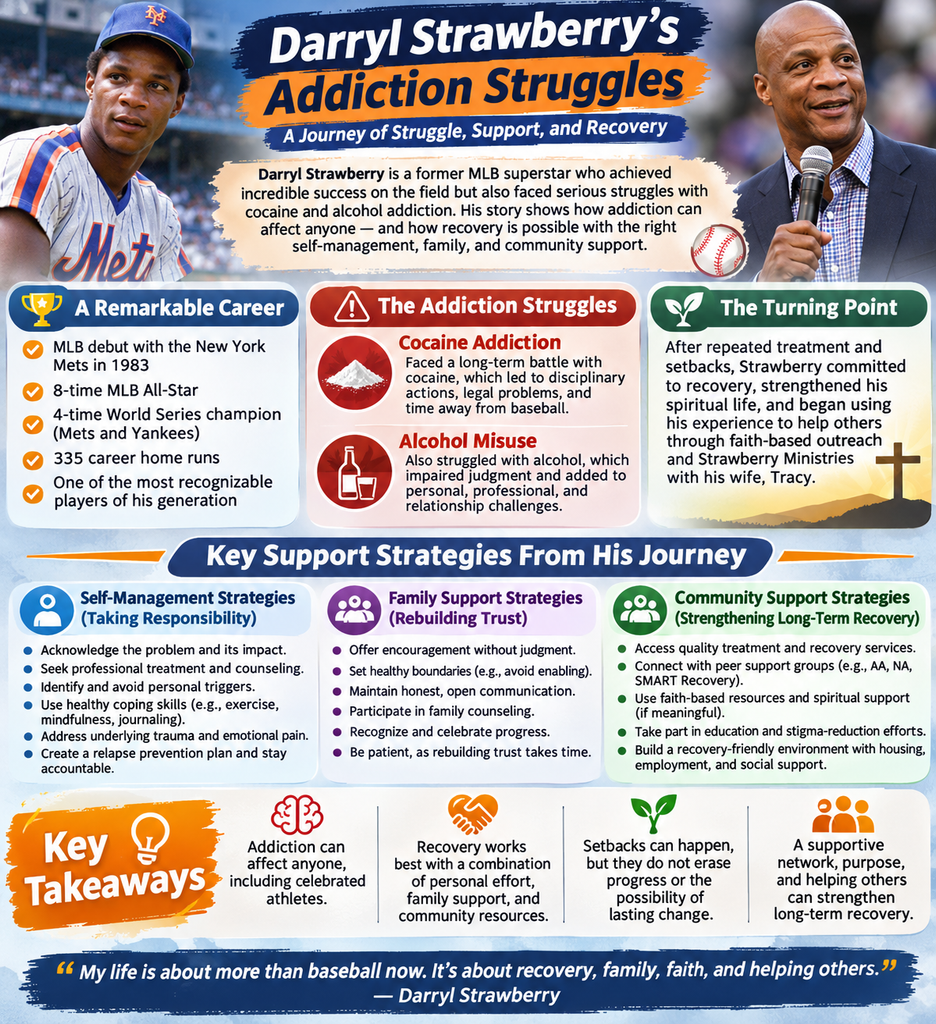
Darryl Strawberry is a former Major League Baseball (MLB) superstar whose career included remarkable athletic achievements, personal challenges, substance use disorders, and a journey toward recovery. Despite becoming one of baseball’s most recognizable players during the 1980s and 1990s, Strawberry struggled with cocaine and alcohol use, legal difficulties, and strained personal relationships.
His experiences demonstrate how addiction can affect anyone, regardless of professional accomplishments, financial security, or public recognition.
Strawberry’s story is also one of personal transformation. After years of substance use and repeated setbacks, he embraced recovery, strengthened his spiritual life, and became an advocate for individuals and families affected by addiction.
Understanding his journey provides valuable lessons about self-management, family involvement, professional treatment, and community support in achieving long-term recovery.
Darryl Strawberry’s Rise to Baseball Stardom
Darryl Strawberry began his MLB career with the New York Mets in 1983, quickly establishing himself as one of baseball’s most talented power hitters.
His athletic accomplishments included:
- Winning the National League Rookie of the Year Award in 1983.
- Becoming an eight-time MLB All-Star.
- Winning four World Series championships with the New York Mets and New York Yankees.
- Hitting 335 career home runs.
- Becoming one of the most recognizable baseball players of his generation.
Despite these achievements, Strawberry faced personal struggles that increasingly affected his health, relationships, and professional career.
His experience illustrates an important reality: external success does not necessarily protect individuals from addiction, emotional distress, or psychological vulnerability.
Understanding Darryl Strawberry’s Addiction Struggles
Throughout his professional baseball career, Strawberry experienced problems involving cocaine and alcohol. His substance use contributed to disciplinary actions, treatment episodes, legal problems, and interruptions in his athletic career.
Cocaine addiction
Cocaine is a powerful stimulant that increases dopamine signaling in the brain’s reward pathways. Repeated use can produce intense cravings, impaired decision-making, and compulsive drug-seeking behavior.
For Strawberry, cocaine use became part of a destructive pattern that threatened his professional achievements and personal stability.
Potential consequences of cocaine use disorder include:
- Intense cravings and difficulty controlling substance use.
- Anxiety, irritability, and changes in mood.
- Cardiovascular complications, including arrhythmias and heart attacks.
- Financial and legal difficulties.
- Damaged relationships and reduced occupational functioning.
- Increased risk of recurrence after periods of abstinence.
Alcohol misuse
Strawberry also experienced difficulties involving alcohol, which can impair judgment and contribute to risky behavior.
Alcohol and cocaine used together create additional medical risks. The liver can produce cocaethylene, a toxic metabolite associated with increased cardiovascular danger.
Repeated treatment and setbacks
Strawberry’s struggles included multiple treatment efforts and periods of renewed substance use.
In 1999, MLB suspended him following a positive cocaine test. Additional substance-related legal and disciplinary problems followed.
His experience highlights that addiction is often a chronic, relapsing medical condition requiring ongoing care, behavioral changes, and support.
A return to substance use does not erase previous progress. However, it signals the need to reassess treatment, strengthen protective factors, and address unresolved risks.
Emotional and Psychological Factors Behind Addiction
Addiction rarely develops from a single cause. Biological vulnerability, psychological distress, social environments, and learned behaviors can interact to increase substance use risk.
For professional athletes, pressures may include public scrutiny, performance expectations, injuries, financial responsibilities, and difficulties adjusting to life outside competitive sports.
Although these factors can contribute to substance use disorders, they should not automatically be assumed to explain Strawberry’s personal experiences.
Several broader factors are important to consider:
- Emotional distress: Anxiety, depression, and unresolved trauma may contribute to substance use.
- Social influences: Environments where alcohol or drugs are readily available can increase exposure and temptation.
- Identity challenges: Individuals whose self-worth is closely connected to professional success may struggle during career transitions.
- Shame and stigma: Fear of judgment can discourage people from seeking treatment.
- Co-occurring conditions: Untreated mental health disorders can complicate addiction recovery.
Recognizing these influences helps healthcare professionals and families approach addiction with compassion rather than blame.
Self-Management Strategies: Taking Responsibility for Recovery
One of the most meaningful lessons from Strawberry’s journey is the importance of addressing the underlying emotional and behavioral patterns associated with addiction.
Strawberry has publicly discussed childhood adversity, painful family experiences, and the difficulty of separating his identity from baseball. He has described personal accountability, spiritual growth, and meaningful change as important elements of his recovery. DVIDS+1
For individuals experiencing substance use disorders, effective self-management strategies include:
- Recognize the problem: Acknowledge how substance use affects physical health, emotional stability, relationships, and daily responsibilities.
- Seek professional treatment: Participate in addiction counseling, medically supervised withdrawal management when indicated, or structured outpatient or residential treatment.
- Identify personal triggers: Recognize emotional distress, high-risk environments, social pressures, and situations associated with previous substance use.
- Develop healthy coping mechanisms: Practice mindfulness, physical activity, journaling, relaxation techniques, and problem-solving skills.
- Address underlying trauma: Consider trauma-informed psychotherapy when adverse childhood experiences or unresolved emotional difficulties contribute to substance use.
- Establish daily routines: Maintain consistent sleep, nutrition, exercise, and meaningful activities.
- Create a relapse prevention plan: Identify warning signs, emergency contacts, supportive people, and specific actions to take when cravings occur.
- Practice accountability: Monitor progress, attend follow-up appointments, and discuss setbacks openly with trusted professionals.
Cognitive behavioral therapy (CBT), motivational interviewing, and contingency management can be useful components of addiction treatment, depending on the substance involved and individual needs.
For cocaine use disorder, contingency management has particularly strong evidence. There is currently no FDA-approved medication specifically for treating cocaine use disorder, although medications may be appropriate for co-occurring conditions.
Strawberry’s experience demonstrates that recovery involves more than stopping substance use. It also requires developing healthier responses to stress, emotional pain, and everyday challenges.
Family Support Strategies: Rebuilding Trust and Relationships
Addiction affects more than the individual using substances. Family members may experience fear, emotional exhaustion, financial instability, broken trust, and uncertainty about how to help.
Strawberry has credited his wife, Tracy Strawberry, with playing an important role in his recovery.
Their relationship illustrates the balance between offering compassionate support and maintaining healthy boundaries.
Tracy, who has also publicly discussed her own recovery experiences, emphasized the importance of changing destructive behaviors rather than repeatedly rescuing someone from the consequences of substance use. The Washington Post+1
Practical family support strategies
- Encourage treatment without judgment: Discuss addiction as a treatable medical condition rather than a personal weakness.
- Establish healthy boundaries: Avoid providing money, covering up substance-related behavior, or tolerating abuse.
- Promote honest communication: Create opportunities for respectful conversations about concerns, emotions, and recovery goals.
- Participate in family counseling: Address communication difficulties, relationship conflicts, and unhealthy interaction patterns.
- Recognize progress: Celebrate treatment engagement, responsible decisions, and meaningful behavioral changes.
- Practice patience: Understand that rebuilding trust requires consistent actions over time.
- Protect family well-being: Encourage relatives to seek counseling, peer support, and respite when needed.
- Develop emergency plans: Know how to respond to overdose symptoms, suicidal behavior, or other immediate safety concerns.
Rebuilding relationships after addiction
Family reconciliation does not happen automatically when someone stops using drugs or alcohol.
Trust may need to be rebuilt through:
- Accepting responsibility for past actions.
- Demonstrating consistent behavioral changes.
- Respecting the emotional experiences of affected family members.
- Maintaining open and honest communication.
- Allowing relationships to heal at a realistic pace.
Family support can strengthen recovery, but relatives cannot control another person’s substance use or guarantee treatment success.
The goal is to support recovery without sacrificing personal safety, emotional health, or healthy boundaries.
Community Support Strategies: Turning Personal Struggles Into Advocacy
One of the most significant chapters of Strawberry’s life involves his transition from professional athlete to recovery advocate and Christian minister.
Together with Tracy, he has participated in addiction recovery initiatives, public speaking engagements, faith-based outreach, and programs designed to help individuals and families affected by substance use.
Through Strawberry Ministries, they have shared personal experiences and promoted restoration, accountability, and hope. strawberryministries.org+1
His advocacy shows how individuals with lived experience can reduce stigma and encourage others to seek help.
Community strategies that support addiction recovery
- Expand access to treatment: Support affordable outpatient services, residential programs, behavioral health care, and appropriate medication-based treatment.
- Develop peer recovery networks: Connect individuals with trained peer recovery specialists and people who have experienced similar challenges.
- Encourage recovery support groups: Promote Alcoholics Anonymous, Narcotics Anonymous, SMART Recovery, and other evidence-informed or peer-led programs.
- Support faith-based resources: Offer spiritual counseling, faith communities, and recovery ministries for individuals who find them meaningful.
- Create educational programs: Teach schools, workplaces, and community organizations about substance use disorders, prevention, and treatment.
- Reduce addiction stigma: Encourage respectful language and emphasize that substance use disorders are treatable health conditions.
- Provide family resources: Establish family education workshops, counseling referrals, and caregiver support groups.
- Strengthen recovery-friendly environments: Support employment opportunities, stable housing, transportation, and social reintegration.
Faith-based programs can provide belonging, encouragement, and purpose. However, spiritual support should complement—not replace—evidence-based medical and psychological treatment when clinically indicated.
How Darryl Strawberry Found Purpose Beyond Addiction
For many years, Strawberry’s identity was closely connected to his accomplishments as a professional baseball player.
Over time, he began redefining success through personal responsibility, relationships, spirituality, and helping others.
In 2026, Strawberry and Tracy continued discussing their recovery and the importance of consistency, humility, and family relationships. Strawberry also spoke about his work helping communities through his ministry. MLB.com+1
His transformation offers several important lessons.
Recovery requires internal change. Avoiding substances is essential, but identifying harmful thinking patterns, emotional difficulties, and behavioral triggers can support long-term stability.
Personal identity can evolve. Individuals recovering from addiction can discover new interests, responsibilities, relationships, and sources of meaning.
Helping others can strengthen purpose. Volunteering, mentoring, and participating in community programs may increase social connection and reinforce recovery-oriented values.
Progress is more important than perfection. Recovery is an ongoing process of learning, accountability, and adaptation.
Strawberry’s journey shows how difficult experiences can eventually contribute to meaningful advocacy and service.
The Role of Professional Addiction Treatment
Although Strawberry emphasizes faith and personal transformation, his experiences also demonstrate why comprehensive addiction treatment is important.
Substance use disorders involve changes in brain function, behavior, and emotional regulation. Treatment should be individualized according to clinical severity, substance use patterns, co-occurring disorders, and social circumstances.
An effective treatment plan may include:
- Comprehensive medical and psychiatric assessment.
- Evidence-based behavioral therapies.
- Medically supervised withdrawal management when necessary.
- Treatment of co-occurring mental health disorders.
- Family education and counseling.
- Peer recovery support.
- Ongoing relapse prevention and continuing care.
For alcohol use disorder, FDA-approved medications include naltrexone, acamprosate, and disulfiram, when clinically appropriate.
For stimulant use disorders, behavioral approaches, especially contingency management, remain central to treatment.
A comprehensive recovery plan should also address housing, employment, transportation, physical health, and access to supportive relationships.
Lessons Families and Communities Can Learn From Strawberry’s Journey
Darryl Strawberry’s experiences offer important insights into addiction prevention, treatment, and long-term recovery.
Addiction does not discriminate.
Professional success, financial resources, and public recognition do not eliminate vulnerability to substance use disorders.
Compassion and accountability can coexist.
Families can encourage treatment while maintaining boundaries and protecting their own well-being.
Community connection matters.
Recovery groups, treatment providers, mentors, and supportive social networks can reduce isolation and strengthen recovery.
Long-term recovery is possible.
Repeated setbacks do not mean someone is incapable of meaningful change. Continuing care and individualized support can improve outcomes.
Resources for Individuals and Families Facing Addiction
People experiencing substance use disorders do not have to navigate recovery alone.
In the United States, several resources provide confidential information, treatment referrals, and peer support.
- SAMHSA National Helpline: 1-800-662-HELP (4357), offering free, confidential treatment referral information.
- FindTreatment.gov: A national directory of mental health and substance use treatment facilities.
- Alcoholics Anonymous (AA): Peer support for individuals seeking recovery from alcohol problems.
- Narcotics Anonymous (NA): Peer support for individuals recovering from drug addiction.
- SMART Recovery: A science-informed approach emphasizing practical behavioral and self-management skills.
- Al-Anon Family Groups: Support for families and friends affected by someone else’s drinking.
- 988 Suicide & Crisis Lifeline: Call or text 988 for immediate emotional crisis support in the United States.
Early intervention can reduce complications and improve opportunities for recovery.
Conclusion: Darryl Strawberry’s Journey From Addiction to Hope
Darryl Strawberry’s life demonstrates that addiction can profoundly affect even the most successful individuals.
His struggles with cocaine, alcohol, legal difficulties, and damaged relationships threatened both his baseball career and personal well-being. Yet his later experiences show that lasting change is possible through personal commitment, supportive relationships, meaningful purpose, and sustained recovery efforts.
His wife Tracy, spiritual community, and involvement in recovery advocacy have played important roles in the story he shares publicly.
For individuals experiencing addiction, his journey reinforces the importance of seeking professional help, recognizing triggers, addressing underlying emotional difficulties, and developing healthy coping strategies.
For families, it emphasizes compassion, boundaries, communication, and patience.
For communities, it highlights the value of accessible treatment, recovery education, peer support, and stigma reduction.
Darryl Strawberry’s greatest legacy may extend beyond his accomplishments on the baseball field. His recovery journey reminds us that a person’s past does not have to determine their future—and that hope, healing, and meaningful change remain possible.
Frequently Asked Questions and Answers
Understanding Darryl Strawberry’s Addiction
1. Who is Darryl Strawberry, and why is his addiction story important?
Darryl Strawberry is a former professional baseball player who played for the New York Mets, Los Angeles Dodgers, San Francisco Giants, and New York Yankees.
He was an eight-time MLB All-Star and four-time World Series champion. However, his career and personal life were affected by cocaine and alcohol use, legal difficulties, and repeated treatment efforts.
His experiences demonstrate that addiction can affect individuals regardless of wealth, fame, talent, or professional achievements.
2. What substances did Darryl Strawberry struggle with?
Strawberry has publicly discussed problems involving cocaine and alcohol.
Cocaine is a highly addictive stimulant that affects the brain’s reward system, while alcohol is a central nervous system depressant that can impair judgment, coordination, and decision-making.
Using cocaine and alcohol together can produce cocaethylene, a toxic metabolite associated with increased cardiovascular risks.
3. When did Darryl Strawberry’s addiction problems begin?
Strawberry has described substance use problems that emerged during his professional baseball years, particularly as he navigated fame, social pressures, and personal difficulties.
His struggles became increasingly public during the 1990s through treatment episodes, disciplinary actions, and legal problems.
4. How did addiction affect Darryl Strawberry’s baseball career?
His substance use contributed to professional suspensions, interrupted playing time, and damage to his reputation.
In 1999, Major League Baseball suspended Strawberry following a positive cocaine test. His subsequent substance-related difficulties further complicated his career.
Despite these challenges, he remained an accomplished athlete whose baseball achievements are historically significant.
5. Did Darryl Strawberry attend addiction rehabilitation programs?
Yes. Strawberry underwent addiction treatment on multiple occasions during his struggles with cocaine and alcohol.
His experiences illustrate that treatment may involve repeated attempts, changing approaches, and ongoing support.
A return to substance use does not mean treatment is hopeless. Instead, it can indicate that additional interventions or modifications to the recovery plan are needed.
6. What emotional factors may have contributed to his addiction?
Strawberry has publicly discussed difficult childhood experiences, family adversity, and emotional struggles.
Adverse childhood experiences can increase vulnerability to substance use disorders, although they do not determine whether someone will develop addiction.
Factors that can contribute to addiction include:
- Childhood trauma and unresolved emotional pain.
- Chronic stress and difficulties regulating emotions.
- Social environments where substances are readily available.
- Co-occurring mental health conditions.
- Genetic and biological vulnerability.
It is important not to assume that any single factor caused Strawberry’s addiction.
Recovery and Self-Management Strategies
7. How did Darryl Strawberry begin rebuilding his life?
Strawberry has credited his Christian faith, personal accountability, his wife Tracy, and meaningful lifestyle changes with helping him rebuild his life.
He later became involved in ministry and recovery advocacy, sharing his experiences to encourage individuals facing similar challenges.
His story emphasizes the importance of developing a meaningful life beyond substance use.
8. What self-management strategies can individuals learn from his recovery journey?
Individuals experiencing addiction can benefit from practical strategies that strengthen emotional regulation and reduce exposure to high-risk situations.
Recommended approaches include:
- Recognizing substance use patterns and their consequences.
- Seeking professional addiction assessment and treatment.
- Identifying triggers and early warning signs.
- Practicing mindfulness, exercise, and stress-management techniques.
- Establishing consistent daily routines.
- Addressing underlying trauma and mental health concerns.
- Creating an individualized relapse prevention plan.
- Maintaining contact with recovery supporters.
These strategies work best when integrated into a comprehensive treatment plan.
9. Why is identifying addiction triggers important?
Triggers are internal or external cues that increase cravings or the likelihood of substance use.
Examples include stressful situations, certain social environments, emotional distress, relationship conflicts, and exposure to substances.
Recognizing triggers allows individuals to develop coping strategies before cravings intensify.
10. What should someone do when experiencing cocaine or alcohol cravings?
Cravings can be intense, but they often fluctuate over time.
Helpful strategies include:
- Moving away from environments associated with substance use.
- Contacting a trusted recovery supporter.
- Practicing slow breathing or mindfulness.
- Engaging in physical activity or another meaningful distraction.
- Using coping skills developed through cognitive behavioral therapy.
- Attending counseling or a recovery support meeting.
Persistent or escalating cravings should prompt reassessment with an addiction treatment professional.
11. Can someone recover after multiple relapses?
Yes. Many individuals achieve sustained recovery after experiencing multiple episodes of renewed substance use.
Addiction is a treatable chronic condition, and recovery often requires continuing care.
A return to substance use should lead to an assessment of triggers, treatment engagement, coping strategies, and additional support needs.
It should never be viewed as proof that recovery is impossible.
12. What professional treatments are available for cocaine addiction?
Evidence-based treatments for cocaine use disorder include contingency management, cognitive behavioral therapy, and other structured behavioral interventions.
Contingency management has particularly strong evidence for reducing stimulant use.
Currently, there are no FDA-approved medications specifically for cocaine use disorder. However, clinicians may treat co-occurring psychiatric or medical conditions and evaluate other interventions based on individual circumstances.
Family Support and Relationship Recovery
13. How did Darryl Strawberry’s addiction affect his family?
Strawberry’s addiction contributed to marital difficulties, strained relationships, and family instability.
He has publicly acknowledged how his substance use affected people close to him.
His experiences demonstrate that addiction can create emotional, financial, and interpersonal consequences extending beyond the individual.
14. What role did his wife, Tracy Strawberry, play in his recovery?
Tracy Strawberry has been an important source of encouragement and support.
Both have openly discussed their experiences with addiction and their shared commitment to Christian ministry and recovery advocacy. They married in 2006, and Strawberry has credited Tracy with helping him sustain his recovery. MLB.com+1
Their story emphasizes the importance of accountability, shared values, and supportive relationships.
15. How can families help someone struggling with addiction?
Family members can provide meaningful support while maintaining healthy boundaries.
Helpful strategies include:
- Encouraging professional addiction treatment.
- Listening without criticism or judgment.
- Avoiding behaviors that unintentionally enable continued substance use.
- Participating in family counseling.
- Supporting healthy daily routines.
- Recognizing positive behavioral changes.
- Seeking emotional support for themselves.
Family members should understand that they cannot force another person to recover.
16. How can trust be rebuilt after addiction?
Trust develops through consistent behavior over time.
Individuals in recovery can rebuild relationships by acknowledging past harm, communicating honestly, respecting boundaries, and following through on commitments.
Families may also benefit from counseling to address unresolved emotional pain.
Forgiveness and reconciliation are personal processes and should never be rushed or demanded.
17. What should families do when a loved one repeatedly relapses?
Families should respond with concern, clear boundaries, and encouragement to reassess treatment.
Rather than relying on confrontation or shame, they can help the individual reconnect with addiction specialists and recovery resources.
Families should also protect their own emotional, physical, and financial well-being.
Community Support and Addiction Advocacy
18. How did Darryl Strawberry become an addiction recovery advocate?
Following his struggles with substance use and legal difficulties, Strawberry became a Christian minister and began sharing his recovery experiences.
He and Tracy have participated in faith-based outreach, recovery education, and initiatives supporting people affected by addiction.
His work illustrates how lived experience can become a source of encouragement for others. CBS Detroit+1
19. What is Strawberry Ministries?
Strawberry Ministries is a Christian outreach initiative associated with Darryl and Tracy Strawberry.
Its activities have emphasized spiritual growth, personal transformation, family restoration, and recovery-related encouragement.
Faith-based support can provide meaning and community connection, but it should not replace clinically indicated addiction treatment.
20. Why is community support important for long-term recovery?
Community support reduces isolation and provides opportunities for accountability, social connection, and practical assistance.
Recovery resources may include:
- Alcoholics Anonymous and Narcotics Anonymous.
- SMART Recovery meetings.
- Peer recovery coaching.
- Outpatient counseling programs.
- Recovery community organizations.
- Faith-based support groups.
- Recovery housing and employment assistance.
The most appropriate resources depend on individual preferences, treatment needs, and accessibility.
21. Can faith and spirituality help someone recover from addiction?
Yes. Faith and spirituality can provide hope, belonging, meaning, and motivation for individuals who value these practices.
Strawberry has consistently identified his Christian faith as central to his personal transformation. Christianity Today
However, recovery is also possible without religious involvement. Evidence-based treatment, behavioral changes, supportive relationships, and continuing care remain important regardless of spiritual beliefs.
22. How can communities reduce the stigma surrounding addiction?
Communities can reduce stigma by promoting accurate information and treating substance use disorders as health conditions.
Effective approaches include:
- Using respectful, person-first language.
- Sharing recovery experiences with permission.
- Expanding affordable treatment services.
- Educating families and employers.
- Supporting recovery-friendly workplaces.
- Encouraging early intervention.
- Recognizing recovery as an ongoing process.
Lessons From Darryl Strawberry’s Recovery Journey
23. What is the biggest lesson from Darryl Strawberry’s addiction struggles?
One of the most important lessons is that professional success does not guarantee emotional well-being.
Despite his accomplishments, Strawberry experienced serious substance-related difficulties.
His recovery journey illustrates that individuals can make meaningful changes even after years of addiction, personal losses, and repeated setbacks.
24. How can professional athletes protect themselves from addiction?
Professional athletes may experience injuries, chronic pain, intense competition, public scrutiny, and demanding schedules.
Prevention strategies include confidential mental health services, education about substance-related risks, healthy stress-management techniques, appropriate pain treatment, and early access to addiction specialists.
Teams and athletic organizations can also promote environments where seeking help is encouraged rather than stigmatized.
25. What advice can someone take from Darryl Strawberry’s story when beginning recovery?
Strawberry’s journey encourages people to recognize their difficulties, seek support, and pursue meaningful changes.
For someone beginning recovery, practical steps include acknowledging the impact of substance use, obtaining a professional assessment, identifying supportive people, and establishing realistic recovery goals.
Recovery does not require achieving perfection. It requires continued engagement, appropriate treatment, and a willingness to adapt when challenges arise.
26. Has Darryl Strawberry maintained his recovery?
Strawberry has publicly described many years of sobriety. In 2026, MLB reported that he credited his wife Tracy with supporting his sobriety since their 2006 marriage.
He continues to share his experiences through ministry and community outreach. MLB.com+1
27. Where can individuals and families find addiction recovery assistance?
Several national organizations provide treatment information and support.
- SAMHSA National Helpline: 1-800-662-HELP (4357).
- FindTreatment.gov: Search for substance use and mental health treatment services.
- Alcoholics Anonymous: Peer support for alcohol-related problems.
- Narcotics Anonymous: Peer support for drug-related problems.
- SMART Recovery: Practical, evidence-informed recovery support.
- Al-Anon Family Groups: Support for relatives and friends affected by another person’s drinking.
- 988 Suicide & Crisis Lifeline: Call or text 988 for immediate crisis support in the United States.
Video: