What happens when a successful professional athlete realizes that alcohol is threatening his health, family relationships, and future?
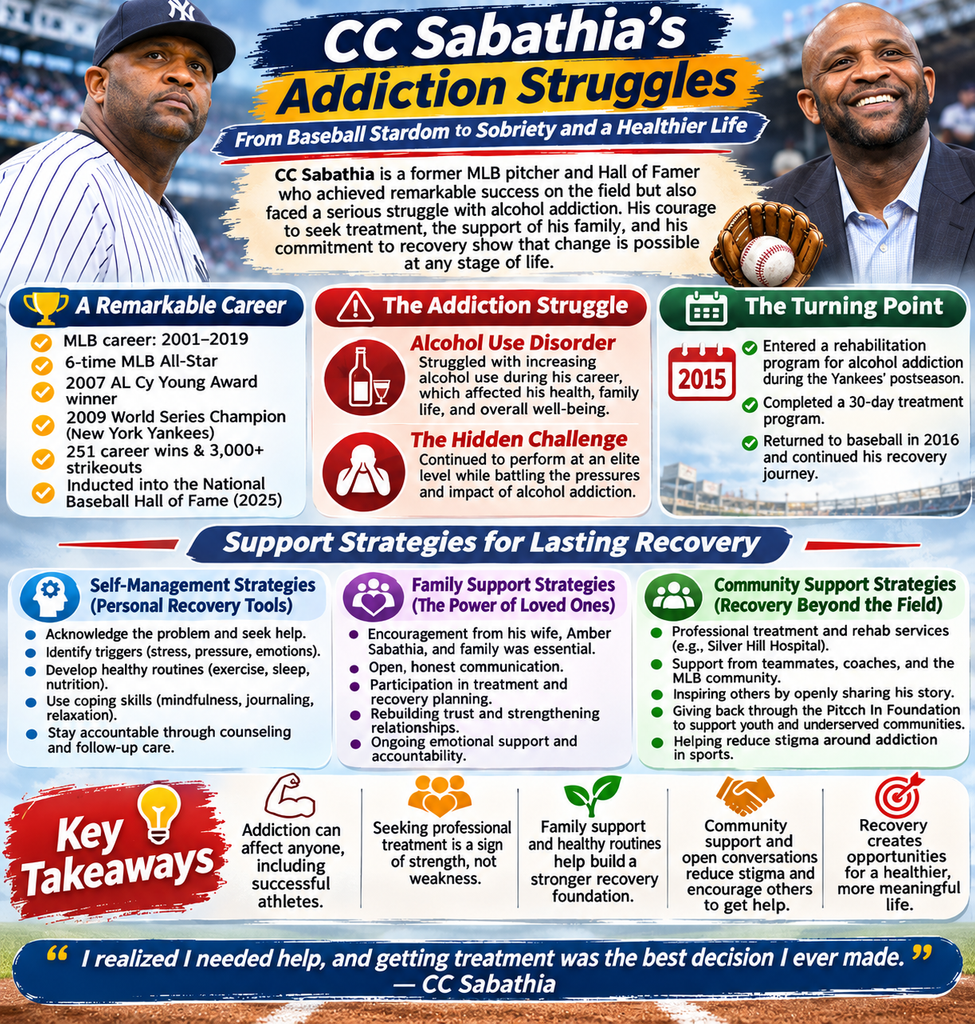
CC Sabathia is a former Major League Baseball (MLB) pitcher whose remarkable athletic career included a World Series championship, a Cy Young Award, and widespread recognition as one of baseball’s most accomplished pitchers.
Behind his professional success, however, Sabathia struggled with alcohol use disorder. His drinking became increasingly difficult to control, eventually leading him to seek professional addiction treatment in 2015.
His decision to enter rehabilitation during the New York Yankees’ postseason demonstrated the importance of prioritizing personal health over professional expectations.
Sabathia has since spoken openly about his recovery, the importance of family, and the challenges of maintaining sobriety.
His journey provides valuable lessons about self-management, family support, professional treatment, and community involvement in overcoming alcohol addiction.
CC Sabathia’s Rise to Baseball Stardom
Carsten Charles “CC” Sabathia Jr. began his MLB career with the Cleveland Indians in 2001. He later played for the Milwaukee Brewers before joining the New York Yankees in 2009.
Throughout his career, Sabathia became known for his powerful pitching, leadership, and competitive determination.
His professional achievements include:
- Winning the American League Cy Young Award in 2007.
- Helping the New York Yankees win the 2009 World Series.
- Earning six MLB All-Star selections.
- Recording 251 career wins.
- Achieving more than 3,000 career strikeouts.
- Being elected to the National Baseball Hall of Fame in 2025.
Despite these accomplishments, Sabathia experienced personal struggles with alcohol that were largely hidden from public view for years.
His experience illustrates an important reality: professional achievement and financial security do not protect individuals from developing substance use disorders.
Understanding CC Sabathia’s Alcohol Addiction
Sabathia has publicly discussed how his relationship with alcohol became increasingly unhealthy during his baseball career.
What initially appeared to be social drinking developed into patterns of excessive alcohol consumption and loss of control.
In interviews and his memoir, Till the End, Sabathia described the difficulties of acknowledging his drinking problem while maintaining his responsibilities as a professional athlete.
How alcohol addiction develops
Alcohol use disorder is a chronic, treatable medical condition characterized by impaired control over drinking despite harmful consequences.
Repeated alcohol exposure can alter neural pathways involved in reward processing, stress regulation, motivation, and decision-making.
Common signs include:
- Drinking more alcohol than intended.
- Repeated unsuccessful attempts to reduce consumption.
- Experiencing strong alcohol cravings.
- Continuing to drink despite relationship or health problems.
- Spending significant time drinking or recovering from its effects.
- Developing tolerance or withdrawal symptoms.
- Neglecting important responsibilities because of alcohol use.
Not everyone with alcohol use disorder experiences every symptom. Severity ranges from mild to severe.
The hidden nature of high-functioning addiction
Sabathia continued performing at an elite professional level while experiencing alcohol-related difficulties.
This illustrates why addiction can remain unrecognized when someone maintains employment, financial stability, or outward success.
The term high-functioning alcoholic is sometimes used informally, but it is not a formal medical diagnosis.
A person can maintain professional responsibilities while experiencing clinically significant alcohol use disorder.
The Turning Point: Entering Rehabilitation in 2015
One of the most significant moments in Sabathia’s recovery journey occurred in October 2015.
As the New York Yankees prepared for the American League Wild Card Game, Sabathia publicly announced that he would enter an alcohol rehabilitation program.
His decision meant stepping away from baseball during a crucial postseason period.
For an accomplished professional athlete, this was a significant personal and professional decision.
Rather than continuing to hide his struggles, Sabathia acknowledged that he needed help.
His decision demonstrated several important recovery principles:
- Recognizing when substance use has become unmanageable.
- Accepting the need for professional intervention.
- Prioritizing health and family responsibilities.
- Seeking help despite potential public criticism.
- Understanding that recovery requires commitment beyond professional success.
Seeking addiction treatment is not a sign of weakness. It is an important step toward protecting health and rebuilding stability.
Self-Management Strategies: Learning to Live Without Alcohol
Sabathia’s recovery involved learning how to manage stress, recognize drinking triggers, and establish healthier habits.
During his approximately 30-day stay at Silver Hill Hospital in Connecticut, he participated in treatment that helped him understand his drinking patterns and develop strategies for maintaining sobriety.
He later described how treatment helped him recognize situations that increased his desire to drink and develop new ways of responding. Silver Hill Hospital
Practical self-management strategies
- Acknowledge the problem: Recognize how alcohol affects physical health, relationships, judgment, and responsibilities.
- Identify drinking triggers: Determine whether stress, loneliness, social situations, or emotional discomfort increase the desire to drink.
- Seek professional treatment: Work with addiction specialists to develop an individualized recovery plan.
- Establish healthy routines: Maintain regular sleep, nutritious meals, exercise, and structured daily activities.
- Practice emotional regulation: Use mindfulness, cognitive behavioral therapy, relaxation exercises, or journaling.
- Develop alcohol-free activities: Replace drinking-centered routines with hobbies, sports, creative interests, or volunteering.
- Create a relapse prevention plan: Identify warning signs and establish specific steps for managing cravings.
- Maintain accountability: Attend treatment appointments, communicate with trusted supporters, and regularly evaluate recovery progress.
Finding healthy alternatives to drinking
After entering recovery, Sabathia developed a stronger interest in physical fitness and golf.
He has described golf as an activity that helps him remain present, enjoy time with friends, and maintain a healthier lifestyle.
His experience illustrates how replacing substance-related routines with meaningful activities can support recovery. Golf Digest
For individuals recovering from alcohol addiction, developing new interests can reduce boredom, improve mood, and create opportunities for positive social connections.
However, hobbies alone are not a substitute for professional treatment when alcohol use disorder is present.
Family Support Strategies: The Importance of Amber Sabathia
Family relationships played an important role in Sabathia’s recovery.
His wife, Amber Sabathia, supported him during treatment and throughout his transition toward sobriety.
Sabathia has acknowledged that his drinking placed considerable strain on their marriage. In later interviews, he described how their relationship improved after he stopped drinking.
He also identified Amber and his mother, Margie, as especially important sources of support during his recovery. SI+1
How families can support addiction recovery
- Encourage professional help: Support addiction treatment without using shame or threats.
- Maintain open communication: Discuss concerns honestly while listening to the individual’s experiences.
- Establish healthy boundaries: Avoid covering up harmful behaviors or assuming responsibility for another person’s drinking.
- Participate in family counseling: Address relationship conflicts, communication difficulties, and emotional distress.
- Recognize positive changes: Acknowledge treatment participation, improved communication, and responsible decisions.
- Support alcohol-free activities: Plan family gatherings and recreational activities that do not center on drinking.
- Practice patience: Understand that rebuilding trust takes time and consistent effort.
- Protect personal well-being: Encourage family members to seek their own counseling and support when necessary.
Rebuilding trust after alcohol addiction
Alcohol misuse can create emotional distance, broken promises, and uncertainty within families.
Rebuilding trust requires more than expressing regret.
Individuals in recovery can demonstrate meaningful change by maintaining honesty, respecting boundaries, following through on responsibilities, and participating consistently in treatment.
Families should recognize that recovery is a continuing process rather than a single event.
Family support can strengthen recovery, but loved ones cannot control another person’s drinking or guarantee sobriety.
Community Support Strategies: Breaking the Silence Around Addiction
Following treatment, Sabathia became more open about his experiences with alcohol addiction.
He has discussed the importance of challenging stigma, particularly in environments where individuals may feel pressured to hide emotional difficulties or appear constantly strong.
His willingness to discuss addiction publicly provides an example of how personal experiences can encourage others to seek help.
Community strategies for supporting recovery
- Expand access to addiction treatment: Promote affordable counseling, outpatient programs, residential treatment, and medically supervised withdrawal services.
- Establish peer recovery networks: Connect individuals with trained recovery coaches and people with lived experience.
- Support recovery meetings: Encourage participation in Alcoholics Anonymous, SMART Recovery, or other supportive programs.
- Educate athletes and coaches: Provide training on substance use disorders, mental health, and early warning signs.
- Create recovery-friendly workplaces: Encourage confidential treatment referrals and supportive return-to-work policies.
- Reduce stigma: Promote respectful conversations about addiction as a treatable medical condition.
- Offer family education: Help relatives understand addiction, boundaries, and available treatment resources.
- Strengthen social support: Promote mentoring, recreational activities, volunteer opportunities, and community involvement.
The importance of peer support
During his rehabilitation, Sabathia found encouragement in hearing from former patients who returned to share their recovery experiences.
These conversations helped him imagine a future without alcohol.
His experience demonstrates how peer recovery support can provide hope, practical guidance, and a sense of belonging. Silver Hill Hospital
CC Sabathia’s Advocacy and Giving Back to the Community
Sabathia’s community involvement extends beyond his recovery story.
Together with Amber, he established the PitCCh In Foundation, which supports young people through educational opportunities, community initiatives, and youth development programs.
Although the foundation is not primarily an addiction treatment organization, its work reflects Sabathia’s broader commitment to supporting underserved communities.
His willingness to discuss alcohol addiction publicly also helps challenge misconceptions about substance use disorders.
Why public advocacy matters
When respected athletes share their experiences with addiction, they can help:
- Normalize seeking professional treatment.
- Encourage conversations about mental health.
- Reduce shame associated with substance use disorders.
- Demonstrate that addiction can affect successful individuals.
- Inspire families to seek education and support.
- Promote healthier attitudes toward recovery.
Sabathia’s experiences illustrate that sharing personal challenges can create opportunities to help others.
The Medical Importance of Treating Alcohol Use Disorder
Alcohol use disorder is a complex medical condition influenced by genetic, psychological, environmental, and social factors.
Long-term excessive alcohol consumption can affect multiple organ systems, including the brain, liver, cardiovascular system, and gastrointestinal tract.
Potential complications include:
- Alcohol-associated liver disease.
- Hypertension and cardiomyopathy.
- Pancreatitis.
- Sleep disturbances.
- Depression and anxiety symptoms.
- Cognitive impairment.
- Increased risk of certain cancers.
- Alcohol withdrawal complications.
Evidence-based treatment options
Effective alcohol use disorder treatment may include behavioral therapy, medication, and continuing care.
Behavioral therapies such as cognitive behavioral therapy and motivational enhancement therapy can help individuals recognize drinking patterns, strengthen motivation, and develop coping strategies.
FDA-approved medications include naltrexone, acamprosate, and disulfiram. Medication selection depends on individual medical history, treatment goals, contraindications, and patient preferences.
Withdrawal management may be necessary for individuals at risk of severe alcohol withdrawal.
Abruptly stopping heavy, prolonged alcohol use can cause seizures or delirium tremens and may require urgent medical supervision.
Continuing care may include follow-up appointments, counseling, peer support, and ongoing assessment of relapse risk.
Treatment should be individualized rather than based on a single recovery approach.
Life After Alcohol Addiction: A New Definition of Success
After completing rehabilitation, Sabathia returned to professional baseball in 2016 and continued pitching for the Yankees until his retirement in 2019.
He reached important career milestones, including 250 wins and 3,000 strikeouts, while continuing his recovery journey.
In July 2025, he was inducted into the National Baseball Hall of Fame. He has also spoken about nearly a decade of sobriety, the importance of family, and finding purpose beyond baseball. MLB.com+1
His transformation demonstrates that recovery can involve rebuilding several areas of life.
Important lessons from his journey
Health comes before professional success.
Seeking treatment may require difficult decisions, but protecting physical and mental health is essential.
Supportive relationships matter.
Family, friends, healthcare professionals, and peers can provide encouragement and accountability.
Recovery requires behavioral changes.
Identifying triggers, developing coping skills, and establishing healthy routines can strengthen long-term recovery.
A meaningful life is possible after addiction.
Sobriety can create opportunities for personal growth, stronger relationships, and renewed purpose.
Addiction Recovery Resources for Individuals and Families
Individuals experiencing alcohol addiction can access confidential assistance through national treatment and recovery organizations.
- SAMHSA National Helpline: 1-800-662-HELP (4357), providing confidential treatment referral information.
- FindTreatment.gov: A national directory of substance use and mental health treatment services.
- Alcoholics Anonymous (AA): Peer support for individuals seeking recovery from alcohol problems.
- SMART Recovery: A science-informed approach emphasizing practical coping and behavioral skills.
- Al-Anon Family Groups: Support for relatives and friends affected by another person’s drinking.
- 988 Suicide & Crisis Lifeline: Call or text 988 for immediate emotional crisis support in the United States.
People who drink heavily on a regular basis should consult a healthcare professional before abruptly stopping alcohol because withdrawal can be medically dangerous.
Conclusion: CC Sabathia’s Journey From Alcohol Addiction to Recovery
CC Sabathia’s story demonstrates that alcohol addiction can affect anyone, including highly accomplished professional athletes.
Despite achieving remarkable success in Major League Baseball, he experienced a serious struggle with alcohol that threatened his health, relationships, and personal stability.
His decision to enter rehabilitation in 2015 marked a turning point.
Through professional treatment, family encouragement, self-management strategies, and healthier lifestyle choices, Sabathia began rebuilding his life beyond alcohol.
His wife Amber, his family, and his recovery support network played meaningful roles in his journey.
For individuals experiencing addiction, his story emphasizes the importance of acknowledging the problem, seeking appropriate treatment, identifying triggers, and developing sustainable coping strategies.
For families, it reinforces the value of compassionate communication, healthy boundaries, and emotional support.
For communities, it demonstrates the importance of reducing stigma, expanding treatment access, and encouraging open conversations about substance use disorders.
CC Sabathia’s recovery journey reminds us that asking for help can be one of the most important decisions a person ever makes. Success is not measured only by professional achievements, but also by the ability to protect one’s health, strengthen relationships, and build a meaningful life in recovery.
Frequently Asked Questions and Answers
Understanding CC Sabathia’s Alcohol Addiction
1. Who is CC Sabathia, and why is his addiction story important?
CC Sabathia is a former MLB pitcher who played for the Cleveland Indians, Milwaukee Brewers, and New York Yankees.
He earned six All-Star selections, won the 2007 American League Cy Young Award, and helped the Yankees win the 2009 World Series.
His story is important because it demonstrates that alcohol addiction can affect anyone, regardless of professional success, financial stability, or public recognition.
2. What type of addiction did CC Sabathia struggle with?
Sabathia has publicly discussed his struggles with alcohol use disorder (AUD), a medical condition characterized by difficulty controlling alcohol consumption despite harmful consequences.
Alcohol use disorder can affect judgment, emotional regulation, physical health, relationships, and occupational functioning.
3. When did CC Sabathia recognize that he had a drinking problem?
Sabathia has described years of problematic drinking before seeking treatment in October 2015.
His decision to enter rehabilitation followed growing recognition that his drinking had become unmanageable and was affecting his personal life.
Recognizing the need for treatment became a turning point in his recovery.
4. How did alcohol addiction affect his baseball career?
Sabathia continued performing professionally while experiencing alcohol-related difficulties.
However, in October 2015, he stepped away from the New York Yankees just before the American League Wild Card Game to enter rehabilitation.
His decision demonstrated that protecting his health and addressing addiction were more important than participating in postseason baseball.
5. Why did CC Sabathia enter rehabilitation in 2015?
Sabathia recognized that he needed professional help to address his drinking.
Rather than continuing to hide the problem, he publicly announced his decision to seek treatment.
His actions illustrated the importance of acknowledging addiction and accepting professional support, even when doing so involves difficult personal or professional consequences.
6. Where did CC Sabathia receive addiction treatment?
Sabathia entered Silver Hill Hospital in New Canaan, Connecticut, a facility providing psychiatric and addiction treatment services.
He participated in an approximately 30-day rehabilitation program.
His treatment helped him begin addressing drinking behaviors and developing healthier coping strategies.
7. What are the warning signs of alcohol use disorder?
Common symptoms include:
- Drinking more alcohol than intended.
- Repeated unsuccessful attempts to reduce drinking.
- Experiencing strong alcohol cravings.
- Continuing to drink despite relationship difficulties.
- Neglecting responsibilities because of alcohol.
- Developing tolerance or withdrawal symptoms.
- Spending significant time drinking or recovering from alcohol use.
- Continuing alcohol consumption despite physical or psychological harm.
A healthcare professional can assess these symptoms using established diagnostic criteria.
Recovery and Self-Management Strategies
8. What self-management strategies helped CC Sabathia maintain sobriety?
During rehabilitation, Sabathia learned to recognize his drinking triggers, examine why he relied on alcohol, and develop healthier ways to handle challenging situations. Silver Hill Hospital
Individuals recovering from alcohol addiction can use similar strategies:
- Identify emotional and environmental drinking triggers.
- Develop consistent sleep, exercise, and nutrition routines.
- Practice mindfulness and relaxation techniques.
- Attend addiction counseling and recovery meetings.
- Establish alcohol-free recreational activities.
- Create a personalized relapse prevention plan.
- Maintain accountability through regular follow-up care.
9. Did CC Sabathia experience relapses before entering rehabilitation?
Yes. Sabathia has publicly described attempting to stop drinking independently, sometimes remaining abstinent for several weeks or months before returning to alcohol.
He recognized that trying to manage the problem without professional support was not producing lasting results. The Players’ Tribune
His experience illustrates why treatment and continuing care can be important for long-term recovery.
10. How did CC Sabathia learn to manage alcohol cravings?
Sabathia has described learning to identify triggers and avoid situations associated with drinking during his treatment at Silver Hill Hospital.
He also discovered that he could enjoy social events without alcohol, which helped change his beliefs about drinking and social interaction. Silver Hill Hospital
Other evidence-based coping strategies include cognitive behavioral therapy, contacting recovery supporters, and developing alternative responses to cravings.
11. Why are healthy routines important during alcohol recovery?
Consistent routines can reduce stress, improve emotional regulation, and limit unstructured time associated with drinking.
Exercise, adequate sleep, balanced nutrition, and meaningful activities can strengthen overall well-being.
Sabathia has discussed improvements in his physical fitness and lifestyle following treatment.
12. Can exercise help someone recovering from alcohol addiction?
Yes. Regular physical activity may improve mood, sleep, stress management, and general health.
However, exercise should complement, not replace, professional addiction treatment.
Individuals with alcohol-related medical complications should consult a healthcare professional before beginning strenuous exercise.
13. What should someone do if they experience an alcohol relapse?
A return to alcohol use should be addressed promptly without shame or unnecessary delay.
Recommended steps include:
- Contacting an addiction treatment professional.
- Evaluating triggers and circumstances surrounding drinking.
- Reassessing treatment intensity and medication options.
- Reconnecting with recovery supporters.
- Updating the relapse prevention plan.
- Seeking medical assessment if withdrawal symptoms are possible.
A setback does not eliminate the possibility of long-term recovery.
Family Support and Relationships
14. How did CC Sabathia’s alcohol addiction affect his marriage?
Sabathia has acknowledged that his drinking placed considerable strain on his relationship with his wife, Amber.
In interviews, he described how his drinking created problems that Amber often had to manage.
He also discussed concerns about losing the relationship as his alcohol use continued. SI
His experience illustrates how addiction can affect emotional trust and family stability.
15. What role did Amber Sabathia play in his recovery?
Amber Sabathia provided encouragement and support during her husband’s treatment and recovery.
Sabathia has publicly credited her with being an important source of stability throughout his personal and professional life.
Their experiences demonstrate the value of supportive relationships, honest communication, and healthy boundaries.
16. How can families support a loved one with alcohol addiction?
Family members can help by:
- Encouraging professional assessment and treatment.
- Communicating concerns without judgment.
- Establishing clear and respectful boundaries.
- Participating in family counseling when appropriate.
- Supporting alcohol-free activities.
- Recognizing meaningful behavioral improvements.
- Seeking counseling or peer support for themselves.
Family support can improve recovery conditions, but relatives cannot guarantee another person’s sobriety.
17. How can trust be rebuilt after alcohol addiction?
Trust generally develops through consistent behavior over time.
Individuals in recovery can strengthen relationships by acknowledging past harm, communicating honestly, following through on commitments, and respecting boundaries.
Family counseling may help address unresolved conflicts and improve communication.
18. Should family members remove all alcohol from the home?
For some individuals, maintaining an alcohol-free home can reduce exposure to triggers and support early recovery.
However, the appropriate approach depends on the person’s recovery plan, household circumstances, and preferences.
Families should discuss expectations openly and establish boundaries that support everyone’s well-being.
Community Support and Addiction Advocacy
19. How did CC Sabathia’s teammates respond to his decision to seek treatment?
Sabathia received support from teammates, coaches, and other professional baseball players.
He publicly described encouragement from Yankees manager Joe Girardi and fellow athletes after announcing his decision to enter rehabilitation. ABC News+1
Their response demonstrates the importance of supportive professional environments.
20. Why is peer support important during addiction recovery?
Peer support connects individuals with others who understand the challenges of addiction.
During rehabilitation, Sabathia found encouragement in hearing from former patients who returned to share their recovery experiences. Silver Hill Hospital
Peer support may help reduce isolation, strengthen motivation, and provide practical coping strategies.
21. How has CC Sabathia helped reduce addiction stigma?
Sabathia has publicly discussed his alcohol use disorder through interviews, personal essays, and his memoir, Till the End.
He has emphasized that individuals should not wait until experiencing severe consequences before seeking help.
His openness challenges the misconception that addiction reflects weakness or a lack of discipline. SI
22. How can professional sports organizations support athletes experiencing addiction?
Sports organizations can promote recovery by providing confidential mental health services, addiction screening, treatment referrals, and supportive return-to-play policies.
They can also educate athletes about alcohol-related risks, discourage harmful drinking cultures, and ensure that seeking treatment does not automatically result in stigma or exclusion.
23. What community resources are available for alcohol addiction recovery?
Useful resources include:
- Alcoholics Anonymous (AA).
- SMART Recovery.
- Outpatient addiction counseling.
- Residential treatment programs.
- Peer recovery coaching.
- Recovery community organizations.
- Family support groups such as Al-Anon.
- Mental health services for co-occurring conditions.
Individuals should choose resources that align with their clinical needs, personal values, and treatment goals.
Medical Treatment and Long-Term Recovery
24. Is alcohol use disorder considered a medical condition?
Yes. Alcohol use disorder is a recognized medical condition involving impaired control over alcohol consumption despite adverse consequences.
It can affect brain reward pathways, stress regulation, judgment, and behavioral control.
Evidence-based treatment may include psychotherapy, medication, withdrawal management, and continuing care.
25. What medications are available for alcohol use disorder?
Three medications are FDA-approved for alcohol use disorder:
- Naltrexone: Can reduce alcohol’s rewarding effects and help decrease heavy drinking.
- Acamprosate: Helps support abstinence after alcohol cessation.
- Disulfiram: Produces an unpleasant physical reaction if alcohol is consumed and may be appropriate for selected patients.
Medication selection requires individualized clinical assessment.
These are general treatment options, not a statement that Sabathia personally used them.
26. Can abruptly stopping alcohol be dangerous?
Yes. Individuals with physiological alcohol dependence may experience withdrawal symptoms after suddenly reducing or stopping alcohol consumption.
Symptoms can include tremors, sweating, anxiety, nausea, rapid heart rate, seizures, and delirium tremens.
Severe alcohol withdrawal can be life-threatening. Individuals with a history of heavy, prolonged drinking should seek medical guidance before abruptly stopping.
27. How has CC Sabathia’s life changed since entering recovery?
Following rehabilitation, Sabathia returned to baseball in 2016 and continued playing through the 2019 season.
He achieved more than 3,000 career strikeouts and was elected to the National Baseball Hall of Fame in 2025.
He has also described improvements in his health, relationships, and overall quality of life. Silver Hill Hospital+1
28. What is the most important lesson from CC Sabathia’s recovery journey?
One of the most important lessons is that seeking help can be a turning point, even for someone who appears successful and capable of managing life’s responsibilities.
Sabathia’s story demonstrates that acknowledging addiction, accepting treatment, and building a supportive recovery environment can create opportunities for lasting change.
29. Where can individuals and families find confidential addiction treatment assistance?
In the United States, several resources are available:
- SAMHSA National Helpline: 1-800-662-HELP (4357).
- FindTreatment.gov: Search for substance use and mental health treatment services.
- Alcoholics Anonymous: Peer support for alcohol recovery.
- SMART Recovery: Evidence-informed recovery support.
- Al-Anon Family Groups: Support for families affected by another person’s drinking.
- 988 Suicide & Crisis Lifeline: Call or text 988 for immediate crisis support.
Video: