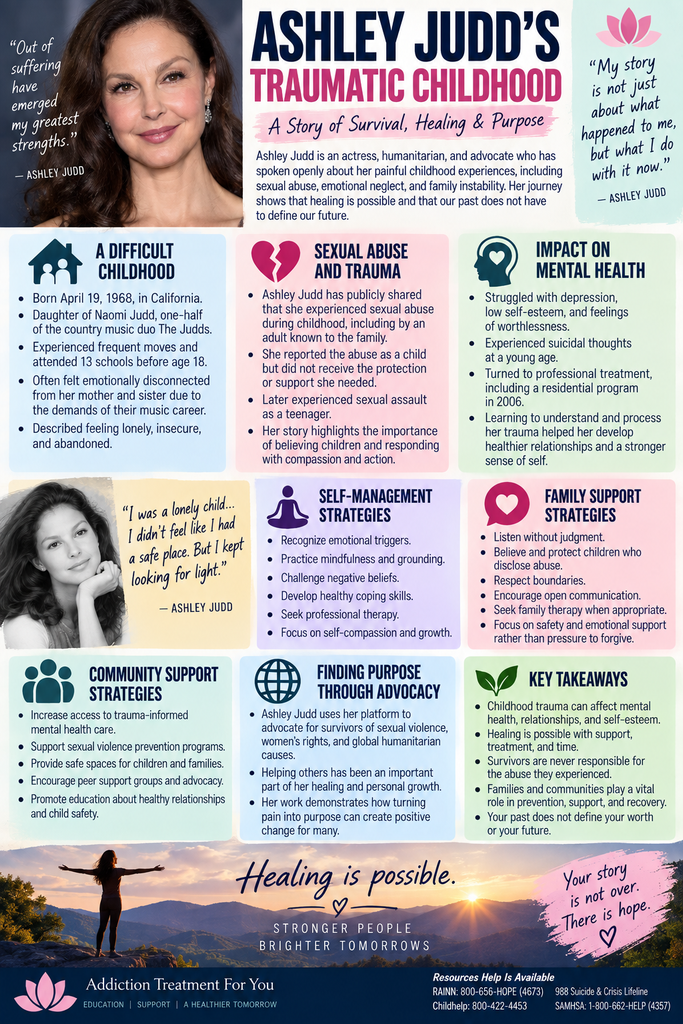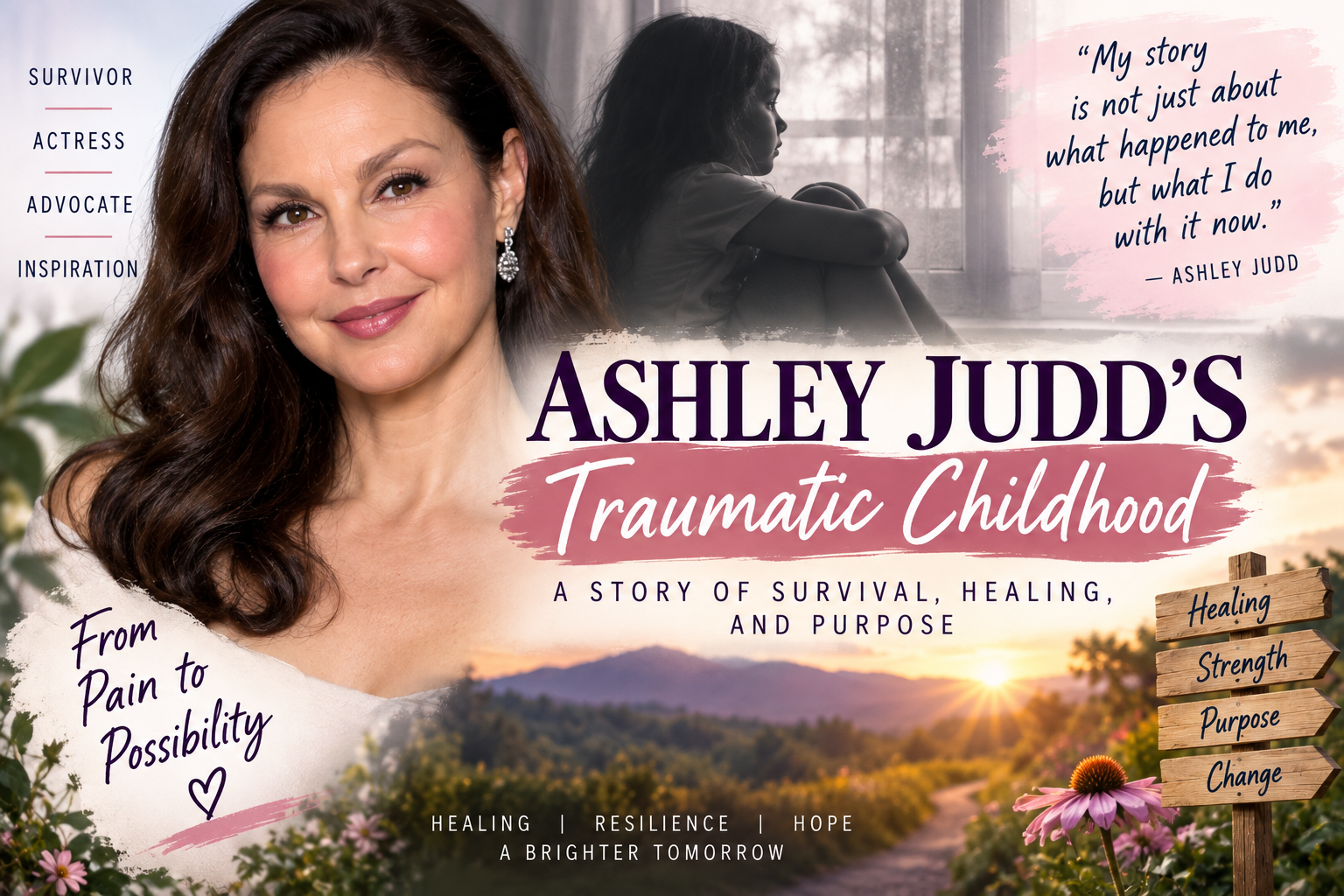
Ashley Judd is an award-winning actress, humanitarian, and advocate for survivors of sexual violence. Known for her performances in Double Jeopardy, Kiss the Girls, and Divergent, she has built a successful career while openly discussing the painful experiences that shaped her childhood.
Behind her Hollywood success lies a personal history involving childhood sexual abuse, emotional neglect, family instability, and depression. In her 2011 memoir, All That Is Bitter & Sweet, Judd described growing up in an unpredictable family environment and struggling with feelings of loneliness and abandonment.
Her journey illustrates how childhood trauma can influence emotional development, self-esteem, relationships, and mental health long after the original experiences have ended.
By sharing her story, Judd has helped raise awareness about childhood adversity, the importance of trauma-informed mental healthcare, and the role of supportive relationships in emotional recovery.
This article explores Ashley Judd’s traumatic childhood, her experiences with mental health treatment, and practical self-management, family, and community support strategies that can help individuals affected by similar experiences.
Ashley Judd’s Childhood: Growing Up in a Famous but Unstable Family
Ashley Judd was born on April 19, 1968, in Granada Hills, California. Her mother, Naomi Judd, and older half-sister, Wynonna Judd, became internationally recognized country music performers known as The Judds.
Although Ashley grew up surrounded by musical talent and eventually achieved fame herself, she described feeling emotionally disconnected from her family.
In her memoir, she recalled frequently changing homes and schools while her mother and sister pursued their musical careers.
According to her account, she attended 13 schools before turning 18.
She also described spending extended periods away from her mother and sister, sometimes feeling that she lacked the emotional stability and attention she needed.
These experiences contributed to feelings of loneliness, insecurity, and abandonment. ABC News
How family instability can affect childhood development
Children depend on predictable routines, emotional security, and consistent caregiving to develop a healthy sense of safety and belonging.
Frequent changes in caregivers, living arrangements, or family relationships may increase emotional stress, especially when children lack opportunities to talk about their experiences.
Potential consequences include:
- Emotional insecurity: Difficulty feeling safe or confident in relationships.
- Fear of abandonment: Worrying that important people will leave or become unavailable.
- Low self-esteem: Developing negative beliefs about personal worth.
- Difficulty trusting others: Struggling to believe that relationships will remain stable.
- Social isolation: Experiencing loneliness or difficulty establishing lasting friendships.
- Emotional suppression: Hiding painful feelings to avoid creating additional family conflict.
Not every child who experiences family instability develops long-term psychological difficulties.
Supportive caregivers, stable relationships, and access to appropriate mental healthcare can help protect children from the effects of adversity.
Ashley Judd’s Experiences With Childhood Sexual Abuse
One of the most painful aspects of Ashley Judd’s childhood involved sexual abuse.
In her memoir and subsequent interviews, Judd disclosed that she experienced sexual abuse during childhood, including abuse involving an adult known to her family.
She also described being sexually assaulted as a teenager.
During a 2018 NPR interview, Judd discussed an experience of sexual molestation when she was approximately seven years old.
She recalled telling adults about what happened but receiving dismissive responses rather than the protection and validation she needed.
Her account illustrates how harmful it can be when adults minimize or dismiss a child’s disclosure of sexual abuse.
Understanding the psychological effects of childhood sexual abuse
Childhood sexual abuse can disrupt a child’s developing sense of safety, autonomy, and trust.
Survivors may experience emotional and behavioral difficulties that continue into adolescence or adulthood.
Potential effects include:
- Persistent feelings of shame, guilt, or self-blame.
- Anxiety, depression, or trauma-related symptoms.
- Difficulty establishing personal boundaries.
- Fear of intimacy or vulnerability.
- Problems trusting caregivers or romantic partners.
- Negative beliefs about personal worth.
- Emotional numbness or avoidance of distressing memories.
However, childhood sexual abuse does not inevitably lead to lifelong psychological difficulties.
Individual outcomes depend on multiple factors, including the nature of the abuse, the response of trusted adults, access to treatment, and the presence of protective relationships.
The responsibility for childhood sexual abuse always belongs to the person who commits the abuse, never to the child who experiences it.
How Childhood Trauma Influenced Ashley Judd’s Mental Health
Ashley Judd has openly discussed experiencing depression and emotional distress associated with her childhood experiences.
In her memoir, she described struggling with profound loneliness and suicidal thoughts at a young age.
Her experiences highlight the importance of recognizing emotional distress in children rather than assuming that childhood is always a carefree period.
Children exposed to abuse, neglect, or family instability may experience psychological symptoms that are difficult for adults to recognize.
These symptoms may include withdrawal, irritability, changes in sleep, declining academic performance, or persistent feelings of sadness.
Judd later sought professional treatment for depression and other emotional difficulties, describing the experience as an important part of her recovery.
The relationship between childhood trauma and depression
Childhood adversity is associated with an increased risk of depression and other mental health conditions later in life.
Traumatic experiences can influence how individuals perceive themselves, interpret stressful situations, and respond to interpersonal conflict.
For example, a child who repeatedly feels abandoned may develop beliefs that they are unworthy of love or that important relationships are unreliable.
These beliefs may persist into adulthood unless they are recognized and addressed.
Common symptoms of depression include:
- Persistent sadness or emotional emptiness.
- Loss of interest in previously enjoyable activities.
- Fatigue or reduced motivation.
- Changes in appetite or sleep.
- Difficulty concentrating.
- Feelings of hopelessness or worthlessness.
- Thoughts of death or suicide.
Individuals experiencing persistent symptoms should seek evaluation from a qualified healthcare professional.
Depression is treatable, and appropriate care may include psychotherapy, medication, or a combination of approaches.
Ashley Judd’s Decision to Seek Professional Treatment
In 2006, Ashley Judd entered a residential treatment program to address depression and longstanding emotional difficulties.
She later discussed how treatment helped her examine painful childhood experiences, recognize unhealthy relationship patterns, and develop healthier coping strategies.
Her treatment experience also encouraged her to reconsider how she approached her personal relationships and emotional well-being.
In a 2012 interview with ABC News, Judd described the importance of receiving professional support and developing a greater understanding of herself.
She also discussed how humanitarian work became an important source of personal meaning. Marie Claire
Why professional treatment can be important for trauma survivors
Some individuals attempt to manage childhood trauma by avoiding painful memories, suppressing emotions, or focusing exclusively on work and other responsibilities.
Although these strategies may provide temporary relief, they do not always address the underlying emotional difficulties.
Professional treatment can help individuals:
- Recognize how past experiences shape current emotional responses.
- Identify unhealthy coping patterns.
- Challenge negative beliefs about themselves.
- Develop healthier emotional regulation skills.
- Improve communication and relationship boundaries.
- Address depression, anxiety, or trauma-related symptoms.
- Establish realistic recovery goals.
Treatment should be individualized according to the person’s symptoms, preferences, and circumstances.
Not everyone who experiences childhood trauma requires residential treatment. Many individuals benefit from outpatient psychotherapy, community mental health services, and supportive relationships.
Self-Management Strategies for Healing Childhood Trauma
Ashley Judd’s experiences demonstrate the importance of recognizing emotional pain and seeking appropriate support.
For individuals affected by childhood adversity, self-management can complement professional treatment by strengthening emotional awareness and developing healthier coping skills.
Recognize emotional triggers
Trauma-related triggers are situations, memories, or experiences that produce distress associated with earlier traumatic events.
For someone who experienced childhood abandonment, situations involving rejection or separation may provoke particularly intense emotional responses.
Helpful strategies include:
- Identifying situations that produce strong emotional reactions.
- Recognizing physical symptoms such as rapid breathing, muscle tension, or increased heart rate.
- Recording thoughts and emotions in a journal.
- Practicing grounding exercises during periods of distress.
- Learning to distinguish current circumstances from earlier traumatic experiences.
Recognizing emotional triggers can help individuals respond more intentionally rather than automatically reacting to perceived threats.
Develop healthy emotional regulation skills
Emotional regulation involves understanding and managing feelings without suppressing them or acting impulsively.
Practical strategies include:
- Practicing mindfulness and controlled breathing.
- Maintaining consistent sleep and exercise routines.
- Engaging in enjoyable activities that promote relaxation.
- Using creative outlets such as writing, art, or music.
- Taking breaks during emotionally overwhelming situations.
- Seeking support from trusted individuals.
These strategies may help reduce everyday stress but should not replace professional treatment for persistent or severe trauma-related symptoms.
Challenge negative beliefs about self-worth
Children who experience abuse or neglect may mistakenly believe that they are responsible for what happened.
These beliefs can contribute to shame, guilt, and difficulty establishing healthy relationships.
Cognitive restructuring can help individuals recognize and challenge inaccurate beliefs.
Healthier perspectives may include:
- Childhood abuse was not my responsibility.
- My experiences do not determine my personal worth.
- I deserve relationships based on safety and respect.
- Asking for help is a healthy response to emotional distress.
- I can establish boundaries without feeling guilty.
Developing self-compassion can help individuals respond to painful memories without reinforcing negative beliefs about themselves.
Seek trauma-focused mental health treatment
Individuals experiencing persistent trauma-related symptoms may benefit from evidence-based psychotherapy.
Depending on the person’s symptoms and clinical needs, treatment options may include:
- Trauma-focused cognitive behavioral therapy.
- Cognitive processing therapy.
- Prolonged exposure therapy.
- Eye movement desensitization and reprocessing (EMDR).
- Treatment for co-occurring depression or anxiety.
A qualified mental health professional can help determine the most appropriate treatment approach.
Healing from childhood trauma does not require confronting painful memories alone. Professional support can provide a structured and supportive environment for recovery.
Family Support Strategies: Rebuilding Trust and Emotional Safety
Family relationships can play an important role in recovery from childhood trauma.
However, family involvement should prioritize emotional safety, respect, and the survivor’s personal choices.
Ashley Judd has discussed her complicated family relationships while also acknowledging the love and support she experienced from certain relatives.
In a later interview, she described her grandparents as important sources of stability during childhood.
Her account illustrates how supportive family members can provide protective relationships even when other aspects of the family environment are unstable.
Encourage open and supportive communication
Family members can help trauma survivors feel understood by listening without judgment.
Helpful approaches include:
- Allowing individuals to discuss painful experiences at their own pace.
- Acknowledging their feelings without minimizing what happened.
- Avoiding statements that suggest they should simply forget the past.
- Respecting privacy and personal boundaries.
- Asking what type of support would be most helpful.
Survivors should never feel obligated to disclose details of traumatic experiences before they are ready.
Believe and protect children who disclose abuse
When a child reports sexual abuse, the response of trusted adults can significantly influence their immediate safety and emotional well-being.
Caregivers should:
- Listen calmly and take the disclosure seriously.
- Reassure the child that the abuse was not their fault.
- Avoid blaming or questioning the child’s motives.
- Take appropriate steps to protect the child from further harm.
- Seek guidance from qualified child protection and healthcare professionals.
- Follow applicable reporting requirements.
Adults should avoid repeatedly questioning children about traumatic events or attempting to conduct their own investigations.
Specialized professionals can help ensure that disclosures are handled appropriately.
Establish healthy family boundaries
Some survivors benefit from maintaining relationships with supportive relatives while limiting contact with individuals who have caused harm.
Healthy boundaries may include:
- Refusing to tolerate threatening or abusive behavior.
- Limiting conversations that become emotionally harmful.
- Respecting an individual’s decision to maintain distance from certain relatives.
- Avoiding pressure to forgive or reconcile.
- Establishing clear expectations for respectful communication.
Forgiveness and reconciliation are personal decisions and are not requirements for trauma recovery.
Consider family therapy when appropriate
Family therapy may help relatives improve communication, understand the effects of childhood adversity, and develop healthier relationship patterns.
However, joint therapy involving an abusive family member may be inappropriate when violence, coercion, or intimidation is ongoing.
Individual safety and professional guidance should take priority.
Community Support Strategies: Helping Survivors Find Safety and Connection
Ashley Judd has used her public platform to advocate for survivors of sexual violence and individuals experiencing social injustice.
Her humanitarian work has included supporting women and girls affected by sexual exploitation, poverty, and gender-based violence.
She has also spoken publicly about the importance of addressing shame and encouraging survivors to seek appropriate support.
Her advocacy highlights the role communities can play in creating environments where survivors feel safe, believed, and supported.
Expand access to trauma-informed mental healthcare
Trauma-informed care recognizes that past traumatic experiences may influence a person’s emotional responses, relationships, and interactions with healthcare professionals.
Community healthcare organizations can support survivors by:
- Providing affordable and accessible mental health services.
- Offering confidential trauma assessments.
- Training healthcare professionals to recognize trauma-related symptoms.
- Connecting survivors with qualified therapists.
- Providing culturally responsive treatment.
- Reducing stigma surrounding mental health conditions and sexual abuse.
Healthcare professionals should avoid requiring individuals to repeatedly disclose traumatic experiences when doing so is unnecessary for treatment.
Strengthen sexual violence prevention programs
Communities can reduce the risk of childhood sexual abuse through education, prevention, and effective intervention.
Important strategies include:
- Teaching children age-appropriate concepts about bodily autonomy and personal boundaries.
- Educating caregivers about recognizing possible signs of abuse.
- Establishing clear safeguarding policies in schools and youth organizations.
- Providing confidential reporting procedures.
- Ensuring that disclosures receive appropriate professional attention.
- Supporting organizations that provide services to survivors.
Prevention efforts must place responsibility on adults, institutions, and potential perpetrators rather than expecting children to prevent abuse themselves.
Encourage peer support and survivor advocacy
Support groups can help individuals connect with others who have experienced similar challenges.
Potential benefits include reduced isolation, emotional validation, and increased awareness of available resources.
Community support may include:
- Survivor-led support groups.
- Mental health peer support programs.
- Educational workshops about childhood trauma.
- Community wellness and resilience programs.
- Mentorship opportunities.
- Faith-based or spiritual support when consistent with individual preferences.
Peer support can complement professional treatment but should not replace specialized mental healthcare when it is needed.
Promote early intervention for children experiencing adversity
Schools, pediatric healthcare providers, and community organizations can help identify children who may benefit from additional support.
Early intervention strategies include:
- School-based mental health counseling.
- Child-focused trauma therapy.
- Family support and parenting education.
- Safe housing and practical assistance.
- Programs that strengthen supportive caregiver relationships.
- Referral services for children experiencing abuse or neglect.
Providing stable, supportive relationships can help children develop a stronger sense of safety and emotional security.
The Connection Between Childhood Trauma and Addiction
Childhood trauma is associated with an increased risk of substance use disorders later in life.
Some individuals may use alcohol or drugs to temporarily manage painful memories, anxiety, depression, or emotional distress.
This pattern is sometimes described as self-medication.
However, substance use can worsen mental health symptoms, interfere with sleep, and increase the risk of developing a substance use disorder.
Although Ashley Judd has discussed growing up in an environment affected by substance use and later seeking treatment for emotional difficulties, her experiences should not be interpreted as evidence that she has a substance use disorder.
How trauma-informed addiction treatment can help
For individuals experiencing both childhood trauma and substance use problems, comprehensive treatment may include:
- Assessment of trauma-related symptoms and substance use patterns.
- Evidence-based psychotherapy.
- Medications for substance use disorders when clinically appropriate.
- Development of healthier coping and emotional regulation skills.
- Family education and support.
- Peer recovery services.
- Relapse prevention planning.
- Ongoing mental health follow-up.
Treatment should address both substance use and co-occurring mental health conditions when present.
Integrated care can help individuals develop healthier coping strategies while reducing the risk of continued substance-related harm.
Ashley Judd’s Humanitarian Work: Finding Meaning Through Helping Others
An important aspect of Ashley Judd’s public life involves her humanitarian work and advocacy for vulnerable populations.
She has supported efforts addressing sexual exploitation, gender-based violence, poverty, and access to healthcare.
Judd has said that working with people facing hardship helped her develop a stronger sense of purpose and connection.
Her advocacy has also included speaking openly about her experiences as a survivor of sexual violence and encouraging greater public awareness of the challenges survivors face.
How meaningful activities can support emotional recovery
Meaningful activities may help individuals develop a sense of purpose, strengthen social connections, and improve psychological well-being.
Examples include:
- Volunteering with community organizations.
- Supporting causes that reflect personal values.
- Participating in creative or educational activities.
- Developing supportive friendships.
- Mentoring others when emotionally ready.
- Engaging in advocacy or awareness initiatives.
However, survivors should never feel obligated to transform their traumatic experiences into public advocacy or service to others.
A person’s recovery is meaningful even when it remains private.
Helping others can be one component of emotional well-being, but it is not a substitute for addressing one’s own mental health needs.
What Can We Learn From Ashley Judd’s Traumatic Childhood?
Ashley Judd’s experiences illustrate how childhood abuse, emotional neglect, and family instability can influence mental health and relationships into adulthood.
Her willingness to discuss her experiences has also helped bring attention to the importance of believing survivors and reducing the stigma surrounding childhood sexual abuse.
Several important lessons emerge from her story:
- Childhood trauma can affect emotional development even when a person later achieves professional success.
- Sexual abuse is never the responsibility of the child who experiences it.
- Emotional neglect and unstable caregiving can contribute to feelings of insecurity and abandonment.
- Supportive relationships can provide important protection during childhood adversity.
- Professional treatment can help individuals address persistent emotional difficulties.
- Family members should respect survivors’ boundaries and personal choices.
- Community education and prevention programs can help protect vulnerable children.
- Recovery can involve developing healthier relationships, emotional awareness, and a renewed sense of personal meaning.
Judd’s story also demonstrates that individuals can acknowledge both the positive and painful aspects of their family relationships without minimizing the harm they experienced.
Conclusion: Childhood Trauma Does Not Have to Define Your Future
Ashley Judd’s traumatic childhood reveals the emotional challenges that can exist behind a successful public career.
Her experiences with sexual abuse, family instability, loneliness, and depression illustrate how childhood adversity can influence mental health long after the original events have ended.
Through professional treatment, personal reflection, supportive relationships, and humanitarian work, Judd has described finding healthier ways to understand her experiences and move forward.
Her story reminds us that emotional healing is possible, although recovery may involve ongoing challenges and different approaches for different individuals.
Self-management strategies can help survivors recognize emotional triggers and develop healthier coping skills. Families can provide validation, safety, and supportive relationships, while communities can improve access to mental healthcare, prevention programs, and survivor services.
Childhood trauma may influence a person’s life, but it does not determine their worth, identity, or future. Every survivor deserves safety, compassion, and the opportunity to heal.
Resources for Childhood Trauma and Sexual Abuse Survivors
Individuals experiencing the effects of childhood trauma or sexual abuse can access confidential support through the following resources:
- RAINN National Sexual Assault Hotline: Call 800-656-HOPE (4673) for confidential support and information about local services.
- 988 Suicide & Crisis Lifeline: Call or text 988 for immediate mental health crisis support.
- Childhelp National Child Abuse Hotline: Call or text 800-422-4453 for assistance related to child abuse and neglect.
- SAMHSA National Helpline: Call 1-800-662-HELP (4357) for information about mental health and substance use treatment resources.
Frequently Asked Questions
Here are some common questions:
1. What childhood trauma did Ashley Judd experience?
Ashley Judd has publicly discussed experiencing childhood sexual abuse, emotional neglect, family instability, and feelings of abandonment. In her 2011 memoir, All That Is Bitter & Sweet, she described growing up in an unpredictable environment while her mother, Naomi Judd, and older half-sister, Wynonna Judd, pursued their musical careers. These experiences influenced her emotional development, self-esteem, and relationships.
2. Was Ashley Judd sexually abused as a child?
Yes. Ashley Judd disclosed in her memoir that she experienced sexual abuse during childhood, including abuse involving an adult known to her family. She also described experiencing sexual assault during adolescence. Her public disclosures have helped raise awareness about childhood sexual abuse and the importance of believing and protecting children who report abuse.
3. How did Ashley Judd’s family environment affect her childhood?
Judd described growing up in a family environment characterized by frequent moves, emotional instability, and periods of separation from her mother and sister. She reported attending 13 schools before turning 18. These experiences contributed to feelings of loneliness, insecurity, and abandonment. Her story illustrates how inconsistent caregiving and family instability can affect a child’s sense of safety and belonging.
4. Did Ashley Judd experience emotional neglect during childhood?
Ashley Judd has described feeling emotionally neglected and disconnected from her family during childhood. She reported spending significant periods away from her mother and sister while they pursued their music careers. Emotional neglect can occur when a child’s emotional needs for affection, attention, reassurance, and consistent support are not adequately met.
5. How did Ashley Judd’s childhood trauma affect her mental health?
Judd has publicly discussed experiencing depression, loneliness, and emotional distress associated with her childhood experiences. She also described struggling with suicidal thoughts at a young age. Childhood trauma can increase the risk of depression, anxiety, post-traumatic stress disorder (PTSD), and difficulties with emotional regulation. However, individual responses to trauma vary, and not everyone who experiences childhood adversity develops a mental health condition.
6. Did Ashley Judd seek professional treatment for childhood trauma?
Yes. In 2006, Ashley Judd entered a residential treatment program to address depression and longstanding emotional difficulties. She later discussed how treatment helped her better understand her childhood experiences, recognize unhealthy emotional patterns, and develop healthier coping strategies. Her decision to seek professional support highlights the importance of addressing persistent mental health symptoms rather than attempting to manage them alone.
7. How did Ashley Judd’s relationship with Naomi Judd influence her childhood?
Ashley Judd has described a complicated relationship with her mother, Naomi Judd. Although she acknowledged her mother’s accomplishments and their family bond, she also discussed feeling emotionally disconnected during childhood. Her memoir describes how family instability and periods of separation affected her emotional well-being. Her experiences illustrate how children may feel conflicting emotions — love, resentment, loneliness, and attachment — within complicated family relationships.
8. Did Ashley Judd develop PTSD because of her childhood experiences?
Ashley Judd has publicly discussed childhood trauma and its emotional consequences. However, experiencing trauma does not automatically establish a diagnosis of PTSD. PTSD requires a clinical evaluation of symptoms, their duration, and their impact on daily functioning. Childhood sexual abuse and other adverse experiences can increase the risk of trauma-related disorders, but individual outcomes vary.
9. How did Ashley Judd’s childhood trauma affect her adult relationships?
Judd has discussed how childhood experiences influenced her emotional well-being and understanding of relationships. Childhood trauma can affect adult relationships by contributing to difficulties with trust, emotional vulnerability, communication, and personal boundaries. However, specific events in Judd’s adult relationships should not automatically be attributed to her childhood experiences without sufficient evidence.
10. What helped Ashley Judd begin healing from childhood trauma?
Ashley Judd has described professional mental health treatment, personal reflection, supportive relationships, and humanitarian work as important aspects of her emotional journey. Her experiences illustrate how understanding painful childhood memories and developing healthier coping strategies can support recovery. Healing is an individual process, and different approaches may be appropriate depending on a person’s symptoms, circumstances, and preferences.
Self-Management and Emotional Healing
11. What self-management strategies can help someone recover from childhood trauma?
Self-management strategies can help individuals recognize emotional triggers, regulate stress, and develop healthier coping mechanisms.
Helpful approaches include:
- Practicing mindfulness and grounding exercises.
- Identifying emotional triggers and recognizing stress responses.
- Maintaining consistent sleep and exercise routines.
- Challenging negative beliefs about personal worth.
- Developing healthy relationship boundaries.
- Practicing self-compassion.
- Seeking professional trauma-focused treatment when needed.
Self-management can complement professional mental healthcare but should not replace treatment when trauma symptoms significantly interfere with daily functioning.
12. Can childhood trauma cause depression later in life?
Childhood trauma is associated with an increased risk of depression during adolescence and adulthood. Experiences involving abuse, neglect, or unstable caregiving may influence emotional development, stress responses, and beliefs about personal worth. However, childhood trauma does not inevitably cause depression. Genetics, environmental factors, supportive relationships, and access to mental healthcare also influence mental health outcomes.
13. Why do some childhood trauma survivors struggle with self-esteem?
Children who experience abuse or neglect may develop negative beliefs about themselves, including feelings of shame, inadequacy, or personal responsibility for what happened. These beliefs can persist into adulthood and affect relationships, emotional well-being, and confidence. Trauma-focused psychotherapy can help individuals identify and challenge inaccurate beliefs while developing a healthier sense of self-worth.
14. What types of therapy can help adults recover from childhood trauma?
Several evidence-based treatments can help individuals experiencing persistent trauma-related symptoms. Depending on the person’s clinical needs, options may include trauma-focused cognitive behavioral therapy, cognitive processing therapy, prolonged exposure therapy, and eye movement desensitization and reprocessing (EMDR). Treatment for co-occurring depression or anxiety may also be appropriate. A qualified mental health professional can recommend an individualized treatment plan.
15. Can someone recover from childhood trauma without forgiving the person who abused them?
Yes. Forgiveness is not a requirement for trauma recovery. Individuals can develop healthier coping strategies, establish personal boundaries, and improve their emotional well-being without forgiving or reconciling with someone who harmed them. Recovery should prioritize personal safety, emotional stability, and the survivor’s individual choices.
Family and Community Support
16. How can families support someone recovering from childhood trauma?
Families can support trauma survivors by providing emotional safety, listening without judgment, and respecting personal boundaries. They should acknowledge the individual’s experiences without minimizing the abuse or pressuring them to forgive. Encouraging professional treatment, maintaining consistent communication, and demonstrating patience can help strengthen supportive relationships.
17. How should parents respond when a child discloses sexual abuse?
Parents and caregivers should remain calm, listen carefully, and take the child’s disclosure seriously. They should reassure the child that the abuse was not their fault and take appropriate steps to protect them from further harm. Caregivers should seek guidance from qualified child protection and healthcare professionals and follow applicable reporting requirements. Avoid repeatedly questioning the child or attempting to conduct an independent investigation.
18. Can family therapy help survivors of childhood trauma?
Family therapy may help relatives improve communication, understand the effects of childhood adversity, and develop healthier relationship patterns. However, therapy involving an abusive family member may be inappropriate when violence, coercion, or intimidation is ongoing. The survivor’s safety and preferences should guide decisions about family involvement.
19. How can communities support survivors of childhood sexual abuse?
Communities can support survivors by improving access to trauma-informed mental healthcare, providing confidential reporting services, and supporting sexual violence prevention programs. Schools, healthcare organizations, and community agencies can also offer counseling, survivor support groups, educational programs, and referrals to specialized services. Creating environments where survivors feel safe and believed can encourage individuals to seek appropriate assistance.
20. What role does early intervention play in preventing long-term trauma-related difficulties?
Early intervention can help children exposed to abuse or neglect access appropriate emotional support and mental healthcare. School-based counseling, child-focused trauma therapy, supportive caregiving, and safe living environments may reduce the risk of persistent psychological difficulties. Although early intervention cannot guarantee that a child will avoid future mental health problems, it can strengthen protective factors and support healthy emotional development.
Childhood Trauma, Addiction, and Recovery
21. Is childhood trauma linked to addiction later in life?
Yes. Research has identified an association between adverse childhood experiences and an increased risk of substance use disorders in adulthood. Some individuals may use alcohol or drugs to temporarily manage painful memories, anxiety, depression, or emotional distress. However, childhood trauma does not inevitably lead to addiction. Supportive relationships, access to treatment, and healthy coping strategies can help reduce risk.
22. Did Ashley Judd develop a substance use disorder because of her childhood trauma?
Ashley Judd has publicly discussed childhood trauma, depression, and seeking professional mental health treatment. However, her traumatic childhood should not be interpreted as evidence that she developed a substance use disorder. Childhood adversity can increase vulnerability to substance misuse, but individual outcomes vary, and a substance use disorder should not be assumed without appropriate evidence.
23. How can trauma-informed addiction treatment help survivors of childhood abuse?
Trauma-informed addiction treatment recognizes that past traumatic experiences may influence substance use patterns, emotional regulation, and responses to treatment. Comprehensive care may include psychotherapy, medications for substance use disorders when appropriate, healthy coping strategies, family education, and peer recovery support. Addressing both trauma-related symptoms and substance use problems can improve overall treatment outcomes.
24. How did Ashley Judd use her experiences to advocate for others?
Ashley Judd has used her public platform to advocate for survivors of sexual violence, women’s rights, and humanitarian causes. She has spoken openly about her experiences and supported initiatives addressing sexual exploitation and gender-based violence. Her advocacy has helped bring public attention to the importance of survivor support, prevention, and access to appropriate resources.
However, survivors are not obligated to share their experiences publicly or participate in advocacy to achieve meaningful recovery.
25. What is the most important lesson from Ashley Judd’s traumatic childhood?
Ashley Judd’s story illustrates how childhood abuse, emotional neglect, and family instability can influence mental health long after the original experiences have ended.
Her experiences also highlight the importance of believing children who disclose abuse, providing supportive relationships, and ensuring access to appropriate mental healthcare.
Childhood trauma may influence a person’s emotional development, but it does not determine their worth or future. With appropriate support and treatment, survivors can develop healthier relationships, improve emotional well-being, and work toward meaningful recovery.
Where Can Survivors of Childhood Trauma Find Help?
Individuals experiencing the effects of childhood trauma or sexual abuse can access confidential support through several national resources.
RAINN National Sexual Assault Hotline: Call 800-656-HOPE (4673) for confidential support and information about sexual assault services.
Childhelp National Child Abuse Hotline: Call or text 800-422-4453 for assistance related to child abuse and neglect.
988 Suicide & Crisis Lifeline: Call or text 988 for immediate mental health crisis support.
SAMHSA National Helpline: Call 1-800-662-HELP (4357) for information about mental health and substance use treatment resources.
If someone is in immediate danger, call 911.
Remember: Healing from childhood trauma is possible. Survivors deserve safety, compassion, and access to the support they need to build healthier, more fulfilling lives.
Video: