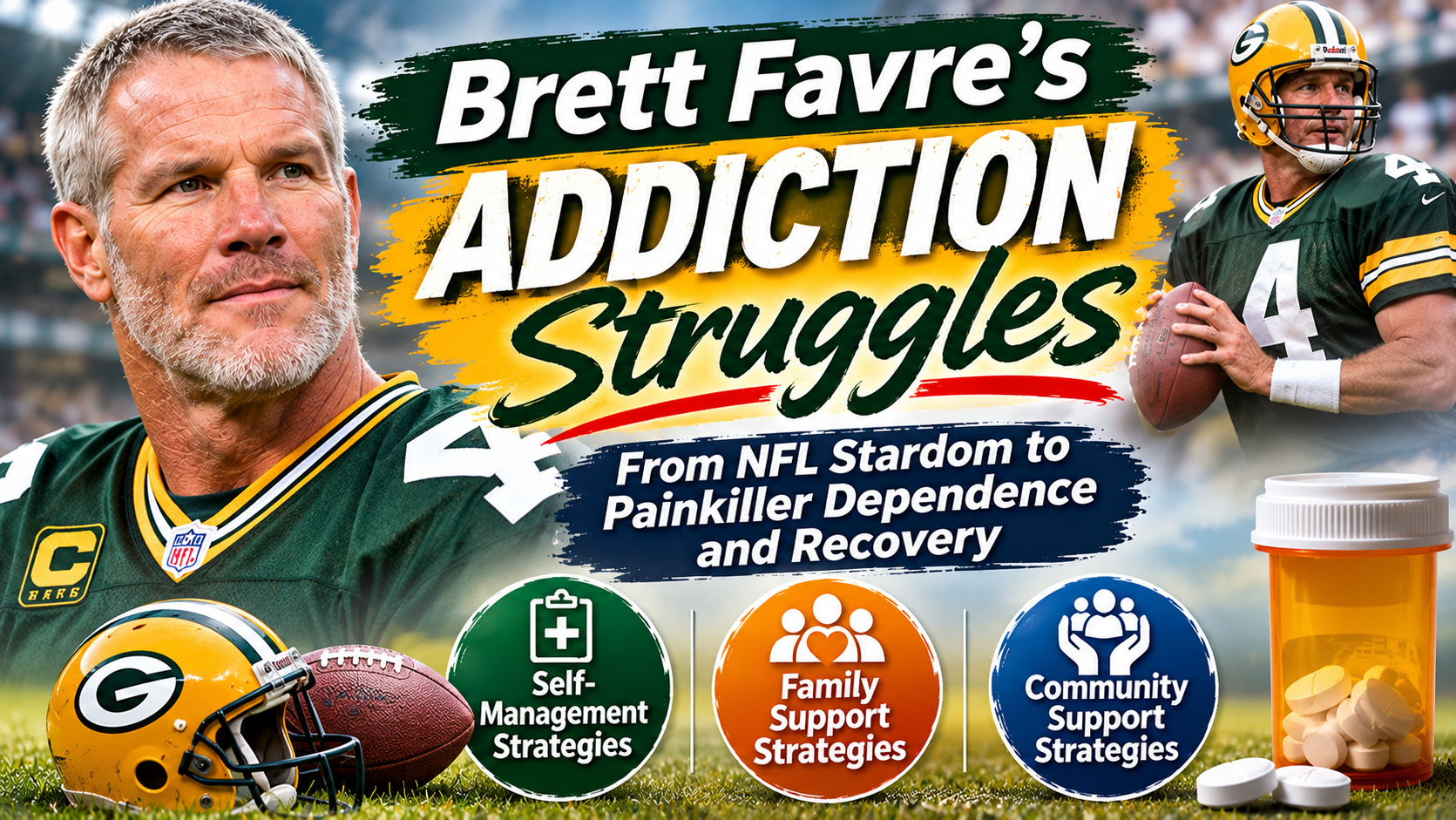
What happens when one of football’s most celebrated quarterbacks becomes dependent on prescription painkillers while trying to manage injuries and maintain his professional career?
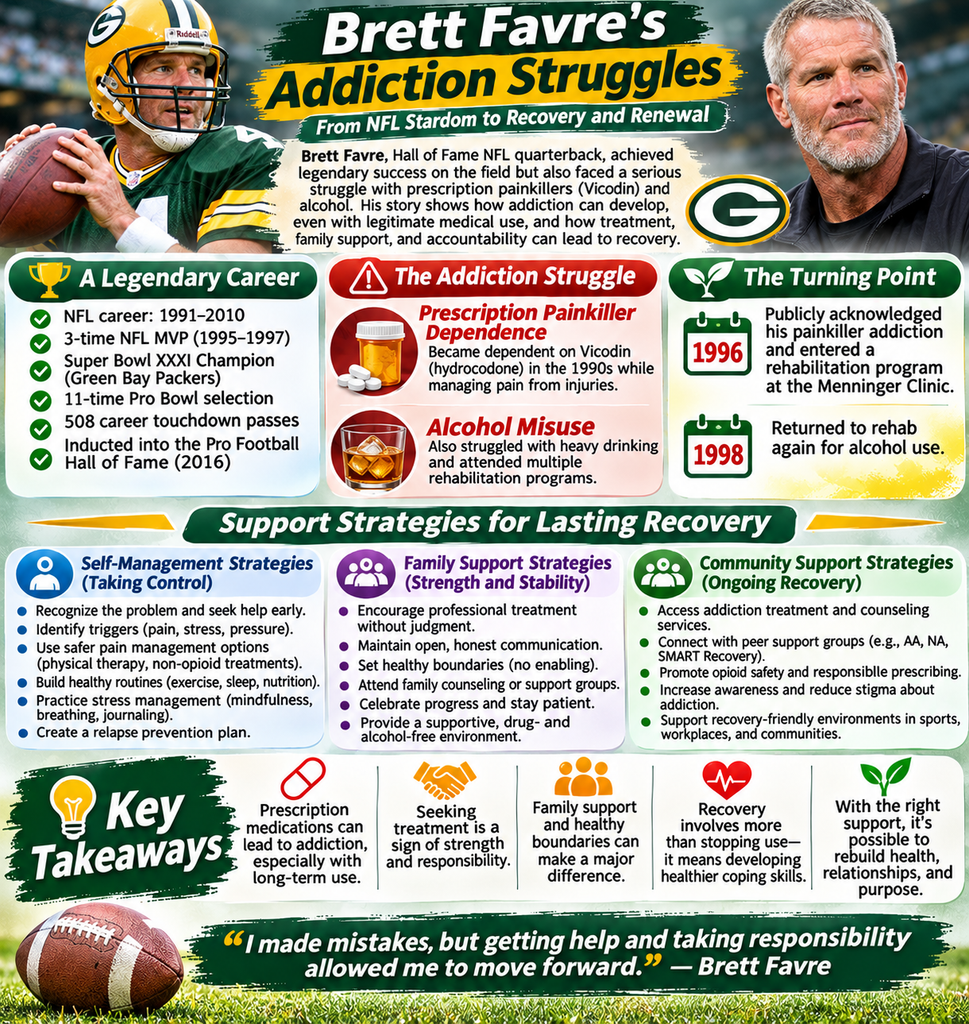
Brett Favre is a legendary former National Football League (NFL) quarterback best known for his remarkable career with the Green Bay Packers. Despite his extraordinary achievements, Favre experienced a serious struggle with prescription opioid painkillers, particularly Vicodin, during the 1990s.
His addiction developed in the context of managing physical pain, recovering from injuries, and maintaining the demanding schedule of professional football.
In 1996, Favre publicly acknowledged his dependence on painkillers and entered a rehabilitation program. His decision to seek treatment became an important turning point in his personal life and career.
Favre’s experiences illustrate how prescription medications, even when initially used for legitimate medical reasons, can contribute to opioid use disorder.
His journey provides valuable lessons about self-management, family involvement, professional treatment, and community support in addressing prescription opioid addiction.
Brett Favre’s Rise to NFL Stardom
Brett Favre began his NFL career with the Atlanta Falcons in 1991 before joining the Green Bay Packers in 1992.
He became one of the most recognizable quarterbacks in NFL history, known for his strong throwing arm, competitive determination, and ability to play through injuries.
His professional achievements include:
- Winning three consecutive NFL Most Valuable Player awards from 1995 through 1997.
- Leading the Green Bay Packers to victory in Super Bowl XXXI.
- Earning 11 Pro Bowl selections.
- Throwing 508 career touchdown passes.
- Recording 71,838 career passing yards.
- Starting 297 consecutive regular-season games.
- Being inducted into the Pro Football Hall of Fame in 2016.
However, his determination to keep playing despite injuries contributed to an environment where pain management became a major concern.
His experiences highlight the complicated relationship between athletic performance, physical pain, prescription medications, and addiction risk.
Understanding Brett Favre’s Prescription Painkiller Addiction
During the 1990s, Favre developed dependence on prescription opioid painkillers, including Vicodin.
Vicodin contains hydrocodone, an opioid analgesic, combined with acetaminophen.
Hydrocodone acts on mu-opioid receptors in the central nervous system to reduce pain perception. It can also activate reward pathways, contributing to its potential for misuse and addiction.
Favre has publicly discussed escalating painkiller consumption and the difficulty of controlling his medication use.
How prescription opioid addiction develops
Opioid use disorder can develop through a combination of biological, psychological, and environmental factors.
Repeated opioid exposure can produce physical dependence, tolerance, and, in some individuals, compulsive medication use despite harmful consequences.
Common warning signs include:
- Taking larger doses than prescribed.
- Experiencing strong cravings for opioid medications.
- Difficulty reducing or stopping medication use.
- Continuing opioid use despite health or relationship problems.
- Spending excessive time obtaining or using medication.
- Developing withdrawal symptoms when opioid use decreases.
- Using medication for emotional relief rather than its prescribed purpose.
- Experiencing impaired judgment or reduced daily functioning.
Importantly, physical dependence and addiction are not identical. A person taking prescribed opioids can develop physiological dependence without meeting the diagnostic criteria for opioid use disorder.
The Pressure of Professional Sports and Pain Management
Professional football is physically demanding, with athletes frequently experiencing injuries, chronic pain, and pressure to return to competition.
Favre became known for his exceptional durability and willingness to play through physical discomfort.
However, athletes who rely heavily on pain medication may face additional risks when medication use escalates.
Factors that can increase vulnerability include:
- Repeated injuries requiring pain treatment.
- Pressure to remain available for competition.
- Fear of losing a starting position.
- Difficulty balancing recovery time with professional obligations.
- Inadequate monitoring of opioid medication use.
- Emotional stress associated with chronic pain.
- Social attitudes that reward playing through injuries.
These factors do not automatically cause addiction, but they can complicate pain management and increase the importance of appropriate medical supervision.
Favre’s experience demonstrates why sports medicine professionals must balance effective pain relief with careful assessment of opioid-related risks.
Medical Complications and the Turning Point in 1996
Favre’s opioid addiction became especially serious when he experienced seizures during the mid-1990s.
In February 1996, he suffered a seizure while hospitalized following ankle surgery. His medication use and severe sleep deprivation were major concerns.
In May 1996, Favre publicly acknowledged his painkiller dependence and entered the NFL’s substance abuse program. He subsequently received treatment at the Menninger Clinic in Topeka, Kansas. The Washington Post+1
Recognizing the seriousness of addiction
Favre later described how his use of Vicodin escalated dramatically. He reported taking approximately 14–16 tablets at once during the worst periods of his addiction.
These amounts were medically dangerous, particularly because Vicodin contains both hydrocodone and acetaminophen. Excessive acetaminophen exposure can cause severe liver injury.
His experiences illustrate several warning signs:
- Increasing medication doses beyond prescribed amounts.
- Seeking additional medication from multiple sources.
- Continuing opioid use despite serious health consequences.
- Experiencing significant sleep disturbances.
- Losing control over medication consumption.
- Struggling to stop despite recognizing the dangers.
Favre’s health complications emphasized the need for professional medical intervention.
Alcohol Misuse and Repeated Rehabilitation
Favre’s struggles were not limited to prescription painkillers.
In later interviews, he acknowledged that he also experienced problems with excessive alcohol consumption.
In 2018, Favre revealed that he had attended rehabilitation three times during his football career.
His treatment history included an earlier rehabilitation stay in Louisiana, treatment in Kansas during the mid-1990s, and another rehabilitation admission in 1998 focused on drinking. NBC Sports+1
Understanding the relationship between opioids and alcohol
Alcohol and opioids both depress central nervous system activity.
Using them together increases the risk of:
- Respiratory depression.
- Severe sedation.
- Impaired coordination and judgment.
- Accidental injuries.
- Loss of consciousness.
- Fatal overdose.
Individuals with a history of addiction to one substance may also experience difficulties involving other substances.
Favre’s experiences demonstrate why comprehensive addiction assessments should examine all substance use rather than focusing exclusively on a single medication.
Self-Management Strategies: Taking Control of Recovery
Recovery from opioid addiction requires more than discontinuing medication. Individuals must also address chronic pain, emotional distress, cravings, and behaviors associated with substance use.
Favre has described learning to recognize his addiction, accept professional treatment, and change his relationship with pain medications.
He later reported avoiding prescription opioid painkillers after overcoming his dependence. CBS Sports
Practical self-management strategies
- Recognize problematic medication use: Monitor changes in dosage, cravings, and the reasons for taking medication.
- Seek professional assessment: Consult an addiction specialist when medication use becomes difficult to control.
- Identify personal triggers: Recognize physical pain, emotional stress, social pressures, and environments associated with opioid use.
- Develop healthier pain-management strategies: Consider physical therapy, appropriate nonopioid medications, exercise, and other evidence-based treatments.
- Practice emotional regulation: Use mindfulness, cognitive behavioral therapy, relaxation exercises, and healthy stress-management techniques.
- Establish consistent routines: Maintain adequate sleep, balanced nutrition, physical activity, and meaningful daily responsibilities.
- Create a relapse prevention plan: Identify warning signs, supportive contacts, and specific steps for managing cravings.
- Maintain accountability: Participate in follow-up appointments, counseling, and appropriate recovery programs.
Managing chronic pain without relying on opioids
For individuals recovering from opioid addiction, chronic pain can become a significant relapse trigger.
A comprehensive pain-management plan may include physical therapy, graded exercise, psychological interventions, and condition-specific nonopioid treatments.
Importantly, avoiding all opioid medications is not a universal requirement for everyone with a history of opioid use disorder. Pain management should be individualized and coordinated with qualified healthcare professionals.
Family Support Strategies: The Role of Deanna Favre
Family support played an important role in Brett Favre’s efforts to address addiction.
His wife, Deanna Favre, recognized concerning changes in his medication use and encouraged him to seek help.
Favre has described how Deanna and his agent, Bus Cook, persuaded him to enter treatment during an earlier period of his addiction.
He initially resisted acknowledging the seriousness of his substance use. NBC Sports
How families can support recovery
- Recognize warning signs: Pay attention to escalating medication use, secrecy, behavioral changes, and impaired functioning.
- Encourage professional treatment: Express concern without shaming or threatening the individual.
- Establish healthy boundaries: Avoid supplying medication, concealing dangerous behaviors, or assuming responsibility for another person’s addiction.
- Maintain honest communication: Discuss concerns respectfully and encourage openness about cravings and treatment needs.
- Participate in family counseling: Address emotional distress, relationship difficulties, and unhealthy interaction patterns.
- Support safe medication practices: Encourage appropriate prescribing, secure medication storage, and safe disposal of unused medications.
- Recognize recovery progress: Acknowledge treatment participation and meaningful behavioral changes.
- Protect family well-being: Encourage relatives to obtain counseling, education, and support when needed.
Rebuilding trust after addiction
Addiction can damage relationships through secrecy, broken promises, and emotional instability.
Rebuilding trust requires consistent behavior over time.
Individuals in recovery can strengthen relationships by accepting responsibility, communicating honestly, following treatment recommendations, and respecting family boundaries.
Family members can encourage recovery, but they cannot control another person’s substance use or guarantee treatment success.
Community Support Strategies: Building a Recovery Network
Favre’s addiction struggles also demonstrate the importance of professional and community support.
During his treatment journey, he received encouragement from family members, healthcare professionals, coaches, and individuals associated with the Green Bay Packers.
His willingness to publicly discuss prescription painkiller addiction helped draw attention to substance use risks in professional sports.
Community strategies for opioid addiction recovery
- Expand access to treatment: Support affordable outpatient services, residential treatment, and medications for opioid use disorder.
- Provide peer recovery support: Connect individuals with trained recovery coaches and people who have experienced addiction.
- Educate athletes and coaches: Promote awareness of opioid risks, appropriate pain management, and early intervention.
- Support medication safety programs: Encourage prescription monitoring, safe storage, and appropriate medication disposal.
- Increase naloxone availability: Train families and communities to recognize opioid overdose and administer naloxone.
- Reduce addiction stigma: Promote respectful language and recognize opioid use disorder as a treatable medical condition.
- Create recovery-friendly workplaces: Provide confidential treatment referrals and supportive return-to-work policies.
- Strengthen family education: Offer workshops about addiction, boundaries, overdose prevention, and recovery resources.
Why peer support matters
Individuals recovering from addiction may benefit from connecting with others who understand cravings, withdrawal, and the challenges of rebuilding relationships.
Peer recovery programs can provide encouragement, accountability, and practical strategies.
Community support is particularly valuable when individuals transition from intensive treatment back into everyday life.
Evidence-Based Treatment for Opioid Use Disorder
Favre’s experiences highlight the importance of comprehensive treatment for prescription opioid addiction.
Modern treatment approaches have expanded significantly since the 1990s.
Effective care may include medication, behavioral therapy, pain management, overdose prevention, and long-term follow-up.
Medications for opioid use disorder
Three FDA-approved medications are available:
Buprenorphine: A partial opioid agonist that reduces withdrawal symptoms and cravings and can lower overdose risk.
Methadone: A full opioid agonist provided for opioid use disorder through certified opioid treatment programs, with limited exceptions.
Extended-release naltrexone: An opioid antagonist that blocks opioid effects. Patients must complete an appropriate opioid-free period before initiation to avoid precipitated withdrawal.
Buprenorphine and methadone are associated with substantial reductions in overdose mortality and are recommended evidence-based treatment options.
Behavioral and psychological treatment
Behavioral interventions may include:
- Cognitive behavioral therapy.
- Motivational interviewing.
- Relapse prevention counseling.
- Family therapy.
- Treatment for co-occurring psychiatric disorders.
- Trauma-informed care when appropriate.
Behavioral therapy can strengthen recovery, but it should not be used as a reason to withhold effective medication treatment.
Overdose prevention
People who return to opioid use after a period of abstinence face increased overdose risk because their tolerance may have decreased.
Naloxone can reverse opioid overdose and should be accessible to individuals at risk and their support networks.
Suspected opioid overdose requires immediate emergency medical assistance, even when naloxone has been administered.
Lessons From Brett Favre’s Addiction Journey
Prescription medications can carry addiction risks.
Even medications prescribed for legitimate injuries require careful monitoring and individualized treatment.
Seeking treatment is a sign of responsibility.
Recognizing addiction and accepting professional assistance can prevent serious medical complications.
Families and communities can strengthen recovery.
Supportive relationships, access to treatment, and appropriate boundaries create healthier recovery environments.
Recovery can involve repeated attempts.
Setbacks may require treatment adjustments, but they do not eliminate the possibility of long-term improvement.
Addiction Recovery Resources for Individuals and Families
Individuals experiencing opioid addiction can access confidential assistance through several national organizations.
- SAMHSA National Helpline: 1-800-662-HELP (4357), providing confidential treatment referral information.
- FindTreatment.gov: A national directory of substance use and mental health treatment services.
- Narcotics Anonymous: Peer support for individuals recovering from drug addiction.
- SMART Recovery: Evidence-informed recovery support emphasizing behavioral change and coping strategies.
- SAMHSA Opioid Treatment Program Directory: Information about certified opioid treatment programs.
- 988 Suicide & Crisis Lifeline: Call or text 988 for immediate emotional crisis support.
- Emergency Services: Call 911 for suspected opioid overdose or other life-threatening medical emergencies.
Conclusion: Brett Favre’s Journey From Addiction to Recovery
Brett Favre’s struggles with prescription opioid painkillers and alcohol demonstrate that addiction can affect individuals regardless of their professional success, determination, or public recognition.
His dependence on Vicodin developed during a demanding football career marked by injuries, physical pain, and pressure to continue competing.
His experiences included escalating medication use, serious health complications, and repeated rehabilitation efforts.
Through professional treatment, family encouragement, and personal changes, Favre reported overcoming his dependence on prescription opioids and later addressing problematic alcohol use.
His story highlights the importance of recognizing addiction early, managing pain appropriately, seeking evidence-based treatment, and maintaining supportive relationships.
For individuals experiencing addiction, his journey reinforces the importance of professional care, self-management, and continuing recovery support.
For families, it emphasizes compassion, healthy boundaries, and open communication.
For communities, it demonstrates the need for opioid education, overdose prevention, accessible treatment, and reduced stigma.
Brett Favre’s experiences remind us that addiction can develop even when medication use begins with legitimate pain treatment. Recovery becomes more achievable when individuals receive appropriate medical care, family encouragement, and sustained community support.
Frequently Asked Questions and Answers
Understanding Brett Favre’s Addiction Struggles
1. Who is Brett Favre, and why is his addiction story important?
Brett Favre is a former NFL quarterback best known for his career with the Green Bay Packers. He won three consecutive NFL Most Valuable Player awards, led the Packers to victory in Super Bowl XXXI, and was inducted into the Pro Football Hall of Fame in 2016.
His addiction story is important because it demonstrates that prescription opioid addiction can affect anyone, including highly successful professional athletes.
2. What substances did Brett Favre struggle with?
Favre has publicly discussed addiction to prescription opioid painkillers, particularly Vicodin, as well as problems involving excessive alcohol consumption.
Vicodin contains hydrocodone, an opioid pain reliever, and acetaminophen, a nonopioid analgesic.
Both opioids and alcohol can produce dependence and serious health complications when misused.
3. How did Brett Favre become addicted to prescription painkillers?
Favre’s opioid use developed during his professional football career, when he experienced injuries and relied on medication for pain relief.
Over time, his medication consumption escalated beyond prescribed amounts.
His experience illustrates how opioid addiction can develop when medication use becomes increasingly difficult to control.
4. How much Vicodin did Brett Favre reportedly take?
Favre has publicly described taking approximately 14–16 Vicodin tablets at once during the most severe period of his addiction.
This level of consumption was medically dangerous because excessive hydrocodone can cause respiratory depression and overdose, while excessive acetaminophen can cause severe liver injury.
The precise risk depends on the medication formulation, dose, and other substances involved.
5. Did Brett Favre experience serious health complications from addiction?
Yes. Favre experienced seizures during the 1990s, including a widely reported episode following ankle surgery in 1996.
His prescription medication use raised serious medical concerns during this period.
However, the precise cause of an individual seizure cannot be established from public accounts alone.
6. When did Brett Favre publicly acknowledge his addiction?
Favre publicly acknowledged his prescription painkiller addiction in May 1996.
He subsequently entered rehabilitation and participated in the NFL’s substance abuse program.
His announcement brought national attention to prescription medication misuse among professional athletes.
7. Where did Brett Favre receive addiction treatment?
Favre received treatment at the Menninger Clinic in Topeka, Kansas, during the 1990s.
He has also publicly discussed other rehabilitation experiences, including treatment related to alcohol use.
His experiences demonstrate that addiction treatment may require multiple interventions and continuing support.
8. How many times did Brett Favre attend rehabilitation?
In a 2018 interview, Favre revealed that he had attended rehabilitation three times during his NFL career.
He described an early treatment stay in Louisiana for painkiller addiction, another in Kansas during the mid-1990s, and a third in 1998 focused on excessive drinking. Los Angeles Times+1
His experiences illustrate that recovery may require repeated treatment efforts.
9. Did Brett Favre also struggle with alcohol addiction?
Yes. Favre acknowledged that he experienced problematic drinking and sometimes consumed alcohol excessively.
He reported entering rehabilitation in 1998 specifically to address his drinking. NBC Sports
Alcohol and opioid misuse can involve overlapping behavioral and psychological risk factors, making comprehensive addiction treatment important.
10. How did Brett Favre’s addiction affect his football career?
Favre continued playing at an exceptionally high level during his addiction struggles, including winning the NFL MVP award in 1995.
However, his substance use created serious health risks and required rehabilitation and participation in the NFL’s substance abuse program.
His experience demonstrates that professional performance alone is not a reliable indicator of someone’s health.
Self-Management and Recovery Strategies
11. How did Brett Favre overcome his prescription painkiller addiction?
Favre has credited rehabilitation and changes in his approach to pain management with helping him discontinue prescription opioid misuse.
In a 2020 interview, he described avoiding opioid painkillers after treatment and relying on other approaches to manage discomfort. CBS Sports
His personal approach should not be interpreted as a universal treatment plan. Today, medications such as buprenorphine and methadone are important evidence-based treatments for opioid use disorder.
12. What self-management strategies can individuals learn from Favre’s experiences?
Practical strategies include:
- Recognizing signs of medication misuse.
- Seeking professional addiction treatment.
- Identifying triggers such as pain, stress, and emotional distress.
- Developing healthier coping mechanisms.
- Establishing consistent sleep and exercise routines.
- Creating a personalized relapse prevention plan.
- Attending follow-up appointments.
- Building supportive relationships.
Self-management should complement professional care rather than replace it.
13. Why is managing chronic pain important during opioid addiction recovery?
Chronic pain can contribute to emotional distress, sleep disturbances, and renewed substance use.
A comprehensive pain-management plan may include physical therapy, appropriate nonopioid medications, cognitive behavioral therapy, and other condition-specific interventions.
Patients should work with healthcare professionals to develop individualized treatment plans.
14. What are common warning signs of prescription opioid addiction?
Warning signs may include:
- Taking larger doses than prescribed.
- Strong cravings for medication.
- Difficulty reducing opioid consumption.
- Continuing use despite harmful consequences.
- Obtaining medication from unauthorized sources.
- Neglecting responsibilities because of opioid use.
- Spending excessive time seeking or using medication.
Physical dependence alone does not necessarily indicate addiction. Diagnosis requires assessment of the broader pattern of substance use and associated impairment.
15. What should someone do if they develop cravings for opioid painkillers?
Individuals experiencing cravings should contact their addiction treatment provider and review their recovery plan.
Helpful strategies may include avoiding triggers, practicing relaxation techniques, contacting recovery supporters, and engaging in structured activities.
For people with opioid use disorder, medication treatment can substantially reduce cravings and overdose risk.
16. Can someone recover after multiple attempts at rehabilitation?
Yes. Recovery from substance use disorders may involve repeated treatment attempts, adjustments in care, and ongoing support.
Favre’s three reported rehabilitation experiences illustrate that recognizing and addressing additional substance-related problems can be part of the recovery process.
A return to substance use should prompt reassessment rather than shame.
Family Support and Relationships
17. What role did Deanna Favre play in Brett Favre’s recovery?
Favre has publicly credited his wife, Deanna, with recognizing concerning medication use and encouraging him to seek treatment.
He also described how Deanna and his agent, Bus Cook, persuaded him to attend an early rehabilitation program. NBC Sports
Their involvement demonstrates how family members and trusted supporters can encourage professional help.
18. How can families recognize prescription opioid misuse?
Families may notice changes in medication consumption, behavior, mood, sleep patterns, or daily functioning.
Possible warning signs include:
- Taking medication more frequently than prescribed.
- Requesting early prescription refills.
- Becoming secretive about medication use.
- Experiencing unusual sedation or impaired coordination.
- Withdrawing from family responsibilities.
- Continuing medication use despite harmful consequences.
These signs warrant concern and professional assessment, but they do not establish a diagnosis on their own.
19. How can families support someone with opioid addiction?
Families can help by encouraging professional treatment, maintaining honest communication, and establishing healthy boundaries.
They can also learn overdose prevention, keep naloxone available when appropriate, and participate in family counseling.
Supporting recovery does not require tolerating unsafe behavior or assuming responsibility for another person’s substance use.
20. What should families avoid when helping someone with addiction?
Families should avoid shaming, threatening, or humiliating the individual.
They should also avoid sharing prescription medication, concealing dangerous behaviors, or attempting to manage severe withdrawal without medical guidance.
Compassionate support is most effective when combined with clear boundaries and professional assistance.
21. How can trust be rebuilt after prescription drug addiction?
Trust develops through consistent behavior, honesty, accountability, and respect for boundaries.
Individuals in recovery can strengthen relationships by following treatment recommendations, acknowledging past harm, and communicating openly.
Family counseling may help address unresolved conflicts and emotional distress.
Community Support and Addiction Advocacy
22. Why is community support important for opioid addiction recovery?
Community support can reduce isolation, encourage engagement in treatment, and provide practical assistance.
Recovery networks may include addiction specialists, peer recovery coaches, support groups, employers, and community organizations.
Stable housing, transportation, employment, and access to healthcare can also improve recovery outcomes.
23. How can professional sports organizations prevent prescription opioid misuse?
Sports organizations can promote safer pain management by:
- Providing multidisciplinary medical care.
- Educating athletes about opioid risks.
- Monitoring prescribing practices.
- Offering confidential addiction assessments.
- Supporting appropriate injury rehabilitation.
- Encouraging athletes to report medication-related concerns.
- Providing access to behavioral health services.
These measures can help reduce unnecessary opioid exposure and encourage early intervention.
24. Has Brett Favre publicly advocated for safer pain management?
Yes. Favre has discussed the dangers of prescription painkiller addiction and expressed support for exploring alternatives to opioids.
In interviews, he has described the difficulties of overcoming opioid dependence and managing pain after treatment. CBS Sports
However, alternative pain treatments should be evaluated according to clinical evidence, safety, and individual medical needs.
25. What community resources are available for opioid addiction recovery?
Resources include Narcotics Anonymous, SMART Recovery, addiction treatment centers, peer recovery programs, and certified opioid treatment programs.
Families may also benefit from Nar-Anon or other support groups.
Community overdose prevention initiatives can provide naloxone education and distribution.
Medical Treatment and Long-Term Recovery
26. What medications are available for opioid use disorder?
Three FDA-approved medications are available:
- Buprenorphine: Reduces withdrawal symptoms and cravings and lowers overdose risk.
- Methadone: Helps stabilize opioid dependence and reduce illicit opioid use.
- Naltrexone: Blocks opioid receptors and may help prevent a return to opioid use after appropriate detoxification.
Buprenorphine and methadone have particularly strong evidence for reducing opioid-related mortality.
27. Is medically supervised opioid withdrawal necessary?
Not everyone requires inpatient withdrawal management, but medical assessment is important.
Opioid withdrawal can cause significant discomfort, dehydration, vomiting, diarrhea, anxiety, and sleep disturbances.
Withdrawal management alone is not considered adequate treatment for opioid use disorder because it does not address the underlying disorder and can increase overdose vulnerability after tolerance decreases.
28. Why is combining opioids and alcohol dangerous?
Both opioids and alcohol can suppress central nervous system activity.
Combining them increases the risk of respiratory depression, severe sedation, loss of consciousness, and fatal overdose.
Individuals should avoid combining these substances and seek medical guidance regarding medication interactions.
29. What are the warning signs of an opioid overdose?
Possible signs include:
- Slow, irregular, or absent breathing.
- Unresponsiveness or inability to awaken.
- Blue or gray discoloration of lips or fingernails.
- Pinpoint pupils.
- Gurgling or choking sounds.
- Severe sedation or loss of consciousness.
If an opioid overdose is suspected, call 911 immediately, administer naloxone if available, and provide rescue breathing or CPR according to emergency dispatcher instructions.
30. What is the most important lesson from Brett Favre’s addiction struggles?
Favre’s experiences demonstrate that prescription opioid addiction can develop even when medication use begins in the context of legitimate pain treatment.
His recovery journey highlights the importance of recognizing problematic substance use, seeking professional treatment, addressing chronic pain safely, and accepting support from family and healthcare professionals.
Recovery is possible, and seeking help early can prevent serious health complications.
Video: