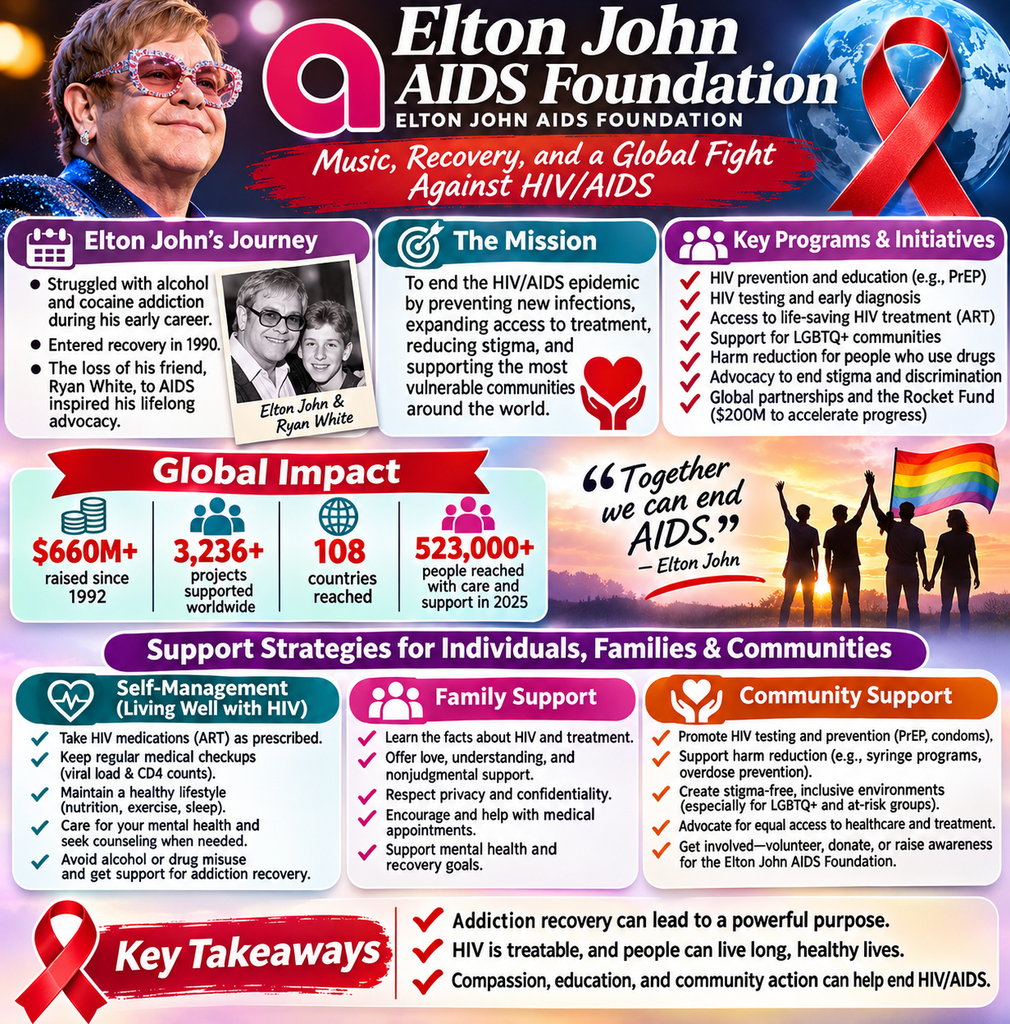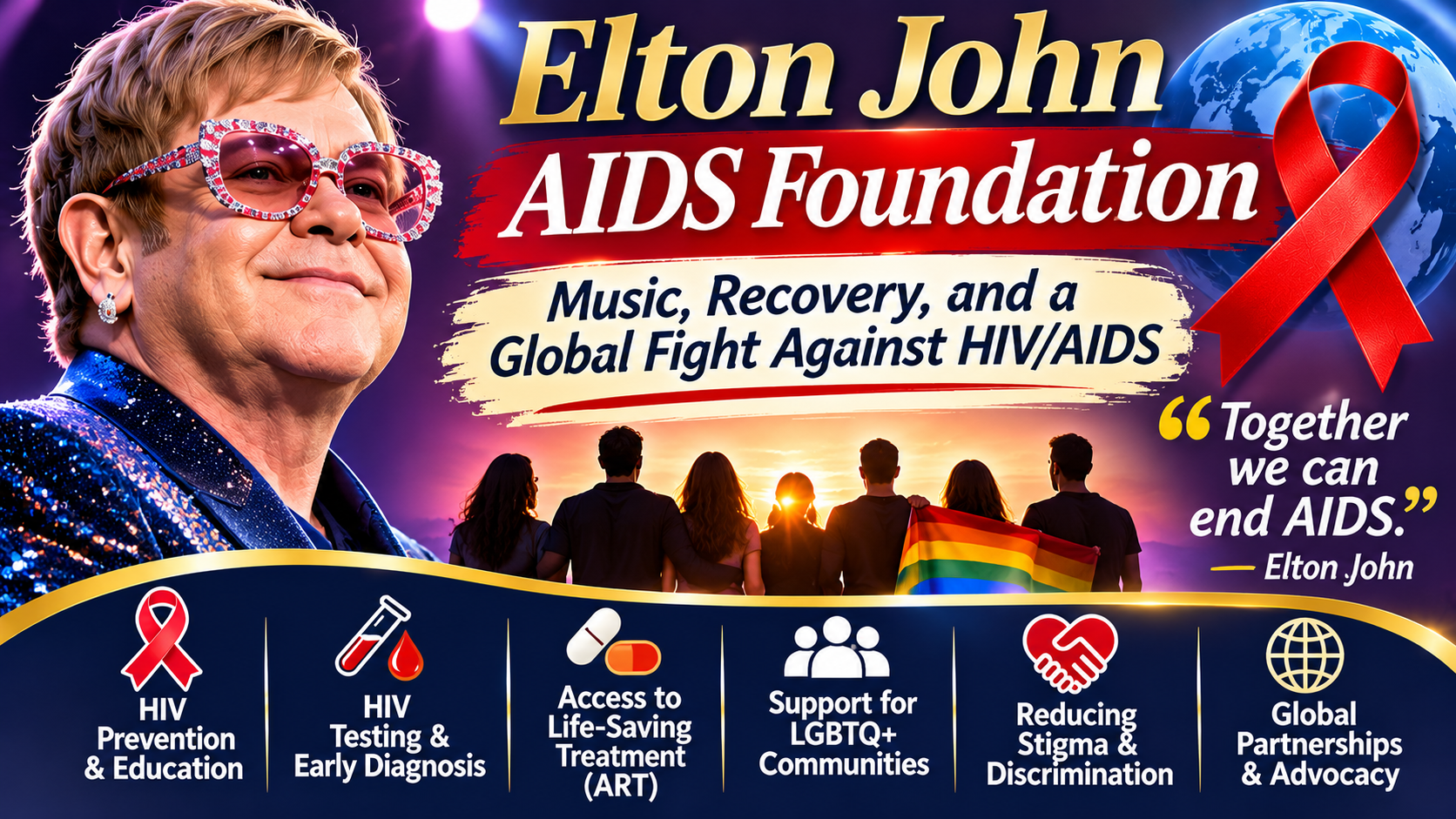
Elton John is celebrated worldwide for his extraordinary musical career, but his humanitarian contributions have created an equally meaningful legacy. Through the Elton John AIDS Foundation, he has dedicated decades to helping people affected by HIV/AIDS, expanding access to healthcare, and challenging discrimination.
Behind his fame and success was a personal struggle with alcohol and cocaine addiction, emotional isolation, and self-destructive behavior. His recovery in 1990 marked a turning point, changing not only his personal life but also his commitment to helping others.
The devastating impact of the AIDS epidemic during the 1980s and early 1990s deeply affected Elton John. The deaths of friends and fellow artists, particularly young AIDS activist Ryan White and Queen frontman Freddie Mercury, strengthened his determination to address the crisis.
In 1992, he established the Elton John AIDS Foundation in the United States, followed by a UK organization in 1993. Its mission was to confront HIV/AIDS through education, prevention, treatment, compassionate care, and the elimination of stigma.
His journey offers an important lesson: Personal recovery can become a powerful foundation for advocacy, but meaningful public health progress also requires evidence-based healthcare, family understanding, and sustained community involvement.
This article explores Elton John’s experiences, the foundation’s humanitarian mission, and practical self-management, family, and community support strategies that can improve the lives of people affected by HIV/AIDS and substance use disorders.
Elton John’s Personal Journey: Addiction, Recovery, and Transformation
Before becoming a leading HIV/AIDS advocate, Elton John struggled with cocaine and alcohol addiction during the height of his music career.
Despite international fame, financial success, and professional recognition, he experienced emotional difficulties, unhealthy relationships, and destructive patterns of substance use.
He has openly described how addiction affected his behavior, judgment, and personal relationships.
A defining moment came through his friendship with Ryan White.
Ryan contracted HIV through contaminated blood products used to treat his hemophilia. After his diagnosis, he faced discrimination and was prevented from attending his school in Indiana.
Despite these experiences, Ryan and his family demonstrated resilience and compassion.
Elton John became close to Ryan and his family and was deeply affected by Ryan’s death in April 1990.
He later credited their influence with inspiring him to reconsider his lifestyle and seek addiction treatment. PBS News+1
Lessons from Elton John’s recovery
His journey illustrates several important principles:
- Addiction can affect individuals regardless of fame, wealth, or professional success.
- Personal relationships can motivate individuals to seek help.
- Recovery requires acknowledging harmful behaviors and accepting support.
- Meaningful goals can strengthen long-term recovery.
- Compassion for others can become an important source of personal growth.
Elton John’s recovery also helped him redirect his energy toward humanitarian work.
The Birth of the Elton John AIDS Foundation
During the early AIDS epidemic, people living with HIV frequently experienced rejection, discrimination, inadequate healthcare, and social isolation.
At that time, effective antiretroviral treatment was not yet widely available.
Elton John recognized that people living with HIV needed more than medical assistance. They also needed compassion, dignity, emotional support, and protection from discrimination.
In 1992, he established the Elton John AIDS Foundation.
The foundation initially focused on providing care and support to individuals affected by HIV/AIDS. As scientific advances improved treatment and prevention, its mission expanded to address healthcare access, HIV prevention, and structural barriers.
The foundation’s US and UK operations were brought together under one global organizational strategy in 2019. Elton John AIDS Foundation+1
The foundation’s primary goals
- Prevent new HIV infections through education and evidence-based prevention.
- Improve access to HIV testing and early diagnosis.
- Expand access to antiretroviral therapy.
- Reduce discrimination against people living with HIV.
- Support communities disproportionately affected by HIV.
- Advocate for equitable healthcare policies.
- Strengthen partnerships with local organizations and governments.
Understanding HIV and AIDS: Why Education Matters
HIV, or human immunodeficiency virus, attacks the immune system, particularly CD4 T lymphocytes.
Without appropriate treatment, HIV can progressively weaken immune defenses and eventually develop into acquired immunodeficiency syndrome, or AIDS.
However, advances in antiretroviral therapy have dramatically changed the prognosis for people living with HIV.
With early diagnosis, consistent treatment, and appropriate medical monitoring, many individuals with HIV can live long, healthy lives.
Important facts about HIV
- HIV can be transmitted through certain sexual exposures, blood exposure, shared injection equipment, and from parent to child during pregnancy, childbirth, or breastfeeding.
- HIV is not transmitted through hugging, sharing food, casual contact, or using the same bathroom.
- Antiretroviral therapy can suppress HIV replication and preserve immune function.
- People who maintain an undetectable viral load do not sexually transmit HIV to their partners. This principle is known as Undetectable = Untransmittable (U=U).
- Pre-exposure prophylaxis (PrEP) can substantially reduce the risk of acquiring HIV.
- Post-exposure prophylaxis (PEP) may prevent infection when started as soon as possible, within 72 hours after a potential exposure.
Education helps individuals understand their risks, seek testing, and access effective prevention and treatment.
Self-Management Strategies for People Living With HIV
Although Elton John’s personal journey centers on addiction recovery and advocacy rather than his own HIV diagnosis, the foundation’s mission offers important lessons about self-management for individuals living with HIV.
A. Maintain consistent medical treatment
Antiretroviral therapy is essential for managing HIV.
Recommended strategies include:
- Take prescribed HIV medications consistently.
- Attend scheduled healthcare appointments.
- Monitor viral load and CD4 counts as recommended.
- Discuss medication side effects with healthcare professionals.
- Address barriers to treatment, such as transportation or medication costs.
Modern HIV treatment may include daily oral medications or long-acting injectable regimens for eligible patients.
B. Support physical health
Healthy lifestyle habits can improve overall well-being.
Helpful approaches include:
- Eating balanced meals.
- Participating in regular physical activity.
- Maintaining appropriate sleep routines.
- Avoiding tobacco use.
- Reducing harmful alcohol consumption.
- Receiving recommended vaccinations.
- Obtaining routine preventive healthcare.
These measures support overall health but do not replace antiretroviral therapy.
C. Address emotional and mental health needs
Living with HIV can involve anxiety, depression, social isolation, or concerns about disclosure.
Individuals may benefit from:
- Individual counseling or psychotherapy.
- Peer support groups.
- Mindfulness and relaxation techniques.
- Stress-management strategies.
- Developing supportive relationships.
- Seeking professional treatment for substance use disorders.
D. Practice HIV prevention and sexual health awareness
Individuals should discuss appropriate prevention strategies with healthcare professionals.
These may include condoms, PrEP for HIV-negative partners, regular testing for other sexually transmitted infections, and maintaining viral suppression through treatment.
E. Develop personal empowerment
People living with HIV should be encouraged to participate actively in healthcare decisions.
Understanding treatment options, patient rights, and available resources can improve confidence and long-term engagement in care.
Family Support Strategies: Replacing Fear With Understanding
Families can play a significant role in helping loved ones navigate HIV treatment, emotional challenges, and addiction recovery.
During the early AIDS epidemic, many people experienced rejection from relatives and communities because of misinformation and fear.
The Elton John AIDS Foundation has consistently emphasized compassion and dignity as essential parts of the HIV response.
A. Educate family members about HIV
Understanding how HIV is transmitted helps eliminate unnecessary fear.
Families should recognize that ordinary household contact does not spread HIV.
Education can reduce isolation and encourage healthier relationships.
B. Encourage treatment without judgment
Family members can support adherence to medical treatment by:
- Offering transportation to healthcare appointments.
- Helping organize medications when requested.
- Encouraging communication with healthcare providers.
- Respecting treatment decisions.
- Providing emotional encouragement during difficult periods.
Support should respect the individual’s independence and privacy.
C. Respect confidentiality
HIV status is private medical information.
Families should not disclose a loved one’s diagnosis without permission, except when disclosure is legally required or otherwise authorized.
Respecting privacy helps maintain trust.
D. Support mental health and addiction recovery
Some individuals living with HIV also experience substance use disorders or other mental health concerns.
Families can encourage integrated treatment addressing both conditions.
Helpful strategies include:
- Avoiding shame and blame.
- Learning about addiction as a treatable medical condition.
- Encouraging counseling and recovery support.
- Maintaining healthy boundaries.
- Participating in family therapy when appropriate.
E. Provide practical and emotional assistance
Families can help with daily responsibilities, transportation, nutrition, childcare, and navigating healthcare systems.
Small acts of support can reduce stress and strengthen relationships.
Community Support: The Global Impact of the Elton John AIDS Foundation
Raised since 1992
$660M+
Projects supported
3,236+
Countries reached historically
108
People reached with care in 2025
523K
Figures reported by the Elton John AIDS Foundation; historical totals and 2025 program results. Elton John AIDS Foundation+1
The foundation has become an important international supporter of HIV prevention, treatment, and advocacy.
Its work focuses particularly on people who face substantial barriers to healthcare.
A. Supporting vulnerable populations
The foundation prioritizes communities that experience disproportionate HIV risks or obstacles to treatment, including:
- LGBTQ+ communities.
- Adolescents and young adults.
- People who use or inject drugs.
- Individuals experiencing poverty or unstable housing.
- Communities with limited access to healthcare.
B. Expanding HIV testing and treatment
The foundation funds organizations that improve access to HIV screening, prevention medications, and antiretroviral treatment.
Early diagnosis and treatment reduce HIV-related illness and prevent additional transmission.
C. Supporting harm reduction
People who inject drugs may face increased risks of HIV transmission through shared injection equipment.
Evidence-based harm reduction programs include:
- Sterile syringe access.
- HIV and hepatitis C testing.
- Naloxone distribution.
- Overdose prevention education.
- Referrals to addiction treatment.
- Medications for opioid use disorder.
- Connections to HIV treatment and social services.
Harm reduction does not require individuals to achieve abstinence before receiving potentially lifesaving healthcare.
D. Addressing discrimination
Stigma can discourage people from seeking testing, disclosing concerns to healthcare professionals, or continuing treatment.
Community organizations can reduce these barriers by promoting respectful care, confidentiality, and equal access to medical services.
E. Supporting global partnerships
The foundation works with local organizations and healthcare systems to improve access to prevention and treatment.
Its priorities include young people, LGBTQ+ communities, people who use drugs, and underserved populations in the United States, United Kingdom, Eastern Europe, Central Asia, and other regions. Elton John AIDS Foundation+1
The Connection Between Substance Use Disorders and HIV
Elton John’s recovery history makes the relationship between addiction and HIV prevention particularly relevant to his advocacy.
Substance use can increase HIV vulnerability through several mechanisms.
Alcohol and other drugs may impair judgment, influence sexual decision-making, or interfere with healthcare engagement.
Injection drug use creates an additional risk when contaminated equipment is shared.
People living with both HIV and substance use disorders may also face barriers to treatment because of stigma, unstable housing, financial difficulties, or co-occurring mental health conditions.
Integrated treatment strategies
For individuals:
- Seek confidential HIV and substance use screening.
- Discuss PrEP or PEP when appropriate.
- Access medications for opioid or alcohol use disorders when indicated.
- Maintain HIV treatment if diagnosed.
- Use sterile injection equipment and overdose prevention services.
- Participate in mental health and recovery support programs.
For families:
- Encourage treatment without judgment.
- Learn about HIV transmission and addiction.
- Support healthcare appointments when requested.
- Respect confidentiality and personal boundaries.
For communities:
- Integrate addiction and HIV treatment services.
- Expand harm reduction programs.
- Provide affordable mental healthcare.
- Address discrimination in healthcare settings.
- Improve transportation, housing, and social support.
The foundation specifically identifies reducing stigma toward people who use drugs as a major area of its work. Elton John AIDS Foundation
Breaking HIV Stigma: Compassion as a Public Health Strategy
HIV-related stigma remains a significant obstacle to prevention and treatment.
Individuals may avoid testing because they fear rejection, discrimination, or negative treatment by healthcare professionals.
Stigma can also contribute to social isolation, depression, and delayed medical care.
How communities can reduce stigma
- Provide accurate education about HIV transmission.
- Promote awareness of U=U.
- Use respectful, nonjudgmental language.
- Protect patient confidentiality.
- Challenge discriminatory policies and practices.
- Include people living with HIV in program planning.
- Support equitable access to prevention and treatment.
Compassion is not a replacement for medical treatment. It helps create the conditions in which people can access and remain engaged in care.
The Rocket Fund: Accelerating Progress Toward Ending AIDS
In 2023, the Elton John AIDS Foundation launched the Rocket Fund, a $200 million fundraising initiative designed to accelerate progress against HIV/AIDS.
The campaign focuses on expanding prevention, testing, treatment, and community-led programs while addressing stigma and healthcare inequality.
The foundation has also supported efforts to increase access to long-acting HIV prevention medications and innovative healthcare delivery models.
For example, its work includes partnerships to improve access to PrEP and initiatives addressing HIV prevention and treatment in Eastern Europe and Central Asia. Elton John AIDS Foundation+1
Why continued investment matters
Although HIV treatment has improved dramatically, progress remains uneven.
Financial barriers, discrimination, gaps in healthcare infrastructure, and interruptions in international funding can undermine prevention and treatment programs.
Sustained investment is necessary to ensure that scientific advances reach the people who need them.
Lessons From Elton John’s Journey: Recovery, Purpose, and Advocacy
Elton John’s experiences illustrate how personal transformation can lead to broader social contributions.
His friendship with Ryan White helped him recognize the importance of compassion, responsibility, and meaningful relationships.
His decision to pursue sobriety allowed him to rebuild his life and devote substantial energy to humanitarian work.
The Elton John AIDS Foundation reflects those values through its commitment to healthcare access, dignity, and social justice.
Five lessons from his journey
- Recovery can create new opportunities. Addiction treatment can help individuals rebuild their health, relationships, and sense of purpose.
- Compassion can inspire meaningful change. Supportive relationships may motivate individuals to seek help and participate in recovery.
- Stigma can cause measurable harm. Fear and discrimination can prevent people from receiving lifesaving care.
- Education strengthens prevention. Accurate information about HIV, addiction, and treatment helps individuals make informed decisions.
- Community partnerships multiply impact. Sustainable public health improvements require cooperation among individuals, families, healthcare professionals, organizations, and governments.
Creating a Practical HIV and Addiction Support Action Plan
| Area | Recommended action | Goal |
|---|---|---|
| Self-management | Obtain appropriate HIV testing and preventive care | Early identification and prevention |
| Medical treatment | Maintain prescribed ART when living with HIV | Viral suppression and long-term health |
| Addiction recovery | Access evidence-based substance use treatment | Reduce substance-related harm |
| Mental health | Seek counseling and peer support | Improve emotional well-being |
| Family | Provide nonjudgmental support and respect confidentiality | Strengthen trust |
| Community | Expand testing, PrEP, harm reduction, and treatment services | Improve healthcare access |
| Advocacy | Support education and anti-discrimination initiatives | Reduce stigma and inequality |
The plan should be adapted to individual circumstances and implemented with appropriate healthcare guidance.
How Individuals Can Support the Elton John AIDS Foundation
Supporting the foundation does not require celebrity status or substantial financial resources.
Individuals can contribute through education, advocacy, volunteering with local HIV organizations, fundraising, and sharing accurate information.
Practical opportunities include:
- Learning about HIV prevention and treatment.
- Encouraging routine testing when appropriate.
- Supporting World AIDS Day awareness activities.
- Donating to reputable HIV/AIDS organizations.
- Volunteering with community health programs.
- Advocating for affordable treatment and prevention.
- Challenging misinformation and discrimination.
The foundation primarily funds organizations and partnerships rather than providing direct grants to individuals. People seeking personal assistance should contact local HIV service providers or community health organizations. Elton John AIDS Foundation
Conclusion: Elton John’s Legacy of Recovery, Compassion, and Global Change
Elton John’s journey demonstrates how personal struggles can inspire meaningful transformation.
His experiences with addiction, his friendship with Ryan White, and his decision to pursue sobriety helped shape a lifelong commitment to supporting people affected by HIV/AIDS.
Through the Elton John AIDS Foundation, he has helped advance HIV prevention, access to treatment, education, and advocacy for vulnerable populations worldwide.
His story also emphasizes that effective HIV care requires more than medication alone. Individuals need accurate information, emotional support, access to healthcare, and protection from discrimination.
Families can contribute by offering understanding, respecting confidentiality, and supporting treatment.
Communities can create lasting change by expanding healthcare access, strengthening harm reduction services, and challenging stigma.
Elton John’s legacy reminds us that recovery can transform one life, while compassion, education, and collective action can help transform millions more.
Resources for HIV Prevention, Treatment, and Addiction Recovery
- Elton John AIDS Foundation — Official Website
- HIV.gov — HIV Testing, Treatment, and Prevention
- CDC — HIV Information and Prevention
- FindTreatment.gov — Addiction and Mental Health Services
- Ryan White HIV/AIDS Program — Care and Support
For substance use treatment referrals in the United States, call SAMHSA’s National Helpline at 1-800-662-HELP (4357).
Frequently Asked Questions and Answers
Understanding the Elton John AIDS Foundation
1. What is the Elton John AIDS Foundation?
The Elton John AIDS Foundation is an international nonprofit organization dedicated to preventing HIV infections, expanding access to testing and treatment, and reducing the stigma associated with HIV/AIDS.
It works with healthcare organizations, governments, community groups, and advocacy partners to help underserved populations access essential services.
2. When was the Elton John AIDS Foundation established?
Elton John established the foundation in the United States in 1992, followed by a UK organization in 1993.
The foundation emerged during a period when the AIDS epidemic was causing widespread illness, death, discrimination, and fear.
Its early work focused on compassionate care and support for people living with HIV/AIDS.
3. Why did Elton John establish the AIDS Foundation?
Elton John was deeply affected by the suffering and discrimination experienced by people living with HIV/AIDS.
His friendship with young AIDS activist Ryan White was particularly influential.
Ryan contracted HIV through contaminated blood products used to treat hemophilia and faced significant discrimination.
His death in 1990 profoundly affected Elton John and strengthened his commitment to HIV/AIDS advocacy.
4. What is the foundation’s primary mission?
The foundation seeks to help end the AIDS epidemic by addressing barriers to HIV prevention, testing, treatment, and care.
Its priorities include:
- Preventing new HIV infections.
- Expanding access to antiretroviral therapy.
- Improving HIV testing and early diagnosis.
- Reducing stigma and discrimination.
- Supporting marginalized and underserved communities.
- Promoting equitable healthcare policies.
- Strengthening community-led HIV programs.
5. How is Elton John’s addiction recovery connected to his foundation?
Elton John has publicly discussed struggling with alcohol and cocaine addiction during his music career.
In 1990, he entered addiction treatment and began his recovery journey.
His friendship with Ryan White and Ryan’s family helped motivate him to make meaningful changes in his life.
Recovery allowed him to devote more energy to charitable work and HIV/AIDS advocacy.
His experiences illustrate how personal recovery and supportive relationships can inspire lasting humanitarian contributions.
HIV Prevention, Treatment, and Global Impact
6. How much money has the Elton John AIDS Foundation raised?
According to its official website, the foundation has raised more than $660 million since 1992, supporting over 3,236 projects across 108 countries.
These contributions have helped fund HIV prevention, testing, treatment, community services, and advocacy. Elton John AIDS Foundation
7. How many people does the foundation help?
Reported impact in 2025
523,000
People reached with HIV services
230,692
People tested for HIV
26,857
People initiated on PrEP
52,199
People connected with mental health services
Source: Elton John AIDS Foundation, 2025 Annual Report. Programs operated across 68 countries. Elton John AIDS Foundation
8. What is the difference between HIV and AIDS?
HIV, or human immunodeficiency virus, attacks the immune system, particularly CD4 T cells.
AIDS, or acquired immunodeficiency syndrome, represents the most advanced stage of HIV infection.
Without treatment, HIV can progressively weaken immune defenses. However, modern antiretroviral therapy can prevent disease progression and allow many people living with HIV to enjoy long, healthy lives.
9. Can HIV be cured?
There is currently no widely available cure for HIV.
However, antiretroviral therapy (ART) can suppress the virus to undetectable levels, protect immune function, and prevent HIV-related complications.
A small number of individuals have achieved prolonged HIV remission or apparent cure following specialized stem cell transplantation for serious blood cancers. These procedures are not appropriate as routine HIV treatment.
10. What does Undetectable = Untransmittable (U=U) mean?
U=U means that a person living with HIV who maintains an undetectable viral load through effective treatment will not sexually transmit HIV to their partners.
This scientifically established principle is important for reducing stigma and encouraging treatment adherence.
U=U specifically refers to sexual transmission. It does not eliminate the need for other appropriate prevention measures, such as protection against sexually transmitted infections.
11. What is PrEP, and why is it important?
Pre-exposure prophylaxis, or PrEP, is medication taken by HIV-negative individuals to prevent HIV infection.
Depending on clinical eligibility, PrEP may be available as daily oral medication or long-acting injections.
When used as prescribed, PrEP is highly effective at preventing sexually acquired HIV.
The Elton John AIDS Foundation supports initiatives that improve access to PrEP, particularly among populations facing barriers to healthcare.
12. What is PEP, and when should it be used?
Post-exposure prophylaxis, or PEP, involves taking antiretroviral medications after a possible HIV exposure.
PEP must be started as soon as possible and no later than 72 hours after exposure. A typical treatment course lasts 28 days.
Anyone who believes they have experienced a significant HIV exposure should seek urgent medical evaluation rather than waiting for symptoms.
13. What is the Rocket Fund?
The Rocket Fund is a major fundraising initiative launched in 2023 to accelerate progress toward ending AIDS.
Its fundraising goal is $200 million to support innovative HIV prevention and treatment programs, particularly for underserved communities.
The campaign focuses on young people, LGBTQ+ communities, and people who use drugs. Elton John AIDS Foundation
14. Why does the foundation focus on LGBTQ+ communities?
Some LGBTQ+ populations experience disproportionately high HIV rates because of intersecting medical, social, and structural factors.
Discrimination, criminalization, stigma, and inadequate access to healthcare can increase vulnerability.
The foundation supports community-led programs that expand prevention and treatment services while promoting dignity and equal access.
Addiction Recovery, Mental Health, and HIV
15. How are substance use disorders connected to HIV?
Substance use can increase HIV vulnerability in several ways.
Sharing injection equipment creates a direct risk of bloodborne HIV transmission. Alcohol and other drugs may also affect decision-making, increasing the likelihood of certain sexual exposures.
People experiencing substance use disorders may encounter barriers to HIV testing, prevention, and treatment.
Integrated addiction and HIV services can address these challenges.
16. Does the Elton John AIDS Foundation support harm reduction?
Yes. Harm reduction is an important part of the foundation’s work.
Its supported initiatives seek to reduce health risks associated with substance use and improve access to healthcare.
Examples of evidence-based harm reduction include:
- Sterile syringe services.
- HIV and hepatitis C testing.
- Naloxone distribution.
- Overdose prevention education.
- Linkage to medications for opioid use disorder.
- Referrals to HIV prevention and treatment services.
The foundation emphasizes that people who use drugs deserve healthcare, dignity, and support rather than discrimination. Elton John AIDS Foundation
17. Why is mental health support important for people living with HIV?
People living with HIV may experience depression, anxiety, social isolation, discrimination, or emotional distress.
Mental health challenges can also interfere with medication adherence and engagement in healthcare.
Counseling, peer support, psychiatric care when indicated, and supportive relationships can improve emotional well-being and help individuals remain engaged in treatment.
18. What self-management strategies help people living with HIV?
Effective self-management involves maintaining treatment and supporting overall physical and emotional health.
Recommended strategies include:
- Taking HIV medications as prescribed.
- Attending regular medical appointments.
- Monitoring viral load as recommended.
- Maintaining healthy nutrition, sleep, and physical activity.
- Seeking treatment for depression, anxiety, or substance use disorders.
- Practicing safer sexual health behaviors.
- Building supportive relationships.
- Discussing medication side effects or adherence difficulties with healthcare professionals.
These strategies should complement individualized medical care.
Family and Community Support
19. How can families support someone living with HIV?
Families can provide emotional encouragement, practical assistance, and respectful communication.
Helpful strategies include:
- Learning accurate information about HIV transmission.
- Avoiding judgment and blame.
- Respecting confidentiality.
- Offering transportation or assistance with appointments when requested.
- Encouraging consistent treatment.
- Supporting mental health needs.
- Challenging misinformation and discrimination.
People living with HIV should retain control over personal healthcare decisions whenever possible.
20. Can HIV spread through everyday family contact?
No. HIV does not spread through ordinary household activities such as hugging, shaking hands, sharing meals, or using the same bathroom.
It is not transmitted through saliva during casual contact, sweat, tears, or mosquito bites.
Accurate education helps families replace unnecessary fear with understanding.
21. How can families support a loved one experiencing both HIV and addiction?
Families should encourage integrated treatment addressing HIV, substance use, and any co-occurring mental health concerns.
Supportive approaches include maintaining healthy boundaries, avoiding shame, encouraging medical appointments, and helping the individual connect with appropriate treatment services.
Family counseling may also help improve communication and reduce conflict.
22. How can communities reduce HIV stigma?
Communities can reduce stigma through education, advocacy, and inclusive healthcare practices.
Important actions include:
- Promoting accurate HIV information.
- Educating the public about U=U.
- Protecting medical confidentiality.
- Challenging discriminatory language.
- Supporting accessible HIV testing and treatment.
- Including people living with HIV in program planning.
- Encouraging respectful, culturally responsive healthcare.
Reducing stigma helps create environments where individuals feel safer seeking medical care.
23. How does the foundation support underserved communities?
The foundation funds local organizations working with populations experiencing barriers to healthcare.
Its priorities include LGBTQ+ communities, young people, people who use drugs, and individuals living in regions with limited HIV services.
The organization also advocates for policy changes and funding commitments that improve access to prevention and treatment. Elton John AIDS Foundation
24. Why is HIV/AIDS advocacy still necessary?
Although treatment has improved significantly, HIV remains a major global public health challenge.
Millions of people continue to face inadequate access to medications, prevention services, and supportive healthcare.
Funding interruptions, stigma, discrimination, and healthcare inequality can undermine progress.
In 2025, the foundation established a Rocket Response Fund to help protect HIV services disrupted by international funding cuts. Elton John AIDS Foundation
Supporting the Elton John AIDS Foundation
25. How does the foundation raise money?
The foundation receives support through charitable donations, fundraising events, corporate partnerships, institutional grants, and merchandise revenue.
Its annual Academy Awards Viewing Party is among its best-known fundraising events.
According to the foundation, approximately 89% of its funds support grant-making and programs. Elton John AIDS Foundation
26. Can individuals living with HIV receive financial assistance directly from the foundation?
The Elton John AIDS Foundation does not generally provide grants directly to individuals.
Instead, it funds partner organizations and community programs that deliver HIV-related services.
Individuals needing assistance should contact local HIV service organizations, community health centers, or the Ryan White HIV/AIDS Program in the United States. Elton John AIDS Foundation
27. How can someone donate or volunteer?
Individuals can support the foundation by donating, participating in fundraising events, becoming corporate partners, or promoting HIV awareness.
The foundation notes that direct volunteering opportunities are limited, although some fundraising events may need volunteers.
For current opportunities, visit its official website.
28. What is the biggest lesson from Elton John’s journey and the foundation’s work?
One of the most important lessons is that personal transformation can inspire meaningful social change.
Elton John’s addiction recovery, his friendship with Ryan White, and his commitment to HIV/AIDS advocacy demonstrate the importance of compassion, education, and sustained action.
His foundation also shows that medical advances alone cannot end the epidemic if people remain unable or afraid to access care.
Effective HIV prevention requires science, compassionate treatment, supportive families, inclusive communities, and a commitment to eliminating discrimination.
Video: