Addiction does not develop in isolation. Although substance use disorders involve complex changes in brain function, genetics, behavior, and environmental influences, relationships can significantly affect how addiction develops, progresses, and responds to treatment.
Our earliest relationships shape how we understand trust, emotional safety, communication, conflict, and connection. When these experiences involve trauma, neglect, unpredictable caregiving, or chronic stress, some individuals may develop relational patterns that make emotional regulation and healthy relationships more challenging.
For individuals experiencing addiction, these patterns may appear as fear of abandonment, emotional withdrawal, people-pleasing, secrecy, controlling behaviors, or difficulty trusting others.
Substances may become a way to temporarily manage uncomfortable emotions, avoid relationship conflicts, or cope with loneliness.
Over time, addiction can further disrupt relationships, creating cycles of mistrust, conflict, shame, and emotional disconnection.
However, unhealthy relational patterns are not permanent. With self-awareness, evidence-based treatment, supportive families, and healthy community connections, individuals can develop more secure relationships while strengthening their recovery.
Understanding these patterns helps shift the conversation from blame to emotional healing, accountability, and meaningful change.
What Are Relational Patterns in Addiction?
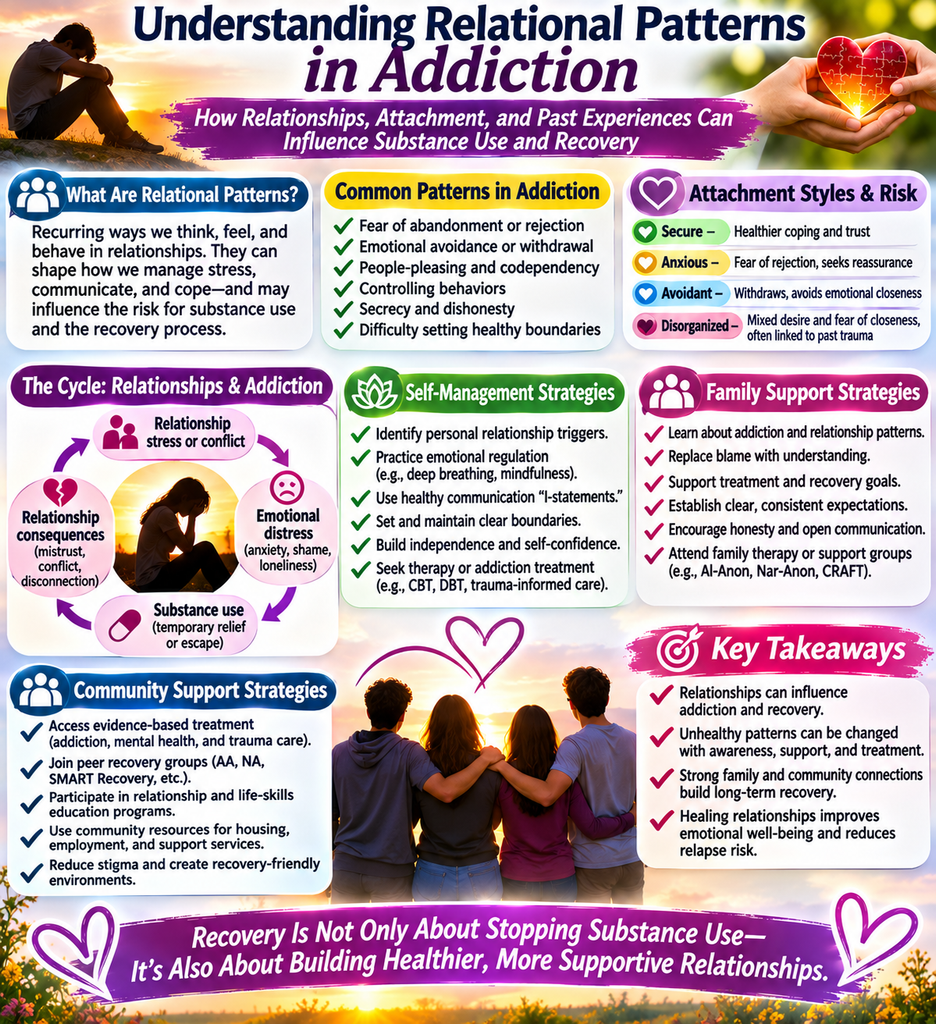
Relational patterns are recurring ways individuals think, feel, and behave in relationships.
These patterns develop through a combination of childhood experiences, attachment relationships, personality, learned behaviors, cultural influences, and later life experiences.
Some patterns promote emotional security and healthy communication. Others can contribute to conflict, instability, and difficulty managing stress.
When addiction is present, unhealthy patterns may become more intense.
Common relational patterns associated with addiction
- Fear of abandonment: Excessive worry that loved ones will leave or reject the individual.
- Emotional avoidance: Withdrawing from difficult conversations or uncomfortable feelings.
- People-pleasing: Prioritizing others’ approval while neglecting personal needs.
- Codependent behaviors: Becoming excessively focused on managing another person’s emotions or behavior.
- Controlling behaviors: Attempting to manage uncertainty through excessive monitoring or demands.
- Secrecy and dishonesty: Concealing substance use or other behaviors to avoid consequences.
- Conflict avoidance: Suppressing concerns until resentment or emotional distress increases.
- Difficulty establishing boundaries: Struggling to distinguish personal responsibilities from those of others.
- Emotional dependency: Relying heavily on another person for reassurance or self-worth.
These behaviors are not unique to people with addiction. They may occur in many relationships and do not independently establish a mental health diagnosis.
The Connection Between Attachment Styles and Addiction
Attachment theory describes how early relationships with caregivers can influence expectations about safety, closeness, and emotional support.
Attachment patterns may affect how individuals respond to relationship stress, seek reassurance, and manage conflict.
However, attachment styles are not fixed diagnoses, and no particular attachment style guarantees that someone will develop addiction.
Four commonly described attachment patterns
Secure attachment
Individuals generally feel comfortable with closeness, independence, and emotional communication. They can often seek support while maintaining appropriate boundaries.
Anxious attachment
Individuals may experience heightened fear of rejection, seek frequent reassurance, or struggle with uncertainty in relationships. Some may use substances to manage distress.
Avoidant attachment
Individuals may minimize emotional needs, avoid vulnerability, or withdraw during conflict. Substance use may sometimes serve as an emotional escape.
Disorganized or fearful attachment
Individuals may desire closeness while simultaneously fearing it. Relationships may involve inconsistent responses to intimacy and stress, particularly when there is a history of frightening or unpredictable experiences.
Attachment patterns can change through supportive relationships, therapy, self-reflection, and repeated experiences of emotional safety.
How Childhood Experiences Influence Adult Relationship Patterns
Childhood experiences can influence emotional development and expectations about relationships.
Individuals exposed to chronic stress, neglect, abuse, parental substance use, or unpredictable caregiving may develop coping strategies designed to protect themselves from emotional pain.
These strategies may have been adaptive during childhood but become less helpful in adulthood.
For example, a child who learns that expressing emotions leads to criticism may grow into an adult who avoids difficult conversations.
Another child who experiences inconsistent caregiving may become highly sensitive to perceived rejection.
Some individuals may later use substances to manage these emotional difficulties.
Childhood experiences that may increase vulnerability
- Emotional or physical neglect.
- Exposure to domestic violence.
- Parental substance use disorders.
- Repeated family conflict.
- Childhood abuse or trauma.
- Unstable housing or caregiving.
- Lack of consistent emotional support.
- Experiences of abandonment or rejection.
Importantly, childhood adversity does not determine a person’s future. Many people who experience trauma never develop addiction, and many people with addiction do not report significant childhood trauma.
Protective relationships, effective treatment, and supportive environments can reduce risk.
The Cycle of Addiction and Relationship Conflict
Substance use and relationship difficulties can reinforce one another.
For some individuals, conflict creates emotional distress that increases the urge to use substances. Substance use may then contribute to behaviors that create additional conflict.
How a reinforcing cycle can develop
Relationship stress or emotional trigger
Conflict, rejection, loneliness, or fear
Emotional discomfort
Anxiety, shame, anger, or sadness
Substance use as a coping response
Temporary relief or emotional avoidance
Relationship consequences
Broken agreements, secrecy, withdrawal, or conflict
Consequences may create further stress, restarting the cycle.
This cycle does not describe every person with addiction. Nevertheless, recognizing it can help individuals identify where to intervene.
Codependency, Enabling, and Healthy Boundaries
Families affected by addiction sometimes develop relationship patterns centered on managing the substance use of a loved one.
One family member may assume excessive responsibility for another person’s choices, emotional state, or consequences.
These behaviors may begin as attempts to provide protection or maintain family stability.
Understanding codependent behaviors
The term codependency is commonly used to describe relationships characterized by excessive caretaking, difficulty setting boundaries, and loss of personal autonomy.
It is not a formal psychiatric diagnosis.
Examples may include:
- Feeling responsible for another person’s sobriety.
- Neglecting personal needs to prevent conflict.
- Constantly monitoring a loved one’s behavior.
- Feeling guilty when establishing boundaries.
- Believing love requires rescuing someone from every consequence.
Understanding enabling
Enabling refers to actions that unintentionally make harmful behavior easier to continue.
Examples may include repeatedly providing money that is used to purchase substances or concealing dangerous behavior from appropriate care providers.
However, providing housing, food, transportation, naloxone, or access to healthcare is not automatically enabling. Such assistance can be protective and lifesaving.
Establishing healthy boundaries
Healthy boundaries communicate what an individual is willing or able to do.
Examples include:
- “I care about you, but I cannot give you money for substances.”
- “I am willing to help you find treatment.”
- “I will not remain in a conversation when someone is threatening me.”
- “I need time to take care of my own emotional health.”
Boundaries should focus on personal actions and safety rather than attempts to control another person’s behavior.
Self-Management Strategies: Recognizing and Changing Unhealthy Patterns
Recovery involves more than reducing or stopping substance use. It can also involve developing healthier ways to respond to emotions, communicate needs, and manage relationships.
A. Identify recurring relationship triggers
Individuals can begin by examining situations that create emotional distress or cravings.
Common triggers include:
- Feeling rejected or criticized.
- Arguments with a partner.
- Loneliness or isolation.
- Fear of abandonment.
- Jealousy or insecurity.
- Relationship breakups.
- Unresolved resentment.
- Difficulty expressing needs.
Keeping a journal can help identify connections between emotions, relationship events, and substance use urges.
B. Develop emotional regulation skills
Emotional regulation helps individuals respond thoughtfully rather than react impulsively.
Helpful strategies include:
- Slow breathing exercises.
- Mindfulness meditation.
- Grounding techniques.
- Regular physical activity.
- Taking a brief break during conflict.
- Identifying and naming emotions.
- Practicing self-compassion.
These strategies can reduce emotional distress but should complement appropriate addiction treatment.
C. Practice healthy communication
Effective communication involves expressing needs respectfully while listening to others.
An example of an I-statement is:
“I feel overwhelmed when we argue. I would like us to discuss this when we are both calmer.”
This approach emphasizes personal feelings and needs rather than accusations.
D. Build healthy independence
Recovery can be strengthened when individuals develop a sense of identity beyond their relationships.
Helpful activities include:
- Pursuing meaningful hobbies.
- Developing personal goals.
- Maintaining supportive friendships.
- Practicing independent decision-making.
- Participating in recovery communities.
- Building financial and emotional stability.
E. Seek evidence-based treatment
Individuals experiencing substance use disorders may benefit from:
- Cognitive behavioral therapy (CBT).
- Motivational interviewing or motivational enhancement therapy.
- Contingency management, where appropriate.
- Dialectical behavior therapy (DBT) skills for emotional regulation.
- Trauma-focused treatment when clinically indicated.
- Medications for opioid or alcohol use disorder.
- Couples or family-based treatment when safe and appropriate.
For opioid use disorder, medications such as buprenorphine and methadone reduce overdose risk and improve treatment retention.
Treatment should be individualized based on the person’s diagnosis, goals, and circumstances.
Family Support Strategies: Rebuilding Trust and Emotional Safety
Families can influence recovery by creating supportive environments, maintaining healthy boundaries, and encouraging engagement in treatment.
However, family members cannot control another person’s recovery, and they should not be blamed if substance use continues.
A. Replace blame with understanding
Addiction is a treatable medical condition influenced by biological, psychological, and environmental factors.
Families can encourage recovery by learning about substance use disorders and avoiding stigmatizing language.
Instead of saying, “You never care about this family,” a more constructive approach might be:
“I am worried about your health and safety. I want to understand what support would be helpful.”
B. Establish clear expectations
Families should discuss expectations concerning safety, finances, communication, and household responsibilities.
Consistency helps reduce confusion and resentment.
C. Rebuild trust gradually
Trust often takes time to restore after repeated conflict, secrecy, or broken commitments.
Healthy rebuilding may involve:
- Honest communication.
- Consistent follow-through.
- Respect for boundaries.
- Accountability for harmful behavior.
- Patience during setbacks.
- Professional family counseling.
Forgiveness and reconciliation are personal choices. Individuals are not obligated to restore relationships that remain unsafe.
D. Avoid excessive monitoring
Constant surveillance may increase conflict and undermine personal autonomy.
Instead, families can discuss mutually agreed-upon expectations and appropriate ways to communicate concerns.
E. Participate in family therapy
Family therapy can help identify communication difficulties, clarify roles, and develop healthier responses to substance use.
Evidence-based approaches include behavioral couples therapy and selected family-based interventions.
Joint therapy should be carefully evaluated when there is intimate partner violence, coercive control, or other safety concerns.
F. Protect family members’ well-being
Supporting someone with addiction can create emotional exhaustion.
Family members may benefit from individual counseling, support groups, stress-management strategies, and maintaining their own relationships and interests.
Community Support Strategies: Creating Healthy Connections Beyond the Family
Community support can help individuals replace isolation with meaningful social connection.
Recovery-supportive environments provide opportunities to develop healthier relationships, strengthen coping skills, and access practical assistance.
A. Encourage peer recovery support
Peer recovery specialists and mutual-help groups provide connection with individuals who understand substance use challenges.
Examples include:
- Alcoholics Anonymous (AA).
- Narcotics Anonymous (NA).
- SMART Recovery.
- LifeRing Secular Recovery.
- Recovery Dharma.
- Professionally facilitated recovery groups.
Participation should reflect individual preferences, beliefs, and treatment goals.
B. Expand access to integrated treatment
Community healthcare systems can improve outcomes by addressing addiction, mental health, trauma, and physical health together.
Integrated services may include:
- Primary care.
- Addiction medicine.
- Behavioral health treatment.
- Medication management.
- Family counseling.
- Case management.
- Housing and employment support.
C. Provide relationship education
Schools, healthcare organizations, and community centers can teach communication, emotional regulation, conflict resolution, and healthy boundary-setting.
These skills may reduce interpersonal stress and improve help-seeking behaviors.
D. Reduce stigma and social isolation
Communities can promote recovery by treating individuals with substance use disorders respectfully.
Public education, recovery-friendly employment practices, and inclusive community programs can help reduce discrimination.
E. Support families and caregivers
Family support groups, educational workshops, and caregiver counseling can help loved ones understand addiction without sacrificing their own well-being.
Programs such as Community Reinforcement and Family Training (CRAFT) can teach family members constructive communication and strategies that may encourage engagement in treatment.
Trauma Bonding, Toxic Relationships, and Addiction
Some individuals experiencing addiction may also be involved in relationships characterized by manipulation, emotional abuse, or repeated cycles of harm and reconciliation.
The term trauma bonding describes an attachment that may develop in an abusive relationship through alternating periods of mistreatment and affection.
It should not be used to label every difficult relationship or every relationship affected by addiction.
Warning signs of an unhealthy or abusive relationship
- Threats, intimidation, or physical violence.
- Excessive control over finances or social activities.
- Repeated humiliation.
- Isolation from friends and family.
- Coercion involving substance use.
- Monitoring or controlling communication.
- Fear of expressing disagreement.
When abuse is present, the priority should be safety, access to confidential support, and individualized planning.
Couples counseling may be inappropriate when coercion or violence makes honest participation unsafe.
In the United States, the National Domestic Violence Hotline is available at 1-800-799-SAFE (7233) or through thehotline.org.
Relational Patterns and Relapse Prevention
Relationship difficulties can contribute to cravings or recurrence of substance use, particularly during periods of high emotional stress.
A breakup, unresolved conflict, or feelings of rejection may activate familiar coping responses.
Recognizing these patterns allows individuals to develop a plan before a crisis occurs.
Practical relapse prevention strategies
- Identify relationship situations associated with cravings.
- Develop alternative coping responses.
- Establish a trusted support network.
- Create a plan for managing conflict.
- Avoid situations involving coercion or substance-related pressure.
- Maintain consistent treatment appointments.
- Discuss changes in mood or cravings with healthcare professionals.
- Seek additional support after major relationship changes.
A return to substance use does not mean recovery is impossible. It signals the need to reassess safety, treatment, and support.
For people using opioids, reduced tolerance after abstinence can increase overdose risk if substance use resumes. Access to naloxone and medications for opioid use disorder can be lifesaving.
A Practical Relationship Recovery Action Plan
Seven steps toward healthier relationships
0 of 7 completed
Identify relationship triggers
Write down situations that lead to distress, conflict, or cravings.
Recognize automatic responses
Notice tendencies such as withdrawal, reassurance-seeking, anger, or people-pleasing.
Practice emotional regulation
Use grounding, breathing, or a planned pause before responding.
Communicate needs clearly
Express feelings and requests respectfully without blaming.
Establish healthy boundaries
Define personal limits and follow through consistently.
Build supportive connections
Maintain relationships with trusted people, peers, and healthcare professionals.
Seek appropriate treatment
Address substance use, trauma, and mental health needs with qualified professionals.
Copy action plan
Use this checklist for self-reflection, recovery coaching, family education, or discussion with a therapist.
How Healthy Relationships Strengthen Long-Term Recovery
Healthy relationships can provide emotional security, accountability, encouragement, and a sense of belonging.
They can also help individuals practice skills learned during treatment.
Characteristics of recovery-supportive relationships
- Mutual respect.
- Honest communication.
- Emotional safety.
- Consistent boundaries.
- Shared responsibility.
- Support for personal growth.
- Respect for treatment and recovery goals.
- Freedom from threats, coercion, and abuse.
Recovery-supportive relationships do not require perfection. Disagreements and misunderstandings can occur in healthy relationships.
What matters is the ability to address problems respectfully, repair harm, and maintain safety.
Conclusion: Healing Addiction Means Understanding Relationships, Not Assigning Blame
Relational patterns can influence how individuals experience stress, communicate emotions, manage conflict, and seek support.
For some people, unhealthy relationship dynamics may contribute to substance use or interfere with recovery. For others, addiction itself may create relationship difficulties that were not previously present.
Understanding these patterns helps individuals and families recognize cycles of emotional distress and develop healthier responses.
Self-management strategies strengthen emotional awareness, coping skills, and personal boundaries.
Family support promotes understanding, appropriate accountability, and emotional safety.
Community programs provide access to treatment, peer connections, relationship education, and practical resources.
Most importantly, individuals do not need to repair every relationship to achieve recovery. Safety, autonomy, and personal well-being remain essential.
Lasting recovery is not only about changing substance use behaviors. It can also involve learning how to connect with others without losing yourself, communicate without fear, and build relationships grounded in trust, respect, and emotional safety.
Resources for Addiction Recovery and Family Support
- FindTreatment.gov — Locate substance use and mental health treatment services.
- SAMHSA — Addiction education, treatment resources, and family support.
- SMART Recovery — Recovery support using evidence-informed self-management approaches.
- Nar-Anon Family Groups — Support for families affected by another person’s addiction.
- National Domestic Violence Hotline — Confidential support for people experiencing relationship abuse.
Frequently Asked Questions and Answers
Understanding Relational Patterns and Addiction
1. What are relational patterns in addiction?
Relational patterns are recurring ways individuals think, feel, communicate, and behave in relationships.
For someone experiencing addiction, these patterns may include emotional withdrawal, fear of abandonment, excessive reassurance-seeking, conflict avoidance, secrecy, or difficulty maintaining boundaries.
Although these patterns can influence substance use and recovery, they do not necessarily cause addiction.
2. How do relationships influence addiction?
Relationships can affect addiction through emotional stress, social influences, support systems, and learned coping behaviors.
For example, repeated conflict or rejection may increase emotional distress and substance cravings in some individuals.
Conversely, supportive relationships can encourage participation in treatment, strengthen coping skills, and reduce social isolation.
3. Can unhealthy relationships cause addiction?
Unhealthy relationships may contribute to substance use vulnerability, but addiction rarely has a single cause.
Substance use disorders develop through interactions among genetics, brain function, mental health, environmental exposures, and individual experiences.
Relationship stress is one possible contributing factor, not a universal explanation.
4. What are common unhealthy relational patterns associated with addiction?
Common patterns include:
- Fear of abandonment or rejection.
- Emotional avoidance or withdrawal.
- Excessive people-pleasing.
- Difficulty trusting others.
- Controlling or possessive behavior.
- Secrecy and dishonesty.
- Difficulty establishing boundaries.
- Repeated relationship conflict.
- Excessive emotional dependence.
- Avoiding accountability.
These behaviors can occur in people with or without substance use disorders.
5. Why do some individuals use substances to cope with relationship problems?
Alcohol or drugs may temporarily reduce feelings of anxiety, sadness, loneliness, or emotional distress.
However, substance use can interfere with emotional regulation, decision-making, and communication.
Over time, using substances to manage relationship problems may create additional difficulties, including conflict, secrecy, and reduced trust.
Attachment Styles, Trauma, and Childhood Experiences
6. What is attachment theory, and how does it relate to addiction?
Attachment theory examines how early caregiving relationships influence expectations about emotional safety, closeness, and trust.
Attachment patterns may affect how individuals handle stress, seek support, and respond to relationship conflict.
Insecure attachment has been associated with substance use problems in some research, but it does not mean a person will develop addiction.
7. What are the four commonly described attachment styles?
| Attachment style | Common characteristics |
|---|---|
| Secure | Comfortable with emotional closeness, independence, and communication |
| Anxious | Fear of rejection, frequent reassurance-seeking, sensitivity to relationship uncertainty |
| Avoidant | Discomfort with vulnerability, emotional withdrawal, strong preference for independence |
| Fearful-avoidant/disorganized | Conflicting desires for closeness and distance, difficulty trusting relationships |
Attachment styles describe tendencies rather than fixed personality categories or psychiatric diagnoses.
8. Can childhood trauma contribute to addiction and unhealthy relationships?
Yes. Childhood adversity can increase vulnerability to emotional regulation difficulties, mental health conditions, and substance use problems.
Examples include neglect, abuse, family instability, exposure to violence, and parental substance use.
However, trauma does not inevitably lead to addiction. Supportive relationships, effective treatment, and protective environments can reduce long-term risk.
9. Can attachment patterns change during recovery?
Yes. Attachment-related behaviors can change through new experiences, therapy, self-awareness, and supportive relationships.
Individuals can learn to communicate more openly, tolerate emotional vulnerability, establish boundaries, and develop greater trust.
Progress is often gradual and requires consistent practice.
10. What is trauma bonding, and how can it affect addiction recovery?
Trauma bonding refers to an attachment that may develop within an abusive relationship, particularly when mistreatment alternates with affection, reassurance, or reconciliation.
An individual may find it difficult to leave despite recognizing harmful behaviors.
Substance use can complicate these situations by increasing dependence, emotional distress, or safety risks.
Trauma bonding should not be confused with two people bonding over shared traumatic experiences.
When abuse is present, safety planning and confidential professional support are priorities.
Codependency, Boundaries, and Relationship Behaviors
11. What is codependency in relationships affected by addiction?
Codependency is a commonly used term describing patterns of excessive caretaking, difficulty setting boundaries, or relying heavily on another person’s behavior for emotional stability.
For example, someone may feel personally responsible for preventing a loved one’s substance use or continually neglect their own needs.
Codependency is not a formal psychiatric diagnosis. Healthcare professionals increasingly favor describing specific behaviors rather than labeling individuals.
12. What is the difference between helping and enabling?
Helping involves providing support that promotes safety, health, autonomy, and recovery.
Enabling generally refers to behaviors that unintentionally make harmful substance use easier to continue.
For example, helping someone access treatment is supportive, while repeatedly providing money specifically for substance purchases may reinforce harmful behavior.
Providing food, shelter, naloxone, or healthcare assistance should not automatically be considered enabling.
13. Why are healthy boundaries important in addiction recovery?
Healthy boundaries clarify personal responsibilities, protect emotional well-being, and reduce unhealthy relationship dynamics.
Examples include:
- Refusing to provide money for substance purchases.
- Declining to participate in threatening conversations.
- Respecting personal privacy.
- Establishing expectations about household responsibilities.
- Encouraging treatment without attempting to control another person’s decisions.
Boundaries should focus on what an individual can control rather than forcing someone else to change.
14. How can addiction affect trust in relationships?
Addiction may contribute to broken agreements, secrecy, financial difficulties, emotional withdrawal, or unpredictable behavior.
These experiences can weaken trust between partners, relatives, and friends.
Rebuilding trust generally requires consistent actions, honest communication, accountability, and time.
Forgiveness cannot be demanded, and reconciliation is not required when a relationship remains unsafe.
15. Can addiction lead to controlling or manipulative behaviors?
Some individuals experiencing addiction may engage in controlling, deceptive, or manipulative behaviors, particularly when attempting to conceal substance use or avoid consequences.
However, these behaviors are not universal characteristics of addiction.
Threats, coercion, intimidation, and abuse should never be excused solely because someone has a substance use disorder.
Self-Management Strategies for Healthier Relationships
16. How can individuals recognize unhealthy relational patterns?
Self-awareness begins by identifying recurring emotional responses and behaviors.
Helpful questions include:
- Do I withdraw when someone expresses concern?
- Do I fear rejection or abandonment?
- Do arguments increase my substance cravings?
- Do I struggle to communicate my needs?
- Do I depend on others for my sense of self-worth?
- Do I repeatedly ignore my own boundaries?
Journaling and psychotherapy can help individuals identify patterns without excessive self-criticism.
17. What emotional triggers can increase relapse risk?
Common relationship-related triggers include rejection, loneliness, criticism, jealousy, breakups, and unresolved conflict.
Triggers may activate anxiety, anger, shame, or sadness.
Developing a relapse prevention plan can help individuals recognize warning signs and use healthier coping strategies before returning to substance use.
18. How can someone improve emotional regulation during recovery?
Emotional regulation involves recognizing feelings and responding without impulsive or harmful behavior.
Strategies include:
- Practicing mindfulness.
- Using slow breathing exercises.
- Identifying and naming emotions.
- Taking breaks during arguments.
- Maintaining regular sleep and physical activity.
- Practicing distress tolerance skills.
- Seeking counseling when emotional difficulties persist.
These techniques complement, rather than replace, evidence-based addiction treatment.
19. What therapies can help change unhealthy relationship patterns?
Several therapeutic approaches may be useful:
| Therapy | Potential benefits |
|---|---|
| Cognitive behavioral therapy (CBT) | Identifies unhelpful thoughts and develops healthier coping behaviors |
| Dialectical behavior therapy (DBT) | Strengthens emotional regulation, distress tolerance, and interpersonal skills |
| Family therapy | Improves communication, boundaries, and family functioning |
| Behavioral couples therapy | Supports recovery and relationship functioning when appropriate |
| Trauma-focused therapy | Addresses trauma-related symptoms and responses |
| Motivational interviewing | Strengthens motivation for behavior change |
Family-based interventions can improve communication and support recovery when matched appropriately to the individual’s circumstances. NCBI Bookshelf+1
20. Can a person maintain addiction recovery without repairing every relationship?
Yes. Recovery does not require reconnecting with every former partner, relative, or friend.
Some relationships may remain emotionally harmful or unsafe.
Individuals can build supportive connections through trusted friends, recovery groups, healthcare professionals, and chosen family.
Personal safety and emotional well-being should remain priorities.
Family Support Strategies
21. How can families help break unhealthy relationship cycles?
Families can support healthier relationships by improving communication, setting realistic expectations, and encouraging treatment.
Helpful strategies include:
- Learning about addiction and recovery.
- Avoiding shame and blame.
- Listening without immediately criticizing.
- Establishing consistent boundaries.
- Encouraging professional treatment.
- Supporting appropriate accountability.
- Participating in family counseling.
- Maintaining their own emotional well-being.
SAMHSA emphasizes that families can influence treatment engagement and recovery while also needing support for their own health. SAMHSA
22. What is Community Reinforcement and Family Training (CRAFT)?
CRAFT is an evidence-based, family-focused approach designed to help concerned loved ones respond more effectively to another person’s substance use.
It teaches skills such as positive reinforcement, constructive communication, boundary-setting, and encouraging treatment participation.
CRAFT also emphasizes the well-being of family members rather than making them solely responsible for another person’s recovery. SAMHSA Store
23. How can families rebuild trust after addiction?
Trust can gradually improve through:
- Honest communication.
- Consistent behavior.
- Respecting agreements.
- Accepting responsibility for past actions.
- Establishing realistic expectations.
- Participating in counseling when appropriate.
- Allowing time for emotional healing.
Trust is built through repeated experiences of reliability rather than promises alone.
24. Should families attend therapy together?
Family therapy may be beneficial when members are willing to participate, and the setting is emotionally and physically safe.
It can help improve communication, address conflict, clarify boundaries, and develop supportive recovery strategies.
However, joint therapy may be inappropriate when there is ongoing coercive control, intimidation, or intimate partner violence.
25. How can families protect their own mental health?
Families should recognize that supporting someone with addiction can be emotionally demanding.
Self-care may involve counseling, peer support, maintaining friendships, setting boundaries, and taking time for personal interests.
Family members are not responsible for controlling another person’s substance use.
Community Support and Long-Term Recovery
26. How can community support improve relational patterns in recovery?
Community programs can provide healthy social connections, peer mentorship, relationship education, and access to treatment.
Supportive communities may reduce isolation and help individuals practice communication, accountability, and emotional regulation.
Research and clinical guidance recognize the importance of social support in sustaining recovery. NCBI Bookshelf
27. Which support groups can help individuals and families?
Several organizations provide recovery and family support:
- Alcoholics Anonymous (AA): Peer support for individuals seeking recovery from alcohol problems.
- Narcotics Anonymous (NA): Peer support for people recovering from drug addiction.
- SMART Recovery: Evidence-informed self-management and recovery support.
- Al-Anon: Support for people affected by another person’s drinking.
- Nar-Anon: Support for families and friends affected by another person’s drug use.
- Recovery Dharma: Peer recovery support incorporating mindfulness practices.
Different groups offer different approaches. Individuals should choose resources that fit their needs and preferences.
28. How can healthy relationships reduce the risk of returning to substance use?
Supportive relationships may provide encouragement, accountability, emotional stability, and practical assistance.
They can also help individuals recognize early warning signs and stay engaged in treatment.
However, healthy relationships do not guarantee that recurrence of substance use will never occur. Addiction treatment, relapse prevention planning, and ongoing support remain important.
29. What should someone do if relationship conflict triggers substance cravings?
The individual should first identify the trigger and use a coping strategy before responding impulsively.
Helpful actions include:
- Temporarily stepping away from an argument.
- Practicing breathing or grounding exercises.
- Contacting a trusted recovery supporter.
- Attending a recovery meeting.
- Discussing cravings with a therapist or addiction treatment professional.
- Reviewing their relapse prevention plan.
If substance use recurs, seeking prompt treatment support is more helpful than responding with shame or self-punishment.
30. What is the most important lesson about relational patterns in addiction?
The most important lesson is that relationship patterns can influence addiction and recovery, but they can also change.
Individuals can develop healthier coping skills, families can improve communication, and communities can provide meaningful support.
Recovery involves addressing substance use while strengthening emotional well-being, personal autonomy, and healthy connections.
Healing relational patterns is not about finding someone to blame. It is about understanding repeated behaviors, creating emotional safety, and building relationships that support lasting recovery.
Video: