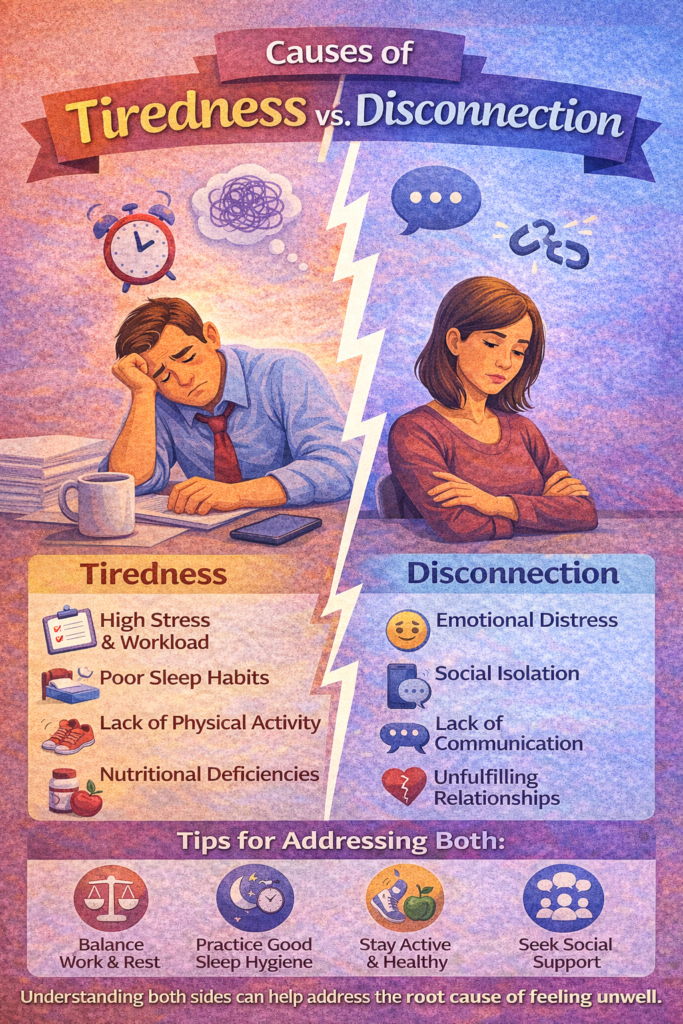
In today’s fast-paced world, tiredness and emotional disconnection are common challenges, but they are often mistaken for one another. Tiredness is usually caused by physical exhaustion, stress, or insufficient rest, signaling the need for recovery. Disconnection, however, is often an emotional issue, stemming from feelings of isolation, burnout, or a lack of fulfillment. Understanding the distinction between these two is essential for addressing their root causes. This blog will examine their differences, contributing factors, and how to recognize and manage both.
Tired vs. Disconnected: How to Identify the Root Cause of Your Struggles
At first glance, feeling exhausted and feeling emotionally distant may seem like two sides of the same coin. After all, when you’re tired, you may feel mentally and physically drained, and when you’re disconnected, you might find it hard to connect emotionally or socially with others. But these two states—tiredness and disconnection—are not the same, and understanding the difference is crucial to addressing the real underlying issue.
While both can lead to a sense of overwhelm, burnout, or a lack of motivation, the causes and solutions are distinct. Recognizing whether you are truly tired or emotionally disconnected can help you understand your needs better, whether it’s rest, reconnection, or a deeper emotional adjustment. Let’s break down the difference and explore how to address both effectively.
Tiredness: A Physical and Mental Need for Rest
Being tired is a physical response that signals the body needs rest. It’s a temporary condition that can usually be remedied by getting enough sleep, reducing physical exertion, or simply taking a break. Tiredness can be caused by:
- Lack of sleep or poor-quality rest
- Physical overexertion, whether from work, exercise, or stress
- Mental fatigue, from working long hours, concentrating for extended periods, or processing a lot of information
Signs you might be genuinely tired include:
- Yawning frequently
- Difficulty focusing or concentrating
- Feeling physically drained or weak
- Irritability due to lack of sleep or rest
The solution here is often simple: take time to rest, sleep more, or adjust your daily routine to avoid overexertion. Recharging physically will help you bounce back quickly.
Disconnection: Emotional and Social Withdrawal
On the other hand, feeling disconnected goes beyond physical fatigue. It’s an emotional and psychological state that signals a lack of connection, either with others or with yourself. You may still feel physically energized, but emotionally, you might feel isolated, numb, or out of sync. Disconnection can occur when:
- You feel detached from people around you, including family, friends, or colleagues
- You no longer feel connected to your passions, goals, or the things that used to excite you
- You experience feelings of loneliness despite being around others
- You struggle with emotional numbness or a lack of purpose
Signs of emotional disconnection include:
- Feeling detached or disconnected during social interactions
- Apathy toward things you once enjoyed
- A sense of emptiness despite being physically well-rested
- Difficulty expressing emotions or feeling like your emotional needs aren’t being met
Disconnection is often linked to mental health conditions such as depression, burnout, or anxiety, but it can also be a result of chronic stress, lack of meaningful social interactions, or emotional overload.
How to Spot the Real Problem
So, how do you know whether you’re truly tired or just disconnected? It’s all about assessing the underlying cause of your feelings:
- Are you physically exhausted? If your tiredness is linked to physical activity or lack of sleep, you may just need rest.
- Do you feel emotionally withdrawn? If you’re feeling mentally okay but still distant from others or have a sense of emptiness despite doing well physically, you might be dealing with emotional disconnection.
It’s important to ask yourself:
- Do I feel recharged after sleep?
- Do I feel numb or unable to connect with others?
- Is this a temporary fatigue or a longer-term emotional struggle?
Taking stock of how your body and mind feel in tandem can help you pinpoint the real issue.
Solutions: Addressing Tiredness vs. Disconnection
If You’re Tired:
- Get adequate sleep: Aim for 7-9 hours of sleep each night.
- Take physical breaks: Rest throughout the day to avoid mental and physical fatigue.
- Maintain a balanced diet: Eating the right foods can keep your energy levels stable.
If You’re Disconnected:
- Reconnect emotionally: Engage in activities that bring you joy, whether it’s hobbies, spending time with loved ones, or pursuing creative outlets.
- Seek support: If you’re feeling isolated, consider talking to a therapist or counselor to explore any underlying emotional struggles.
- Engage in mindfulness: Practices like meditation, journaling, or reflecting on your emotions can help you reconnect with yourself and your feelings.
Final Thought
Whether you’re simply tired or dealing with emotional disconnection, it’s important to listen to your body and mind. If you’re feeling physically exhausted, give yourself the rest you need to recharge. If you’re feeling emotionally distant, take steps to reconnect with your passions, your loved ones, and yourself. Understanding the root cause of your struggles is the key to finding the right solutions and ensuring you move forward with balance and purpose.
Tired vs. Disconnected: Self-Management Strategies for Identifying the Root Causes
The terms “tired” and “disconnected” may seem similar at first, especially when you’re feeling mentally or emotionally drained. But these two experiences stem from different causes, and understanding the root cause is essential for effective self-management. While feeling tired typically signals a need for physical rest or recovery, feeling disconnected can indicate an emotional or social withdrawal that requires deeper attention and healing.
This blog will explore the causes behind these two states and provide practical self-management strategies to help identify and address the underlying issues. Whether it’s physical exhaustion or emotional detachment, recognizing the difference is the first step toward a healthier, more balanced life.
1. Understanding the Cause of Being Tired: Physical and Mental Fatigue
Tiredness is often linked to physical exhaustion, but it can also stem from mental fatigue. When we experience tiredness, it’s the body signaling that it needs rest or has been overworked. Common causes of tiredness include:
- Sleep deprivation: Lack of quality sleep disrupts the body’s ability to recharge.
- Overexertion: Long hours at work, physical activity, or mental tasks can leave you feeling drained.
- Stress: Chronic stress can lead to fatigue, as the body is constantly in a heightened state of alertness.
- Poor nutrition: An unbalanced diet can lead to low energy levels and fatigue.
Self-Management Strategies for Tiredness
- Prioritize sleep: Aim for 7-9 hours of sleep per night, and ensure it’s quality rest by establishing a consistent sleep schedule.
- Exercise regularly: Physical activity increases energy levels and reduces fatigue, but make sure not to overdo it.
- Practice relaxation techniques: Meditation, deep breathing, or yoga can help lower stress levels and prevent exhaustion.
- Eat well: A balanced diet rich in vitamins and minerals helps maintain energy levels throughout the day.
2. Understanding the Cause of Being Disconnected: Emotional and Social Withdrawal
Feeling disconnected is an emotional experience that may be less obvious than physical fatigue, but it can be just as draining. Disconnection is often caused by:
- Emotional exhaustion: Long-term stress, unresolved emotions, or chronic anxiety can leave you feeling detached or numb.
- Lack of meaningful social interactions: Loneliness or feeling emotionally distanced from others can contribute to a sense of disconnection.
- Burnout: If you’ve been overworking, you may feel disconnected not just from others, but from your own desires, passions, or goals.
- Mental health struggles: Conditions like depression, anxiety, or trauma can contribute to emotional withdrawal, making it harder to feel connected to others or oneself.
Self-Management Strategies for Disconnection
- Reconnect with others: Engage in quality time with family, friends, or support groups to break the isolation.
- Engage in meaningful activities: Spend time doing things that bring you joy and fulfillment, such as hobbies, creative outlets, or volunteering.
- Seek therapy or counseling: If emotional exhaustion or mental health struggles are contributing to your disconnection, professional help can provide support in addressing these challenges.
- Practice mindfulness: Meditation, journaling, and reflection can help you reconnect with your emotions, values, and personal identity.
3. Identifying When You’re Tired vs. When You’re Disconnected
One of the most important self-management skills is the ability to distinguish between physical tiredness and emotional disconnection. Here are some ways to recognize which issue you may be dealing with:
- Tiredness is typically accompanied by:
- A need for rest or sleep
- Difficulty concentrating
- Physical exhaustion or weakness
- A temporary sense of being drained after physical or mental exertion
- Disconnection is often felt when:
- You feel emotionally distant from others or yourself
- You experience apathy toward things you used to enjoy
- You feel numb, isolated, or detached despite not being physically tired
- You struggle with finding meaning or purpose
By assessing the underlying causes of your fatigue or emotional state, you can better determine whether the solution lies in rest and physical care or emotional healing and reconnection.
4. Practical Steps to Address Both States Simultaneously
If you are dealing with both tiredness and disconnection at the same time, it can be overwhelming. Here are some practical steps to help manage both:
- Create a balanced routine: Integrate self-care practices, such as exercise, healthy eating, and relaxation, into your daily life. Prioritize quality sleep to tackle physical fatigue, and make time for meaningful social interactions to address emotional disconnection.
- Set boundaries: If overwork or stress is contributing to both exhaustion and disconnection, it’s important to set limits on work and prioritize personal time.
- Pace yourself: Take breaks throughout the day and practice mindful relaxation to prevent both burnout and emotional numbness.
Final Thought
The difference between being tired and being disconnected lies in the underlying cause, and recognizing these differences is essential for effective self-management. When you understand what’s causing your fatigue or emotional withdrawal, you can take targeted actions to restore balance—whether through rest, emotional healing, or reconnection with yourself and others. By implementing these strategies, you can move toward a life that’s not only energized but also emotionally fulfilling and well-connected.
Supporting Loved Ones: Family Strategies to Understand Tiredness vs. Disconnection
As a family member, it’s natural to want to help a loved one who seems overwhelmed, exhausted, or emotionally distant. But often the first challenge is determining whether the root cause of their struggle is physical fatigue or emotional disconnection. These two states may seem similar, but they have very different underlying causes and require distinct approaches.
Tiredness generally results from physical exhaustion, lack of sleep, or overwork, while disconnection is often an emotional state related to feelings of isolation, burnout, or a lack of meaningful engagement in life. Identifying which one your loved one is experiencing can help you provide more effective support. In this blog, we’ll explore family support strategies to help identify the causes of tiredness and disconnection and offer ways to provide meaningful assistance.
1. Observing the Symptoms of Tiredness
When your loved one is tired, the causes are often related to physical or mental exhaustion. Recognizing the symptoms of tiredness can help you determine whether rest and recovery are needed. Common signs of tiredness include:
- Physical fatigue: They may feel drained, weak, or struggle with physical tasks.
- Sleep issues: Insomnia or poor-quality sleep might contribute to tiredness.
- Difficulty concentrating: Mental fatigue makes it hard to focus or complete tasks.
- Increased irritability: Physical exhaustion often leads to short tempers.
Family Support for Tiredness
As a family member, the best way to support someone who is tired is by encouraging them to take time to rest and prioritize self-care. Here’s how you can help:
- Encourage rest and sleep: Suggest they take breaks, go to bed earlier, or engage in relaxation activities to promote recovery.
- Offer practical help: Help with physical tasks or responsibilities that might contribute to their exhaustion.
- Be patient and understanding: Recognize that when someone is tired, they may not have the energy to engage socially, and that it’s okay to rest without guilt.
2. Identifying Disconnection: Emotional or Social Withdrawal
Disconnection differs from tiredness in that it stems from emotional exhaustion, a lack of social engagement, or a sense of purposelessness. While someone may feel physically rested, emotional disconnection can lead to numbness, isolation, and apathy toward relationships or activities. Some signs of disconnection include:
- Emotional numbness: A lack of emotional response to things that used to matter.
- Isolation: Avoiding social interactions, even with close family and friends.
- Loss of interest: Not enjoying activities that were once fulfilling or meaningful.
- Mood swings or irritability: Emotional withdrawal may cause abrupt mood shifts.
Family Support for Disconnection
Supporting someone who feels emotionally disconnected requires a gentler, more empathetic approach. Family members can:
- Encourage open communication: Create a safe space for your loved one to express their feelings without judgment.
- Promote social engagement: Invite them to social gatherings or offer companionship in low-pressure environments.
- Be patient with emotional distance: Understand that emotional disconnection may take time to address, and your loved one may not be ready to reconnect right away.
- Suggest seeking professional help: If the disconnection appears to be linked to depression, anxiety, or burnout, gently suggest speaking to a therapist or counselor.
3. Differentiating Between Tiredness and Disconnection
As a family member, it can be challenging to discern whether your loved one is tired or disconnected, especially when symptoms overlap. Here are a few ways to distinguish between the two:
- Physical exhaustion vs. emotional withdrawal: If your loved one is physically exhausted, they will likely need sleep and rest. If they seem emotionally distant, they may need social interaction or support for mental health issues.
- Short-term fatigue vs. long-term disengagement: Tiredness is typically a temporary state that improves with rest, whereas disconnection is more persistent and may not improve without emotional or psychological support.
- Response to rest: If your loved one feels better after resting, they are likely experiencing physical fatigue. If they still seem disengaged or unmotivated after a good rest, emotional disconnection could be the issue.
4. Providing Ongoing Support Based on Their Needs
Once you’ve determined whether your loved one is experiencing tiredness or disconnection, you can tailor your support strategies accordingly.
- For Tiredness: Focus on creating a nurturing environment that promotes relaxation, adequate sleep, and physical self-care. Make sure your loved one has time for rest, and help them ease physical and mental strain.
- For Disconnection: Focus on emotional support by being present, engaging in nonjudgmental conversations, and offering opportunities to reconnect with others. Encourage activities that bring joy or meaning, and suggest therapy or counseling if needed.
5. Encouraging Self-Care and Healthy Boundaries
In both cases, the key to managing tiredness or disconnection is encouraging your loved one to adopt self-care practices and set healthy boundaries. As a family member, here are ways you can promote self-care:
- Encourage breaks and time for themselves: Whether they are tired or disconnected, self-care is essential for recovery.
- Be supportive of boundary-setting: Help them set boundaries between work, personal time, and relationships so they don’t feel overwhelmed or overextended.
Final Thought
Whether your loved one is feeling physically tired or emotionally disconnected, both states require empathy, understanding, and active support. As a family member, it’s important to recognize the underlying causes of their struggles and offer targeted strategies to help them address the issue at hand. By being patient and creating a safe environment for rest and reconnection, you play a pivotal role in helping them regain balance, rebuild emotional connection, and improve their overall well-being. With the right support, they can find their way back to feeling whole and engaged in both their personal and professional lives.
Community Resources for Understanding the Causes of Tiredness vs. Disconnection
In today’s fast-paced world, feeling tired or disconnected can become a common struggle, especially as people juggle multiple responsibilities. While the two might seem similar, they stem from different root causes—tiredness is often a physical state signaling the body needs rest, while disconnection is an emotional or psychological experience that points to a deeper sense of isolation, burnout, or emotional numbness.
Recognizing the difference between the two is crucial to providing the appropriate support and interventions. Community resources can be invaluable in helping individuals and families understand whether fatigue is linked to physical exhaustion or emotional disconnection. Understanding the root cause enables better strategies and targeted help, whether that means offering rest or providing the necessary emotional support.
In this blog, we’ll explore the role of community-based resources in identifying and addressing both tiredness and disconnection, as well as strategies to connect individuals with the right tools for recovery and healing.
1. Educating the Community About the Differences Between Tiredness and Disconnection
One of the first steps in addressing these issues is community education. Many people are unaware of the subtle differences between tiredness and emotional disconnection. Local community centers, schools, and healthcare providers can host workshops or seminars that focus on:
- Defining tiredness and disconnection
- Identifying the signs and symptoms of both
- Providing guidance on how to determine which issue may be affecting someone
By offering educational resources, communities can help individuals understand what they are experiencing and how to take the first step toward recovery.
2. Mental Health and Wellness Programs to Address Disconnection
Disconnection is often a mental health issue, and addressing it requires emotional support and therapeutic resources. Many community organizations offer programs aimed at helping people reconnect emotionally. These resources can include:
- Therapy and counseling: Many community mental health centers offer affordable counseling services that specialize in emotional well-being and burnout. Therapy can help individuals explore underlying causes of disconnection, such as stress, anxiety, or depression.
- Support groups: Group therapy or support groups provide a safe space for individuals to share their experiences, learn coping strategies, and receive emotional support from others facing similar challenges.
- Mindfulness and stress reduction programs: Yoga, meditation, and breathing exercises can help individuals manage the emotional and psychological symptoms of disconnection, especially in high-stress communities.
These resources help people confront feelings of isolation, restore emotional balance, and reconnect with themselves and others.
3. Health and Fitness Programs to Address Tiredness
When tiredness is the primary concern, addressing it requires physical rest and wellness strategies. Communities can provide various health and fitness programs to help individuals manage physical fatigue:
- Exercise classes: Physical activity such as yoga, tai chi, or walking groups can help improve energy levels, relieve stress, and improve sleep. Many community centers offer free or low-cost fitness classes that encourage both physical health and social connection.
- Nutrition education: Fatigue can sometimes be exacerbated by a poor diet. Offering nutrition workshops can educate individuals on the importance of eating balanced, energy-boosting meals to support overall health.
- Sleep programs: Community resources focused on sleep hygiene can help individuals improve sleep quality, often the most effective remedy for tiredness. Programs may include information on creating a bedtime routine, reducing screen time, and developing good sleep habits.
These initiatives help individuals prioritize their physical health, which often leads to better emotional well-being.
4. Providing Emotional and Social Support Networks
Feeling disconnected often stems from emotional or social isolation. Peer support programs, social clubs, and community engagement are vital resources that help people build and maintain meaningful relationships:
- Community groups: Volunteering, book clubs, or hobby-based groups provide opportunities for individuals to connect with others over shared interests, combating feelings of loneliness and emotional detachment.
- Social events: Hosting community social events or activities that encourage interaction and bonding—whether it’s a picnic, dinner, or a recreational outing—can help people build connections and improve their emotional health.
- Mentorship programs: For individuals struggling with disconnection, having a mentor or trusted figure to talk to can provide significant emotional support and guidance.
These community-based efforts create supportive social networks, offering both emotional fulfillment and a sense of belonging.
5. Offering Resources for Stress Management
Stress is often the root cause of both tiredness and disconnection. Providing access to stress management resources can help individuals find balance:
- Workshops on time management: Community centers can offer workshops on improving work-life balance, setting boundaries, and reducing stress.
- Crisis helplines and support services: Offering access to immediate emotional support via hotlines or text services can provide people with relief when they feel overwhelmed.
- Relaxation techniques: Offering classes in relaxation techniques such as deep breathing, progressive muscle relaxation, or guided meditation can help individuals de-stress and regain emotional clarity.
By offering stress-management tools, communities can help prevent burnout, reduce emotional fatigue, and support individuals in dealing with life’s challenges in healthier ways.
6. Providing Access to Professional Mental Health Services
For those who need more specialized help, community resources should include access to professional mental health services. This might involve:
- Referrals to therapists or psychiatrists who can help diagnose and treat deeper psychological issues, such as depression or anxiety, which often underlie both disconnection and exhaustion.
- Cognitive-behavioral therapy (CBT): CBT programs are effective for individuals dealing with emotional exhaustion or disconnection, as it teaches practical strategies for changing negative thought patterns.
Professional mental health support is often necessary when the challenges of tiredness and disconnection persist despite self-management efforts.
Final Thought
Tiredness and disconnection are both common struggles in today’s fast-paced world, but they stem from different causes and require distinct approaches. Communities have the power to provide the resources and support necessary for individuals to address these issues effectively. Whether it’s through physical wellness programs, emotional support groups, or mental health services, community resources can help people identify the causes of their fatigue and isolation and guide them on the path to recovery. By prioritizing well-being, building stronger social connections, and offering emotional support, communities can empower individuals to regain their health and find balance.
Frequently Asked Questions
Here are some common questions:
1. What is the difference between tiredness and disconnection?
Tiredness is typically a physical state caused by lack of rest, overexertion, or stress. It signals that your body needs recovery. On the other hand, disconnection is more of an emotional or psychological state, where someone may feel isolated, numb, or detached from their emotions or relationships, despite not being physically exhausted.
2. What causes tiredness?
Tiredness can result from:
- Physical overexertion (too much work or activity)
- Lack of sleep or poor-quality rest
- Chronic stress or pressure from work or personal life
- Nutritional deficiencies that affect energy levels
3. What causes emotional disconnection?
Disconnection often stems from:
- Emotional distress or unresolved personal issues
- Social isolation, not engaging with others or feeling left out
- Lack of communication or meaningful connections
- Unfulfilling relationships, which can lead to emotional withdrawal or apathy
- Burnout, from overworking or neglecting personal needs
4. How do I know if I’m physically tired or emotionally disconnected?
It’s important to evaluate your symptoms:
- If you feel exhausted or physically drained, and need rest or sleep, it’s likely tiredness.
- If you feel numb, detached, or unable to connect with people or activities you once enjoyed, it may be disconnection.
5. Can you feel both tired and disconnected at the same time?
Yes, it’s possible to experience both tiredness and disconnection at once, especially if emotional distress is contributing to physical fatigue. In such cases, it’s important to address both physical and emotional needs, such as getting enough rest and seeking emotional support.
6. What are the signs of tiredness?
Signs of tiredness include:
- Physical fatigue: feeling weak or drained
- Difficulty concentrating
- Irritability due to lack of rest
- Frequent yawning or a constant need to rest
7. What are the signs of disconnection?
Signs of disconnection include:
- Emotional numbness or difficulty feeling joy
- Social withdrawal or avoiding interactions with others
- Loss of interest in things that once brought happiness
- Feeling isolated even when surrounded by others
8. Can tiredness be fixed just by resting?
Yes, typically rest, sleep, and reducing physical or mental exertion can help recover from tiredness. However, if it is related to underlying health issues, more specific interventions may be needed.
9. How can emotional disconnection be addressed?
To address emotional disconnection:
- Seek therapy or counseling to explore deeper emotional issues
- Reconnect with supportive people in your life, fostering meaningful relationships
- Engage in activities that bring joy or purpose, whether hobbies, volunteering, or creative outlets
10. Can stress contribute to both tiredness and disconnection?
Yes, chronic stress can lead to physical exhaustion (tiredness) and emotional burnout, causing disconnection from others or oneself. Managing stress through relaxation techniques, exercise, and seeking professional support can help address both.
11. What are effective strategies to address tiredness?
To manage tiredness:
- Prioritize sleep (7-9 hours a night)
- Take regular breaks during work or physical activities
- Practice relaxation techniques like deep breathing or meditation
- Exercise regularly to boost energy levels
12. How can I help someone who is both tired and disconnected?
If someone is experiencing both:
- Encourage them to rest and recover physically
- Offer emotional support by creating a safe space for them to talk
- Help them connect with professional help, such as therapy or counseling
- Encourage engagement in social activities and hobbies that may help them reconnect emotionally
13. Can lifestyle changes help with both tiredness and disconnection?
Yes, lifestyle changes such as adopting a balanced routine, getting adequate rest, and managing stress can significantly reduce both tiredness and emotional disconnection. Regular physical activity, mindful relaxation, and quality sleep are key factors in improving overall well-being.
14. When should I seek professional help for tiredness or disconnection?
If tiredness doesn’t improve with rest, or if disconnection persists despite efforts to reconnect, seeking professional help is important. This might include:
- Therapy for emotional disconnection
- A doctor’s consultation if tiredness is affecting daily functioning or is linked to health issues
15. What is the most important thing to remember about tiredness vs. disconnection?
The most important takeaway is that tiredness is typically physical, while disconnection is emotional or psychological. Understanding the difference helps you take the right steps toward recovery. For tiredness, rest and physical recovery are key. For disconnection, emotional support and reconnection with meaningful relationships are essential.
Conclusion
Recognizing the difference between tiredness and disconnection is essential for effectively addressing and managing both. While tiredness typically requires physical rest and recovery, disconnection often requires emotional healing, reconnection with others, or addressing underlying mental health challenges. By understanding the root causes of these feelings, individuals can take the necessary steps to restore their energy and emotional well-being. Whether through better sleep habits, seeking emotional support, or practicing self-care, recognizing what’s behind your fatigue or emotional distance can empower you to make positive changes and regain balance in your life.
Video: