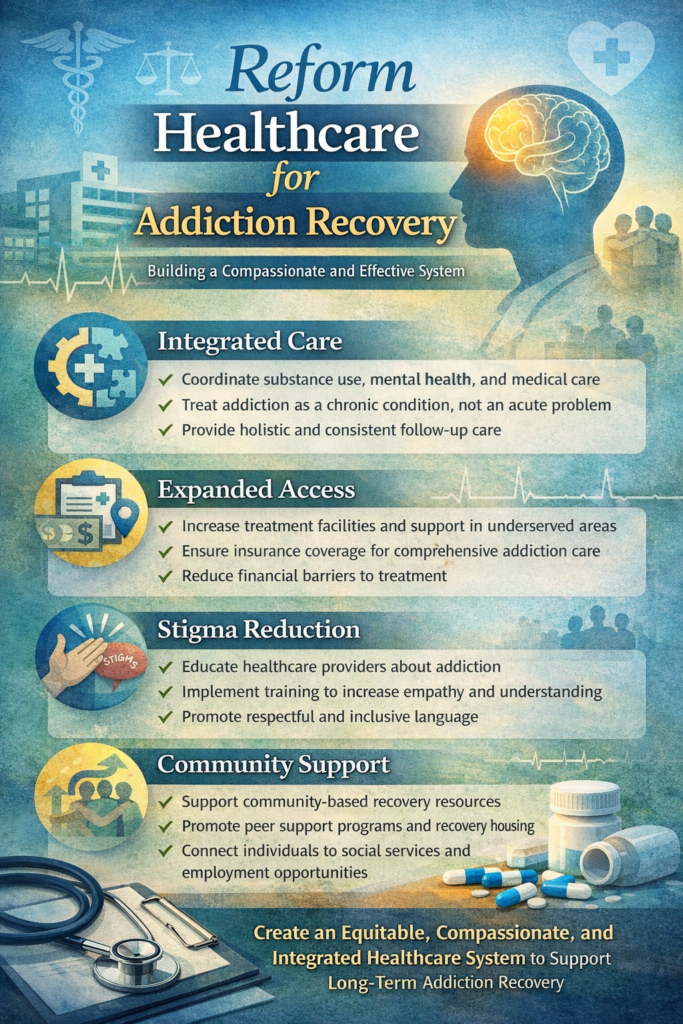
Addiction remains one of the most complex public health challenges, requiring more than short-term treatment or isolated interventions. Despite growing awareness, many healthcare systems continue to fall short in providing comprehensive, accessible, and integrated care for individuals in recovery. Barriers such as fragmented services, limited access, and persistent stigma within healthcare settings often prevent individuals from receiving the support they need. Reforming healthcare for addiction recovery is essential not only to improve treatment outcomes but also to create a system that recognizes addiction as a multifaceted condition requiring coordinated, compassionate, and long-term care.
Reforming Healthcare for Addiction Recovery: A Path Toward Effective and Compassionate Care
Addiction is a complex and multifaceted condition that affects individuals physically, psychologically, and socially. Yet, despite its complexity, healthcare systems have often struggled to provide comprehensive and effective care for those in recovery. Fragmented services, limited access to treatment, stigma within healthcare settings, and inadequate integration of mental health support all contribute to gaps in care. As a result, many individuals fall through the cracks, unable to access the consistent and compassionate support they need.
Reforming healthcare for addiction recovery is not simply a matter of improving treatment options—it is about restructuring the system to better understand and respond to the realities of addiction.
The Problem of Fragmented Care
One of the most significant challenges in addiction treatment is the lack of coordination between services. Individuals often need to navigate separate systems for:
- Substance use treatment
- Mental health care
- Primary healthcare
- Social services
This fragmentation creates barriers, especially for those already overwhelmed. Without integrated care, treatment becomes inconsistent, and long-term recovery becomes more difficult to sustain.
Limited Access and Inequality in Treatment
Access to addiction treatment remains uneven. Barriers such as cost, lack of insurance coverage, geographic limitations, and long wait times prevent many from receiving care.
Key issues include:
- Insufficient treatment facilities in underserved areas
- Financial barriers to therapy and medication
- Disparities in care for marginalized populations
Healthcare reform must address these inequities to ensure that recovery support is accessible to all, not just a few.
The Role of Stigma in Healthcare Settings
Stigma within healthcare systems can significantly impact the quality of care individuals receive. Patients with addiction may be viewed as difficult, non-compliant, or responsible for their condition, which can lead to:
- Reduced empathy from providers
- Inadequate treatment plans
- Reluctance to seek care
Addressing stigma requires education, training, and cultural change within healthcare institutions.
The Need for Integrated, Holistic Care
Effective addiction recovery requires more than detoxification or short-term intervention. It involves addressing the whole person, including mental health, trauma, and social circumstances.
Integrated care models should include:
- Mental health counseling
- Medication-assisted treatment (MAT)
- Case management and social support
- Long-term follow-up care
By treating addiction as a chronic condition rather than an isolated issue, healthcare systems can improve long-term outcomes.
Emphasizing Prevention and Early Intervention
Healthcare reform must also focus on prevention. Early identification of risk factors and intervention can reduce the severity of addiction and improve recovery outcomes.
This includes:
- Screening in primary care settings
- Education on substance use and mental health
- Early access to counseling and support services
Prevention reduces both human and economic costs in the long term.
Expanding Community-Based Care
Community resources play a critical role in supporting recovery. Healthcare systems should collaborate with community organizations to provide:
- Peer support programs
- Recovery housing
- Employment and education services
This approach bridges the gap between clinical care and everyday life, making recovery more sustainable.
Policy and System-Level Change
Meaningful reform requires changes at the policy level, including:
- Increased funding for addiction treatment
- Expanded insurance coverage for mental health and substance use services
- Support for workforce development in addiction care
Policy changes create the foundation for a more responsive and equitable healthcare system.
The Path Forward
Reforming healthcare for addiction recovery is not just a medical issue—it is a societal one. It requires collaboration between policymakers, healthcare providers, communities, and individuals.
Final Thought
Addiction recovery should not depend on luck, location, or resources. A reformed healthcare system has the potential to transform recovery from a fragmented and uncertain process into a coordinated, compassionate, and accessible pathway to healing.
Because when healthcare systems truly understand addiction, they don’t just treat it—
They support the people behind it.
Empowering Change: Self-Management Strategies to Support Healthcare Reform in Addiction Recovery
Reforming healthcare systems for addiction recovery is essential—but systemic change often takes time. In the meantime, individuals navigating recovery must learn how to manage their own care within a system that may be fragmented, stigmatizing, or difficult to access. Self-management does not replace the need for reform; rather, it empowers individuals to navigate challenges, advocate for themselves, and sustain recovery despite systemic limitations.
Understanding how to take an active role in one’s recovery can help bridge the gap between what the healthcare system currently offers and what individuals truly need.
Developing Self-Advocacy Skills
One of the most critical self-management strategies is learning to advocate for your own care. This means:
- Asking questions about treatment options
- Expressing concerns openly with providers
- Requesting second opinions when necessary
Healthcare systems can be complex, and not all providers approach addiction the same way. Self-advocacy ensures that individuals are not passive recipients of care but active participants in their recovery journey.
Understanding Available Resources
Navigating addiction recovery often involves multiple services—therapy, medical care, support groups, and social services. A key strategy is becoming informed about:
- Local and community-based resources
- Insurance coverage and treatment options
- Support programs (in-person or online)
Knowledge reduces barriers and increases access, allowing individuals to make informed decisions about their care.
Creating a Personal Recovery Plan
In a fragmented system, consistency may not always come from providers—it may need to come from the individual. Developing a personal recovery plan can help maintain structure.
This might include:
- Regular therapy or support group attendance
- Daily routines that support stability (sleep, nutrition, exercise)
- Coping strategies for managing triggers
A personalized plan creates continuity, even when external systems are inconsistent.
Building a Support Network Beyond Healthcare
While healthcare providers are important, recovery often depends on support outside formal systems. This includes:
- Peer support groups
- Trusted friends or family members
- Recovery communities
These networks provide emotional support, accountability, and connection—elements that healthcare systems alone may not fully provide.
Managing Setbacks Without Losing Momentum
In a system with gaps, setbacks—such as missed appointments, delays in care, or limited access—can occur. Self-management involves developing resilience and maintaining progress despite obstacles.
Strategies include:
- Viewing setbacks as temporary, not permanent
- Adjusting plans rather than abandoning them
- Seeking alternative resources when needed
Flexibility is key to sustaining recovery in imperfect systems.
Practicing Health Literacy
Health literacy—the ability to understand and use healthcare information—is essential for effective self-management. This includes:
- Understanding diagnoses and treatment plans
- Knowing how medications work
- Recognizing early warning signs of relapse
The more informed individuals are, the better equipped they are to make decisions that support their recovery.
Setting Boundaries Within the Healthcare System
Not all healthcare experiences are positive. Individuals may encounter stigma or inadequate care. Self-management includes setting boundaries, such as:
- Choosing providers who are respectful and informed
- Disengaging from unhelpful or harmful interactions
- Seeking alternative care when necessary
This reinforces the idea that quality of care matters.
Engaging in Preventive Self-Care
Recovery is not just about treatment—it is also about prevention. Self-care strategies help reduce the risk of relapse and support overall well-being.
These may include:
- Stress management techniques (mindfulness, journaling)
- Physical activity and healthy routines
- Engaging in meaningful activities or goals
Preventive care strengthens long-term recovery.
Contributing to Broader Change
While self-management focuses on individual action, it can also contribute to broader reform. Sharing experiences, participating in advocacy, or supporting awareness efforts can help highlight gaps in the system and drive change.
Even small actions—like providing feedback to providers—can help improve care for others.
Final Thought
Healthcare reform is essential for improving addiction recovery, but individuals do not have to wait for systems to change in order to take control of their own healing. Self-management empowers individuals to navigate challenges, build resilience, and create stability within an imperfect system.
Because while systems should support recovery,
Recovery also grows through personal agency, informed choices, and consistent self-care.
And sometimes, the most powerful change begins with the ability to say:
“I will take an active role in my own recovery.”
Strengthening Recovery: Family Support Strategies to Reform Healthcare for Addiction
Reforming healthcare for addiction recovery is often discussed at the level of policy, providers, and institutions—but one of the most powerful forces for change lies closer to home: the family. Families are not only support systems for individuals in recovery; they are also key stakeholders who experience firsthand the strengths and shortcomings of healthcare systems. Their insights, advocacy, and involvement can play a critical role in shaping more effective, compassionate, and accessible care.
Understanding how families can support both individual recovery and broader healthcare reform is essential in building a system that truly meets the needs of those affected by addiction.
Supporting Navigation Through Complex Systems
Healthcare systems for addiction recovery are often fragmented and difficult to navigate. Families can play an active role in helping their loved ones:
- Identify appropriate treatment options
- Coordinate appointments and services
- Understand insurance coverage and resources
By assisting with navigation, families help reduce the overwhelming burden individuals may face, increasing the likelihood of consistent and effective care.
Advocating for Quality and Compassionate Care
Families are often in a unique position to recognize when care is inadequate, stigmatizing, or ineffective. Advocacy becomes a powerful tool for change.
This can include:
- Speaking up about concerns with providers
- Requesting better treatment options or second opinions
- Providing feedback to healthcare organizations
Advocacy not only improves care for their loved one but can also contribute to system-wide improvements.
Reducing Stigma Within Healthcare Interactions
Families can influence how addiction is perceived and treated within healthcare settings. By approaching providers with informed, respectful communication, families can help shift attitudes away from stigma.
Strategies include:
- Using person-first language (e.g., “person with addiction” rather than labels)
- Challenging stigmatizing comments or assumptions
- Promoting understanding of addiction as a health condition
These actions contribute to a more compassionate healthcare environment.
Encouraging Continuity of Care
Recovery is not a one-time event—it requires ongoing support. Families can help ensure continuity by:
- Encouraging follow-up appointments
- Supporting long-term treatment plans
- Helping maintain routines and structure
Consistency in care is often where healthcare systems fall short, and family involvement can help bridge that gap.
Participating in Family-Inclusive Treatment Models
Many modern approaches to addiction recovery emphasize family involvement as part of treatment. Engaging in these models can improve outcomes and strengthen support systems.
Examples include:
- Family therapy sessions
- Educational programs about addiction
- Collaborative treatment planning
Participation helps families better understand addiction and equips them with tools to provide effective support.
Connecting with Community and Advocacy Groups
Families can extend their impact beyond individual care by engaging with broader networks. Advocacy groups and community organizations provide opportunities to:
- Share experiences and insights
- Support policy changes
- Raise awareness about gaps in care
Collective voices often carry more influence in driving healthcare reform.
Supporting Preventive and Early Intervention Efforts
Families are often the first to notice early signs of struggle. By encouraging early intervention, they can help reduce the need for more intensive treatment later.
This includes:
- Promoting open conversations about mental health and substance use
- Seeking help at the early stages
- Supporting education and awareness within their communities
Prevention is a critical component of effective healthcare reform.
Taking Care of the Family System
Healthcare reform also involves recognizing the needs of families themselves. Supporting a loved one through addiction can be emotionally demanding, and families benefit from their own resources and support.
This may include:
- Therapy or counseling for family members
- Support groups such as Al-Anon
- Education about boundaries and self-care
A supported family is better equipped to support recovery and advocate for change.
The Role of Families in Systemic Change
Families are not just passive participants in the healthcare system—they are active agents of change. Through advocacy, education, and engagement, they can help shape a system that is more responsive, inclusive, and effective.
Final Thought
Reforming healthcare for addiction recovery requires more than policy changes—it requires voices, experiences, and commitment from those most affected. Families bring a unique perspective that bridges personal experience with systemic insight.
By supporting their loved ones while also advocating for better care, families help create a future where addiction recovery is not hindered by system gaps—but supported by a system designed to heal.
Because when families are empowered,
they don’t just support recovery—
They help transform the system itself.
Strengthening Systems: Community Resource Strategies to Reform Healthcare for Addiction Recovery
Reforming healthcare for addiction recovery requires more than changes within hospitals or clinical settings—it demands a broader, community-centered approach. Addiction is not solely a medical issue; it is deeply connected to social, economic, and environmental factors. As a result, effective reform must extend beyond traditional healthcare systems and incorporate community resources that support long-term recovery and stability.
Communities have the power to fill critical gaps in care, reduce barriers to access, and create environments where recovery is not only possible but sustainable.
Bridging the Gap Between Clinical Care and Daily Life
One of the biggest limitations of traditional healthcare systems is their focus on short-term treatment rather than long-term support. Community resources help bridge this gap by providing ongoing, real-world support.
These resources include:
- Recovery community centers
- Peer support programs
- Sober living environments
By extending care beyond clinical settings, communities ensure that individuals are supported in their everyday lives—not just during treatment.
Expanding Access Through Local Resources
Access to addiction treatment is often limited by cost, location, and availability. Community-based services can reduce these barriers by offering:
- Low-cost or free programs
- Local, easily accessible support
- Flexible and walk-in services
This localized approach makes it easier for individuals to engage with care, especially those who might otherwise fall through the cracks.
Integrating Social Services with Healthcare
Addiction recovery is closely tied to factors such as housing, employment, and education. Community strategies that integrate these services with healthcare can significantly improve outcomes.
Examples include:
- Job training and employment assistance
- Housing support programs
- Educational and life skills workshops
By addressing these broader needs, communities reduce the risk factors that contribute to relapse and instability.
Promoting Peer Support and Lived Experience
Peer support is one of the most effective community-based strategies. Individuals with lived experience of addiction can provide:
- Relatable guidance and mentorship
- Emotional support without judgment
- Practical insights into recovery
Incorporating peer support into healthcare reform helps humanize care and build trust, especially for those hesitant to engage with traditional systems.
Reducing Stigma Through Community Engagement
Stigma remains a major barrier to accessing care. Community-level efforts can shift perceptions and create more supportive environments.
Strategies include:
- Public education campaigns
- Community discussions and workshops
- Inclusion of recovery narratives in local initiatives
When communities become more informed and compassionate, individuals are more likely to seek help without fear of judgment.
Collaborating Across Systems
Effective reform requires collaboration between healthcare providers, community organizations, and local governments. Coordinated efforts can lead to:
- Better continuity of care
- Shared resources and information
- More comprehensive support networks
This integrated approach reduces fragmentation and improves the overall effectiveness of addiction care.
Outreach and Early Intervention
Community resources are often better positioned to identify and engage individuals early. Outreach programs can:
- Connect with individuals in underserved or high-risk areas
- Provide education and early support
- Link individuals to appropriate services before problems escalate
Early intervention not only improves outcomes but also reduces the long-term burden on healthcare systems.
Empowering Communities to Drive Change
Communities are not just service providers—they are catalysts for reform. By identifying local needs and advocating for resources, communities can influence policy and improve healthcare systems from the ground up.
This includes:
- Supporting local initiatives and programs
- Advocating for funding and policy changes
- Engaging in community planning and decision-making
The Future of Addiction Recovery
Healthcare reform for addiction recovery is most effective when it is community-informed and community-supported. Clinical care alone cannot address the complexity of addiction; it must be complemented by resources that promote connection, stability, and long-term growth.
Final Thought
Reforming healthcare for addiction recovery is not just about improving treatment—it is about building systems that support people in every aspect of their lives.
Communities play a vital role in this transformation.
They provide the connection, resources, and understanding that healthcare systems alone often cannot.
And when communities and healthcare systems work together,
recovery becomes not just possible—but sustainable, accessible, and real.
Frequently Asked Questions
Here are some common questions:
1. What does “reforming healthcare for addiction recovery” mean?
It refers to improving healthcare systems to provide more accessible, integrated, and effective care for individuals struggling with addiction, including medical, psychological, and social support.
2. Why is healthcare reform necessary for addiction recovery?
Current systems often have:
- Fragmented services
- Limited access to treatment
- Stigma within healthcare settings
- Lack of long-term support
Reform is needed to ensure individuals receive comprehensive and continuous care.
3. What are the biggest problems in current addiction healthcare systems?
Key issues include:
- Poor coordination between services
- High costs and insurance limitations
- Short-term treatment focus
- Insufficient mental health integration
These gaps can make recovery harder to achieve and sustain.
4. How does stigma affect addiction treatment in healthcare?
Stigma can lead to:
- Judgment from healthcare providers
- Reduced quality of care
- Patients avoiding or delaying treatment
This creates a barrier to seeking and receiving effective help.
5. What is integrated care in addiction recovery?
Integrated care means combining:
- Substance use treatment
- Mental health services
- Physical healthcare
- Social support
This approach treats the whole person, not just the addiction.
6. How can access to addiction treatment be improved?
Improvement strategies include:
- Expanding insurance coverage
- Increasing treatment facilities
- Offering low-cost or free services
- Providing telehealth options
These changes make care more equitable and reachable.
7. What role do communities play in healthcare reform?
Communities help by:
- Providing support programs
- Reducing stigma
- Offering local resources
- Advocating for policy changes
They bridge the gap between formal healthcare and everyday life.
8. Why is long-term care important in addiction recovery?
Addiction is often a chronic condition, meaning it requires ongoing management. Short-term treatment alone is usually not enough to maintain recovery.
9. What is medication-assisted treatment (MAT)?
MAT combines medications with counseling and behavioral therapies to treat addiction. It is an evidence-based approach that improves recovery outcomes.
10. How can healthcare providers improve addiction care?
Providers can:
- Receive training on addiction and mental health
- Use non-judgmental, person-centered approaches
- Coordinate care across services
- Support long-term recovery plans
11. What role does policy play in healthcare reform?
Policy changes can:
- Increase funding for treatment programs
- Expand insurance coverage
- Improve access to medications and services
- Support workforce development
Policy sets the foundation for systemic improvement.
12. How can families support healthcare reform efforts?
Families can:
- Advocate for better care
- Share their experiences
- Support awareness initiatives
- Participate in treatment planning
Their voices can influence both care and policy.
13. Can individuals contribute to healthcare reform?
Yes. Individuals can:
- Advocate for their own care
- Provide feedback to providers
- Participate in support or advocacy groups
- Share their recovery experiences
Small actions can contribute to larger change.
14. What is the role of prevention in healthcare reform?
Prevention focuses on:
- Early identification of risk factors
- Education on substance use and mental health
- Early intervention services
This reduces the severity and long-term impact of addiction.
15. What is the most important takeaway about reforming addiction healthcare?
The key takeaway is that addiction recovery requires a system that is accessible, integrated, and compassionate. Reform is not just about treatment—it’s about creating a system that truly supports long-term healing.
Conclusion
Reforming healthcare for addiction recovery is not simply about expanding services—it is about transforming how addiction is understood and addressed at every level of care. By prioritizing integration, accessibility, and stigma reduction, healthcare systems can better support individuals throughout the recovery process. Meaningful reform requires collaboration between providers, policymakers, communities, and individuals to create a system that is responsive, inclusive, and sustainable. Ultimately, when healthcare systems are designed to meet the realities of addiction, recovery becomes not just a possibility, but a supported and achievable path forward.
Video: