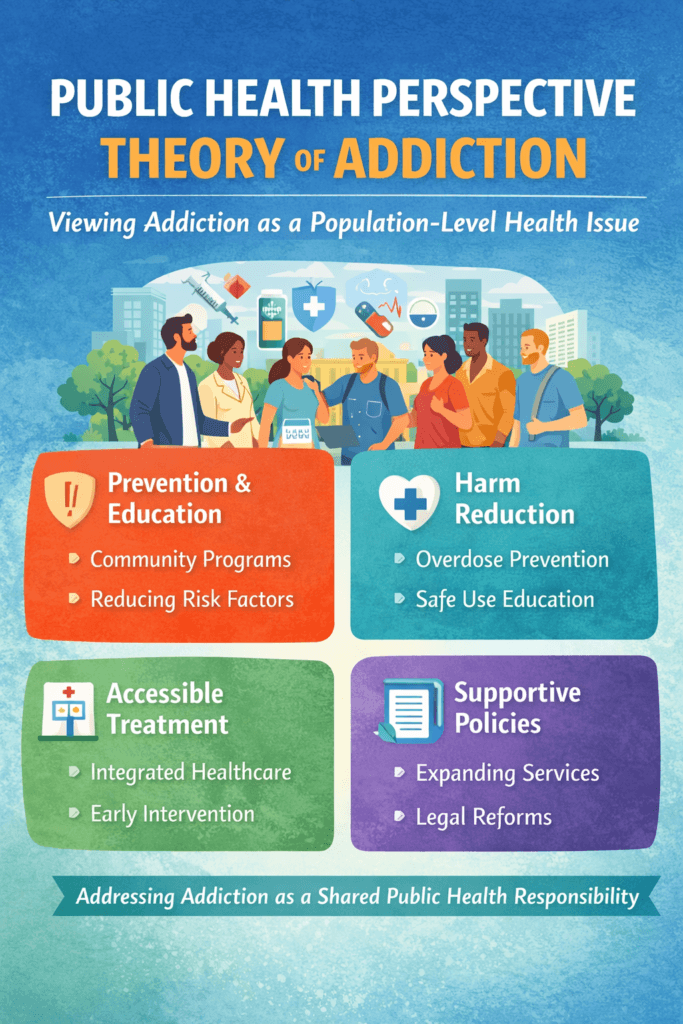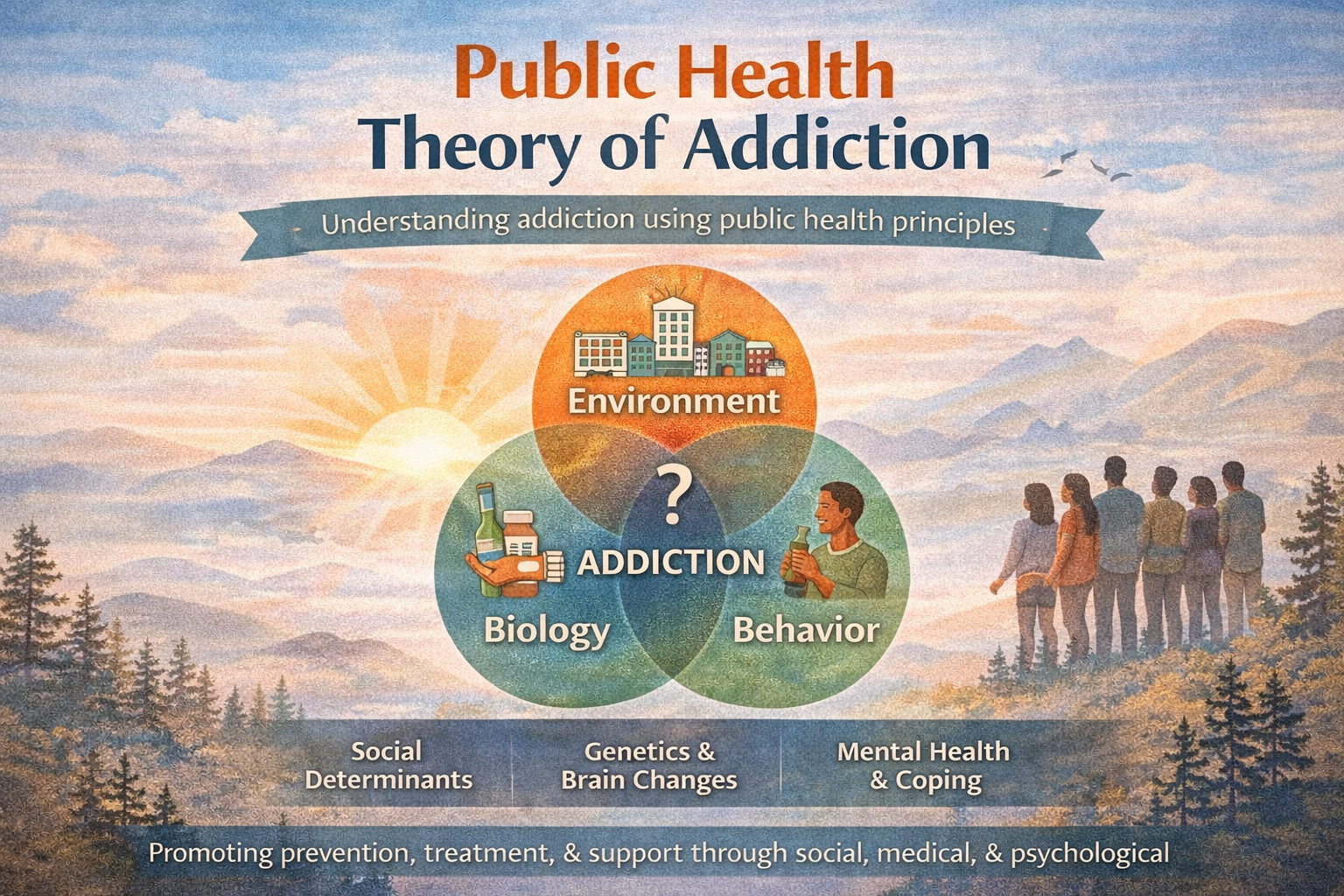
The Public Health Perspective Theory of Addiction views substance use and addiction as population-level health concerns that affect individuals, families, and entire communities. Rather than focusing solely on personal behavior, this approach examines patterns of substance use, risk factors, and protective factors across populations. It emphasizes prevention, early intervention, harm reduction, and equitable access to care as essential tools for reducing addiction-related harm. By treating addiction as a public health issue, this model shifts the focus from punishment and stigma to education, safety, and long-term health outcomes.
Public Health Perspective Theory of Addiction: A Population-Level Approach to Prevention and Recovery
The Public Health Perspective Theory of Addiction views substance use and addiction as population-level health issues rather than solely individual or moral problems. This approach focuses on how addiction affects communities, healthcare systems, economies, and overall public well-being. Instead of asking only why one person develops addiction, the public health perspective asks how patterns of substance use emerge across populations and what strategies can reduce harm, prevent initiation, and improve recovery outcomes on a large scale.
Central to this theory are risk and protective factors. Public health identifies factors that increase addiction risk—such as early exposure to substances, trauma, social inequality, limited healthcare access, and high availability of addictive substances—while also strengthening protective factors like education, social support, economic stability, and access to prevention services. By addressing these factors early, addiction can often be prevented before it becomes severe or chronic.
The public health perspective also emphasizes harm reduction. Recognizing that not everyone is ready or able to stop using substances immediately, harm-reduction strategies aim to minimize negative consequences. These may include overdose prevention, access to treatment medications, safe-use education, and early intervention services. From this viewpoint, saving lives and reducing harm are essential steps toward long-term recovery.
Another key principle is policy and systems-level intervention. Public health approaches support evidence-based policies, including regulating substance availability, improving prescribing practices, expanding access to treatment, and investing in community prevention programs. These strategies shift responsibility from individuals alone to shared societal action, acknowledging that addiction trends are shaped by laws, economic forces, and healthcare infrastructure.
Ultimately, the Public Health Perspective Theory of Addiction promotes a proactive, compassionate, and data-driven response to substance use. By focusing on prevention, early intervention, harm reduction, and equitable access to care, this model aims to reduce addiction-related harm across entire populations. It reframes addiction as a collective health challenge—one that can be effectively addressed when communities, healthcare systems, and policymakers work together.
Self-Management Strategies for Recovery Using the Public Health Perspective Theory of Addiction
The Public Health Perspective Theory of Addiction views addiction as a widespread health issue influenced by risk factors, protective factors, and access to care across populations. When applied at the individual level, self-management strategies focus on reducing personal risk, strengthening protective behaviors, and actively engaging in health-promoting systems. Rather than relying on willpower alone, this approach encourages individuals to manage recovery through informed, preventative, and health-centered actions.
One core self-management strategy is risk awareness and prevention planning. Individuals learn to recognize personal risk factors such as stress, trauma triggers, untreated mental health conditions, or environments with easy substance access. By identifying early warning signs and high-risk situations, people can take proactive steps—such as avoiding triggering settings, scheduling check-ins with providers, or increasing support during stressful periods—to prevent escalation or relapse.
Health system engagement is another essential strategy. The public health model emphasizes routine interaction with healthcare services, including primary care, behavioral health, and preventive screenings. Regular appointments, medication adherence, and early intervention for emerging symptoms help stabilize recovery and reduce long-term harm. Managing recovery as an ongoing health condition aligns addiction care with how other chronic conditions are treated.
The public health perspective also supports harm reduction as a self-management tool. For some individuals, recovery may include gradual change rather than immediate abstinence. Strategies such as overdose prevention planning, safer-use education, medication-assisted treatment, and carrying emergency resources prioritize safety and survival. Harm reduction empowers individuals to protect their health as they move toward long-term recovery goals.
Building protective lifestyle routines further strengthens self-management. Consistent sleep, nutrition, physical activity, stress management, and social connection reduce vulnerability to substance use. These behaviors improve physical and mental resilience, making recovery more sustainable. Education plays a key role, as understanding how substances affect the body and brain supports informed decision-making.
Ultimately, self-management strategies grounded in the Public Health Perspective Theory of Addiction emphasize prevention, safety, and long-term health. By actively reducing risk, engaging healthcare systems, and strengthening protective behaviors, individuals become partners in their own recovery. This approach reframes recovery as a proactive health practice—one that supports stability, dignity, and overall well-being over time.
Family Support Strategies for Recovery Using the Public Health Perspective Theory of Addiction
The Public Health Perspective Theory of Addiction understands addiction as a widespread health issue shaped by prevention, early intervention, and access to care. Within this framework, families play a critical role in reducing risk, promoting protective factors, and supporting long-term recovery. Family support strategies focus on education, safety, consistency, and collaboration with healthcare and community systems to improve outcomes for everyone involved.
One essential family strategy is education and awareness about prevention. Families who understand addiction as a health condition—not a moral failing—are better equipped to respond early and effectively. Learning about risk factors, warning signs, and evidence-based treatments allows families to intervene before substance use escalates. Open conversations about substances, mental health, and coping skills help reduce secrecy and stigma within the household.
The public health perspective also emphasizes early intervention and monitoring. Families can support recovery by noticing changes in behavior, mood, or functioning and encouraging timely professional help. Supporting regular healthcare visits, medication adherence, and follow-up care mirrors how families manage other chronic health conditions. Early action reduces the severity and long-term consequences of addiction.
Harm reduction and safety planning are key components of family support in this model. Families can help reduce risk by supporting overdose prevention strategies, promoting safer-use education when appropriate, and ensuring access to emergency resources. Prioritizing safety does not enable addiction; it protects life and creates opportunities for future recovery.
Creating a health-promoting home environment is another vital strategy. Families can model healthy routines, stress management, and balanced lifestyles that reinforce recovery. Consistent schedules, supportive communication, and shared wellness activities strengthen protective factors and reduce the risk of relapse.
Ultimately, family support strategies grounded in the Public Health Perspective Theory of Addiction recognize families as partners in prevention and recovery. By focusing on education, early intervention, harm reduction, and healthcare engagement, families help transform addiction from a crisis-driven response into a proactive, health-centered process that supports long-term stability and well-being.
Community Resource Strategies for Recovery Using the Public Health Perspective Theory of Addiction
The Public Health Perspective Theory of Addiction frames substance use and recovery as population-level health issues that require coordinated, community-wide solutions. From this viewpoint, community resources are essential for reducing harm, preventing addiction, and supporting long-term recovery. Effective strategies focus on accessibility, early intervention, data-driven planning, and equity—ensuring that care reaches people before crises occur.
A core community strategy is expanding access to integrated healthcare services. Community health centers that combine primary care, mental health services, and substance use treatment make it easier for individuals to receive timely, continuous care. When addiction services are embedded within general healthcare, stigma decreases, and early intervention becomes more likely. This integration mirrors how other chronic health conditions are managed at the population level.
Harm reduction infrastructure is another pillar of the public health approach. Community-based overdose prevention programs, medication access, safer-use education, and crisis response services prioritize saving lives and reducing long-term health consequences. These services recognize that reducing harm benefits not only individuals but also entire communities by lowering healthcare costs, reducing strain on emergency response, and preventing deaths.
Public health strategies also emphasize prevention and education initiatives. Community-wide education campaigns, school-based programs, and workplace trainings help raise awareness about substance use risks, mental health, and healthy coping strategies. By strengthening protective factors early—especially among youth and high-risk populations—communities can reduce future addiction rates before treatment is needed.
Addressing social determinants of health is equally critical. Community resources that provide stable housing, employment support, transportation, food security, and legal assistance reduce the environmental stressors that contribute to substance use. Recovery-friendly housing and workplaces enhance stability and create conditions that support individuals in sustaining recovery over time.
Ultimately, community resource strategies grounded in the Public Health Perspective Theory of Addiction shift the focus from reactive crisis care to proactive health promotion. By investing in accessible services, harm reduction, prevention, and social supports, communities create healthier environments that reduce addiction-related harm and support recovery as a shared public health responsibility.
Frequently Asked Questions
Here are some common questions:
What is the Public Health Perspective Theory of Addiction?
The Public Health Perspective Theory of Addiction views addiction as a population-level health issue rather than solely an individual problem. It focuses on prevention, early intervention, harm reduction, and equitable access to treatment to reduce addiction-related harm across entire communities.
How does the public health perspective differ from other addiction theories?
Unlike models that focus mainly on personal behavior or brain disease, the public health approach examines patterns of substance use across populations. It emphasizes how policies, environments, healthcare systems, and social conditions influence addiction rates and recovery outcomes.
What are the main goals of the public health approach to addiction?
The primary goals are to prevent substance use before it starts, reduce harm for those currently using substances, increase access to treatment and recovery services, and improve overall community health and safety.
What role does prevention play in this theory?
Prevention is central. Public health strategies aim to reduce risk factors such as early substance exposure, trauma, and easy access to addictive substances, while strengthening protective factors like education, social support, and economic stability.
What is harm reduction in the public health model?
Harm reduction focuses on minimizing the negative consequences of substance use rather than requiring immediate abstinence. Examples include overdose prevention, safer-use education, and access to medications. The goal is to save lives and reduce long-term health damage.
How does this theory view treatment and recovery?
Treatment and recovery are seen as essential healthcare services. The public health perspective supports integrating addiction care into primary healthcare, expanding access to evidence-based treatment, and providing long-term support similar to other chronic health conditions.
Why are policies important in the public health approach?
Policies shape the availability of substances, healthcare access, and funding for prevention. Public health approaches support evidence-based policies that reduce harm, expand treatment services, and promote healthier communities.
Does this approach remove personal responsibility?
No. The public health perspective balances individual responsibility with shared societal responsibility. Individuals are encouraged to engage in healthy behaviors while systems work to reduce barriers and risks.
How does the public health model reduce stigma?
By framing addiction as a health condition rather than a moral failing, this approach promotes compassion and understanding. Reduced stigma encourages people to seek help earlier and improves treatment engagement.
Who benefits most from the public health perspective?
Everyone benefits—individuals, families, and communities. It is especially effective for addressing widespread substance use trends, preventing overdose deaths, and improving long-term recovery outcomes at a population level.
Conclusion
The Public Health Perspective Theory of Addiction highlights that meaningful progress in addressing addiction requires coordinated, system-wide action. When healthcare systems, communities, and policymakers work together to reduce risk, expand access to treatment, and support harm reduction, recovery becomes more attainable and sustainable. This approach reframes addiction as a shared responsibility and prioritizes saving lives, improving well-being, and preventing future harm. By focusing on prevention and population health, the public health model offers a compassionate and evidence-based framework for long-term recovery and community resilience.
Video: The Missing Piece in Addiction Treatment #PublicHealthApproach #SocietalChange