Casual substance use is often viewed as low risk, especially when it occurs infrequently or in social settings. However, even occasional use can quietly influence brain chemistry, judgment, mood regulation, and physical health. Substances that affect neurotransmitters such as dopamine and serotonin may begin altering the brain’s reward system long before noticeable problems appear. Because these early effects are subtle, they can be overlooked or misattributed to stress, fatigue, or lifestyle factors. Understanding the hidden dangers of casual substance use is essential for recognizing how small, seemingly harmless choices can gradually shape long-term health, behavior, and vulnerability to dependence.
Hidden Dangers of Casual Substance Use: What Occasional Use Can Really Do
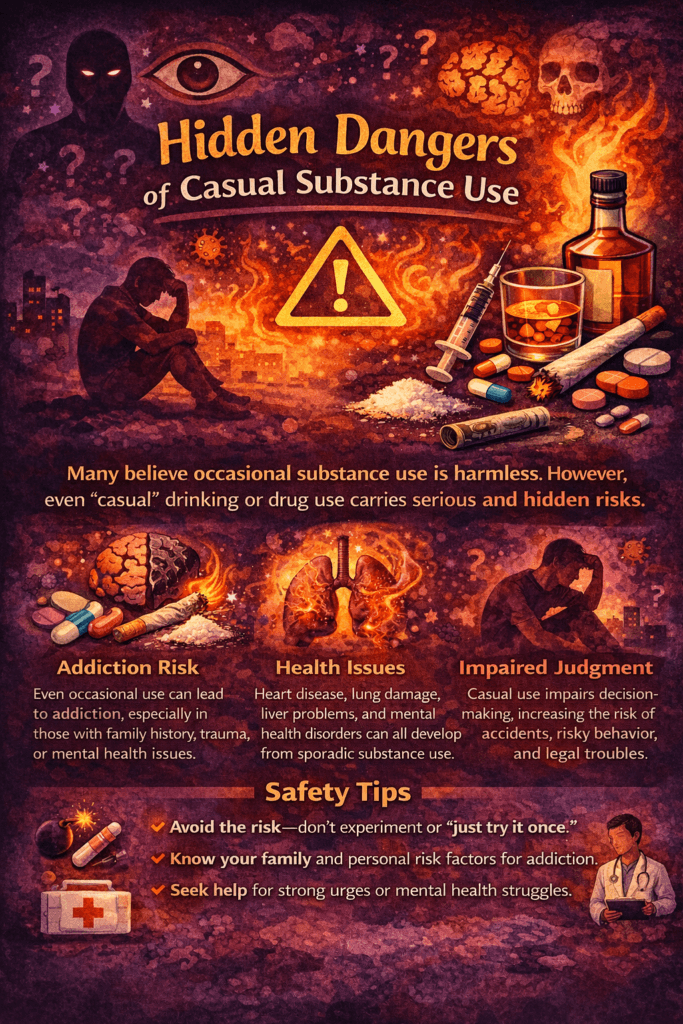
Many people believe that occasional or “casual” substance use is harmless, especially when it doesn’t seem to interfere with daily responsibilities. However, research from organizations such as the National Institute on Drug Abuse and the Centers for Disease Control and Prevention shows that even infrequent use can carry significant physical, neurological, and psychological risks. Casual use can quietly alter brain chemistry, increase vulnerability to dependence, and trigger health problems that may not become obvious until long after use begins.
Subtle Brain Changes Can Start Early
Even small amounts of substances can affect neurotransmitters such as dopamine, serotonin, and GABA. These chemicals regulate mood, motivation, stress response, and decision-making. Occasional exposure can begin training the brain’s reward system to associate substances with relief or pleasure, laying neurological groundwork for future cravings and habit formation.
Casual Use Can Lower Risk Awareness
Many substances impair judgment even at low doses. This can lead to risky behaviors such as unsafe driving, poor decision-making, or social conflicts. Because casual users often feel “in control,” they may underestimate impairment and overlook early warning signs of harm.
Hidden Physical Health Effects
Occasional substance use can still stress organs. Alcohol can irritate the stomach and liver, stimulants can increase heart strain, and inhaled substances can inflame the lungs. These effects may be mild at first but can accumulate over time, especially if use gradually increases.
Mental Health Risks Often Go Unnoticed
Casual use may worsen anxiety, sleep quality, mood stability, and stress tolerance. Some individuals experience subtle emotional changes that they don’t immediately link to substance use. In vulnerable individuals, even occasional use can trigger panic attacks, depressive symptoms, or psychotic reactions.
The Progression Risk
One of the most underestimated dangers of casual use is how gradually it can escalate. Tolerance may develop, meaning more of a substance is needed to achieve the same effect. Over time, occasional use can shift into habitual use without a clear turning point. This progression often happens slowly enough that individuals don’t recognize the pattern until dependence is already forming.
Clinical Perspective
Casual substance use is often perceived as low-risk because its consequences are not always immediate or dramatic. Yet biological changes can begin long before outward signs appear. Understanding these hidden dangers empowers individuals to make informed decisions, recognize early warning signs, and seek support if patterns start to change. Awareness does not require alarm—it provides knowledge that protects long-term health, mental stability, and overall well-being.
Self-Management Strategies for Recognizing the Hidden Dangers of Casual Substance Use
Casual substance use can appear harmless, especially when it is infrequent or socially accepted. Yet even occasional use can subtly affect brain chemistry, judgment, sleep, mood, and long-term health. Public health authorities such as the National Institute on Drug Abuse and the Centers for Disease Control and Prevention emphasize that early awareness and self-monitoring are key to preventing escalation into problematic patterns. Self-management skills help individuals recognize warning signs early, evaluate risks realistically, and make intentional choices that protect both mental and physical well-being.
Track Patterns and Triggers
One of the most effective ways to detect hidden risks is by tracking behavior. Recording when, why, and how often substances are used can reveal patterns that may otherwise go unnoticed. For example, someone may discover they use substances primarily during stress, boredom, or social pressure. Recognizing these triggers allows individuals to intervene early and choose healthier alternatives.
Monitor Subtle Physical and Emotional Changes
Early warning signs of harm are often subtle rather than dramatic. Changes in sleep quality, mood stability, energy level, or concentration may signal that casual use is affecting the nervous system. Paying attention to these small shifts helps individuals connect symptoms to substance use before problems intensify.
Strengthen Decision-Making Awareness
Self-management involves pausing before acting. Practicing mindful decision-making—asking questions such as Why am I using this?, How will I feel afterward?, or Is this helping or harming me?—strengthens executive functioning skills. Over time, this reflective pause becomes a protective habit that reduces impulsive choices.
Set Personal Boundaries and Limits
Clear boundaries provide structure and prevent gradual escalation. Individuals can set rules such as limiting exposure to high-risk environments, declining substances in certain situations, or committing to substance-free days. Written personal guidelines can reinforce accountability and reduce reliance on moment-to-moment willpower.
Build Healthy Coping Alternatives
Replacing substance use with healthier coping strategies is essential. Activities such as exercise, creative hobbies, relaxation practices, social connection, or time outdoors can provide stress relief and pleasure without chemical effects. When the brain learns that positive emotions can come from natural experiences, reliance on substances decreases.
Seek Feedback from Trusted Supporters
Self-awareness improves when combined with outside perspective. Friends, family members, or mentors may notice changes that individuals overlook. Inviting honest feedback—without defensiveness—can help identify early warning signs and encourage proactive adjustments.
Clinical Perspective
Recognizing the hidden dangers of casual substance use is fundamentally a skill of awareness. Most harmful patterns develop gradually, not suddenly. Individuals who practice self-monitoring, reflection, and intentional decision-making strengthen their ability to detect risk early and adjust behavior before consequences escalate. Self-management does not require perfection; it requires curiosity, honesty, and consistency. These qualities empower people to stay in control of their choices, protect their health, and prevent casual use from becoming a long-term problem.
Family Support Strategies for Recognizing the Hidden Dangers of Casual Substance Use
Casual substance use is often perceived as harmless, especially when it appears occasional or socially accepted. However, families play a critical role in identifying early warning signs of emerging risks. Research and prevention guidance from organizations such as the National Institute on Drug Abuse and the Substance Abuse and Mental Health Services Administration emphasize that early family awareness and supportive communication significantly reduce the likelihood that casual use will progress into harmful patterns. When families are informed, observant, and compassionate, they can recognize subtle changes before serious consequences develop.
Notice Behavioral Shifts Early
Early indicators of risk are often small and gradual rather than dramatic. Families may observe changes in sleep habits, irritability, secrecy, declining motivation, or shifts in social circles. Because these signs can be mistaken for normal stress or personality changes, awareness is essential. Noticing patterns early allows families to respond supportively rather than reactively.
Create an Environment That Encourages Honesty
Individuals are more likely to disclose substance use when they feel safe from judgment or punishment. Families can foster openness by listening without interrupting, validating emotions, and avoiding criticism. A calm tone and respectful questions help maintain trust and reduce defensiveness, making it easier to discuss concerns honestly.
Learn the Difference Between Experimentation and Risk
Understanding the effects of substances helps families interpret behavior accurately. Casual experimentation does not always lead to addiction, but certain patterns—such as increasing frequency, using substances to cope with stress, or hiding use—can signal elevated risk. Educated families can distinguish between curiosity and concerning trends, allowing them to intervene appropriately.
Encourage Healthy Coping Alternatives
Families can reduce the appeal of substances by promoting positive outlets for stress and emotions. Activities such as exercise, hobbies, creative expression, social connection, or volunteering provide natural sources of reward and belonging. When individuals have fulfilling alternatives, they are less likely to rely on substances for relief or excitement.
Model Responsible Behavior
Family members influence behavior through example. Demonstrating healthy stress management, balanced routines, and responsible decision-making teaches practical life skills. Modeling self-regulation communicates that well-being is a priority and reinforces positive norms without requiring lectures or pressure.
Establish Supportive Boundaries
Clear, consistent expectations help prevent escalation. Families can set reasonable limits while maintaining respect and empathy. Boundaries work best when they are explained calmly, applied consistently, and paired with encouragement rather than punishment. This approach promotes accountability without damaging trust.
Clinical Perspective
Recognizing hidden dangers of casual substance use is a collaborative process. Families who remain attentive, informed, and emotionally supportive act as an early detection system, often noticing subtle changes before they become serious problems. Their role is not to control behavior but to guide awareness, encourage healthy choices, and provide stability. When families combine observation, education, communication, and compassion, they create a protective environment that helps individuals stay safe, informed, and in control of their decisions.
Community Resource Strategies for Recognizing the Hidden Dangers of Casual Substance Use
Casual substance use is often underestimated because it may appear occasional, socially accepted, or seemingly controlled. However, community systems play a crucial role in identifying early warning signs before patterns escalate into harmful use. Public health authorities such as the Centers for Disease Control and Prevention and the Substance Abuse and Mental Health Services Administration emphasize that prevention is most effective when communities provide education, screening, and accessible support services. When communities actively promote awareness and early intervention, they can help individuals recognize risks long before serious consequences develop.
Public Education and Awareness Initiatives
Educational campaigns help individuals understand how even occasional substance use can affect brain function, judgment, and long-term health. Workshops, school programs, workplace seminars, and community events can teach people how to recognize subtle warning signs such as increased tolerance, mood changes, or reliance on substances for stress relief. Education replaces myths with evidence-based knowledge, empowering people to make informed decisions.
Early Screening and Prevention Programs
Screening programs in clinics, schools, and community centers can identify early risk patterns before substance use becomes problematic. Brief assessments and questionnaires help professionals detect behavioral shifts, emotional distress, or early dependency indicators. Early detection allows individuals to receive guidance or support before use progresses.
Accessible Counseling and Support Services
Communities that provide affordable counseling and peer support groups create safe spaces for individuals to discuss concerns about substance use without stigma. These services encourage self-reflection, promote coping skills, and offer professional guidance. Early conversations often prevent casual use from becoming habitual.
Youth and Social Development Programs
Positive community programs for youth and young adults reduce the likelihood of risky experimentation. Structured activities such as sports, arts, leadership programs, and mentoring provide purpose, belonging, and healthy stimulation. These protective factors reduce boredom, stress, and peer pressure—common drivers of casual substance use.
Anti-Stigma and Help-Seeking Campaigns
Communities that normalize conversations about mental health and substance use make it easier for individuals to ask for help early. Anti-stigma initiatives encourage openness, reduce shame, and shift public perception from blame to support. When people feel safe discussing concerns, they are more likely to recognize risks and seek assistance before problems intensify.
Community-Level Clinical Insight
Recognizing the hidden dangers of casual substance use is most effective when communities function as prevention networks. Education builds awareness, screening detects early warning signs, counseling provides guidance, and social programs strengthen resilience. Together, these resources create a protective environment where individuals can recognize risks, make healthier choices, and avoid escalation. Communities that prioritize prevention not only reduce substance-related harm—they empower individuals to maintain long-term well-being and stability.
Frequently Asked Questions
Here are some common questions:
1. What is considered casual substance use?
Casual use refers to occasional or social consumption of substances such as alcohol, cannabis, nicotine, or drugs without perceived dependence or daily use.
2. Is casual use really dangerous?
Yes. Even occasional use can impair judgment, increase accident risk, trigger mental health symptoms, and, in some individuals, lead to addiction or medical complications.
3. Why do people think casual use is safe?
Cultural normalization, social settings, media portrayals, and the absence of immediate consequences often create the false belief that occasional use carries little risk.
4. Can casual use lead to addiction?
It can. Addiction risk depends on genetics, brain chemistry, trauma history, mental health, and frequency of exposure—not just how often someone uses.
5. Which substances are most risky even in small amounts?
Opioids, stimulants, benzodiazepines, synthetic drugs, and high-potency cannabis can produce strong neurochemical effects even with limited exposure.
6. What are short-term hidden dangers?
Impaired judgment, slowed reaction time, risky decision-making, overdose risk (especially with unknown potency), and dangerous interactions with medications.
7. What are the long-term risks of occasional use?
Even intermittent use can contribute to cardiovascular strain, liver stress, lung irritation, cognitive changes, sleep disruption, and mood instability.
8. Who is most vulnerable to harm from casual use?
People with a family history of addiction, trauma exposure, mental health disorders, chronic pain, or early age of first use have a higher risk.
9. Can casual use worsen mental health?
Yes. Substances can increase anxiety, depression, paranoia, irritability, and emotional instability, especially in people already prone to these conditions.
10. Is mixing substances dangerous even occasionally?
Very. Combining substances (like alcohol + sedatives or stimulants + alcohol) significantly increases overdose risk, heart strain, and unpredictable reactions.
11. What warning signs suggest casual use is becoming a problem?
Using to cope with stress, increasing tolerance, craving, hiding use, neglecting responsibilities, or needing substances to relax or socialize.
12. What’s the safest approach?
Avoidance is safest. If someone chooses to use, informed decisions, awareness of personal risk factors, and strict limits reduce harm—but no use is risk-free.
Conclusion
Recognizing the risks of casual substance use does not require fear—it requires awareness. When individuals understand how early biological and psychological changes develop, they are better equipped to make informed decisions and notice warning signs before patterns escalate. Education, self-reflection, supportive relationships, and access to reliable information all serve as protective factors that reduce harm and promote healthier choices. By acknowledging that even occasional use can carry consequences, people can take proactive steps to safeguard their mental clarity, physical health, and overall well-being over time.
Video: