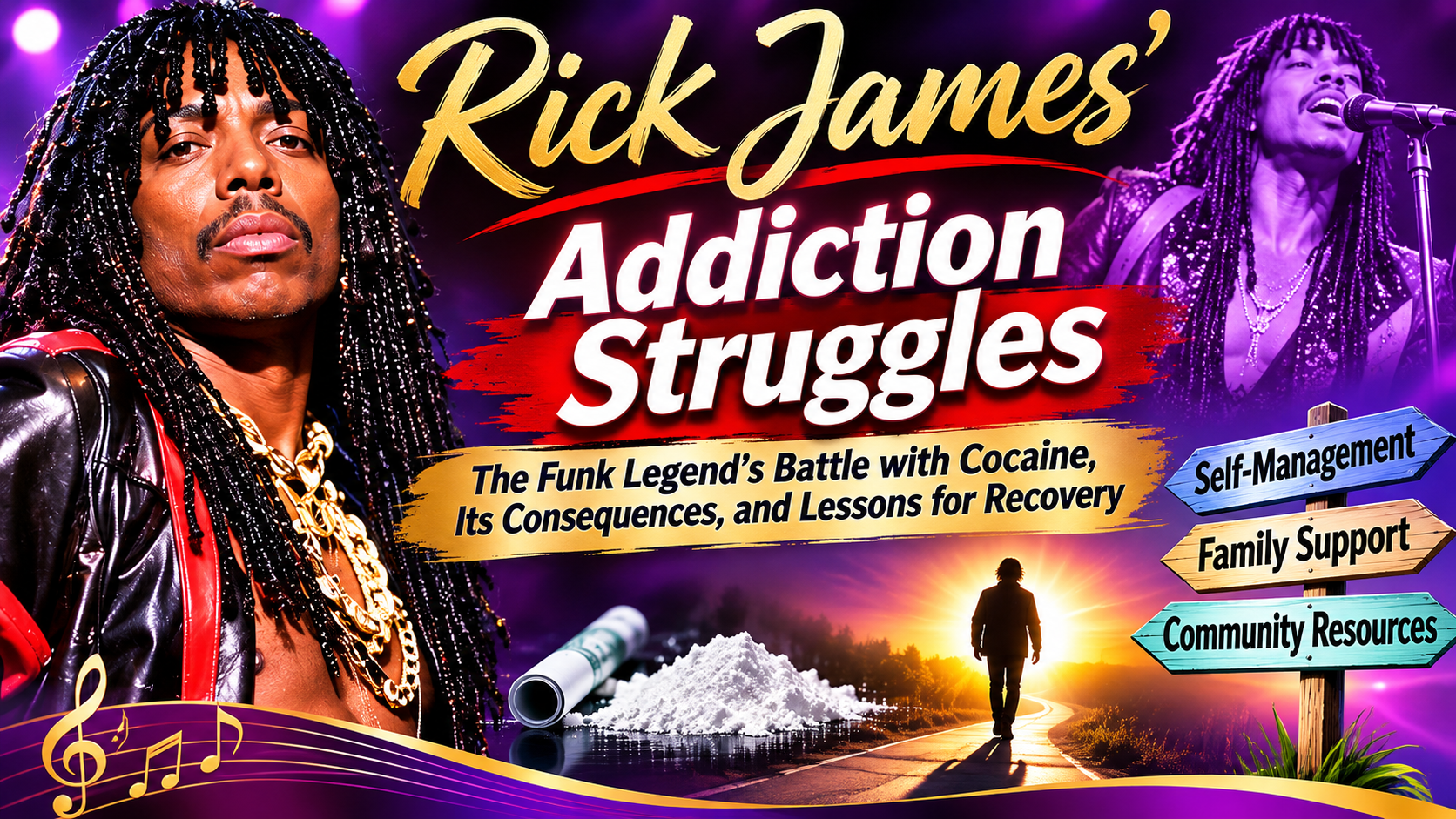
Rick James, the legendary funk musician known for his electrifying performances and unforgettable hits such as Super Freak, Give It to Me Baby, and Mary Jane, was one of the most influential artists of the late 1970s and 1980s. Behind his musical success, however, was a complicated personal life marked by substance use, legal troubles, health complications, and turbulent relationships.
James struggled with cocaine addiction, including crack cocaine use, which contributed to serious consequences throughout his career. His experiences demonstrate how substance use disorders can affect individuals regardless of their fame, financial success, or creative achievements.
His story also illustrates the importance of recognizing addiction as a chronic, treatable medical condition rather than simply a failure of willpower.
By examining Rick James’ addiction struggles through self-management, family support, and community resources, we can better understand the challenges of substance use disorders and identify strategies that support recovery, accountability, and long-term wellness.
Rick James’ Rise to Fame and Addiction Struggles
Born James Ambrose Johnson Jr. on February 1, 1948, in Buffalo, New York, Rick James developed a passion for music early in life. His unique combination of funk, soul, rock, and rhythm and blues helped establish him as a major force in popular music.
His breakthrough album, Come Get It!, released in 1978, introduced audiences to his distinctive musical style. His popularity reached new heights with the release of Street Songs in 1981, featuring the hit Super Freak.
Despite his professional accomplishments, James experienced increasingly serious problems related to substance use.
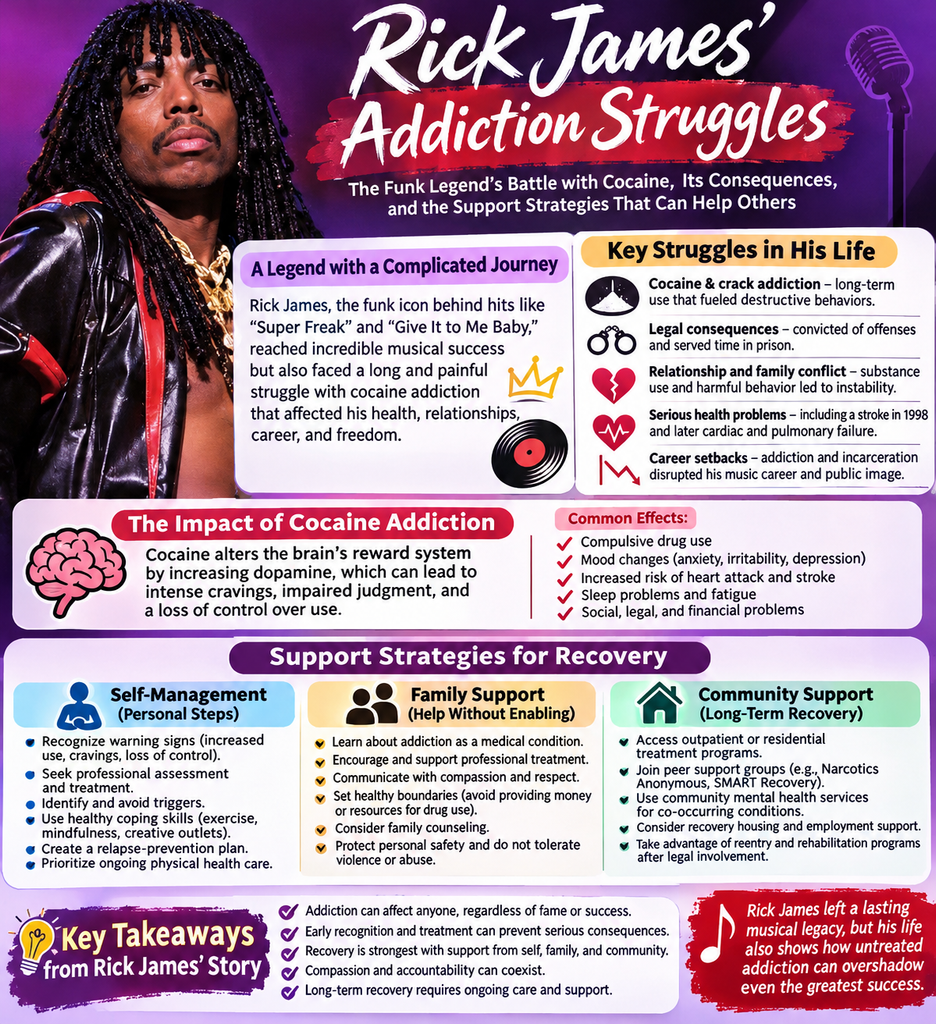
Major challenges throughout his life
- Cocaine addiction: James publicly discussed extensive cocaine use, which became a significant part of his personal struggles.
- Crack cocaine use: His substance use escalated during periods of his career, contributing to impaired judgment and destructive behaviors.
- Legal consequences: In the early 1990s, James was involved in serious criminal cases involving violence and abuse. He was convicted of offenses and served time in prison.
- Relationship difficulties: Substance use and harmful behavior contributed to conflict, instability, and damaged personal relationships.
- Physical health problems: James experienced significant health complications later in life, including a stroke in 1998.
- Professional setbacks: Addiction-related problems and incarceration interrupted his musical career and damaged his public reputation.
James died on August 6, 2004, at age 56. His death was attributed to cardiac and pulmonary failure, with multiple health conditions and substances identified in the medical examiner’s findings.
His experiences demonstrate the potentially devastating consequences of prolonged substance use, particularly when addiction coexists with other medical, psychological, and behavioral problems.
Importantly, addiction may help explain impaired judgment, but it does not excuse violence, abuse, or criminal behavior. Accountability and victim protection remain essential.
Understanding the Connection Between Addiction and Brain Function
Cocaine is a powerful stimulant that affects the brain’s reward system by increasing dopamine signaling.
Dopamine is involved in motivation, reinforcement, learning, and reward. Repeated cocaine exposure can alter these processes, increasing the likelihood of compulsive drug-seeking behaviors.
Over time, individuals may experience intense cravings, impaired decision-making, and difficulty controlling substance use despite harmful consequences.
Common effects of cocaine addiction
- Psychological dependence: Strong cravings and compulsive patterns of drug use.
- Emotional instability: Anxiety, irritability, depression, and mood changes.
- Cardiovascular complications: Increased risk of hypertension, arrhythmias, heart attack, and stroke.
- Sleep disturbances: Insomnia, fatigue, and disrupted sleep patterns.
- Behavioral changes: Impulsivity, impaired judgment, and difficulty managing responsibilities.
- Social consequences: Financial instability, relationship conflict, and occupational difficulties.
Although Rick James’ personal experiences were unique, the medical and psychological consequences associated with cocaine use disorder remain relevant today.
Understanding these effects can help individuals and families recognize warning signs and seek professional treatment before complications become severe.
Self-Management Strategies for Addiction Recovery
Self-management involves developing practical skills that help individuals recognize substance use patterns, reduce exposure to triggers, manage cravings, and maintain engagement in treatment.
For individuals struggling with stimulant addiction, recovery often requires behavioral therapy, supportive relationships, and ongoing relapse-prevention planning.
Effective self-management strategies
- Recognize addiction warning signs: Identify increasing substance use, cravings, secrecy, and loss of control.
- Seek professional assessment: Consult addiction specialists or mental health professionals to evaluate substance use and co-occurring conditions.
- Participate in evidence-based treatment: Cognitive behavioral therapy (CBT), contingency management, and community reinforcement approaches can support recovery from stimulant use disorders.
- Identify personal triggers: Recognize situations, emotions, environments, and relationships associated with drug use.
- Develop healthy coping mechanisms: Practice exercise, mindfulness, relaxation techniques, creative activities, and structured routines.
- Create a relapse-prevention plan: Establish strategies for managing cravings and responding to a return to substance use.
- Prioritize physical health: Obtain regular medical evaluations, particularly when cardiovascular complications are possible.
- Build accountability: Maintain consistent contact with healthcare professionals, counselors, and trusted recovery supporters.
The importance of early intervention
Rick James’ history illustrates why addiction treatment should begin as early as possible.
When substance use continues without effective intervention, individuals may experience escalating health risks, impaired functioning, and worsening social consequences.
Early treatment can help prevent complications and improve long-term outcomes.
Recovery is not simply about stopping drug use. It also involves rebuilding emotional stability, developing healthier behaviors, and addressing the underlying factors that contribute to addiction.
Family Support Strategies: Helping Without Enabling
Addiction rarely affects only the individual using substances. Families often experience emotional distress, uncertainty, conflict, and financial difficulties.
Rick James’ troubled relationships demonstrate how substance use and harmful behavior can destabilize personal connections.
Families can play an important role in encouraging recovery, but effective support requires clear boundaries and realistic expectations.
Practical family support strategies
- Educate yourself about addiction: Understand substance use disorders as medical conditions influenced by biological, psychological, and environmental factors.
- Encourage professional treatment: Support participation in counseling, rehabilitation programs, and appropriate medical care.
- Practice compassionate communication: Discuss concerns calmly without humiliation, threats, or stigmatizing language.
- Establish healthy boundaries: Avoid providing money or resources that directly support continued substance use.
- Recognize enabling behaviors: Understand the difference between helping someone access treatment and repeatedly shielding them from consequences.
- Consider family counseling: Work with qualified therapists to address communication problems, emotional distress, and relationship patterns.
- Protect personal safety: Do not tolerate threats, violence, or abuse because a loved one has an addiction.
- Seek independent support: Family members may benefit from counseling, peer support groups, and educational programs.
Compassion and accountability can coexist
One important lesson from Rick James’ life is that supporting someone with addiction does not require ignoring destructive behavior.
Family members can express love and concern while maintaining boundaries that protect their emotional and physical well-being.
For example, a family member might encourage treatment while refusing to provide financial assistance that facilitates continued drug use.
When violence or abuse is present, safety planning and specialized professional assistance must take priority over attempts to preserve the relationship.
Families cannot force another person to recover, but they can create conditions that encourage treatment while protecting themselves.
Community Support Strategies for Long-Term Recovery
Community resources provide essential support for individuals recovering from substance use disorders.
Access to affordable treatment, peer recovery networks, healthcare services, and stable housing can significantly influence recovery outcomes.
For individuals facing the combined challenges of addiction, legal consequences, and damaged relationships, coordinated community support may be especially valuable.
Important community recovery resources
- Outpatient addiction treatment: Provides structured counseling and behavioral interventions while allowing individuals to maintain daily responsibilities.
- Residential rehabilitation programs: Offer intensive treatment and supportive environments for individuals who require a higher level of care.
- Peer recovery support groups: Narcotics Anonymous, SMART Recovery, and other groups provide connection, encouragement, and practical coping strategies.
- Community mental health centers: Address depression, anxiety, trauma, and other co-occurring mental health concerns.
- Recovery housing programs: Provide substance-free living environments and opportunities to establish healthy routines.
- Employment and vocational services: Help individuals rebuild financial stability and professional confidence.
- Reentry programs: Support individuals returning to their communities after incarceration through counseling, employment assistance, and social services.
- Public health education: Reduces stigma and improves awareness of addiction treatment and overdose prevention.
The role of evidence-based treatment
For cocaine use disorder, contingency management is among the most effective evidence-based interventions. It uses structured incentives to reinforce treatment participation and recovery-related behaviors.
CBT and other behavioral therapies can also help individuals identify triggers, manage cravings, and develop healthier decision-making skills.
Currently, there is no FDA-approved medication specifically for cocaine use disorder, although clinicians may consider certain medications off-label in selected circumstances.
Community programs that combine medical care, behavioral treatment, peer support, and practical assistance can improve access to recovery services.
Barriers to Recovery: Lessons From Rick James’ Experiences
Rick James’ addiction struggles highlight several barriers that may prevent individuals from seeking or maintaining treatment.
Common barriers include
- Denial and minimization: Individuals may underestimate the severity of their substance use.
- Social environments: Easy access to drugs and social circles that normalize heavy substance use can make recovery difficult.
- Stigma and shame: Fear of judgment may discourage individuals from seeking professional assistance.
- Co-occurring mental health conditions: Untreated psychological symptoms can complicate addiction treatment.
- Limited treatment access: Financial barriers, transportation difficulties, and shortages of specialized services may delay care.
- Legal and occupational consequences: Involvement with the criminal justice system and employment instability can create additional obstacles.
- Relapse vulnerability: Stress, cravings, and exposure to familiar triggers can contribute to renewed substance use.
For entertainers and other public figures, professional demands, social expectations, and constant exposure to high-risk environments may create additional challenges.
However, these factors do not make addiction inevitable. Protective relationships, accessible treatment, and early intervention can reduce risks.
What Rick James’ Story Teaches Us About Addiction and Recovery
Rick James’ life represents both extraordinary artistic achievement and the destructive consequences that can accompany severe substance use disorders.
His musical influence continues to be recognized, but his personal struggles offer important lessons about addiction, responsibility, and the need for comprehensive treatment.
His experiences emphasize several key principles:
- Addiction can affect individuals from every socioeconomic background.
- Fame, talent, and financial success do not protect someone from substance use disorders.
- Early recognition and treatment can reduce serious medical and social consequences.
- Families need education, support, and boundaries.
- Community resources are essential for maintaining recovery.
- Accountability for harmful behavior remains necessary even when addiction is present.
- Long-term recovery requires ongoing support rather than a single intervention.
Rick James’ story should not be romanticized as an inevitable consequence of musical genius. It is a reminder that untreated addiction can overshadow extraordinary accomplishments and cause lasting harm to individuals and those around them.
Resources for Individuals and Families Affected by Addiction
Individuals struggling with cocaine or other substance use disorders can benefit from professional treatment and recovery support.
SAMHSA’s National Helpline: 1-800-662-HELP (4357) provides confidential treatment referrals and information in the United States.
FindTreatment.gov: Find substance use and mental health treatment services helps individuals locate treatment providers.
Narcotics Anonymous: Explore Narcotics Anonymous offers peer support for individuals seeking recovery.
SMART Recovery: Explore SMART Recovery provides evidence-informed mutual support for managing addictive behaviors.
988 Suicide & Crisis Lifeline: Call or text 988 for immediate emotional or mental health crisis support in the United States.
These resources can help individuals and families take meaningful steps toward treatment, stability, and recovery.
Conclusion: Remembering Rick James Beyond His Addiction
Rick James left a lasting musical legacy through his creativity, distinctive sound, and contributions to funk music. However, his struggles with cocaine addiction, legal consequences, and serious health problems reveal another important dimension of his life.
His story demonstrates how addiction can disrupt even the most successful careers and damage relationships, physical health, and emotional well-being.
Through self-management strategies, family education, professional treatment, and community recovery resources, individuals affected by substance use disorders can build healthier and more stable lives.
Rick James’ experiences also remind us that compassion must be balanced with accountability, particularly when substance use is associated with harmful behavior.
The most important lesson is that addiction does not have to determine a person’s future. Early intervention, evidence-based treatment, and sustained support can create opportunities for meaningful recovery.
Recovery is possible. Seeking help is a sign of strength, and every positive step toward change matters.
Frequently Asked Questions and Answers
Understanding Rick James’ Addiction Journey
1. Who was Rick James, and why is his addiction story important?
Rick James was an American singer, songwriter, musician, and producer who became one of funk music’s most recognizable performers during the late 1970s and 1980s.
Despite his extraordinary musical achievements, James struggled with cocaine addiction and experienced significant personal and legal consequences.
His story demonstrates that addiction can affect anyone, regardless of fame, wealth, or professional success. It also emphasizes the importance of early intervention and access to addiction treatment.
2. What drugs did Rick James struggle with?
Rick James publicly acknowledged extensive cocaine use, including crack cocaine, during his career.
His substance use became associated with increasingly serious behavioral, legal, and health problems.
Cocaine is a highly addictive stimulant that affects the brain’s reward system and can produce intense cravings, impaired judgment, and compulsive drug use.
3. How did cocaine addiction affect Rick James’ music career?
Rick James achieved enormous success during the 1980s, but his substance use and legal problems contributed to significant professional setbacks.
His incarceration during the 1990s interrupted his career, while health complications later limited his ability to perform.
Although his musical influence remained significant, his experiences demonstrate how severe substance use disorders can disrupt professional stability and long-term success.
4. Did Rick James experience legal problems related to his addiction?
Yes. Rick James faced serious criminal charges during the early 1990s and was convicted of offenses involving violence and abuse. He subsequently served time in prison.
His cocaine use was part of the broader circumstances surrounding this period of his life.
However, addiction does not excuse criminal behavior. Individuals remain responsible for their actions, and protecting victims must remain a priority.
5. Did Rick James ever seek treatment for addiction?
Rick James discussed his drug use and periods of abstinence publicly. His incarceration also interrupted his access to substances.
However, publicly available accounts do not establish a complete, verified history of his participation in specific evidence-based addiction treatment programs.
His experiences highlight the importance of comprehensive treatment, relapse prevention, and continued support rather than relying solely on periods of abstinence.
6. What health problems did Rick James experience?
Rick James experienced several serious health problems, including a stroke in 1998.
Long-term cocaine use is associated with increased risks of hypertension, abnormal heart rhythms, heart attack, and stroke.
Although cocaine may contribute to cardiovascular complications, not every medical condition experienced by James can be attributed directly to his addiction.
7. Did Rick James die from a drug overdose?
Rick James died on August 6, 2004, at age 56.
His death was attributed to cardiac and pulmonary failure, with multiple medical conditions and substances identified in toxicology findings.
His death was not officially classified as an acute drug overdose.
His medical history nevertheless illustrates the importance of cardiovascular monitoring and comprehensive healthcare for individuals with prolonged stimulant exposure.
Self-Management and Addiction Recovery
8. How does cocaine addiction affect the brain?
Cocaine increases dopamine activity in the brain’s reward pathways, reinforcing drug use and contributing to cravings.
Repeated exposure can alter reward processing, motivation, impulse control, and decision-making. These changes may make it difficult to stop using cocaine even when serious consequences occur.
Treatment can help individuals develop healthier coping mechanisms and manage cravings.
9. What self-management strategies can help someone struggling with cocaine addiction?
Effective strategies include recognizing triggers, establishing healthy routines, seeking professional counseling, and developing a relapse-prevention plan.
Cognitive behavioral therapy (CBT) helps individuals identify unhealthy thinking patterns and develop coping skills. Exercise, stress management, adequate sleep, and supportive relationships can complement professional treatment.
10. What treatments are most effective for cocaine addiction?
Evidence-based treatments include contingency management, cognitive behavioral therapy, and the community reinforcement approach.
Contingency management uses structured incentives to encourage positive recovery behaviors and has particularly strong evidence for stimulant use disorders.
There are currently no FDA-approved medications specifically for cocaine use disorder, although certain medications may be considered off-label by qualified clinicians. asam.org+1
11. Can someone recover from long-term cocaine addiction?
Yes. Recovery from cocaine addiction is possible, even after years of substance use.
Treatment can help individuals reduce or stop drug use, improve physical and mental health, rebuild relationships, and regain stability.
Recovery experiences vary, and some individuals require multiple treatment episodes or long-term support.
12. Why is relapse prevention important in addiction recovery?
A return to substance use can occur during recovery, particularly when individuals encounter stress, cravings, or familiar triggers.
Relapse-prevention planning helps individuals recognize warning signs and respond before substance use escalates.
A strong plan may include regular counseling, supportive contacts, coping strategies, and clear steps for reengaging in treatment.
Family Support and Healthy Relationships
13. How can addiction affect family relationships?
Addiction can contribute to broken trust, emotional distress, financial difficulties, and communication problems.
Family members may experience anxiety, frustration, or uncertainty when trying to help someone struggling with substance use.
Rick James’ troubled personal relationships illustrate how addiction and harmful behavior can coexist, creating serious consequences for loved ones.
14. How can families support someone struggling with cocaine addiction?
Families can provide encouragement while maintaining healthy boundaries.
Helpful strategies include learning about addiction, encouraging professional treatment, practicing respectful communication, and participating in family counseling when appropriate.
Support should never require tolerating violence, abuse, or threats.
15. What is the difference between helping and enabling addiction?
Helping involves supporting behaviors that promote treatment, recovery, and personal responsibility.
Enabling occurs when actions unintentionally make continued substance use easier or repeatedly shield someone from consequences.
For example, providing transportation to counseling supports recovery, while repeatedly providing money that is used to purchase drugs may reinforce harmful behaviors.
16. Can family counseling improve addiction recovery outcomes?
Family counseling can improve communication, strengthen boundaries, and help relatives understand substance use disorders.
It may also reduce conflict and support healthier relationships.
However, when domestic violence or coercive control is present, individual safety assessment and specialized services should come before joint counseling.
Community Support and Addiction Awareness
17. What community resources can help individuals recovering from cocaine addiction?
Community resources include outpatient addiction treatment centers, residential rehabilitation programs, mental health clinics, peer support groups, and recovery housing.
Organizations such as Narcotics Anonymous and SMART Recovery offer opportunities for peer connection and ongoing encouragement.
Treatment services can be located through FindTreatment.gov.
18. How can communities reduce stigma surrounding addiction?
Communities can reduce stigma by promoting accurate education, using respectful language, and treating substance use disorders as medical conditions that deserve evidence-based care.
Public awareness campaigns, affordable treatment services, and recovery-friendly employment opportunities can help individuals seek assistance without fear of discrimination.
19. Why is long-term community support important?
Recovery involves more than stopping substance use. Individuals may also need stable housing, employment, mental healthcare, supportive relationships, and opportunities to rebuild their lives.
Long-term community support can help individuals stay engaged in treatment and manage challenges that arise throughout recovery.
Lessons From Rick James’ Life
20. What can we learn from Rick James’ addiction struggles?
Rick James’ life demonstrates that talent, fame, and financial success do not prevent addiction.
His experiences highlight the potential consequences of prolonged cocaine use, including serious health problems, legal difficulties, and damaged relationships.
They also emphasize the importance of seeking treatment early, maintaining personal accountability, and building supportive recovery networks.
21. Did Rick James try to enter rehabilitation?
Yes. A 1994 Los Angeles Times report documented that James sought permission to remain at the California Rehabilitation Center and participate in a nine-month drug treatment program rather than serve his sentence in prison.
This provides documented evidence that he pursued access to rehabilitation, although it does not establish the complete outcome of his treatment efforts. Los Angeles Times
22. What is the most important message from Rick James’ addiction story?
Rick James’ legacy reminds us that extraordinary success can coexist with serious personal struggles.
His experiences demonstrate the importance of recognizing addiction early, seeking appropriate treatment, maintaining accountability for harmful behavior, and supporting individuals and families affected by substance use disorders.
Addiction is treatable, recovery is possible, and compassionate support combined with personal responsibility can help individuals build healthier futures.
Video: