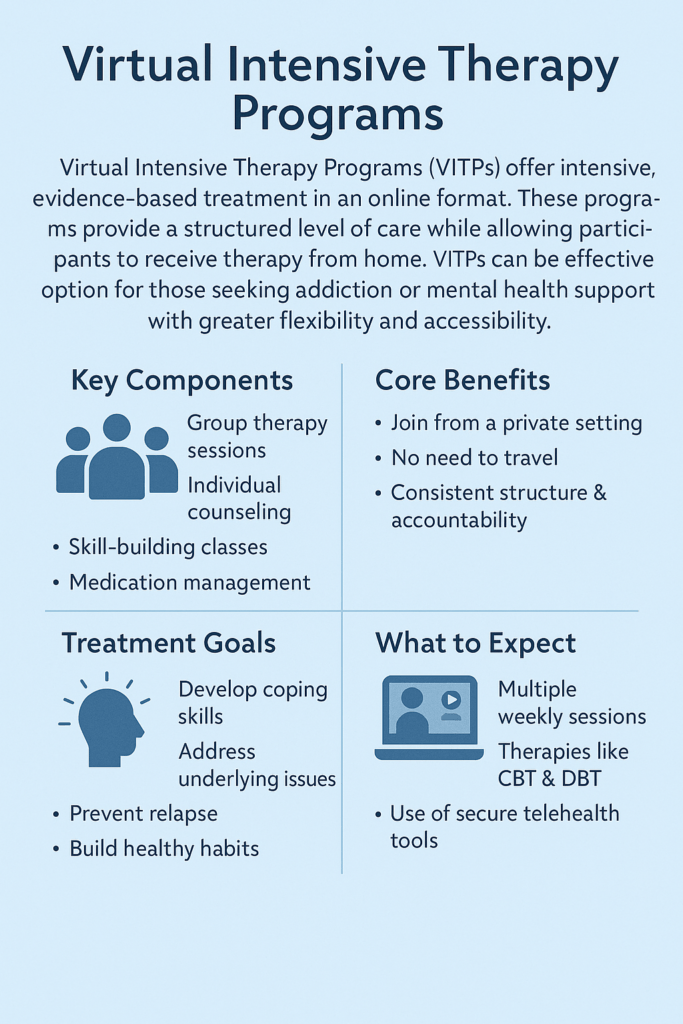
Virtual Intensive Therapy Programs are rapidly becoming a go-to option for people seeking meaningful mental health support without leaving home. Instead of committing to weeks in a clinic or hospital setting, individuals can now participate in structured, high-impact treatment entirely online. These programs blend frequent video therapy sessions, virtual group work, skills training, and guided exercises that continue between sessions—all accessible through a laptop, tablet, or phone. This model allows people to receive care similar to partial hospitalization or intensive outpatient programs, but with far greater flexibility and privacy. In this article, I’ll walk you through how Virtual Intensive Therapy Programs operate, what sets them apart from traditional therapy, the key benefits and potential drawbacks, and the essential factors to consider before enrolling.
What is a Virtual Intensive Therapy Program?
Virtual Intensive Therapy Programs (often called IOPs or PHPs in the telehealth world) are structured mental health treatment options. They’re called “intensive” because they go beyond a weekly therapy session; you can expect multiple appointments each week, daily activities, and a care team checking in on your progress. You continue living at home and keep up with your day-to-day life, but you’re spending several hours per week focusing on your mental wellbeing—all from your device.
These programs are offered for a range of conditions such as depression, anxiety, trauma, OCD, substance use, and eating disorders. Many clinics moved their intensive programs online during the pandemic, and now some offer both in-person and virtual options year-round. With strong privacy protections and user-friendly technology, virtual intensive therapy is accessible for people who live far from specialized clinics or who want to skip the commute.
How Virtual Intensive Therapy Programs Work
Getting into a virtual intensive program usually starts with an assessment session. A clinical provider goes over your mental health history and suggests a treatment plan. If the program looks like a good fit, you receive a schedule—for example, three to five sessions per week plus group work.
- Live Video Sessions: Most of the therapy is done over secure video calls. You’ll attend sessions with a counselor or psychologist, often in both one-on-one and group formats.
- Homework and Digital Tools: There might be worksheets, guided journaling, or meditation exercises, all accessible through a patient portal or therapy app.
- Check-ins and Support: Some programs add regular text check-ins, medication management, or access to a crisis support hotline, so you always have help between sessions.
- Multidisciplinary Teams: Many programs include more than one specialist; for example, a psychiatrist, social worker, or occupational therapist, all working together on your care plan.
You set aside dedicated hours for therapy each week. However, there’s no need to travel anywhere, which makes it easier to keep up with work, school, or family life while still getting meaningful mental health care.
Getting Started with a Virtual Intensive Therapy Program
If you feel a bit uncertain about joining a virtual program, you’re not alone. Here’s what helps smooth the way:
- Stable Internet Connection: Since your sessions happen via video call, a strong Wi-Fi connection keeps things running smoothly.
- Private Space: Having a quiet place to talk freely is essential, whether it’s a bedroom, office, or even your parked car with headphones.
- Open Attitude to New Tech: You don’t need to be a tech expert, but being willing to learn a new app or portal can make the experience much better.
Most clinics offer an orientation to walk you through their portals, how to upload homework, join video chats, and manage your schedule. They’re there to answer questions and make things clear right from the beginning.
Main Benefits of Virtual Intensive Therapy Programs
I’ve seen several practical benefits with these programs, especially compared to the older, in-person models:
- Convenience and Flexibility: No more commuting or overnight hospital stays. Schedules are often much more flexible so that you can fit therapy around your life.
- Access to Specialists: Connect with great therapists anywhere, even if there isn’t a clinic nearby. This is especially helpful if you live outside a metropolitan area.
- Continuity of Care: If you move or get sick, the program continues virtually with the same providers you’ve gotten to know.
- Privacy: If you’re nervous about being seen at a clinic, virtual programs offer much more discretion and comfort.
Things to Consider Before Signing Up
Virtual intensive therapy isn’t ideal for everyone, so here’s what to think about before you enroll:
- Tech Challenges: Not everyone has strong internet or a quiet workspace, which could make attending sessions difficult.
- Urgent Needs: If you’re in crisis or require constant support (such as withdrawal management), in-person care might be a safer choice.
- Insurance and Cost: Insurance often covers virtual programs, but it’s smart to double-check the details before committing.
- Personal Learning Preferences: If you learn best in person, an online format might not suit you.
Careful research helps you get a sense of whether a virtual intensive program is right for you, or if another approach would give you more value. Please don’t shy away from asking lots of questions; program intake teams are used to it and can clear up doubts.
Tech and Environment Challenges
Technical issues can be a significant hurdle. If your Wi-Fi is choppy or you’re using an old device, sessions can become hard to follow. Lacking a private spot at home can be tough, too. People have found practical solutions, like using a privacy screen or scheduling sessions when others are out of the house.
Program Intensity
The structure of these intensive programs can catch some people off guard. Expect a several-hour commitment multiple times a week, including homework assignments. Check out the schedule to see if it fits with your energy levels and daily responsibilities.
Social and Emotional Connection
Virtual care can feel less personal than in-person sessions. There are no spontaneous chats or high-fives in a hallway. Skilled therapists work hard to help you feel connected, but the experience is definitely different.
Extra Program Features That Make Virtual Therapy Stand Out
Many virtual programs put out there features that keep you engaged and help with progress:
- Interactive Therapy Activities: Shared docs, online whiteboards, and specialized apps help you tackle therapy tasks in real time.
- On-Demand Materials: Access recorded mindfulness exercises, guided meditations, and educational videos whenever you need a little support.
- Flexible Session Formats: Some programs let you choose between group chats and private sessions every week.
- Custom Progress Tools: Tracking apps let you and your care team watch fundamental changes and make adjustments as needed.
Some clinics even add weekly webinars or guest group leaders to keep things fresh, helping you mix things up and hear different perspectives.
Who Can Benefit Most from Virtual Intensive Therapy?
Virtual intensive therapy programs are great for people who:
- Want more substantial support than what weekly therapy provides, but don’t need to check into a hospital
- Live in rural areas or have travel limitations
- Need to juggle work or family schedules alongside treatment
- Get anxious about showing up for in-person groups and prefer more privacy
These programs work exceptionally well for those coping with persistent depression, social anxiety, PTSD, OCD, eating disorders, or substance use—especially if progress has stalled in regular one-hour-a-week sessions.
Frequently Asked Questions
Here are answers to a few common questions about Virtual Intensive Therapy Programs:
Q: How do I know if my insurance will cover a virtual intensive therapy program?
A: Start by calling your insurer to ask if they cover “intensive outpatient telehealth” or “virtual IOP.” Clinic-side intake coordinators can usually help you check your benefits, too.
Q: Can I do a virtual program if I need medication management?
A: Yes, many programs offer a psychiatrist who can manage medications during video appointments. Just make sure to ask if this option is included.
Q: What if I don’t have a private space for sessions?
A: Try headphones and a virtual background or join sessions from your car or a closet if needed. Many people find creative ways to get privacy for essential appointments.
Real-World Impact and Wrapping Up
Virtual Intensive Therapy Programs are giving mental health care a significant boost, thanks to their flexibility and accessibility for people of all kinds. If you want structured support without interrupting your home routine, these programs are worth tracking down. While it might take a while to get used to the technology, once you’re set up, most people find the format surprisingly supportive and helpful. Finding the right program and therapist can really give your mental health a boost when you need it most. If you’re interested, reach out to clinics, ask about your options, and see if one of these programs matches your goals and lifestyle.
Video: Intensive therapy but make it convenient #MentalHealthMatters #SelfCare