Addiction sobriety is more than abstaining from substances—it is the ongoing process of building a balanced, stable, and meaningful life. Successful sobriety depends on practical strategies that support emotional regulation, healthy routines, and consistent decision-making. By focusing on daily habits, supportive relationships, and compassionate self-care, individuals can strengthen their recovery and reduce the risk of relapse over time.
Practical Tips for Addiction Sobriety: Building a Strong and Sustainable Recovery
Sobriety is more than simply stopping substance use—it is the process of building a healthier, more stable life that supports long-term recovery. While each person’s journey is unique, there are practical, evidence-informed strategies that consistently help individuals maintain sobriety and strengthen resilience over time. These tips focus on structure, self-awareness, and compassionate self-care rather than willpower alone.
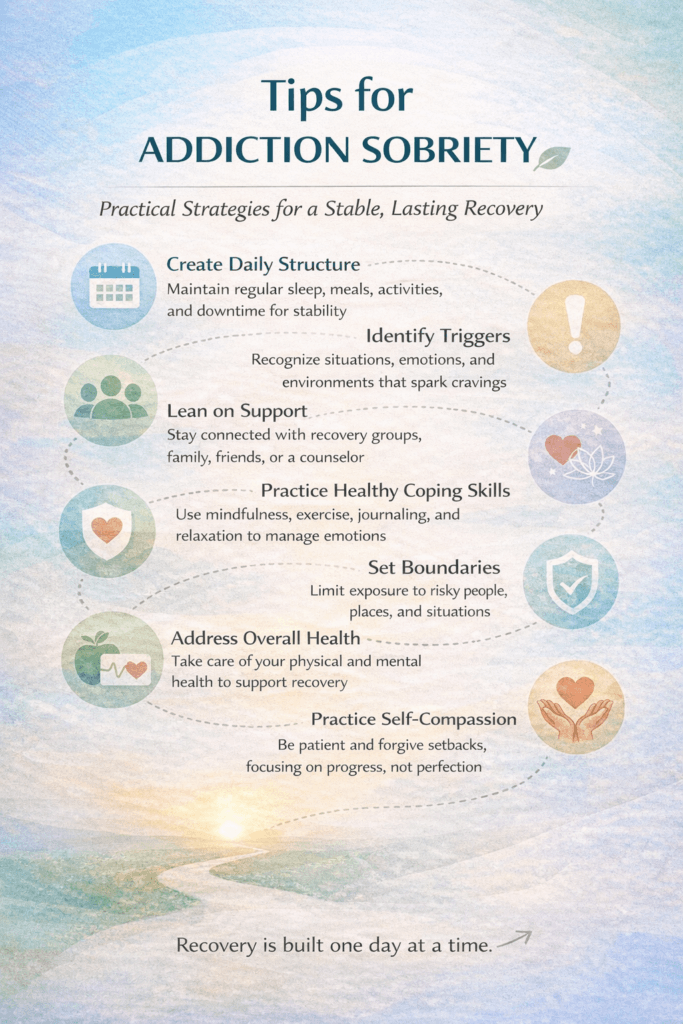
One of the most important tips for sobriety is to create a daily routine. Predictable routines reduce uncertainty and stress, both of which can trigger cravings. Regular sleep, meals, work, or purposeful activity, and downtime help stabilize mood and energy levels. Structure provides a sense of control and direction, especially during early recovery.
Identifying triggers is another foundational skill. Triggers can be emotional, environmental, social, or physical. Stress, loneliness, fatigue, certain people or places, and even positive celebrations can increase vulnerability. Recognizing these patterns allows individuals to plan ahead and use coping strategies before urges escalate.
Strong support systems are essential for sobriety. Recovery is not meant to be done alone. Support may include peer recovery groups, trusted family members, counselors, sponsors, or recovery coaches. Regular connection reduces isolation and provides accountability, encouragement, and perspective during difficult moments.
Learning and practicing healthy coping skills helps replace substance use as a way to manage emotions. Techniques such as deep breathing, mindfulness, exercise, journaling, prayer, creative outlets, and grounding exercises support emotional regulation. Over time, these skills retrain the brain to respond to stress without substances.
Another key tip is responding to cravings with compassion rather than fear. Cravings are temporary brain responses, not commands. Meeting urges with calm awareness and supportive self-talk reduces their intensity and helps prevent relapse driven by shame or panic.
Setting boundaries supports sobriety as well. This may involve limiting contact with people who encourage substance use, avoiding high-risk environments, or learning to say no without guilt. Boundaries protect recovery and reinforce self-respect.
Sobriety also benefits from addressing overall health. Nutrition, hydration, physical activity, and medical or mental health care all influence recovery outcomes. Treating co-occurring anxiety, depression, trauma, or chronic pain reduces relapse risk and improves quality of life.
Finally, sobriety is strengthened by patience and self-compassion. Progress is rarely linear. Setbacks, difficult days, and emotional discomfort are part of healing. Viewing recovery as a learning process rather than a test helps sustain motivation and long-term commitment.
Sobriety is built one choice at a time. By focusing on structure, support, coping skills, and compassion, individuals create a recovery that is not only sustainable but meaningful and empowering.
Self-Management Strategies for Addiction Sobriety: Practical Tips for Long-Term Recovery
Maintaining sobriety requires more than motivation—it depends on daily self-management skills that support emotional regulation, decision-making, and resilience. Self-management strategies help individuals take an active role in their recovery, respond effectively to challenges, and build stability over time. These practical tips focus on awareness, structure, and compassionate self-care.
One essential strategy is establishing consistent routines. Regular sleep, meals, work, or purposeful activity, and rest help regulate mood and energy levels. Predictable routines reduce stress and decrease impulsive decision-making, both of which can increase relapse risk.
Craving awareness and management is another cornerstone of sobriety. Cravings are temporary brain responses, not commands. Tracking when cravings occur—time of day, emotional state, or environment—helps individuals intervene early with coping skills such as deep breathing, grounding exercises, or brief distraction.
Goal setting supports focus and motivation. Breaking recovery goals into small, achievable steps—such as attending meetings, exercising three times per week, or practicing mindfulness—builds confidence and reinforces progress. Celebrating small wins strengthens self-efficacy.
Emotional regulation skills are critical for self-management. Learning to tolerate discomfort without substances is a learned skill. Techniques such as mindfulness, journaling, movement, and relaxation exercises help individuals process emotions rather than escape them.
Another important strategy is developing healthy self-talk. Replacing self-criticism with compassionate, realistic language reduces shame and increases persistence. Statements like “This is difficult, but I have handled hard things before” promote resilience.
Planning for high-risk situations helps protect sobriety. This includes identifying triggers, rehearsing responses, arranging exits from unsafe environments, and having emergency support contacts available. Preparation reduces reliance on willpower alone.
Monitoring physical health also supports recovery. Adequate nutrition, hydration, exercise, and treatment of co-occurring mental or physical health conditions improve emotional stability and reduce vulnerability to relapse.
Finally, regular self-reflection strengthens self-management. Checking in daily or weekly to assess stress levels, triggers, coping effectiveness, and support needs encourages early course correction rather than crisis response.
Sobriety is sustained through intentional daily choices. By practicing structured routines, emotional awareness, compassionate self-talk, and proactive planning, individuals develop the self-management skills needed to maintain recovery and build a healthier, more fulfilling life.
Family Support Strategies for Addiction Sobriety: Practical Tips for Helping Loved Ones Stay in Recovery
Family support plays a powerful role in addiction sobriety. While recovery ultimately belongs to the individual, the environment created by family members can either strengthen or strain that process. Families who understand addiction, practice compassionate communication, and maintain healthy boundaries help create the stability and safety needed for long-term sobriety.
One of the most important family strategies is education about addiction and recovery. Addiction is a chronic, treatable condition—not a moral failing. Understanding cravings, relapse risk, and emotional regulation helps families respond with support rather than fear, blame, or control. Education reduces stigma and builds realistic expectations.
Compassionate communication is essential. Families should focus on listening rather than lecturing or fixing. When a loved one shares struggles, responding with validation—“That sounds really hard”—helps reduce shame and encourages openness. Avoiding criticism and threats lowers stress, which directly supports sobriety.
Another key strategy is encouraging structure without controlling behavior. Families can support routines such as regular meals, sleep schedules, appointments, or recovery activities while respecting autonomy. Supportive reminders and shared routines feel collaborative rather than punitive.
Healthy boundaries protect everyone involved. Supporting sobriety does not mean ignoring harmful behavior or sacrificing personal well-being. Clear, consistent boundaries around safety, respect, and expectations create stability and reduce conflict. Boundaries work best when they are communicated calmly and followed consistently.
Families can also help by reducing high-risk environments. Keeping substances out of the home, being mindful of social events, and planning sober-friendly activities reduce unnecessary triggers. These actions signal respect for recovery rather than restriction.
Encouraging connection to recovery supports strengthens sobriety. Families can support attendance at therapy, peer support groups, or medical appointments without forcing participation. Expressing pride in recovery efforts reinforces motivation and accountability.
It is equally important for families to practice self-care. Supporting someone in recovery can be emotionally demanding. Seeking family counseling, support groups, or education helps loved ones manage stress and avoid burnout. A regulated family system supports a regulated individual.
Finally, families should recognize that progress is not always linear. Difficult days, cravings, and emotional fluctuations are part of recovery. Responding with patience rather than panic helps prevent setbacks from becoming crises.
When families provide education, compassion, structure, and boundaries, they become a stabilizing force in sobriety. Recovery grows best in environments rooted in understanding, consistency, and care—where everyone is supported, not just the person in recovery.
Community Resource Strategies for Addiction Sobriety: Practical Tips That Strengthen Recovery
Long-term addiction sobriety is strongly influenced by the environment surrounding an individual. While personal motivation and family support are important, community resources often provide the structure, connection, and continuity that sustain recovery. Communities that invest in accessible, compassionate recovery supports reduce the risk of relapse and help individuals build stable, meaningful lives in sobriety.
One of the most impactful community strategies is peer recovery support. Recovery community organizations, mutual-aid meetings, peer coaches, and sober social groups provide a connection with others who understand lived experience. Peer support reduces isolation, normalizes challenges, and offers practical coping strategies that are grounded in real-world recovery.
Accessible treatment and healthcare services are essential for sobriety. Communities that integrate addiction treatment with primary care, mental health services, and medication management help individuals address the full scope of recovery needs. Easy access to counseling, medication-assisted treatment, and follow-up care improves engagement and long-term outcomes.
Recovery-friendly housing and employment programs play a major role in maintaining sobriety. Stable housing reduces stress and exposure to high-risk environments, while employment and vocational training restore purpose, routine, and financial stability. These resources help individuals rebuild independence and confidence.
Community-based education and skill-building programs strengthen sobriety by teaching emotional regulation, stress management, relapse prevention, and life skills. Workshops offered through community centers, nonprofits, faith organizations, and healthcare systems empower individuals with tools they can use daily.
Creating safe, sober social spaces is another effective strategy. Community centers, gyms, libraries, and recreational programs that offer substance-free activities help individuals develop healthy routines and social networks. Belonging and connection are powerful protective factors against relapse.
Crisis response and support services are critical during vulnerable moments. Hotlines, peer warm lines, mobile crisis teams, and walk-in support centers provide immediate, compassionate assistance during cravings or emotional distress. Timely support can prevent setbacks from escalating into relapse.
Communities also support sobriety by reducing stigma. Public education campaigns, training for healthcare workers and first responders, and inclusive policies help shift addiction from a moral judgment to a health-centered understanding. Reduced stigma encourages help-seeking and sustained engagement in recovery services.
Finally, supporting the well-being of recovery workers and volunteers ensures quality care. Training in trauma-informed and compassion-centered approaches helps providers respond effectively without burnout, creating consistent and supportive recovery systems.
Sobriety is not achieved in isolation. When communities provide coordinated resources, safe spaces, education, and compassionate support, they create environments where recovery can flourish. Strong community strategies turn sobriety from an individual effort into a shared foundation for healing, stability, and long-term success.
Frequently Asked Questions
Here are some common questions:
What does sobriety really mean in addiction recovery?
Sobriety means maintaining freedom from substance use while actively building a healthy, balanced life. It includes emotional regulation, stable routines, supportive relationships, and ongoing self-care—not just abstinence alone.
What is the most important tip for maintaining sobriety?
Consistency. Daily structure, reliable support, and regular coping practices reduce stress and impulsivity, making sobriety more sustainable over time.
Why are routines so important for sobriety?
Routines help regulate sleep, mood, and energy. Predictability reduces stress and limits unstructured time, which can increase cravings and relapse risk.
How should cravings be handled in sobriety?
Cravings should be acknowledged without judgment. They are temporary brain responses, not commands. Using coping skills such as breathing, grounding, or reaching out for support helps cravings pass safely.
What role does support play in sobriety?
Support reduces isolation and provides accountability and encouragement. Peer groups, family members, counselors, and recovery coaches all help individuals stay connected during challenging moments.
Is relapse part of recovery?
Relapse can occur, but it is not a failure. It is a signal that coping strategies or supports may need adjustment. Responding with learning and compassion supports long-term recovery.
How do boundaries help maintain sobriety?
Boundaries protect recovery by limiting exposure to high-risk people, places, and situations. Clear boundaries reduce stress and reinforce self-respect and personal safety.
Why is self-compassion important in sobriety?
Self-criticism increases stress and discouragement, which can weaken recovery. Self-compassion supports resilience, motivation, and emotional regulation, especially during difficult days.
What are common triggers that threaten sobriety?
Stress, fatigue, hunger, loneliness, emotional pain, celebrations, and certain environments can trigger cravings. Awareness allows individuals to plan and respond proactively.
How does physical health affect sobriety?
Nutrition, hydration, sleep, exercise, and mental health care all influence emotional stability. Addressing overall health reduces vulnerability to cravings and relapse.
Can sobriety improve quality of life?
Yes. Over time, sobriety often leads to improved relationships, better physical and mental health, increased stability, and a stronger sense of purpose and self-confidence.
What helps sustain sobriety long term?
Ongoing support, healthy routines, coping skills, accountability, and patience. Sobriety is maintained through daily choices and continued growth, not perfection.
Conclusion
Sustaining sobriety is achieved through intention, patience, and ongoing support rather than perfection. Setbacks, cravings, and difficult emotions are part of the recovery journey, not signs of failure. By using practical sobriety tips—such as structure, coping skills, connection, and self-compassion—individuals can maintain recovery, build resilience, and continue moving forward one day at a time.
Video: Building Sobriety That Actually Lasts #recovery #addiction #mentalwellness