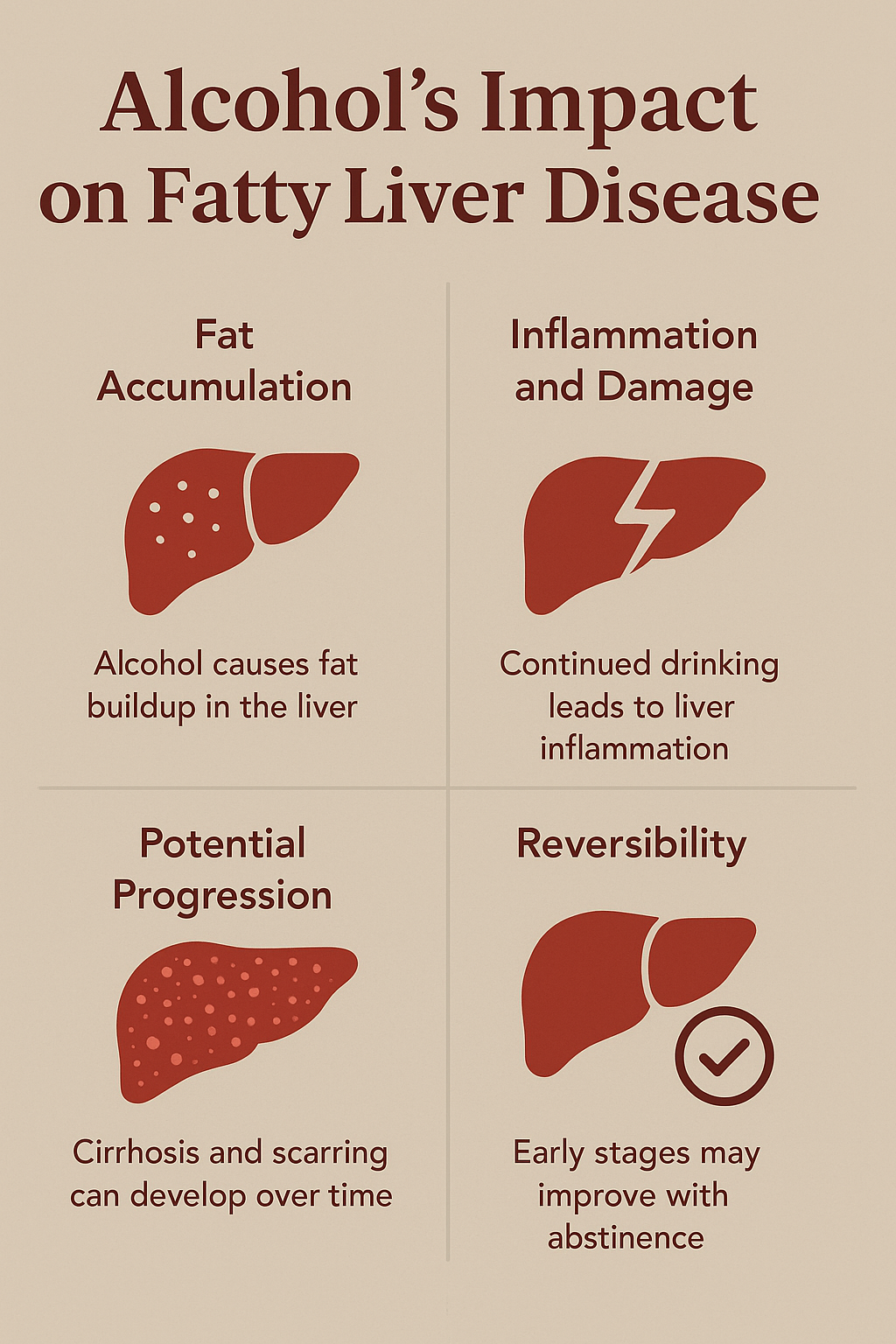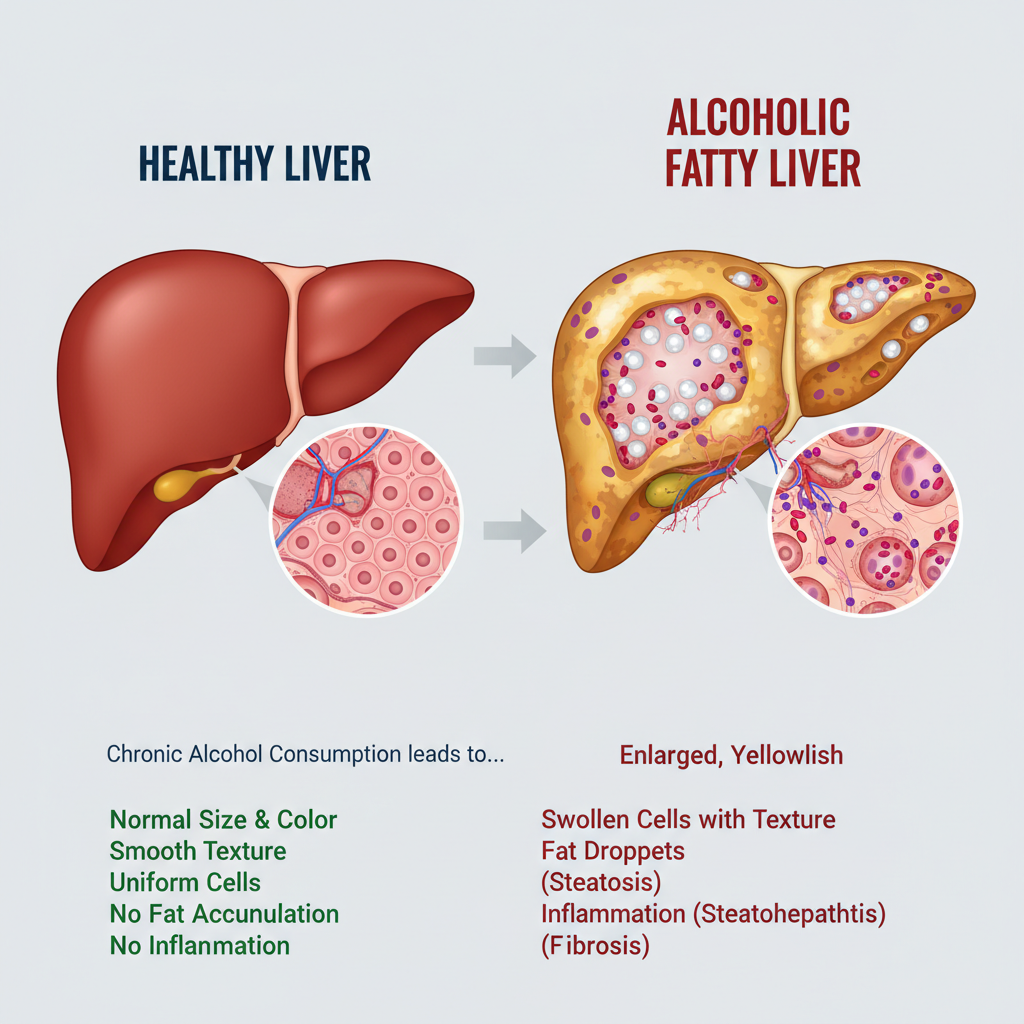
Fatty liver disease is becoming more common, and many people are asking how alcohol really affects liver health. With so much mixed information out there, it’s hard to know what’s true. Some believe a nightly drink is harmless, while others say any alcohol is damaging. The reality is that alcohol can speed up fat buildup, trigger inflammation, and cause lasting harm—especially if your liver is already under stress. Even moderate drinking can worsen fatty liver over time. After digging into the research, I want to share what I’ve learned about how alcohol impacts the liver and help clear up some of the myths that keep people confused.
Understanding Fatty Liver Disease and Its Connection to Alcohol
Fatty liver disease develops when too much fat collects inside liver cells. There are two primary types: alcoholic fatty liver disease (AFLD) and nonalcoholic fatty liver disease (NAFLD). While these conditions sound similar, they have different root causes. Alcohol has been seen as a significant cause of liver trouble for a long time, but understanding where the dangers actually lie can be tricky—especially with the number of mixed messages people encounter.
Some believe the liver can efficiently process alcohol, but it’s actually quite sensitive. The liver’s job is to break down most of the alcohol we drink, and in doing so, it experiences stress. Over time, this stress can cause fat to build up, make the liver inflamed, and may lead to scarring if the drinking doesn’t stop. NAFLD, by contrast, is often connected to obesity, diabetes, or high cholesterol—rather than just alcohol itself—but booze can still add extra strain.
Myths and Facts: Alcohol and Fatty Liver Disease
Clearing up common misunderstandings is essential so people can make solid choices. Here are some popular myths and the realities behind them:
- Myth: Only heavy drinkers get fatty liver disease. Moderate drinkers can develop fatty liver, too, especially if they’re overweight or have diabetes. A study published in the World Journal of Gastroenterology supports this finding.
- Myth: Nonalcoholic fatty liver disease has nothing to do with alcohol. While NAFLD is mainly caused by issues like excess weight or high blood sugar, even small amounts of alcohol can still increase liver stress. People with NAFLD should also pay close attention to their drinking habits.
- Myth: Light drinking is harmless to your liver. If you already have any form of fatty liver disease, even small quantities of alcohol can cause harm. Liver experts generally agree that the safest choice is to avoid alcohol entirely if you’re dealing with fatty liver.
Research in the Journal of Hepatology in 2022 shows that for those with NAFLD, even drinking a little bit regularly raises the risk of severe liver complications—especially when paired with obesity or metabolic concerns.
How Alcohol Makes Fatty Liver Disease Worse
Alcohol forces your liver to work extra hard. When processing alcohol, the liver generates byproducts that can damage liver cells and interfere with fat metabolism. Here’s how alcohol ramps up problems:
- More fat stays in the liver: Alcohol alters how your liver breaks down and removes fat, so more fat is stored in liver cells.
- Inflammation increases: Drinking alcohol prompts cytokine chemicals, which inflame and damage liver tissue over time.
- Scarring builds up: Chronic fatty buildup and inflammation without relief can lead to fibrosis, which reduces the liver’s ability to function.
People often think only wild binge drinking does any real harm. However, having a couple of drinks several times per week can add up. This routine drinking increases the risk of significant liver damage over time, even when outward signs aren’t obvious, making it essential to stay alert to your consumption.
Spotting Warning Signs and Knowing When to Act
Fatty liver disease can go unnoticed for years. Many people don’t experience symptoms until they’re well into the condition. It’s easy to brush off things like feeling unusually tired or experiencing bloating after a night out, but sometimes these are early warning signs of a more serious issue. I recommend seeing a doctor if you have:
- Lingering tiredness that doesn’t have a clear cause
- Ongoing soreness or pressure in the top right area of your stomach
- Losing weight without trying
- Yellow tinges in your skin or eyes (jaundice)
Liver blood tests and ultrasound scans offer a better picture. Catching problems early—especially if you’re a regular drinker or have other risk factors—makes early action possible to avoid permanent damage.
Steps to a Healthier Liver
Getting your liver back on track is achievable, and many people reverse early-stage fatty liver disease by making healthier choices. Here’s what’s proven to make a difference:
- Stop drinking altogether: Skipping alcohol entirely is the best way to help your liver recover. Even so-called “light” drinking drags out healing.
- Upgrade your diet: Avoid greasy foods, excessive sugar, and processed snacks. Instead, load up on vegetables, lean meats, and whole grains for a solid boost to your liver.
- Stay physically active: Whether you walk, swim, or play a sport, it helps fight weight gain and lower liver fat levels.
- Monitor your medications: Some medicines can be harsh on the liver, mainly when used with alcohol. Ask your doctor or pharmacist for advice as needed.
Smart Choices for Social Drinkers
Quitting isn’t always simple, particularly for those who frequently go out or have friends who enjoy a night out. To make it easier, consider offering to be a designated driver, opting for fun mocktails or alcohol-free beverages, or try treating nonalcoholic drinks as your go-to choice at gatherings. Being candid with your friends and setting clear boundaries helps build lasting, healthy habits.
Common Pitfalls to Avoid
With lots of noisy opinions about alcohol and liver health, it’s easy to make mistakes. Look out for these typical traps:
- Thinking one drink is harmless: Regularly having a “just one” adds up faster than expected and can quietly fuel liver trouble over the years.
- Believing general rules apply to all: Like my doctor once said, “Each liver has its own story.” Genetics, past health, and your personal circumstances all influence how your liver responds to stress.
- Ignoring subtle symptoms: Because fatty liver doesn’t always show itself early, continuing to drink “just a little” can mean silent damage is growing.
- Only looking at alcohol: Problems like obesity, high blood pressure, or specific prescriptions can be just as rough on your liver, even if you’re not a frequent drinker.
Checking in with your healthcare provider and consulting trusted sources can help you avoid these mistakes. Each person needs their own game plan for good liver health.
Getting Help Early Really Matters
For anyone who drinks regularly or has other risk factors, routine doctor visits make it possible to spot fatty liver problems before they get serious. Catching issues early means lifestyle adjustments and, occasionally, medication can be effective. The sooner you start, the more likely you are to see your liver get back on track. Putting it off only makes things more complicated in the long run.
Everyday Benefits of Quitting Alcohol for Your Liver
I’ve met many people who are amazed by how much better they feel after cutting out alcohol—even for a few months. They often report higher energy, brighter skin, improved digestion, and sometimes weight loss. Medical checkups typically reveal decreased liver enzyme levels and reduced fat accumulation when the liver is scanned. The positive momentum from these changes can keep people on a healthy track. Some standout benefits include:
- More energy and sharper focus
- Restful sleep and less grogginess
- Better stomach health
- Decreased cholesterol and balanced blood sugar
Seeing real progress in lab tests and feeling more in control provides long-lasting motivation to stick with healthy routines.
Frequently Asked Questions About Alcohol and Fatty Liver
Here are some common questions people ask—with clear, direct answers based on both research and real-life experience:
Question: Is it ever safe to drink in moderation if you have fatty liver?
Answer: It can be tempting to think an occasional glass is okay, but the best approach with fatty liver is to skip alcohol entirely. Any amount can increase your risk of more serious damage, and staying away gives your liver the cleanest slate for recovery.
Question: How long does it take for the liver to recover after stopping alcohol?
Answer: The liver is surprisingly resilient if problems are caught early. Noticeable improvements in blood results can be seen in a few weeks to a few months after quitting alcohol and adopting a healthy lifestyle.
Question: Is one type of alcohol safer than others for the liver?
Answer: There’s no safe option—all forms of booze, from beer to whiskey, put stress on your liver. When dealing with fatty liver, it’s not about which drink is better, but about whether or not to drink at all.
Wrapping Up: Making Better Choices for Your Liver
The effect alcohol has on fatty liver disease is much stronger than most people assume. Even social drinking can lead to bigger issues if you already have risk factors or liver trouble. Getting to the real facts helps you protect your health. Simple steps, such as quitting alcohol, upgrading your diet, and being physically active, have significant benefits. Checking in with your doctor early and regularly is always a good move, as small changes now can make a significant difference down the road.
Video: What Happens To Your Liver When You Drink Alcohol?