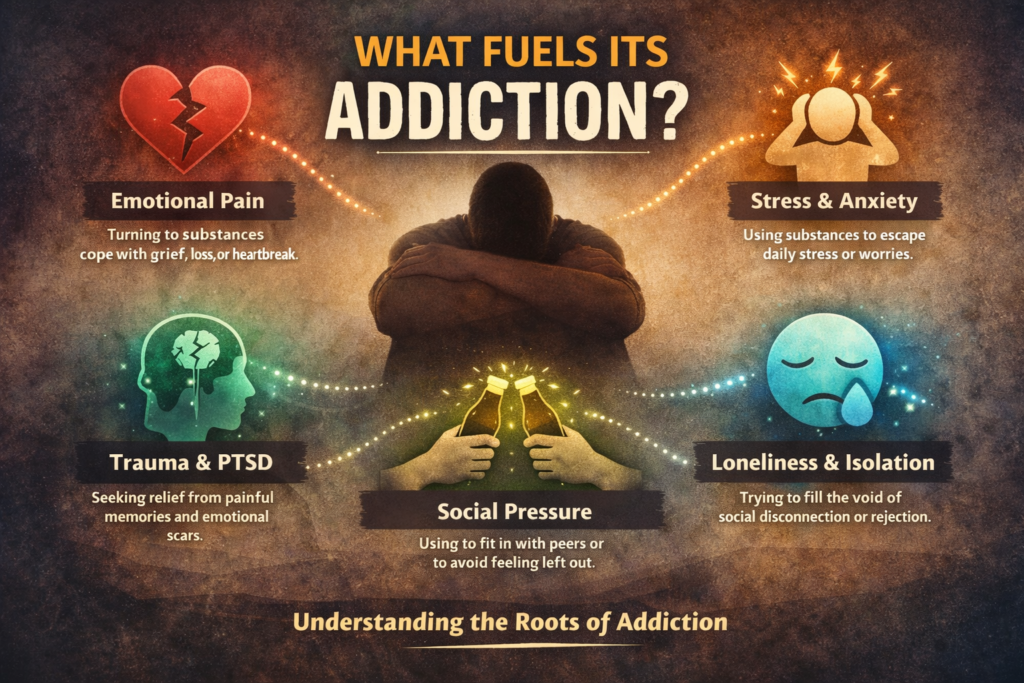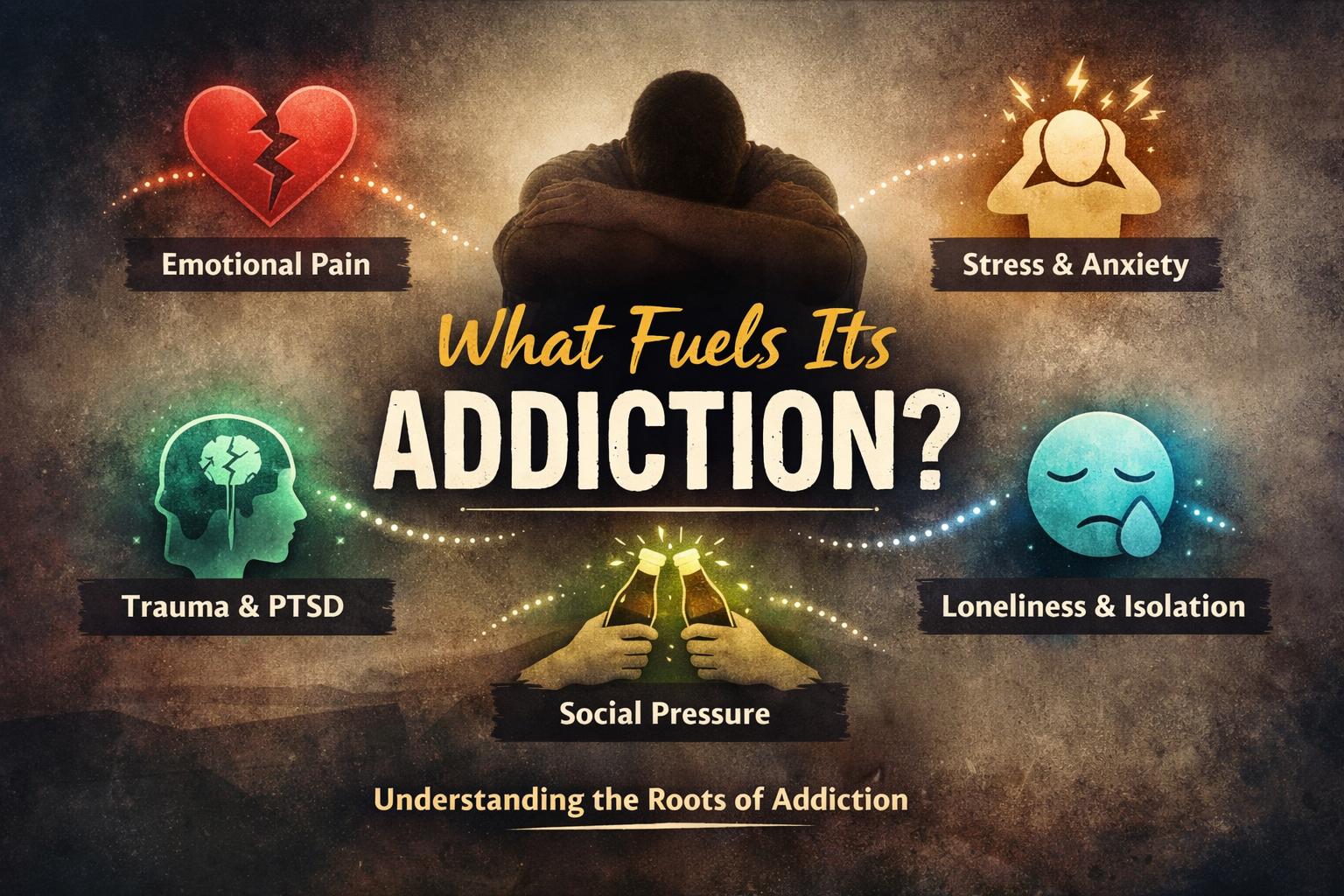
Addiction is a complex condition that develops over time and is often influenced by multiple emotional, psychological, and social factors. While substances or addictive behaviors may appear to be the main problem, they are usually symptoms of deeper issues that fuel the addiction cycle. Common factors that fuel addiction include emotional pain, stress, trauma, mental health challenges, social pressure, and feelings of isolation. Many individuals turn to substances or compulsive behaviors as a way to temporarily escape difficult emotions or life challenges. Understanding what fuels addiction is an important step toward prevention, compassion, and effective recovery.
What Fuels Addiction? Understanding the Forces Behind Addictive Behavior
Addiction does not appear suddenly or without cause. It develops through a combination of emotional, psychological, biological, and social factors that gradually reinforce harmful behaviors. Many experts explain that addiction is fueled by a cycle of emotional pain, temporary relief, and repeated behavior that eventually becomes difficult to control. Understanding what fuels addiction is essential for prevention, compassion, and effective recovery.
1. Emotional Pain and Stress
One of the most common fuels of addiction is unresolved emotional pain. Feelings such as anxiety, loneliness, trauma, grief, shame, or depression can become overwhelming. Individuals may turn to substances or addictive behaviors as a way to numb or escape these emotions. While the relief may be temporary, the brain begins to associate the behavior with emotional comfort, encouraging repeated use.
2. The Brain’s Reward System
Addictive substances and behaviors activate the brain’s dopamine reward system, which produces feelings of pleasure and satisfaction. Over time, the brain starts to crave the substance or behavior because it associates it with reward. This biological process reinforces addictive patterns and can make it difficult to stop without support.
3. Environmental Influences
A person’s environment can also fuel addiction. Factors such as peer pressure, exposure to substance use, family conflict, or high-stress living conditions may increase the likelihood of developing addictive behaviors. Social environments that normalize or encourage substance use can make addiction more likely.
4. Trauma and Past Experiences
Many individuals struggling with addiction have experienced trauma or difficult life events, such as abuse, neglect, loss, or chronic stress. These experiences can create emotional wounds that lead individuals to seek relief through substances or compulsive behaviors.
5. Mental Health Challenges
Conditions such as anxiety, depression, and other mental health disorders can increase the risk of addiction. Sometimes individuals attempt to self-medicate their symptoms with alcohol, drugs, or addictive activities, which may temporarily reduce emotional discomfort but often worsen the problem over time.
6. Isolation and Lack of Support
Human connection plays a major role in emotional well-being. Feelings of isolation, rejection, or lack of support can make individuals more vulnerable to addiction. When people feel disconnected from others, they may turn to substances or behaviors that provide temporary comfort.
Breaking the Cycle
Although many factors fuel addiction, understanding them provides an opportunity for healing. Recovery often involves addressing the underlying emotional struggles, building healthy coping strategies, and strengthening supportive relationships. Therapy, support groups, community resources, and personal self-awareness can help individuals regain control and develop healthier ways of managing life’s challenges.
Ultimately, addiction is not simply about substances or behaviors—it is about the deeper struggles that fuel them. By recognizing these factors and responding with compassion and support, individuals and communities can help break the cycle and promote long-term recovery.
Understanding the Triggers: Self-Management Strategies to Recognize What Fuels Addiction
Addiction often develops when individuals attempt to cope with emotional discomfort, stress, trauma, or other life challenges. While substances or addictive behaviors may provide temporary relief, they often reinforce patterns that make it difficult to break free. Understanding what fuels addiction—such as emotional pain, environmental triggers, or mental health struggles—is a crucial step toward prevention and recovery. Through effective self-management strategies, individuals can gain greater awareness of their triggers and develop healthier ways to respond to life’s challenges.
1. Building Self-Awareness
The first step in managing addiction is becoming aware of personal triggers. Self-awareness involves paying attention to thoughts, emotions, and behaviors that lead to cravings or addictive actions. Keeping a journal or reflecting on daily experiences can help individuals identify patterns such as stress, loneliness, boredom, or conflict that may fuel addictive behavior.
2. Identifying Emotional Triggers
Many addictive behaviors are linked to specific emotional states. Individuals may notice that urges increase during times of anxiety, sadness, anger, or frustration. By recognizing these emotional triggers, people can better understand why they feel the urge to escape through substances or compulsive activities.
3. Practicing Healthy Coping Skills
Once triggers are identified, it is important to replace harmful habits with healthier coping strategies. Activities such as exercise, mindfulness, deep breathing, meditation, creative expression, or engaging in hobbies can help individuals manage stress and emotional discomfort without turning to addictive behaviors.
4. Setting Clear Personal Boundaries
Self-management also involves establishing boundaries that reduce exposure to triggers. This might include limiting time in environments where substance use is common, avoiding certain online platforms that encourage addictive behavior, or setting specific limits on activities that may become compulsive.
5. Creating Structured Daily Routines
Healthy routines can provide stability and reduce opportunities for addictive behavior. Regular schedules that include sleep, work, exercise, relaxation, and social interaction help individuals maintain balance and reduce stress, thereby lowering the risk of relapse.
6. Developing Emotional Resilience
Learning to manage difficult emotions without escaping them is a key self-management skill. Practicing emotional regulation techniques, such as mindfulness or stress-management exercises, helps individuals build resilience and confidence in their ability to handle challenges.
7. Seeking Support When Needed
Although self-management focuses on personal responsibility, recovery often involves support from others. Talking with trusted friends, family members, mentors, counselors, or support groups can provide guidance and encouragement when facing difficult situations.
Moving Toward Greater Understanding and Control
Addiction is often fueled by deeper emotional and environmental factors rather than simple habits. By using self-management strategies such as self-awareness, healthy coping skills, emotional regulation, and supportive routines, individuals can better understand what fuels their addictive behaviors. With greater understanding comes the ability to make healthier choices and build a life that supports long-term well-being and recovery.
Healing Together: Family Support Strategies to Understand What Fuels Addiction
Addiction rarely develops in isolation. It is often fueled by deeper issues such as emotional pain, trauma, stress, loneliness, or unresolved personal struggles. When individuals turn to substances or addictive behaviors, it is often an attempt to cope with these underlying challenges. Families play a powerful role in helping loved ones understand what fuels addiction and in creating a supportive environment that encourages healing. Through compassion, education, and open communication, families can help uncover the deeper causes of addiction and support recovery.
1. Encouraging Open and Honest Conversations
One of the most important family strategies is creating a safe space for honest communication. When individuals feel comfortable sharing their thoughts and emotions without fear of judgment, they are more likely to talk about the struggles that may be fueling their addiction. Active listening, empathy, and patience help build trust and allow deeper emotional issues to surface.
2. Learning About the Root Causes of Addiction
Families who educate themselves about addiction are better prepared to offer meaningful support. Understanding how emotional pain, stress, trauma, or mental health issues can fuel addiction helps family members respond with compassion rather than blame. Reading about addiction, attending educational programs, or participating in support groups can provide valuable insight.
3. Recognizing Emotional Triggers
Families can help identify situations or emotions that may trigger addictive behaviors. Stressful life events, conflict, loneliness, or feelings of rejection may contribute to cravings or relapse. By recognizing these triggers, families can work together to find healthier ways to manage them.
4. Promoting Healthy Coping Skills
Encouraging healthy ways to deal with stress and emotions can reduce the need for addictive behaviors. Families can support activities such as exercise, creative hobbies, mindfulness practices, and time spent together. These positive outlets help individuals manage emotional challenges more effectively.
5. Creating a Stable and Supportive Home Environment
A calm and supportive home environment can significantly reduce the stress that fuels addiction. Families can establish healthy routines, encourage positive habits, and promote a sense of stability. Consistency and emotional support help individuals feel safe as they work through underlying issues.
6. Supporting Professional Help
Addiction often involves complex emotional and psychological factors that benefit from professional guidance. Families can encourage counseling, therapy, or participation in recovery programs. Family therapy can also help improve communication and strengthen relationships within the household.
7. Practicing Patience and Compassion
Recovery is a process that takes time. Families who approach addiction with patience, empathy, and understanding help reduce shame and encourage progress. Showing unconditional support while maintaining healthy boundaries helps individuals feel valued and motivated to change.
Moving Forward as a Family
Understanding what fuels addiction allows families to shift from blame to support. By encouraging communication, recognizing emotional triggers, and promoting healthy coping strategies, families play an important role in the healing process. When families work together with compassion and knowledge, they help create an environment where individuals can confront the deeper causes of addiction and move toward lasting recovery.
Stronger Together: Community Resource Strategies to Understand What Fuels Addiction
Addiction is a complex issue that affects individuals, families, and entire communities. While substances or addictive behaviors may appear to be the main problem, many experts agree that addiction is often fueled by deeper factors such as emotional pain, trauma, stress, mental health challenges, and social isolation. Understanding these underlying causes is essential for effective prevention and recovery. Communities play an important role in addressing these issues by providing resources, education, and supportive environments that help individuals recognize and manage the factors that fuel addiction.
1. Community Education and Awareness Programs
One of the most effective strategies is increasing public awareness about the root causes of addiction. Community organizations, schools, and healthcare providers can offer educational workshops and seminars that explain how emotional pain, trauma, and stress contribute to addictive behaviors. These programs help reduce stigma and encourage individuals to seek help earlier.
2. Access to Mental Health Services
Mental health support is a critical community resource in understanding and addressing addiction. Community clinics, counseling centers, and nonprofit organizations can provide affordable therapy, mental health screenings, and emotional support services. These resources help individuals identify and manage the emotional challenges that often fuel addiction.
3. Peer Support and Recovery Groups
Support groups within the community provide safe spaces where individuals can share experiences and learn from others who have faced similar struggles. Peer-led recovery programs encourage openness, accountability, and mutual support. These groups help individuals recognize emotional triggers and develop healthier coping strategies.
4. Trauma-Informed Community Services
Many individuals struggling with addiction have experienced trauma. Communities that implement trauma-informed approaches ensure that teachers, healthcare workers, social workers, and community leaders understand how trauma influences behavior. This awareness helps create supportive environments where individuals feel safe seeking help.
5. Youth Prevention and Life Skills Programs
Early prevention programs can reduce the risk of addiction later in life. Schools and youth organizations can offer programs that teach emotional intelligence, stress management, problem-solving, and resilience. These skills help young people develop healthy coping strategies before addictive behaviors develop.
6. Opportunities for Social Connection and Engagement
Isolation and loneliness can contribute to addiction. Communities can reduce these risks by creating opportunities for meaningful engagement through sports leagues, volunteer programs, arts activities, cultural events, and recreational programs. Positive social connections strengthen emotional well-being and reduce the need for harmful coping behaviors.
7. Collaboration Between Community Organizations
Addressing addiction effectively requires cooperation among multiple community institutions. Schools, healthcare providers, faith-based groups, local governments, and nonprofit organizations can work together to provide comprehensive support systems that address emotional, social, and environmental factors related to addiction.
Building Healthier Communities
When communities focus on understanding what fuels addiction rather than simply punishing its consequences, they create pathways for healing and prevention. Through education, mental health support, social connection, and collaborative efforts, communities can empower individuals to address the root causes of addiction and develop healthier ways of coping with life’s challenges.
By investing in these community resource strategies, society can move toward a more compassionate and effective approach to addiction—one that prioritizes understanding, prevention, and long-term recovery.
Frequently Asked Questions
Here are some common questions:
1. What does “what fuels addiction” mean?
“What fuels addiction” refers to the underlying factors that drive or sustain addictive behaviors. These factors often include emotional pain, stress, trauma, mental health challenges, social pressure, and feelings of isolation that push individuals toward substances or compulsive activities for relief.
2. Is addiction only caused by drugs or alcohol?
No. Drugs or alcohol are often the substances involved, but they are not always the root cause. Addiction is frequently fueled by deeper emotional, psychological, or environmental issues that lead individuals to seek escape or relief.
3. Why does emotional pain fuel addiction?
Emotional pain, such as anxiety, loneliness, or trauma, can feel overwhelming. People may turn to substances or behaviors like gambling, gaming, or excessive internet use because these activities temporarily numb or distract from difficult emotions.
4. What role does stress play in addiction?
High levels of stress can increase the desire for quick relief. Some individuals use substances or addictive behaviors to cope with pressure from work, relationships, finances, or other life challenges.
5. Can mental health conditions fuel addiction?
Yes. Conditions such as depression, anxiety, or post-traumatic stress disorder (PTSD) can increase the risk of addiction. In some cases, people attempt to self-medicate these symptoms through drugs, alcohol, or other behaviors.
6. How does trauma contribute to addiction?
Past traumatic experiences—such as abuse, neglect, violence, or major loss—can create deep emotional wounds. Individuals may use substances or addictive behaviors as a way to escape painful memories or emotions associated with trauma.
7. Can social pressure influence addiction?
Yes. Social environments where substance use is normalized or encouraged can increase the risk of addiction. Peer pressure, cultural influences, and exposure to substance use in social circles may fuel addictive behaviors.
8. How does loneliness or isolation fuel addiction?
Humans need connection and support. When individuals feel isolated or disconnected from others, they may turn to substances or addictive behaviors to fill emotional gaps or cope with loneliness.
9. Can understanding what fuels addiction help with recovery?
Yes. Identifying the underlying triggers—such as stress, trauma, or emotional pain—helps individuals and professionals address the root causes of addiction, making recovery more effective and sustainable.
10. What are healthy ways to manage the factors that fuel addiction?
Healthier alternatives include:
- Therapy or counseling
- Support groups
- Exercise and physical activity
- Mindfulness and stress-management techniques
- Building supportive relationships
- Developing healthy coping skills
11. Can addiction be prevented by addressing these factors early?
Yes. Early support for emotional health, stress management, and mental health can significantly reduce the risk of addiction. Prevention often focuses on building resilience and healthy coping strategies.
12. What is the most important message about what fuels addiction?
The key message is that addiction is often a response to deeper struggles rather than simply a bad habit. Understanding and addressing those underlying issues is essential for prevention, healing, and long-term recovery.
Conclusion
Recognizing the underlying factors that fuel addiction allows individuals, families, and communities to address the root causes rather than focusing only on the behavior itself. When emotional struggles, stress, or trauma are acknowledged and treated through healthy coping strategies, counseling, and supportive relationships, the cycle of addiction can begin to break. By promoting awareness, providing resources, and encouraging open conversations about mental and emotional health, people can build stronger foundations for healing and long-term recovery. Understanding what fuels addiction ultimately helps create more compassionate and effective approaches to overcoming it.
Video: Why the Cycle Keeps Repeating #AddictionAwareness #RecoveryJourney